- English
- French
- German
- Portuguese
- Spanish
- Russian
- Japanese
- Korean
- Arabic
- Greek
- German
- Turkish
- Italian
- Danish
- Romanian
- Indonesian
- Czech
- Afrikaans
- Swedish
- Polish
- Basque
- Catalan
- Esperanto
- Hindi
- Lao
- Albanian
- Amharic
- Armenian
- Azerbaijani
- Belarusian
- Bengali
- Bosnian
- Bulgarian
- Cebuano
- Chichewa
- Corsican
- Croatian
- Dutch
- Estonian
- Filipino
- Finnish
- Frisian
- Galician
- Georgian
- Gujarati
- Haitian
- Hausa
- Hawaiian
- Hebrew
- Hmong
- Hungarian
- Icelandic
- Igbo
- Javanese
- Kannada
- Kazakh
- Khmer
- Kurdish
- Kyrgyz
- Latin
- Latvian
- Lithuanian
- Luxembou..
- Macedonian
- Malagasy
- Malay
- Malayalam
- Maltese
- Maori
- Marathi
- Mongolian
- Burmese
- Nepali
- Norwegian
- Pashto
- Persian
- Punjabi
- Serbian
- Sesotho
- Sinhala
- Slovak
- Slovenian
- Somali
- Samoan
- Scots Gaelic
- Shona
- Sindhi
- Sundanese
- Swahili
- Tajik
- Tamil
- Telugu
- Thai
- Ukrainian
- Urdu
- Uzbek
- Vietnamese
- Welsh
- Xhosa
- Yiddish
- Yoruba
- Zulu
What are the Advantages of Touch screen HMI with PLC in Industry 4.0?
A touchscreen HMI with PLC integration represents a transformative advancement in industrial automation, merging visual interface capabilities with programmable logic control to deliver unprecedented operational efficiency. In the context of Industry 4.0, this synergy enables manufacturers to harness real-time data visualization, streamline machine operation, and achieve connectivity that traditional control systems cannot match. The combination creates intelligent production environments where human operators interact intuitively with complex machinery while PLCs execute precise logic sequences. This approach reduces operational complexity, accelerates troubleshooting, and supports the smart manufacturing principles that define the fourth industrial revolution.

Understanding Touch Screen HMI and PLC Integration
Touch screen human-machine interfaces serve as the visual gateway between operators and industrial equipment, while programmable logic controllers function as the computational backbone executing automation logic. Understanding how these technologies work together clarifies their value in modern manufacturing environments.
Core Components of Touch Screen HMI Systems
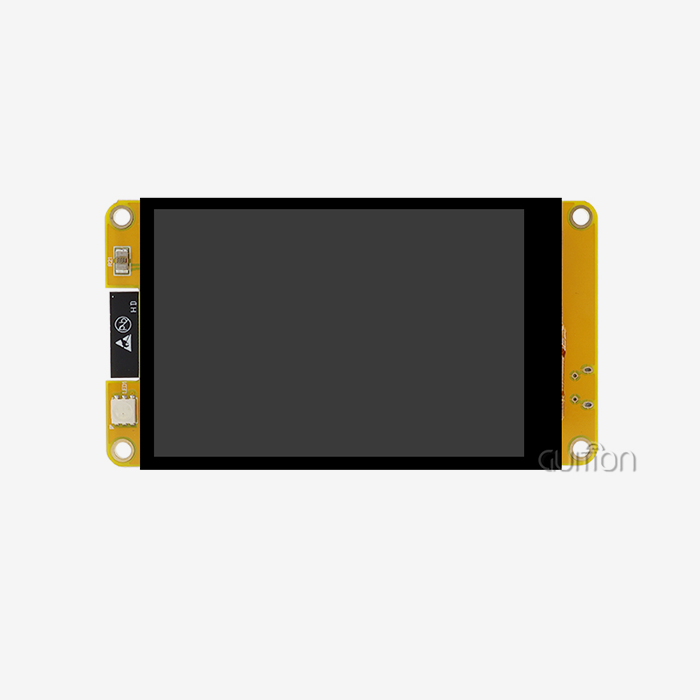
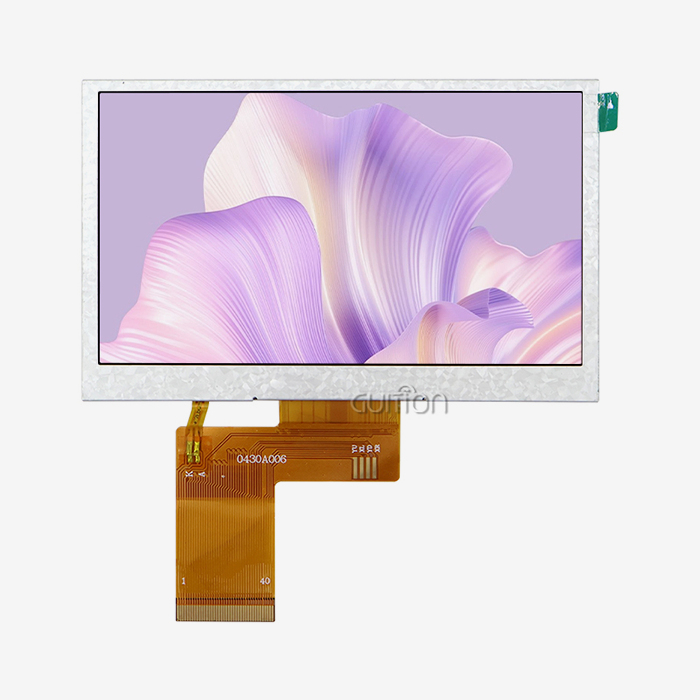
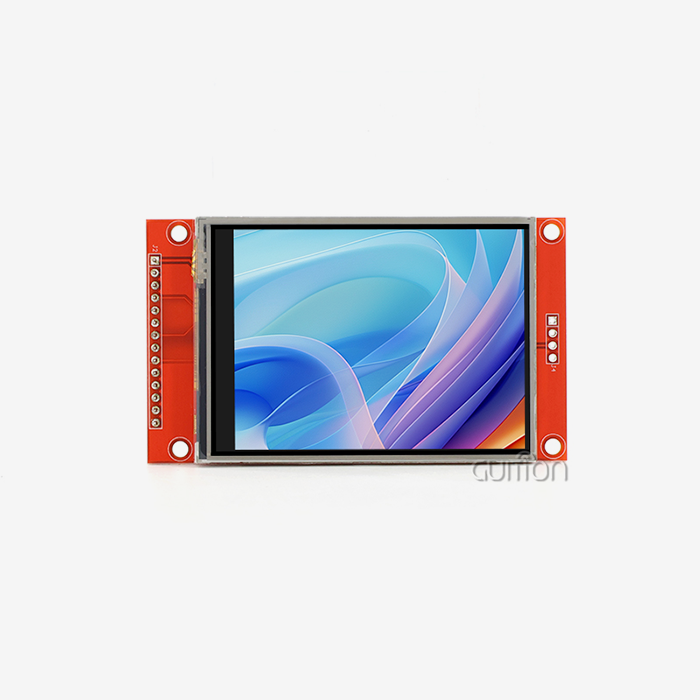
Modern industrial displays employ either resistive or capacitive sensing technologies. Capacitive touchscreens, like those found in the GUITION JC8048Q350C_I, offer superior touch sensitivity and clarity with 800×480 IPS resolution across a 5.0-inch display. The D121BBV single-core MCU runs at 400MHz, giving it enough processing power to display complex graphical interfaces and keep touch interactions responsive. This display module includes a backlight control circuit and IO port interfaces in a compact form factor, which helps solve space constraints that are common in control cabinets and machine panels.
Communication Protocols Enabling Seamless Data Exchange
Touch screen HMI-PLC integration requires robust communication protocols. Modbus RTU and TCP are popular due to their simplicity and device interoperability. Ethernet/IP is faster for data-updating applications, while Profinet is better for automation situations with tight timing. Wireless communication via WiFi and Bluetooth on the GUITION JC8048Q350C_I reduces cable clutter and allows flexible equipment placement. These protocols synchronize the visual interface and control logic, sustaining system coherence during complex process sequences.
Interface Design Principles for Industrial Applications
Designing effective operator interfaces requires balancing information density with usability. The Guition development software makes this easier with drag-and-drop functionality, so embedded engineers and HMI designers can position controls accurately without needing extensive programming knowledge. Visual hierarchy guides operator attention to critical parameters, while colour coding communicates system status at a glance. Industrial applications demand rugged implementations that withstand temperature fluctuations, vibration, and occasional impacts. The capacitive touch technology used in modern hmi display modules maintains accuracy across millions of actuation cycles, meeting durability standards essential for continuous production environments.
Advantages of Touch Screen HMI with PLC in Industry 4.0
Integrating touch screen interfaces with programmable logic controllers delivers multiple operational benefits that directly address Industry 4.0 objectives. These advantages extend beyond basic control capabilities to include data utilization, flexibility, and long-term scalability.
Enhanced Real-Time Control and Monitoring
The combination of visual displays with programmable logic raises immediate operational awareness. Operators view process parameters, machine status, and alarm conditions without navigating multiple screens or interpreting indicator lights. Real-time trend displays reveal process variations before they escalate into quality issues. The GUITION JC8048Q350C_I processes and displays data with minimal latency thanks to its 400MHz processor and 8MB PSRAM, ensuring operators receive current information for decision-making. This immediacy reduces response times during abnormal conditions, minimizing material waste and equipment damage.
Streamlined Process Control and Reduced Errors
Touch screen HMI with PLC integration facilitates operator interactions over button-and-switch interfaces. Touch gestures replace button sequences for recipe selection, parameter modification, and mode changes. Clarity lowers training and operational errors, especially during shift changes or temporary operator operations. Modern HMI displays machine statuses graphically, making status interpretation faster and more precise. Error reduction boosts production efficiency and equipment effectiveness, which is crucial to competitive manufacturing. s.
Data Collection Supporting Smart Analytics
Industry 4.0 emphasizes data-driven decision-making, which requires production systems to generate and communicate operational data. Modern HMI systems equipped with networking capabilities collect time-stamped process information, alarm logs, and production counts. This data feeds analytics platforms that identify efficiency opportunities and predict maintenance needs. The wireless connectivity built into displays like the GUITION JC8048Q350C_I facilitates integration with cloud-based analytics services, enabling remote monitoring and historical analysis. Manufacturing intelligence derived from this data informs continuous improvement initiatives, aligning operational practices with strategic business objectives.
Customizable Interfaces Improving Operator Usability
Different applications require different interface approaches. Food processing equipment emphasizes cleaning protocols and allergen tracking, while semiconductor fabrication focuses on environmental parameters and batch traceability. The Guition development platform enables rapid interface customization without rewriting control logic. Support for UTF-8 encoding and multi-language switching accommodates global deployment, allowing the same equipment to serve markets with different language requirements. This customization capability reduces engineering time during product development and simplifies equipment adaptation when production requirements change.
Here are the core operational advantages this technology delivers to industrial environments:
- Improved Production Efficiency: Faster parameter changes and clearer status indication reduce downtime between production runs, maximizing asset utilization during available production windows
- Lower Training Costs: Intuitive graphical interfaces require less operator training compared to legacy control panels, accelerating workforce onboarding and reducing errors during the learning curve
- Enhanced System Reliability: Integration of display and control functions within coordinated architectures eliminates potential points of failure associated with separate components connected through external cabling
- Scalable Automation Architecture: Modular approaches allow manufacturers to start with basic control implementations and expand functionality as production requirements evolve without replacing core hardware
These advantages collectively support manufacturers in achieving the flexibility and responsiveness demanded by modern production environments. The combination of visual feedback and programmable control creates operational transparency, empowering both operators and management to optimize production outcomes consistently.
Comparison: Touch Screen HMI with PLC vs Traditional HMIs and Other Control Systems
Evaluating control system options requires understanding how different technologies address specific operational requirements. Modern integrated approaches offer distinct advantages over legacy systems while occupying different niches than enterprise-level supervision platforms.
Touch Screen HMIs with PLC vs Legacy Push-Button Interfaces
Traditional control panels use fixed-layout buttons, selector switches, and indicator lights. Changing functionality needs rewiring and mechanical adjustments, prolonging engineering cycles. Legacy push-button interfaces vs. touch-screen HMIs with PLCs: Traditional control panels use fixed-layout buttons, selector switches, and indicator lights. Changing functionality needs rewiring and mechanical adjustments, prolonging engineering cycles. Touchscreen interfaces alleviate these limits with software-based control. The same hardware supports alternative interface designs by loading new application files. Remote upgrades allow feature updates without equipment access using the GUITION JC8048Q350C_I. This flexibility is crucial for serving geographically dispersed installations or changing client needs.
Integrated HMI-PLC Solutions vs Standalone Components
Connecting separate HMI panels to independent PLC units requires careful attention to communication configuration, cable routing, and protocol compatibility. Integrated solutions simplify deployment by ensuring display and control elements communicate through optimized internal pathways. The GUITION JC8048Q350C_I provides I/O port interfaces and supports multiple development modes, including Arduino, ESP-IDF, and Guition, offering integration flexibility while maintaining development simplicity. This approach reduces component count, cabinet space requirements, and potential connection failures compared to discrete architectures.
Touch Screen HMIs with PLC vs SCADA Systems
Supervisory control and data gathering technologies provide enterprise-wide visibility across many production sites beyond localized machine management. SCADA systems excel at coordinating multi-machine processes and collecting historical data for analysis and reporting. Touch screen HMIs with PLC solutions target quick machine control with cheaper deployment costs and better reaction times. Many industrial facilities use both HMI-PLC systems for equipment management and SCADA platforms for facility coordination. Understanding this distinction helps procurement professionals choose technology that meets operational scale and complexity.
Procurement Considerations for Touch Screen HMI with PLC Solutions
Selecting appropriate control interfaces requires evaluating technical specifications, supplier capabilities, and long-term support considerations. Procurement decisions impact not only initial project costs but also ongoing operational efficiency and maintenance expenses.
Key Technical Specifications to Evaluate
Display features greatly impact operator efficiency. Screen size must provide enough data without taking up too much room. The GUITION JC8048Q350C_I's 5.0-inch display is ideal for tiny and portable machines, while larger machinery may need up to 21.5 inches for comfortable reading from standard operating distances. The 800×480 pixel density provides sharp rendering for industrial viewing situations, ensuring text readability and graphical detail. Interfaces with dynamic images, trend displays, or complicated animations require processing power. The 400MHz D121BBV MCU with 16MB Flash memory handles complex programs with responsive touch.
Supplier Reliability and Support Infrastructure
Technical specifications describe what equipment can do; supplier capabilities determine how successfully implementations proceed. Established manufacturers offer comprehensive documentation, reference designs, and technical support channels that accelerate development and troubleshooting. Guition provides cross-platform online debugging capabilities that reduce development time by enabling engineers to identify and resolve issues quickly. Development tools significantly impact engineering productivity; drag-and-drop interface builders like the Guition software platform reduce time-to-market compared to traditional hand-coding approaches. Supplier responsiveness during technical questions and their willingness to support custom requirements indicate partnership quality beyond initial product purchase.
Evaluating Leading Industry Solutions
Several established industrial HMI brands have distinct product philosophies. Siemens' tightly integrated ecosystems ease compatibility but may limit flexibility by combining HMI panels, PLCs, and engineering software. Rockwell Automation prioritizes industrial designs that meet strict environmental standards for demanding working environments. Schneider Electric's entry-level to advanced product lines meet varied budgets. Guition provides versatile, cost-effective display solutions with rapid development for embedded system developers, OEM manufacturers, and system integrators. The GUITION JC8048Q350C_I offers manufacturers who value customization and development speed professional-grade performance and easy development tools.
Instead of merely buying price, procurement experts should evaluate the total cost of ownership. Development tool licensing, training, spare parts, and technical support all affect lifecycle costs. Solutions that require specialized programming or proprietary development environments may cost more to maintain than platforms that enable standard languages and open development.
Technical Support and Integration Best Practices
To successfully implement touchscreen HMIs with PLC systems, you must pay attention to wiring practices, communication configuration, and software development methodology. Following established best practices reduces commissioning time and improves long-term system reliability.
Wiring and Communication Setup
Reliable system operation depends on electrical connections. Power supply selection must consider logic power and display backlight current. The GUITION JC8048Q350C_I uses conventional industrial voltages and power-saving lighting control circuits. Electrical interference can be reduced via cable type, shielding, and route in communication wiring. Twisted-pair cable with termination resistors at network ends should link to RS-485. When near variable frequency drives or other noise sources, Ethernet cables benefit from shielding. Installation is easier with wireless connectivity, but industrial signal strength and network security must be verified.
Programming and Interface Development Strategies
Efficient development begins with a clear definition of required functionality before detailed programming begins. The Guition development platform supports rapid prototyping through drag-and-drop control placement, allowing designers to create functional mockups quickly for stakeholder review. Modular programming practices improve maintainability by organizing interface elements and control logic into discrete functional blocks. The GUITION JC8048Q350C_I comes with factory-burnt test programmes that demonstrate core capabilities, providing reference implementations that developers can examine and adapt. Support for multiple development modes, including Arduino and ESP-IDF, accommodates different programming preferences and project requirements, reducing the learning curve for engineers familiar with these platforms.
Firmware Updates and Third-Party Device Integration
Maintaining system security and functionality requires periodic firmware updates, addressing discovered vulnerabilities and adding new features. Remote upgrade capability built into the GUITION JC8048Q350C_I enables field updates without requiring technicians to access every installation physically, dramatically reducing maintenance expenses for distributed equipment deployments. Compatibility with third-party sensors, actuators, and peripheral devices expands system capabilities beyond basic control functions. Reserved ports for TF cards, sensors, and general IO on the GUITION display module provide expansion options as application requirements evolve. Validating component compatibility during design phases prevents integration challenges during commissioning.
Conclusion
Touch screen HMI with PLC integration delivers operational advantages essential for manufacturers embracing Industry 4.0 principles. The combination of intuitive visual interfaces with robust programmable control creates production systems that are simultaneously more capable and easier to operate. Real-time monitoring, streamlined control interactions, and data collection capabilities support both immediate operational needs and long-term continuous improvement initiatives. Guition meets these needs with display modules like the JC8048Q350C_I, which balance performance and ease of development. The platform has 400MHz processing, an 800×480 IPS display, and wireless connectivity, making it suitable for various industrial applications. Procurement decisions should consider not only technical specifications but also development tool quality, supplier support infrastructure, and long-term ecosystem compatibility. Manufacturers investing in modern HMI-PLC solutions position themselves to compete effectively in increasingly dynamic global markets.
FAQ
What specific benefits does a touchscreen HMI with PLC integration provide over separate components?
Integrated approaches simplify system architecture by reducing component count, cabinet space requirements, and potential connection failures. Internal communication pathways offer lower latency than external network connections. Development complexity decreases when interface and control programming occur within unified environments rather than requiring coordination between separate programming platforms.
How does capacitive touch technology compare to resistive in industrial environments?
Capacitive screens deliver superior touch sensitivity, supporting gesture controls and requiring minimal activation pressure. They maintain clarity better because they lack the flexible overlay that slightly obscures resistive displays. Modern capacitive implementations are durable enough for industrial use because they use strong cover glass and sealed construction.
Can the GUITION JC8048Q350C_I integrate with existing PLC equipment?
The display module supports standard communication protocols and offers multiple development modes, including Arduino and ESP-IDF, facilitating integration with diverse control platforms. Reserved IO ports and support for common industrial protocols enable connection to existing automation equipment.
Partner with Guition for Your Touch Screen HMI with PLC Needs
Guition delivers comprehensive display solutions addressing the challenges embedded engineers, product managers, and system integrators face during automation project development. Our JC8048Q350C_I touchscreen HMI with PLC compatibility provides the processing power, display quality, and connectivity options modern industrial applications demand. The D121BBV MCU, running at 400MHz, smoothly handles complex interfaces, while the 800×480 IPS capacitive touchscreen keeps operator interactions clear and responsive. Wireless connectivity through built-in WiFi and Bluetooth eliminates cable constraints, and remote upgrade capability reduces long-term maintenance costs. We understand rapid development cycles matter; our Guition software platform features drag-and-drop interface creation tools that accelerate time-to-market without sacrificing customization flexibility. Whether your application involves medical devices, smart home systems, industrial control panels, or energy management equipment, our display modules adapt to your specific requirements. Contact our team at david@guition.com to discuss your project needs with experienced technical consultants who understand the nuances of HMI display module supplier relationships and can recommend configurations optimized for your production environment.
References
1. National Institute of Standards and Technology (2018). "Framework for Cyber-Physical Systems: Volume 1, Overview," Special Publication 1500-201, U.S. Department of Commerce.
2. Automation Federation (2020). "Industrial Human-Machine Interface Design Guidelines for Safety-Critical Applications," Technical Report AF-2020-07, International Society of Automation.
3. Manufacturing Leadership Council (2019). "Digital Manufacturing: Industry 4.0 Implementation Strategies and ROI Analysis," National Association of Manufacturers Research Division.
4. Industrial Ethernet Consortium (2021). "Communication Protocol Selection for Industrial Automation Networks," White Paper IEC-WP-2021-03, Industrial Ethernet Technology Review Board.
5. International Electrotechnical Commission (2017). "IEC 61131-3: Programmable Controllers – Part 3: Programming Languages", Edition 3.0, Geneva: IEC Central Office.
6. Society of Manufacturing Engineers (2022). "Human Factors in Advanced Manufacturing Systems: Operator Interface Design and Evaluation," SME Technical Paper Series TP22-MFG-018, Dearborn: SME Publications.
Learn about our latest products and discounts through SMS or email