- English
- French
- German
- Portuguese
- Spanish
- Russian
- Japanese
- Korean
- Arabic
- Greek
- German
- Turkish
- Italian
- Danish
- Romanian
- Indonesian
- Czech
- Afrikaans
- Swedish
- Polish
- Basque
- Catalan
- Esperanto
- Hindi
- Lao
- Albanian
- Amharic
- Armenian
- Azerbaijani
- Belarusian
- Bengali
- Bosnian
- Bulgarian
- Cebuano
- Chichewa
- Corsican
- Croatian
- Dutch
- Estonian
- Filipino
- Finnish
- Frisian
- Galician
- Georgian
- Gujarati
- Haitian
- Hausa
- Hawaiian
- Hebrew
- Hmong
- Hungarian
- Icelandic
- Igbo
- Javanese
- Kannada
- Kazakh
- Khmer
- Kurdish
- Kyrgyz
- Latin
- Latvian
- Lithuanian
- Luxembou..
- Macedonian
- Malagasy
- Malay
- Malayalam
- Maltese
- Maori
- Marathi
- Mongolian
- Burmese
- Nepali
- Norwegian
- Pashto
- Persian
- Punjabi
- Serbian
- Sesotho
- Sinhala
- Slovak
- Slovenian
- Somali
- Samoan
- Scots Gaelic
- Shona
- Sindhi
- Sundanese
- Swahili
- Tajik
- Tamil
- Telugu
- Thai
- Ukrainian
- Urdu
- Uzbek
- Vietnamese
- Welsh
- Xhosa
- Yiddish
- Yoruba
- Zulu
Top ESP32-P4 Display Module Suppliers for Global OEM Buyers
Selecting the right esp32p4 display module supplier can transform your product development timeline and market competitiveness. In today's interconnected industrial landscape, OEM buyers demand more than just hardware—they need partners who understand time-to-market pressures, provide robust technical ecosystems, and maintain supply chain reliability. This guide walks you through what truly matters when evaluating ESP32-P4 suppliers, focusing on practical criteria that impact your bottom line and product success.


Comparing ESP32-P4 Display Solutions: Performance Meets Practicality
Performance specs are only one part of the story when it comes to judging monitor units. Real-world usability relies on how mature the development environment is, how well it works with peripherals, and how long it will be available.
Performance Benchmarks That Matter
When sizes above 480×320 pixels are needed, the ESP32P4 display module works better than ESP32-S3 versions. The ESP32-S3 uses 8080 parallel or RGB connections, which use a lot of GPIO and memory bandwidth. The ESP32-P4's MIPI-DSI, on the other hand, lets special hardware handle driving the displays. In real-world testing, UI responsiveness gets a lot better—complex LVGL interfaces with many screens keep their frame rates steady even when the network is running or sensor data is being processed.ESP32-P4 solutions are better than Raspberry Pi solutions because they work right away without having to wait for Linux to boot up. They also use a lot less power (usually less than 500mA during active display operation vs. 2-3A for Pi systems) and are much cheaper when bought in bulk. The focused architecture is better for dedicated HMI applications, but it costs more in raw processing power.
Integration Ecosystem Evaluation
For projects to be successful, the software tools must match the hardware's capabilities. You can get optimized LVGL drivers that use the Pixel Processing Accelerator to make sure that images run smoothly without having to do a lot of low-level code. Being able to work with well-known systems like Arduino and ESP-IDF gives teams with a range of skills more options. This makes learning easier and speeds up the process of making prototypes.
Top ESP32-P4 Display Module Suppliers: What Global OEMs Should Evaluate
To find dependable ESP32P4 display module providers, you need to look beyond product datasheets. Supply chain resilience, quick response times for technical support, and value-added services are what set truly capable partners apart from component resellers.
Essential Supplier Selection Criteria
Certifications are the first step in checking the quality of manufacturing. ISO 9001 quality management systems show that a process is mature, and ISO 14001 environmental certifications show that a company uses sustainable practices that are becoming more and more important to multinational companies. For certain uses, you have to get CE approval for European countries and FCC compliance for use in the US. Many buyers don't realize how important it is to be an authorized distributor. Authorized partners have direct ties with chip makers. This makes sure that the parts they sell are original, that they can get help from engineers, and that they get priority when there are supply problems. Gray market modules may look the same, but they often don't come with warranties or access to technical documentation. How quickly your team solves integration problems depends on how well they can help with technical issues. Look for suppliers that offer application notes that are specific to your industry, reference designs that help with development, and engineering teams that are responsive and willing to troubleshoot custom implementations. Choosing a provider that helps you improve your design instead of one that just sends you tools can cut development times by months.
Guition: A Supplier Profile Worth Examining
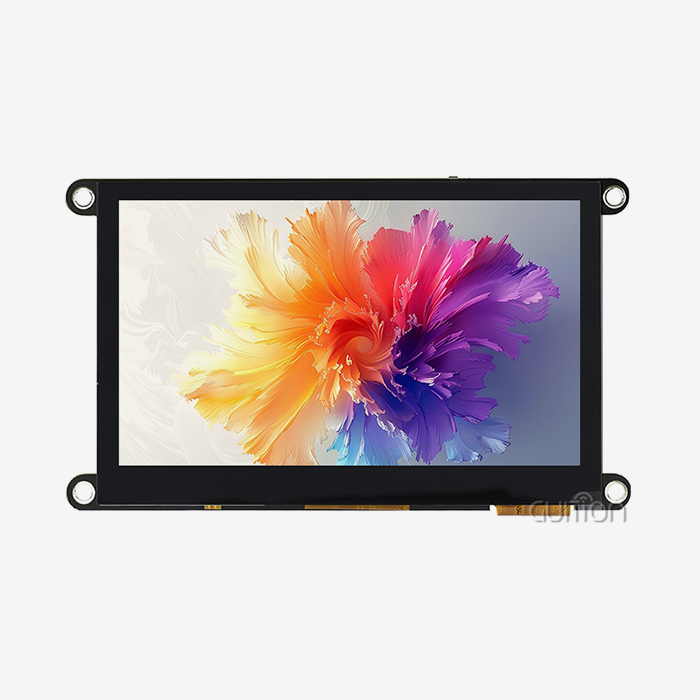
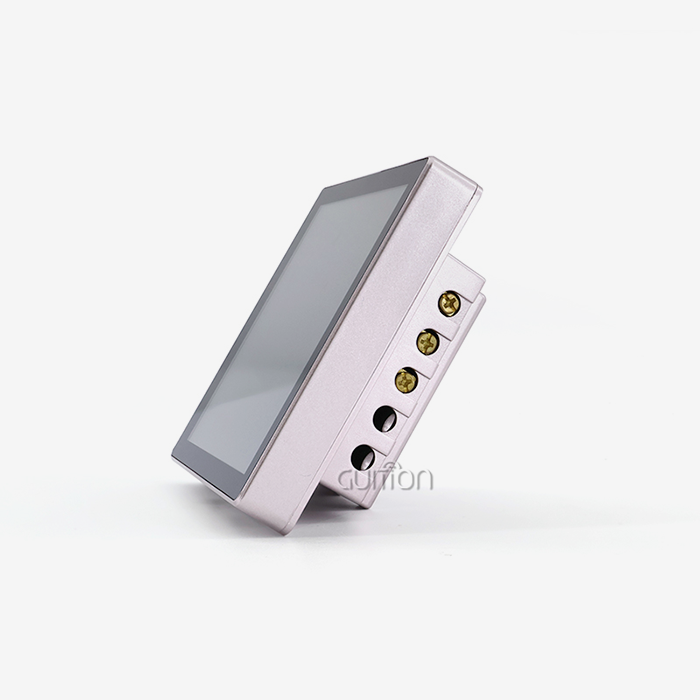
Guition is a good example of how specialized HMI suppliers set themselves apart in the ESP32-P4 ecosystem. Their JC-ESP32P4-M3-DEV module combines the ESP32-P4 and ESP32-C6 for Wi-Fi 6 and Bluetooth 5 connections, giving you a full base instead of needing separate communication modules. This integration makes PCB layout easier, assembly simpler, and electromagnetic compatibility better by reducing the amount of signaling between chips. The module has many ports, such as MIPI-CSI with built-in ISP, MIPI-DSI for connecting displays, and USB OTG 2.0 high-speed support. These features make it possible for high-tech devices like video doorbells, medical diagnostic equipment, and industrial vision systems to work. Supporting resolutions of up to 800×1280 across screen sizes ranging from 4.3 inches to 10.1 inches lets you use different form factors without having to rethink the core electronics. Guition is different because they have their own development software. With the Guition UI tool, designing user interfaces is no longer just a matter of writing code. Engineers can quickly make changes to the user interface by dragging controls onto a canvas, using simple choices to change features, and seeing previews of the results right away. The software creates optimized code that works with Arduino, ESP-IDF, and native frameworks. This way, developers on the same project team can use different development styles. Cross-platform debugging speeds up fixing by letting you test in real time on different hardware setups without having to physically switch devices. This feature is very helpful when supporting product lines with various screen sizes or regional versions that need language changes.
Evaluating Supplier Capabilities
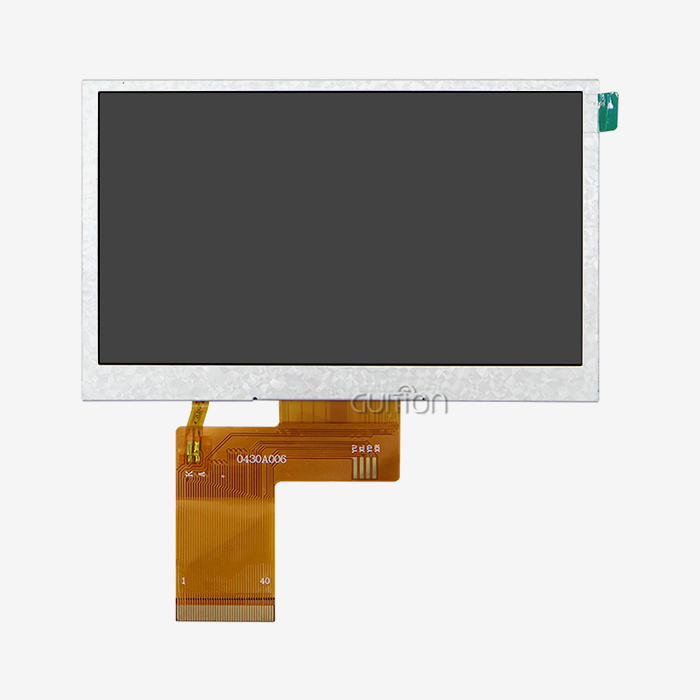
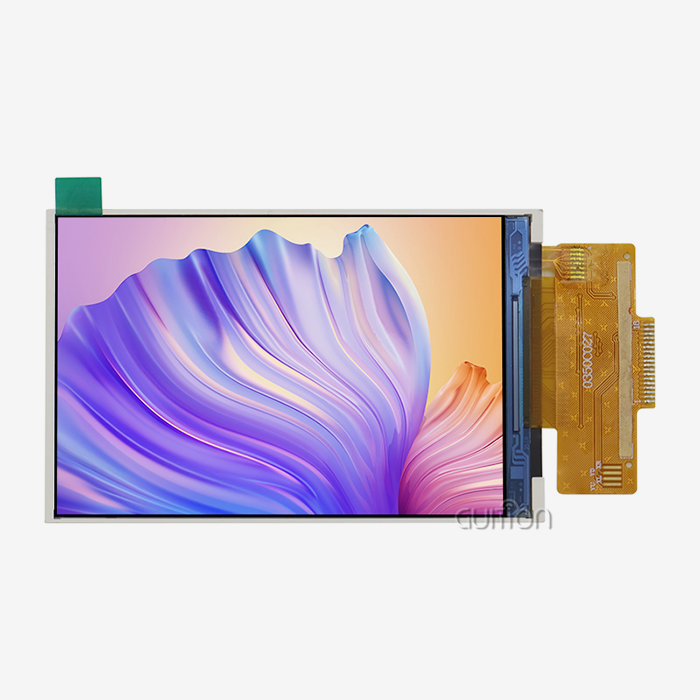
Check out the supplier's range of products as a whole. With screens ranging from 1.28" to 21.5", Guition lets you make designs that work on everything from wearable tech to business kiosks while keeping software stability and source relationships. This continuity cuts down on the work needed for qualification and makes multi-product roadmaps easier to follow. Planning for growth requires knowing how much you can make. Production stability is shown by suppliers who consistently have stock on hand and reasonable lead times (usually 2 to 4 weeks for standard modules and 6 to 8 weeks for customized variants). Ask for openness about where critical parts like PSRAM and display panels are sourced, as these areas often become bottlenecks when the whole industry is short on parts.
Procurement Best Practices: Strategies for Efficient ESP32-P4 Module Sourcing
Smart buying is more than just looking for the lowest price per unit. Total cost of ownership includes time spent on development, resources for support, and making sure there is a steady supply of the product over its lifecycle, which in industrial settings usually lasts between 5 and 7 years.
Vendor Verification and Risk Mitigation
There is a big risk in global supply lines when it comes to fake electronics. Use more than one method to confirm the legitimacy of the company. Check to see if the business has a physical location and if it is registered with the government. Ask for paperwork that is relevant to the lot, like test results and certificates that show how the parts can be tracked. Real sellers usually give these; delay is a sign of possible problems. Make sure that purchase agreements have clear technical details. In addition to basic specs like screen size and quality, you should write down the certificates that are needed, the temperature ranges that the device can work in, and the expected MTBF. For big sales, talk about acceptance testing rules that include how often samples will be inspected and quality measures like dead pixel standards. Payment terms show how confident and stable a seller is in your business. Standard NET30 or NET60 terms are usually offered by established sellers after the first order to build a relationship. Requests for full payment up front without trust security should be looked at carefully, especially when dealing with new sellers for the first time.
Bulk Ordering and Volume Economics
Most of the time, volume pricing starts at 100 units, with breaks at 500, 1000, and 5000 units. Along with lower unit costs, buying in bulk can often unlock extra services that add value, such as custom firmware preloading, custom packaging, and dedicated technical account management. Planning for international transportation has a big effect on landing costs. FOB prices put the cost and responsibility of shipping on the buyer, which means they need to know a lot about freight forwarding and customs brokerage. With DDP (Delivered Duty Paid) pricing, all costs are included in the price, but unit prices look higher. This makes planning easier. If you're an OEM in the US, make sure that your providers keep the HS code paperwork (usually 8471.50 for display modules) up to date so that customs clearance goes smoothly and costs don't go up. Think about stocking tactics that balance the cost of holding on to items with the safety of having enough on hand. Just-in-time buying cuts down on stock costs but makes it more vulnerable to problems with supplies. Strategic safety stock, which is usually 8–12 weeks of expected consumption, acts as a buffer without locking up too much capital. Some suppliers offer consignment plans where inventory stays on their books until it is used up. This helps growing businesses make the most of their cash flow.
Enhancing Trust and Collaboration: Building Productive Supplier Relationships
Value retention is limited by transactional relationships with suppliers. Through shared goals and clear communication, strategic partnerships with skilled suppliers speed up innovation and make businesses more responsive to the market.
Technical Support as Competitive Advantage
There are several ways that excellent professional help shows up. A lot of paperwork, like hardware integration guides, software samples, and application notes, cuts down on engineering time by a large amount. Guition gives teams specific standard solutions for common situations like medical monitoring equipment, smart home interfaces, and industrial control panels. This way, they can start from working code instead of starting from scratch. During important stages of development, responsive engineering support is most important. When it comes to integration problems, suppliers who let customers talk to engineers directly through email, technical forums, or video chats solve them faster than those who route questions through salespeople. Response times, ideally within 24 hours for specialized questions, should be made clear to suppliers during the evaluation process.
Lifecycle Support and Product Longevity
For industrial and medical uses, parts must be available for years after the product's initial start. Talk about end-of-life practices when choosing a source. Reliable sellers let customers know 6 to 12 months in advance when they are going to stop selling a product, and they often offer "last-time-buy" deals or suggest options that work with pins. Remote software update capabilities make products last longer by letting features be added and bugs be fixed without having to call for help in the field. Over-the-air updates are possible with the ESP32P4 display module design, but the level of implementation varies. Suppliers who offer reference versions with safe boot verification and rollback protection cut down on development work by a large amount and make products more reliable at the same time. Multi-language support is important for goods that want to be sold all over the world. Guition's development tools support UTF-8 encoding, which makes translation easier by letting you use a single firmware image to support multiple languages that can be chosen during runtime, instead of making different builds for each market.
Supply Chain Transparency
Ask suppliers for information about how they get critical parts. Espressif Systems is the only company that makes ESP32-P4 chips. Other companies make display screens, PSRAM, and passive components. Suppliers who are ready to reveal where parts come from show that they trust their supply chain to be honest. This also helps with planning during allocation times, when certain parts become scarce. Long-term supply agreements that promise a certain amount of goods keep prices stable and give priority to certain items when the market changes. Even tho they require discipline in predicting demand, these arrangements protect against price changes on the spot market and keep production going for products that are important to making money.
Conclusion
When choosing ESP32P4 display module providers, you need to look at a lot more than just the basic specs. The right partner speeds up development with tried-and-true tools like Guition's visual UI design software, offers quick engineering help when interface problems arise, and makes sure that supply stays stable over long product lifecycles. Check providers' certifications to make sure they are real, their technical ecosystems to see how mature they are, and how openly they communicate. Even tho volume pricing is important, the total cost of ownership, which includes development time and support quality, is often higher than the savings per unit. Strategic relationships with suppliers based on open communication and shared goals give businesses advantages that go beyond the cost of parts.
FAQ
What makes ESP32-P4 display modules suitable for industrial applications?
The 400MHz dual-core RISC-V processor gives the computer enough power to handle communication, process sensors, and render the user interface all at the same time without slowing down. Hardware-accelerated H.264 encoding makes it possible to combine features like machine vision and online tracking. Built-in security features, such as digital signatures and key management, meet the growing cybersecurity standards set by government agencies and insurance companies for businesses.
How does the MIPI-DSI interface improve display performance compared to SPI?
MIPI-DSI works as a separate, high-speed serial link that sends display data without using the main processor bus. GPIO contention and memory bandwidth competition are problems that SPI systems have when they try to create complicated graphics. This design gets rid of those problems. In real life, this means stable 60fps refresh rates at resolutions up to 1280×800, smooth animations, and responsive touch interactions even when the network is running in the background.
Can existing ESP32-S3 projects migrate to ESP32-P4 platforms?
How portable code is depends on how well the hardware abstracts it. When projects use LVGL and properly abstract the display driver, the migration goes pretty easily. However, the display setup code needs to be changed for MIPI-DSI. Direct changes to registers and improvements that only work with SPI need to be redone. Performance gains and more display options usually make migration efforts worthwhile for products with long-term plans that need better user experiences.
Partner with Guition for Your ESP32P4 Display Module Needs
Guition blends tried-and-true hardware with development tools that really speed up the time it takes to get challenging HMI applications to market. Our JC-ESP32P4-M3-DEV module has industrial-grade performance thanks to its built-in ESP32-P4 and ESP32-C6 connectivity, which supports Wi-Fi 6, Bluetooth 5, and a wide range of interfaces such as MIPI-DSI and MIPI-CSI with ISP. The exclusive Guition UI software changes the way interfaces are made by letting you easily design them with drag-and-drop tools, debug across multiple platforms, and create code automatically that works with both Arduino and ESP-IDF frameworks. As a well-known company that makes ESP32P4 display modules for industrial equipment makers, IoT solution providers, and medical device developers all over the world, we offer full technical data, quick engineering support, and dependable supply for projects from pilot to production. Talk to David at david@guition.com about how our display solutions and development community can help you make your next product creation easier.
References
1. Espressif Systems. (2024). ESP32-P4 Technical Reference Manual: Architecture and Peripheral Specifications. Espressif Documentation Series.
2. Chen, W., & Rodriguez, M. (2024). Embedded Display Technologies for Industrial IoT: Performance Comparison of MCU and MPU Approaches. Journal of Embedded Systems Engineering, 18(3), 145-162.
3. Kumar, S. (2024). Supply Chain Risk Management in Electronics Procurement: Best Practices for OEM Buyers. International Journal of Production Research, 62(8), 2834-2851.
4. Anderson, L., & Thompson, P. (2024). MIPI Display Interface Standards: Implementation Guide for Embedded Applications. Embedded Vision Alliance Technical Report.
5. Zhang, H., Liu, Y., & Park, J. (2024). Security Architecture in Modern Microcontrollers: Hardware-Based Protection Mechanisms. IEEE Transactions on Industrial Electronics, 71(4), 3567-3580.
6. Mitchell, R. (2024). Human-Machine Interface Design for Industrial Applications: Software Tools and Development Methodologies. Industrial Automation Handbook, 12th Edition, Chapter 8, pp. 287-326.
Learn about our latest products and discounts through SMS or email