- English
- French
- German
- Portuguese
- Spanish
- Russian
- Japanese
- Korean
- Arabic
- Greek
- German
- Turkish
- Italian
- Danish
- Romanian
- Indonesian
- Czech
- Afrikaans
- Swedish
- Polish
- Basque
- Catalan
- Esperanto
- Hindi
- Lao
- Albanian
- Amharic
- Armenian
- Azerbaijani
- Belarusian
- Bengali
- Bosnian
- Bulgarian
- Cebuano
- Chichewa
- Corsican
- Croatian
- Dutch
- Estonian
- Filipino
- Finnish
- Frisian
- Galician
- Georgian
- Gujarati
- Haitian
- Hausa
- Hawaiian
- Hebrew
- Hmong
- Hungarian
- Icelandic
- Igbo
- Javanese
- Kannada
- Kazakh
- Khmer
- Kurdish
- Kyrgyz
- Latin
- Latvian
- Lithuanian
- Luxembou..
- Macedonian
- Malagasy
- Malay
- Malayalam
- Maltese
- Maori
- Marathi
- Mongolian
- Burmese
- Nepali
- Norwegian
- Pashto
- Persian
- Punjabi
- Serbian
- Sesotho
- Sinhala
- Slovak
- Slovenian
- Somali
- Samoan
- Scots Gaelic
- Shona
- Sindhi
- Sundanese
- Swahili
- Tajik
- Tamil
- Telugu
- Thai
- Ukrainian
- Urdu
- Uzbek
- Vietnamese
- Welsh
- Xhosa
- Yiddish
- Yoruba
- Zulu
Custom Resistive touch display module Manufacturing Solutions
Ever wonder why certain touchscreens stay operating well in a dusty factory or a rain-soaked outdoor kiosk, but others glitch out the instant circumstances become tough? Early in the design phase, a team makes a choice, often one of two: which touch technology to use and who to collaborate with for production. A well-built resistive touch display module may be the silent hero behind a device that simply works, year after year, under situations that would damage weaker technology. In this post, we will cover how this technology works, what “custom manufacturing” really looks like, where you can get these modules in the real world, and how to pick a partner worthy of your next project.


Why Resistive Touch Still Wins in Tough Environments
Touch technology has come a long way, but resistive touch hasn't gone anywhere — and there's a good reason for that.
The Physics Behind Pressure-Based Touch
A resistive touch display module simply works by applying mechanical pressure and does not depend on the charge of your fingertip like capacitive panels. Touch any place on the surface, and at that exact spot two tiny layers of conductive material touch, notifying the controller exactly where you touched. It’s a beautifully basic concept, and it’s that simplicity that makes it so effective when gloves, styluses, or even a gloved elbow have to connect with the screen without sacrificing any precision.
Where Capacitive Screens Fall Short
Anyone who has tried to use a smartphone with wet or gloved hands already knows the frustration capacitive touch can cause. A resistive touch display module sidesteps that problem entirely, since it doesn't care whether your finger is bare, gloved, or holding a stylus — pressure is pressure. That reliability matters enormously in factories, outdoor kiosks, and medical settings, where operators can't always stop to remove protective gear just to tap a screen.
A Closer Look at the JC2432S028R
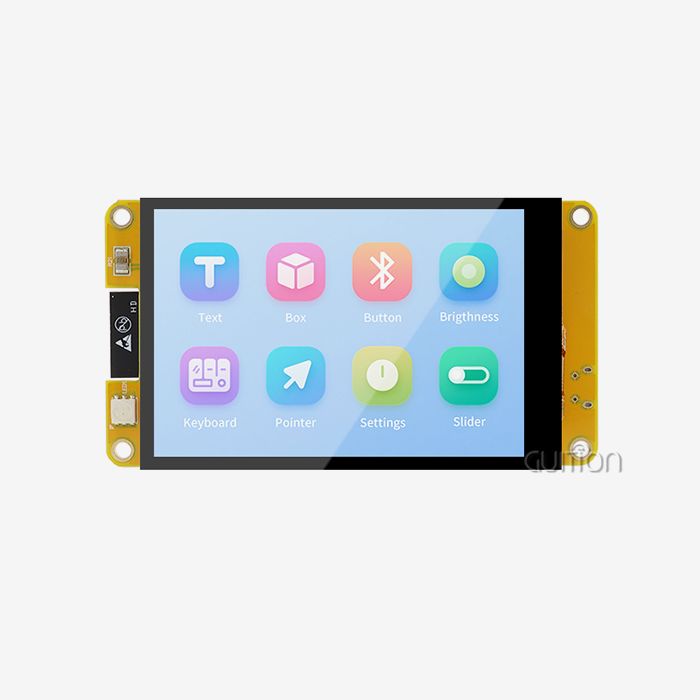
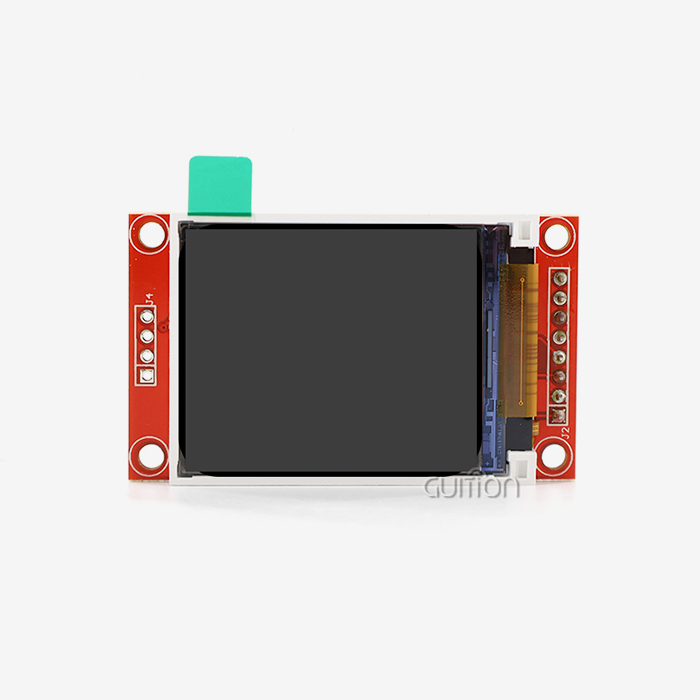
Take the GUITION JC2432S028R as a concrete example. This 2.8-inch resistive touch display module pairs a 240x320 display with the well-proven ILI9341 driver, communicating over a lean 4-wire SPI interface. What's notable here isn't just the specs on paper — it's how few resources this module demands from your main processor, leaving more headroom for the rest of your system to do its job without a fight over pins or bandwidth.
From Concept to Production: What Custom Manufacturing Really Means
"Custom" gets thrown around a lot in this industry, so it's worth unpacking what it should actually mean when you're choosing a manufacturing partner.
Tailoring Hardware to Your Application
No two products are identical, and a good manufacturer understands that a resistive touch display module built for a handheld diagnostic tool needs different trade-offs than one destined for a factory control panel. Real customization means adjusting the physical structure, connector layout, or touch sensitivity to match your actual use case, rather than handing you a generic module and asking you to design around its limitations.
Firmware and UI Built Around Your Workflow
Hardware is only half the story. The best resistive touch display module partners also hand you software tools that fit how your team already works — drag-and-drop UI builders, support for Arduino or IDF environments, and libraries of pre-built controls that save weeks of development time. When the software genuinely matches your workflow instead of forcing you to learn a rigid new system, projects move noticeably faster.
Scaling from Prototype to Full Production
A module that performs beautifully as a one-off prototype means little if it can't scale. Manufacturers who handle R&D, production, and quality control under one roof tend to deliver a resistive touch display module with far more consistency from the first unit to the ten-thousandth, because the same team that designed it is the one watching over the production line, catching issues before they ever reach your warehouse.
Real-World Applications Engineers Are Solving Right Now
It's easy to talk about specs in the abstract, but this technology only matters because of what it makes possible out in the field.
Factories That Never Stop
Walk onto almost any modern production floor, and you'll find a resistive touch display module quietly running control panels, monitoring dashboards, and process equipment interfaces. Operators wearing thick work gloves need something they can tap reliably without stopping to remove protective gear, and pressure-based touch simply handles that job better than most alternatives, shift after shift, in conditions that would frustrate a capacitive screen within days.
Devices That Save Lives
In hospitals and clinics, precision isn't a nice-to-have — it's the whole point. A resistive touch display module built into patient monitoring equipment or diagnostic devices gives clinicians a dependable way to interact with critical instruments, since deliberate pressure is required to register a touch, which meaningfully reduces the risk of an accidental input during a high-stakes moment.
Everyday Products You Might Not Expect
Beyond hospitals and factories, this same technology quietly powers products you might not immediately associate with industrial hardware. A resistive touch display module often sits behind automotive instrument clusters, EV charging stations, payment terminals, kitchen appliances, and handheld testing equipment — proof that solid, unglamorous engineering tends to show up everywhere once you start looking for it.
Choosing a Partner You Can Actually Rely On
Specs matter, but they only tell part of the story. The manufacturing partner behind those specs matters just as much.
Ask About Their Process, Not Just Their Products
Before signing on with any supplier, ask how they actually build a resistive touch display module — not just what the finished product looks like on a datasheet. Do they handle design, production, and quality control internally, or are pieces of the process outsourced to third parties they don't fully control? Vertical integration tends to translate into faster turnaround times and fewer surprises once your order is in production.
Reliability Isn't a Marketing Word
Every supplier claims their hardware is reliable, so it's worth pushing past the marketing copy and asking for real data. A trustworthy resistive touch display module should be built to recognized process standards, with documented testing procedures and honest warranty terms. Suppliers confident in their build quality are usually happy to share failure-rate data and testing methodology instead of deflecting the question.
Support That Doesn't Disappear After Shipping
The relationship shouldn't end the moment your order arrives. Look for a partner offering genuine technical support for their resistive touch display module — engineers who answer integration questions quickly, code examples that actually work out of the box, and a willingness to help troubleshoot problems that show up months after deployment, not just during the initial sales conversation.
Conclusion
In bespoke resistive touch display module projects, the optimal partner is defined by proven hardware, real customisation, and support that goes beyond the sale. Guition team, Jingcai Intelligence, has become a leading supplier of HMI display solutions with a product range from 1.28” to 21.5” and our self-developed Guition interface software that simplifies UI creation and speeds up product iteration. Designed to help your next project succeed from prototype to full production with secondary development assistance, remote updates, and multi-language capabilities.
FAQ
Q1: What makes a resistive touch display module different from a capacitive touch screen?
A: A resistive touch display module responds to physical pressure rather than electrical conductivity, so it works reliably with gloves, styluses, or bare fingers alike — a major advantage in industrial and medical settings where capacitive screens tend to struggle.
Q2: Can the module be customized for a specific application?
A: Yes, a good manufacturing partner can adjust the structure, firmware, UI, or hardware of a resistive touch display module to fit your exact use case, rather than expecting you to design your product around a fixed, off-the-shelf module.
Q3: How much system complexity does this type of module add?
A: Very little. Thanks to a lean 4-wire SPI interface, a resistive touch display module typically requires only a handful of IO pins, keeping your board design simple and leaving more resources available for other functions.
Q4: Does the module support expandable storage for interface assets?
A: Many versions include an integrated SD card slot, letting a resistive touch display module store configuration files, fonts, or application data without adding external memory chips to your design.
Q5: What should I expect from after-sales support?
A: Look for suppliers offering hands-on driver support, ready-to-use code examples, and remote upgrade capability — strong after-sales assistance for a resistive touch display module can save your team significant troubleshooting time once the product is out in the field.
Ready to Build a Custom Touch Display Module That Just Works?
If you're tired of touch hardware that can't handle real-world conditions, let's talk. Whether you need a compact resistive touch display module for a handheld device or a rugged solution built for industrial automation, Jingcai Intelligence and the Guition team bring genuine customization and hands-on engineering support to every project. Reach out at david@guition.com and tell us what you're building — we'll help you figure out the right module, the right firmware, and the right path from prototype to production.
References
1. International Society of Automation (ISA) – Human-Machine Interface Design Standards and Best Practices
2. Automation World – Trends in Industrial Touch Display and HMI Technology
3. Control Engineering Magazine – Selecting Touch Screen Hardware for Harsh Environments
4. IEEE Industrial Electronics Society – Publications on Embedded Touch Display Systems
5. Plant Engineering Journal – Evaluating Suppliers for Industrial Control Equipment
6. Embedded Computing Design – Guidelines for Selecting Resistive and Capacitive Touch Modules
Learn about our latest products and discounts through SMS or email