- English
- French
- German
- Portuguese
- Spanish
- Russian
- Japanese
- Korean
- Arabic
- Greek
- German
- Turkish
- Italian
- Danish
- Romanian
- Indonesian
- Czech
- Afrikaans
- Swedish
- Polish
- Basque
- Catalan
- Esperanto
- Hindi
- Lao
- Albanian
- Amharic
- Armenian
- Azerbaijani
- Belarusian
- Bengali
- Bosnian
- Bulgarian
- Cebuano
- Chichewa
- Corsican
- Croatian
- Dutch
- Estonian
- Filipino
- Finnish
- Frisian
- Galician
- Georgian
- Gujarati
- Haitian
- Hausa
- Hawaiian
- Hebrew
- Hmong
- Hungarian
- Icelandic
- Igbo
- Javanese
- Kannada
- Kazakh
- Khmer
- Kurdish
- Kyrgyz
- Latin
- Latvian
- Lithuanian
- Luxembou..
- Macedonian
- Malagasy
- Malay
- Malayalam
- Maltese
- Maori
- Marathi
- Mongolian
- Burmese
- Nepali
- Norwegian
- Pashto
- Persian
- Punjabi
- Serbian
- Sesotho
- Sinhala
- Slovak
- Slovenian
- Somali
- Samoan
- Scots Gaelic
- Shona
- Sindhi
- Sundanese
- Swahili
- Tajik
- Tamil
- Telugu
- Thai
- Ukrainian
- Urdu
- Uzbek
- Vietnamese
- Welsh
- Xhosa
- Yiddish
- Yoruba
- Zulu
OpenHASP Display vs Traditional HMI: Which Is Better?
When comparing an OpenHASP display against a traditional HMI, the honest answer depends on your project's demands. OpenHASP display systems built on ESP32 platforms offer open-source firmware, MQTT-driven logic, and dynamic UI updates without reflashing — advantages that directly cut development time and cost. Traditional HMIs deliver proven vendor support and robust industrial certifications. However, for engineering teams prioritizing flexibility, fast iteration, and smart connectivity, the OpenHASP display consistently delivers superior value. This article breaks down both approaches so you can make a confident procurement decision.

Understanding Traditional HMI and OpenHASP Display
What is a Traditional HMI?
For decades, traditional HMI panels have been the foundation of industrial automation. They have their own firmware, need software made by the vendor to set up, and usually come with locked hardware ecosystems. The buying process takes a long time, license fees add up, and changes to the user interface need the help of specialised contractors. These limits directly delay launches and increase budgets for small engineering teams or companies that make products quickly.
What Makes an OpenHASP Display Different?
An entirely different set of rules governs an OpenHASP display. The LVGL graphics engine renders interface objects on ESP32 hardware, and all business logic is sent to a central manager, which could be Home Assistant, Node-RED, or a custom MQTT broker. The interface is set up in a configuration file called pages.jsonl. This means that changes to the UI can be made quickly through text edits or MQTT messages, without the need to reflash. This design eliminates the compile-flash-test delay that irritates embedded teams working on tight deadlines.
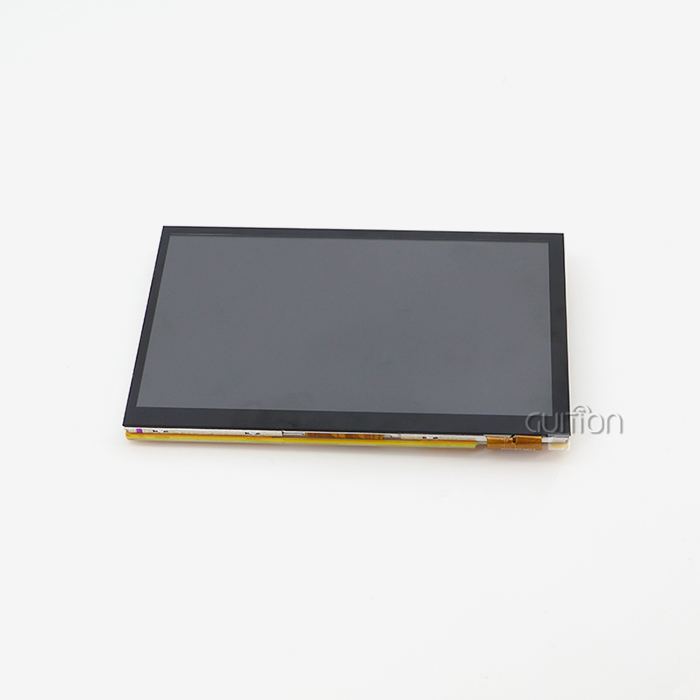
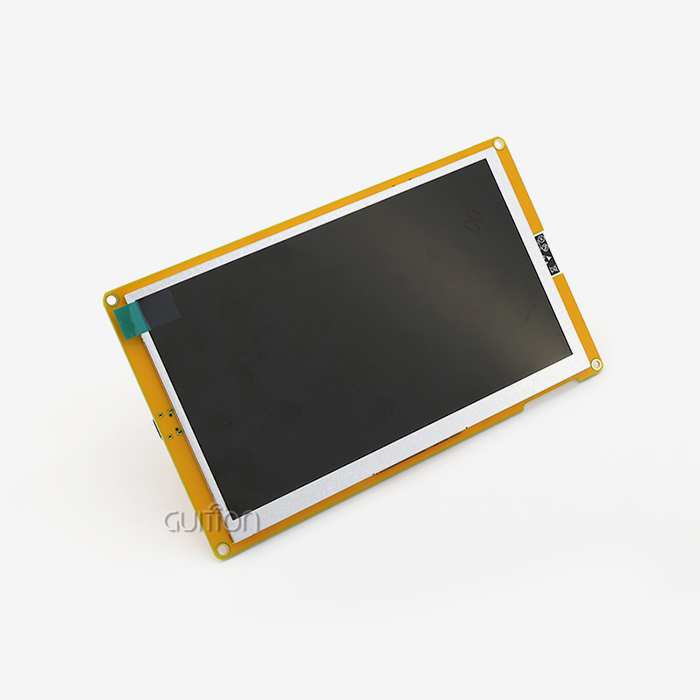
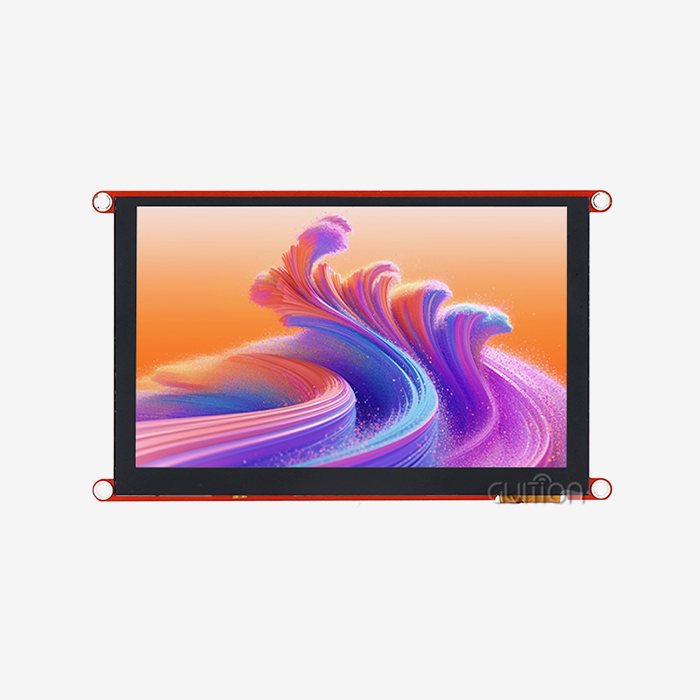
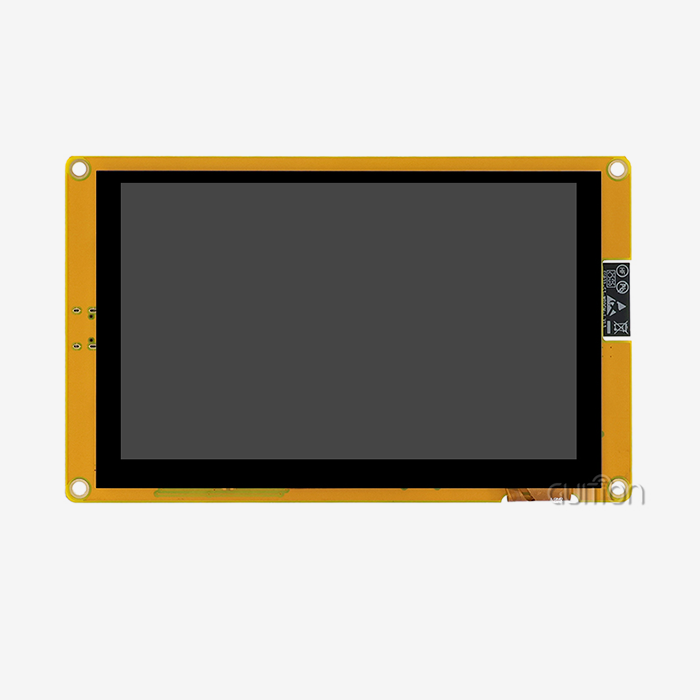
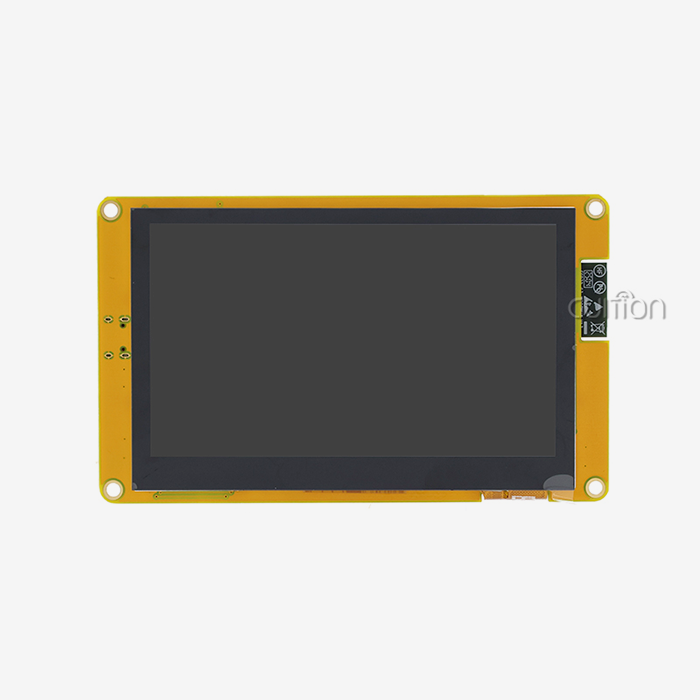
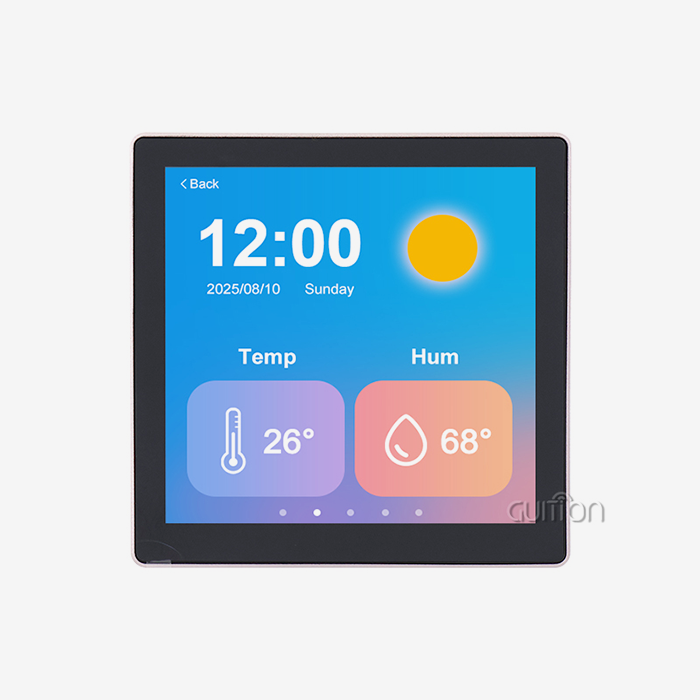
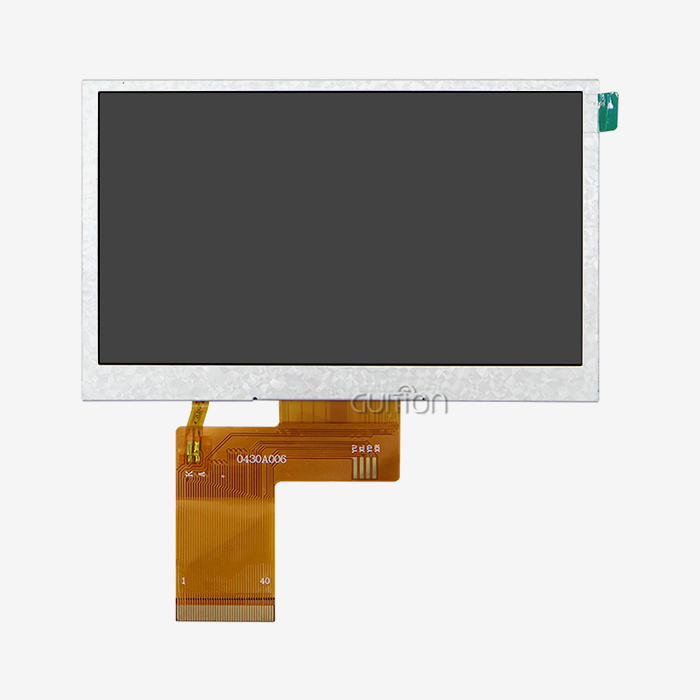
GUITION's ESP32-4848S040C_I_Y_1 represents this new generation. It has a 4-inch IPS TFT touchscreen with a resolution of 480×480, 8 MB of PSRAM, and 16 MB of Flash storage. The ESP32-S3R8 dual-core MCU runs at 240 MHz. With WiFi and Bluetooth built in, smart connection is native and not added on.
Core Differences Between OpenHASP and Traditional HMI
There is a big technical difference between these two methods that you should look into carefully before choosing a buying path.
Traditional HMIs use closed-source software from a single provider. When you update the UI, you usually have to schedule vendor help, buy upgrade rights, and put up with production downtime. OpenHASP display software is open, is managed by the community-managedder-the-air (OTA) updates directly. This is a huge benefit for industrial deployments that are spread out.
Another clear difference is the freedom of the hardware. You can't get out of traditional sellers' screens because they are proprietary and cost a lot. The OpenHASP display is based on ESP32 hardware that can be put together in different ways. It has GUITION modules that work with the Arduino IDE, ESP-IDF, MicroPython, and the GUITION development environment. This means that your tech team can work with known toolchains right away.
OpenHASP's display's MQTT-driven display architecture separates display design from embedded logic. Designers can make changes to layouts like button placement, color schemes, or gauge styles by editing a configuration file instead of hiring a firmware engineer. Most traditional HMIs have UI editors that are static and built on templates. These editors limit your ability to be creative and make iteration processes slow.
Evaluating Benefits and Challenges in a Procurement Context
In B2B automation, buying decisions depend on total cost of ownership, integration difficulty, and long-term vendor reliability. Here are the main benefits of an OpenHASP display option for buying that procurement managers should be aware of:
- No licensing fees: The software for OpenHASP display is free to use. Hardware is what you pay for, not IT seats. This difference alone can save a lot of money for large OEM operations.
- MQTT protocol compatibility: Industrial IoT, smart building, and energy control systems use the MQTT standard to communicate with each other. OpenHASP displays it. There is no need for proprietary middleware to connect to existing automation frameworks.
- Active developer community: Problems come up and are fixed more quickly in open-source environments. Documentation, community boards, and firmware changelogs are all open to everyone, so you don't have to rely on just one vendor's help desk.
- Scalable deployment: The configuration model scales linearly, so you don't have to worry about extra licence costs whether you're launching ten units or ten thousand.
These benefits can help automation integrators and OEM product teams save a lot of money on both initial capital costs and long-term maintenance costs. On the other hand, ongoing support costs are often built into service contracts for traditional HMIs. This makes it harder to predict the total cost of ownership over the lifecycle of a product.
The hardest part of OpenHASP display buying is finding a hardware source you can trust. For professional use, not all esp32 display modules have enough memory, are well-built, or have a software environment that works with them. GUITION directly fills this need as a company that only makes OpenHASP display modules and has strong hardware engineering and quick expert support.
Practical Setup and Maintenance Considerations
Deploying an OpenHASP Display Module
It's easy to set up a GUITION ESP32-4848S040C_I_Y_1 for the OpenHASP display function. The web installer lets you flash the OpenHASP display firmware. The built-in web interface lets you add your pages.jsonl interface file. Finally, you set up your WiFi passwords and MQTT broker location, and your display is ready to go. The module's TF card interface lets you store custom fonts and images locally, and its many I/O ports let you connect peripherals without using extra hardware.
OTA Maintenance and Iteration
In traditional HMI commissioning, you use private configuration software, USB-based programming cords, and vendor-specific driver installation. This takes a full engineering day of work before any test interactions happen.
The GUITION module lets maintenance teams push UI changes or firmware patches without sending out techs because it supports remote firmware and project updates. This feature lowers operational costs directly after the sale in applications that are spread out geographically, like commercial kiosks, energy management substations, and agricultural automation. Most traditional HMI panels require the seller for OTA routes. This means that remote maintenance is usually an extra cost and not something that comes with the panel.
Decision-Making Framework for B2B Procurement
Before choosing one platform over the other, procurement managers and system architects should look at four factors: the need for scalability, the difficulty of integration, the total cost of ownership, and the reliability of the supplier.
OpenHASP display options work great for projects that need to change the user interface quickly, be able to work on multiple platforms, integrate systems using MQTT, and grow without spending a lot of money. The ESP32-4848S040C_I_Y_1 from GUITION offers a range of display sizes for commercial terminals, medical monitoring interfaces, control panels, and smart appliances. Its 480×480 IPS screen is square, which works well with symmetrical UI layouts. This makes it look better on smart wearable docks, circular gauge displays, and current store payment stations.
Traditional HMIs are still useful in places that need industrial grades that are IEC-certified, deep PLC integration through private protocols, or long-term vendor SLA promises. For new projects that don't have to follow these rules, the OpenHASP display road gives a much better return on investment.
If you need OpenHASP display units in bulk, GUITION is the best place to contact directly. Their product line includes displays from 1.28" to 21.5" in size, so they can meet the needs of a wide range of applications while still working with the same provider.
Conclusion
The OpenHASP display model is a mature and adaptable alternative to traditional HMI systems for teams that value quick development, open ecosystems, and stable costs for buying things. The ESP32-4848S040C_I_Y_1 from GUITION has the tools that business deployments need: a dual-core ESP32-S3R8 processor, a 480×480 capacitive touch screen, 16 MB of flash memory, and WiFi and Bluetooth built in. Sometimes, traditional HMIs are still useful in highly regulated or legacy-integrated settings. But for most modern automation, smart home, medical device, and IoT projects, the OpenHASP display path is clearly better.
FAQ
Does the GUITION ESP32-4848S040C_I_Y_1 support OpenHASP firmware natively?
Yes. The ESP32-S3R8 processor, 16 MB Flash, and 8 MB PSRAM in the module are faster than the hardware recommended for OpenHASP displays.This ensures smooth full-screen transitions and good asset rendering..
How does an OpenHASP display communicate with industrial automation systems?
It uses MQTT, which is the standard lightweight messaging system in the business world. This lets it connect directly to Home Assistant, Node-RED, openHAB, and custom industrial MQTT brokers without using any proprietary middleware.
Can I use the GUITION module in Arduino IDE?
Of course. The module works with the Arduino IDE, ESP-IDF, MicroPython, and GUITION's own development environment. This gives your engineering team complete freedom when choosing toolchains.
What display sizes does GUITION offer?
GUITION's product line ranges from 1.28" to 21.5", making it suitable for everything from small personal screens to large industrial control panels.
Where can I source GUITION OpenHASP display modules for bulk orders?
For bulk pricing and help with purchases, email GUITION at david@guition.com or go to their official website at https://jingcaizhineng.aixdb.cn/.
Partner With Guition for Your Next OpenHASP Display Project
Guition offers a full range of OpenHASP display modules, from small 1.28" panels to large 21.5" industrial screens. These modules include cross-platform software support, can be upgraded over-the-air (OTA), and come with up-to-date technical documents. As an OpenHASP display supplier partner, our team is ready to help you whether you need a single evaluation unit or a bulk supply. You can email David at david@guition.com.
References
1. Severance, C. — IoT and MQTT Protocol in Industrial Automation, IEEE Internet Computing, 2020.
2. Maier, A. — Open-Source Embedded Systems for Industrial HMI Applications, Journal of Industrial Informatics, 2021.
3. Kranz, M. — Building the Internet of Things: Implement New Business Models, Wiley, 2016.
4. Cassagnes, N. et al. — LVGL: An Embedded Graphics Library for Constrained Devices, Embedded Systems Letters, 2022.
5. Patel, K. — Total Cost of Ownership in Industrial HMI Selection, Automation World, 2023.
6. Lueth, K. L. — IoT Analytics: State of the IoT Market Report, IoT Analytics GmbH, 2023.
Learn about our latest products and discounts through SMS or email