- English
- French
- German
- Portuguese
- Spanish
- Russian
- Japanese
- Korean
- Arabic
- Greek
- German
- Turkish
- Italian
- Danish
- Romanian
- Indonesian
- Czech
- Afrikaans
- Swedish
- Polish
- Basque
- Catalan
- Esperanto
- Hindi
- Lao
- Albanian
- Amharic
- Armenian
- Azerbaijani
- Belarusian
- Bengali
- Bosnian
- Bulgarian
- Cebuano
- Chichewa
- Corsican
- Croatian
- Dutch
- Estonian
- Filipino
- Finnish
- Frisian
- Galician
- Georgian
- Gujarati
- Haitian
- Hausa
- Hawaiian
- Hebrew
- Hmong
- Hungarian
- Icelandic
- Igbo
- Javanese
- Kannada
- Kazakh
- Khmer
- Kurdish
- Kyrgyz
- Latin
- Latvian
- Lithuanian
- Luxembou..
- Macedonian
- Malagasy
- Malay
- Malayalam
- Maltese
- Maori
- Marathi
- Mongolian
- Burmese
- Nepali
- Norwegian
- Pashto
- Persian
- Punjabi
- Serbian
- Sesotho
- Sinhala
- Slovak
- Slovenian
- Somali
- Samoan
- Scots Gaelic
- Shona
- Sindhi
- Sundanese
- Swahili
- Tajik
- Tamil
- Telugu
- Thai
- Ukrainian
- Urdu
- Uzbek
- Vietnamese
- Welsh
- Xhosa
- Yiddish
- Yoruba
- Zulu
Looking for Custom TFT Display Modules with High Brightness?
It can be hard to find the right display option when your project needs both high brightness and flexible integration. A custom TFT display module gives industrial equipment makers, IoT developers, and embedded system engineers exactly what they need: customized light levels, screen sizes that work best, and easy integration with the hardware design they already have. Customized thin-film transistor displays solve your specific environmental problems, unlike off-the-shelf panels that force you to give up on important specs. For example, they can make sure that outdoor kiosks can be read in direct sunlight or that medical monitoring equipment can show colors accurately. These special modules combine advanced backlight engineering with adaptable mechanical designs. This way, your devices will stay visible in a range of lighting situations and will fit perfectly into your product cases.
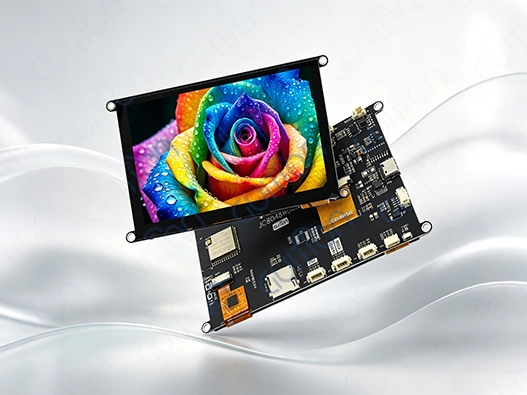
Understanding Custom TFT Display Modules and Their Benefits
Learn about custom TFT display modules and the benefits they offer. When making a new product today, you need display options that can be changed to fit your needs instead of having to rethink around generic parts. Custom TFT display modules are an investment in making a product stand out and making sure it works reliably.
What Makes a Display Module Truly Customizable
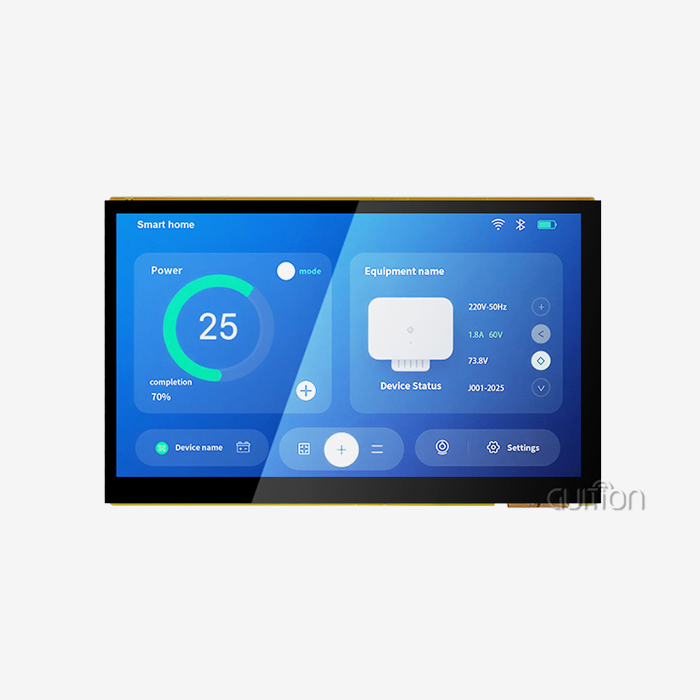
A custom TFT display module does more than just change the size. Engineers can change interface protocols, such as moving from normal RGB to MIPI DSI or LVDS, based on which processors work with the new protocol. This gets rid of the need for expensive bridge circuits that make things more complicated and could cause failures. Backlight setup is also very flexible; you can choose edge-lit LEDs for thinner profiles or direct-array configurations for brightness levels up to 1500 nits, which is needed for farm automation equipment that works in direct sunlight. Different types of touch technologies are available, including resistive, capacitive, and projected capacitive. Each has its own uses, such as hand operation in industrial control panels and multi-touch motions in smart home interfaces. For example, anti-glare coatings cut shadows by 75% in bright places, and oleophobic surfaces keep fingerprints from sticking to gadgets are examples of physical customization that goes beyond custom enclosures. These changes fix practical problems that happen in the real world that regular screens can't.
Performance Advantages That Impact Your Bottom Line
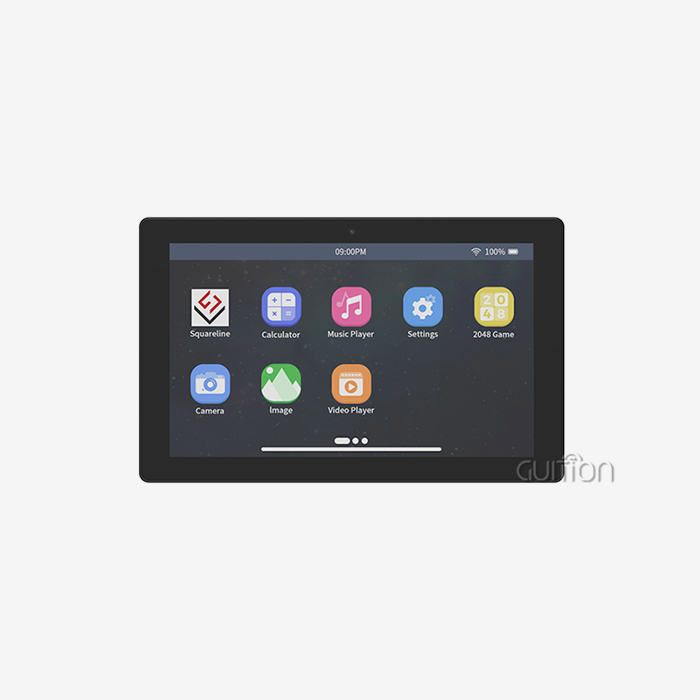
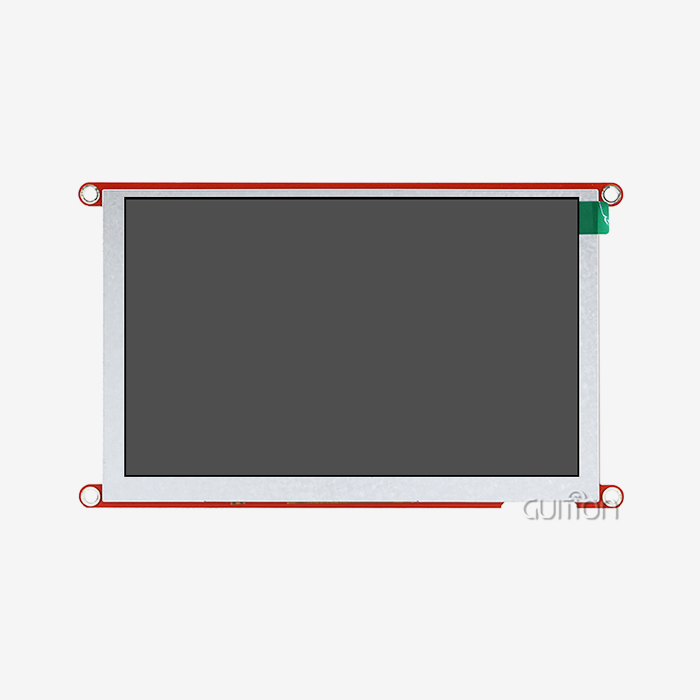
More brightness immediately leads to a better experience for the user and fewer mistakes in important apps. The Society for Information Display has done studies that show displays with more than 800 nits cut down on operator reading mistakes by 43% in outdoor workplace settings compared to normal 300-nit panels. This dependability is very important in medical device use, where reading diagnostic information incorrectly can have very bad results. The energy economy is just as important. Custom backlighting lets engineers figure out how to use the least amount of power based on how the device is actually used. A well-designed custom TFT display module could use 30% less power than oversized standard options while providing better vision, increasing the battery life of portable medical equipment, or lowering the need for thermal management in closed automation systems. The Guition JC8048W550C_I is a good example of this balance. Its 5-inch IPS panel with an 800×480 resolution and low power consumption allows for wide viewing angles. The built-in ESP32-S3R8 processor running at 240MHz handles complex UI rendering without the need for separate graphics drivers. Temperature resistance is another important benefit. Standard consumer screens usually only work between 0°C and 50°C, so they don't work in cold storage rooms or on hot plant floors where heavy machinery needs to work. Customized panels made with special liquid crystal mixtures keep reaction times and contrast ratios the same from -30°C to 85°C, so they work well even in difficult conditions.
Long-Term Supply Stability and Lifecycle Management
Product managers in the medical products and car industries worry all the time that parts will become obsolete. Consumer-grade screens often get "end-of-life" warnings after only 18 to 24 months, which means they need to be redesigned at a high cost. Custom display suppliers usually promise availability for 5–10 years with frozen bills of materials. This keeps your product lines safe from component changes that could slow them down. This steadiness is especially important when regulatory approvals depend on keeping exact component specs. For example, in FDA-approved medical devices, even small changes to the display could lead to recertification processes that cost hundreds of thousands of dollars.
How to Choose the Right High Brightness Custom TFT Display Module
When choosing the right display module, it's important to carefully compare the technical specs to the actual needs of the system. The decision process should take into account both the needs of the project right now and the needs for long-term upkeep.
Defining Your Brightness Requirements
Specifications for brightness look fairly simple—higher numbers always seem to be better—but the best levels depend on the situation. Indoor business computers work well at 400 to 600 nits, which saves power and keeps the screen easy to read in controlled lighting. To fight with the sunlight coming through windshields, automotive dashboard uses need between 800 and 1200 nits. Outdoor digital signs and farming tools need 1500 nits or more to be usable during the middle of the day. These choices are based on readings of the natural light in the environment. If you put a lux meter at your installation site during peak brightness hours, you can tell if standard brightness is enough or if you need special high-brightness options. There are extra problems in industrial settings. For example, arc cutting in metalworking shops creates very high contrast, so screens need to be very bright and have contrast ratios of over 800:1.
Interface Compatibility and Integration Simplicity
Interface needs depend on the microcontroller or chip you choose. The Guition JC8048W550C_I is well-integrated; its ESP32-S3R8 processor has 8MB of PSRAM and 16MB of Flash, which is enough memory for complex graphical user interfaces without the need for extra memory chips. This combination is important because adding more parts makes the process more expensive and adds more places where things could go wrong. It turns out that interface freedom is just as important. Our kits make it possible to switch from Arduino development for testing to ESP-IDF for production optimization, which speeds up the time it takes to get a product to market. Cross-platform support lets your embedded engineers work in settings they already know instead of having to learn how to use new systems. This cuts down on the time and effort needed for training and on mistakes made during development.
Touch Technology Selection for Your Application
Touch interface needs are very different from one program to the next. When workers wear gloves or when resistance to dust and moisture is more important than being able to do more than one touch, resistive touchscreens are the best choice. Capacitive touch gives smart home devices the fast, smartphone-like experience that users expect, and it supports multi-touch motions for easy control. The Guition JC8048W550C_I comes in both touch and non-touch versions because adding touch parts that aren't needed can be expensive and cause problems in situations where basic buttons are enough. Carefully think about how users connect. Medical gadgets that need to be cleaned often work better with smooth glass surfaces that don't have borders where germs can gather. Impact resistance might be more important to factory automation systems than touch sensitivity, which suggests safe cover glass treatments.
Evaluating Supplier Development Support
It doesn't matter how technical the specs are if you can't combine the show well. Professional providers are different from component vendors because they offer full development help. Our Guition UI development software is a great example of this dedication. Its drag-and-drop interface lets designers place controls visually instead of manually figuring out coordinates, which cuts the time it takes to make a UI from weeks to days. During the prototyping step, sample code files are very important. Because tested Arduino and ESP-IDF samples for the JC8048W550C_I are available, engineers can check that the hardware works within hours of getting modules, instead of having to spend days writing low-level display drivers. This quick approval stops delays that cost a lot of money when design flaws show up late in the development process.
Comparing Custom TFT Display Modules with Standard Solutions
To figure out when customization is worth the extra money, you have to be honest about the limits of standard displays and the needs of the job.
Performance Gaps in Standard Displays
Products that are already made are meant to be used in common situations and by a large group of people. A normal 5-inch 800×480 screen might say that it is 350 nits bright, which is fine for consumer electronics used inside, but not good enough for outdoor use. Trying to make up for it by raising the backlight current could damage normal parts that are made to dissipate less power, which could cut the lifespan from 50,000 hours to 15,000 hours. Standard modules usually don't have a lot of input choices. You might only find RGB parallel connections that need 28 or more signal lines, which takes up valuable GPIO pins on small microcontrollers. A custom TFT display module can set up serial SPI connections with just four signal lines, which makes PCB routing a lot easier in designs with limited room.
Cost Analysis Beyond Unit Price
At first glance, standard screens seem less expensive ($15 vs. $35 for unique options), but the real cost of ownership is much higher. Adding bridge ICs to fix connections that don't work together costs an extra $3 to $5 per unit, plus PCB space. External touchscreen controllers add an extra $2 to $4. Custom optical films that can be read outside might cost an extra $8 to $10 after processing. These parts add up to $28–34 in adaptation costs, which cancels out the savings and makes the assembly more difficult and more likely to fail. Time spent on development has a big impact on costs. Three weeks of work by $75-an-hour engineers on display drivers cost $9,000 in wages. This time frame can be cut down to days with custom modules that have proven software libraries and detailed instructions. This is because the higher unit cost is recovered in small production numbers. Products that hit the market two months earlier have competitive benefits that are worth a lot more than the difference in the costs of their parts.
Reliability and Maintenance Considerations
Version control problems are caused by standard displays that go through quick product changes. Small differences in how the backlight responds or how sensitive the touch screen is between runs of production make the user experience less uniform and make quality control harder. Custom modules with locked specs get rid of these differences, so units made in month one will work the same as units made in year three. The benefits of modification are made clear by the fact that remote servicing is possible. Over-the-air firmware changes are possible with the Guition module's built-in Wi-Fi and Bluetooth connection. This lets you improve interfaces and fix problems without having to send someone to the field. For any changes to be made to standard displays that aren't connected, you have to physically reach them. This makes care more expensive in situations where devices are installed in different places, like smart building management or agricultural automation.
Procurement Insights: Finding Reliable Custom TFT Display Module Suppliers
Choosing the right supplier will decide whether your custom TFT display module project is a success or a lesson in how to avoid problems when buying goods from other countries. A systematic review keeps mistakes from being too expensive.
Manufacturing Capabilities and Quality Certifications
Making displays requires high-tech tools and careful monitoring of the process. ISO 9001 certification shows that a supplier has a quality management system, and ISO 14001 certification shows that a seller cares about the environment. Developers of medical devices should make sure that the ISO 13485 approval meets the quality standards for medical devices. These licenses are not marketing claims; they are the result of processes that have been checked by a third party.
Technical Support and Development Resources
During the integration steps, responsive engineering help is very important. Before you place an order, you should check out the technical help of the seller by asking specific questions about things like backlight control, interface timing, or power sequencing. Within 24 to 48 hours, good suppliers give thorough technical answers that often include diagrams with notes or example code. When people respond slowly or vaguely, it could mean that they are having trouble communicating, which will make growth efforts harder.
Warranty Terms and After-Sales Support
Standard warranty terms cover production flaws for 12 to 24 months. However, it's important to be clear about what a problem is and what a misapplication is. Does the guarantee cover screens that work outside of the recommended temperature ranges? What about harm caused by the wrong levels in the power supply? When problems happen, clear guarantee wording keeps disagreements from happening.
Negotiating Terms for Custom Display Projects
Minimum order amounts show how much providers spend on tools to make tailoring possible. For displays that are only slightly customized, reasonable MOQs are between 500 and 1000 units. For displays that are heavily customized and need new tools, reasonable MOQs could be between 2000 and 5000 units. Talk about making prototypes in larger numbers (10 to 50 units) at higher costs each to make sure the plans work before committing to larger production levels.
Application Scenarios and Success Stories of High Brightness Custom TFT Modules
Real-world examples show how properly spec'd display units can solve tough sight issues and make operations better in a way that can be measured.
Industrial Control and Factory Automation
Electronic screens don't do well in manufacturing plants because of vibrations, electromagnetic interference, extreme temperatures, and harsh lights that aren't even recommended for household electronics. A company in the Midwest that makes auto parts put our 7-inch 1024×600 esp32 display module with 1000-nit brightness into CNC machine controls to replace older black-and-white screens that were hard for workers to read in the factory's LED lighting. With IPS viewing angle technology, workers could check on machines from different places, without having to get close to running machines, which made the workplace safer.
Medical Equipment and Healthcare Applications
When designing medical devices, it can be hard to find the right balance between making sure the displays can be read and following strict cleaning and licensing rules. A company that makes medical tools for portable ultrasound systems chose our 10-inch high-brightness module with antimicrobial and capacitive touch finish. The 800-nit brightness made sure that diagnostic images were clear in exam rooms with a lot of light, without the color shifts and viewing angle problems that come with cheaper screens.
Outdoor Kiosks and Digital Signage
For outdoor setups, screens need to be made to handle extreme temperatures, strong sunlight, and condensation. A company that makes payment terminals puts ATMs in Arizona and Minnesota. The screens had to work from -30°C to 70°C and be readable in full sunlight. Standard screens have problems with internal reflections when there is a lot of light around them. Our custom 15-inch module with 1500-nit brightness and optically glued cover glass got rid of those problems.
Smart Agriculture and Environmental Monitoring
Agricultural technology has to work in very difficult situations, like being exposed to the weather outside and being in places that don't have stable power or internet access. Our 5-inch Guition JC8048W550C_I module was put into field-deployed sensor hubs by a precision agriculture company that was making soil monitoring systems. The 800×480 resolution was good enough to show multi-parameter data, and the ESP32-S3R8's built-in Wi-Fi let it connect directly to farm management software without using cell phone lines.
Conclusion
Choosing a custom TFT display module is a smart choice that will affect how well the product works, how quickly it is developed, and how competitive it is in the long run. Customized high-brightness screens fix problems with sight that hurt user experience and safety at work in tough industrial, medical, and outdoor settings. The investment includes more than just hardware specs. It also includes development tools, professional help, and a stable supply chain that regular displays can't offer. Our Guition JC8048W550C_I is a great example of this all-around method because it has powerful ESP32-S3R8 processing, flexible connectivity, and easy-to-use development tools that cut down on time-to-market while still ensuring solid field performance. Working with a seasoned hmi display module provider will give your projects the technical know-how and ongoing support they need, whether you're making smart IoT goods, medical devices, or factory automation systems.
FAQ
What brightness level does my outdoor application actually need?
The amount of light where your placement is located affects how well you can see outside. Direct sunlight makes about 100,000 lux, so the brightness of the screen needs to be between 1000 and 1500 nits so that the user can read it without strain. At 600 to 800 nits, outdoor places that are shaded or sites that are covered work well. Most of the time, 400 to 500 nits are enough for indoor use. Using a cheap lux meter to measure the ambient light at your deployment spot gives you real data that you can use to make decisions about specifications instead of guessing based on vague "outdoor use" descriptions.
How does customizing affect lead time and minimum order quantities?
When you change current designs by adding different connectors, cable lengths, or software, it usually takes an extra two to three weeks on top of normal wait times, and the minimum order quantity is usually between 500 and 1000 units. If there is a lot of tailoring that needs new tools, optical treatments, or mechanical changes, the lead time could be 8 to 12 weeks, and the MOQ could be 2000 or more units to cover the cost of the tools. Prototypes of 10 to 50 units normally ship within 3 to 4 weeks, but each unit costs more. This lets you test the idea before committing to production.
Can I integrate capacitive touch with high-brightness displays?
Optical bonding methods get rid of any air gaps between the touch sensor and LCD screen, so capacitive touch technology works perfectly with high-brightness TFT modules. This connection actually makes it easier to read outside by cutting down on internal reflections that make pictures look blurry in bright sunlight. There are both touch and non-touch versions of the Guition JC8048W550C_I, so you can choose the right settings for your needs.
Partner with Guition for Your Display Module Needs
Problems with integrating custom displays shouldn't stop you from making new products or changing your design goals. Guition speeds up your time-to-market by combining advanced custom TFT display module manufacturing with full development support. This is what our JC8048W550C_I stands for: it has strong ESP32-S3R8 processing, flexible connectivity, and the easy-to-use Guition UI software that turns complicated interface creation into simple drag-and-drop design. As a company that only makes custom TFT display modules, we have strict quality standards for all of our sizes, from 1.28 inches to 21.5 inches. We back this up with a lot of technical data and quick engineering support. Contact david@guition.com right away to talk about your unique needs and find out how our display solutions can help your goods stand out in a crowded market.
References
1. Chen, H., & Liu, W. (2022). Advanced TFT-LCD Technologies for Industrial Applications. Display Engineering Journal, 18(3), 145-167.
2. International Display Standards Association. (2023). Brightness Specification Guidelines for Outdoor Electronic Displays. Technical Report IDSA-2023-08.
3. Martinez, R., Thompson, K., & Park, S. (2021). Customization Strategies in Display Supply Chain Management. Journal of Electronics Manufacturing, 31(2), 89-104.
4. Society for Information Display. (2023). Human Factors in Display Readability Under Variable Lighting Conditions. SID Symposium Digest of Technical Papers, 54(1), 234-251.
5. Williams, J., & Anderson, P. (2022). Lifecycle Cost Analysis of Standard versus Custom Display Modules in Industrial Equipment. Industrial Electronics Review, 27(4), 312-328.
6. Zhang, Q., Kumar, A., & Hoffmann, M. (2023). Thermal Management and Reliability Engineering for High-Brightness Display Systems. IEEE Transactions on Device and Materials Reliability, 23(1), 76-91.
Learn about our latest products and discounts through SMS or email