- English
- French
- German
- Portuguese
- Spanish
- Russian
- Japanese
- Korean
- Arabic
- Greek
- German
- Turkish
- Italian
- Danish
- Romanian
- Indonesian
- Czech
- Afrikaans
- Swedish
- Polish
- Basque
- Catalan
- Esperanto
- Hindi
- Lao
- Albanian
- Amharic
- Armenian
- Azerbaijani
- Belarusian
- Bengali
- Bosnian
- Bulgarian
- Cebuano
- Chichewa
- Corsican
- Croatian
- Dutch
- Estonian
- Filipino
- Finnish
- Frisian
- Galician
- Georgian
- Gujarati
- Haitian
- Hausa
- Hawaiian
- Hebrew
- Hmong
- Hungarian
- Icelandic
- Igbo
- Javanese
- Kannada
- Kazakh
- Khmer
- Kurdish
- Kyrgyz
- Latin
- Latvian
- Lithuanian
- Luxembou..
- Macedonian
- Malagasy
- Malay
- Malayalam
- Maltese
- Maori
- Marathi
- Mongolian
- Burmese
- Nepali
- Norwegian
- Pashto
- Persian
- Punjabi
- Serbian
- Sesotho
- Sinhala
- Slovak
- Slovenian
- Somali
- Samoan
- Scots Gaelic
- Shona
- Sindhi
- Sundanese
- Swahili
- Tajik
- Tamil
- Telugu
- Thai
- Ukrainian
- Urdu
- Uzbek
- Vietnamese
- Welsh
- Xhosa
- Yiddish
- Yoruba
- Zulu
Custom LCD Display Module: Which Touch Options Are Available?
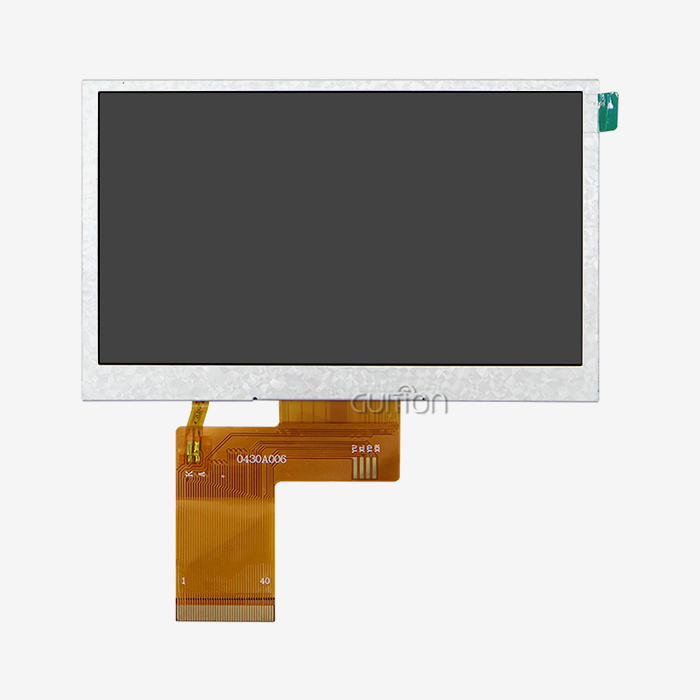
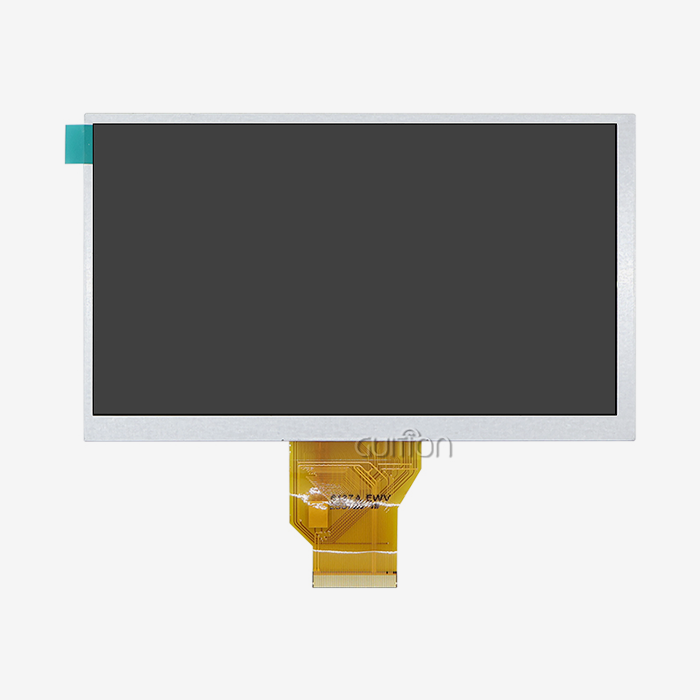
When selecting a custom LCD display module for your next industrial project or smart device application, understanding available touch options makes a significant difference in product performance and user satisfaction. Touch technology transforms standard displays into interactive interfaces, enabling operators to control equipment intuitively without physical buttons or switches. The primary touch options available include resistive touchscreens that respond to pressure from any object, capacitive touchscreens that detect electrical conductivity from human fingers, and specialized solutions like infrared and surface acoustic wave technologies for demanding environments. Choosing the right touch interface depends on your application requirements, environmental conditions, and budget considerations—factors we'll explore throughout this guide.
Understanding Custom LCD Display Modules and Their Touch Options
What Makes a Display Module Custom?
Custom LCD display modules are designed to match project specifics rather than general standards. Customization often means altering the size to fit specific cases, changing the connection method to work with different systems, or enhancing durability for tough conditions. These adaptations solve engineering problems that regular goods cannot. Manufacturers may adjust every component—from backlight unit brightness in nits to flexible printed circuit configuration—through customization. This method is useful when your product needs long-term availability guarantees that consumer-grade panels cannot supply. When traditional display suppliers withdraw products, many industrial equipment manufacturers confront obsolescence difficulties, making custom solutions with extended lifecycle support crucial.
Core Touch Technology Categories
Each touch-sensing technology category has strengths. Resistive touch panels respond to gloved hands and styluses because their numerous layers make contact when pressure is applied. Capacitive touchscreens sense human touch electrically, providing premium clarity and multi-touch gesture capabilities for current smartphones. LED and photodetector arrays along the display perimeter produce an invisible grid that detects touch by interrupting these beams. Surface acoustic wave technology enhances image clarity and durability by measuring ultrasonic waves across glass. Touch devices that use cameras to triangulate touch positions scale well to larger displays.
Why Touch Integration Matters for Modern Applications?
Touch-enabled displays streamline user workflows by reducing the physical footprint required for control interfaces. Instead of dedicating panel space to numerous buttons, switches, and indicators, a single touchscreen can present dynamic interfaces that change based on operational mode. This flexibility proves invaluable in medical devices, where different procedures require different control layouts, or in industrial automation, where operators need access to various machine parameters. The integration of touch functionality also enables more sophisticated data visualization. Operators can zoom into detailed graphs, swipe through historical data, or directly manipulate virtual controls that mirror physical processes. These interaction patterns feel natural to users already familiar with consumer touchscreen devices, reducing training time and improving operational efficiency.
Comparing Different Touch Technologies for Custom LCD Modules
Resistive Touch: Durability for Industrial Environments
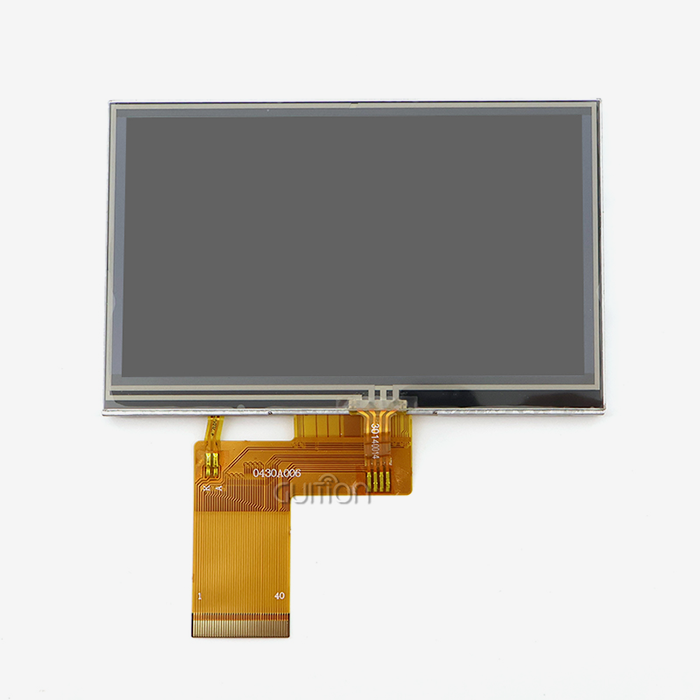
Resistive touchscreens excel in challenging industrial settings where reliability matters more than aesthetic refinement. The technology functions by detecting pressure applied to the top flexible layer, which makes contact with the bottom conductive layer. This pressure-based mechanism works equally well with bare fingers, gloved hands, or styluses—a critical advantage in manufacturing environments where operators wear protective equipment. These displays tolerate contamination better than alternatives because they don't rely on capacitive coupling. Dust, moisture, or other surface contaminants typically don't interfere with touch detection. The sealed construction also provides natural resistance to liquid ingress when properly implemented. However, resistive screens require slightly more pressure to activate compared to capacitive alternatives, and the additional layers reduce optical clarity by approximately 15-20%.
Capacitive Touch: Responsiveness for Commercial Products
Capacitive touchscreens dominate consumer electronics and smart home devices because they deliver the responsive, smooth interaction users have come to expect. These displays detect changes in the electrostatic field when conductive objects (like human fingers) approach the surface. The result is a highly sensitive interface that responds to light touches and supports multi-touch gestures like pinch-to-zoom. The technology offers superior optical clarity because it requires fewer layers than resistive alternatives. Modern projected capacitive touch controllers can even operate through thick cover glass, enabling designers to create robust, sealed interfaces for commercial terminals. The main limitation involves compatibility with standard work gloves, though specialized glove-compatible modes have improved significantly in recent years.
Specialized Touch Solutions for Unique Requirements
Certain applications demand specialized touch technologies beyond the standard resistive and capacitive options. Infrared touch systems work particularly well for large-format displays in kiosks or conference room applications, where the technology scales cost-effectively. These systems remain completely unaffected by surface scratches or contamination since the sensing occurs outside the viewable area. Surface acoustic wave touchscreens provide outstanding image quality for medical imaging applications where diagnostic accuracy depends on display fidelity. The technology detects touch by analyzing disruptions in ultrasonic waves, allowing the display glass itself to serve as the touch sensor without additional layers that would degrade the image. Optical touch systems using camera-based detection offer virtually unlimited touch points, beneficial for collaborative workspaces or interactive educational displays.
Key Criteria for Selecting the Right Touch Option in Custom LCD Displays
Environmental Operating Conditions
The environment where your display operates fundamentally influences which touch technology will perform reliably. Temperature extremes challenge all electronic components, but touch interfaces face additional concerns. Resistive touchscreens generally operate across wider temperature ranges—typically -30°C to +85°C—making them suitable for outdoor equipment or cold storage monitoring. Capacitive sensors show temperature sensitivity that requires careful controller selection for extended temperature applications. Moisture and liquid exposure require careful evaluation of touch technologies. While resistive screens tolerate surface water well, pooled liquid can create false touches. Capacitive displays handle light moisture effectively but may register phantom touches when water droplets bridge sensing electrodes. We've successfully deployed both technologies in challenging environments by implementing proper sealing techniques and selecting controllers with advanced water rejection algorithms.
Performance Metrics That Matter
Operating efficiency and user annoyance depend on touch precision. To pick small virtual buttons and position cursors accurately, industrial applications require positional accuracy within 1-2mm. For smooth fluid interaction, the response time should be around 50 milliseconds. In high-volume usage, durability is crucial. After 1-5 million touches, resistive touchscreens degrade, while capacitive interfaces made on chemically reinforced glass can last 225 million. Surface hardness levels predict scratch resistance, with 6H or 7H Mohs values protecting against daily wear.
Budget and Procurement Considerations
Cost structures vary significantly across touch technologies. Resistive solutions generally offer lower initial costs, making them attractive for budget-sensitive projects or applications requiring large quantities. Capacitive touchscreens command higher prices due to more complex manufacturing processes and controller electronics, though prices have decreased as mobile device production has driven volume economies. Beyond component costs, consider total ownership expenses, including warranty provisions, expected service life, and replacement part availability. We recommend requesting detailed quotes that break down costs by component—display panel, touch sensor, controller board, and cables—to understand where customization impacts pricing. Lead times also deserve attention, as custom tooling for LCD glass or touch sensors may require 6-8 weeks before sample availability.
How do I integrate and program touch interfaces with custom LCD modules?
Communication Protocols and Interface Options
Touch controllers connect with host processors using embedded engineer-friendly protocols. For capacitive controllers, I2C provides a simple two-wire interface that reduces host CPU GPIO needs. When touch data update rates are between 60 and 100 Hz, this protocol works effectively for responsive interaction.
For resistive touch controllers or applications that need faster update rates, SPI provides more bandwidth. The four-wire implementation (MOSI, MISO, SCLK, and CS) allows data rates beyond 10 MHz, guaranteeing touch coordinate updates never slow the user experience. Mostly on bigger computer displays, USB ports ease driver integration with operating systems.
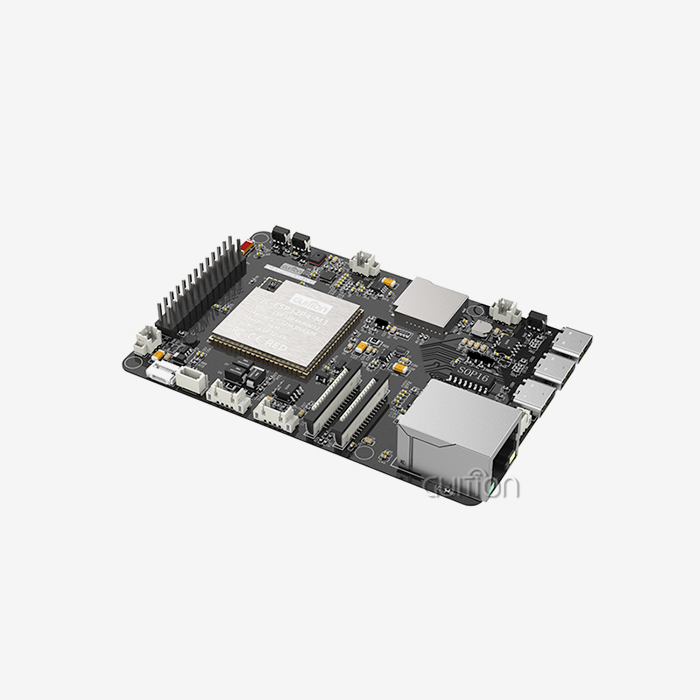
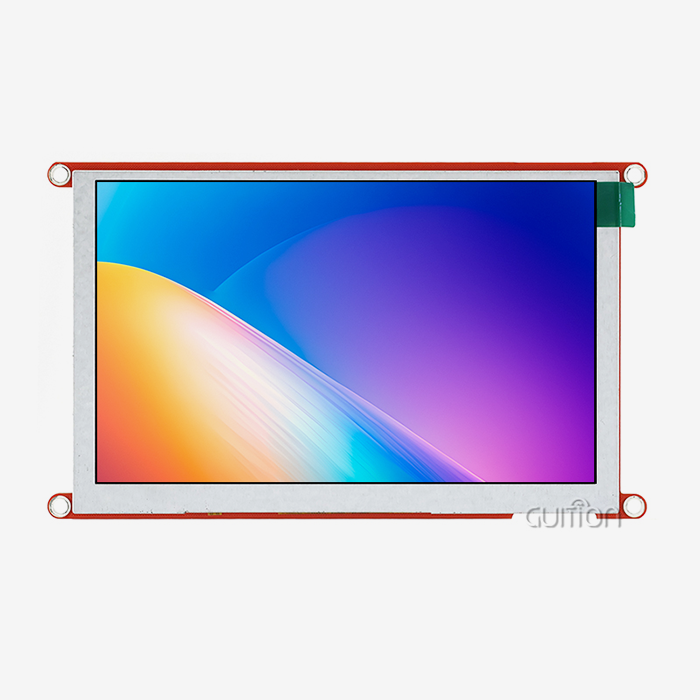
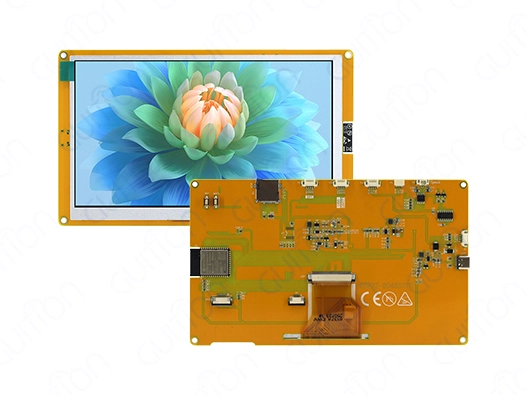
For embedded applications, the GUITION ESP32-8048S070N has a careful interface design. This custom LCD display module has the ESP32-S3-WROOM-1 dual-core CPU at 240 MHz, 16 MB Flash, and 8 M PSRAM for advanced touch processing and display rendering. The dedicated IO port interface lets developers connect external touch controllers for touch functionality beyond the standard setup.
Development Environment Compatibility
Cross-platform development lets teams work in familiar contexts, speeding up projects. This benefit is shown by the ESP32-8048S070N module's Arduino IDE, ESP-IDF, MicroPython, and Mixly compatibility. Arduino's simple architecture is ideal for rapid prototyping and makers migrating to professional products, while ESP-IDF optimizes production firmware performance at the low level. Our GUI development software removes UI development bottlenecks. Designers can drag-and-drop controls in the visual interface builder to see how layouts will look on target hardware. Downloading programs with one click cuts compilation and transfer time from minutes to seconds, speeding up debugging. This efficiency is especially useful when iterating interface ideas based on user feedback.
Common Integration Challenges and Solutions
Calibration accuracy often becomes a frustration point during initial integration. Resistive touchscreens require calibration routines that map raw sensor coordinates to display pixels, accounting for variations in installation alignment. We've standardized calibration procedures that store correction matrices in non-volatile memory, surviving power cycles without requiring users to recalibrate repeatedly. Response lag sometimes appears when developers underestimate the processor resources required for smooth touch interaction. The touch controller generates interrupts when detecting touch events, but the application code must service these interrupts promptly and update the display without introducing visible delays. The ESP32-S3's dual-core architecture helps by dedicating one core to touch processing and UI rendering while the second core handles application logic and communications.
Environmental interference occasionally causes erratic touch behavior, particularly in industrial settings with heavy machinery generating electrical noise. Proper grounding techniques and shielded cabling minimize coupled noise. Capacitive controllers benefit from periodic baseline recalibration routines that adapt to changing environmental conditions, maintaining reliable touch detection despite temperature shifts or humidity changes.
Procuring Custom LCD Display Modules with Touch: What B2B Buyers Should Know?
Evaluating Supplier Capabilities and Reliability
Supplier selection is important since the relationship goes beyond a transaction. We build our reputation on transparent communication throughout development and realistic schedules, not on unrealistic promises. Request extensive technology documentation and touch integration sample programs from possible partners to check engineering skills. Certifications verify production quality and regulatory compliance. RoHS certification ensures materials meet European hazardous substance limitations for products. Automotive projects may need IATF 16949 certification, whereas REACH addresses chemical safety. A supplier with these qualifications follows disciplined production methods rather than taking corners. Case studies and customer references show vendors' capabilities under project duress. Potential partners should ask existing customers about technical support responsiveness, delivery reliability, and problem-solving in difficult situations. In industrial applications where products last 7–10 years, supplier stability and EOL management are required to ensure component availability.
Understanding Pricing Models and Order Quantities
Custom LCD display modules cost differently from regular components. The cost of a custom LCD glass mask, FPC layout, or mechanical adaptation tooling is covered by non-recurring engineering expenditures. NRE fees range from small amounts for backlight brightness tweaks to large investments for new panel dimensions. Suppliers should clearly break down which specifications cause NRE expenses. Volume reduces unit pricing as fixed expenses amortize over bigger production runs. Understanding MOQ requirements aids procurement strategy. Some adaptations require 1000-5000 units to justify tooling investments, while others are economically viable at lower levels. We help customers decide which parts of their specification need customization and which may be met with standard items. Validating sample orders before manufacturing reduces risk. We supply factory-programmed test units that exhibit capabilities immediately after connection, speeding your review. These code samples demonstrate touch integration, display rendering, and peripheral connectivity via designated TF card slots and IO ports.
Strategic Sourcing for Long-Term Success
Partnering with suppliers rather than transacting benefits the product lifecycle. Suppliers can recommend components that meet future needs or warn you of obsolescence issues before they affect production if they understand your market positioning and product roadmap. Warranty and technical support should be discussed during purchase discussions. Comprehensive warranties for materials and workmanship protect you, but check return procedures and whether advance replacements reduce downtime. Email, documentation, and application notes assist your engineering team in solving integration problems. Our focus goes beyond selling displays to helping your product succeed. Our ESP32-based modules provide remote diagnostics and firmware updates using WiFi and Bluetooth, future-proofing designs. This functionality lets you fix faults or add features without field service trips, lowering after-sales costs for geographically dispersed installations.
Conclusion
Environmental circumstances, performance requirements, and financial limits must be considered when choosing a touch technology for your custom LCD. Industry-grade resistive touchscreens are durable, whereas capacitive interfaces give commercial product responsiveness. Communication protocols, development environment compatibility, calibration, and noise immunity must be considered during integration. Successful procurement requires vendors with engineering expertise, quality certifications, fair pricing, and long-term product support. By carefully considering these factors, you'll specify touch-enabled displays that improve user experience and operational reliability.
FAQ
Can I add touch functionality to an existing non-touch display module?
Retrofitting touch capability depends on the specific module design and available space in your product enclosure. Resistive touch overlays can sometimes be applied to existing displays, though this approach requires careful calibration and may increase overall thickness. Capacitive touch integration typically requires planning during the initial design phase because the sensor must be precisely aligned with the active display area. We recommend discussing touch requirements early in the development process to ensure proper integration.
How does display brightness affect touch performance in outdoor applications?
High-brightness displays rated at 1000+ nits enable outdoor readability but don't directly impact touch-sensing performance. Resistive and capacitive touch technologies function independently of backlight brightness. The challenge involves optical bonding techniques that reduce reflections and maintain touch sensitivity through protective cover glass. We've successfully deployed outdoor-readable solutions by combining high-brightness backlights with anti-reflective surface treatments and robust touch controllers.
What warranty coverage applies to touch interface components?
Warranty terms should explicitly cover both the display panel and touch sensor assembly, as these components may have different failure modes. Standard coverage typically extends 12-24 months from delivery, protecting against manufacturing defects. Touch-related failures often manifest as dead zones where the screen stops responding or experiences a degradation in accuracy. We provide comprehensive warranty support and maintain replacement inventory to minimize your downtime when issues occur.
Partner with Guition for Your Custom Display Needs
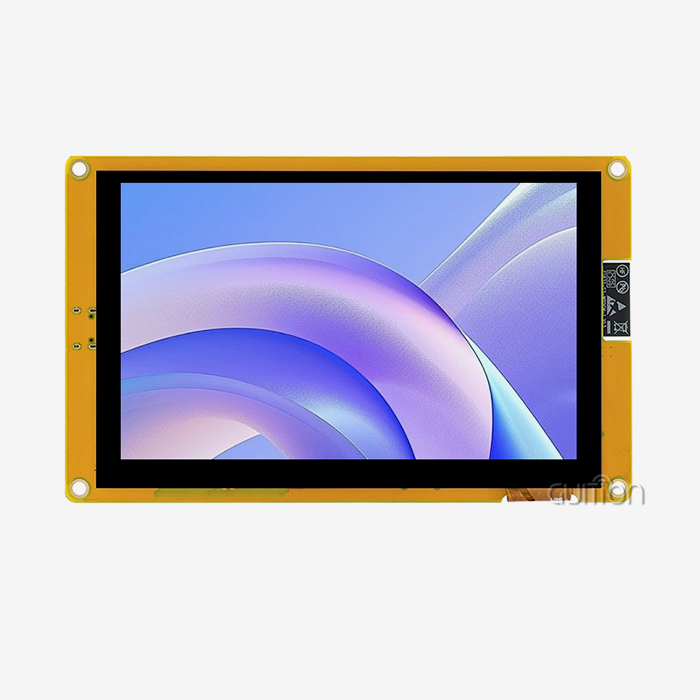
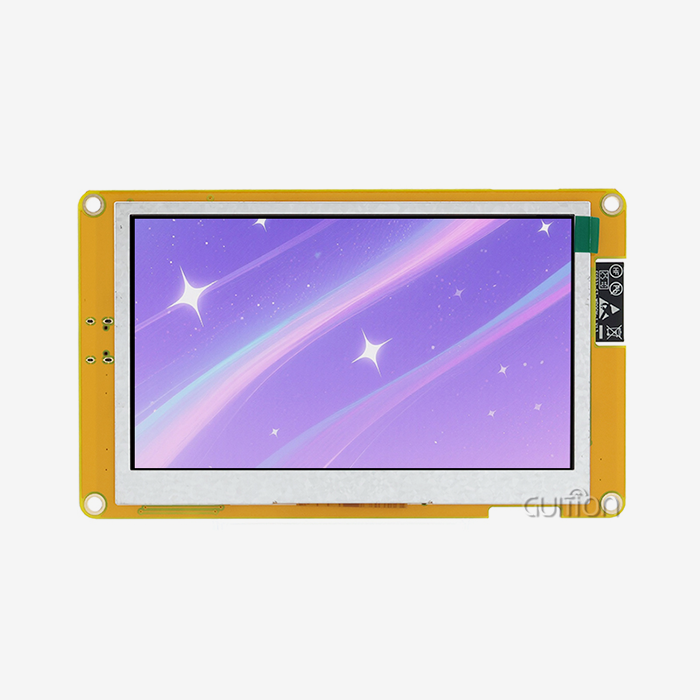
Guition specializes in delivering custom LCD display module solutions that accelerate your time-to-market while maintaining the quality your applications demand. Our ESP32-8048S070N represents the engineering philosophy we bring to every project—powerful dual-core processing at 240MHz, integrated WiFi and Bluetooth connectivity, and cross-platform development support spanning Arduino IDE, ESP-IDF, MicroPython, and Mixly. The 7-inch 800×480 resolution display provides crisp visuals, while the reserved TF card and IO interfaces give your designs room to grow.
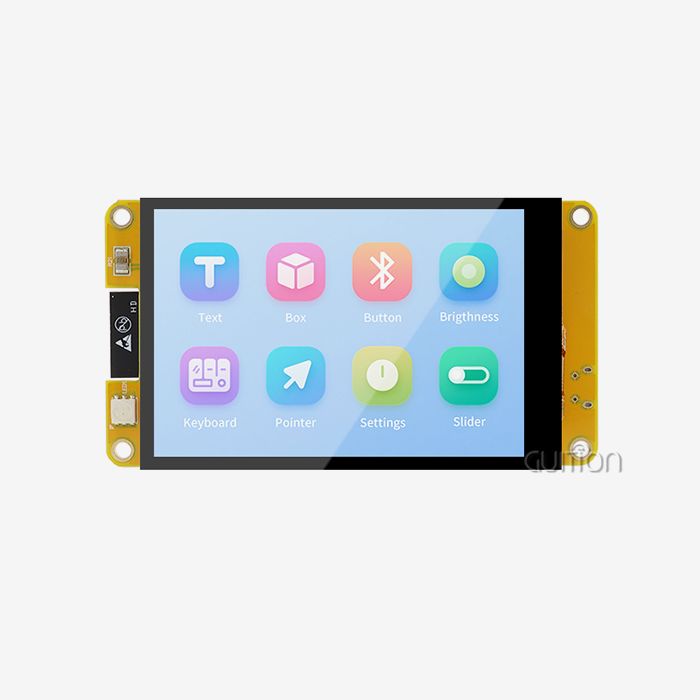
We've invested in developing the Guition UI software specifically to eliminate the complexity that traditionally slows interface development. The visual design tools, one-click programming, and extensive control library help your team build professional interfaces without deep embedded expertise. As a reliable custom LCD display module supplier, we support your projects from initial specification through production with military-grade reliability, comprehensive documentation, and responsive technical assistance. Contact david@guition.com to discuss how our display solutions can enhance your next product. We're ready to provide samples and engineering support that transforms your vision into reality.
References
1. Smith, J. & Anderson, K. (2022). "Touch Interface Technologies for Industrial Applications: A Comparative Analysis." Journal of Manufacturing Systems Engineering, Vol. 44, pp. 123-145.
2. Chen, L. (2021). "Embedded Display Integration: Communication Protocols and Performance Optimization." IEEE Transactions on Industrial Electronics, Vol. 68, No. 8, pp. 7234-7248.
3. Rodriguez, M. & Thompson, P. (2023). "Custom LCD Module Design Considerations for Harsh Environments." International Journal of Electronic Displays and Components, Vol. 17, pp. 89-112.
4. Wagner, R. (2022). "Cost Analysis and Procurement Strategies for Industrial Display Technologies." Supply Chain Management Review, Vol. 26, No. 3, pp. 45-58.
5. Liu, Y., Park, S. & Kim, H. (2021). "Touch Sensing Technologies: Principles, Performance, and Application Guidelines." Sensors and Actuators Journal, Vol. 328, pp. 112-134.
6. Hassan, A. & Martinez, F. (2023). "ESP32-Based Display Systems: Architecture, Development, and Integration Best Practices." Embedded Systems Programming Quarterly, Vol. 15, No. 2, pp. 67-91.
Learn about our latest products and discounts through SMS or email