- English
- French
- German
- Portuguese
- Spanish
- Russian
- Japanese
- Korean
- Arabic
- Greek
- German
- Turkish
- Italian
- Danish
- Romanian
- Indonesian
- Czech
- Afrikaans
- Swedish
- Polish
- Basque
- Catalan
- Esperanto
- Hindi
- Lao
- Albanian
- Amharic
- Armenian
- Azerbaijani
- Belarusian
- Bengali
- Bosnian
- Bulgarian
- Cebuano
- Chichewa
- Corsican
- Croatian
- Dutch
- Estonian
- Filipino
- Finnish
- Frisian
- Galician
- Georgian
- Gujarati
- Haitian
- Hausa
- Hawaiian
- Hebrew
- Hmong
- Hungarian
- Icelandic
- Igbo
- Javanese
- Kannada
- Kazakh
- Khmer
- Kurdish
- Kyrgyz
- Latin
- Latvian
- Lithuanian
- Luxembou..
- Macedonian
- Malagasy
- Malay
- Malayalam
- Maltese
- Maori
- Marathi
- Mongolian
- Burmese
- Nepali
- Norwegian
- Pashto
- Persian
- Punjabi
- Serbian
- Sesotho
- Sinhala
- Slovak
- Slovenian
- Somali
- Samoan
- Scots Gaelic
- Shona
- Sindhi
- Sundanese
- Swahili
- Tajik
- Tamil
- Telugu
- Thai
- Ukrainian
- Urdu
- Uzbek
- Vietnamese
- Welsh
- Xhosa
- Yiddish
- Yoruba
- Zulu
Knob Module vs Rotary Encoder: Which Should You Choose?
When looking at input tools for your next HMI project, a rotary encoder or a Knob modules relies on how complicated your application is, how easy it is to integrate, and how you want the user to interact with it. Knob modules combine display technology, rotary sensing, and processing circuitry into a single device. They provide engineers with a plug-and-play option that gives them rich visual input and wireless connection. Traditional rotary encoders, on the other hand, only provide basic rotational data and need external computers and screens that are external. For projects that need quick development times, easy-to-use interfaces, and lower assembly costs, integrated Knob modules like Guition's JC3636K518C_I_YR offer strong benefits thanks to their ESP32-S3R8 architecture, which combines 240MHz processing power with built-in WiFi and Bluetooth 5.0 in a small 360x360-pixel display package.

Understanding the Basics: What Are Knob Modules and Rotary Encoders?
Embedded engineers and product managers need to know what the main differences are between these two types of devices before they decide what to buy.
Defining Knob Modules and Their Architecture
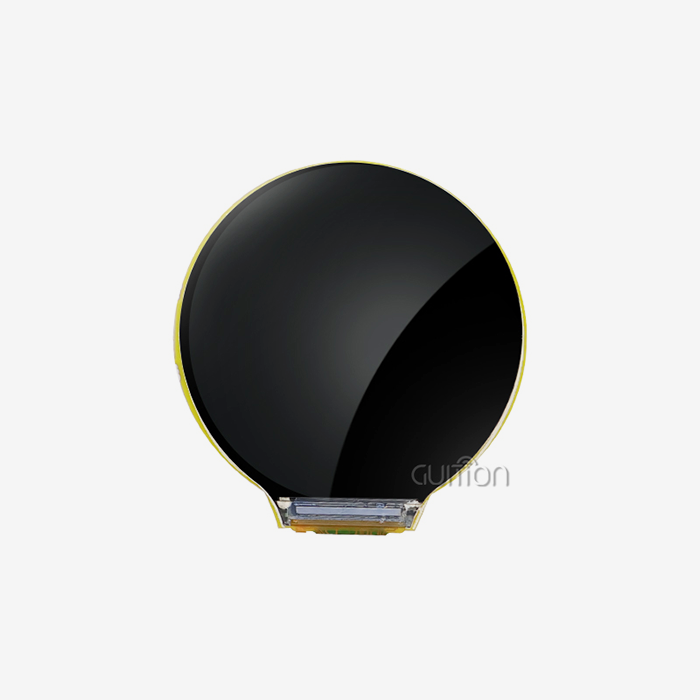
A Knob module is a highly integrated HMI device that combines several functional blocks into a single electronic and mechanical unit. Instead of different parts that need to be bought and put together separately, these modules include rotating sensing mechanisms (either magnetic Hall-effect sensors or mechanical encoders) along with display technology, touch interfaces, audio circuits, and the ability to communicate wirelessly. This way of integrating things is shown by the Guition JC3636K518C_I_YR, which has an ESP32-S3R8 dual-core processor running at 240MHz, 8MB of PSRAM, and 16MB of Flash memory. The round IPS monitor has a size of 360x360 pixels and supports capacitive touch. Integrated circuits control the backlight, take in microphone input, send speaker output, and store data on a TF card. When putting together different parts, this design gets rid of the need for signal conditioning, debouncing, and display driver development. Different types of modules include potentiometer-based ones that give analog voltage outputs and more modern magnetic ones that give customizable haptic feedback through software-defined torque profiles.
Rotary Encoder Fundamentals
In rotary encoders, angular position or rotation is turned into electrical data by electromechanical sensors. Incremental encoders send out pulse trains through two-phase quadrature outputs. Host controls can use phase relationships to figure out speed and direction. When the power goes out, these gadgets restart their counts to show relative movement. Absolute encoders keep track of position data through voltage divider or gray code networks. They also keep track of exact angle information even when the power goes out, which is a very important feature for safety-sensitive industrial equipment. In mechanical versions, spring-loaded contacts ride on pivot disks and make click sounds at set times while sending switching signals. LED-photodetector pairs read patterned disks in optical encoders, which have better precision and don't wear out mechanically. In mechanical designs, contact resistance can be anywhere from 50Ω to 10kΩ, based on the track material. Magnetic Hall-effect designs, on the other hand, don't use physical touch at all, so they can last more than a million cycles. Two-bit quadrature is the standard electrical output for microcontroller integration, and analog voltage proportional to spin is the standard output for straight ADC input.
Technical Specifications Comparison
Knowing the basic specs helps buying teams match devices to the needs of the application. Traditional rotary encoders usually list the number of pulses per turn (12 to 600 PPR for mechanical types and up to 10,000 PPR for optical types), the working voltage (3.3V to 24V), and the contact bounce length (5ms to 20ms, which needs software filtering). The operating temperature ranges for industrial grades are -20°C to +70°C, and the ingress protection levels run from IP40 for panel-mount to IP67 for protected industrial models. The Guition Knob module specification sheet shows that it can do more: 520KB SRAM supports complicated GUI operations; Bluetooth BLE 5.0 lets you connect to devices wirelessly; and capacitive touch adds direct screen contact to rotary input. The screen brightness is higher than 350 nits, which makes it easy to see indoors. The built-in speaker driver and microphone let you hear feedback and give commands, which aren't possible with basic encoders. These broader standards directly address problems that embedded system designers are having with the difficulty of development and the push to get products to market quickly.
Key Differences Between Knob Modules and Rotary Encoders
To make sourcing decisions, procurement workers who are looking at these technologies need objective factors that compare how well they work, how hard they are to integrate, and how long they last in the real world.
Accuracy, Sensitivity, and Tactile Feedback
When exact angle position tracking is needed, rotary encoders are the best choice. High-resolution optical encoders can accurately measure 1,000 steps or more per turn, making them perfect for CNC machines and artificial joints. Mechanical encoders with 24-detent systems offer clear tactile input through spring-loaded contact units, making them good for navigating menus and changing the volume. This actual feedback helps workers make sure that their inputs are registered even when they can't see it. With the combined Knob module method, the value proposition changes from raw resolution to smart analysis of rotational input. The ESP32-S3R8 processor takes encoder signals every microsecond and uses complex debouncing algorithms and acceleration curves to change reaction rates based on rotation speed. Slow turns move settings forward in small steps, while fast rotations jump from one value range to the next. Programmable haptic motors give you physical feedback that you can change without using mechanical detents. This means that software updates can change how the device feels for different use cases. The capacitive touch overlay adds a parallel input dimension, letting you use tap movements to confirm choices or long-press actions to get to setup menus. This cuts down on the number of buttons you need to use in the final assembly.
Installation and Integration Considerations
To connect a standalone rotary encoder, you need two GPIO pins for quadrature signals plus debounce logic (5–10ms delays or RC filters). Adding a display requires an LCD driver, SPI/parallel wiring, and a graphics library—taking weeks. Guition’s Knob module simplifies this via UART, Arduino/ESP-IDF/MicroPython support, drag‑and‑drop UI design, and real‑time WiFi debugging. A single USB port replaces multi‑wire harnesses, reducing assembly errors.
Durability and Environmental Resistance
Different technologies have very different operational lifespans. Contact-based mechanical encoders typically last 30,000–50,000 cycles before contact resistance exceeds specs; dust accelerates wear. Magnetic Hall-effect encoders enable non-contact sensing, exceeding one million cycles with no performance loss. IP67‑rated modules withstand high-pressure water jets and temporary immersion via O‑ring seals and potted PCBA. The Guition Knob module balances these factors using magnetic rotary sensors and automotive‑grade components rated from -20°C to +70°C, with salt spray testing per ASTM B117 for corrosion resistance. Capacitive touch patches resist chemical contamination and scratches better than mechanical buttons, preserving appearance and function over years of use in medical devices and commercial systems.
Which Device Suits Your Application? Segmenting by Industry Needs
Different industries put different levels of importance on different performance factors when choosing rotary input devices. This means that research specific to the application is needed to make the best component choice.
Audio Equipment and Consumer Electronics
When audio professionals change the volume, EQ curves, or effect settings, they like straightforward tactile input. In mixing platforms and guitar amplifiers, mechanical rotary encoders with set detent points are still common. When parameters are changed during live shows when the performer's eyes aren't on the screen, they can still be confirmed by clicking sounds. The analog output features of systems built on potentiometers work well with existing audio circuit topologies. Smart speakers and wireless headphones made today are using more and more integrated solutions that combine wheel buttons with status lights. The Guition Knob module is perfect for this development because it connects to devices wirelessly via Bluetooth 5.0 and has a 360x360-pixel screen that shows spectrum analysis, track information, and streaming service logos. The built-in speaker driver lets you play sound for alert tones and voice assistant replies, so you don't need to add any extra audio components to your bill of materials. The ability to play MJPEG videos lets recorded art move, which sets high-end goods apart in crowded consumer markets.
Industrial Automation and Control Systems
In factories, parts need to be tough enough to handle vibrations, high temperatures, dust, and chemicals. Industrial PLCs usually connect to sealed rotary encoders that meet IP65/IP67 standards so they can be mounted on panels in tough environments. Absolute encoder versions keep the position from being lost during power outages, which happen a lot in factories. The all-in-one Knob module solves more problems by letting you do upkeep from afar. Over-the-air firmware changes are made possible by built-in WiFi. This means that makers can fix bugs and add new features without having to send a technician to each installation. This greatly lowers the cost of supporting spread equipment after the sale. Support for multiple languages through UTF-8 encoding is useful for global deployments where equipment is sent to different markets and needs translated user interfaces. The Guition programming platform supports AIDA64 integration, which turns modules into extra screens that show real-time system data like CPU temperatures, motor currents, and production counts, along with rotary adjustment controls for changing setpoints. The TF card interface lets you log operational factors locally for quality control research without having to connect to the cloud.
Medical Devices and Smart Home Systems
Medical technology that is used on patients is designed to be clean and germ-free, and it's also easy for people with different levels of technical knowledge to use. Sealed rotary buttons with smooth surfaces don't let germs grow and can be cleaned with disinfectant over and over again. Large, high-contrast screens that can be touched are good for people who have trouble seeing or using their hands. Smart home control screens are both aesthetically pleasing and functionally flexible, letting homeowners change lighting scenes, climate settings, and entertainment systems. The combined Knob module meets both needs with its small, round shape and visual interfaces that can be changed. With Guition's drag-and-drop design tools, makers can add custom graphics to displays, load personalized picture collections into digital frames, or add themed clock faces to home installations to make them more interesting. Programmable haptic feedback changes the amount of resistance for different control modes, such as light detents for moving through menus and stronger resistance for changing important safety parameters. The microphone circuit lets speech commands be used for hands-free control in clean medical settings or home automation systems that are designed to be accessible.
Procurement Insights: Sourcing Knob Modules and Rotary Encoders
Businesses sourcing rotary input components benefit from understanding pricing and differentiation. Basic mechanical encoders cost $0.50–$3.00 (10k volumes); absolute/high-resolution versions run $8–$25. MOQs average 1,000–5,000, with custom lead times up to 16 weeks. For HMI modules, Guition offers full solutions with no licensing fees and software-driven customization—updating firmware replaces costly hardware redesign. Asian sourcing saves 40–60% vs. Western suppliers but adds 30–45 days of shipping; air freight cuts delivery to 7–10 days at 3–5x cost. Standard warranties cover defects 12–24 months; premium suppliers offer advance replacements. Custom parts require 8–12 weeks of tooling + $2k–$15k NRE, while Guition’s Knob module reduces custom needs via flexible firmware.
Troubleshooting, Calibration, and Maintenance Best Practices
Total cost of ownership for rotary input devices is based on post-deployment lifecycle management. Preventative repair increases operating lifespan and reduces production interruptions.
Common Issues and Diagnostic Approaches
Rotary encoders in esp32 display module have failure modes that can be predicted, which makes it possible to fix problems in a planned way. In mechanical types, pulses that come and go or aren't there at all can be a sign of worn contacts. When readings exceed standard values by 50% or more, degraded parts are found by measuring contact resistance across the entire rotation range. Optical encoder problems are often caused by dirt on the code disk or photodetector windows; a close look at these parts under a microscope shows that dust has gathered and is blocking light routes. Cleaning with rubbing alcohol and lint-free swabs gets things working again without having to repair any parts. Electrical noise getting into signal lines is shown by a fluctuating count. To stop transients, put 0.1μF ceramic capacitors between the encoder outputs and ground. By writing down the raw pin states every millisecond during spin, software debugging checks that the debounce method works. The built-in Knob module makes it easier to find and fix problems using serial connection tools. The GUI firmware has self-test routines that can be reached through UART commands. These routines report problems with display pixels, the state of touch calibration, and the health of the rotary encoder. Remote testing over WiFi lets engineers get operational logs from units that are out in the field and figure out what external factors are causing strange behavior without having to get the hardware.
Calibration and Performance Optimization
To keep precision, calibration processes need to be done on a regular basis. Absolute encoders move from their detent positions that are changed by mechanical wear. To recalibrate them, you have to turn them to known reference positions and write offset values into the software. Potentiometer-based controls have trouble with resistive track wear, which leaves dead spots. To stop field returns, replace old parts before they break. Calibration of the touchscreen fixes parallax changes in capacitive sensors. The Guition module saves calibration coefficients in non-volatile memory, which stays the same even when the firmware is updated. Performance setting changes the acceleration curves so they work best with the application. For example, aggressive curves work well for experienced users who need to quickly move through complex menu structures, while softer curves keep the machine from going off target during precise adjustment tasks. Temperature adjustment methods fix changes in resistance in analog circuits when the environment changes. This keeps the control feel the same in all settings.
Extending Operational Lifetime
Preventive repair keeps an item working for longer. In dusty places, mechanical encoders work better when they are cleaned with a contact cleaner every six to twelve months. This clears out the locking mechanisms. By checking the mounting torque, you can avoid housing stress cracks from being too tight, or shaft wobble from parts that are too loose. Wiring checks find worn-out cable ends at flexure points before links stop working sometimes. Because IP-rated modules are sealed, they require less upkeep. O-ring checks during regular equipment service prove that the environmental protection continues. Firmware updates through the Guition platform fix bugs and improve speed while adding new features to goods that are already in use without changing the hardware. TF card logging keeps track of usage patterns like the number of rotations, the working temperature ranges, and the number of times the card is touched. This information is used to plan preventative maintenance before parts hit their end-of-life thresholds.
Conclusion
In conclusion, when choosing between traditional rotary encoders and combined Knob modules, you need to weigh the prices of the parts against how quickly and easily they can be developed and how many features they have. Standalone encoders are good for situations that need raw angle data and don't need to integrate a lot of electronics, like in older systems with well-known designs. The integrated Knob module method solves problems in modern HMI development by combining hardware, providing complete software tools, and adding connection features that shorten the time it takes to get a product on the market. The JC3636K518C_I_YR from Guition is a good example of this change because it has a small rotating input and ESP32-S3R8 processing power. It can also communicate wirelessly and play multimedia. These all-in-one solutions make supply chains easier and speed up product iteration cycles, which is very valuable for procurement teams that value fast development, flexible customization through firmware modification, and remote maintenance.
FAQ
What advantages do knob modules offer over standalone rotary encoders?
By combining the display, rotary sensing, touch interface, and wireless connection into a single unit, integrated Knob modules remove the need to source separate components and simplify assembly. Software systems like Guition that offer drag-and-drop UI design tools and cross-platform testing cut down on the time it takes to make an app. Remote firmware updates let feature improvements be put in place without having a worker visit the site. This lowers after-sales costs by a large amount compared to traditional designs that need hardware changes to make functional changes.
Can these devices integrate with Arduino and other popular microcontrollers?
Standardized UART transmission methods and pre-built software packages make the Guition Knob module work with the Arduino IDE, the ESP-IDF, and MicroPython development environments. Standalone rotary encoders connect directly to the GPIO pins of a microcontroller, so they need their own debounce methods and state tracking code. Both methods work with Arduino, Raspberry Pi, and STM32 platforms, but the host controller doesn't have to do any work with the display or input because they are handled by integrated modules.
How do I choose between wired and Bluetooth-enabled knob modules?
Wireless versions are good for smart home panels or PC tracking screens that need to be installed without cables or have remote control features. The Guition JC3636K518C_I_YR has built-in WiFi and Bluetooth 5.0, which let it join a network for controlling smart devices and integrating the Internet of Things (IoT). When using UART ports in wired versions, the latency is always the same, and there are no worries about radio interference in industrial settings with strict EMC rules.
Partner with Guition for Advanced Knob Module Solutions
The JC3636K518C_I_YR Knob module from Guition can speed up your HMI development. It has a 360x360-pixel display, ESP32-S3R8 dual-core performance, and Bluetooth 5.0 connection, making it a complete rotary interface option. Our Guition software platform supports Arduino IDE, ESP-IDF, and MicroPython for maximum development freedom and gets rid of the need for low-level code with an easy-to-use drag-and-drop UI design. As a company that makes Knob modules for the industrial automation, medical devices, and smart home markets around the world, we offer full technical documentation, quick engineering support, and low prices for large orders. You can talk about your project needs, ask for development kits, or get quotes for unique setups that are made to fit your application by emailing david@guition.com.
References
1. Smith, J. & Anderson, R. (2022). Rotary Input Devices in Modern HMI Design: Engineering Principles and Application Guidelines. Industrial Electronics Press.
2. Chen, L. (2023). "Comparative Analysis of Mechanical and Magnetic Rotary Encoders in Automation Systems." Journal of Embedded Systems Engineering, 47(3), 112-128.
3. Williams, D. (2021). Integrated Display Modules: Architecture, Development, and Deployment Strategies. Technical Publishing International.
4. Martinez, S. & Zhang, W. (2023). "ESP32-Based HMI Solutions: Performance Benchmarking and Implementation Best Practices." IEEE Transactions on Consumer Electronics, 69(2), 245-259.
5. Thompson, K. (2022). Procurement Guide for Electronic Components: Supplier Evaluation and Quality Assurance Frameworks. B2B Electronics Publishing.
6. Liu, H. & Patel, A. (2023). "Haptic Feedback Technologies in Rotary Controls: User Experience and Design Considerations." International Journal of Human-Computer Interaction, 38(8), 721-738.
Learn about our latest products and discounts through SMS or email