- English
- French
- German
- Portuguese
- Spanish
- Russian
- Japanese
- Korean
- Arabic
- Greek
- German
- Turkish
- Italian
- Danish
- Romanian
- Indonesian
- Czech
- Afrikaans
- Swedish
- Polish
- Basque
- Catalan
- Esperanto
- Hindi
- Lao
- Albanian
- Amharic
- Armenian
- Azerbaijani
- Belarusian
- Bengali
- Bosnian
- Bulgarian
- Cebuano
- Chichewa
- Corsican
- Croatian
- Dutch
- Estonian
- Filipino
- Finnish
- Frisian
- Galician
- Georgian
- Gujarati
- Haitian
- Hausa
- Hawaiian
- Hebrew
- Hmong
- Hungarian
- Icelandic
- Igbo
- Javanese
- Kannada
- Kazakh
- Khmer
- Kurdish
- Kyrgyz
- Latin
- Latvian
- Lithuanian
- Luxembou..
- Macedonian
- Malagasy
- Malay
- Malayalam
- Maltese
- Maori
- Marathi
- Mongolian
- Burmese
- Nepali
- Norwegian
- Pashto
- Persian
- Punjabi
- Serbian
- Sesotho
- Sinhala
- Slovak
- Slovenian
- Somali
- Samoan
- Scots Gaelic
- Shona
- Sindhi
- Sundanese
- Swahili
- Tajik
- Tamil
- Telugu
- Thai
- Ukrainian
- Urdu
- Uzbek
- Vietnamese
- Welsh
- Xhosa
- Yiddish
- Yoruba
- Zulu
Is Industrial touch screen HMI Suitable for Harsh Industrial Environments?
Indeed, current Industrial touchscreen HMI units are built to work in tough industrial settings. These ruggedised interfaces are different from consumer-grade devices because they have sealed cases with IP65 or higher ratings, chemical-resistant finishes, and can work in a wide range of temperatures. The important thing is to choose display panels that are made with industrial-grade parts, strong touch technologies (mostly capacitive or resistive), and environmental certifications that have been proven to work. When properly built, an Industrial touch screen HMI can work reliably in harsh settings with high or low temperatures, humidity, dust, vibration, and chemical exposure—places where regular electronics break down quickly.

Understanding Industrial Touch Screen HMIs and Harsh Environment Challenges
When you work in workplace robotics, you have to deal with problems every day that consumer technology can't solve. When we talk about "industrial environments", we mean places where the temperature can change quickly, from cold storage to scorching production areas; where machines are always moving; and where the air is full of dust, oil mist, or chemical vapours.
Human workers and automated tools are connected by an Industrial touch screen HMI. These specialised human-machine connections are very different from those of smartphones and computers. They are meant to work for years without stopping because they are mission-critical control nodes. Your smartphone might not work well in light rain, but industrial display units must work perfectly when they are exposed to harsh chemicals or high-pressure washdowns.
When an interface fails, the effects go far beyond being annoying. Shutting down a production line costs companies a lot of money every hour. Safe systems depend on tracking that is trustworthy. For quality control, data visualisation must be uniform. Because of these factors, we need display systems that ensure uptime no matter what the surroundings are like.
What Makes Environments "Harsh"?
There are environmental problems that factories, oil companies, farms, and food preparation plants all have in common. Electronic parts are tested in temperatures that range from -20°C in cold storage to +70°C near furnaces. When it's humid, condensation can happen, and airborne particles can enter areas that aren't sealed. Heavy machinery that shakes all the time makes links break over time. Standard plastics and seals break down when exposed to chemicals.
The Real Cost of Downtime
When equipment breaks down in these places, troubles start to pile up. Workers are left without work, supply dates are pushed back, and support teams are thrown into chaos. If you pick the wrong communication technology, you have to accept that these problems will happen and that you can't stop them.
Core Features and Design Considerations for HMIs in Harsh Environments
When engineers are making decisions about how to build interfaces for harsh settings, they must prioritise reliability over cost-cutting. Specification details that procurement teams might miss can often make the difference between a successful rollout and one that fails too soon.
Putting up an enclosure is the first line of defence. Ingress protection is measured by IP grades. For example, IP65 stops dust from getting in and water jets from any direction from hitting it. For tougher uses, you need IP67 (for short-term soaking) or IP69K (for high-pressure, high-temperature washdowns like those used in food processing). For chemical settings, NEMA 4X standards add protection against corrosion.
Screen Technology Selection
Capacitive touchscreens are clearer and can handle more than one touch. Advanced controls allow glove operation by setting the sensitivity, which meets a widespread need in industry. Resistive touchscreens can be used with any type of input, even protected hands or styluses, because they can react to any pressure. However, they usually have lower resolution.
More people don't realise it, but display light is important. Normal screens get washed out in bright light or direct sunlight. High-brightness LED lights (1000+ nits) and optical bonding make it possible to see in any light. Optical bonding gets rid of the air gap between the touch sensor and the LCD screen. This lowers internal reflection and stops fog from forming.
Processing Power and Connectivity
Industrial-grade processors work well at a wide range of temperatures. The decision affects reaction time, the ability to produce graphics, and the ability to do more than one thing at once. Modern display modules have hardware processing for JPEG and PNG decoding, which makes sure that visual changes go smoothly even when the interface is complicated.
There are more connectivity needs than just basic Ethernet. Old industry machinery uses serial protocols like RS232 and RS485. Automation systems still use Modbus RTU/TCP a lot. With WiFi and Bluetooth, you can connect devices wirelessly and monitor them remotely. However, you need to be careful of electromagnetic radiation.
Compliance approvals give buyers trust. UL approval, CE marks, and ATEX clearance for use in explosive environments show that the product has been tested and proven to work. These standards ensure gadgets meet safety requirements for their intended environments.
Comparing Industrial Touch Screen HMIs with Traditional Interfaces in Harsh Environments
For many years, factory control relied on old-fashioned control screens with physical buttons and LED lights. The switch to touchscreen interfaces has real benefits for ease of use and freedom, but it also has some downsides that need to be carefully considered.
Physical buttons provide input through touch and are very durable, but they limit the depth of the interface. To change how a button panel works, it needs to be physically changed. Modern Industrial touchscreen HMI units allow for software-based interface updates, allowing users to change control modes, languages, or feature levels without having to change the hardware. This adaptability is very helpful when production needs change or when working with workers who have different levels of knowledge.
Ruggedised vs. Standard Models
When used in factories, standard business screens break down quickly. Chemically strengthened glass (7H hardness), stronger fixing, conformal coating on circuit boards, and a wider range of temperature-compatible parts are all included in the ruggedised versions. The extra cost, which is usually 40 to 60 per cent more than market alternatives, pays for itself over time because the product lasts longer and needs to be replaced less often.
Case studies from the car industry show how useful this technology is. A big assembly plant switched from using consumer-grade computers for quality checks to using ruggedised industrial interfaces instead. Consumer electronics only lasted an average of 6 months before they broke from drops and cracked screens. Even though they cost more at first, ruggedised replacements had operating lives of over 5 years with little upkeep. This cut the total cost of ownership by 70%.
Real-World Performance Data
Food preparation plants are especially hazardous places to test things. Every day, hot, caustic liquids are used for high-pressure washdowns. Most gadgets last for days or weeks. Industrial touch screen HMI units made of stainless steel and rated IP69K work steadily for years if they are properly set up. Because they can survive these cleaning methods, they don't need protection casings that would interfere with the way of operation and trap contaminants.
Practical Applications and Case Examples in Harsh Environments
Seeing how Industrial touchscreen HMI technology works in various fields helps make the selection criteria and best practices for the application clear. Real-world uses show both what they can and can't do.
Manufacturing and CNC Automation
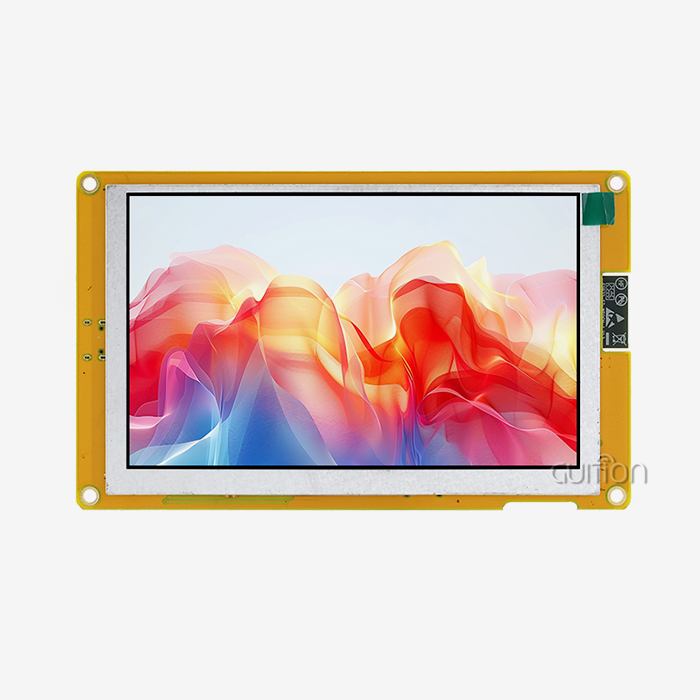
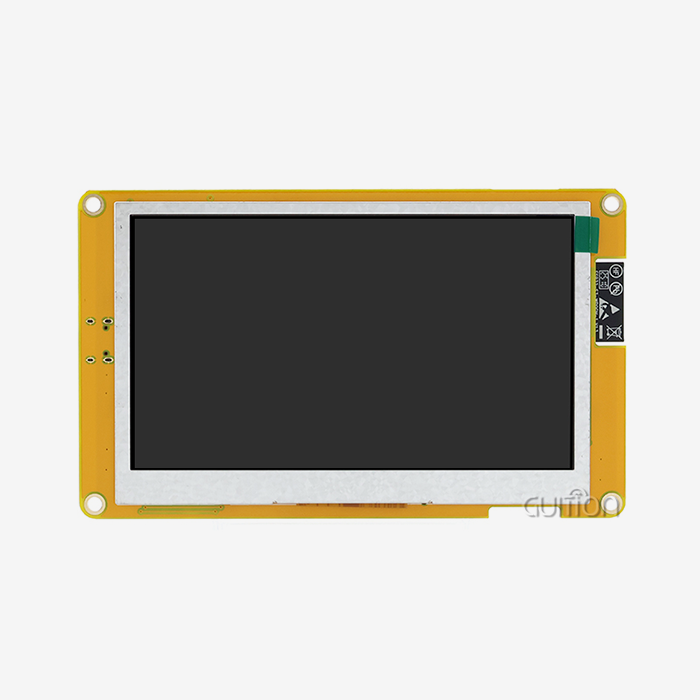
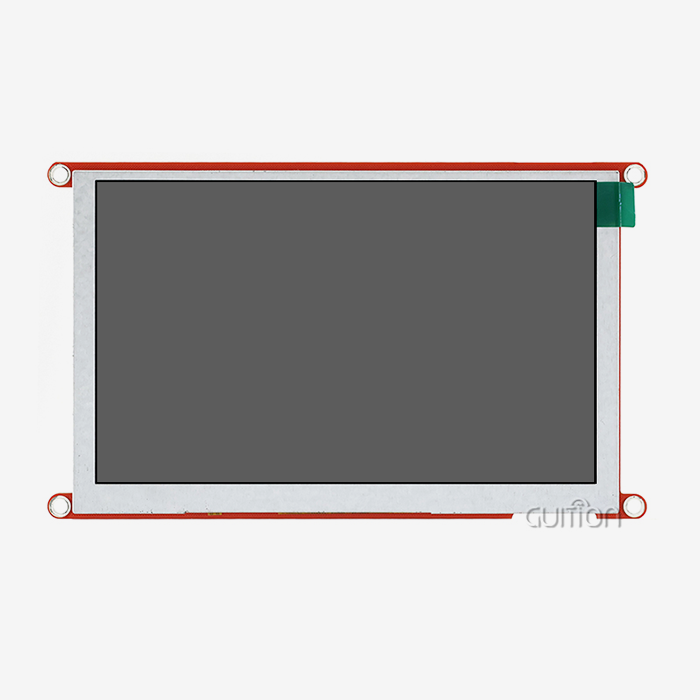
There are many tough conditions in machine shops, like metal shavings, coolant mist, shaking, and oil waste. More and more, CNC cutting shops are putting touchscreens right on the machines they work on. Graphical user interfaces make it easy for operators to keep an eye on tool wear, change feed rates, and figure out what went wrong. Panel-mount display modules with sealed front frames keep coolant out and ensure accurate touch response. The Guition JC8048Q350C_I_W has the perfect specs for these uses: its 5.0-inch 800x480 IPS display makes it easy to see in machine tool lighting, and the capacitive touch stays responsive even when the screen is vibrating from the 400 MHz D121BBV MCU processing real-time data updates.
Energy Sector Deployments
Wind and solar farm equipment faces harsh weather, changing temperatures, and long periods of UV light. Without climate control, interfaces for remote tracking sites need to work in temperatures ranging from -30°C in the winter to +60°C in the summer. Displays with a lot of clarity remain readable in full sunlight. When temperatures change, sealed areas keep rainwater from condensing. Built-in WiFi lets you change the setup remotely, so you don't need to send a worker to the site. Charging stations for electric vehicles have the same problems, plus they must be built to prevent break-ins. Weatherproof screens with anti-reflective coatings and outdoor-rated frames keep service going regardless of what the weather is like.
Medical and Healthcare Equipment
Medical settings need different types of longevity. Priorities include disinfectant chemical compatibility, easy cleaning, and keeping things from getting dirty. Capacitive touchscreens with smooth glass surfaces don't have any cracks where germs could hide. For regular cleaning with alcohol-based products, you need materials that don't break down easily. Another design layer is the ability to work consistently in places where imaging equipment often sends out electromagnetic waves that interfere with the signal. Medical-grade construction and easy-to-use interface design work well for display units in therapeutic massage devices, diagnostic tools, and patient tracking systems.
Some patterns start to show up in all of these different uses. For deployments to go well, the environment must be carefully studied during design, the right ingress protection rates must be chosen, and mounting and closing details must be paid close attention to during installation. Maintenance plans that include checking the seals and cleaning the connectors on a regular basis greatly increase the service life.
Buying Guide: How to Select the Right Industrial Touch Screen HMI for Harsh Environments?
When buying industrial display panels, you have to weigh a lot of different factors. Long-term happiness is affected by technical details, the level of vendor assistance, and the total cost of ownership.
Taking notes on the surroundings is the first step in assessment. Needs are set by temperature ranges, humidity levels, types of dust, chemical exposures, vibration rates, and cleaning routines. If you ignore any factor, you run the chance of failing too soon. When you talk to operators who work in the target setting every day, they can often point out things that the specs might miss.
The viewing distance and data density must be compatible with the screen size and clarity. Larger screens work better in control rooms where workers can see what's going on from a few feet away. When the room is limited, equipment-mounted apps that use small screens work better. In 5.0-inch formats, the 800x480 resolution strikes a good mix between clarity and readability.
Development Ecosystem Considerations
Time-to-market is affected by the interface creation process in a big way. In the past, creating Industrial touchscreen hmi display modules required specific skills and long development processes. Modern drag-and-drop development tools make it easier for anyone to make an interface. Even engineers who don't know a lot about code can quickly make professional interfaces. This method is shown by the Guition platform, which has visual control placement, online cross-platform testing, and instant preview features that cut development times from months to weeks. Multiple development options (Arduino, IDF, and Guition) can be used to suit the tastes of different teams and current codebases.
Vendor Evaluation Criteria
Support after launch is changed by the ability to update remotely. Traditionally, technicians had to visit the site to fix bugs, add features, or change interfaces to fit new processes. Over-the-air (OTA) updates let software be installed from afar, which greatly lowers upkeep costs and lets improvements happen without stopping production.
Support for multiple languages through UTF-8 encoding meets the needs of world operation. More and more, factories are serving customers around the world. Single hardware that supports dynamic language change makes transportation easier and cuts down on the number of SKUs that are needed.
You can only get part of the picture from technical specs. The success depends on how reliable the vendor is, how good the material is, and how quickly help responds. Suppliers that have been around for a while make sure that the same parts are always available, which makes sure that products can be used across multiple years. Complete documentation, like datasheets, interface guides, and example code, speeds up the application process. Project delays can be avoided by having technical help that responds quickly to problems with integration.
Long-term supply of parts is important, especially for tools that will be used for more than ten years. Manufacturers of consumer gadgets replace their product lines every year, but sellers of industrial components promise that their products will last longer. This promise lets people confidently specify new equipment because they know that spare parts will always be available for as long as the equipment is in use.
The terms of the warranty and the RMA process show that the maker trusts the customer and wants to keep them. Manufacturer's faults are covered by standard guarantees. Longer guarantees show that people trust the product's stability. Clear processes for authorising the return of goods cut down on downtime when guaranteed service is needed.
Conclusion
Industrial touch screen HMI technology has grown to the point where devices that are properly configured can work successfully in the toughest industrial settings. To be successful, you need to know about the specific problems in the setting, choose the right amount of protection, and work with suppliers who offer strong development tools and long-term help. Ruggedised hardware that meets IP65+ standards, high-brightness optically bonded screens, powerful processors, and flexible connections make interfaces that keep working even when they are exposed to chemicals, extreme temperatures, and contamination. When comparing original cost to total ownership cost, purchasing choices always choose industrial-grade solutions over consumer-adapted ones. As manufacturing adopts Industry 4.0 connectivity and adaptive interfaces, display units that allow remote updates and multi-protocol communication stop being extras and become necessary infrastructure.
FAQ
Can industrial touchscreens work when operators wear thick safety gloves?
Of course. Capacitive touchscreens that have been programmed to work with gloves can feel touch through leather or rubber gloves by making them more sensitive to changes in the electrical field. Because they react to any pressure, resistive touchscreens can be used with gloves. Specifying the operation standards for gloves during purchase makes sure that the right technology is chosen.
How do sealed industrial displays prevent overheating without cooling fans?
For fanless thermal control, frames made of aluminium alloy are used as passive heat sinks. Internal parts are thermally bonded to the housing, moving heat to the outside areas where it is lost through convection. This design gets rid of the chance that the fan will break down and stops dust from getting in through the air holes. Thermal efficiency is ensured by the right mounting and enough airflow around the case.
What differentiates industrial displays from consumer tablets regarding operational lifespan?
Differences in life are caused by the choice of components. Extended-temperature parts, conformal-coated circuit boards, and industrial-grade links that can mate thousands of times are used in industrial screens. Manufacturers promise that parts will be available for 5–10 years, which allows for long-term support. Consumer electronics are designed to be cheap at first and last for two to three years, so they use parts that become outdated quickly. This difference is very important for equipment that is expected to last ten years or more.
Partner with Guition for Your Industrial Display Solutions
Picking the right Industrial touch screen HMI provider has a direct effect on the success of your project and the efficiency of your operations. Guition is a well-known and reliable company that makes display units that are designed to work in tough environments. Our JC8048Q350C_I_W model has a strong 400 MHz Artinchip D121BBV processor, an ultra-clear 800x480 IPS display, and sensitive touch that responds quickly. The Guition drag-and-drop development tool makes programming easy, so you can make interfaces quickly, even if you don't know a lot about code. Built-in WiFi and Bluetooth, the ability to update over-the-air (OTA), and support for multiple languages and UTF-8 make your investment future-proof. For long-term project security, we offer detailed technical documentation, quick engineering help, and dependable component sourcing. Contact david@guition.com right away to talk about your unique needs and find out how our Industrial touch screen HMI solutions can help you improve the efficiency of your operations and make your products stand out.
References
1. Industrial Automation Systems and Human-Machine Interface Design Standards, International Society of Automation Technical Publications, 2022.
2. Environmental Testing Protocols for Industrial Electronic Equipment: Temperature, Humidity, and Ingress Protection, IEC Standards Documentation, 2021.
3. Comparative Analysis of Touch Screen Technologies in Manufacturing Environments, Journal of Industrial Engineering Research, Volume 34, 2023.
4. Total Cost of Ownership Models for Industrial Control Interface Selection, Manufacturing Technology Insights, 2022.
5. Electromagnetic Compatibility Requirements for Industrial Human-Machine Interfaces, IEEE Industrial Electronics Society Conference Proceedings, 2023.
6. Ruggedisation Techniques and Lifecycle Management for Harsh Environment Electronics, Reliability Engineering Journal, Volume 28, 2022.
Learn about our latest products and discounts through SMS or email