- English
- French
- German
- Portuguese
- Spanish
- Russian
- Japanese
- Korean
- Arabic
- Greek
- German
- Turkish
- Italian
- Danish
- Romanian
- Indonesian
- Czech
- Afrikaans
- Swedish
- Polish
- Basque
- Catalan
- Esperanto
- Hindi
- Lao
- Albanian
- Amharic
- Armenian
- Azerbaijani
- Belarusian
- Bengali
- Bosnian
- Bulgarian
- Cebuano
- Chichewa
- Corsican
- Croatian
- Dutch
- Estonian
- Filipino
- Finnish
- Frisian
- Galician
- Georgian
- Gujarati
- Haitian
- Hausa
- Hawaiian
- Hebrew
- Hmong
- Hungarian
- Icelandic
- Igbo
- Javanese
- Kannada
- Kazakh
- Khmer
- Kurdish
- Kyrgyz
- Latin
- Latvian
- Lithuanian
- Luxembou..
- Macedonian
- Malagasy
- Malay
- Malayalam
- Maltese
- Maori
- Marathi
- Mongolian
- Burmese
- Nepali
- Norwegian
- Pashto
- Persian
- Punjabi
- Serbian
- Sesotho
- Sinhala
- Slovak
- Slovenian
- Somali
- Samoan
- Scots Gaelic
- Shona
- Sindhi
- Sundanese
- Swahili
- Tajik
- Tamil
- Telugu
- Thai
- Ukrainian
- Urdu
- Uzbek
- Vietnamese
- Welsh
- Xhosa
- Yiddish
- Yoruba
- Zulu
Is an ESP32 P4 display module Suitable for Industrial Control Panels?
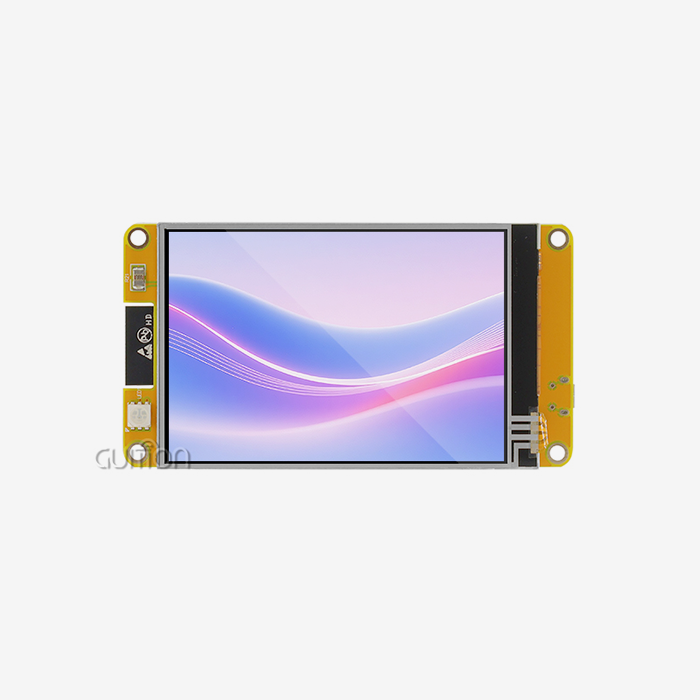
If you are an embedded engineer or product manager evaluating display solutions for your next industrial project, the short answer is yes — the ESP32 P4 display module is well-suited for industrial control panels. Built on a 400MHz dual-core RISC-V processor with up to 32MB PSRAM, native MIPI-DSI support, and hardware H.264 encoding, this class of module handles high-resolution UI rendering, real-time data visualization, and secure communication without requiring an external application processor. The GUITION model JC-ESP32P4-M3-C6 goes a step further by integrating an ESP32-C6 co-processor for Wi-Fi 6 and Bluetooth 5 connectivity, making it a strong fit for modern industrial HMI deployments.

Overview of the ESP32 P4 Display Module in Industrial Applications
A bright screen is not enough for industrial control panels. It's important for operators to be able to see clearly in bright workplace lights and for the system to work even in places with a lot of vibration and high temperatures. Each of these needs is met by the ESP32 P4 display module's design, not by finding other ways to do things.
Processing Power That Matches Industrial Demands
The ESP32-P4 chip has a 400MHz dual-core HP RISC-V CPU and a 40MHz LP RISC-V core for low-power background tasks. The hardware 2D Pixel Processing Accelerator (PPA) handles layer mixing, scaling, and rotation without putting too much stress on the main cores. This keeps the frame rate of the UI smooth even when sensing data is coming in at the same time. Espressif's official paperwork says that the chip has 768KB of high-speed HP SRAM built in. This means that it doesn't have to deal with memory problems that were common in older MCU-based HMI solutions.
Temperature and Environmental Resilience
Most industrial-grade parts need to work between -40°C and +85°C. The ESP32-P4 system can handle this temperature range, and the JC-ESP32P4-M3-C6 module from GUITION is made to do the same. Burn-in testing at 85°C and 85% humidity for 168 hours or more is normal quality control for BGA soldering and PSRAM stability, making sure the module can handle the rough factory floors.
Security for Industrial Networks
More and more industrial panels are connecting to plant networks, which is raising security concerns. The ESP32 P4 display module has a digital signature device and a separate unit for managing keys built right in. Because Secure Boot and Flash Encryption are hardware-enforced, firmware tampering is blocked at the silicon level. This is a big advantage over cheaper security methods that only use software.
Performance Comparison: ESP32 P4 vs Other Display Modules for Industrial Use
It's not always easy to pick the right display technology for a control panel. Each choice has pros and cons when it comes to brightness, battery life, processing power, and interface flexibility.
ESP32 P4 vs Standard ESP32 Variants
Early versions of the ESP32, like the S3, relied a lot on LVGL for software rendering, which can slow down the frame rate when the user interface gets more complicated. This problem is fixed by the ESP32 P4 display module, which has built-in MIPI-DSI support and a specialized PPA accelerator that lets it handle images of up to 1280x800 at 60 frames per second without taxing the CPU. This makes a big difference for screens that show more than one live data stream.
ESP32 P4 vs OLED and TFT Modules
Even though OLED screens have high contrast, their brightness decreases over time, and they are more likely to burn in when used with static industrial user interface layouts. When paired with the ESP32 P4 display module, TFT-LCD panels last longer and stay bright in a wide range of industrial lighting conditions. The JC-ESP32P4-M3-C6's MIPI-DSI link lets high-resolution TFT screens work with little power. This makes it a better choice for control panels that are used all the time for years.
Power Efficiency and Operational Cost
The ESP32-P4's LP RISC-V core keeps the module connected to the network and able to poll sensors even when the main display cores are low on power. The ESP32 P4 display module has boot times measured in milliseconds instead of seconds and a bill-of-materials cost that is much lower than Linux-based single-board computers that are often used in industrial HMI applications. Both of these factors are important in large-scale industrial deployments.
Integration and Programming Guide for Industrial Control Panels
It's important to pay attention to the interfaces, development tools, and testing procedures when setting up an ESP32 P4 display module for use in a real commercial setting.
Hardware Interface Options
It has MIPI-DSI and MIPI-CSI (with built-in ISP), SPI, I2C, I2S, UART, ADC, MCPWM, RMT, TWAI, LED PWM, and USB OTG 2.0 HS ports. The CAN bus, which is used in many industrial and automotive control systems, works with TWAI (Two-Wire Automotive Interface). With this range of connections, you don't need to add extra bridge chips to connect sensors, actuators, cameras, and old serial devices from a single module.
Development Environments and Toolchain
There are three ways to create for the JC-ESP32P4-M3-C6: the Arduino IDE for quick prototypes, the ESP-IDF for production-level firmware, and the Guition platform for UI-first processes. With Guition, designers can add controls with a single click and move them around by dragging and dropping them. This creates UI code without having to do any low-level programming by hand. This method cuts down on the time it takes to build an HMI and makes it easier for teams that don't have a lot of experience.
Debugging and Remote Maintenance
Cross-platform online debugging is part of the Guition development process, which helps teams find problems faster on all platforms. The JC-ESP32P4-M3-C6 can receive OTA (over-the-air) firmware updates after the initial deployment. This means that production panels can get feature updates or security patches without having a service technician go to the installation site. This feature alone can cut operational costs after the sale by a large amount for industrial customers who are in charge of dozens or hundreds of deployed units.
Procurement Considerations for ESP32 P4 Display Modules in B2B Markets
When procurement teams and R&D managers look at ESP32 P4 display module suppliers, total value is based on more than just unit price.
Supplier Verification and Quality Standards
When you buy from a recognized ESP32 P4 display module maker, you lower the risk of getting fake parts and poor quality. GUITION is a business that does research and development, production, and sales all in one. To make sure the quality is good, the MIPI DSI signal is checked for integrity, the capacitive touch linearity is tested (response times are less than 10ms), and the memory is stressed across external PSRAM data lines. It is standard B2B practice to ask any supplier for written test reports and certifications.
Total Cost of Ownership
The JC-ESP32P4-M3-C6's unit cost is based on its combined design. The ESP32-C6 co-processor for Wi-Fi 6 and Bluetooth 5 is already built in, so there is no need for a separate wireless module in the bill of materials. At 27x27x3.4mm, the small footprint also cuts down on the amount of space needed on the PCB. Over the course of three to five years, GUITION's product line (which includes 1.28" to 21.5" displays) is cheaper overall than putting together similar features from different vendors because of its low bill of materials (BOM) cost, over-the-air (OTA) update capability, and long-term supply reliability.
Multi-Language and Global Deployment Support
Multilingual UI support is needed for industrial technology that is sold in North America, Europe, and Asia. The JC-ESP32P4-M3-C6 supports UTF-8 encoding and switching between languages naturally. This gets rid of a development problem for teams making goods for markets around the world.
Is the ESP32 P4 Display Module the Best Choice for Your Industrial Control Panel?
After looking at performance, integration, and cost, the ESP32 P4 display module is a good choice for most industrial control panel uses. It works especially well for those that need a high-resolution HMI, wireless connection, hardware security, and long rollout lifetimes. Extra hardening might be needed in places with high EMI or where safety certifications are needed (SIL-rated systems, for example). The JC-ESP32P4-M3-C6 from GUITION, on the other hand, meets the main needs for most industrial HMI, energy management, medical monitoring, and smart automation applications without the extra work that comes with a Linux-based solution.
Conclusion
In a tiny 27x27x3.4mm module, the ESP32 P4 display module GUITION JC-ESP32P4-M3-C6 has a 400MHz dual-core RISC-V processor, hardware display acceleration, Wi-Fi 6, Bluetooth 5, TWAI/CAN bus support, and security built right in. Because it's in between cheap application processors and low-power MCUs, it's a good choice for industrial control panels, medical monitors, energy systems, and business terminals. For large-scale deployments, it's a good fit for teams that need quick iterations, support for multiple languages, and the ability to update remotely.
FAQ
Does the ESP32 P4 display module support Wi-Fi and Bluetooth natively?
The ESP32-P4 SoC doesn't have any built-in RF radios. The JC-ESP32P4-M3-C6 from GUITION solves this problem by including an ESP32-C6 co-processor. This co-processor handles Wi-Fi 6 and Bluetooth 5 connectivity, while the P4 handles rendering the screen and heavy computation.
What is the maximum resolution the module supports effectively?
With the JC-ESP32P4-M3-C6's MIPI-DSI interface, you can get resolutions of up to 1280x800 at 60 frames per second. The hardware PPA handles layer blending, which keeps the CPU from getting too busy with complicated UI tasks.
How does it compare to the ESP32-S3 for HMI development?
Both use ESP-IDF, but the ESP32 P4 display module has an extra hardware PPA and H.264 codec that make it stand out. This takes the place of software rendering on the S3 and makes things a lot faster when driving displays with a resolution higher than 800x480.
Is OTA firmware update supported for deployed industrial units?
Yes. The JC-ESP32P4-M3-C6 can be updated over-the-air (OTA) remotely through the Guition platform. This lets firmware and user interface changes be made to installed panels without having to physically reach them.
Can this module handle CAN bus communication for industrial machines?
Yes. The ESP32-P4's TWAI peripheral works with CAN buses, so the JC-ESP32P4-M3-C6 can be used right away in industrial control systems that use CAN-based communication protocols.
Ready to Build Your Next Industrial HMI? Contact GUITION Today
The JC-ESP32P4-M3-C6 from GUITION is an ESP32 P4 display module that gives your engineering team a powerful HMI platform with Wi-Fi 6, Bluetooth 5, hardware security, and over-the-air (OTA) update support all in one small module. GUITION is a reliable provider of ESP32 P4 display modules. They offer full technical documents, support in multiple languages, and the Guition UI creation tool to help you get your product to market faster. To get a sample or technical advice today, email your project details to david@guition.com or go to https://jingcaizhineng.aixdb.cn/.
References
1. Espressif Systems. ESP32-P4 Technical Reference Manual. Espressif Systems, 2024.
2. IPC Association. IPC-A-610 Acceptability of Electronic Assemblies. IPC, 2020.
3. Grand View Research. Human Machine Interface (HMI) Market Size & Forecast Report. Grand View Research, 2023.
4. JEDEC Solid State Technology Association. JESD22-A101: Steady State Temperature Humidity Bias Life Test. JEDEC, 2009.
5. IEEE. IEEE Std 1149.1: Standard Test Access Port and Boundary-Scan Architecture. IEEE, 2013.
6. MarketsandMarkets. Industrial Display Market — Global Forecast to 2028. MarketsandMarkets, 2023.
Learn about our latest products and discounts through SMS or email