- English
- French
- German
- Portuguese
- Spanish
- Russian
- Japanese
- Korean
- Arabic
- Greek
- German
- Turkish
- Italian
- Danish
- Romanian
- Indonesian
- Czech
- Afrikaans
- Swedish
- Polish
- Basque
- Catalan
- Esperanto
- Hindi
- Lao
- Albanian
- Amharic
- Armenian
- Azerbaijani
- Belarusian
- Bengali
- Bosnian
- Bulgarian
- Cebuano
- Chichewa
- Corsican
- Croatian
- Dutch
- Estonian
- Filipino
- Finnish
- Frisian
- Galician
- Georgian
- Gujarati
- Haitian
- Hausa
- Hawaiian
- Hebrew
- Hmong
- Hungarian
- Icelandic
- Igbo
- Javanese
- Kannada
- Kazakh
- Khmer
- Kurdish
- Kyrgyz
- Latin
- Latvian
- Lithuanian
- Luxembou..
- Macedonian
- Malagasy
- Malay
- Malayalam
- Maltese
- Maori
- Marathi
- Mongolian
- Burmese
- Nepali
- Norwegian
- Pashto
- Persian
- Punjabi
- Serbian
- Sesotho
- Sinhala
- Slovak
- Slovenian
- Somali
- Samoan
- Scots Gaelic
- Shona
- Sindhi
- Sundanese
- Swahili
- Tajik
- Tamil
- Telugu
- Thai
- Ukrainian
- Urdu
- Uzbek
- Vietnamese
- Welsh
- Xhosa
- Yiddish
- Yoruba
- Zulu
Can an Industrial HMI Panel Improve Production Line Efficiency?
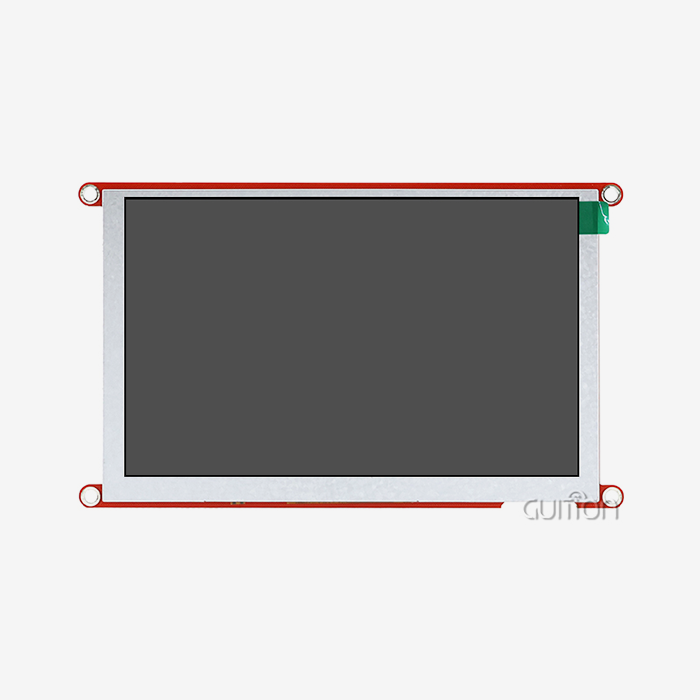
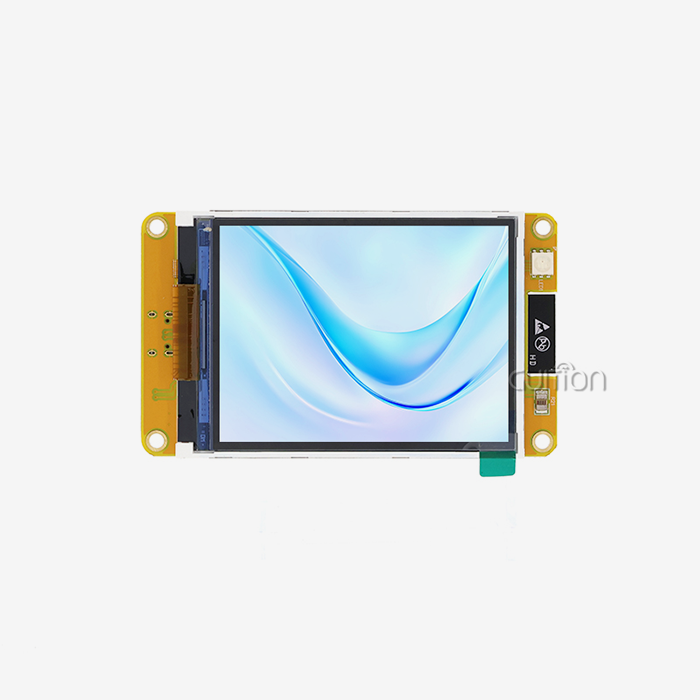
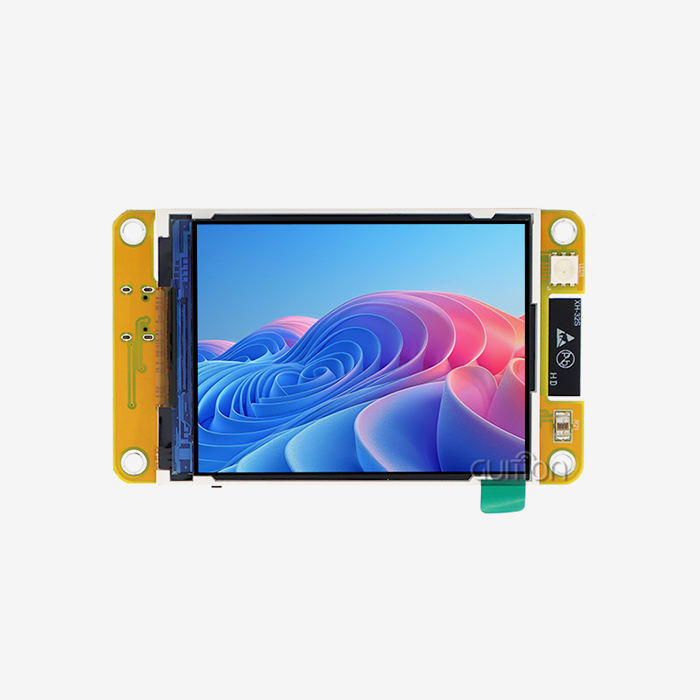
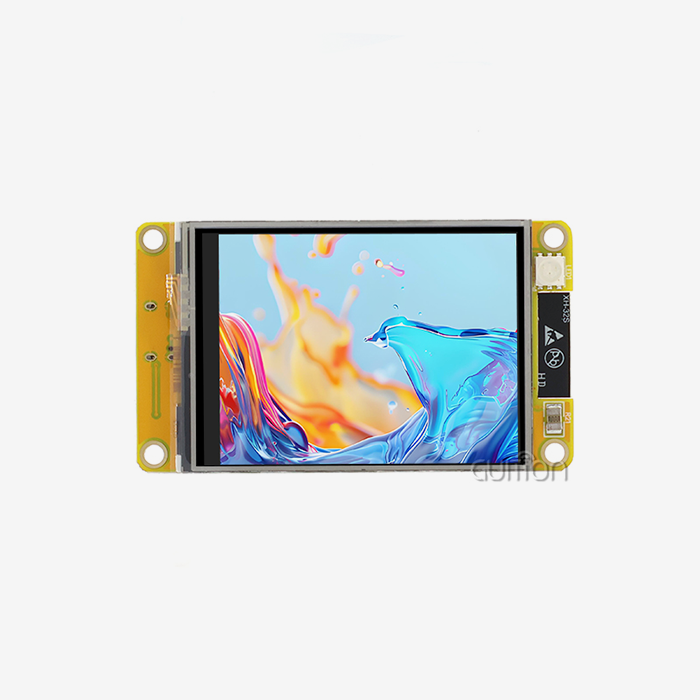
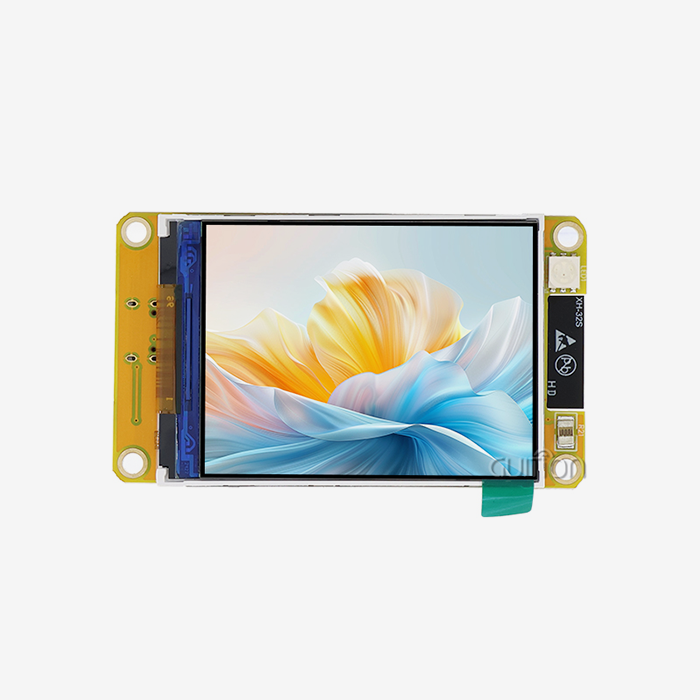
An industrial HMI panel may have a huge effect on the productivity of the production line. These display screens provide operators immediate access to real-time process data, minimizing response time and human errors, and giving engineers actionable insight into equipment status. For example, the GUITION JC8048Q350N_I gives clear and accurate feedback to shop floor teams on a 5.0-inch 800×480 IPS screen using a single-core 400 MHz Artinchip D121BBV MCU, without the need for extensive coding or costly integration work.

Understanding Industrial HMI Panels and Their Role in Production Efficiency
An industrial HMI panel is a ruggedized display and control device that connects human operators with automated equipment—PLCs, RTUs, and motion controllers. Unlike a consumer tablet, an industrial HMI screen is built to withstand the dust, vibration, wide temperature swings, and electromagnetic interference seen in real production environments.
Core Functionality of an Industrial HMI Panel
An industrial HMI panel is meant to turn the raw data of the machine into useful pictures. The operators see live sensor data, alert statuses, and trend charts without reading a PLC ladder diagram. This alone reduces misreads and speeds up line decisions.
Integration with PLCs and Control Units
Modern hmi display modules connect with Modbus RTU/TCP, RS-232/485, and increasingly MQTT for IIoT communication. A good choice of industrial HMI panel can link with your current PLC infrastructure without the need to re-wire, conserving cash already spent on automation equipment.
Key Panel Types by Application
Panels range from tiny integrated modules with a 1.28-inch display to 21.5-inch operator workstations. The GUITION JC8048Q350N_I belongs to the 5.0-inch class, a common size for machine tool control, energy management consoles, and agricultural automation terminals where space and readability are problems.
How Industrial HMI Panels Drive Production Line Efficiency
Most manufacturing difficulties are late information problems. If a person is working on a machine and cannot spot a problem until an alert light flashes, it may take him minutes to do anything. An Industrial hmi panel almost eliminates the latency, displaying real process status on a graphical dashboard.
Real-Time Data Visualization Reduces Downtime
A 2022 reseastudyhe ARC Advisory Group indicated factories with graphical HMI display systems had up to 15% less downtime than plants with indicator lights and paper logs. The GUITION JC8048Q350N¢I has an 800x480 IPS screen, trend graphs, and status applications. It displays everything in 16-bit RGB 65K color, making it simple to notice values that are not normal.
Automated Alerts Accelerate Operator Response
This display feature helps handle notifications a lot easier in several primary ways:
- High-contrast IPS display: The 800×480 resolution guarantees that warning lettering is still readable in high ambient light, decreasing misreading rates on busy factory floors.
- 400 MHz MCU processing speed: The Artinchip D121BBV single-core processor rapidly refreshes screen data, ensuring that warning statuses show with no discernible delay between the machine event and operator notification.
- Built-in IO port interface: The panel may independently activate audible or visual peripheral alerts via direct I/O connections, independent of the host PLC, offering a hardware-level safety layer.
This hardware advantage translates directly to quicker operator reaction times, and industry studies consistently correlate faster response times with greater Overall Equipment Effectiveness (OEE) ratings.
Remote Control and OEE Improvement
Engineers may update the user interface (UI) or parameters over WiFi without sending a worker. This reduces expenses after the sale and ensures the HMI screen display remains accurate, even if the manufacturing recipes change.
Comparing Industrial HMI Panels with Other Automation Solutions
Engineers frequently wonder how an HMI panel compares to a standalone PLC or complete SCADA system. The answer depends on where the choice is made and where the visualization takes place.
HMI Panel vs. PLC
A PLC runs the control logic; an industrial HMI panel displays it. Most manufacturing lines need both. The HMI display module exposes the internal states of a PLC so that the operator interacts with the machine via the screen instead of through hard-wired pushbuttons, saving the cost of panel wiring and increasing reconfigurability.
HMI Panel vs. SCADA
SCADA systems collect data from multiple pieces of equipment inside a site or facility. The industrial HMI panel is used for local interaction at machine level. The two are complementary: the HMI display provides local data, and SCADA consolidates it for plant-wide analysis. For small and midsize businesses, a competent HMI panel frequently gives 80% of the visibility value at a fraction of the SCADA license cost.
Technical Selection Criteria
Below are some of the major technical elements to consider when choosing an HMI panel for your application:
- Screen size and resolution: The GUITION JC8048Q350N\_I has a 5.0-inch 800×480 IPS display suitable for machine mounting or panel door applications.
- Processing architecture: No thermal overhead of a complete industrial PC; most HMI display jobs are easily handled by a 400 MHz single-core MCU.
- Development ecosystem: Engineers may choose from familiar toolchains using Arduino, IDF, and Guition development modes, lowering the learning curve.
These criteria allow system architects to match display hardware to actual project restrictions, rather than over- or under-specifying the solution.
Buying Guide for Industrial HMI Panels: What Procurement Managers Should Know
When purchasing an industrial HMI panel, think about not only the present demands of the project but also the long-term dependability of the supply. An industrial builder of HMI panels, GUITION has full control over the output — from the hardware it uses to the programming it runs. This provides them with a distinct advantage for BOM stability.
Matching Panel Specs to Production Environments
If you are doing minor construction work, a 5.0-inch display module such as the JC8048Q350N_I is good. For heavy industrial applications, you should verify the touch mode requirements early to ensure they can operate with gloves. If you are looking for a display-only operator station or a system that uses external controllers for input, then the JC8048Q350N_I variant is perfect for you since it does not feature a touchscreen.
Vendor Differentiators Worth Evaluating
GUITION allows you to develop interfaces by dragging and dropping items from their online GUI tool. This implies that UI designers without embedded programming knowledge may nevertheless develop screens production-ready. The panel supports several languages and UTF-8 encoding, so it can be used on sites in North America, Europe, and Asia without having to update the software.
Total Cost of Ownership
By permitting remote upgrades, maintenance staff may update the software of the Industrial hmi panel without having to go on-site, reducing the cost of the deployment throughout the three to five years of the production run.
Troubleshooting and Maintaining Industrial HMI Panels to Sustain Efficiency
Even the more detailed display hardware for HMI requires servicing from time to time to maintain optimal operation.
Common Issues and Practical Fixes
If you have difficulty connecting between an HMI panel and a PLC, it is usually because the baud rates are not matching or the RS-485 connectors are becoming old on the cables. In most situations,s the problems may be solved rapidly by checking the termination resistors and validating that the protocol settings are correct in the Guition development environment.
Preventive Maintenance Practices
The backlight of an industrial LCD module will usually last between 30,000 and 50,000 hours at full brightness. To avoid unexpected failure of the display, brightness tests should be programmed for every 25,000 hours and panel firmware should be updated on a regular basis using GUITION’s remote update channel.
Partnering with a Capable Supplier
A provider that offers full secondary development documentation, cross-platform debugging tools, and rapid technical help will dramatically minimize the time between reporting a problem and checking that it has been resolved. This keeps the production line rolling.
Conclusion
An industrial hmi panel is not just a data display; it's a tool that gives workers the information to act fast, engineers the tools to make changes quickly, and procurement teams a clear picture of their investment. The Guition JC8048Q350N_I has a 400 MHz Artinchip D121BBV MCU, an 800x480 IPS screen, and the Guition drag-and-drop development environment, giving teams a solid starting point to go beyond warning lights and paper logs. One of the best investments a production engineering group can make in a CNC machine, an energy management console, or a medical monitoring station is a well-chosen display module.
FAQ
Q1: How does an industrial HMI panel differ from a standard touchscreen monitor?
Industrial hmi pHMIls are made to work in harsh conditions; they can handle EMI, vibration, and temperature changes that would damage consumer displays. They link straight to PLCs and industrial protocols like Modbus, which is something that regular monitors can't do by default.
Q2: Can the GUITION JC8048Q350N\_I integrate with my existing PLC system?
The JC8048Q350N\_I talks to other devices through its IO port interface, and it works with most common PLC brands' serial protocols. The Guition development environment has instructions on how to set up communication parameters without having to do any low-level firmware work.
Q3: Is WiFi connectivity available on GUITION HMI display modules?
The products made by GUITION come with built-in WiFi and Bluetooth. Check the model specification sheet carefully because the JC8048Q350N\_I is mainly a display module. GUITION's wider selection includes connected HMI panel types for IIoT uses.
Q4: What touch technology should I choose for industrial use?
Which one to use (resistive or capacitive) depends on where the user is. Projected capacitive (PCAP) supports multi-touch gestures and makes the screen clearer, but resistive touch doesn't work with heavy gloves or when the surface is oily. The JC8048Q350N_I is a display module that doesn't respond to touches. It works best in situations where input comes from separate controls.
Q5: How do I update the interface on a deployed industrial HMI panel?
GUITION supports remote project updates, which means that teams can push new versions of the user interface over a network link without having to physically access the installed panel. This is very helpful for setups that are spread out or hard to get to.
Partner with Guition for Your Next Industrial HMI Panel Project
The display hardware on your production line should be able to keep up with it. Guition has many industrial HMI panel options, ranging from the small JC8048Q350N_I to bigger operator workstations. These come with the Guition drag-and-drop development tool, support for multiple languages, and the ability to update remotely. We are a reliable industrial HMI panel seller, and we can help you with your next project by providing technical paperwork, making bulk purchases, and providing direct engineering advice. Please email our team at david@guition.com or visit https://jingcaizhineng.aixdb.cn/ to set up a demo or talk about your application needs.
References
1. ARC Advisory Group. HMI and Operator Interface Technology Trends. ARC Advisory Group, 2022.
2. Siemens AG. SIMATIC HMI: Operator Control and Monitoring Systems. Siemens Industry Documentation, 2021.
3. Rockwell Automation. The Connected Enterprise: Leveraging HMI for Production Optimization. Rockwell Automation Technical Report, 2020.
4. International Society of Automation (ISA). ISA-101: Human Machine Interfaces for Process Automation Systems. ISA Standards, 2015.
5. Frost & Sullivan. Global Industrial HMI Market Outlook. Frost & Sullivan Research Report, 2023.
6. Manufacturing Engineering Magazine. Real-Time Visualization and OEE: What the Data Shows. Society of Manufacturing Engineers, 2022.
Learn about our latest products and discounts through SMS or email