- English
- French
- German
- Portuguese
- Spanish
- Russian
- Japanese
- Korean
- Arabic
- Greek
- German
- Turkish
- Italian
- Danish
- Romanian
- Indonesian
- Czech
- Afrikaans
- Swedish
- Polish
- Basque
- Catalan
- Esperanto
- Hindi
- Lao
- Albanian
- Amharic
- Armenian
- Azerbaijani
- Belarusian
- Bengali
- Bosnian
- Bulgarian
- Cebuano
- Chichewa
- Corsican
- Croatian
- Dutch
- Estonian
- Filipino
- Finnish
- Frisian
- Galician
- Georgian
- Gujarati
- Haitian
- Hausa
- Hawaiian
- Hebrew
- Hmong
- Hungarian
- Icelandic
- Igbo
- Javanese
- Kannada
- Kazakh
- Khmer
- Kurdish
- Kyrgyz
- Latin
- Latvian
- Lithuanian
- Luxembou..
- Macedonian
- Malagasy
- Malay
- Malayalam
- Maltese
- Maori
- Marathi
- Mongolian
- Burmese
- Nepali
- Norwegian
- Pashto
- Persian
- Punjabi
- Serbian
- Sesotho
- Sinhala
- Slovak
- Slovenian
- Somali
- Samoan
- Scots Gaelic
- Shona
- Sindhi
- Sundanese
- Swahili
- Tajik
- Tamil
- Telugu
- Thai
- Ukrainian
- Urdu
- Uzbek
- Vietnamese
- Welsh
- Xhosa
- Yiddish
- Yoruba
- Zulu
Can a Custom LCD Module Meet Your Unique Design Requirements?
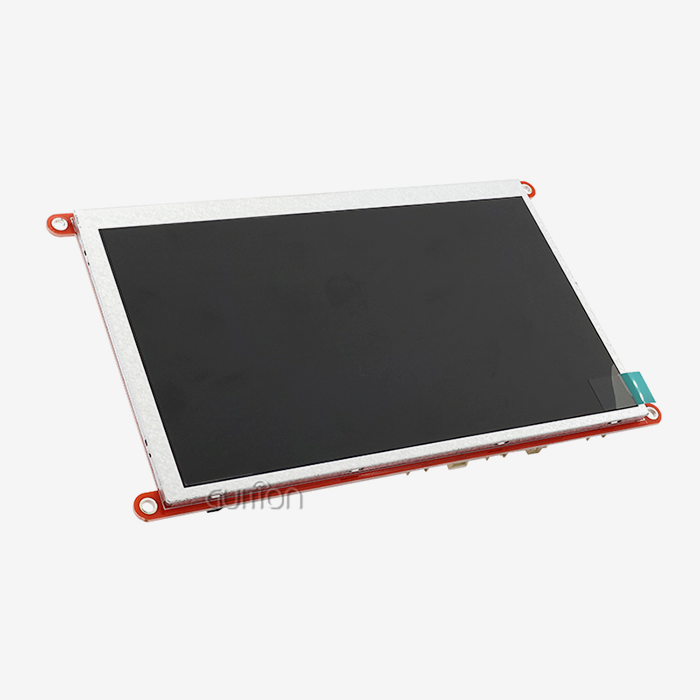
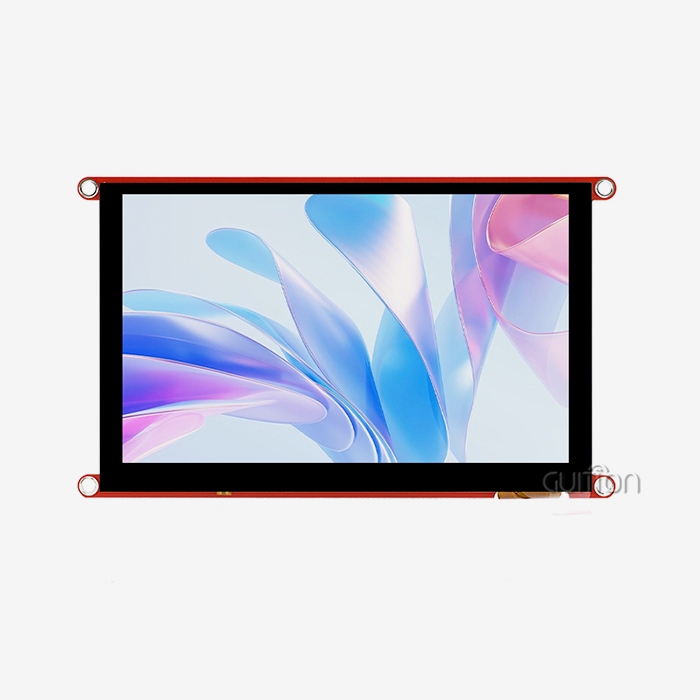
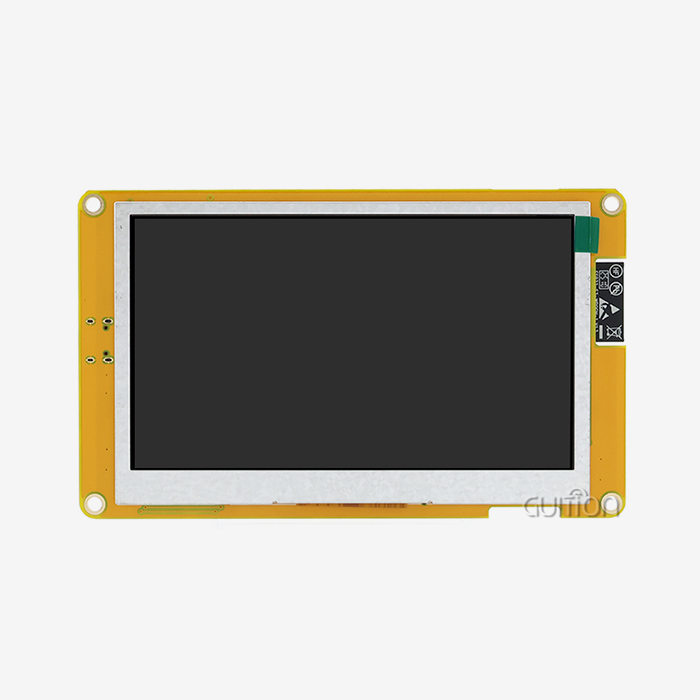
A custom LCD module can absolutely meet your unique design requirements, and in most cases, it outperforms generic alternatives. Whether you are building industrial control panels, medical monitoring equipment, or smart home appliances, a purpose-built display module aligns with your exact mechanical, optical, and electrical specifications. The GUITION JC4827Q343N_I is a strong example: it pairs a 400MHz D121BAV single-core MCU with a sharp 4.3-inch IPS screen at 480×272 resolution, giving engineers a dependable, application-ready custom LCD module without excessive development overhead.

Understanding Custom LCD Modules: Features and Functionalities
What Makes a Display Module "Custom"?
A custom LCD module has the screen, lighting control circuit, interface logic, and driver IC all in one unit that is made to fit your product's needs. A purpose-configured module, on the other hand, takes into account optical targets, form-factor limits, and interface support (SPI, I2C, parallel, RGB, LVDS, or MIPI DSI). All of this is done in a single piece that can be dropped into your design right away.
Panel Technology Options
Today, engineers choose between TN, IPS, VA, and OLED screen types based on the amount of light, the viewing angle, and the amount of power they have available. IPS screens, like the one in the GUIDE JC4827Q343N_I, show colors correctly and have a wide viewing angle. When workers in an industrial setting need to see the screen from different points during the course of a shift, these functions are very useful.
Interface and Backlight Flexibility
How well it reads in direct sunlight and how much power it uses depend on the type of backlight: edge-lit LED, direct-lit, or transflective. The JC4827Q343N_I has a different circuit for controlling the backlight. This means that the brightness can be changed directly by the software. The module has a serial port, IO port interfaces, and a slot set aside for a TF card. To connect sensors, peripheral controls, or logging files, you don't need any extra breakout boards.
Why Choose a Custom LCD Module? Advantages and Practical Applications
Performance Matched to Your Application
Most panels that you can buy off the shelf won't meet all of your needs. You need a screen that can handle 65K colors and smooth JPEG decoding up to 1024x768 at 60 frames per second if you want to show process animations on a medical device or show real-time graphs on an energy management panel. The Custom LCD module JC4827Q343N_I's Artinchip D121 processor can read both JPEG and PNG files, so it doesn't need a separate graphics processor.
Real-World Deployment Scenarios
This package is most useful in the following places:
- Industrial automation and smart warehousing: The 400MHz processing speed handles fast data refresh for equipment status panels and 3D printer interfaces without frame drops.
- Healthcare and wellness devices: The IPS panel's color consistency supports accurate readout displays for massage equipment, diagnostic devices, and cosmetic treatment instruments.
- Smart home and commercial appliances: Built-in WiFi and Bluetooth connectivity allow the module to join a home network or report data to a cloud backend without extra hardware.
- Automotive and EV charging stations: Wide-temperature stability and long-term supply reliability make it appropriate for vehicle instrument clusters and charging load interfaces.
Automation in business and smart storage: Progress screens and 3D printer interfaces can get new data quickly and without any frame drops at a speed of 400MHz.- Medical and beauty tools: The IPS panel's colors are always the same, so it can be used for accurate readout displays on massage machines, medical diagnostic tools, and beauty treatment tools.
As the module comes with both WiFi and Bluetooth, it can join a home network or send data to the cloud without the need for any extra gear.
EV and car charging stations: It can be used in charge load interfaces and car indicator screens because it stays stable at a number of settings and has a steady supply for a long time.
Shortened Time-to-Market
Test programs are loaded ahead of time at the factory. That's it! Just plug in the gadget and test right away. For R&D managers with short product launch plans, that early start saves weeks on early-stage validation.
Custom LCD Modules vs. Alternatives: Making an Informed Decision
Comparing Display Technologies
Standard LCD screens for consumers have an EOL risk, which means that the company that makes them could stop making them at any time. If this happened, they would have to be redesigned, which would cost a lot of money. A custom LCD module supplier will usually promise to keep supplying you for five to ten years. This is in line with what people who buy medical and business tools expect from it. When used constantly at high brightness, OLED modules don't last as long and cost more per unit. This is a big problem for HMI screens that are used 24 hours a day, seven days a week in factories.
Total Cost of Ownership
A custom display solution can cost anywhere from $500 to $5,000 or more for one-time NRE (Non-Recurring Engineering). The exact amount depends on how much customization is needed. Total cost of ownership is often less than putting together a stock panel with third-party driver boards and custom software. This is because you don't have to spend as much time and money on fixing and making mistakes in the field.
Matching the Right Module to Your Budget
The JC4827Q343N_I is a good middle ground for teams that need a low-cost entry point that is ready for production and doesn't need a lot of custom tooling. One of the firmware baselines that comes with it has already been tested and shown to work with Arduino, ESP-IDF, and native Guition development modes. This way, your team can work in the environment that suits them best.
Procurement Insights: How to Buy Custom LCD Modules Effectively
Evaluating a Custom LCD Module Supplier
Before you place a large order, ask for engineering samples and test them at the temperature range where you want them to work. Before you buy, make sure that the company that makes custom LCD modules provides complete datasheets, circuit guides, and helpful technical support. Your engineers will depend less on a supplier like Guition after delivery if they offer cross-platform online debugging tools.
Minimum Order Quantities and Lead Times
Prototype samples are normally sent out in three to five days. For more difficult one-of-a-kind sets, the tools and the first piece are made in three to five weeks. Mass production can take anywhere from four to six weeks, depending on how quickly you can get the raw materials. By adding these windows to your project plan, you can avoid launch delays.
Negotiating Favorable Terms
Ask your custom LCD module provider about price tiers based on volume, long-term supply deals, and rules for last-minute buy notifications. If your suppliers promise pin-compatible replacement parts in case a part stops being made, your product line won't have to go through years of board redesigns.
Designing Your Custom LCD Module: A Step-by-Step Guide
Define Your Display Requirements
First, write down the brightness goal, resolution, physical size, type of interface, operating temperature range, and operating temperature range. The GUITION JC4827Q343N_I targets 480×272 IPS at 4.3 inches, which is a good size for small panel holes in gadgets and mobile tools.
Use the Guition Online GUI Tool
If you use Guition's drag-and-drop online GUI builder, you don't have to write low-level display drivers from scratch. A library lets you pick settings and see where they go. You can also see what the interface will look like in real time. It takes a lot less time to make a UI this way, and HMI designers can change styles without changing the source code.
Validate Through Testing Protocols
If you want to start a production run, you should follow the ISO 13406-2 Class II guidelines for storage tests at high and low temperatures, vibration tests, and checking for pixel defects. The JC4827Q343N_I is built to last as long as military-grade standards say it should. It gives you a good place to start when you want to do your own outdoor qualification tests.
Conclusion
A custom LCD module can fit your design needs as long as you choose the right hardware and development platform. Inside the small GUITION JC4827Q343N_I is a 400MHz single-core MCU, a 4.3-inch IPS screen with a resolution of 480x272, WiFi and Bluetooth that are already built in, and a drag-and-drop GUI tool that can do everything. It has test tools already installed and can be used to build for Arduino, ESP-IDF, and Guition. Plus, it lets you use UTF-8 for more than one language. This feature gives engineers, product managers, and technical leaders a quick and easy way to show information. You don't have to add anything else to make it do this.
FAQ
What is the lead time for a custom LCD module order?
Sample fabrication typically takes three to five days for standard configurations. Custom tooling and first article samples require three to five weeks. Volume production runs generally need four to six weeks based on component availability.
Does the GUITION JC4827Q343N_I support touch input?
The JC4827Q343N_I does not include a touchscreen. It is a display-only module. If your application requires touch, Guition offers other models with integrated resistive or capacitive touch overlays.
Can I develop with Arduino on this module?
Yes. The module supports Arduino, ESP-IDF, and native Guition development modes, so your existing team skills apply directly without retraining.
How does remote OTA upgrade work?
The built-in WiFi connectivity allows firmware and UI project updates to be pushed over the network without physical access to the device, which reduces field service costs for deployed equipment.
What industries commonly use this type of custom LCD module?
Industrial automation, smart appliances, medical monitoring devices, EV charging stations, agricultural equipment controllers, and commercial kiosk terminals are the most common deployment environments.
Ready to Build with a Trusted Custom LCD Module Supplier?
GUITION's JC4827Q343N_I gives your team a production-ready display module backed by real technical documentation and responsive support. As an established custom LCD module manufacturer, Guition covers display sizes from 1.28" to 21.5" with a full software and connectivity stack. Contact our team today to request a sample or discuss your project specifications — reach us directly at david@guition.com or visit https://jingcaizhineng.aixdb.cn/.
References
1. Bhatt, R. & Patel, S. — Journal of Display Technology, 2021
2. IHS Markit — Global Display Module Market Report, 2022
3. International Electrotechnical Commission — IEC 61747: Liquid Crystal Display Devices, 2020
4. ISO — ISO 13406-2: Ergonomic Requirements for Flat Panel Displays, 2001
5. Grand View Research — Industrial HMI Market Analysis and Forecast, 2023
6. Society for Information Display — Display Technology Advances in Embedded Systems, SID Symposium Digest, 2022
Learn about our latest products and discounts through SMS or email