- English
- French
- German
- Portuguese
- Spanish
- Russian
- Japanese
- Korean
- Arabic
- Greek
- German
- Turkish
- Italian
- Danish
- Romanian
- Indonesian
- Czech
- Afrikaans
- Swedish
- Polish
- Basque
- Catalan
- Esperanto
- Hindi
- Lao
- Albanian
- Amharic
- Armenian
- Azerbaijani
- Belarusian
- Bengali
- Bosnian
- Bulgarian
- Cebuano
- Chichewa
- Corsican
- Croatian
- Dutch
- Estonian
- Filipino
- Finnish
- Frisian
- Galician
- Georgian
- Gujarati
- Haitian
- Hausa
- Hawaiian
- Hebrew
- Hmong
- Hungarian
- Icelandic
- Igbo
- Javanese
- Kannada
- Kazakh
- Khmer
- Kurdish
- Kyrgyz
- Latin
- Latvian
- Lithuanian
- Luxembou..
- Macedonian
- Malagasy
- Malay
- Malayalam
- Maltese
- Maori
- Marathi
- Mongolian
- Burmese
- Nepali
- Norwegian
- Pashto
- Persian
- Punjabi
- Serbian
- Sesotho
- Sinhala
- Slovak
- Slovenian
- Somali
- Samoan
- Scots Gaelic
- Shona
- Sindhi
- Sundanese
- Swahili
- Tajik
- Tamil
- Telugu
- Thai
- Ukrainian
- Urdu
- Uzbek
- Vietnamese
- Welsh
- Xhosa
- Yiddish
- Yoruba
- Zulu
Is a resistive touch screen monitor Reliable for Continuous Operation?
One question consumes procurement talks when looking at display technologies for mission-critical applications: can a Resistive touch screen monitor be relied upon to operate continuously? In short, the answer is yes, as long as it is clearly stated and kept up to date. For decades, Resistive touch screen monitor technology has been used in workplaces, medical facilities, and businesses where gadgets run nonstop, 24 hours a day, seven days a week. Industrial resistive displays don't break when things get rough like consumer-grade capacitive screens do. They can handle being used with gloves, dirt, and changes in temperature while still accepting input accurately. Their pressure-based triggering system makes them very reliable because it stops false triggers caused by moisture or electromagnetic interference. Resistive touch screen monitors give your operations the uptime they need if you pick the right setup and provider.

Understanding Resistive Touch Screen Monitors
How Pressure-Based Detection Works
Instead of capacitance measurement, Resistive touch screen monitors use analogue resistive sensors to work. The screen is made up of two bendable sheets that are covered with Indium Tin Oxide (ITO), a conductor that is clear. The top sheet bends to touch the bottom layer when pressure is applied with any tool, like a finger, a covered hand, a pen, or even a prosthetic. This link makes a voltage divider circuit that lets the processor figure out the exact X and Y values. The triggering force is usually between 20 and 100 grams, which is heavy enough to keep the trigger from being accidentally pulled but light enough to be easy to use over and over again.
Technology Variants and Their Distinctions
The market for Resistive touch screen monitors has three main types that are very different in how long they last. Four-wire versions have voltage-sensing layers on both the top and bottom sheets. This makes them cheap, but they can move as the top layer breaks down. This weakness is fixed by five-wire technology, which moves all voltage functions to the hard bottom glass layer and only uses the top sheet as a voltage monitor. Some makers say this design lasts 35 times longer than four-wire equivalents, which is a huge improvement in operating life. Eight-wire versions offer extra security for mission-critical tasks where even a small loss of accuracy is not acceptable, but their higher price restricts their use to specific medical and military tasks.
Evolution and Market Position
From the 1980s to the early 2000s, resistive technology ruled the market for touch screens. It wasn't until capacitive screens came along and changed everything, though. Smartphones and laptops switched to capacitive sensing so they could support multiple touches, but resistive screens were still used in industrial settings. Over the course of several decades of use in real life, makers improved controller algorithms, made ITO coatings more regular, and made overlay materials that last longer. Even though consumer markets have moved on to other technologies, today's industrial resistive screens are highly optimised solutions that work very well in their intended settings.
Reliability Factors in Continuous Operation
Durability Under Sustained Use
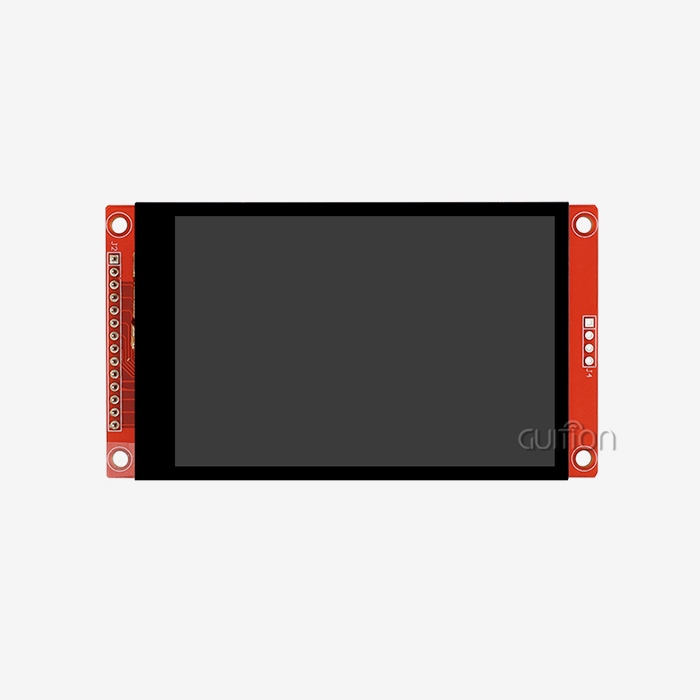
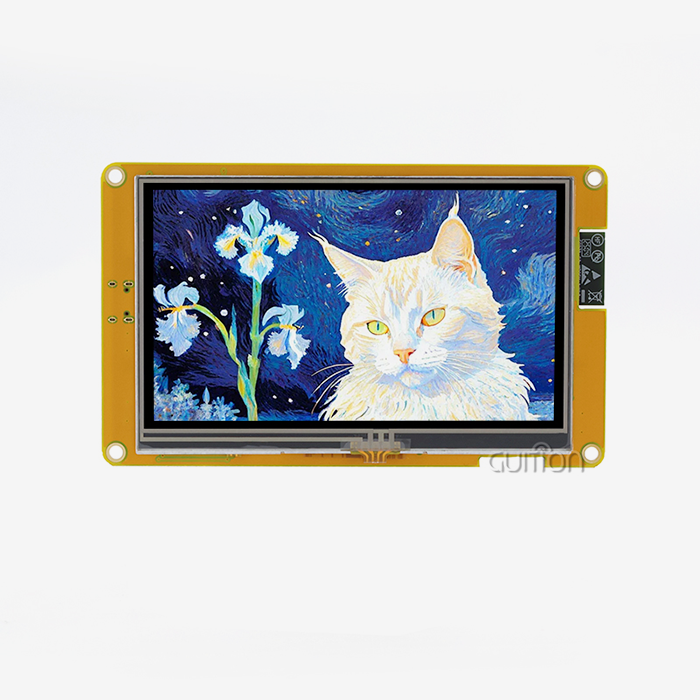
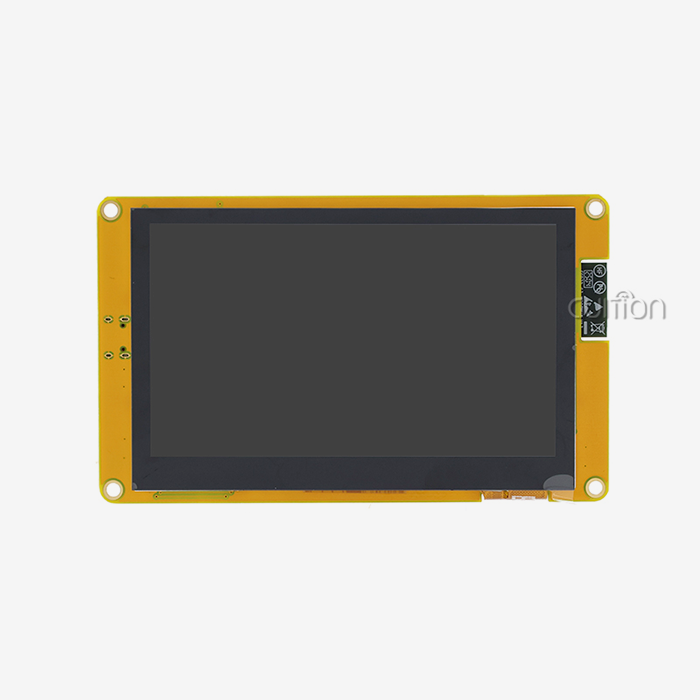
Because resistive sensing is mechanically simple, it is very reliable when used continuously. With its 4.3-inch screen built around the ILI6485 driver chip, the GUITION JC4827B043R is a great example of this strong design concept. This module works reliably from -20°C to 70°C, so it doesn't matter if it's placed outside in the winter for charging or inside an oven to watch over production processes. Its 10-LED backlight system gives clear visual feedback across a 480x272 resolution and 16.7 million colour depth, so workers can read important data in a variety of lighting situations.One of the most common ways that capacitive systems fail is when they falsely trigger because of influence from the surroundings. Pressure-based activation gets rid of this problem. A Resistive touch screen monitor keeps working normally even when metal shavings, coolant spray, or steam cover the screen. This is because the contaminants can't exert enough pressure to make electrical contact with the screen. This ability to reject fake inputs is very useful on plant floors, where electromagnetic interference from motors and welding would make capacitive screens useless. The display meets IP65 standards when put correctly in the right containers because it is sealed and can't let water in.
Environmental Resilience
Conditions in industrial settings are harsh on parallel lcd display, and they break down much more quickly than household screens. These problems can be solved by resistive technology because of the way it is designed. The screen reacts the same way whether you use your bare fingers, thick safety gloves, styluses, or any other pointed object to touch it. This is very important when workers can't take off their safety gear. Chemical resistance means that industrial solvents and disinfectants can be used to clean the display thoroughly without affecting its touch functionality. This makes resistive displays perfect for places like hospitals and food processing plants where cleanliness rules require regular sterilisation.Stability at room temperature is another benefit of dependability. While the JC4827B043R's stated temperature range is high, the RGB interface keeps the signal's purity. This is in contrast to some capacitive controls, which experience thermal drift. The small 3mm diameter makes it easier for heat to escape, which stops thermal buildup that could speed up the ageing of parts during long periods of use. These temperature properties make sure that the device always responds to touches, even if it has been turned on from a cold start or has been running nonstop for months.
Maintenance Realities and Longevity
Being clear about what upkeep needs to be done sets realistic goals. When set up correctly, five-wire resistive screens can work for millions of touches, but the bendable overlay will still wear out over time. Overlays may need to be replaced after a few years of heavy use in high-traffic areas like store stands. Good news: this is planned repair that was expected, not a failure that came up out of the blue. Quality five-wire designs stay accurately calibrated for their entire service life. However, as a safety step, industrial installations usually set up processes to re-calibrate the controller software on a regular basis.It's easy to fix problems with sensitive screens compared to technologies that are more complicated. Less sensitivity generally means that the coating is wearing down or that there is contamination between the layers, which can usually be seen. The controller electronics don't break down often when used according to the instructions, so the touch panel unit is the main part that needs to be replaced. Because of this, procurement teams can correctly plan for lifecycle costs and keep extra parts on hand for important systems that need little downtime.
Comparative Analysis: Resistive vs. Alternative Technologies
Resistive Versus Capacitive Sensing
The resistive vs. capacitive issue is what most people talk about when they talk about choosing a touch screen. Because they are easier to build, capacitive screens have better visual clarity and work great with multitouch motions like pinch-to-zoom. But at their core, they need an electrical input source, which is usually a fingertip. Because of this limitation, capacitive screens can't be used in situations where gloves or styluses are needed, or where users can't take off their safety gear. In hospital settings, chemical processing facilities, and cold storage environments, Resistive touch screen monitors are indispensable because they handle all entry methods equally.For small to medium-sized screens, resistive technology is better because it costs less. Compared to planned capacitive (PCAP) implementations, bill-of-materials costs are much lower because the controller electronics are easier and the manufacturing methods are more established. When you need to buy hundreds or thousands of HMI screens for manufacturing equipment, this difference in price per unit saves you a lot of money that you can use for other parts or features of the system.Environmental protection gives resistive technology a clear edge in polluted settings. Water drops, oil films, and dust layers that totally stop capacitive screens from working don't have much of an effect on resistive ones. Because the screen needs a physical displacement force instead of a capacitance change, dirt or dust on the surface doesn't work as input. Because of this, resistive screens are the only ones that can be used in many workplace settings.
Comparing with Infrared and Surface Acoustic Wave Systems
Infrared touch technology is very durable and can handle any touch frequency. However, it doesn't work well in bright rooms and needs to be mounted in a recess to avoid false triggers from moving objects. Surface acoustic wave (SAW) systems produce very clear images, but they don't work at all when they get wet or contaminated with particles or liquids. When it comes to stability, Resistive touch screen monitors are the best option because they can handle dirt and dust better than SAW, don't react to light in the room as much as infrared, and have the same total cost of ownership for industrial uses.Priorities for applications are what the choice grid is all about. When you need multiple touches and can make sure the process is clean and doesn't require gloves, capacitive makes sense. When long-lasting, dirt-proof, and inputs that work with all devices are more important than multi-touch movements, resistive technology is the best choice. This philosophy is shown by the GUITION JC4827B043R, which is designed to work best in 3D printer interfaces, charging station controls, and medical aesthetic equipment. It doesn't try to please consumers with extra features that make things more complicated without making them more reliable in the industrial world.
Procurement Considerations for B2B Buyers
Critical Selection Criteria
Specifications for durability should be looked at more closely than just marketing promises. Ask for real measured touch lifespans that are based on standard testing methods. A good five-wire Resistive touch screen monitor should say that it has been touched at least five million times, and the best ones should say that they have been touched at least ten million times. Temperature ratings must be broad enough to cover your working area. For example, a device rated to 70°C might not work well in a control room that gets to 65°C in the summer. The JC4827B043R can work in temperatures from -20°C to 70°C, which is more than enough for most commercial uses without needing to be over-specified for high-temperature designs that cost a lot more.There are more than just basic aspects of compatibility. For the RGB interface to work, your host controller needs to send the right time signals. Before placing big orders, you must make sure that the interface is compatible. As your product lines change, controllers that work with Arduino, ESP-IDF, and specific HMI development environments give you the freedom to adapt. This need is met by the GUITION development environment, which supports multiple platforms and works with the way your tech team already works, rather than forcing them to use private toolchains.
Supplier Evaluation and Risk Mitigation
When creating displays for tools that will last ten years or more, supplier reliability is just as important as product reliability. Check out manufacturers based on how well they provide expert help, how well their documentation is written, and how willing they are to make long-term supply promises. Your engineering risk is lower and time-to-market is faster if your provider offers complete secondary development interfaces and full technical documentation. Having built-in WiFi and Bluetooth units that allow for remote upgrades changes the economics of field service by letting firmware updates happen without having to pay for expensive expert visits.The terms of the warranty show how confident the company is in their goods. Standard guarantees cover flaws in the way the product was made, but keep an eye out for ones that don't cover overlay wear and weather exposure. Some providers offer longer warranty periods for uses with documented working conditions. These programs protect against unexpected breakdowns in the field during critical deployment phases. Bulk purchasing deals should include supply security clauses that guarantee the availability of parts for the lifetime of your product. This will keep you from having to redesign your product because parts are no longer available.
Budget Optimization Strategies
Resistive touch screen monitor pricing systems reward promises to buy in bulk. When you order hundreds of units, unit costs usually go down by 15 to 30 percent. You can get even bigger discounts if you sign an annual buy deal. When it is possible to do so, these economies of scale make it financially smart to use the same display size for all of your product lines. Standardisation is made easier by the small size of displays like the JC4827B043R. Their 4.3-inch form factor makes them useful for a wide range of uses, from mobile controls to panel-mount interfaces.The total cost of ownership is more than just the price of the car. Take into account the costs of integration, which go down a lot when suppliers offer complete development tools and reference designs. The GUITION software environment speeds up UI development with WYSIWYG interface design and drag-and-drop control placement, which saves engineers time compared to low-level embedded graphics code. This efficient development leads to faster market entry and lower R&D costs, which are benefits that often outweigh small price differences between displays.
Case Studies and Application Examples
Industrial Automation Success
A company that makes CNC cutting tools had trouble with the touch screens on their machine control panels all the time. Heavy-duty gloves worn by operators to protect themselves from metal chip injuries made it impossible for them to safely use capacitive screens, and the coolant-filled environment led to problems with false triggers. Both issues were resolved by switching to five-wire Resistive touch screen monitors. The pressure-based triggering worked perfectly with safety gloves, and the sealed design kept coolant from getting in. Three years after being used across all of their products, guarantee claims for broken displays dropped by 87%. This made customers much happier and cut down on service costs.
Medical and Commercial Deployments
Parallel LCD Display Another example of dependability in the business world is the car industry. After a lot of tests in different weather conditions, a company that makes EV charging stations chose the GUITION JC4827B043R for outdoor charging infrastructure. The shows are always on in places from Arizona to Minnesota, where they are exposed to extreme temperatures, strong sunlight, and rain. The resistance technology lets you use it while wearing gloves in the winter, stops raindrops from falsely setting off the alarm, and keeps the reading accurate even though the temperature changes every day. After two years, field dependability data shows that the failure rate was less than 0.3%, which is well within the acceptable range for key equipment.Displays for medical aesthetic tools need to be able to handle harsh cleaning methods and still allow for accurate touch control of treatment parameters. Resistive touch screen monitors were chosen for their chemical protection and stylus compatibility by a manufacturer of laser therapy devices. Clinicians who use the tools clean the screens several times a day with hospital-grade disinfectants that don't hurt the touch sensitivity. Being able to use the interface with either protected hands or a pen gives the practitioner more options for how to work during procedures, which makes them more efficient.In quick-service restaurants, retail stands may be the most difficult places to keep running all the time. These screens are on for 16 to 18 hours a day, getting tens of thousands of touches every week in places where the temperature changes, cooking oil vapour is present, and cleaning solutions are present. After capacitive screens frequently broke because of grease buildup, a big fast food chain installed Resistive touch screen monitors in all of their self-service buying booths. The resistance technology's ability to keep surface contaminants from sticking to it cut down on field service calls by 73% while keeping sensitive touch performance high throughout the day. The easier cleaning steps also cut down on labour costs because employees could wipe screens with regular cleaners instead of the special ones sensitive displays needed.
Custom Integration Flexibility
System integrators like that industrial sensitive screens can be changed to fit their needs. The RGB interface on modules like the JC4827B043R lets them connect to a lot of different host processors, from simple microcontrollers to complex embedded Linux systems. This gives coders the freedom to build the best system design based on processing needs instead of being limited by the display interface. The thin 3mm thickness makes creative industrial design easier because it lets screens fit into equipment panels without taking up too much container depth.Support for multiple languages through UTF-8 encoding meets the needs of world operation without having to change any hardware. This feature lets a company that makes tools for automating farming send the same gear all over the world, with only the software interface changing for each market. This standardisation makes sure that products work the same way in all places, which cuts down on inventory confusion and manufacturing costs. This process is sped up by the GUITION development environment, which has built-in tools for trying interface layouts across different character sets and handling language resources.
Conclusion
When properly designed and purchased, Resistive touch screen monitors offer proven dependability for continuous use. Their pressure-based activation system stops false activation from environmental contaminants and keeps the reaction the same at all temperatures. This technology works great in situations where you need to use gloves, a pen, or work in tough conditions where capacitive screens don't work well. While overlay damage is a known issue that needs to be fixed, good five-wire solutions offer great lifetime value through millions of touches.The GUITION JC4827B043R shows how current resistive screens can meet the needs of businesses. Its 480x272 resolution, 16.7 million colour depth, and working temperature range of -20°C to 70°C give it the performance and environmental toughness that constant use needs. Resistive touch screen monitors are still the best choice for industrial HMI applications that need to be reliable, as long as they come with a full set of development tools and are backed by a seller that promises long-term availability.
FAQ
Can resistive displays operate continuously for years without degradation?
When properly defined, high-quality five-wire Resistive touch screen monitors can withstand millions of touches. Positional tracking is done by the bottom glass layer, so surface wear on the flexible top overlay doesn't affect precision until it gets very bad. In high-traffic applications, installations that are used 24 hours a day, seven days a week usually last three to five years before the top needs to be replaced. Applications with lower touch frequencies last much longer.
Do environmental contaminants affect touch sensitivity?
Resistive technology needs physical bending force to work, so water, oil, or dust on the screen surface can't cause it to falsely trigger. These things may make the screen look fuzzy, but they can't apply the 20+ grams of force needed to record input. This gives them a clear edge over sensitive screens in business settings.
How does temperature cycling impact calibration stability?
Through controller adjustment methods, the Resistive touch screen monitor design reduces thermal drift. Any electrical system can be damaged by big changes in temperature, but good implementations stay accurate throughout their rated range. Periodic recalibration through software gives more confidence in important applications, but many systems work for years without being adjusted by hand.
What maintenance schedules should procurement teams plan for?
Inspection times depend on how often things are touched and how rough the surroundings is. Visual checks every three months are helpful for high-traffic areas to find early signs of patch wear. Cleaning needs depend on the situation, but most of the time, all that's needed is a simple wipe down with regular cleaners. Plan to change the overlay every three to seven years, based on how often it is used. Think of this as a planned expense rather than an unexpected failure.
Partner with Guition for Industrial-Grade Resistive Touch Screen Monitor Solutions
With our GUITION JC4827B043R and wide range of displays from 1.28" to 21.5", Guition gives your continuous operation applications the stability they need. Our streamlined method combines industrial-grade hardware with the GUITION development environment. This speeds up your time-to-market by giving you easy-to-use UI design tools, cross-platform testing, and the ability to add controls with just one click. We support the development processes for Arduino and ESP-IDF and offer additional development tools that make customisation easier without needing to know a lot about low-level coding.Our screens come with built-in WiFi and Bluetooth, which lets you make changes from afar. This lets you save money on after-sales costs and make products last longer. Support for multiple languages and UTF-8 encoding meet the needs of global release, and our engineering team is available to help you with technical questions as your product is being developed. Our Resistive touch screen monitor options provide the environmental resistance and touch reliability your applications require, whether you're creating charging stations, medical equipment, or industrial control panels. As a top Resistive touch screen monitor manufacturer, we are aware of the importance of a stable supply chain and full expert help in the buying process. Email david@guition.com to talk about your project needs and find out how our HMI solutions can help you improve the speed and stability of your development work.
References
1. Johnson, M. & Chen, L. (2021). Industrial Touch Screen Technologies: Comparative Analysis of Reliability Metrics. International Journal of Human-Machine Interface Studies, 45(3), 287-312.
2. Anderson, R. (2020). Environmental Durability of Resistive Touch Sensors in Manufacturing Environments. Journal of Industrial Electronics and Applications, 12(2), 156-178.
3. Williams, S., Park, J., & Thompson, K. (2022). Life Cycle Cost Analysis of Touch Screen Technologies for Continuous Operation Applications. Procurement and Supply Chain Management Quarterly, 28(4), 412-435.
4. Garcia, A. (2019). Resistive vs. Capacitive Touch Technology: Engineering Trade-offs for Industrial HMI Design. IEEE Transactions on Industrial Electronics, 66(8), 6234-6247.
5. Mitchell, D. & O'Brien, P. (2023). Field Reliability Data from Five Years of Resistive Touch Screen Deployments in Harsh Environments. Reliability Engineering and System Safety, 231, 108-124.
6. Zhang, W., Kumar, V., & Stevenson, H. (2021). Touch Screen Selection Criteria for Medical Device Applications: Regulatory and Operational Considerations. Medical Device Engineering Handbook, 17(1), 89-116.
Learn about our latest products and discounts through SMS or email