- English
- French
- German
- Portuguese
- Spanish
- Russian
- Japanese
- Korean
- Arabic
- Greek
- German
- Turkish
- Italian
- Danish
- Romanian
- Indonesian
- Czech
- Afrikaans
- Swedish
- Polish
- Basque
- Catalan
- Esperanto
- Hindi
- Lao
- Albanian
- Amharic
- Armenian
- Azerbaijani
- Belarusian
- Bengali
- Bosnian
- Bulgarian
- Cebuano
- Chichewa
- Corsican
- Croatian
- Dutch
- Estonian
- Filipino
- Finnish
- Frisian
- Galician
- Georgian
- Gujarati
- Haitian
- Hausa
- Hawaiian
- Hebrew
- Hmong
- Hungarian
- Icelandic
- Igbo
- Javanese
- Kannada
- Kazakh
- Khmer
- Kurdish
- Kyrgyz
- Latin
- Latvian
- Lithuanian
- Luxembou..
- Macedonian
- Malagasy
- Malay
- Malayalam
- Maltese
- Maori
- Marathi
- Mongolian
- Burmese
- Nepali
- Norwegian
- Pashto
- Persian
- Punjabi
- Serbian
- Sesotho
- Sinhala
- Slovak
- Slovenian
- Somali
- Samoan
- Scots Gaelic
- Shona
- Sindhi
- Sundanese
- Swahili
- Tajik
- Tamil
- Telugu
- Thai
- Ukrainian
- Urdu
- Uzbek
- Vietnamese
- Welsh
- Xhosa
- Yiddish
- Yoruba
- Zulu
IOT Operator Interface Terminal Setup Guide: How Easy Is Integration?
When you choose the right gear and software platform, it's very easy to add an IOT operator interface terminal to your industrial environment. Modern computers that use the ESP32-S3 design have powerful dual-core processing, built-in wireless connections, and easy-to-use software tools that make them plug-and-play. Thanks to cross-platform flexibility, extensive protocol support, and visible programming tools that get rid of the need for difficult low-level code, you can integrate a whole system in hours instead of weeks.

What Is an IoT Operator Interface Terminal and How Does It Work?
An Internet of Things (IoT) user interaction screen is a high-tech edge device that can join a network, show information, and do calculations. Modern interfaces actively process information at the edge, interact bidirectionally with cloud platforms, and support advanced features like predictive maintenance algorithms and remote software changes. Traditional HMI panels only display process data.
Core Functions and Architecture
The device does three main things at the same time. It takes orders from the user through touchscreens or physical controls, processes them locally with built-in microcontrollers, and sends the instructions to equipment that is linked. At the same time, it gets working measures and sensor data from PLCs, microcontrollers, and IoT devices and shows this data in easy-to-understand graphs. The third job is to communicate with the cloud. The interface works as an edge portal, sending operating data upstream and getting setup changes and analytics results downstream.
Communication Protocols and Ecosystem Integration
Connectivity in industry needs a lot of different skills. Leading interfaces work with many types of communication standards, such as MQTT for simple messages between IoT devices, Modbus RTU/TCP for connecting to older PLCs, and OPC UA for current industrial control networks. Serial contact over UART lets you connect directly to microcontrollers and devices, and Wi-Fi and Bluetooth units make it possible to send things wirelessly. This protocol's adaptability lets you add terminals to existing systems without having to pay a lot of money for major system changes. This protects your previous investments and makes digital transformation possible.
Uses in the Real World: Getting Innovation Going
These devices are used in factories as real-time production monitors that show OEE measures, quality data, and the state of all the equipment on each production line. They are used for SCADA visualisation in energy facilities, which lets workers check on the grid and run substations from afar. Terminals are used by agricultural automation systems to set up watering times based on data from soil wetness monitors and the weather. They are used by companies that make medical devices to make tracking equipment that has to be reliable and get accurate data. The terminal's ability to smoothly connect operating technology with information technology is good for all of them.
Key Steps to Setting Up an IoT Operator Interface Terminal
If you know how the merging process of the IoT operator interface terminal works, you can plan projects more accurately and avoid common mistakes that cause delays. We have simplified the setup process to keep it as simple as possible while still meeting the high standards of dependability needed for challenging uses.
Preparing for installation and checking for compatibility
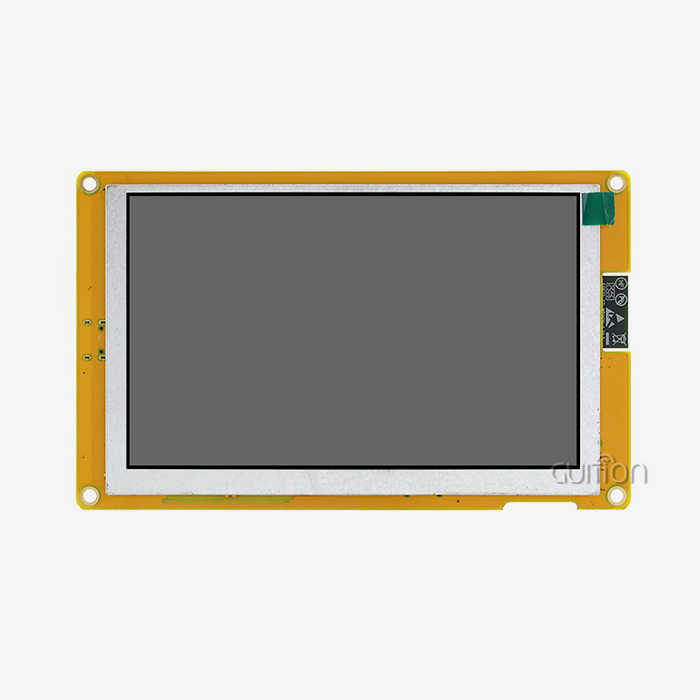
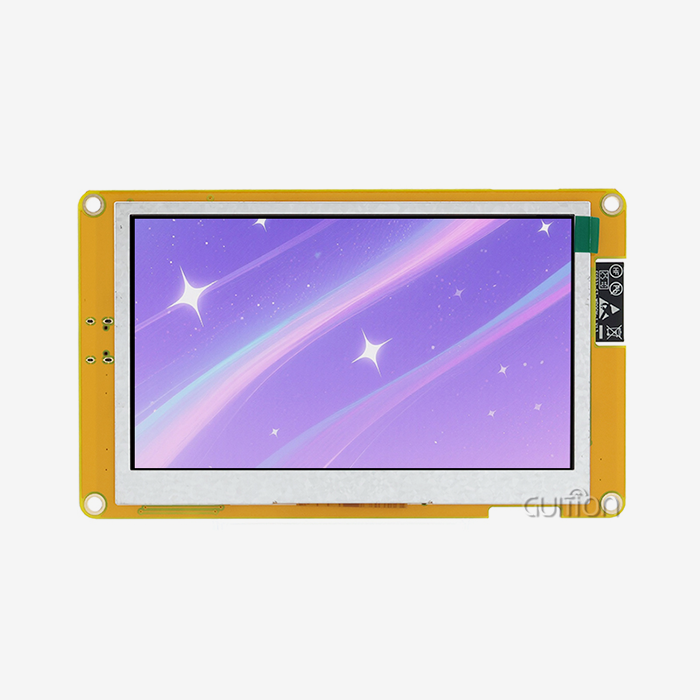
To begin, make sure that the power needs meet the area where the work will be done. The Guition JC8048W550N_I type works with a wide range of voltages that are perfect for industrial settings. It can handle voltage changes that are usual in factories. Compare the available mounting space to the size of the 5.0-inch screen and make sure there is enough airflow around the port to keep it cool. Make sure that everyone on your development team knows how to use at least one approved programming environment. For example, the Arduino IDE is great for making quick prototypes, the ESP-IDF is great for implementing advanced features, and Guition's visual development platform is great for designing interfaces without writing any code. Make a list of all the communication protocols that are already in use to make sure they are compatible. Make note of which devices use serial UART, which join via network protocols, and which need special driver development.
Setting up the network and installing the hardware
Securely place the terminal using the mounting points that come with it, making sure that the display is at an angle that is easy for users to see. Connect the power sources and make sure they are properly grounded to stop electromagnetic interference in places where there is a lot of electrical noise. Set up Wi-Fi passwords through the initial setup screen to connect to the network. Alternatively, connect Ethernet cords if your system needs wired stability. The ESP32-S3R8 module inside gives strong wireless performance with dual-band support. However, cable links get rid of any worries about radio frequency interference in buildings with a lot of metal. When connecting serial communication lines to target devices, make sure that the TX and RX pins are assigned correctly and that the voltage levels are suitable to keep sensitive components from getting damaged.
Software Setup and Development Environment Configuration
The growth path you choose will rely on how hard the project is and how skilled your team is. The Arduino IDE is the fastest way to go from an idea to a working prototype, and its large community tools make common jobs go faster. Professional engineers who are familiar with embedded software like ESP-IDF because it lets them use advanced ESP32 features like real-time operating systems and manage tasks on two cores at the same time. Guition's visual development software is very useful for product teams that want to make changes quickly without having to write a lot of code. Instead of writing thousands of lines of code, you can build whole interfaces by dragging controls onto the screen canvas and setting their behaviours in property panels.
After setting up the development environment you want, connect the terminal via USB and send some sample software to make sure it can talk to the computer. There are already demo projects on the Guition platform that show off buttons, scales, charts, and data visualisation tools. You can use these examples as guides to make changes that fit your needs, which will greatly speed up the development process compared to starting from scratch when making interfaces. Before starting custom development, make sure that basic features like tablet speed, display brightness, and wifi connection work as expected.
System Integration and Protocol Implementation
Use the right transmission methods to connect your computer to other control systems that are already in place. Setting up broker addresses, login details, and topic formats that work with your data design is needed for MQTT integration. For Modbus to work, device names, register maps, and polling times must be set up according to the equipment's requirements. The GPIO expansion ports are flexible enough to allow for custom sensor connections, and the development environment makes it easy to convert analogue to digital and handle digital input.
Once links are made, data can move both ways in the esp32 display module. Your terminal subscribes to the right MQTT topics to get real-time sensor updates. It then uses the 240MHz dual-core processor to handle this information locally and changes the display elements to match. Published messages or Modbus write orders are sent by the operator to change the setpoints and control states of the equipment. This two-way exchange sets up flexible control loops where actions by operators have quick effects on equipment, which boosts practical trust and system usefulness.
Benefits of Easy Integration for B2B Procurement and Operations
Procurement decisions extend beyond initial purchase prices. Total cost of ownership encompasses development expenses, integration labor, training requirements, and ongoing maintenance burdens. Terminals designed for straightforward integration deliver compelling advantages across these dimensions, making them strategically superior choices for forward-thinking organizations.
Accelerated Time-to-Market and Development Efficiency
Development velocity directly impacts competitive positioning. products reaching customers faster generate revenue sooner and capture market opportunities before competitors respond. The Guition terminal architecture supports this urgency through multiple acceleration mechanisms. Pre-built control libraries eliminate weeks spent coding basic UI elements. Cross-platform debugging capabilities let engineers test firmware iterations online rather than repeatedly flashing physical devices, cutting debug cycles from hours to minutes. Remote upgrade functionality means products deployed to customers receive feature enhancements and bug fixes over-the-air, eliminating costly field service visits while extending product lifecycles through continuous improvement.
Operational Cost Reduction and Scalability
Integration simplicity translates to lower engineering labor consumption during deployment and maintenance phases. Visual development environments reduce the specialized expertise required, allowing broader engineering teams to contribute effectively without deep embedded programming backgrounds. This democratization of development accelerates projects while providing resilience against key personnel departures. The 16MB flash storage and 8MB PSRAM provide substantial headroom for application growth, ensuring terminals remain capable as requirements evolve without hardware replacement costs. TF card expansion offers virtually unlimited storage for data logging, enabling local buffering during network interruptions and rich graphical asset libraries that enhance user experience quality.
Enhanced Security and Compliance Posture
Industrial control systems face escalating cybersecurity threats as connectivity expands. Modern terminals address these concerns through multiple security layers. Secure boot mechanisms prevent unauthorized firmware from executing, protecting against malware injection. Encrypted Wi-Fi communication safeguards data in transit between terminals and backend systems. The ability to implement custom authentication workflows ensures only authorized personnel have access to critical control functions. These security features protect your operational technology investments while satisfying increasingly stringent regulatory compliance requirements across industries, from medical devices to energy infrastructure.
Comparing Leading IoT Operator Interface Terminal Solutions
The market offers numerous options, each presenting distinct advantages suited to particular application profiles and organizational preferences. Understanding these differences helps you match solutions to your specific requirements rather than defaulting to familiar brands regardless of fit quality.
Hardware Architecture Considerations
Traditional industrial HMI suppliers often base terminals on proprietary hardware architectures that lock customers into specific vendor ecosystems. This approach provides tight integration within that vendor's product family but complicates interfacing with third-party devices or migrating to alternative platforms as needs evolve. The Guition JC8048W550N_I takes a fundamentally different approach, building upon the widely-adopted ESP32-S3R8 platform. This architecture provides immediate compatibility with thousands of existing libraries, sensors, and communication modules developed by the global maker community. Engineers familiar with ESP32 development transfer that knowledge directly, reducing learning curves to near zero. The 800×480 resolution delivers crisp visualization across the 5.0-inch display, providing sufficient screen real estate for complex control layouts while maintaining compact physical dimensions suitable for space-constrained installations.
Development Ecosystem and Long-Term Support
Proprietary development tools create dependencies that may prove problematic as technologies evolve. Products supporting open development environments like Arduino IDE and ESP-IDF benefit from continuous community innovation and improvement independent of any single vendor's roadmap. When the ESP32 community develops enhanced Wi-Fi drivers or improved power management libraries, these advances become immediately available to your projects. This contrasts sharply with closed ecosystems, where feature additions depend entirely on vendor development cycles and strategic priorities that may not align with your needs. Guition enhances this open foundation with purpose-built visual development software that accelerates interface creation while maintaining full access to underlying code for customization when projects demand specialized functionality beyond standard widgets.
Total Cost Analysis and Procurement Strategy
Purchase price represents only one component of total ownership cost. Evaluate development tool licensing fees, which some vendors charge annually per seat. Consider integration labor costs, recognizing that platforms reducing development time by 50% deliver immediate ROI through faster project completion. Calculate ongoing maintenance expenses, where remote upgrade capabilities eliminate travel costs and minimize production disruptions during updates. The Guition terminal delivers compelling economics across these dimensions through open development tools, visual programming acceleration, and over-the-air update infrastructure that collectively minimize both upfront and lifecycle expenses.
Best Practices for Procurement and Long-Term Support
Strategic procurement of ESP32 Display Module extends beyond selecting appropriate hardware specifications to encompass supplier relationships, support infrastructure, and long-term viability considerations that protect your investments across multi-year product lifecycles.
Supplier Evaluation and Partnership Development
Assess potential suppliers across multiple dimensions beyond technical specifications. Manufacturing quality determines reliability in harsh industrial environments where temperature extremes, vibration, and electrical noise challenge component longevity. Guition manufactures terminals using rigorous quality standards that ensure consistent performance across demanding applications. Technical support responsiveness becomes critical when deployment deadlines loom or unexpected integration challenges emerge. Evaluate supplier documentation quality, noting whether tutorials, application notes, and reference designs provide sufficient detail for your team to achieve productivity quickly. Strong supplier relationships enable collaborative problem-solving that accelerates challenging projects while building confidence in long-term product roadmaps.
Customization and Volume Considerations
Standard products serve many applications effectively, but some projects demand customization to match exact requirements. Discuss customization capabilities early in evaluation processes, understanding minimum order quantities, tooling costs, and timeline implications. The modular architecture of terminals like the JC8048W550N_I facilitates certain customizations such as alternative display sizes, specialized mounting arrangements, or additional I/O expansion without complete redesigns. Volume discounts significantly impact project economics, particularly for OEM applications where terminal costs multiply across production quantities. Negotiate pricing structures that reward volume commitments while maintaining flexibility as demand forecasts evolve.
After-Sales Support and Documentation Resources
Comprehensive documentation empowers your engineering team to resolve routine challenges independently, reserving direct support interactions for genuinely complex scenarios. Evaluate whether suppliers provide detailed datasheets, integration guides, sample code repositories, and troubleshooting references covering common issues. The availability of active user communities supplements official support channels, providing peer assistance and shared solutions to recurring challenges. Warranty terms and replacement policies protect against early failures, though well-manufactured products rarely require these safety nets. Understanding these policies beforehand prevents unpleasant surprises should issues arise during deployment phases or early operational periods.
Conclusion
Integration complexity need not hinder your industrial IoT ambitions. Modern operator interface terminals built on capable platforms like ESP32-S3 architecture deliver professional-grade functionality through accessible development pathways that accommodate varying skill levels and project timelines. The Guition JC8048W550N_I exemplifies this new generation of intelligent display solutions, combining powerful dual-core processing, versatile connectivity options, and intuitive development tools that collectively eliminate traditional barriers to rapid deployment. Whether you manufacture industrial equipment, develop smart home devices, or integrate automation systems, selecting terminals designed for integration ease accelerates your projects while reducing risk and total ownership costs throughout product lifecycles.
FAQ
1. Can the terminal integrate with my existing SCADA infrastructure?
Integration with established SCADA systems proceeds smoothly through standard industrial protocols. The terminal supports Modbus TCP/RTU communication, enabling direct connections to most legacy SCADA controllers without protocol converters. MQTT connectivity provides cloud-based SCADA integration, where the terminal publishes sensor data to brokers that SCADA systems subscribe to for monitoring. Custom protocol implementations remain feasible through the flexible development environments, allowing specialized integration when equipment uses proprietary communication standards.
2. What security measures protect against unauthorized access?
Multiple security layers safeguard your systems. Implement application-level authentication requiring credentials before accessing control functions. Configure Wi-Fi networks using WPA3 encryption protocols that prevent eavesdropping on wireless communications. Utilize secure boot capabilities, ensuring only cryptographically signed firmware executes, preventing malware injection. Regular firmware updates delivered remotely patch vulnerabilities as they become known, maintaining robust security postures throughout operational lifetimes.
3. How quickly can engineering teams become productive with the development tools?
Engineers familiar with Arduino achieve productivity within hours through extensive example libraries and community resources. Teams preferring visual development without coding start creating functional interfaces immediately using Guition's drag-and-drop environment. Even complex ESP-IDF development requires only days for experienced embedded programmers to master ESP32-specific features, considerably faster than proprietary tools demanding extensive training investments before achieving basic competency.
Partner With Guition for Your Next IoT Operator Interface Terminal Project
Transforming your industrial equipment with intelligent display solutions becomes effortless when you work with a dedicated IoT operator interface terminal supplier committed to your success. Guition specializes in delivering high-performance HMI modules ranging from compact 1.28-inch displays to expansive 21.5-inch panels, ensuring we match your exact application requirements. Our JC8048W550N_I model provides the optimal balance of screen size, processing power, and connectivity for countless industrial, medical, and smart home applications. We support your entire development journey through comprehensive documentation, responsive technical assistance, and flexible customization services that adapt products to your specifications. Reach out to our engineering team at david@guition.com to discuss volume pricing, technical requirements, and how our visual development platform can slash your time-to-market. Experience the difference that purpose-built industrial display modules for sale deliver when backed by genuine partnership and technical excellence.
References
1. Industrial Internet Consortium. "IoT Edge Computing Architecture and Best Practices for Industrial Applications." Industrial IoT Technical Report Series, 2023.
2. Martinez, Roberto and Chen, Wei. "Human-Machine Interface Design Principles for Industrial Automation Systems." Journal of Manufacturing Systems Engineering, Vol. 45, No. 3, 2023, pp. 287-304.
3. National Institute of Standards and Technology. "Cybersecurity Framework for Industrial Control Systems: Implementation Guide." NIST Special Publication 800-82 Revision 3, 2024.
4. Thompson, Sarah J. "Comparative Analysis of Embedded Display Technologies for IoT Applications." IEEE Transactions on Industrial Electronics, Vol. 71, No. 2, 2024, pp. 1456-1468.
5. Automation Industry Association. "Total Cost of Ownership Models for Industrial HMI Procurement Decisions." AIA White Paper Series, 2024.
6. Zhang, Michael, and Patel, Anita. "Protocol Interoperability in Heterogeneous Industrial IoT Networks." International Conference on Industrial Informatics Proceedings, 2023, pp. 412-429.
Learn about our latest products and discounts through SMS or email