- English
- French
- German
- Portuguese
- Spanish
- Russian
- Japanese
- Korean
- Arabic
- Greek
- German
- Turkish
- Italian
- Danish
- Romanian
- Indonesian
- Czech
- Afrikaans
- Swedish
- Polish
- Basque
- Catalan
- Esperanto
- Hindi
- Lao
- Albanian
- Amharic
- Armenian
- Azerbaijani
- Belarusian
- Bengali
- Bosnian
- Bulgarian
- Cebuano
- Chichewa
- Corsican
- Croatian
- Dutch
- Estonian
- Filipino
- Finnish
- Frisian
- Galician
- Georgian
- Gujarati
- Haitian
- Hausa
- Hawaiian
- Hebrew
- Hmong
- Hungarian
- Icelandic
- Igbo
- Javanese
- Kannada
- Kazakh
- Khmer
- Kurdish
- Kyrgyz
- Latin
- Latvian
- Lithuanian
- Luxembou..
- Macedonian
- Malagasy
- Malay
- Malayalam
- Maltese
- Maori
- Marathi
- Mongolian
- Burmese
- Nepali
- Norwegian
- Pashto
- Persian
- Punjabi
- Serbian
- Sesotho
- Sinhala
- Slovak
- Slovenian
- Somali
- Samoan
- Scots Gaelic
- Shona
- Sindhi
- Sundanese
- Swahili
- Tajik
- Tamil
- Telugu
- Thai
- Ukrainian
- Urdu
- Uzbek
- Vietnamese
- Welsh
- Xhosa
- Yiddish
- Yoruba
- Zulu
IoT HMI Screens, GUITION for Reliable Solutions
A 7-inch display module, ESP32-S31, delivers a color touch interface, built-in Wi-Fi 6, Bluetooth, and enough RAM to operate a contemporary UI on one board. That gives you a solid foundation to build any kind of IoT HMI (human-machine interface, the screen users use to manage a connected device). Here’s what the hardware accomplishes, what specs to care about, and how to prevent the blunders that impede product launches. I'll also include my own memory math for 1024x600 displays, so you may scale up your idea before ordering samples. Need samples or a quote? Guition builds the ESP32-S31 7 inch display module and supports OEM teams worldwide. If you are comparing an ESP32-S31 7-inch display module supplier for your next IoT HMI project, email david@guition.com with your use case and volume. We reply with datasheets, sample options, and a development plan that fits your schedule.

What Makes an ESP32-S31 7 Inch Display Module Ideal for IoT HMI Applications?
The interface, not the chip, is where most linked goods fail. Users touch a screen, wait, and lose faith when the screen is slow. A decent IoT HMI has to be fast, display clear images, and remain online.
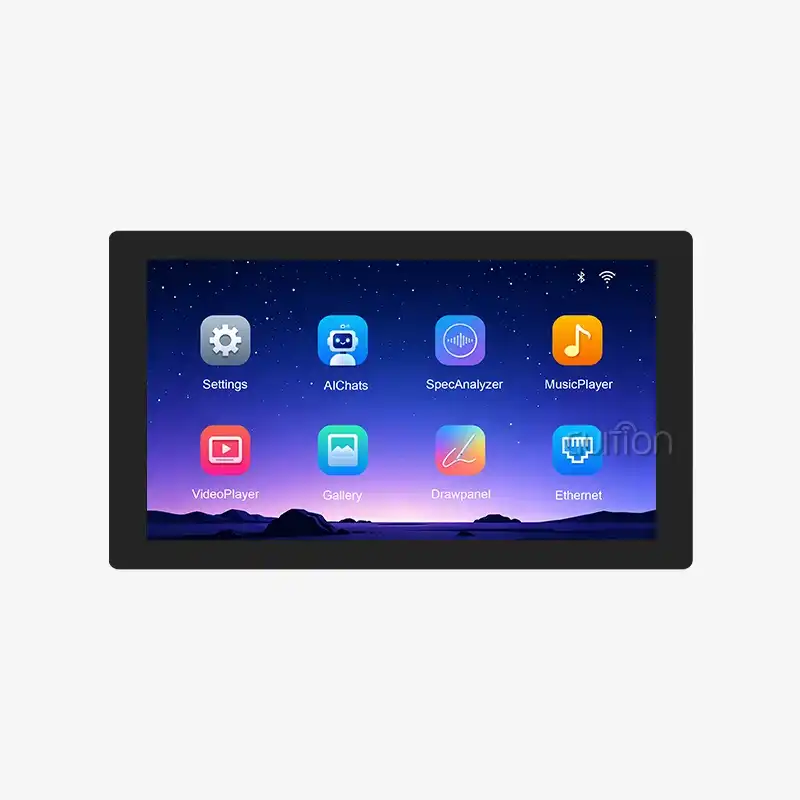
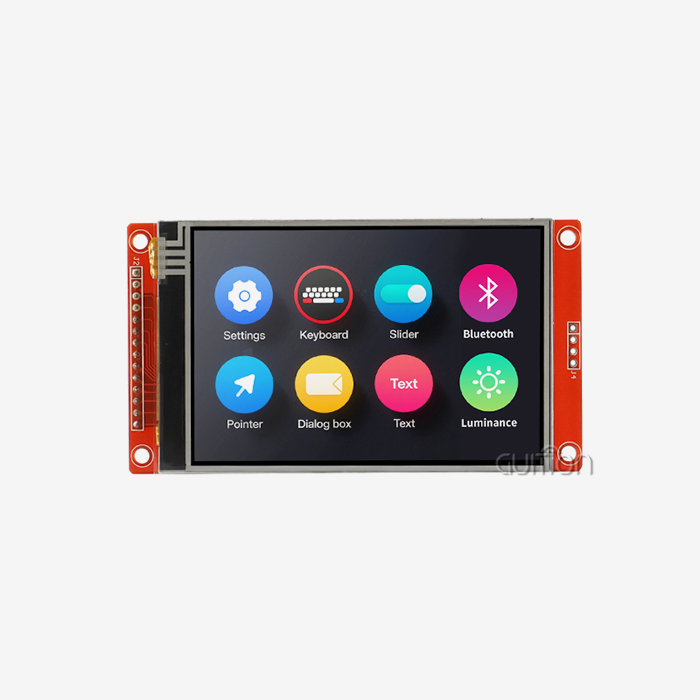
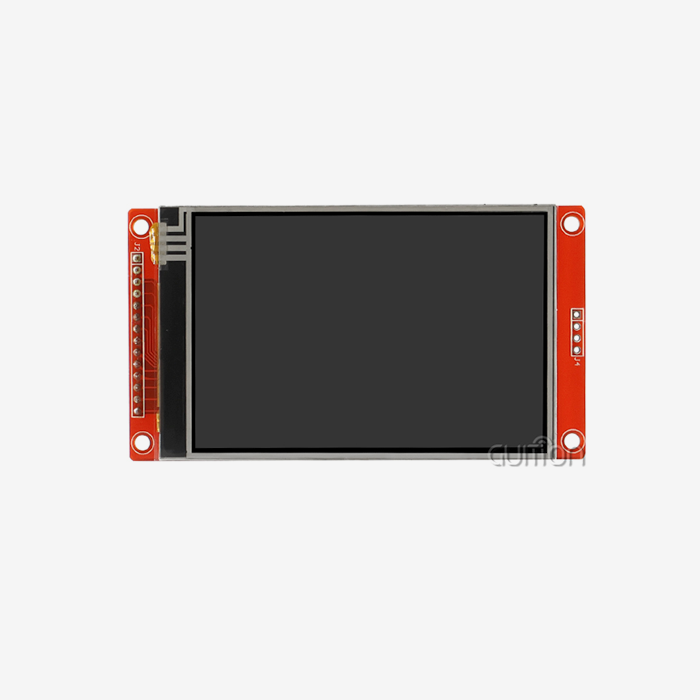
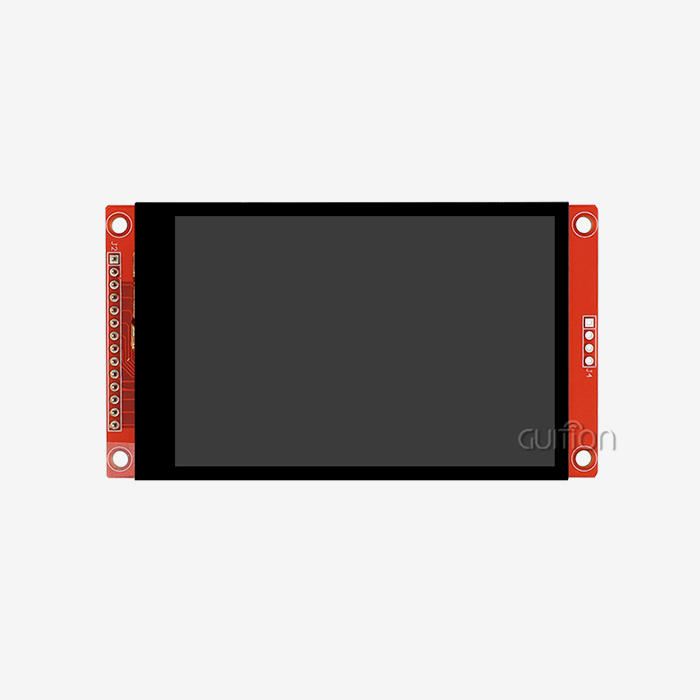
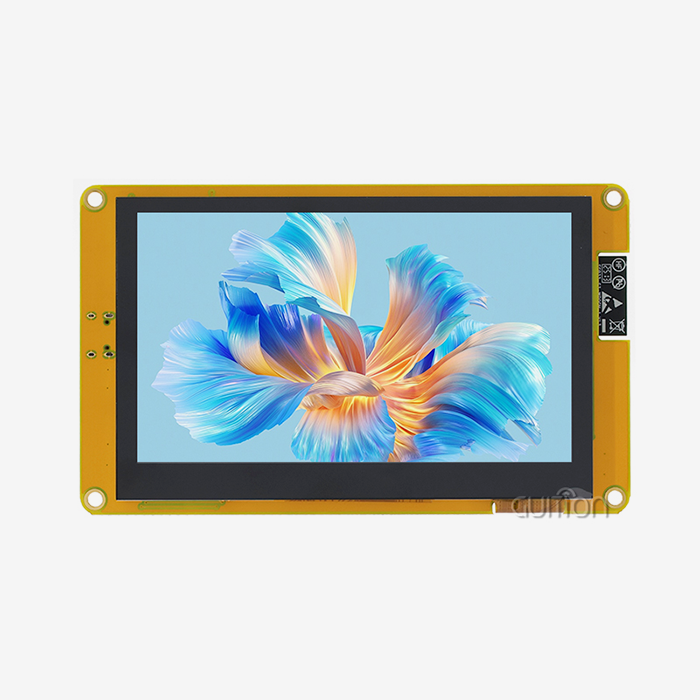
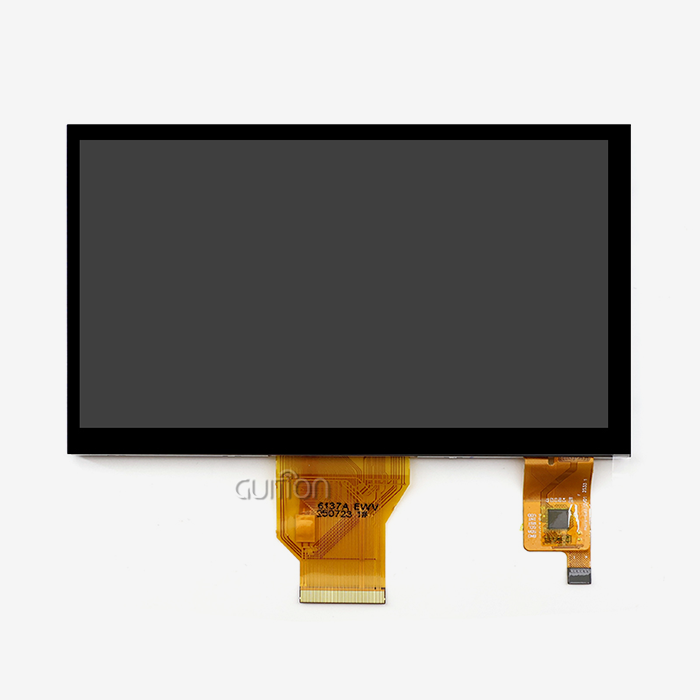
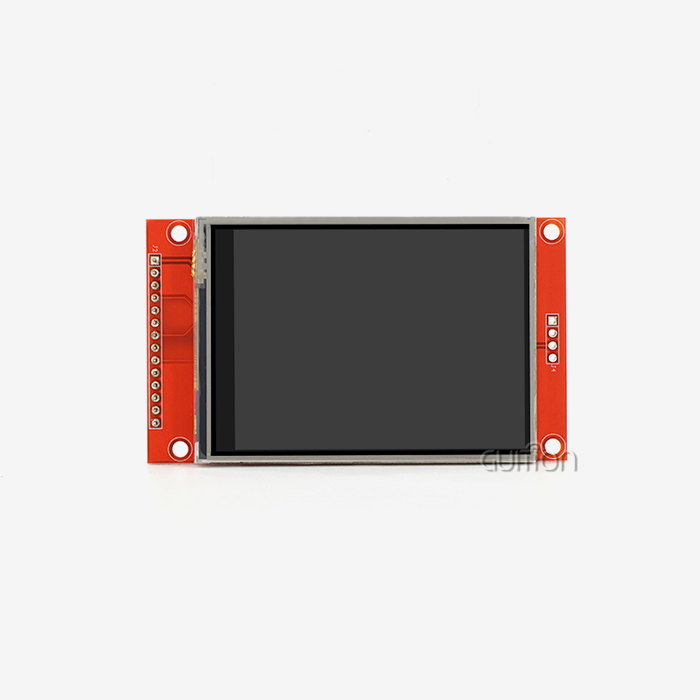
Guition ESP32-S31 7-inch display module (JC1060F570C_I_W_Y). The 7.0-inch, 1024×600 IPS display is integrated with the ESP32-S31-WROOM-1 module. Espressif touts the ESP32-S31 as a dual-core RISC-V SoC (system on a chip) featuring Wi-Fi 6, Bluetooth 5.4, and an IEEE 802.15.4 radio. A single board replaces a separate controller, radio, and display driver board.
Why One Board Beats a Stacked Design
The stacked designs include a microcontroller, a display bridge, and a wireless add-on. Each adds wiring, certification effort, and failure points. A single module display eliminates the bulk of that labor. I have seen tiny hardware teams waste weeks chasing noise between boards. An integrated module avoids that, with the screen, CPU, and radios all sharing a proven layout.
What "Ready Out of the Box" Means in Practice
Your ESP32-S31 7 inch display module comes with test firmware programmed by the manufacturer. You plug it in, validate the screen, touch, and wireless connectivity in minutes. That early check shows you if the hardware meets your design before you write any application code.
Key Features of GUITION IoT HMI Screens for Smart Device Integration
Guition’s firm, Jingcai Intelligence, combines research and development, manufacturing, and sales. We specialize in human-computer interaction display systems and USART-hmi display modules. We have sizes from 1.28 inches to 21.5 inches. So you may start with a smaller size and increase the size without changing vendors. The 7-inch model is a very usable middle ground. Big enough for a control panel, yet tiny enough for battery- or wall-mounted designs.
Core Hardware at a Glance
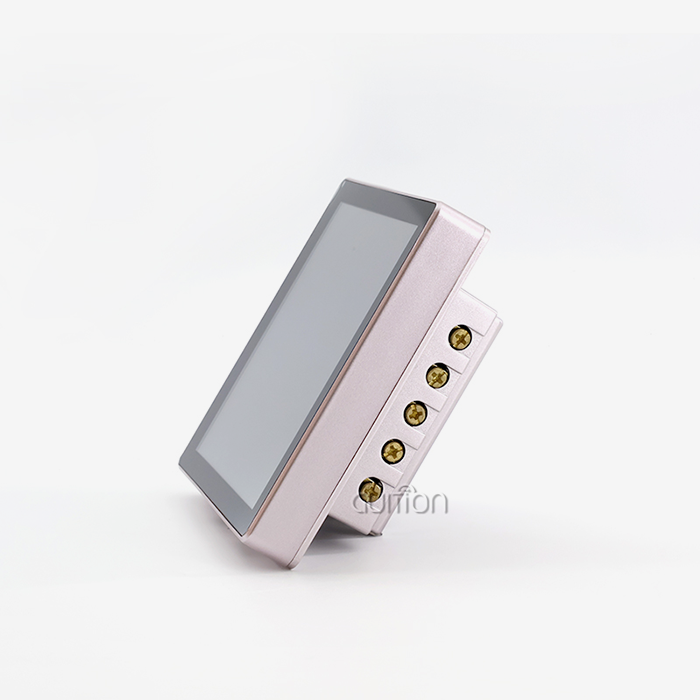
The module has 16 MB Flash and 16 MB PSRAM (external RAM, additional). It also offers 320 KB of ROM, 512 KB of shared SRAM, and 32 KB of low-power SRAM. The display is 24-bit RGB with 16.7 million colors and complete viewing angles. The ESP32-S31 7 inch display module is equipped with a protective casing. It has a TF card slot, IO ports, and an interface for a lithium battery. Those connectors allow you to add storage, sensors, and portable power without a bespoke carrier board.
Features That Matter to Product Teams
These are the features our consumers question us about most:
- Wireless built-in: Wi-Fi 6 and Classic Bluetooth are on the board, so your IoT HMI may connect to a cloud service or pair with a phone without any additional radio hardware, additional certification effort, or additional antenna design on your part.
- Expandable storage: The TF card slot contains fonts, pictures, language packs, and data logs, allowing your product to increase its content library much beyond the original firmware version without a hardware redesign.
- Remote upgrade: You may upgrade deployed units over the air, reducing truck rolls and on-site visits and allowing your team to provide new screens or fixes to clients in the field within a typical release cycle.
These features address a frequent pain point. Once launched, teams typically uncover storage or update holes. Here they are, from day one.
How Do Touchscreen Displays Improve Real-Time IoT Device Control?
Touchscreens turn abstract device data into direct action. A user sees a temperature, taps a slider, and watches the system respond. That loop must feel instant, or people stop trusting the device.
The market shows how much this matters. Fortune Business Insights valued the global human machine interface market at USD 6.1 billion in 2025 and projects USD 12.74 billion by 2034. Asia Pacific held a 35.40% share in 2025. Demand for responsive screens is clearly rising.
Reducing the Steps Between User and Device
Physical buttons limit what you can show. A touchscreen lets one panel handle setup, monitoring, alerts, and settings. You remove dials, labels, and extra enclosure cutouts. For a smart thermostat, that can mean one screen replacing six physical controls. Your bill of materials gets shorter, and your user manual gets simpler.
Keeping Latency Low on the Network Side
A tap is only fast if the command reaches the device quickly. Wi-Fi 6 helps here. Espressif's developer team notes that features like MU-MIMO reduce wait time because devices can transmit and receive at the same time. I recommend testing the full path: touch, UI logic, network call, device response. Measure each step, not only the screen refresh.
ESP32-S31 7 Inch Display Module: Connectivity, Performance, and Compatibility
Connectivity decides whether a screen is a gadget or a control point. The ESP32-S31 supports 2.4 GHz Wi-Fi 6 and Bluetooth 5.4, including LE Audio and Classic BR/EDR. It also includes 802.15.4 for Thread and Zigbee, and it supports Matter over Wi-Fi.
Guition's ESP32-S31 7 inch display module uses Wi-Fi 6 and Classic Bluetooth on the board. If your project needs Thread or Zigbee, discuss the module variant with us before you design around it.
My Memory Math for a 1024×600 Screen
This section is my own calculation from published specifications. A 1024×600 screen has 614,400 pixels. At 16 bits per pixel, one frame buffer takes 1,228,800 bytes, about 1.17 MiB. At 24 bits, it takes 1,843,200 bytes, about 1.76 MiB. The ESP32-S31 has 512 KB of SRAM. A single frame buffer is larger than that. So the 16 MB PSRAM is not a luxury. It is a requirement. A double-buffered 24-bit setup needs 3,686,400 bytes, about 3.52 MiB. That uses roughly 22% of the 16 MB PSRAM. You still have about 12.5 MiB for fonts, images, and application data.
Hardware Help for Graphics
Espressif's mass-production notice lists dedicated accelerators, including a JPEG encoder and decoder and a 2D graphics accelerator. These offload image work from the CPU cores. Your UI can animate and load pictures without starving your network tasks.
Compatibility With Your Existing Toolchain
You can develop in Arduino IDE, ESP-IDF, MicroPython, or Guition's own software. Espressif confirms the chip works with ESP-IDF and its Matter and multimedia frameworks. Your firmware team keeps familiar tools.
Simplifying HMI Interface Design with GUITION's User-Friendly Development Tools
Hardware is half the job. The other half is building a screen people enjoy using. Many projects stall because UI code takes longer than expected.
Guition developed its own interface software, also called Guition, to shorten that stage. It uses a drag-and-drop editor with built-in controls. You add a control with one click, then adjust its position, size, and style by dragging. What you see is what the device shows.
From Design to Working Screen
A typical workflow looks like this. A designer lays out pages in the editor. An engineer binds controls to device data. The team tests on the ESP32-S31 7 inch display module, then pushes updates. Cross-platform online debugging helps you find problems fast. You spend less time guessing and more time fixing.
Room for Custom Work
Not every product fits a template. We provide secondary development interfaces and technical documents. Your engineers can add custom functions without touching low-level drivers. UTF-8 encoding and multi-language switching support global products. One firmware can serve buyers in several regions, which cuts your variant count.
Which Display Specifications Matter Most When Choosing an IoT HMI?
Spec sheets are often daunting. I ask consumers to rate five things against their use case. The ultimate experience is determined by resolution, panel type, color depth, interface access, and RAM.
This is how I weigh them for a 7-inch panel:
- Resolution and panel type: The 1024×600 IPS panel keeps text crisp at arm's length and retains color at broad angles. Viewing angles are more important than raw pixel count, since most control panels and kiosks are not seen straight-on.
- Color depth and memory: 24-bit color provides smooth gradients for charts and icons but requires additional frame buffer capacity. So you prevent tearing and yet save your graphics assets. As my math above illustrates, 16 MB of PSRAM does double buffering at this resolution with space remaining.
- Interfaces and power: The TF card slot, IO ports, and lithium battery interface dictate the ease of connection of the screen to your system. Check them early since a missing port will need a carrier board, adding expense, design time, and another item to test.
These three things cover most purchase choices. Weigh them against your enclosure, power budget, and software strategy.
Comparing Against the Previous Generation
Spec comparisons are useful if you already use another ESP32 part. GlitchWire compared the ESP32-S31 with 320 MHz cores, 60 GPIOs and Wi-Fi 6 to the ESP32-S3 with 240 MHz, 45 GPIOs, and Wi-Fi 4. Both have 512 K of SRAM.That gap is important for IoT HMI devices that need greater I/O and quicker network connectivity. It also means you can typically retain your planned SRAM and pick up wireless headroom.
What to Verify Before You Order
Ask for the precise ESP32-S31 7 inch display module variant, firmware version, and shell option. Verify the type of touch controller and the pinout of connection. Ask for a sample and test your actual UI against it. A bench test cannot be replaced by a spec sheet.
Reliable Wireless Communication for Connected IoT Control Systems
A screen that loses its connection is worse than no screen at all. Users blame the product... not the router. Reliable wireless is a basic need of any IoT HMI design.
Wi-Fi 6 has features designed for IoT. According to the Wi-Fi Alliance, target wake time allows a device to sleep and wake on a schedule, thereby reducing power utilization. MU-MIMO and OFDMA enable numerous devices to share a single access point without lengthy delays.
Why Wi-Fi 6 Fits Dense Environments
Factories, apartment complexes, and workplaces are filled with linked gadgets. In older Wi-Fi, they were handled one by one. Wi-Fi 6 distributes channel capacity so more devices may communicate simultaneously. If you are deploying numerous panels at a single site, test with your actual access point load. If you test the lab on an empty network, you may be fooled.
Bluetooth for Setup and Pairing
The Wi-Fi manages the cloud connectivity. Fast pairing and nearby setup are handled using Bluetooth. A user may submit credentials from a phone, and the panel joins the network in seconds. Then remote upgrades keep the product up to date. Your staff addresses errors without going to each site.
Planning for Interference
ESP32-S31 operates in the 2.4 GHz band. That's a packed house. Plan the antenna positioning and enclosure materials up front. Don’t place metal near the antenna location, and test inside the final housing.
IoT HMI Applications in Smart Homes, Industrial Automation, and Embedded Devices
Same ESP32-S31 7 inch display module, vastly different products. Here are some instances from Guition’s list of supported applications. They relate the features to practical requirements. These are possibilities, not named client outcomes.
Smart Home Control Panels
Lights, locks, and cameras are controlled from a single panel. Espressif mentions smart home hubs and industrial automation as anticipated applications for the ESP32-S31. The panel is connected to devices via the module’s Wi-Fi 6 and Bluetooth, and the 7-inch screen offers a legible size for security viewing.
Industrial Automation and Monitoring
An industrial team requires equipment displays that provide status and receive instructions. 7-inch IoT HMI may be readily mounted on a machine door. TF card storage for logs, remote upgrading for engineers to refresh displays on numerous computers. Asia Pacific’s robust industrial base is one of the reasons why it dominated the HMI market in 2025.
Medical, 3D Printing, and Energy Devices
Medical equipment demand silent, crisp patient interfaces. 3D printers require a control panel to show work status. Dashboards are needed for power statistics for solar controllers and battery management systems.
Each of these cases is the same board with a different UI. That reuse reduces your engineering cost across a product family.
Automotive, Commercial, and Environmental Uses
The interface of a charging pile and the display screen of a dashboard are suitable for automotive demands. Commercial hardware is perfect for kitchen displays, POS systems, and audio controls. Air quality sensors are good for environmental initiatives. One ESP32-S31 7 inch display module platform covers all of these.
How Can GUITION HMI Screens Streamline Product Development and Deployment?
Often the product that gets to market first wins. Every week of display integration takes a week off your key features. Guition’s solution reduces the integration stages.
You begin with a module that boots, displays graphics, and connects. You create displays with a visual editor. One click to upload code. You deploy remotely; you update remotely.
A Realistic Development Path
I advocate this route for new consumers. Order a sample and try the gear out on your bench. Create 2-3 Critical screens in the Guition Editor. Real info from your device. Link up. Test inside your cage. Run a modest pilot, with remote upgrading enabled. You see what consumers do before you go into full production.
Lowering After-Sales Cost
The most important thing about remote upgrade support is that it works after launch. No, a bug signifies a site visit. You push a fix using it. That difference adds up over a fleet of devices. I can’t provide you with an exact savings estimate for your project, since it is subject to fleet size and fault rate. I invite you to estimate it: count your anticipated field trips and multiply by your cost per visit.
Working With a Manufacturer Who Supports You
As an ESP32-S31 7 inch display module manufacturer, Guition provides documents, development interfaces, and engineering answers. Reach us at david@guition.com when your team hits a blocker. Short feedback loops keep schedules intact.
Choosing a Reliable IoT HMI Solution for Long-Term Performance
Registering for a display module is a multi-year commitment. Your goods may ship for five years or longer. The datasheet isn't everything; supplier stability and software support are also important. First, the silicon. Espressif stated that the ESP32-S31 is now in mass production and ready for purchase. That implies a supply channel, which mitigates the risk of designing around a component you can’t get.
Questions to Ask Any HMI Supplier
Ask these questions before signing:
- Documentation and Support: Does the vendor give comprehensive technical papers, pinouts, sample projects, and secondary development interfaces? When your timetable is short, and your firmware team is stuck on a driver problem, will an engineer immediately answer your questions?
- Software tools: Are your designers able to create screens without needing to do deep coding? Can your engineers work with Arduino, ESP-IDF, or MicroPython so that your current abilities translate and you don’t have to go through a retraining process that stalls the whole project?
- Lifecycle and updates: Can units be updated remotely? Does the supplier retain ESP32-S31 7 inch display modules accessible throughout the intended life of your product so you are not forced to redesign when a component leaves the market?
Good responses to these three questions are predictors of a smooth project. Weak replies cause delays.
Checking Claims Against Sources
What suppliers say, cross-reference. The chip’s datasheet is published by Espressif and is labeled as preliminary at the time of writing. Before you freeze a design, check final specifications with your supplier.
Conclusion
An ESP32-S31 7 inch display module combines a crisp IPS screen, sufficient RAM, Wi-Fi 6, and Bluetooth on one board. This combination is ideal for IoT HMI in smart homes, manufacturing, medical equipment, and energy systems. The market is behind this direction. HMI demand is increasing, with embedded designs leading the market by revenue. Memory arithmetic tells me that 16 MB PSRAM provides me with some genuine headroom for a 1024 by 600 screen. Add Guition’s drag-and-drop software and remote upgrading, and you’ll minimize construction time and after-sales expense. Order a sample, run your real UI, and measure. The bench will tell you more than any brochure.
FAQ
1. What is an ESP32-S31 7-inch display module?
It is a 7-inch touchscreen display board built around an ESP32-S31 wireless module. It combines the screen, processor, memory, and wireless radios in one unit. Guition's version uses a 1024×600 IPS panel, 16 MB Flash, 16 MB PSRAM, Wi-Fi 6, and Classic Bluetooth.
2. Which development tools work with this module?
You can use Arduino IDE, ESP-IDF, MicroPython, or Guition's own interface software. The chip itself is supported by Espressif's ESP-IDF framework. Your team can pick the tool that matches its skills.
3. How much memory does a 1024×600 screen need?
One 16-bit frame buffer needs about 1.17 MiB. A 24-bit buffer needs about 1.76 MiB. Double buffering at 24-bit needs about 3.52 MiB. The module's 16 MB PSRAM covers this with room left.
4. Can I update devices after they are deployed?
Yes. Guition supports remote upgrades of user projects. You can fix bugs and add features over the air, without visiting each site. This lowers after-sales costs for large fleets.
5. Does the module support multiple languages?
Yes. It supports UTF-8 encoding and multi-language switching. You can build one product for several regions and show local characters correctly on the same hardware.
6. Is the ESP32-S31 available for production?
Espressif announced mass production and availability for purchase. Confirm lead times and module variants directly with Guition before you finalize your bill of materials.
Start Your Guition HMI Project With a Sample Evaluation
Ready to test an ESP32-S31 7 inch display module in your own product? Guition works as an ESP32-S31 7-inch display module manufacturer for OEM teams worldwide. Send your use case, screen needs, and expected volume to david@guition.com. We will recommend the right IoT HMI configuration, share technical documents, and arrange a sample so your engineers can start testing quickly.
References
1. Espressif Systems. (2026). Espressif Unveils ESP32-S31: A Dual-Core RISC-V SoC with Wi-Fi 6, Bluetooth 5.4, and Advanced HMI Capabilities. Used for the SoC overview. https://www.espressif.com/en/news/ESP32_S31_Release
2. Espressif Systems. (2026). ESP32-S31 Series Datasheet, Pre-release v0.2. Used for wireless features, SRAM, and preliminary status. https://documentation.espressif.com/esp32-s31_datasheet_en.pdf
3. Espressif Systems. (2026). ESP32-S31 Mass Production. Used for availability, accelerators, and software support. https://www.espressif.com/en/news/ESP32_S31_Mass_Production
4. Fortune Business Insights. (2026). Human Machine Interface Market Size, Share, Analysis, Trends, 2026-2034. Used for market size and regional share. https://www.fortunebusinessinsights.com/human-machine-interface-market-114618
5. Espressif Developer Portal. (n.d.). Leveraging Wi-Fi 6 Features for IoT Applications. Used for MU-MIMO and wait-time reasoning. https://developer.espressif.com/blog/leveraging-wi-fi-6-features-for-iot-applications
6. GlitchWire. (2026). Espressif's ESP32-S31 Brings Wi-Fi 6, Gigabit Ethernet and a RISC-V Core to the Mainstream. Used for the ESP32-S31 versus ESP32-S3 comparison. https://glitchwire.com/news/espressifs-esp32-s31-brings-wi-fi-6-gigabit-ethernet-and-a-risc-v-core-to-the-ma/
7. Wi-Fi Alliance. (n.d.). What are IoT and IIoT? Used for target wake time and Wi-Fi 6 Release 2 power features. https://www.wi-fi.org/node/38622
About the Author
David is the CEO of Guition (Jingcai Intelligence), a technology enterprise that integrates R&D, production, and sales of human-machine interface display solutions. He works directly with OEM engineering teams on display selection, firmware tooling, and deployment planning. His focus is helping product teams move from an early sample to stable production with fewer surprises.
Learn about our latest products and discounts through SMS or email