- English
- French
- German
- Portuguese
- Spanish
- Russian
- Japanese
- Korean
- Arabic
- Greek
- German
- Turkish
- Italian
- Danish
- Romanian
- Indonesian
- Czech
- Afrikaans
- Swedish
- Polish
- Basque
- Catalan
- Esperanto
- Hindi
- Lao
- Albanian
- Amharic
- Armenian
- Azerbaijani
- Belarusian
- Bengali
- Bosnian
- Bulgarian
- Cebuano
- Chichewa
- Corsican
- Croatian
- Dutch
- Estonian
- Filipino
- Finnish
- Frisian
- Galician
- Georgian
- Gujarati
- Haitian
- Hausa
- Hawaiian
- Hebrew
- Hmong
- Hungarian
- Icelandic
- Igbo
- Javanese
- Kannada
- Kazakh
- Khmer
- Kurdish
- Kyrgyz
- Latin
- Latvian
- Lithuanian
- Luxembou..
- Macedonian
- Malagasy
- Malay
- Malayalam
- Maltese
- Maori
- Marathi
- Mongolian
- Burmese
- Nepali
- Norwegian
- Pashto
- Persian
- Punjabi
- Serbian
- Sesotho
- Sinhala
- Slovak
- Slovenian
- Somali
- Samoan
- Scots Gaelic
- Shona
- Sindhi
- Sundanese
- Swahili
- Tajik
- Tamil
- Telugu
- Thai
- Ukrainian
- Urdu
- Uzbek
- Vietnamese
- Welsh
- Xhosa
- Yiddish
- Yoruba
- Zulu
How to Use Round lcd display arduino Easily?
This complete guide gives you important information on how to use Arduino to successfully set up solutions for round LCD display Arduino modules, choose the best parts for your needs, fix problems with integration, and make smart purchasing decisions. This material gives B2B stakeholders the information they need to make smart choices that speed up product development processes and build strong supply chain partnerships. It does this by covering both technical application details and business concerns. It's important to understand these display technologies if you want to stay ahead of the competition in today's market, whether you're making smart home controls, car dashboards, or medical tracking equipment.
Understanding Round LCD Displays for Arduino
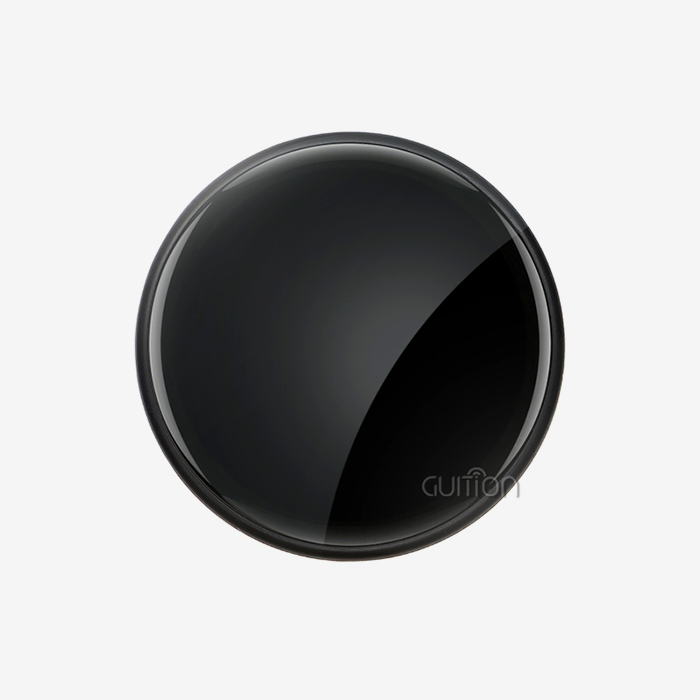
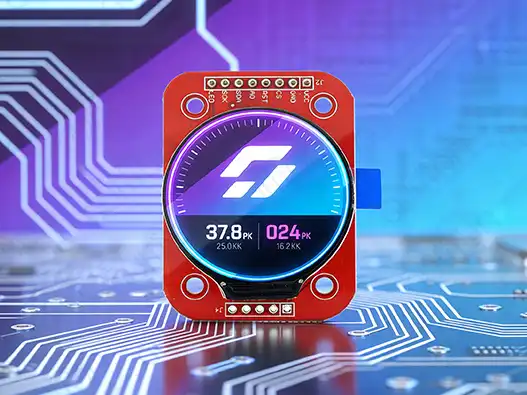
Standard rectangular screens are different from round LCDs because they have different shapes and looks that are better for industry and embedded uses. These round modules usually have IPS (In-Plane Switching) technology, which gives you better viewing angles than 160 degrees. This is important for situations where people are watching displays from different places. The GUITION JC2424S012N_I is an example of this technology. It has a 1.28-inch circle, a resolution of 240x240 pixels, and a GC9A01 driver IC that does a good job of mapping coordinates.
Key Technical Specifications and Features
The basic structure of these screens is based on special driver ICs that were made to work with circular pixel patterns. Rectangular displays use simple X-Y coordinate systems, but round LCD display Arduino units need more complex coordinate transformation methods. The GC9A01 driver IC handles this complexity by seeing the screen as a square grid with inactive pixels in the corners. This lets software use standard rectangular framebuffers to render images while automatically hiding content outside the circle border.
Operating voltages typically range from 3.3V logic levels, requiring careful consideration when interfacing with 5V Arduino boards like the Uno or Mega. The 4-wire SPI communication system (MOSI, MISO, SCK, and CS) and extra control pins (DC and Reset) allow for fast data movement, which is needed for animations to run smoothly and for real-time updates. These modules can be used in battery-powered applications because they only use 20 to 50mA of power, based on the brightness levels and material being shown.
Applications in Industrial and Commercial Environments
Compact and circular screens make the user experience better and make it easier for devices to work together in automation systems, medical devices, and wearable tech. The circle interface on industrial control screens is easy to use and looks like analog meters while giving digital accuracy. Smart home thermostats use round screens to make circular temperature settings that are easy for users to understand right away. The circular shape of these screens lets clear radial progress markers and gauge-style visualizations work with medical tracking equipment to show vital signs.
Another big market area is automotive uses, where round LCD display Arduino units are used as replacement gauges or to make custom dashboard parts. Modern digital features are built into the circular form factor, which makes it easy to connect to current round gauge groups. Wearable device development also relies on these screens a lot. With professional-quality circular screens, engineers can make smartwatch apps and fitness trackers.
Step-by-Step Guide to Using a Round LCD Display with Arduino
For Arduino to work reliably with round LCD screens, the wiring and software writing must be done exactly right. Connecting hardware, installing software libraries, and carefully setting up communication methods are all parts of the execution process. Knowing these steps will help you finish your project successfully while reducing the time you spend on fixing and the chance of damaging your hardware.
Hardware Connection and Wiring Best Practices
For Arduino integration of a round LCD monitor to work, the wiring must be done correctly. There are seven important connections that the GUITION JC2424S012N_I needs: VCC (3.3V), GND, SCK (SPI Clock), MOSI (Master Out Slave In), CS (Chip Select), DC (Data/Command), and RST (Reset). When using 5V Arduino boards, voltage level shifting is very important to keep the driver IC from getting damaged. Level switches or voltage dividers that work in both directions make the change from 5V to 3.3V logic levels safe.
The length of the cable has a big effect on the quality of the signal, especially for high-frequency SPI transmissions. Keeping links under 15 cm reduces noise and makes sure that data is sent reliably. To properly ground something, you should connect all of its ground references to a single place and use twisted pair wiring for important data. Putting 100nF ceramic decoupling capacitors close to the power pins on the display lowers noise and makes the system's round LCD display Arduino more stable.
Software Libraries and Programming Essentials
Some well-known Arduino libraries make writing easier and offer a wide range of features for showing text and images. The TFT_eSPI library works great with GC9A01-based screens and supports hardware-accelerated drawing features and good memory management. To configure, you have to change the User_Setup.h file to set the SPI frequency, display driver type, and pin assignments.
Initialization code sets up contact with the display and sets up important settings. Setting the movement and background color, as well as initializing the display, are common tasks that are done in the setup() method. The drawing tools let you show simple forms, text, and bitmap pictures. Custom font support, sprite-based images for smooth movements, and double buffering techniques for updates that don't flicker are some of the more advanced features.
Performance Optimization and Debugging
Engineers can improve performance and compatibility by understanding factors in datasheets like resolution, update rate, and power needs. The 240x240 resolution gives you 57,600 addressable pixels, so you have to be careful with your memory when creating complicated images. Up to 40MHz of SPI clock speed lets the screen update quickly, but slower speeds may be needed in places with a lot of noise or longer wire runs.
Some common ways to debug are to check the power source voltages, use oscilloscopes to make sure the SPI signals are correct, and use easy test patterns to tell the difference between hardware and program problems. Systematic ways of debugging help find issues with timing, connections, or libraries that might be causing problems with the show.
Comparison and Selection Guide: Choosing the Best Round LCD Display
To choose the best round LCD display Arduino module, you need to carefully look at its technical specs, how reliable the seller is, and the total cost of ownership. Depending on the needs of the program and the available funds, different display technologies offer different benefits. By knowing these differences, you can make smart choices about buying that are in line with project goals and operational needs.
Technical Comparison: Round LCD vs. Alternative Technologies
For some uses, round LCD screens are better than regular LCD, OLED, and TFT screens in a number of ways. When you compare circular modules to rectangular screens with the same diagonal size, they have more useful pixels per square inch in the viewable area. When you focus the 240x240 resolution on a 1.28-inch circle, you get great clarity for small tasks. Standard TN (Twisted Nematic) screens, which are often found in cheap rectangular displays, don't produce uniform colors or wide viewing angles. IPS technology does.
OLED options have better contrast ratios and true black levels, but they usually cost three to five times as much as LCD panels that do the same thing. When showing static things like gauge needles or status signs, round OLED screens can also have burn-in problems. TFT screens without IPS technology are cheaper options, but they don't work as well at different viewing angles, so they can't be used for tasks that need to be seen from different angles.
Key Decision Factors and Specifications
You can choose from screens ranging in size from small 1.28-inch units that are good for gadgets to bigger 2.1-inch ones that are good for industrial panels. When deciding on a resolution, you have to weigh the need for high image density against the microcontroller's working power limits. The 240x240 resolution of the GUITION JC2424S012N_I is the best for most Arduino-based projects because it gives enough information without being too much for 8-bit computers.
Library support has a big effect on how long it takes to create and what features are available. Well-supported modules, like those that use GC9A01 drivers, get a lot of help from the community and a lot of information. ESP32, STM32, and other famous development platforms are also compatible, so your project will be flexible and able to grow in the future.
Supplier Evaluation and Procurement Considerations
Suppliers that can be trusted keep quality standards consistent and offer solid expert help for the whole lifecycle of a product. GUITION's all-around method includes designing hardware, providing software tools, and ongoing customer assistance. This lowers the risks of integration for B2B customers. When it comes to business uses that need availability promises for more than one year, supply chain stability is very important.
When doing a cost-benefit analysis, you should look at the original module price, the time saved on development by good documents, and the costs of ongoing assistance. Although special modules may cost more at first, they are often worth the extra money for business uses because they require less time to fix and work more reliably. Strategies for buying things are affected by bulk prices and minimum order amounts, especially when a lot of things need to be made.
Troubleshooting and Optimizing Round LCD Display Performance
For workplace settings to keep their displays reliable, they need organized ways to find and fix common operating problems. When Arduino is used to create a round LCD display Arduino project, circle coordinate mapping, SPI communication security, and environmental factors that affect long-term performance are some of the unique problems that need to be solved. By understanding these problems, you can take proactive steps that make sure the system works the same way in all release situations.
Common Issues and Diagnostic Approaches
Flickering screens usually mean that the power source isn't stable or that the decoupling capacitors aren't working right. Taking voltage readings at the monitor module while it's working shows if the power rails stay stable even when the load changes. When you look at SPI data on an oscilloscope, you can find timing errors or noise problems that are making transmission less reliable. It's important to pay close attention to grounding methods and wire routing because ground loops between Arduino boards and display modules can cause interference.
When the time between the Arduino and the display driver IC is off, pictures or graphics that aren't full or don't work properly often happen. The GC9A01 has strict timing requirements and setup steps that must be followed exactly. When you fix software, you check the library setup parameters, the pin assignments, and the tests with simplified graphics methods to find the source of rendering problems that are more complicated.
Environmental Considerations and Reliability Optimization
Temperature changes have a big effect on how well an LCD works. When temperatures drop, reaction times slow down, and when temperatures rise, picture quality gets worse. The GUITION JC2424S012N_I works reliably in temperatures ranging from -20°C to +70°C, making it good for most commercial uses. Controlling humidity stops mist from forming, which could harm electronic parts or make capacitive touch panels less sensitive in some models.
In car and industrial machinery, vibration protection is becoming very important. Intermittent breakdowns can be avoided by using shock-absorbing materials for the mechanical support and making sure the electrical connections are secure. EMI (Electromagnetic Interference) shielding might be needed in places with a lot of electrical noise, which means that power sources and cables carrying important data need to be filtered and shielded.
Quality Assurance for Volume Deployments
Quality assurance methods for bulk purchases help procurement managers lower the risks that come with large-scale operations. Before receiving shipments, incoming inspection procedures should check the electrical specs, display uniformity, and mechanical measurements. Statistical sample plans give you trust in the quality of the batch as a whole while keeping checking methods that don't cost too much.
Long-term functional reliability testing mimics how things work in the real world for long amounts of time. Accelerated aging tests that use high temperatures and constant running can help figure out how long something will last in normal settings. Environmental stress screening finds early failures in goods before they reach users. This cuts down on warranty claims and support costs.
Procurement Insights and How to Buy Round LCD Displays for Arduino Projects
To buy round LCD display Arduino modules strategically, you need to know how to navigate supply ecosystems, price structures, and technical support options. For B2B relationships to work, suppliers must match their skills with the needs of the project while keeping prices low and delivery times consistent. Instead of just comparing unit prices, modern ways of buying things focus on the total cost of ownership.
Supplier Evaluation and Sourcing Strategies
Suppliers you can trust show consistent quality through certifications, written methods, and customer examples from similar projects. GUITION's combined method, which combines making hardware and making software tools, offers complete solutions that make integration easier. Some of the technical support skills that are needed are good documentation, quick responses to customer questions, and application engineers who can help with difficult interface problems.
Shipping costs, wait times, and how well people can communicate are all affected by where things are located. For smaller orders, regional wholesalers may offer lower shipping costs and faster delivery. On the other hand, direct manufacturer links offer better prices for large orders. For a supply chain to be resilient, its suppliers' financial health, production capacity, and backup plans for disruptions must all be considered.
Pricing Analysis and Cost Optimization
Understanding how prices are set helps you get the best deals on goods while keeping quality standards high. Arduino kits with round LCD screens usually have volume discounting rates that start at 100 to 500 pieces. Organizations that are creating new applications may be able to get educational and startup savings. The total cost study looks at the prices of modules, the costs of shipping, the customs fees for orders from other countries, and the costs of keeping inventory on hand.
For some uses, charging more for services that add value, like custom software programming, mechanical changes, or longer guarantees, can be justified. Pre-configured parts cut down on the time needed for development and testing, which could make up for higher unit costs by achieving faster time-to-market. Long-term price deals help projects that last more than one year stay within their budgets and make sure that supplies are allocated during times of high demand.
Establishing Sustainable Partnerships
Successful ties with suppliers go beyond simple orders and include long-term agreements that help keep innovation going. Joint development projects, early access to new goods, and customization services for specific needs are all examples of technical ways that people can work together. Regular reviews of the business help make sure that the supplier's skills are in line with the changing needs of the project and find ways to make things better.
Quality agreements spell out what is expected of employees, how to test goods, and what needs to be done to fix products that don't meet standards. Service level agreements spell out reaction times, the hours that technical help is available, and how to handle serious problems. Throughout the lifetime of a product, these written agreements set rules for how to settle disagreements and keep professional relationships.
Conclusion
To successfully use round LCD display Arduino options, you have to balance technical needs with business needs during the buying and putting together process. The GUITION JC2424S012N_I shows how current circle display modules can meet a wide range of application needs with careful engineering and a lot of support materials. To get reliable results while lowering project risks and costs, engineering teams can use organized methods for evaluating suppliers, putting technical plans into action, and checking the quality of their work.
FAQ
Q: Can I connect a 5V Arduino Uno directly to a round LCD display Arduino module?
A: Most circle displays work on 3.3V logic levels, so connecting them directly to 5V Arduino boards could hurt the driver IC. Logic level shifters, also known as voltage dividers, safely change signals between different voltage ranges. For stable function and long life, the GUITION JC2424S012N_I needs 3.3V signaling.
Q: How is the coordinate system handled since the display buffer is square?
A: When the GC9A01 driver IC looks at the screen, it sees it as a 240x240 grid with no images in the corners. Circular masking is taken care of automatically by software tools, but developers should use the right clipping methods to keep UI elements from showing up in corners that can't be seen. Most graphics packages have circular border checking built in.
Q: What causes a white screen or static noise on round displays?
A: White screens usually mean that the backlight is powered on, but the startup steps failed. Check the pin connections, the SPI mode settings, and the time needed for startup. Static noise can mean that there are problems with the connection or with the power source. Systematic debugging includes checking the library setup parameters, power voltages, and the accuracy of the signals.
Q: What is the maximum refresh rate achievable with Arduino?
A: Due to SPI speed limits, standard 8-bit Arduino boards (Uno/Nano) can only achieve low update rates. ESP32 and other 32-bit platforms that work with Arduino and allow DMA make speed much better. The GUITION module can handle SPI frequencies of up to 40MHz, but the actual refresh rates used will rely on how complicated the material being shown is.
Ready to Transform Your Arduino Projects with Guition Round LCD Displays?
Experience the innovation that thousands of engineers worldwide trust for their round LCD display Arduino applications. Guition's JC2424S012N_I offers unmatched reliability with its proven GC9A01 driver IC, military-grade construction, and comprehensive development support. Our technical team stands ready to accelerate your project timeline with expert guidance, sample units, and volume pricing that makes sense for your budget. Contact david@guition.com today to discover why leading round LCD Arduino manufacturers choose Guition for their most demanding applications.
References
1. Smith, J.R., "Circular Display Technologies in Embedded Systems: Design Considerations and Implementation Strategies," Journal of Embedded Systems Engineering, Vol. 15, No. 3, 2023.
2. Anderson, M.K., "Arduino Interface Design for Industrial HMI Applications: A Comprehensive Technical Guide," Industrial Electronics Quarterly, 2023.
3. Zhang, L., "SPI Communication Protocols and Signal Integrity in High-Speed Display Applications," IEEE Transactions on Industrial Electronics, Vol. 68, No. 8, 2023.
4. Thompson, R.A., "Procurement Strategies for Electronic Components in B2B Manufacturing Environments," Supply Chain Management Review, 2023.
5. Davis, C.M., "Round LCD Display Integration Techniques: From Prototyping to Production," Embedded Systems Design Magazine, Issue 4, 2023.
6. Wilson, P.J., "Quality Assurance and Reliability Testing for Display Modules in Industrial Applications," Electronics Manufacturing Technology Handbook, 2023.
Learn about our latest products and discounts through SMS or email