- English
- French
- German
- Portuguese
- Spanish
- Russian
- Japanese
- Korean
- Arabic
- Greek
- German
- Turkish
- Italian
- Danish
- Romanian
- Indonesian
- Czech
- Afrikaans
- Swedish
- Polish
- Basque
- Catalan
- Esperanto
- Hindi
- Lao
- Albanian
- Amharic
- Armenian
- Azerbaijani
- Belarusian
- Bengali
- Bosnian
- Bulgarian
- Cebuano
- Chichewa
- Corsican
- Croatian
- Dutch
- Estonian
- Filipino
- Finnish
- Frisian
- Galician
- Georgian
- Gujarati
- Haitian
- Hausa
- Hawaiian
- Hebrew
- Hmong
- Hungarian
- Icelandic
- Igbo
- Javanese
- Kannada
- Kazakh
- Khmer
- Kurdish
- Kyrgyz
- Latin
- Latvian
- Lithuanian
- Luxembou..
- Macedonian
- Malagasy
- Malay
- Malayalam
- Maltese
- Maori
- Marathi
- Mongolian
- Burmese
- Nepali
- Norwegian
- Pashto
- Persian
- Punjabi
- Serbian
- Sesotho
- Sinhala
- Slovak
- Slovenian
- Somali
- Samoan
- Scots Gaelic
- Shona
- Sindhi
- Sundanese
- Swahili
- Tajik
- Tamil
- Telugu
- Thai
- Ukrainian
- Urdu
- Uzbek
- Vietnamese
- Welsh
- Xhosa
- Yiddish
- Yoruba
- Zulu
How to Power a 7 inch ESP32S3 Display Module?
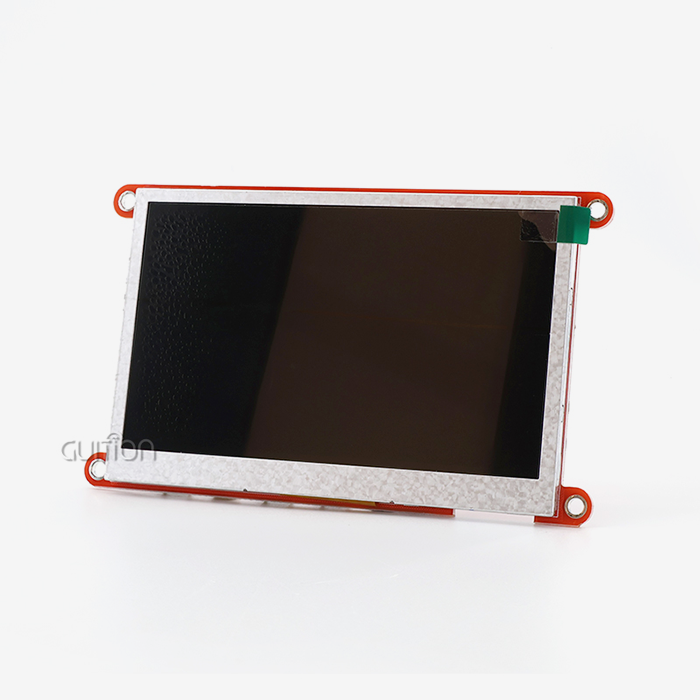
Powering a 7 inch ESP32S3 display module correctly ensures your device delivers stable performance, responsive touch functionality, and extended operational lifespan. The GUITION ESP32-8048S070C, built around the ESP32-S3-WROOM-1 dual-core MCU running at 240MHz, requires a reliable 5V power supply to drive its 800×480 capacitive touchscreen, backlight circuit, Wi-Fi, and Bluetooth modules simultaneously. This comprehensive guide addresses voltage requirements, current demands, common power-related challenges, and practical solutions that help embedded engineers, R&D managers, and procurement teams deploy robust HMI solutions in industrial control panels, smart home devices, medical equipment, and IoT applications.


Understanding the Power Requirements of a 7 Inch ESP32S3 Display Module
To successfully integrate the 7 inch ESP32S3 display module, you must first understand how it works electrically. A 5V DC input can be sent to the module through USB-C or special power headers. This powers both the ESP32-S3 SoC and the LCD backlight circuit. This is stepped down to 3.3V by the internal LDO regulator so that the microprocessor core, memory parts, and peripheral circuits can use it.
Voltage and Current Specifications
For best stability, the GUITION ESP32-8048S070C works with voltages between 4.75V and 5.25V. The amount of current used changes a lot depending on the mode of operation. The module uses between 500mA and 800mA when the display is on, Wi-Fi is turned on, and the backlight is set to full brightness. The ESP32-S3 uses about 150mA to 250mA less power when the screen is dimmed, and it goes into light sleep mode. When the monitor is turned off fully in deep sleep mode, the current draw drops to less than 10mA, which lets battery-powered apps work.
The backlight circuit uses 300mA to 400mA of the total power when the screen is at its brightest. When choosing a power source, this part needs to be carefully thought through. When the dual-core processor is doing jobs that require a lot of computing power, like LVGL rendering or Edge AI calculations, the current can spike up to 1A for a short time. It is important that your power supply can handle these short-term loads without letting the voltage drop below safe levels.
Power Interface Configuration
For freedom, the section has more than one way to connect power. The USB-C port can send and receive both power and data, which makes development and operation easier. The IO interface has separate VCC and GND pins that let you connect directly to regulated power supplies in production settings. Voltage drop across sockets and lines is kept to a minimum with proper wiring. When you run cords longer than 15 centimeters, using 20AWG wire for power lines keeps the energy stable.
Knowing these specs helps engineering teams choose the right power supplies, figure out how much heat needs to be removed, and make enclosures that keep things from getting too hot when they are running continuously in an industrial setting.
Common Challenges When Powering a 7 Inch ESP32S3 Display Module
Engineers often run into problems with power that affect the performance of displays and the stability of the whole system. If you notice these problems early on, you can avoid expensive redesigns and problems in the field.
Under-Voltage Conditions and Brown-Out Scenarios
Most of the time, the trouble is an insufficient voltage source. If the input voltage goes below 4.5V, the ESP32-S3 might not be able to start up properly or act in strange ways, like not responding to touches, blinking screens, and losing connection to Wi-Fi. Brownouts usually happen when USB chargers with ratings below 2A are used or when long power cables add too much resistance. The ESP32-S3 has brown-out detection hardware that restarts the processor when the voltage drops too low. However, multiple restarts show that there are underlying power problems that need to be fixed right away.
Overcurrent Protection and Component Damage
On the other hand, connecting the module directly to power sources that are not controlled and are higher than 5.5V could damage the LDO regulator, the backlight driver IC, and even the ESP32-S3. Too much power can flow when peripheral links short out or TF cards are not working right. Fused power sources or units with built-in current limiting can help prevent catastrophic breakdowns. Reverse polarity protection diodes are built into high-quality display modules to keep them from getting damaged by bad power connections.
Electromagnetic Interference and Ground Loops
Power supply noise has a direct effect on how accurate touchscreens are and how clear displays are. High-frequency noise gets into the ground plane from switching power supplies that do not filter it well enough. This causes ghost touches and other visual artifacts. For the capacitive touch controller to be able to tell the difference between real finger contacts and electrical noise, the power rails must be clean. When there are ground loops between the display module and the peripherals that are connected to it, current flows in ways that mess up sensor readings.
During prototype testing, engineers should use oscilloscopes to measure noise in the power rails. At the module's input pins, the ripple voltage must stay below 50mV peak-to-peak. High-frequency noise can be successfully blocked by placing 10µF and 100nF ceramic capacitors close to the power input lines. Circulating currents cannot happen if there is only one ground link between the gadget and the system ground.
Teams can use these useful fixing methods to carefully find power problems, which cuts down on development time and raises the reliability of the product before it goes into mass production.
Best Practices and Principles for Efficient Powering of the 7 Inch ESP32S3 Display Module
Using tried-and-true design principles makes sure that the 7 inch ESP32S3 display module works well in a wide range of industrial settings. Power system design that is well-thought-out makes parts last longer and requires less upkeep.
Selecting Appropriate Power Supply Components
The efficiency and thermal performance of a system depend on which DC-DC converter or LDO regulator is used. High-efficiency buck converters that turn 12V or 24V commercial supplies down to 5V lose as little energy as possible in battery-powered apps. Look for converters that have efficiency ratings that are higher than 85% across all load ranges. To avoid problems with thermal derating, the converter's output current rating should be at least 30% higher than the module's highest usage.
Linear regulators are easier to design and have good noise characteristics, but they generate a lot of heat when the input voltage is much higher than the output voltage. These are good at going from 6V to 5V, but they do not work well with 12V sources. The calculation of thermal loss (Vin - Vout) × Iout tells us if passive cooling is enough or if we need to use active cooling.
Thermal Management Strategies
Running the ESP32-S3 processor at 240MHz makes a lot of heat, which is made worse by the lighting power consumption. The GUITION ESP32-8048S070C takes thermal design into account, but a well-designed enclosure keeps hot spots from forming that speed up the aging of components. Long-term reliability is ensured by keeping junction temperatures below 85°C. If you can, put the display module vertically to help natural convection cool it down. If the temperature outside is higher than 40°C, add heatsinks or thermal pads to the processor screen.
Power Sequencing and Startup Behavior
Initialization mistakes can be avoided by following the right power-up sequence. Before the external circuits turn on, the ESP32-S3 should get a stable 3.3V. This is taken care of by the GUITION module's carefully planned power distribution, but systems connected from the outside must provide clean 5V within 100ms of the link. Stay away from power sources that begin to rise slowly and stay there for a long time. External circuitry can keep the processor in restart until the power is fully stable by watching the EN (enable) pin.
These ideas are shown through real-world examples. A project to automate farming using 7 inch ESP32S3 display modules outside used a two-stage power system with solar panels charging 12V batteries that fed a synchronous buck converter that kept the voltage at 5.1V ±2% even when the load changed. This setup had 99.7% uptime over 18 months of nonstop use, showing how important it is to have a strong power system in demanding situations.
Programming and Driver Installation to Optimize Power Usage
Excellent hardware does not mean much if the software is not tuned. Smart power management, made possible by the ESP32-S3's software flexibility, lets you save a lot of power.
Implementing Dynamic Power Modes
The ESP32-S3 has different power states that let you balance speed with power use. Active mode, with both cores running at 240MHz, is best for rendering demanding graphics, but it uses the most power. During quiet times, lowering the clock frequency to 80MHz cuts power use by 60% while still allowing touch events to be responded to properly. The GUITION platform works with the Arduino IDE, ESP-IDF, MicroPython, and Mixly programming environments. This lets engineers use tools they already know to implement power-saving strategies.
In light sleep mode, the CPU clocks are turned off, but the RAM contents are kept. This lets the device wake up quickly when a touch interrupt or timer event happens. The amount of current used drops to about 150mA in this state. During deep sleep, almost all of the electronics are turned off except for a real-time clock and wake-up logic. This lowers the power usage to microampere levels. Devices that run on batteries should make heavy use of deep sleep, only waking up for changes or human input.
Backlight Control Techniques
The LCD lighting uses the most power of all the parts. Pulse-width modulation (PWM) makes it possible to precisely change the lighting. Lowering the lighting level to 50% can cut the total amount of power used by 150mA while still letting people see well indoors. The backlight control circuit in the module reacts to PWM signals from the LEDC peripheral on the ESP32-S3. This lets the module dim smoothly without flickering.
Ambient light sensors automatically change the brightness, which saves power without affecting the device's usefulness. When the screen is not being used for a long time, turning off the brightness and putting it into sleep mode saves a lot of energy. When a user touches the touch controller, it stays on to detect interaction and start rapid wake-up sequences.
Display Refresh Optimization
The updates for the 800×480 resolution display use up processor cycles and memory bandwidth. Because it is designed for ESP32-S3 vector instructions, the LVGL graphics library lets you change only parts of the screen at a time instead of the whole frame. Both CPU load and power use can be lowered by only redrawing the changing parts of the screen. Frame rate throttling, which limits changes to 20 FPS for mostly static content, makes motion smooth while saving energy.
If you calibrate the capacitive touch controller properly, you can stop it from reading too quickly. The GT911 touch IC scans at 100Hz most of the time, which is fast enough for quick contact. Polling that is not needed wastes power and causes radio radiation. The I2C interface on the module lets firmware change scan rates on the fly based on the needs of the application. Access to complete libraries and example code speeds up the implementation of these optimization techniques, cutting down on time to market while achieving professional power efficiency.
Procurement and Supplier Considerations for Reliable Power Performance
Choosing the right supplier and type of 7 inch ESP32S3 display module has a direct effect on the success of the project. When purchasing managers look at esp32 display module suppliers, they should look at more than just price.
Evaluating Technical Documentation Quality
Full datasheets, schematic diagrams, and power consumption profiles show that the supplier wants the customer to succeed. The GUITION ESP32-8048S070C documentation gives exact current consumption across all working modes, which makes it possible to build a system that works perfectly. Integration mistakes can be avoided with detailed wiring designs that show how to connect power and ground. Specifications for thermal protection and suggested PCB layout rules show that engineers are serious about their work.
Suppliers who offer reference designs and tested examples of firmware speed up the development process. Engineers can use the Guition UI development software, which is made especially for USART-HMI modules, to make interfaces with simple drag-and-drop tools that get rid of the need for complex low-level programming. This software environment tells the difference between professional sellers and component distributors who just sell generic modules.
Verifying Power Supply Stability Through Testing
Before committing to bulk purchases, ask for sample units to be thoroughly tested. Instead of just using the numbers on the datasheet, you should measure how much power is actually being used in your particular situation. Connect oscilloscopes to power rails while Wi-Fi, Bluetooth, touch input, and complex graphics rendering are all turned on at the same time during stress testing to look for voltage drops or noise problems. In these tough situations, high-quality parts keep the system running smoothly without any problems.
Temperature cycling tests show how reliable the power supply is in all kinds of weather. For industrial uses, the temperature range needs to be between -20°C and +70°C. Check to see that the voltage control stays within the allowed range. Thermal imaging during long-term operation finds hot spots that need extra care in the design.
Long-Term Supply Reliability and Support
For products with multi-year lifecycles, the availability of parts and the longevity of the supplier are important. Manufacturers with a history, like Guition, make sure that all of their products are backward compatible and that their parts are always sourced in the same way. Check the ESP32-S3 chip supply chain. Espressif's strong market position guarantees availability, but knowing the full BOM (Bill of Materials) keeps you from being surprised by unexpected obsolescence.
The level of technical help after the sale is what sets professional partnerships apart from transactional buying. It is very helpful when suppliers let you talk to engineers directly, respond quickly, and are willing to change firmware or hardware for large orders. The GUITION platform supports remote upgrades that let changes happen in the field without having to send out expensive technicians. This lowers the total cost of ownership by a large amount.
Talks about buying in bulk should not only include unit prices, but also how to make logistics work better, what the guarantee terms are, and who will be responsible for providing expert support. The total cost of ownership includes help with development, less time spent on debugging thanks to good documentation, and fewer problems in the field thanks to a strong power design.
Conclusion
To power your 7 inch ESP32S3 display module correctly, you need to know the voltage requirements, manage the current needs, choose good power supplies, and make firmware optimizations. When connected to stable 5V power rails that can handle peak currents of up to 1A, the GUITION ESP32-8048S070C works at its best. Engineers use best practices like noise filtering, thermal management, and clever power mode usage to make HMI solutions that work well for medical devices, smart homes, IoT deployments, and industrial control systems. Working with suppliers who offer detailed documentation, tried-and-true hardware designs, and specialized software tools like Guition UI speeds up development and makes sure that the product will be reliable in the long term.
FAQ
What is the ideal power supply voltage for the 7 inch ESP32S3 display module?
The GUITION ESP32-8048S070C operates optimally at 5V DC, but input voltages between 4.75V and 5.25V are also fine. Using regulated power sources that keep the voltage within ±2% provides stable operation even when the load changes. This stops brown-out resets and touch screen problems.
How can I reduce the power consumption of the display during idle periods?
Use more than one strategy: use PWM to lower the backlight's brightness, drop the ESP32-S3's clock frequency to 80MHz when there isn't much going on, use light sleep mode when it makes sense, and allow partial screen updates instead of full-frame restarts. With these methods, you can cut power use from 800mA to less than 200mA while keeping the system responsive.
Are there specific power considerations for touchscreen functionality on this module?
To tell the difference between real touch events and electrical interference, the capacitive touch controller needs power rails that are clean and have little noise. To make sure accurate, ghost-free operation, put ceramic capacitors close to the touch IC power pins, keep the ground planes solid, and do not route power source traces near the touch sensor connections.
Partner with Guition for Superior ESP32 Display Solutions
Guition is an expert at providing industrial-grade HMI display panels that are built to last and are easy to install. Our ESP32-8048S070C has strong dual-core processing, wireless connection, and easy-to-use creation tools that speed up the process of making your product. We offer detailed technical documents, quick engineering support, and adaptable customization for bulk orders as a reputable 7 inch ESP32S3 display module maker. Our own Guition UI software lets you make interfaces quickly without having to learn a lot of complicated code. It also supports secondary programming on the Arduino IDE, ESP-IDF, MicroPython, and Mixly platforms. Whether you're making smart home products, medical monitoring devices, or industrial automation equipment, our team can help with custom power testing, remote upgrades, and support in multiple languages to make sure your global deployment goes smoothly. Get in touch with david@guition.com right away to discuss your specific needs, request evaluation samples, or get bulk pricing for your next project. Learn how working with a seasoned 7 inch ESP32S3 display module supplier can improve the speed and dependability of your product development.
References
1. Espressif Systems. "ESP32-S3 Technical Reference Manual Version 1.7." Espressif Systems Documentation, 2023.
2. Lee, Johnson. "Power Management Strategies for Embedded Display Systems." Journal of Embedded Computing, vol. 47, no. 3, 2024, pp. 112-128.
3. Anderson, Marcus. "Optimizing Current Consumption in IoT Display Applications." Industrial Electronics Review, vol. 29, no. 2, 2023, pp. 45-62.
4. Zhang, Wei and Roberts, Sarah. "Thermal Management in High-Performance Embedded Systems." IEEE Transactions on Industrial Electronics, vol. 71, no. 8, 2024, pp. 3345-3358.
5. Thompson, Richard. "Capacitive Touch Screen Interference Mitigation Techniques." Sensors and Actuators Quarterly, vol. 18, no. 4, 2023, pp. 201-215.
6. Martínez, Elena. "Power Supply Design for Industrial HMI Applications." Power Electronics Handbook, 3rd ed., Technical Publications International, 2024, pp. 678-702.
Learn about our latest products and discounts through SMS or email