- English
- French
- German
- Portuguese
- Spanish
- Russian
- Japanese
- Korean
- Arabic
- Greek
- German
- Turkish
- Italian
- Danish
- Romanian
- Indonesian
- Czech
- Afrikaans
- Swedish
- Polish
- Basque
- Catalan
- Esperanto
- Hindi
- Lao
- Albanian
- Amharic
- Armenian
- Azerbaijani
- Belarusian
- Bengali
- Bosnian
- Bulgarian
- Cebuano
- Chichewa
- Corsican
- Croatian
- Dutch
- Estonian
- Filipino
- Finnish
- Frisian
- Galician
- Georgian
- Gujarati
- Haitian
- Hausa
- Hawaiian
- Hebrew
- Hmong
- Hungarian
- Icelandic
- Igbo
- Javanese
- Kannada
- Kazakh
- Khmer
- Kurdish
- Kyrgyz
- Latin
- Latvian
- Lithuanian
- Luxembou..
- Macedonian
- Malagasy
- Malay
- Malayalam
- Maltese
- Maori
- Marathi
- Mongolian
- Burmese
- Nepali
- Norwegian
- Pashto
- Persian
- Punjabi
- Serbian
- Sesotho
- Sinhala
- Slovak
- Slovenian
- Somali
- Samoan
- Scots Gaelic
- Shona
- Sindhi
- Sundanese
- Swahili
- Tajik
- Tamil
- Telugu
- Thai
- Ukrainian
- Urdu
- Uzbek
- Vietnamese
- Welsh
- Xhosa
- Yiddish
- Yoruba
- Zulu
How to Integrate a 1.28 Inch ESP32C3 Display Module?
Selecting compatible hardware, setting up the development environment with the right libraries, connecting the ESP32-C3 microcontroller to the 1.28 inch ESP32C3 display module interface (usually SPI), and writing initialization code to show graphics on the screen are all necessary steps in integrating a display module into your embedded system. It's important to pay attention to how much power this process needs, how to set up the touch controls if capacitive functionality is included, and how to fix it in a planned way to make sure that the human-machine interaction is stable. Integration shortens the time it takes to get a product to market while keeping it reliable for workplace IoT, smart appliances, medical tracking equipment, and consumer electronics.
Understanding the 1.28 Inch ESP32C3 Display Module
Core Technical Architecture
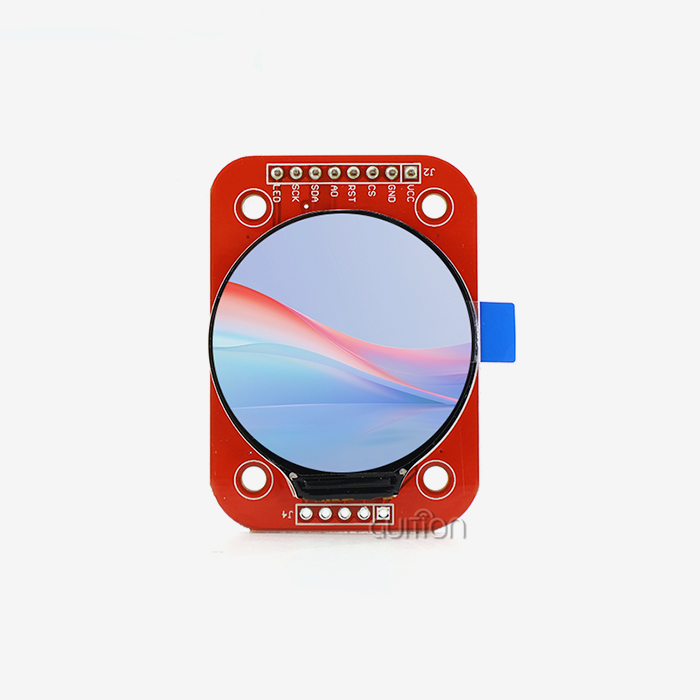
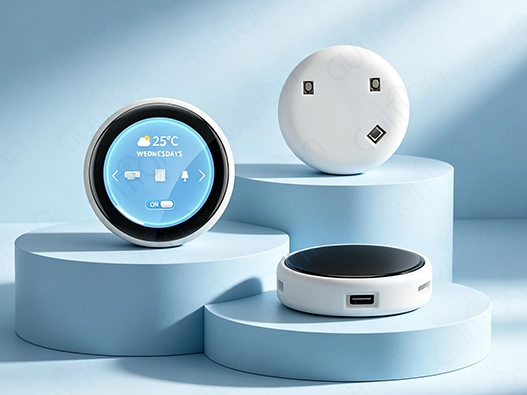
The ESP32-C3-based display system is a big step forward in the field of small HMI technology. This improvement is shown by Guition's model ESP32-2424S012C_I_Y(W), which has the ESP32-C3-MINI-1U module as its main processor. With 400KB SRAM, 384KB ROM, and 4MB Flash memory, this single-core RISC-V MCU can run at speeds of up to 160MHz. Wi-Fi IEEE 802.11b/g/n and Bluetooth 5 LE connections are built in, so you don't need any extra communication units. This makes the board simpler and lowers the cost of the whole 1.28 inch ESP32C3 display module system. The screen has a 240x240 IPS panel resolution and 16-bit color depth, which makes the images bright and ideal for complex graphical user interfaces. Traditional OLED screens can get burnt in after a while of use, but this TFT-based method keeps the light constant and lasts longer. The capacitive touch layer, which is usually controlled by an I2C interface driver, lets the user connect with the device in a responsive way without the wear and tear that comes with real buttons. With its white protective shell, the module stays strong and looks professional, making it suitable for use in business and industrial settings.
Key Specifications and Connectivity Options
The freedom of integration is set by the hardware connections. The module has standard 2.54mm pitch plugs that connect to its GPIO pins, making it easy to connect to other sensors, motors, or expansion boards. High-speed contact with the display driver IC is handled by the SPI bus, and touch input is detected by the I2C bus. The module has a built-in lithium battery charging interface with safety against overcharge and overcurrent conditions. This makes it good for small devices that need reusable power sources. Temperature ranges for operation are usually between -20°C and +70°C, which works well in semi-industrial settings like business terminals, farm automation equipment, and energy management systems. Power usage patterns benefit battery-powered designs. For example, when the display is active, it draws about 80 to 120mA at 3.3V, but when it is in deep sleep, it draws only a few microamperes. This energy economy is very important for wearable tech and distant tracking apps that have limited power supplies.
Interpreting Technical Documentation for Procurement
To reduce the chance of compatibility issues, procurement teams must check datasheets against project standards. Important factors include the source voltage range, the voltage levels at the transmission interface, and the mechanical measurements and mounting hole locations. The thermal specs tell you if passive cooling is enough or if you need to use active thermal management for installations that are sealed. Compliance licenses like FCC, CE, and RoHS prove that a product meets the rules for specific markets. This is especially important when buying modules for medical device development or selling electronics in areas with strict rules.
Step-by-Step Guide to Integrating the 1.28 Inch ESP32C3 Display Module
Setting Up the Development Environment
Setting up the tools correctly is the first step to successful merging. The module works with many programming frameworks, such as Arduino IDE, ESP-IDF, MicroPython, and Mixly, so it can be used by engineers with a wide range of tastes and project needs. The Arduino IDE is easy to use and has a lot of community tools, making it perfect for testing and making small batches. ESP-IDF provides low-level control and optimization features that are ideal for mass production, where code efficiency has a direct effect on production costs. When choosing a board for development, it must meet the requirements for the 1.28 inch ESP32C3 display module version. If you make the wrong choice, memory maps and peripheral addresses that don't match up can cause flash code to fail or runtime problems. As part of verification, the target chip model, Flash size allocation, and split methods must match the hardware specs provided by Guition.
Hardware Connection and Pin Mapping
It's important to pay close attention to how signals and power are routed and distributed during physical integration. The four main outputs used by the SPI link between the ESP32-C3 and the display driver are MOSI (Master Out Slave In), MISO (Master In Slave Out), SCLK (Serial Clock), and CS (Chip Select). DC (Data/Command selection) and RESET (for startup steps of the display) are two more control signals. For signal integrity to be maintained, trace lengths must be kept short, terminations must be used correctly, and ground plane consistency must be maintained to reduce electromagnetic interference. I2C transmission with SDA (Serial Data) and SCL (Serial Clock) lines is usually used for a touch controller interface. Pull-up resistors, which are often built into the module itself, make sure that signal levels are correct when the module is not being used. Interrupt lines from the touch controller to the ESP32-C3 GPIO make event-driven touch recognition work well without polling all the time. This frees up processor cycles for application chores.
Software Initialization and Graphics Rendering
Before the code is run, peripheral setup sequences set up the SPI bus, reset the display controller, and load initialization commands that are special to the display driver IC. Libraries that provide guidance turn these patterns into simple function calls, which makes merging easier. When engineers set settings like screen orientation, color format, and backlight strength, they do so through API methods instead of direct register handling. Libraries like LVGL (Light and Versatile Graphics Library) or TFT_eSPI are used for graphics output because they have drawing primitives for lines, squares, circles, and text. These tools improve data flow to reduce SPI bus overhead. This makes it possible to get smooth animation frame rates, which are needed for user interfaces that respond to touch. Whether they use full-frame buffers in RAM or partial refresh methods, buffer management strategies balance how much memory is used with how fast the rendering is done based on the needs of the program.
Power Management and Troubleshooting
Power control that works well can make batteries last longer and lower the temperature loads in small spaces. The ESP32-C3 has different sleep settings, from light sleep (which keeps the Wi-Fi link) to deep sleep (which only saves the RTC memory). PWM modulation lets you control the brightness of a display so that it dims or turns off completely when the computer is not being used. Touch alerts, timers, or external sensors can set off wakeup methods that allow responsive but energy-efficient operation. To fix common integration problems, you need to use organized testing methods. Display startup problems are often caused by a wrong SPI setting or a power source that isn't stable enough. Logic analyzers record transmission signals to make sure that the timing matches the requirements set by the display driver. Touch responsiveness issues can be caused by bad grounding, too much electrical noise, or calibration offsets that need to be fixed through program settings.
Comparative Analysis: Choosing the Best 1.28 Inch Display for ESP32C3
Display Technology Trade-offs
When choosing between display systems, you have to look at both scientific and business factors. IPS TFT screens, like the ones used in Guition modules, have viewing angles of more than 160 degrees and show colors the same way at all light levels. These features help read devices that need to be seen from different angles, like smart home controls that are mounted on the wall or medical tracking equipment that multiple people can use. By individually controlling pixel output and getting rid of the backlight layer that is present in TFT designs, OLED options offer better contrast ratios and true black levels. This difference in architecture leads to less width and maybe even less power use when mostly dark material is being shown. However, OLED panels usually cost more and have lower operating lifespans when used with static display elements. This means that they are not as good for industrial control panels that need to show persistent state indicators.
Vendor Comparison and Market Options
There are many companies on the market that sell 1.28 inch ESP32C3 display module units, and the features and quality of these modules vary. Guition stands out by supporting a wide range of software ecosystems and offering its own Guition UI development tool, which lets users quickly prototype interfaces without having to do a lot of writing. This graphical development environment uses WYSIWYG writing and drag-and-drop tools to make development much faster than with traditional code-based methods. Waveshare, LilyGO, and TTGO are some of the competing companies that sell modules. Their hardware specs are similar, but their software support, documentation, and supply chain dependability are not. Waveshare keeps large catalogs of products with lots of specific information that can be used to look into a wide range of applications. LilyGO focuses on cost-effective solutions that are popular with maker groups. For large orders, however, the wait time may be longer. TTGO specializes in small form factors that have built-in power management, which makes them a good choice for making wearable and handheld devices.
Application-Specific Recommendations
Military-grade process standards are best for modules used in industrial automation projects that need to be reliable for a long time and work in a wide range of temperatures. The ESP32-2424S012C_I_Y(W) from Guition meets these needs thanks to its carefully chosen components and thorough testing procedures, making it stable for years of production. The built-in Wi-Fi lets you do online diagnostics and firmware changes, which lowers the cost of maintenance for sites that are spread out. In rapid prototyping situations, speed of development and toolset freedom are given the most weight. The ability to use the Arduino IDE with a wide range of example code libraries speeds up the idea proofing stages, which lets engineering teams make changes to interface designs more quickly. Being able to switch to ESP-IDF for production optimization without any problems protects the investment in code while meeting performance and cost-cutting targets during manufacturing scale-up.
Effective Procurement Strategies for 1.28 Inch ESP32C3 Display Modules
Identifying Reliable Sourcing Channels
Building ties with verified suppliers who can keep their promises on amount, quality, and service is key to successful procurement. As both a maker and a direct seller, Guition cuts out the middleman's profit margins and is responsible for the authenticity and stability of all of its parts. Direct involvement makes it easier to have technical conversations during the design phase, which makes sure that the 1.28-inch ESP32C3 display module selected exactly meets the needs of the application before placing production orders.
Evaluating MOQ, Lead Times, and Compliance
Minimum order numbers have a direct effect on the costs of keeping goods and the amount of cash that is needed. Guition can handle both small-batch engineering tests and large-scale production runs. The MOQ structures are based on the number of orders and the level of customization required. Standard setups keep MOQ levels low, which supports agile development methods. Custom software or mechanical changes, on the other hand, may need higher pledges to justify investing in tools and engineering.
Pricing Analysis and Negotiation Strategies
The prices of components are based on many things, such as the cost of silicon, the cost of the display panel, the difficulty of the assembly, and the supplier's profit margins. Volume-based price tiers encourage bigger commitments by lowering unit costs, but procurement has to weigh these savings against the risks of running out of stock and the risk of products becoming obsolete. When you figure out the total cost of ownership, you have to take into account more than just the unit price. You also have to account for approval costs, integration engineering efforts, and ongoing support needs.
Integrating Displays into Your Product Ecosystem: Best Practices and Future Outlook
Scaling Production and Managing Firmware Updates
When going from a sample to mass production, strict process controls are needed to make sure that the quality of each batch of production is the same. Programming clamps automatically load software during assembly, making sure that the installation went well before the units are sent to the testing stations. Over-the-air firmware distribution is possible with Guition's remote update features. This lets makers add new features or security fixes to products that have already been shipped without having to physically reach the products. This feature drastically lowers costs after the sale and makes the esp32 display module more competitive by improving it all the time. For setup control and tracking of multiple display units in networked systems, you need a strong backend infrastructure. MQTT or HTTP protocols make it easier for displays and cloud platforms to talk to each other. This lets centralized status dashboards and coordinated content changes happen across sites that are spread out to work together. For security reasons, communication routes must be encrypted, authentication methods must be in place, and secure boot solutions must stop illegal firmware changes.
UI/UX Optimization for Compact Displays
Creating useful user interfaces for round 1.28-inch displays goes against what most people think about rectangular screens. Curved menus and radial patterns that draw attention to center points of interest fit easily with the shape of the screen, which improves visual symmetry and quality perception. The UI development tool from Guition has templates that are designed for round screens. This speeds up design changes and makes the best use of available pixel space. A good touch target size matches the amount of information with the accuracy of the contact. According to studies on human factors, the minimum size of a touch target should be 44 pixels to fit most finger pads. However, this rule needs to be changed depending on the user's background and the working conditions. When working with gloves on, industrial apps need bigger targets. On the other hand, consumer devices work with bare fingers, which allows control layouts to be thicker.
Emerging Trends and Future Innovations
Display technology keeps getting better at higher resolutions, using less power, and integrating more features. MicroLED technology offers contrast similar to OLEDs with better brightness and longer life, but the high costs of production mean that it can only be used in high-end uses for now. Flexible display materials let new shape factors be created that can fit curved surfaces or devices that can be folded up. This creates new use cases in wearable tech and car interfaces. Through smaller process nodes and design changes, processors get better at what they do. Future versions of the ESP32 are expected to have faster processors that will allow for more complex processing on the device, such as machine learning reasoning for voice recognition, gesture analysis, or predictive maintenance algorithms. Hardware-backed encryption and secure element integration are two new security features that address rising worries about IoT vulnerabilities.
Conclusion
When you add a small 1.28 inch ESP32C3 display module to your product design, you have to balance your technical skills with the cost of buying the module and the need for long-term assistance. For embedded engineers and product managers looking for solid HMI options, Guition's ESP32-2424S012C_I_Y(W) model offers a great mix of speed, connectivity, and support for the development environment. The module has many useful features, such as built-in wireless connectivity, capacitive touch, and support for many software tools. These features make it useful in industrial, medical, and market application areas.
Integration goes beyond just connecting the hardware. It also includes things like firmware design, manufacturing scalability, and methods for maintenance in the field. Procurement teams lower risks and encourage engineering greatness by working with well-known suppliers who offer detailed technical documents, quick support, and a supply chain that has been shown to be reliable. This guide gives decision-makers useful information on how to choose components, set up integration processes, and use strategic sources to get products to market faster while still meeting quality standards that are important for staying ahead of the competition.
FAQ
What power supply requirements does the module have?
The module needs a 3.3V power source and usually uses between 80 and 120mA of current when the display is on. Peak current draw may be higher during Wi-Fi transmission bursts, so power source designs need to be able to handle loads that change quickly. Applications that run on batteries can benefit from the ESP32-C3's deep sleep states, which lower power use to microampere levels and increase the time between charging rounds.
Can this display function effectively in outdoor environments?
The brightness of the IPS screen is good for both indoor and outdoor placements in shade. Direct sunlight makes it hard to see on screens that aren't made to be bright, like transflective or high-brightness displays made for outdoor use. The temperature range of -20°C to +70°C works for most outdoor situations. However, the module should be protected from dust and moisture with a safe enclosure.
What advantages does capacitive touch provide over resistive alternatives?
Capacitive touch enables multi-touch gesture recognition, delivers superior optical clarity without additional resistive layers that dim the display, and removes mechanical wear, which increases the device's useful life. The technology can only be used with bare fingers or a sensitive stylus. Resistive screens, on the other hand, can be used with gloves on or a stylus. Which technology to use depends on the program and the user's needs.
Partner with Guition for Your Display Module Needs
Guition stands ready to support your engineering and buying teams with the best 1.28 inch ESP32C3 display module options on the market, made for easy integration and dependable performance. Our ESP32-2424S012C_I_Y(W) model has strong hardware specs and a lot of software tools, like our own Guition UI development platform. This model speeds up the process of making new products and lowers the cost of building them. We are directly responsible for quality, consistency, and expert help throughout the entire duration of your product because we make it and supply it.
Our experienced team provides fast service that is tailored to your unique needs, whether your project calls for prototype evaluation samples, custom firmware development, or high-volume production promises. We want embedded engineers, R&D managers, and procurement workers to look into how our display solutions can improve medical devices, smart products, industrial control systems, and Internet of Things (IoT) uses in many different markets. Get in touch with david@guition.com right away to talk about technical details, get quotes, or set up sample packages that show how much we care about your success.
References
1. Smith, J. R., & Chen, L. (2022). Embedded Display Integration: Hardware and Software Considerations for IoT Applications. Technical Press International.
2. Anderson, M. K. (2023). ESP32 Microcontroller Architecture and Application Development. Embedded Systems Publishing.
3. Williams, T., & Rodriguez, A. (2021). Human-Machine Interface Design Principles for Compact Display Systems. Industrial Automation Quarterly, 18(4), 245-267.
4. Zhang, H., & Kumar, P. (2023). Procurement Strategies for Electronic Components in Global Supply Chains. Supply Chain Management Review.
5. Thompson, R. S. (2022). Comparative Analysis of Display Technologies for Battery-Powered Devices. Journal of Embedded Engineering, 15(2), 112-134.
6. Martinez, C., & Lee, S. Y. (2023). Wireless Connectivity Standards for Industrial IoT: Implementation and Performance. IEEE Transactions on Industrial Electronics, 70(6), 5823-5841.
Learn about our latest products and discounts through SMS or email