- English
- French
- German
- Portuguese
- Spanish
- Russian
- Japanese
- Korean
- Arabic
- Greek
- German
- Turkish
- Italian
- Danish
- Romanian
- Indonesian
- Czech
- Afrikaans
- Swedish
- Polish
- Basque
- Catalan
- Esperanto
- Hindi
- Lao
- Albanian
- Amharic
- Armenian
- Azerbaijani
- Belarusian
- Bengali
- Bosnian
- Bulgarian
- Cebuano
- Chichewa
- Corsican
- Croatian
- Dutch
- Estonian
- Filipino
- Finnish
- Frisian
- Galician
- Georgian
- Gujarati
- Haitian
- Hausa
- Hawaiian
- Hebrew
- Hmong
- Hungarian
- Icelandic
- Igbo
- Javanese
- Kannada
- Kazakh
- Khmer
- Kurdish
- Kyrgyz
- Latin
- Latvian
- Lithuanian
- Luxembou..
- Macedonian
- Malagasy
- Malay
- Malayalam
- Maltese
- Maori
- Marathi
- Mongolian
- Burmese
- Nepali
- Norwegian
- Pashto
- Persian
- Punjabi
- Serbian
- Sesotho
- Sinhala
- Slovak
- Slovenian
- Somali
- Samoan
- Scots Gaelic
- Shona
- Sindhi
- Sundanese
- Swahili
- Tajik
- Tamil
- Telugu
- Thai
- Ukrainian
- Urdu
- Uzbek
- Vietnamese
- Welsh
- Xhosa
- Yiddish
- Yoruba
- Zulu
How to Display Sensor Data on Arduino LCD ESP32?
Displaying sensor data on an Arduino LCD ESP32 involves leveraging the ESP32's dual-core processing power and versatile communication protocols to drive various LCD modules. The ESP32 microcontroller, programmable through the Arduino IDE framework, connects to LCD screens via I2C, SPI, or parallel interfaces, enabling real-time visualization of temperature, humidity, pressure, and other sensor readings. This integration combines the ESP32's built-in Wi-Fi and Bluetooth capabilities with graphical display technologies, creating powerful HMI solutions for industrial monitoring, smart home devices, and IoT applications where immediate data feedback is essential.
Understanding the Basics of Arduino LCD and ESP32 Integration
The foundation of any successful sensor display project lies in understanding how ESP32 microcontrollers interface with LCD technology. The ESP32 platform has transformed embedded display applications by offering significantly more processing headroom than traditional AVR-based Arduino boards.
Core ESP32 Advantages for LCD Applications
When working with display modules, the ESP32-S3 variant stands out with its 240 MHz dual-core processor, 512 KB SRAM, and 16 MB Flash storage. These specifications enable smooth graphics rendering while simultaneously handling sensor data acquisition and wireless communication tasks. The dual-core architecture allows developers to dedicate one core to display updates while the other manages sensor polling and network connectivity, eliminating the performance bottlenecks common in single-core systems. Modern Arduino LCD ESP32 implementations support multiple display technologies, including character LCDs (16x2, 20x4), color TFT screens, and IPS panels. Each technology offers distinct trade-offs in power consumption, viewing angles, and graphical capabilities that influence project suitability.
Communication Protocols and Pin Configurations
ESP32 boards support three primary LCD communication techniques. I2C is appropriate for space-constrained applications with limited GPIO since it utilizes only two data lines (SDA and SCL) and power connectors. For character displays and small monochrome graphics panels, this serial interface simplifies wiring but runs at lower data speeds. On ESP32 hardware, SPI communication supports 80MHz clock frequencies for better throughput. This protocol provides bandwidth for color TFT displays with 170x320 or 240x320 pixels but requires four to five pins (MOSI, MISO, SCLK, CS, and DC). Parallel interfaces convey data fastest but use eight or sixteen GPIO pins, making them suitable for larger displays in unrestricted pin count applications. Understanding voltage compatibility is essential when choosing components. Interfacing with 5V LCD modules in traditional Arduino environments requires level shifters because the ESP32 works at 3.3V logic levels. Connecting 5V to the ESP32 GPIO pins permanently damages the microcontroller.
Display Technology Comparison
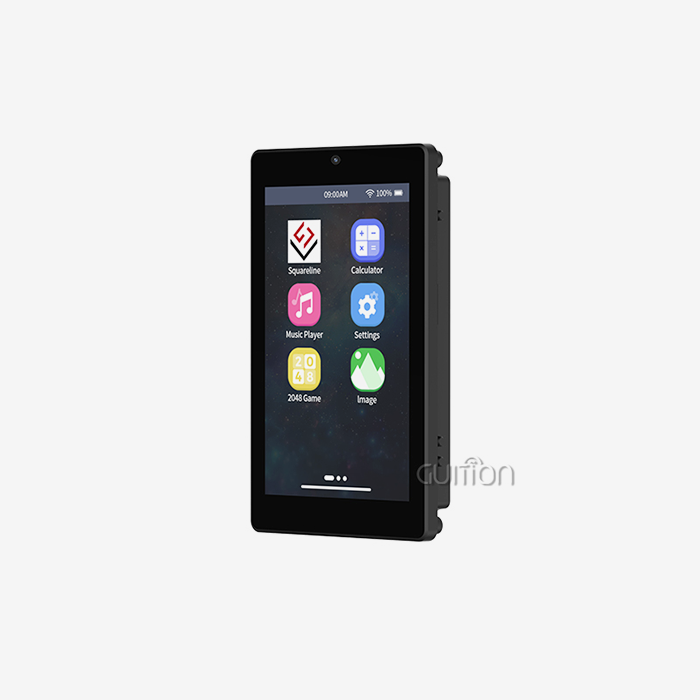
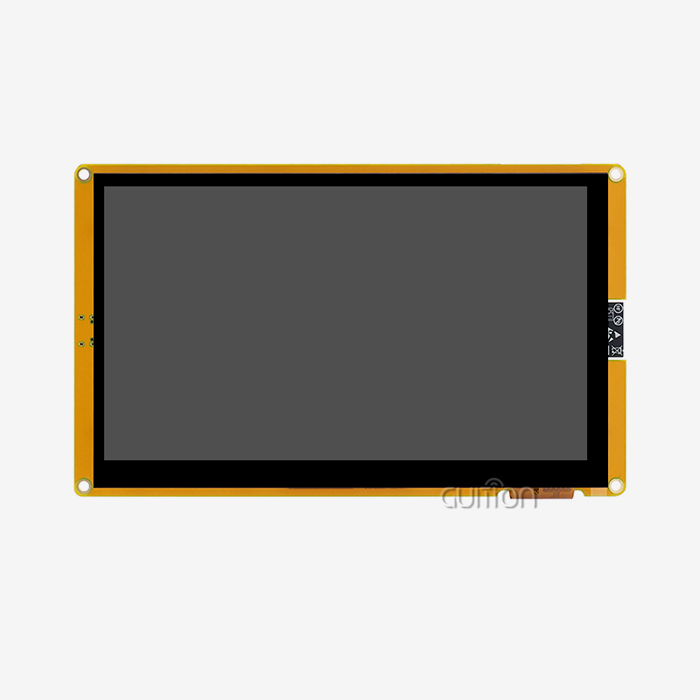
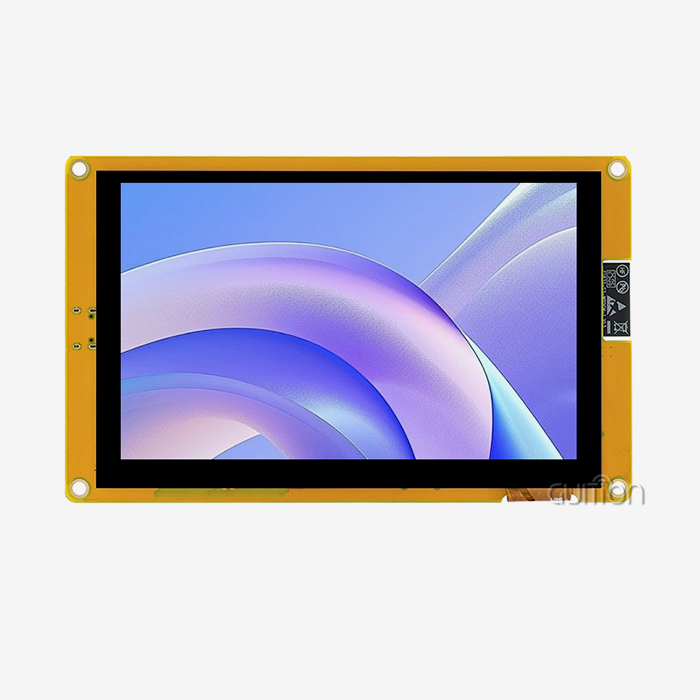
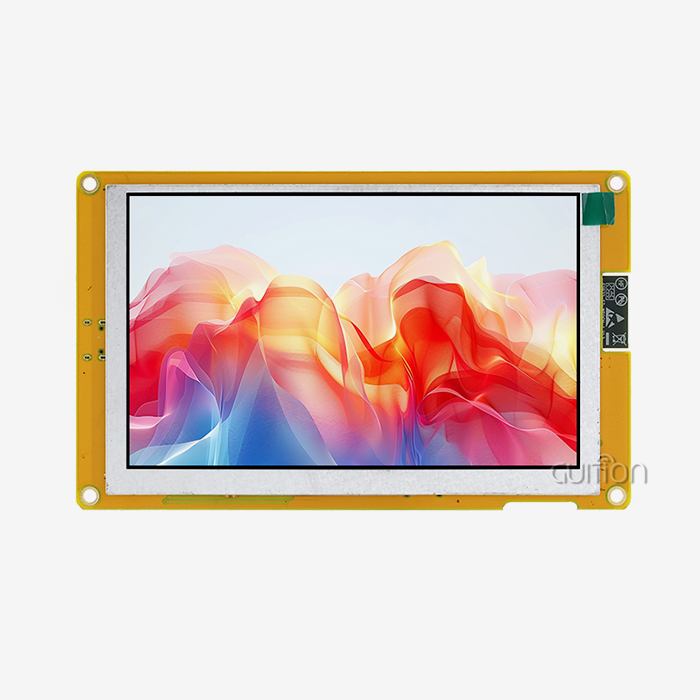
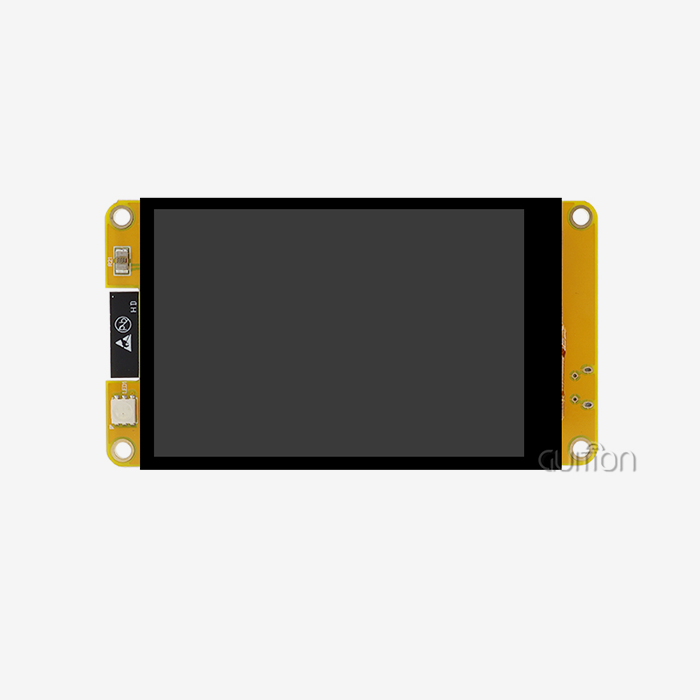
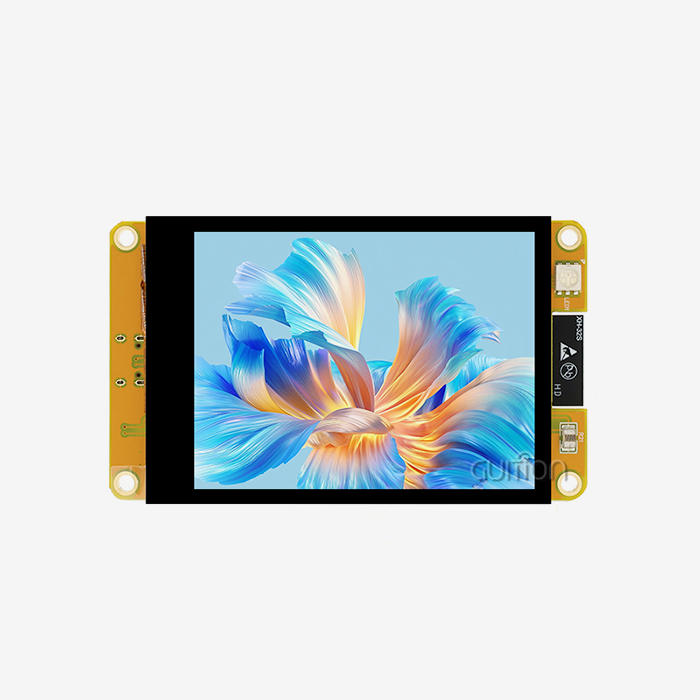
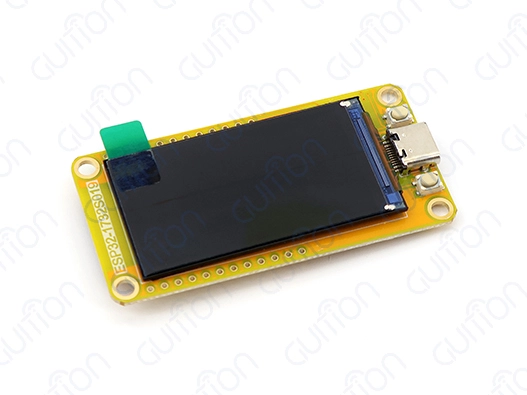
Character LCDs provide straightforward text output perfect for simple sensor readouts. These modules typically feature backlit monochrome displays with fixed character positions, offering excellent readability in various lighting conditions with minimal power draw. Their simplicity makes them reliable choices for industrial applications requiring numeric data display. IPS TFT panels deliver vibrant full-color graphics with wide viewing angles exceeding 170 degrees. The Guiton ESP32-1732S019N-I exemplifies this technology with its 1.9-inch IPS display featuring 170x320 resolution and 16-bit color depth. This configuration produces sharp visuals suitable for graphical sensor dashboards, trend charts, and multi-parameter monitoring interfaces. The IPS technology maintains color accuracy and brightness consistency regardless of viewing position, addressing a key limitation of older TN-panel displays.
Step-by-Step Guide to Display Sensor Data on Arduino LCD with ESP32
Building a functional sensor display system requires careful attention to hardware connections, software configuration, and code implementation. This practical guide streamlines the development process from initial setup through troubleshooting.
Hardware Wiring and Connection Setup
Reliable operation starts with excellent physical connections. SDA and SCL should be connected to GPIO 21 and 22, the default I2C pins on most ESP32 development boards, for using I2C character displays. Provide all components with consistent 3.3V power from the ESP32's regulated output and ensure a common ground. SPI-based color displays need more connections. The Guition ESP32-1732S019N-I module combines the display and controller on one board, simplifying wiring. Connect MOSI, SCLK, CS, DC, and RST to GPIO 23, 18, 5, 2, and 4 for discrete SPI displays. These pin assignments match VSPI peripheral defaults; however, software can define arbitrary configurations. Proper power transmission prevents flickering and system instability. Color TFT backlights take 100-200 mA; thus, power supplies must deliver at least 500 mA of total current to accommodate ESP32 and sensor loads. Bypass capacitors (100μF electrolytic + 0.1μF ceramic) near display power pins reduce voltage ripple during surges.
Software Libraries and Development Environment Configuration
The Arduino IDE provides the most accessible development pathway for ESP32 display projects. Install the ESP32 board package through the Board Manager by adding the Espressif repository URL to the IDE preferences. After installation, select the appropriate board variant ESP32-S3 Dev Module for Guition hardware, ensuring Flash and PSRAM sizes match your module specifications (16 MB and 8 MB, respectively). Library selection significantly impacts development efficiency. The TFT eSPI library offers optimized performance for SPI displays, supporting DMA transfers and hardware acceleration features. Configuration occurs through editing the User Setup.h file to define display driver chips (such as ST7789 or ILI9341), pin assignments, and SPI frequency settings. Alternatively, the LovyanGFX library provides advanced features, including sprite rendering and smooth animations suitable for sophisticated interfaces.
Character displays typically use the LiquidCrystal_I2C library, which abstracts I2C communication complexity. Install this library through the IDE's Library Manager, then initialize it in code by specifying the I2C address (commonly 0x27 or 0x3F) and display dimensions.
Troubleshooting Common Integration Challenges
Display initialization failures often stem from incorrect pin definitions or SPI frequency mismatches. When encountering white or blank screens, verify that the display driver selection in User Setup.h matches your hardware's actual controller chip. Reduce SPI frequency from 80MHz to 40MHz or 27MHz if display corruption appears, as some modules cannot reliably operate at maximum speeds due to PCB layout or connection length limitations. Wi-Fi interference can disrupt display refresh cycles on ESP32 devices. The wireless radio shares certain GPIO resources, potentially causing glitches during transmission bursts. Implement display updates in a dedicated task on one CPU core while handling network operations on the other core. This task separation, unique to dual-core ESP32 variants, maintains smooth graphics performance during wireless activity.
Power-related issues manifest as random resets or display dimming. Measure voltage at the ESP32's 3.3V pin under load. Readings below 3.1V indicate insufficient supply capacity. Upgrade to higher-current power sources and add bulk capacitance near the module to stabilize voltage during peak current draws from backlight and transmitter operations.
Evaluating and Procuring the Best Arduino LCD Modules for ESP32 Projects
Selecting appropriate display hardware requires balancing technical specifications, vendor reliability, and project-specific constraints. This evaluation framework helps engineering teams and procurement professionals make informed sourcing decisions.
Technical Compatibility Criteria
Graphics rendering complexity and memory needs depend on display resolution. For 16-bit color depth, 170x320 pixels require 109KB of framebuffer memory, while 240x320 needs 150KB. The ESP32-S3's 512KB SRAM and 8MB PSRAM meet these needs, although smaller ESP32s with 320KB SRAM may struggle with many framebuffers for smooth animations. Interface bandwidth matching optimizes performance. Character displays can update text via I2C at 100-400kHz, but color graphics require 40-80MHz SPI interfaces. The Guition ESP32-1732S019NI allows for fast SPI connections with DMA, which means it can refresh images more than 30 times a second for industrial HMI applications that require Industrial-grade and consumer-grade components to have different operating temperatures. Standard displays work from 0°C to 50°C, while extended-temperature models work from -20°C to 70°C for outdoor or workplace use. Please ensure that the LCD screen and touch controller meet the deployment environmental requirements.
Vendor Evaluation and Quality Indicators
The quality of supplier technical support affects project timeframes and success. Reliable suppliers provide dimensional drawings, interface timing diagrams, and functioning code examples for popular platforms. Guition offers Arduino libraries, pre-loaded demonstration firmware, and implementation advice via. Multi-year deployment products need component availability and lifespan stability. Current-generation controller ICs and common interface protocols reduce display module obsolescence. The Espressif ESP32S3 platform reduces design-in risks associated with newer microcontroller families by committing to long-term availability.
Manufacturing quality indicators include optical bonding that reduces parallax and improves sunlight readability, controlled backlight uniformity across the display surface, and durable connector systems that endure multiple insertion cycles during development and maintenance. Industrial modules cost more because they undergo temperature cycling, vibration testing, and lengthy burn-in, which consumer modules don't.
Procurement Strategies for Various Project Scales
Prototype quantities benefit from flexible suppliers offering low minimum order quantities with fast shipping. Development kits that bundle display modules with breakout boards and example code accelerate initial feasibility testing. The Guition ESP32-1732S019N-I arrives factory-programmed with test patterns, enabling immediate functional verification upon receipt. Production procurement shifts focus toward pricing structures, inventory management, and customization options. Volume pricing typically activates at 100-500 unit thresholds, with additional breaks at 1,000 and 5,000 pieces. Negotiate consignment inventory arrangements for high-volume programs to minimize cash flow impacts while ensuring supply continuity.
Customization capabilities distinguish strategic suppliers from commodity distributors. Options include custom bootloader firmware, pre-loaded application code, modified mechanical dimensions, and integrated sensor assemblies. These value-added services reduce manufacturing steps and simplify supply chain management, particularly valuable when building complete embedded systems rather than standalone display subsystems.
Use Cases and Project Ideas for Arduino LCD ESP32 Display Integration
Real-world applications demonstrate how Arduino LCD ESP32 combinations solve specific industry challenges while highlighting design considerations that influence component selection and implementation approaches.
Industrial Monitoring and Control Interfaces
Factory automation systems increasingly use dispersed sensor networks to feed local display terminals. On a color TFT screen, an ESP32-based environmental monitoring station displays real-time and historical temperature, humidity, air quality, and vibration data from several sensors. ESP32's Wi-Fi uploads data to cloud databases for analysis, while the local display provides operators with immediate feedback without network dependencies. Production equipment HMI panels use the ESP32's processing capabilities for responsive touch interfaces with graphics. A packaging machine controller communicates with PLCs via Modbus RTU over RS-485 and shows fill levels, cycle counts, and alarms on a 3.5-inch display. The dual-core architecture renders the display on one core and runs the communication stack on the other, ensuring smooth UI performance during busy data exchanges.
Energy management applications use the ESP32's low power. A solar installation monitor periodically reads voltage, current, and irradiance sensors to update an e-paper display with daily production information. The ESP32 goes into deep slumber between readings, prolonging battery life to months, while the e-paper display is visible without electricity.
Smart Home and Consumer IoT Devices
Consumer apps like thermostats combine aesthetics and utility. A smart thermostat using the Guition ESP32 module displays temperature setpoints, schedules, and weather predictions on an IPS display with wide viewing angles for room-wide reading. User preferences are met through touch-free control using proximity sensors or rotary encoders and smartphone communication via Bluetooth. Indoor air quality sensors are popular in health-conscious sectors. ESP32-based devices measure CO₂, VOCs, particulate matter, and temperature and display color-coded indications and numeric readings on a small LCD. The ESP32's PWM controls backlight intensity, allowing the display's brightness to vary based on ambient light sensors to maintain visibility without disturbing nighttime. Recipe suggestions and cooking timers improve user experience on linked kitchen appliances. Graphically displaying temperature profiles allows smart oven controller users to track preheating and roasting. A single microprocessor platform, the ESP32 connects with temperature measurements, operates heating elements via relay drivers, and shows cooking status on an integrated screen.
Portable Data Logging and Field Instrumentation
Agricultural applications require durable, battery-powered data collectors. ESP32 modules with e-ink displays are mounted on sensor stakes in fields to monitor soil moisture. Farmers may examine current readings and 7-day trends on the waterproof display while the device sends data hourly via LoRa radio to a central gateway. ESP32 deep sleep and e-ink technology's low power consumption allow field operation for entire growing seasons on one battery charge. ESP32 computations help medical and laboratory instruments process data on-device. A portable vital signs monitor calculates heart rate variability from pulse oximetry and temperature readings and displays them on a high-contrast OLED screen. Devices with integrated esp32 display modules are smaller than those with a processor and display boards. Remote environmental research equipment must operate autonomously with little maintenance. A weather station using ESP32 hardware logs air pressure, wind speed, rainfall, and sun radiation, and displays current conditions on an LCD and stores past data on an SD card. The display activates only when researchers approach (detected by PIR sensor), saving power between site visits for weeks.
Benefits and Best Practices for Implementing Arduino LCD with ESP32 in B2B Projects
Long-term project success depends on strategic component selection, development methodology, and supplier partnerships that extend beyond initial procurement to encompass the complete product lifecycle.
Development Efficiency and Time-to-Market Advantages
Standard development tools shorten project schedules. The Arduino framework's vast library ecosystem contains verified communication protocols, sensor interfaces, and display drivers that would take weeks to design. Guition's UI development software allows graphical interface creation without low-level coding, democratizing HMI development for teams without graphics programmers.
Pre-integrated modules eliminate early project hardware debugging. ESP32-1732S019N-I has a proven electrical design, pre-loaded test firmware, and a microcontroller, display, and supporting circuitry on one board. This integration strategy lets software teams start application development without waiting for specific hardware manufacture and bring-up, speeding up proof-of-concept demonstrations that obtain project financing and stakeholder support.
Cross-platform debugging reduces troubleshooting time with real-time variable checking and performance benchmarking. JTAG debugging interfaces allow experienced embedded developers to use breakpoint-based development workflows on the ESP32, while Arduino Serial Monitor provides diagnostics for teams switching from simpler platforms. Online debugging from Guition allows straightforward troubleshooting without hardware debuggers.
Scalability and Future-Proofing Strategies
Product evolution and market growth should inform component selection. The ESP32 family includes basic ESP32-WROOM modules and powerful ESP32-S3 modules with USB connectivity and security features. Software architectures that abstract hardware dependencies through driver layers allow migration among ESP32 variations as product lines mature or cost optimization opportunities arise.
ESP32 modules' wireless connectivity allows upgrades beyond baseline specifications. Firmware upgrades can add cloud connectivity, mobile app integration, and over-the-air updates to a local display device without hardware changes. Manufacturers can differentiate product tiers and meet changing customer expectations without rebuilding physical objects.
Display technology roadmaps affect component availability. The move to IPS screens with better viewing characteristics allows for product appeal and interface compatibility. Multiple display sizes (1.28" through 21.5") and uniform development tools from Guition support the expansion of product lines, allowing manufacturers to target varied market segments from micro wearables to massive industrial panels using standard software architectures.
Supplier Partnership and Support Considerations
Technical support responsiveness affects project risk and timeline. Suppliers with email (david@guition.com) or technical forum engineering connections can quickly resolve integration issues that arise during development. Having practical reference designs, evaluations of schematics, and tailored advice sets apart strategic component partners from regular wholesalers.
Quality and thorough documentation speed up onboarding and simplify certification. Complete datasheets for electrical specifications, mechanical dimensions, environmental ratings, and compliance certifications simplify regulatory filings for North American, European, and global products. Engineering teams benefit from Guition's thorough technical documentation during product development and manufacturing.
Even early projects should address long-term supply stability. Suppliers with vertically integrated manufacturing or strong relationships with display panel manufacturers provide more continuity than spot market brokers. For multi-year items, ask about lifespan commitments, last-time-buy notice protocols, and form-fit-function replacement planning to reduce obsolescence concerns.
Conclusion
Implementing sensor data visualization through Arduino LCD ESP32 integration combines powerful hardware capabilities with accessible development tools, creating opportunities across industrial, commercial, and consumer applications. The ESP32 platform's dual-core processing, wireless connectivity, and extensive GPIO resources enable sophisticated HMI solutions that were previously feasible only with expensive dedicated processors. Modern integrated modules like the Guition ESP32-1732S019N-I further streamline development by consolidating microcontroller and display components while providing comprehensive software support through Arduino IDE, ESP-IDF, and specialized tools like the Guition UI development software. Success in deploying these systems depends on careful component selection matching technical requirements to application constraints, adopting best practices that ensure scalability and maintainability, and establishing partnerships with suppliers committed to technical support and long-term availability.
FAQ
What makes the ESP32 better than traditional Arduino boards for display applications?
The ESP32 platform delivers substantially higher processing power through its 240MHz dual-core architecture compared to 16MHz single-core AVR processors in classic Arduino boards. This performance advantage enables smooth graphics rendering on color TFT displays while simultaneously handling sensor acquisition and wireless communication. Additionally, ESP32 modules include integrated Wi-Fi and Bluetooth, eliminating external connectivity modules required in traditional Arduino designs.
Can I use existing Arduino display code with ESP32 boards?
Many Arduino libraries function on ESP32 with minimal modifications, though voltage level differences require attention. The ESP32 operates at 3.3V logic levels versus 5V on older Arduino boards, necessitating level shifters for direct-connected 5V displays. Libraries like TFT_eSPI offer optimized ESP32 implementations that leverage hardware features unavailable on AVR processors, providing superior performance compared to directly ported code.
How do I select between I2C and SPI interfaces for my display?
I2C interfaces suit character displays and small monochrome graphics screens where simplicity and minimal wiring outweigh performance considerations. SPI becomes necessary for color TFT displays requiring higher data throughput to achieve acceptable refresh rates. The Guition ESP32-1732S019N-I employs SPI communication to support its 170x320 color display with smooth animation capabilities.
Where can I source reliable display modules for production projects?
Procurement for volume production should prioritize suppliers offering technical support, consistent quality, and long-term availability. Guition provides industrial-grade display solutions spanning 1.28" to 21.5" with comprehensive development tools and engineering support. Direct manufacturer relationships ensure supply continuity and enable customization options unavailable through distribution channels.
Partner with Guition for Your Arduino LCD ESP32 Display Solutions
Accelerating your sensor display project requires more than component selection—it demands a supplier partner invested in your success. Guition provides ready-to-use Arduino LCD ESP32 modules designed specifically for tough human-machine interface (HMI) needs in industrial machines and smart devices. Our ESP32-1732S019N-I combines the powerful ESP32-S3-WROOM-1 dual-core processor with a vibrant 1.9-inch IPS display, providing the processing headroom and visual quality your applications demand. Whether you're developing environmental monitoring dashboards, portable field instruments, or consumer IoT devices, our solutions offer the development flexibility supporting Arduino IDE, ESP-IDF, MicroPython, and our proprietary Guition UI software. Technical support remains accessible throughout your development journey—reach out to david@guition.com for engineering consultation, customization options, or to discuss volume pricing as an Arduino LCD ESP32 manufacturer committed to your project's success.
References
1. Espressif Systems. "ESP32-S3 Technical Reference Manual: Display Interface Implementation." Espressif Documentation Series, 2022.
2. Monk, Simon. "Programming ESP32: Getting Started with MicroPython and Arduino. "McGraw-Hill Education, 2021.
3. Seneviratne, Pradeeka. "Hands-On Internet of Things with ESP32: Build Connected Projects with Arduino IDE." Packt Publishing, 2020.
4. Barrett, Steven F. "Arduino Microcontroller Processing for Everyone: Advanced Topics with ESP32 Integration." Morgan & Claypool Publishers, 2022.
5. Kurniawan, Agus. "ESP32 Projects: Practical IoT Development with Display Integration." PE Press, 2021.
6. Wang, Chen, and Liu, Ming. "Industrial HMI Design: Modern Approaches with ESP32 and TFT Displays." IEEE Industrial Electronics Magazine, Vol. 16, Issue 3, 2023.
Learn about our latest products and discounts through SMS or email