- English
- French
- German
- Portuguese
- Spanish
- Russian
- Japanese
- Korean
- Arabic
- Greek
- German
- Turkish
- Italian
- Danish
- Romanian
- Indonesian
- Czech
- Afrikaans
- Swedish
- Polish
- Basque
- Catalan
- Esperanto
- Hindi
- Lao
- Albanian
- Amharic
- Armenian
- Azerbaijani
- Belarusian
- Bengali
- Bosnian
- Bulgarian
- Cebuano
- Chichewa
- Corsican
- Croatian
- Dutch
- Estonian
- Filipino
- Finnish
- Frisian
- Galician
- Georgian
- Gujarati
- Haitian
- Hausa
- Hawaiian
- Hebrew
- Hmong
- Hungarian
- Icelandic
- Igbo
- Javanese
- Kannada
- Kazakh
- Khmer
- Kurdish
- Kyrgyz
- Latin
- Latvian
- Lithuanian
- Luxembou..
- Macedonian
- Malagasy
- Malay
- Malayalam
- Maltese
- Maori
- Marathi
- Mongolian
- Burmese
- Nepali
- Norwegian
- Pashto
- Persian
- Punjabi
- Serbian
- Sesotho
- Sinhala
- Slovak
- Slovenian
- Somali
- Samoan
- Scots Gaelic
- Shona
- Sindhi
- Sundanese
- Swahili
- Tajik
- Tamil
- Telugu
- Thai
- Ukrainian
- Urdu
- Uzbek
- Vietnamese
- Welsh
- Xhosa
- Yiddish
- Yoruba
- Zulu
How Is ESP32-C6 Display Used in Smart Device Development?
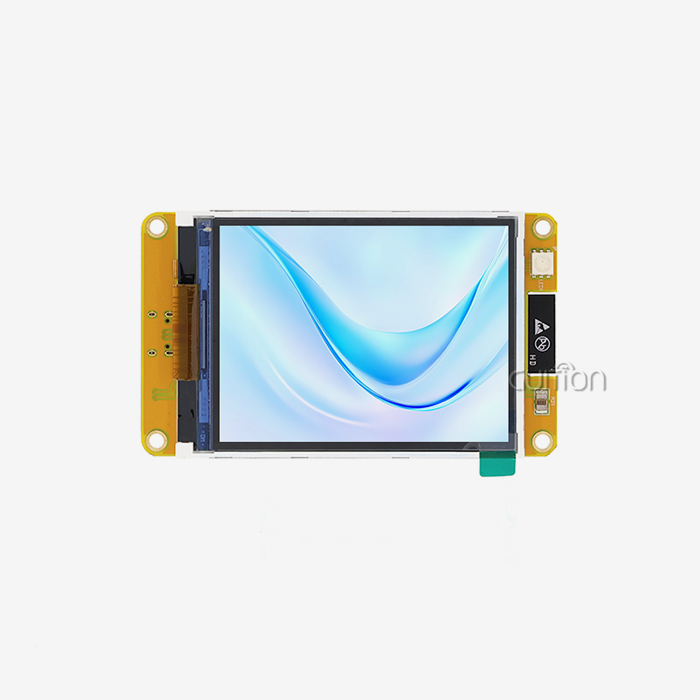
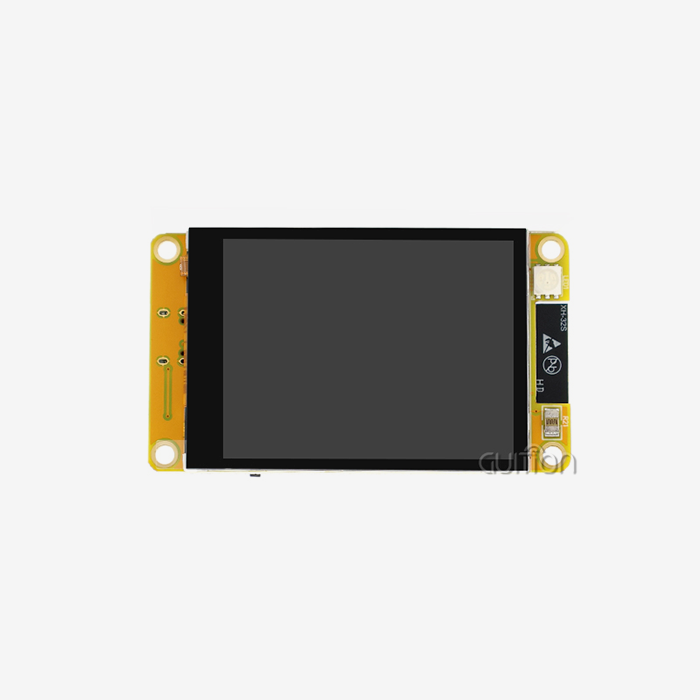
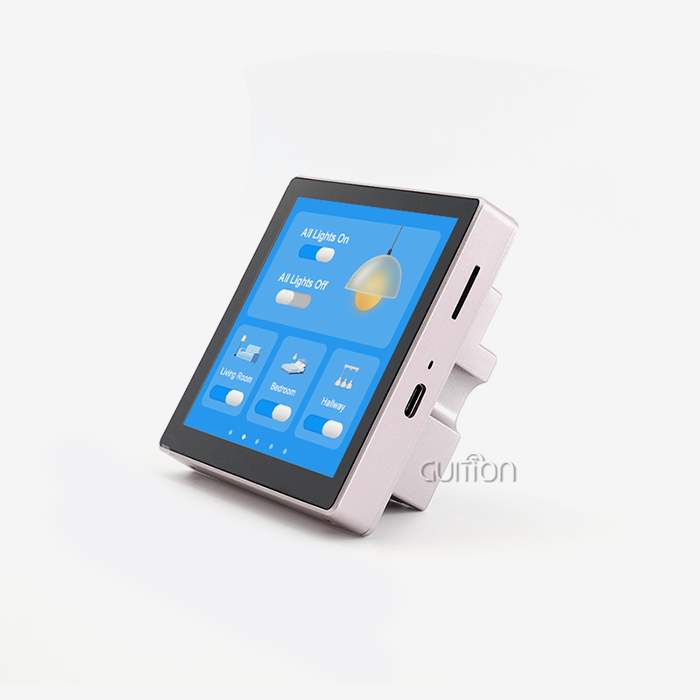
The ESP32-C6 display serves as a specialized HMI solution integrating Espressif's RISC-V-based SoC with visual interfaces like TFT or OLED screens. This display technology combines Wi-Fi 6, Bluetooth 5, and Zigbee/Thread connectivity to address critical smart device challenges: seamless Matter protocol compliance for IoT interoperability, ultra-low power consumption for battery-operated applications, and simplified GUI development for rapid time-to-market. Engineers utilize these modules to build industrial control panels, smart home touchscreens, and medical monitoring devices where reliable wireless connectivity meets intuitive user interaction.
Understanding ESP32-C6 Display Specifications and Interfaces
The architecture of ESP32-C6 display modules represents a significant evolution in embedded HMI design. Unlike conventional microcontroller-driven screens, the technology integrates a 32-bit RISC-V processor clocked at 160 MHz with native support for multiple wireless protocols, enabling engineers to create connected displays without external communication chips.
Core Technical Specifications
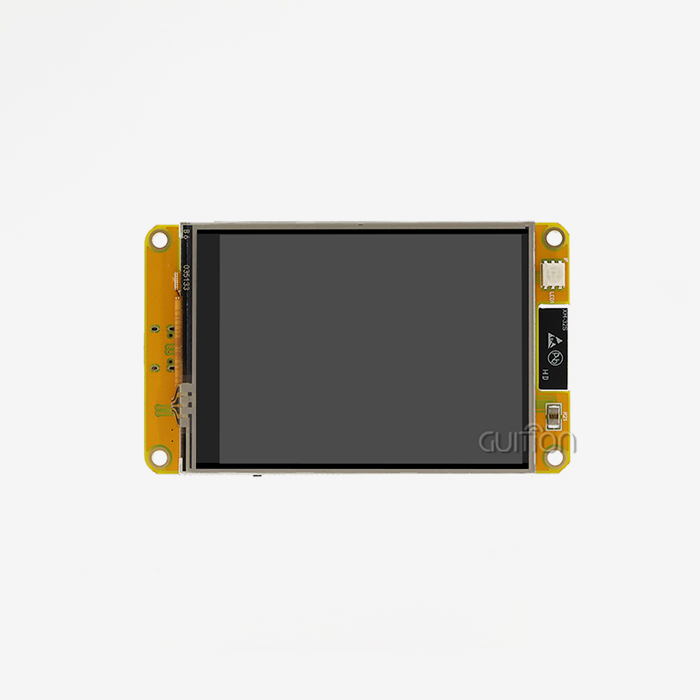
Engineers evaluate these modules for smart device integration using three main specifications. The processing core provides computing capacity for real-time GUI rendering while retaining energy efficiency for battery-powered applications. SRAM ranges from 512 KB for basic implementations to external PSRAM for graphic-intensive applications. Flash memory can store firmware, graphics, and application logic from 4 to 16 MB. Integration flexibility depends on communication interfaces. SPI connections, with transfer rates up to 80 MHz, are suitable for moderate-resolution displays (240x320 to 480x320 pixels). Touch controller integration and sensor communication use 400 kHz or 1 MHz I2C interfaces. Larger displays benefit from eight-bit parallel (I8080) bandwidth and lower refresh delay than serial technologies.
Power Consumption Profiles
Battery-operated smart devices demand stringent power management. Active display operation typically consumes 80-120 mA at 3.3V depending on screen size and backlight intensity. The deep sleep mode reduces consumption to microampere levels while maintaining RAM contents, enabling always-connected IoT applications. Target Wake Time (TWT) functionality in Wi-Fi 6 extends battery life by scheduling transmission windows, allowing the processor to sleep between designated communication periods.
Display Interface Compatibility
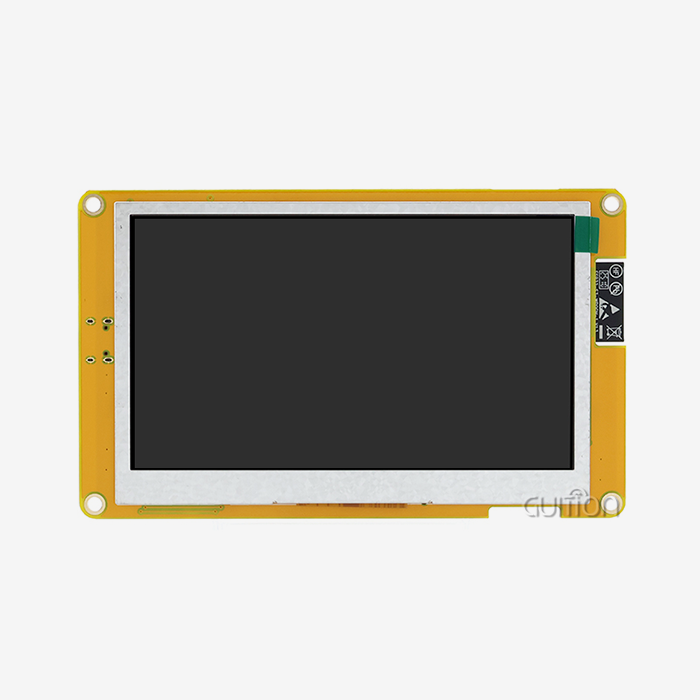
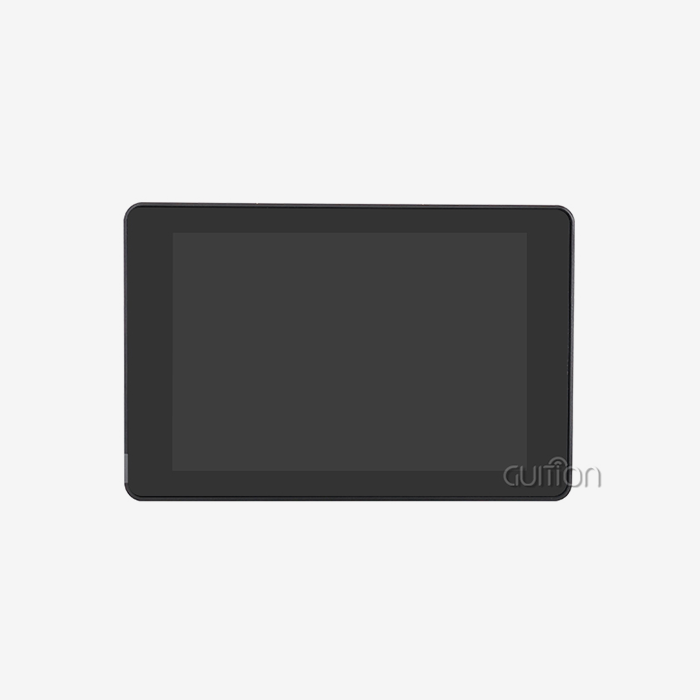
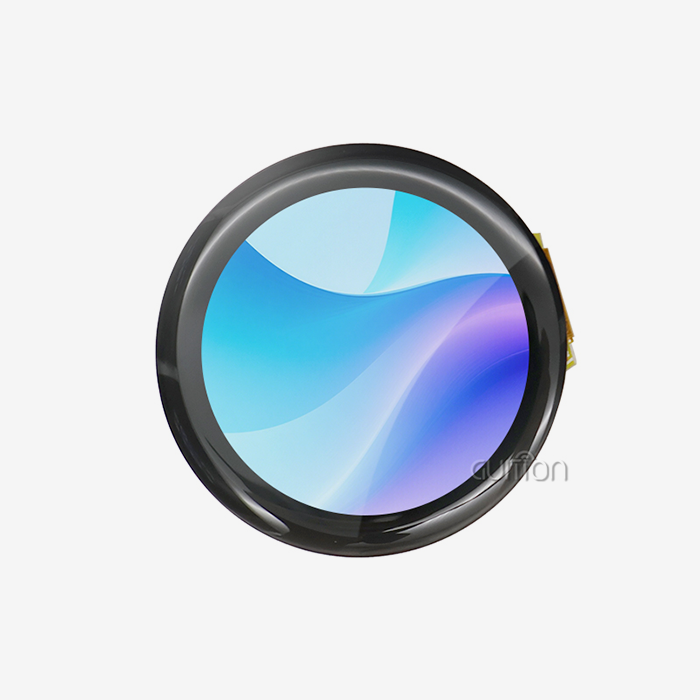
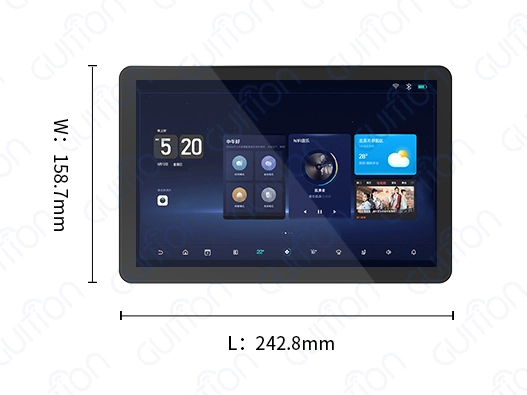
Flexible driver support lets these modules support various screen technologies. Outdoor industrial applications benefit from TFT LCD panels' rich color reproduction. When displaying mostly dark content, OLED alternatives have better contrast ratios and faster response times and use less power. Ultra-low-power, always-visible screens for sensor monitoring stations are possible with e-ink. The modularity of Guition's JC8012P4A1CIWY shows this versatility. This 10.1-inch IPS module, powered by the ESP32-P4 dual-core MCU at 360 MHz, features 800×1280 resolution, 768 KB L2 memory, and 32 MB PSRAM. Capacitive touch is optional. The design supports Arduino IDE, ESP-IDF, MicroPython, and Guition for diverse engineering workflows. Storage expansion and peripheral connectivity are possible without board redesign via reserved TF card and IO ports.
Guition makes it easier to combine everything. Our ready-to-use modules with example apps let engineers try out features right after unpacking. The simple drag-and-drop Guition development platform removes the need for complicated coding, so teams without much experience in embedded systems can quickly create prototypes. This helps solve common problems in HMI development that slow down
Comparing ESP32-C6 Displays with Other Popular Display Solutions
Making informed procurement decisions requires understanding how these wireless-enabled displays compare against established alternatives in performance, ecosystem maturity, and total cost of ownership.
ESP32-C6 Versus ESP32-S3 Display Implementations
The S3 variant prioritizes multimedia processing with dual-core Xtensa LX7 architecture clocked at 240 MHz and native RGB interface support. This configuration excels in high-frame-rate video applications and complex graphical rendering. The C6 alternative trades raw graphical horsepower for advanced connectivity standards, making it optimal for IoT control panels where Matter protocol compliance and Wi-Fi 6 efficiency outweigh video processing demands. Power consumption patterns diverge significantly. S3 implementations typically consume 30-40% more current during active Wi-Fi transmission compared to C6 modules leveraging OFDMA spectrum efficiency. Battery-powered smart thermostats or remote sensors benefit substantially from this differential. Conversely, multimedia displays showcasing video streams or high-resolution image galleries realize better performance from S3 hardware acceleration capabilities.
Display Technology Trade-offs: OLED Versus TFT
For medical monitoring equipment that needs readability in different lighting situations, OLED technology provides clear, bright interfaces with contrast ratios over 100,000:1 and response times under 1 millisecond. OLED panels gradually lose brightness over 20,000–30,000 hours, which raises problems for industrial applications with decade-long deployment lifecycles. TFT LCD alternatives are better for continuously operated industrial control panels since they maintain brightness after 50,000+ hours. Modern IPS TFT panels have color fidelity for most HMI applications and viewing angles nearing 178 degrees. Though LED backlight dimming has improved, dark content ESP32-C6 displays consume 20%–30% more power than OLEDs.
Raspberry Pi Display Ecosystems Compared
Raspberry Pi-based display solutions offer mature software ecosystems with extensive library support and community resources. Integration complexity increases substantially, however, as engineers must combine separate compute modules, display drivers, and wireless adapters. This multi-component approach increases bill-of-materials costs, physical footprint, and potential failure points. Single-chip display solutions like those from Guition reduce component count, streamline supply chains, and simplify certification processes. The integrated approach proves particularly advantageous for space-constrained wearable devices or cost-sensitive consumer electronics where every dollar and cubic millimeter matters. Procurement teams managing high-volume manufacturing runs benefit from simplified vendor relationships and reduced inventory complexity.
Procurement and Sourcing of ESP32-C6 Display Modules for Smart Devices
Strategic component sourcing directly impacts production timelines, product quality, and long-term support capabilities. Engineers and procurement specialists must navigate supplier verification, pricing structures, and logistics considerations to secure reliable display modules.
Identifying Authorized Distributors
Counterfeit electronic components represent a persistent risk in global supply chains. Authorized distributors maintain traceability documentation connecting each module to manufacturing batch records, enabling quality audits and reliability analysis. Verification steps include confirming distributor authorization directly through manufacturer websites, examining component packaging for security features like holographic labels, and requesting certificates of conformity documenting compliance with RoHS and REACH environmental regulations. Guition operates direct sales channels supplemented by certified distribution partners, ensuring authenticity and warranty coverage. Our global network maintains inventory across North America, Europe, and Asia-Pacific regions, reducing shipping times and customs complexity for regional customers.
Pricing Structures and Volume Advantages
Unit pricing follows predictable volume curves. Prototype quantities (1-10 units) carry premium pricing reflecting individual handling costs. Production volumes (100-500 units) typically achieve 15-25% discounts as setup costs amortize across larger batches. High-volume commitments exceeding 1,000 units unlock additional 10-15% savings along with favorable payment terms. Beyond per-unit costs, engineers should evaluate total acquisition expenses, including non-recurring engineering charges for custom firmware, tooling fees for specialized packaging, and logistics costs for international shipments. Warranty coverage spanning 12-36 months protects against premature failures, with extended warranty options available for critical infrastructure applications.
Global Supply Chain Logistics
Order volume and product complexity affect lead times. Stocked Standard catalog products arrive in 5-10 business days. Custom setups involving firmware or mechanical changes take 4-8 weeks, depending on engineering scope. Procurement planning should include buffer inventories for lead time and demand changes. Reliable shipping affects production scheduling. Airfreight delivers components worldwide in 3–7 days at premium prices for urgent prototypes. Ocean freight reduces transportation costs by 60–80% and takes 4-6 weeks, which is ideal for planned production runs. Regional warehouse strategies weigh inventory expenses against lead time savings. We provide procurement beyond component sales. Before placing orders, technical specialists verify specifications to ensure that the modules meet application requirements. After delivery, our engineering team helps with firmware customization, integration, and troubleshooting to accelerate product development.
Best Practices and Use Cases of ESP32-C6 Display in Smart Device Development
Practical implementation wisdom separates successful product launches from protracted development cycles. Real-world case studies demonstrate proven integration patterns across diverse application domains.
Smart Home Control Panel Implementation
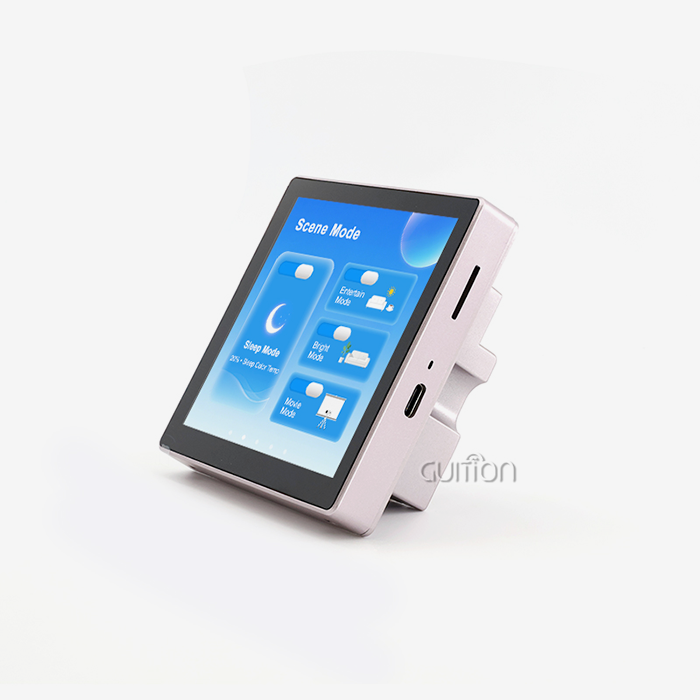
Matter protocol compliance required a thermostat maker to use integrated wireless display technology instead of their proprietary display controller. Thread mesh networking provided low-latency communication with scattered temperature sensors while Wi-Fi provided cloud data synchronization and mobile app control. The development team created an intuitive temperature control interface using LVGL on the RISC-V core. Active use of partial screen refresh tactics lowered power usage to 45 mA, extending battery life to 18 months on ordinary AA cells. Remote firmware updates allowed the manufacturer to distribute UI improvements and bug fixes to deployed units without field service visits, decreasing support costs by 40%.
Industrial Automation HMI Deployment
An automation integrator deployed ruggedized display modules in food processing equipment requiring NEMA 4X enclosure ratings and -20°C to +60°C operating temperatures. The implementation connected via Modbus RTU to existing PLCs while providing Wi-Fi access for production monitoring dashboards. Engineering challenges included electromagnetic interference from nearby variable frequency drives and the need for chemically resistant touchscreens that withstand daily sanitization cycles. The solution employed shielded cabling, ferrite bead filtering, and IP67-rated touchscreen overlays. The resulting system achieved 99.7% uptime across 18 months of continuous operation in harsh industrial environments.
Wearable Health Monitor Development
A medical device startup created a continuous glucose monitoring ESP32-C6 display leveraging Bluetooth LE connectivity to biometric sensors and Wi-Fi 6 for secure data transmission to healthcare provider portals. Regulatory compliance demands require demonstrating data integrity and transmission security that meet HIPAA standards. The engineering approach utilized hardware-accelerated AES encryption for data protection and secure boot mechanisms preventing firmware tampering. E-ink display technology enabled always-visible glucose readings while consuming minimal power, achieving 10-day battery life on a 250 mAh cell. The integrated approach reduced development time by 6 months compared to multi-component alternative designs considered during architecture evaluation.
Integration Best Practices
Successful implementations share common patterns. Pin assignment optimization places high-frequency SPI signals on short traces with controlled impedance to minimize signal integrity issues. Power supply design incorporates low-dropout regulators with fast transient response handling instantaneous current demands during wireless transmission bursts. Antenna placement follows reference designs maintaining clearance from ground planes and metal enclosures that detune RF performance.
Software architecture separates display rendering from wireless communication tasks, preventing GUI freezes during network operations. RTOS implementations assign display updates to dedicated tasks with priorities balancing responsiveness against communication reliability. DMA transfers offload display data movement from CPU intervention, freeing processing cycles for application logic.
Guition's development ecosystem accelerates these best practices. Our modular hardware designs incorporate proven RF layouts and power management circuits validated across thousands of deployed units. The Guition software environment provides pre-configured project templates for common applications, embedding optimized RTOS configurations and driver implementations. Engineers customize interfaces through visual design tools rather than debugging low-level peripheral initialization code.
Future Prospects and Innovations in ESP32-C6 Display Technology
Emerging technological trends promise continued evolution in intelligent display capabilities, creating opportunities for next-generation smart device architectures.
AI-Enhanced Display Processing
Machine learning inference at the edge enables context-aware interfaces adapting to user behavior and environmental conditions. Lightweight neural network models running on RISC-V cores can recognize gesture patterns, predict user intentions, and adjust UI complexity matching operator expertise levels. Power-efficient inference accelerators integrated into future SoC revisions will expand on-device intelligence capabilities without sacrificing battery life.
Advanced Power Management Techniques
Next-generation implementations will integrate energy harvesting capabilities, capturing ambient light or kinetic energy to extend battery runtime indefinitely for low-duty-cycle applications. Adaptive refresh rate algorithms will dynamically adjust screen update frequencies based on displayed content complexity, reducing power consumption during static display periods while maintaining fluidity for animated content.
Enhanced Connectivity Integration
Wi-Fi 7 adoption will bring deterministic latency guarantees enabling time-synchronized multi-display installations for large-format video walls and coordinated industrial control rooms. Ultra-wideband positioning integration will enable location-aware displays automatically adjusting content based on operator proximity and viewing angle.
Security and Compliance Evolution
Expanding IoT implementations require strong security. To meet cybersecurity certification standards for critical infrastructure, future modules will use hardware-based secure components to store cryptographic keys in tamper-resistant memory. Supply chain security improvements like device identity provisioning during production will enable zero-trust authentication.
Guition continues to drive technology through product development and ecosystem expansion. Our technical strategy promotes backward compatibility to protect client investments as new capabilities emerge. With long-term support contracts spanning minimum 10-year production availability for industrial clients, regular firmware updates extend product lifecycles.
Procurement teams should consider modular architectures that allow firmware updates rather than hardware replacements for incremental capability improvements. Technology roadmap disclosure and ecosystem investment from suppliers avoids premature obsolescence in multi-year product development cycles.
Conclusion
Selecting appropriate display technology for smart device development requires balancing technical capabilities, ecosystem maturity, and total cost of ownership. The ESP32-C6 display architecture delivers unique advantages for IoT applications prioritizing wireless connectivity, power efficiency, and rapid development cycles. Engineers gain Matter protocol compliance, Wi-Fi 6 efficiency, and multi-protocol flexibility in compact, integrated modules suitable for space-constrained designs. Guition's JC8012P4A1C_I_W_Y exemplifies this approach, combining ESP32-P4 processing power with intuitive development tools that accelerate time-to-market while maintaining industrial-grade reliability. Strategic procurement from authorized suppliers ensures component authenticity, warranty protection, and access to technical support resources essential for successful product launches.
FAQ
What display types work with ESP32-C6 wireless modules?
These modules support TFT LCD, OLED, and E-ink displays through SPI, I2C, or 8-bit parallel interfaces. TFT panels suit industrial applications requiring a long lifespan and outdoor visibility. OLED technology offers superior contrast for medical devices and premium consumer products. E-ink provides ultra-low power consumption for battery-operated sensor displays.
How does power consumption compare to alternative display solutions?
Wi-Fi 6 Target Wake Time functionality reduces active transmission power by 30-40% compared to legacy Wi-Fi implementations. Deep sleep modes achieve microampere-level consumption while maintaining network connectivity. Battery-operated designs typically achieve a 12- to 24-month runtime on standard cells, depending on display size and update frequency.
Can these modules interface with existing PLCs and industrial protocols?
Standard versions can connect using UART, I2C, and SPI communication, allowing them to work with Modbus RTU, CANbus, and Profibus networks GPIO availability supports discrete I/O for direct sensor and actuator interfacing. Our engineering team provides protocol adaptation guidance for custom integration requirements.
Where can procurement teams source authentic ESP32-C6 display modules?
Guition operates direct sales alongside certified distribution partners, maintaining inventory across major regions. Contact david@guition.com for authorized ESP32-C6 display supplier verification, volume pricing inquiries, and technical specification consultation. Request certificates of conformity documenting regulatory compliance for your target markets.
Partner with a Trusted ESP32-C6 Display Manufacturer
Guition delivers comprehensive HMI solutions combining proven hardware, intuitive development software, and responsive technical support. Our JC8012P4A1C_I_W_Y modules integrate ESP32-P4 processing with 10.1-inch high-resolution displays, supporting Arduino, ESP-IDF, and Guition development environments. We offer competitive bulk pricing for production volumes, expedited logistics supporting aggressive project timelines, and customization services for specialized requirements. Engineering consultation helps optimize display selection matching your application constraints. Reach our team at david@guition.com to discuss your smart device development needs and receive detailed specifications for our complete product portfolio spanning 1.28" to 21.5" display sizes.
References
1. Espressif Systems. "ESP32-C6 Technical Reference Manual: RISC-V MCU with Wi-Fi 6 and Bluetooth 5."Espressif Documentation Center, 2023.
2. Connectivity Standards Alliance. "Matter Protocol Specification: Application Layer for Smart Home Interoperability." CSA Technical Documentation, 2024.
3. Institute of Electrical and Electronics Engineers. "IEEE 802.11ax Standard: High Efficiency WLAN Technical Overview." IEEE Standards Association, 2021.
4. Kiváncsy, Gábor. "LVGL Graphics Library: Embedded GUI Development Best Practices." LVGL Documentation Project, 2023.
5. Zhang, Wei, and Johnson, Michael. "Power Management Strategies for Battery-Operated IoT Display Devices." Journal of Embedded Systems Engineering, Vol. 18, No. 3, 2024.
6. International Electrotechnical Commission. "IEC 61508: Functional Safety of Electrical/Electronic/Programmable Electronic Safety-Related Systems." IEC Standards Publication, 2022.
Learn about our latest products and discounts through SMS or email