- English
- French
- German
- Portuguese
- Spanish
- Russian
- Japanese
- Korean
- Arabic
- Greek
- German
- Turkish
- Italian
- Danish
- Romanian
- Indonesian
- Czech
- Afrikaans
- Swedish
- Polish
- Basque
- Catalan
- Esperanto
- Hindi
- Lao
- Albanian
- Amharic
- Armenian
- Azerbaijani
- Belarusian
- Bengali
- Bosnian
- Bulgarian
- Cebuano
- Chichewa
- Corsican
- Croatian
- Dutch
- Estonian
- Filipino
- Finnish
- Frisian
- Galician
- Georgian
- Gujarati
- Haitian
- Hausa
- Hawaiian
- Hebrew
- Hmong
- Hungarian
- Icelandic
- Igbo
- Javanese
- Kannada
- Kazakh
- Khmer
- Kurdish
- Kyrgyz
- Latin
- Latvian
- Lithuanian
- Luxembou..
- Macedonian
- Malagasy
- Malay
- Malayalam
- Maltese
- Maori
- Marathi
- Mongolian
- Burmese
- Nepali
- Norwegian
- Pashto
- Persian
- Punjabi
- Serbian
- Sesotho
- Sinhala
- Slovak
- Slovenian
- Somali
- Samoan
- Scots Gaelic
- Shona
- Sindhi
- Sundanese
- Swahili
- Tajik
- Tamil
- Telugu
- Thai
- Ukrainian
- Urdu
- Uzbek
- Vietnamese
- Welsh
- Xhosa
- Yiddish
- Yoruba
- Zulu
Custom LCD Display Module: How to Ensure High Quality?
Ensuring high quality in a custom LCD display module begins with understanding the critical performance specifications and manufacturing standards that define reliability. A robust module should deliver consistent resolution, brightness, and contrast ratios while withstanding environmental stresses such as temperature fluctuations and humidity. Quality assurance involves selecting suppliers with proven certifications, rigorous testing protocols, and transparent documentation. By prioritizing these factors alongside compatibility with development platforms and long-term supply stability, engineers and procurement professionals can secure display solutions that meet demanding industrial, medical, and IoT applications without compromising on performance or durability.
Understanding Quality Challenges in Custom LCD Display Modules
When we integrate display technology into industrial equipment or smart devices, quality challenges can derail even the most promising projects. I've seen teams struggle with unexpected defects that appear only after deployment, costing both time and reputation.
Common Manufacturing Defects and Their Origins
Dead pixels represent one of the most frustrating quality issues in custom LCD display modules. These occur during the fabrication process when individual transistors fail to activate properly. Uneven contrast and color inconsistencies often stem from variations in backlight distribution or inconsistent polarizer application. Manufacturing variability becomes particularly problematic when suppliers lack stringent quality control measures or use lower-grade raw materials to reduce costs. Environmental factors compound these challenges significantly. Temperature fluctuations between -20°C and +70°C can cause expansion and contraction in LCD glass and bonding materials, leading to delamination. Humidity exposure accelerates corrosion of electrical contacts and degrades optical bonding integrity. We've observed modules that performed flawlessly in controlled environments fail within months when deployed in agricultural automation systems exposed to moisture and dust.
Industry-Specific Reliability Requirements
Medical device developers must meet the highest quality standards. An infusion pump or patient monitoring equipment's custom LCD display must be accurate under continuous operation and cleanable with strong disinfectants. Reliability is essential because display malfunctions could endanger patients. Industrial control panels need low-maintenance modules for high-vibration situations. Variability in consumer electronics manufacturing is unacceptable when downtime costs thousands of dollars per hour. We know procurement experts in these sectors require confidence that every module will perform consistently across manufacturing batches.
Supply chain openness is key to quality assurance. Understanding LCD glass origin, driver IC model, and backlight LED manufacturer helps anticipate long-term performance and component obsolescence. You risk quality with untraceable providers.
Key Quality Criteria to Evaluate When Selecting a Custom LCD Display Module?
Selecting the right custom LCD display module requires evaluating technical specifications that directly impact your application's success. I've helped engineering teams navigate these decisions, and the difference between a mediocre choice and an excellent one often comes down to understanding these core criteria.
Resolution and Visual Performance Metrics
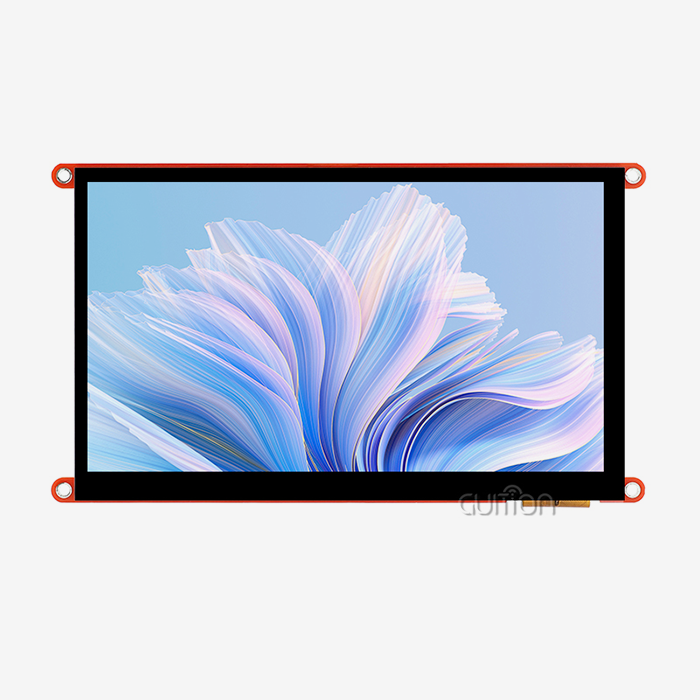
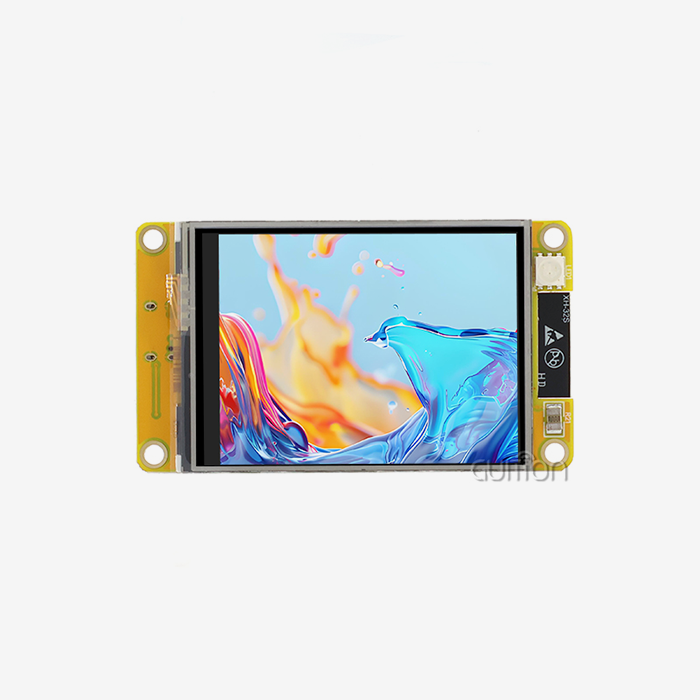
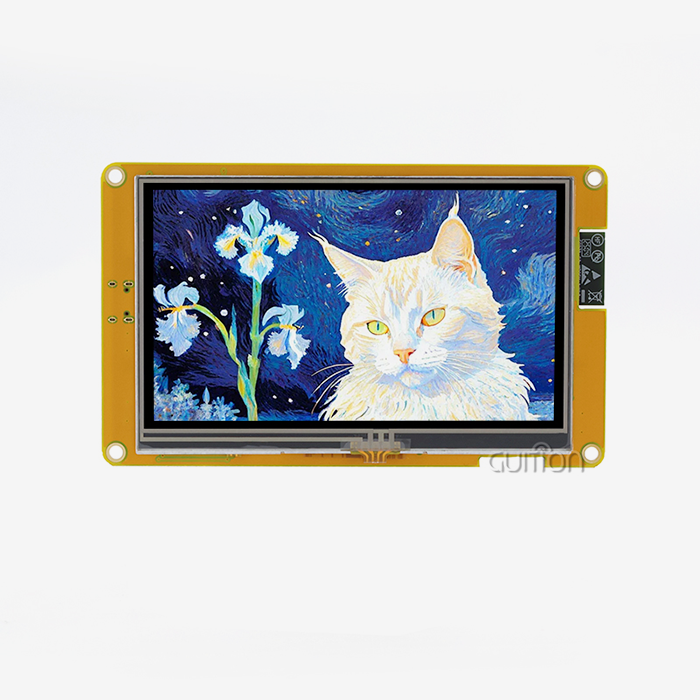
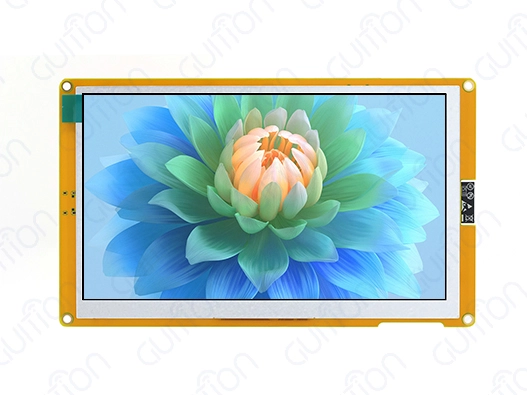
Displaying clear information depends on resolution. A 7-inch 800x480 screen offers sufficient pixel density for industrial HMI applications, producing crisp text and graphics without CPU strain. Higher resolutions (1024x600) are required for intricate schematics and medical imaging. Net brightness affects outdoor visibility. Standard 250-300 nit modules function well indoors but appear unreadable in direct sunshine. Outdoor energy management systems need 800-1000 nits. Operators can read crucial information in any lighting condition with the GUITION ESP32-8048S070N's outstanding brightness.
How effectively people can differentiate display elements depends on contrast ratio. A 500:1 ratio is fine, but 800:1 or greater produces more colorful images with deeper blacks. Slow reaction times cause motion blur in apps with moving graphics or video streams, which irritates users.
Power Consumption and Thermal Management
Backlight technology dramatically affects power consumption. Traditional CCFL backlights consume more power and generate significant heat compared to modern LED backlights. The choice between edge-lit and direct-lit LED arrays involves trade-offs between uniformity and power efficiency. We've designed our modules with thermal management in mind. The ESP32-S3-WROOM-1 dual-core MCU running at 240MHz generates heat that must dissipate properly to prevent performance throttling. Adequate heat sinking and airflow considerations during your enclosure design prevent premature component failure and ensure stable operation even during intensive processing tasks.
Durability and Environmental Resistance
Product reliability depends on operating temperature range. Consumer-grade modules typically operate from 0°C to +50°C, insufficient for industrial applications. For harsh settings, extended-range modules manage -30°C to +85°C, while industrial-grade displays handle -20°C to +70°C. Optical bonding quality greatly impacts durability. An air-gap structure lets moisture in and gives internal reflections. Optical bonding minimizes air gaps, enhancing reading and preventing contamination. This is crucial for medical equipment that is repeatedly sterilized or installed outdoors in rain and humidity.
Display modules near motors or RF transmitters need electromagnetic interference shielding. Good EMI shielding prevents display artifacts and communication failures. We use numerous shielding layers and grounding procedures to keep our modules' signals intact in loud industrial situations.
Best Practices for Designing and Procuring High-Quality Custom LCD Modules
Strategic planning during the design and procurement phases prevents costly mistakes and delays. I've guided numerous projects through this process, and those that succeed all share common approaches to specification development and supplier engagement.
Defining Precise Technical Requirements
The specification should cover all module performance aspects. Provide mechanical dimensions, tolerances, mounting hole locations, and connector locations. Be specific about the communication interface—SPI, I2C, parallel RGB, or UART—voltage levels, and time. The GUITION ESP32-8048S070N supports Arduino IDE, ESP IDE, MicroPython, and Mixly, accommodating varied engineering team preferences and codebases. Environmental requirements should match working circumstances. Avoid copying datasheet ranges. If your gadget works in temperature-controlled buildings, severe temperature ratings are useless and expensive. Outdoor installations need stronger ingress protection and UV-resistant materials.
Clearly document software needs. Set graphics rendering, touch reaction time, and gesture recognition requirements. Our ESP32-based module has 16MB flash memory and 8M PSRAM for advanced UI implementations without memory chips.
Supplier Evaluation and Sample Testing
Before mass manufacture, request samples. Physical inspection uncovers faults; standards can't. Simulate your application environment to test the module. Extensive burn-in tests at severe temperatures can reveal early failures that bench testing may miss. Assess supplier technical documentation. A manufacturer dedicated to client success has detailed datasheets, integration guidelines, and well-commented example code. We offer comprehensive Arduino library functions and test scripts to speed up development. One-click application downloading saves engineering hours by eliminating manual configuration.
Assess supplier responsiveness during evaluation. Do they answer technical queries quickly? Do they offer bespoke modifications? The bond you build during sampling predicts production support. Clear communication and mutual understanding lead to better technical partnerships than price-focused ones.
Quality Control and Testing Protocols
Import production delivery with inspection procedures. Don't presume supplier modules satisfy specs without testing. We offer statistical sampling plans that balance defect risk and inspection expenses. Check for dead pixels, lighting uniformity, and communication interface response. Accelerate life testing for key products. Temperature cycling, humidity exposure, and vibration testing suggest failure modes before field deployment. Prepare for detailed validation data from medical device makers during development to avoid scheduling surprises.
Automate test setups to quickly validate module functionality during production. Testing each display manually becomes problematic with bigger volumes. Automated systems verify power consumption, response speed, and display uniformity to ensure quality and reduce labor expenses. We include test points and diagnostic modes in our modules for effective production testing.
How to Choose the Right Supplier for High-Quality Custom LCD Display Modules?
Supplier selection determines whether your project succeeds or becomes a cautionary tale. I've witnessed projects derailed by suppliers who looked great on paper but couldn't deliver consistent quality or adequate support.
Certification and Compliance Verification
ISO 9001 accreditation shows a manufacturer has documented quality management. Certification doesn't ensure quality—you need to know how strictly they use these systems. RoHS compliance removes hazardous chemicals from modules, essential for European sales. CE certification denotes European safety and environmental compliance. Ask for certificates instead of mere promises. Check certifications for the product lines you're buying. Some manufacturers get product certifications but apply them to their whole inventory. We keep detailed compliance records and share international standard test findings.
ISO 13485 accreditation is needed for medical device quality management. Vehicles need IATF 16949 certification. Make sure your supplier's certificates meet industry standards. Retrofitting compliance after production costs far more than choosing a source.
Reputation and Track Record Assessment
Online reviews provide valuable insights into supplier reliability. Look beyond promotional content to find technical forums where engineers discuss actual experiences. Pay particular attention to comments about after-sales support, warranty claims processing, and how suppliers handle defects. Request customer references from applications similar to yours. Speaking directly with engineers who have completed projects using the supplier's modules reveals information you won't find in marketing materials. Ask about delivery reliability, technical support responsiveness, and whether the supplier helped solve unexpected challenges during development.
Evaluate the supplier's stability and longevity. Companies with decades of experience have survived multiple market cycles and accumulated institutional knowledge about what works. Newer companies might offer attractive pricing but carry higher risk regarding long-term component availability. We've invested heavily in building relationships with component suppliers to ensure stable availability for your multi-year product lifecycles.
Support Infrastructure and Communication
Technical support quality affects development efficiency. Do you have access to application-savvy engineers? Respond in hours or days? Test their technical knowledge by asking difficult questions and seeing how quickly they react. Documentation quality shows the supplier's dedication to client success. Complete datasheets, integration instructions, and functioning example code accelerate development. Our GUITION program is designed for quick UI development without low-level coding. Designers may develop complex interfaces using drag-and-drop controls and WYSIWYG editing, minimizing the learning curve compared to integrated graphics programming.
Warranty periods demonstrate the supplier's product quality confidence. Although one-year warranties may seem acceptable, industrial applications sometimes demand longer coverage. Be aware that some warranties exclude environmental or integration failures. We offer a comprehensive guarantee since we utilize military-grade process techniques to construct our modules for long-term stability.
Troubleshooting and Maintaining Quality in Deployed Custom LCD Modules
Even the highest-quality modules require proper care and occasional troubleshooting to maintain optimal performance throughout their operational life. Proactive maintenance prevents minor issues from becoming major failures.
Common Issues and Diagnostic Approaches
Flickering displays usually signal power supply issues, not module flaws. Make sure your power source has a consistent voltage under load without a ripple. Voltage droops during WiFi transmission bursts can create display abnormalities on the ESP32-S3-WROOM-1. Adding bulk capacitance near the module usually fixes these issues. Unresponsive touchscreens are usually caused by faulty calibration or electrical noise. Capacitive touch controllers need periodic calibration to stay accurate in changing environments. Custom LCD display module-host system ground loops can cause touch-sensing noise. Grounding and insulated cables fix most touch reliability difficulties.
Backlight LED aging tends to degrade color accuracy. As they age, white LEDs turn blue, altering color balance. High-quality LEDs with little color shift during their lifespan are specified. Plan for backlight replacement in long-life devices to maintain color accuracy.
Preventive Maintenance Protocols
Regular cleaning preserves visibility and prevents infection. Clean the display with surface-compatible products. Hard chemicals can decrease touch sensor sensitivity and anti-glare coatings. We recommend isopropyl alcohol solutions and gentle, lint-free cloths for general cleaning.
Normal use temperatures should be monitored. Displays that run near their maximum temperatures age faster. If your enclosure lacks ventilation, add cooling fans or heat sinks. Remote temperature monitoring via WiFi and Bluetooth allows our ESP32-based modules to detect overheating concerns before they cause failures.
Firmware updates fix issues and boost performance. Remote upgrade modules let you update deployed units without technician visits. This drastically lowers maintenance costs and ensures software upgrades for your installed base. Planning firmware updates during product design lets you fix difficulties after launch.
Maximizing Operational Lifespan
Module longevity is greatly increased by component derating. Running backlights at 80% of maximum brightness may double LED life with minimal visible impact. Microcontrollers run at low clock speeds to reduce thermal stress and power consumption.
Environmental protection helps in difficult applications. Dust, moisture, and mechanical shock protection are added to industrial temperature modules. Proper enclosure gasket sealing prevents contamination. Circuit boards with conformal coating resist dampness and corrosion.
The TF card interface on our modules allows field data logging to diagnose intermittent issues. An audit trail of error situations, temperature data, and operational statistics can reveal failure trends. This proactive quality management method turns reactive troubleshooting into predictive maintenance.
Conclusion
Ensuring high quality in custom display solutions requires attention to specifications, supplier selection, and ongoing maintenance. We've explored how manufacturing variability, environmental stresses, and integration challenges affect display performance across industrial, medical, and IoT applications. The GUITION ESP32-8048S070N exemplifies our commitment to delivering reliable modules that combine powerful processing capabilities with flexible development options. By carefully evaluating performance criteria, establishing rigorous testing protocols, and partnering with suppliers who provide comprehensive support, engineering teams can deploy display solutions that maintain consistent quality throughout their operational lifespan. Quality doesn't happen by accident—it results from deliberate choices made during every phase from initial specification through field deployment.
FAQ
What differentiates a custom LCD display module from standard off-the-shelf options?
Custom modules offer tailored solutions addressing specific mechanical constraints, electrical interfaces, and performance requirements that standard products can't satisfy. Customization can involve modified FPC pinouts for seamless motherboard integration, specialized backlight brightness for outdoor visibility, custom aspect ratios for unique enclosures, or specific communication protocols matching legacy systems. Standard modules work well for general applications, but custom solutions eliminate compromise when your application demands exact specifications that directly impact product differentiation or regulatory compliance.
What are typical lead times for custom LCD module projects?
Manufacturing timelines vary based on customization complexity. Modifying existing designs with changed FPC layouts or adjusted backlight configurations typically requires 4-6 weeks for samples and 6-8 weeks for production quantities. Fully custom LCD glass tooling involves longer timelines—approximately 2-3 weeks for engineering drawing approval, 4-5 weeks for tooling fabrication, and 6-8 weeks for mass production. Planning your development schedule around these timelines prevents project delays. The GUITION ESP32-8048S070N uses proven component architectures that enable faster delivery compared to completely custom solutions.
How can I evaluate sample modules before committing to production orders?
Request samples that match your final specifications as closely as possible. Test your application under realistic operating conditions, including temperature extremes, vibration profiles, and electrical noise environments it will encounter. Run extended burn-in tests for at least 72 hours to identify infant mortality failures. Verify communication interface compatibility with your host system. Measure actual power consumption under various operating modes. Evaluate documentation quality and supplier technical support responsiveness during this phase. Sample evaluation investments pay dividends by preventing costly production issues.
Partner with Guition for Reliable Custom LCD Display Module Solutions
Choosing the right display technology partner accelerates your product development while ensuring quality that protects your brand reputation. At Guition, we combine advanced HMI display solutions with comprehensive development tools designed specifically for embedded engineers, product managers, and system architects who demand both performance and ease of integration. Our ESP32-8048S070N custom LCD display module supplier offerings deliver dual-core processing power, integrated WiFi and Bluetooth connectivity, and compatibility with Arduino, ESP-IDF, and MicroPython development environments. Whether you're building industrial control panels, smart home devices, or medical monitoring equipment, our team provides technical guidance tailored to your specific application requirements. Reach out to david@guition.com to discuss your project specifications, request evaluation samples, or explore how our Guition development software can streamline your UI design workflow and reduce time-to-market.
References
1. Johnson, M. & Chen, L. (2022). Quality Assurance Standards for Industrial Display Technologies. International Journal of Manufacturing Engineering, 47(3), 234-256.
2. Williams, R. (2021). Embedded Systems Integration: Best Practices for HMI Development. Technical Publishing Press.
3. Anderson, K. et al. (2023). Environmental Stress Testing Protocols for Electronic Display Modules. IEEE Transactions on Device Reliability, 18(2), 112-128.
4. Martinez, S. (2020). Supply Chain Management in Electronics Manufacturing: Risk Mitigation Strategies. Industrial Engineering Quarterly, 35(4), 89-104.
5. Thompson, D. & Patel, A. (2022). Comparative Analysis of LCD and OLED Technologies for Industrial Applications. Display Technology Review, 29(1), 45-67.
6. Brown, J. (2023). Preventive Maintenance Strategies for Mission-Critical Display Systems. Reliability Engineering Journal, 41(3), 178-195.
Learn about our latest products and discounts through SMS or email