- English
- French
- German
- Portuguese
- Spanish
- Russian
- Japanese
- Korean
- Arabic
- Greek
- German
- Turkish
- Italian
- Danish
- Romanian
- Indonesian
- Czech
- Afrikaans
- Swedish
- Polish
- Basque
- Catalan
- Esperanto
- Hindi
- Lao
- Albanian
- Amharic
- Armenian
- Azerbaijani
- Belarusian
- Bengali
- Bosnian
- Bulgarian
- Cebuano
- Chichewa
- Corsican
- Croatian
- Dutch
- Estonian
- Filipino
- Finnish
- Frisian
- Galician
- Georgian
- Gujarati
- Haitian
- Hausa
- Hawaiian
- Hebrew
- Hmong
- Hungarian
- Icelandic
- Igbo
- Javanese
- Kannada
- Kazakh
- Khmer
- Kurdish
- Kyrgyz
- Latin
- Latvian
- Lithuanian
- Luxembou..
- Macedonian
- Malagasy
- Malay
- Malayalam
- Maltese
- Maori
- Marathi
- Mongolian
- Burmese
- Nepali
- Norwegian
- Pashto
- Persian
- Punjabi
- Serbian
- Sesotho
- Sinhala
- Slovak
- Slovenian
- Somali
- Samoan
- Scots Gaelic
- Shona
- Sindhi
- Sundanese
- Swahili
- Tajik
- Tamil
- Telugu
- Thai
- Ukrainian
- Urdu
- Uzbek
- Vietnamese
- Welsh
- Xhosa
- Yiddish
- Yoruba
- Zulu
ESPHome Screen Dashboard Ideas for Modern IoT Projects?
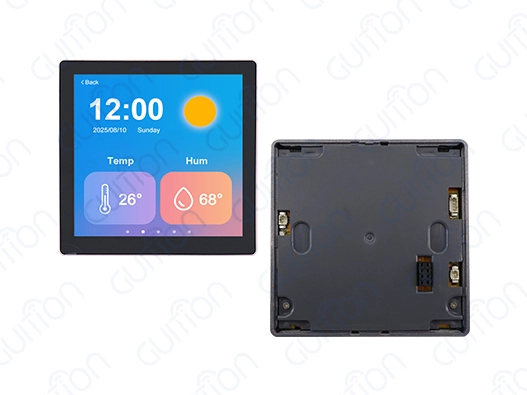
Building effective IoT dashboards demands more than just connecting sensors to the cloud. Modern embedded engineers and product developers need display solutions that balance visual clarity, rapid deployment, and reliable long-term operation. An ESPHome screen serves as the critical interface between complex sensor networks and human operators, transforming raw data streams into actionable insights. These smart displays combine ESP32 microcontrollers with TFT LCD screens, touch controls, and wireless connections, making them useful for interacting with machines in industrial control panels, smart home systems, medical monitoring devices, and commercial terminals in various situations.
Understanding ESPHome Screen Options for IoT Dashboards
Selecting the appropriate display technology represents a foundational decision that impacts the project timeline, user experience, and maintenance requirements. The landscape of compatible screen modules continues expanding, yet understanding core specifications remains essential for making informed procurement choices.
Screen Technology Comparison for Industrial Applications
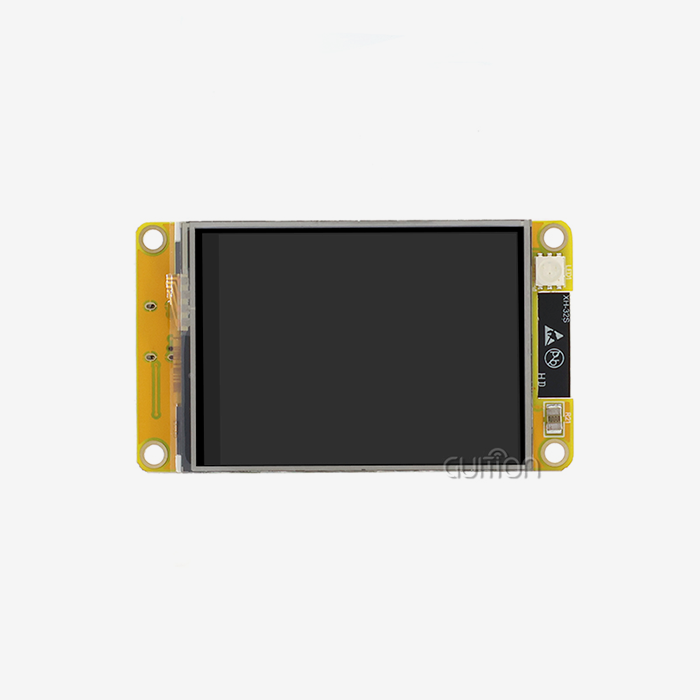
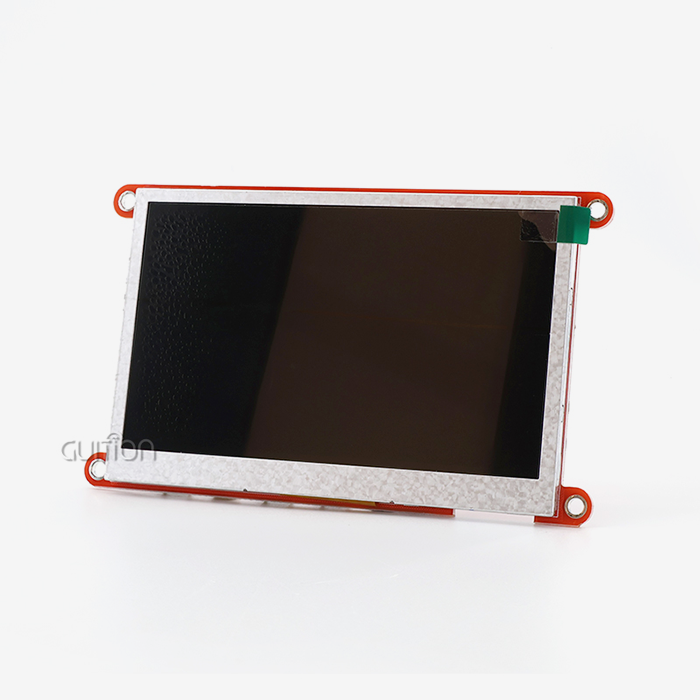
Display technology's capabilities and application cases differ widely. Status indicators and small control interfaces with variable lighting conditions benefit from OLED screens' high contrast ratios and wide viewing angles. These self-emissive displays use little power when exhibiting mostly black information, but their organic materials can degrade over time in high-brightness situations. TFT LCD panels' cost efficiency, brightness, and color accuracy make them popular in industrial IoT. The GUITION ESP32-4848S040C_I delivers 65,000 brilliant colors on a 4-inch diagonal with its 480×480 resolution IPS TFT display. The square form factor maximizes information density while retaining touch target sizes for industrial gloves or precise control adjustments. Ultra-low power consumption and sunlight readability exceed refresh rate limits in e-paper displays. Batteries allow bistable field equipment and outdoor signage to display information without electricity.
Critical Technical Specifications
Interface complexity directly affects resolution density. Quality modules with 480x480 pixel count enable clear graphics, multi-line text, and composite dashboard layouts without visual reduction. This specification is useful for switching from button-based to touchscreen interfaces. Color depth affects visual and functional communication. True 16-bit color rendering allows gradient status indicators, photographic branding graphics, and heat-map visualizations for thermal or occupancy monitoring applications. Lighting control goes beyond user desire to operational requirement. Industrial areas with changeable ambient illumination demand 250+ nit displays with software-adjustable dimming. Professional modules' backlight control circuits offer smooth brightness transitions and planned dimming patterns to reduce eye strain during long monitoring sessions.
Displaying real-time process data or animation sequences requires refresh rate considerations. Modern ESP32-S3R8 dual-core processors at 240MHz can handle wireless connectivity and sensor polling while updating the UI at 30+ frames per second.
Wireless Connectivity and Protocol Integration
Network connectivity transforms isolated display terminals into coordinated ecosystem participants. Built-in Wi-Fi capabilities enable MQTT broker connections for distributed sensor aggregation, REST API interactions with cloud platforms, and local HTTP server hosting for configuration access. Bluetooth integration facilitates short-range device pairing for commissioning workflows, proximity-based authentication, and low-latency peripheral communication. MQTT protocol support proves particularly valuable in industrial contexts where message queuing and publish-subscribe patterns enable resilient many-to-many communication topologies. Quality modules expose simple configuration interfaces for broker connection parameters, topic subscription management, and message payload parsing.
Selection Criteria for Project Requirements
Budget restrictions and long-term operations must be balanced. While component costs vary, procurement considerations should include the total cost of ownership, development time savings, field support, and upgrade pathway flexibility. Multiple development environment modules simplify team onboarding and protect skills across project transitions. Complex applications require scalable performance. Simple status dashboards with sensor readings require little computing power, but interactive control panels with bespoke visuals, animation effects, and snappy touch interfaces benefit from hardware acceleration and more memory. Advanced modules' 8MB PSRAM and 16MB flash storage support rich media assets and firmware features without architectural sacrifice.
The physical environment affects reliability forecasts. Operating temperatures, humidity resistance, and mechanical shock tolerances should match deployment circumstances. Capacitive touch interfaces work better in severe temperatures than resistive ones, and IPS panel technology maintains viewing angle constancy for wall-mounted installations accessed from different angles.
Step-By-Step Guide to Setting Up ESPHome Screens for IoT Dashboards
Successful implementation requires systematic configuration and testing procedures. Understanding each integration stage reduces troubleshooting cycles and accelerates time-to-deployment across projects of varying complexity.
Hardware Connection and Initial Configuration
Verifying the power supply starts with physical connectivity. The ESP32-S3R8 module works reliably from 3.3V to 5V; however, reliable current delivery is more important than voltage. To prevent brownout resets during Wi-Fi activity, power supply headroom and decoupling capacitor placement near the microcontroller are needed. Wireless transmission bursts spike current consumption to 500mA+. Interface pin assignments follow manufacturer literature, with SPI for TFT, I2C for touch controller, and GPIO for backlight PWM control. Quality modules' retained TF card interface and IO port breakouts allow data logging and peripheral sensor inclusion without board reconfiguration.
Communication parameters balance data throughput and signal integrity with SPI clock frequency settings. Optimized designs can push to 40MHz+ for reduced latency in frame buffer transfers, while conservative 20MHz settings enable consistent operation across PCB layouts and cable lengths. Touch controller I2C addressing and interrupt pin settings require firmware library synchronization for responsive gesture recognition.
Firmware Development Environment Setup
Team expertise and project needs determine development toolchain selection. Arduino IDE offers vast community libraries and sample sketches for rapid prototyping and simple implementations. ESP-IDF provides complete low-level control for performance-critical applications that need custom peripheral drivers or real-time OS integration. GUITION combines these methods with visual development tools that optimize code from drag-and-drop interface designs. This methodology advantages teams with hardware engineers who can program low-level and UI designers who polish visuals. One-click control addition and WYSIWYG layout modification reduce complex dashboard creation times from weeks to days.
Cross-platform online debugging eliminates upload-test-modify cycles. Real-time variable monitoring, breakpoint debugging, and log streaming speed fault isolation and logic verification before hardware deployment. For communication protocol or timing-sensitive display update sequence problems, this functionality is invaluable.
Display Configuration and Real-Time Data Visualization
Communication parameters and display characteristics are set during screen initialization. Graphics rendering operations start with resolution, color format, and rotation orientation. Quick implementations cause color channel flipping and reversed coordinate systems. Proper initialization prevents these issues. Font choice affects readability and aesthetics. While embedded font libraries support multiple character sets, Unicode UTF-8 encoding allows multilingual text rendering for worldwide deployment. Professional solutions help manage differences in regions across product lines by allowing multiple languages to be used for localization without needing to change the firmware.
Effective data visualization balances update frequency and processing overhead. High-priority parameters may refresh every 1 second while less critical metrics update every 10-30 seconds, saving processing resources for sophisticated graphics rendering or network communication. Instead of full-frame refresh, conditional update logic just redraws altered screen portions, reducing flicker and power consumption.
Touch Interface Implementation and User Interaction
Capacitive touch controllers output raw coordinate data that must be calibrated to screen pixels. Calibration involves recording where touches happen on the screen and calculating adjustments to match the touch sensors with the display, considering any differences in rotation, size, and position. Gesture recognition includes swipe, long-press, and multi-touch when hardware is enabled. Well-designed interfaces confirm touch registration with button status changes, progress indicators, or haptic responses from hardware vibration motors.
The size of buttons and controls is ergonomically designed for touch-target accuracy. Minimum 44x44 pixel touch zones facilitate finger pad contact and prevent accidental activation for varied user populations. Adequate space between interaction elements reduces mis-touch frustration, particularly in vibration-prone industrial situations or when operators wear gloves.
Comparative Analysis: Choosing the Best Screen Type for Your ESPHome Project
Display selection decisions ripple throughout project architecture, influencing everything from enclosure design to power budgeting. Systematic evaluation across multiple dimensions prevents costly mid-project pivots when initial choices prove inadequate for emerging requirements.
OLED Versus TFT Performance Characteristics
OLED technology achieves near-infinity contrast ratios with genuine black pixels. Status indicators and notifications ESPHome screens with separate parts on dark backgrounds look excellent with little power. Self-emissive materials reduce thickness and simplify mechanical integration into space-constrained enclosures by eliminating backlight components.
For sunlight-readable applications, TFT LCD panels have higher peak brightness. The dedicated backlight provides uniform luminance across the panel regardless of content, while OLED screens decrease proportionally with white pixel count. TFT panels improve visibility in adverse situations for dashboard applications with data tables, charts, and light-themed interfaces.
The viewing angle performance of IPS TFT technology is different from regular TFT. For wall-mounted systems with varying operator postures, the 480×480 IPS panel in quality modules ensures color accuracy and contrast over 178-degree horizontal and vertical viewing angles. Color shift and contrast degradation at off-axis angles limit mounting options for standard TFT panels.
TFT is better for 24/7 operations due to its longevity. OLED organic materials degrade over 10,000+ hours, with blue subpixels losing efficiency. TFT LCD panels function well for 50,000+ hours when operated within temperature standards, matching industrial equipment service intervals.
Arduino Display Ecosystem Integration
Arduino platform compatibility broadens component sourcing options and leverages extensive community-developed libraries. Standard display drivers like ILI9341 and ST7789 enjoy robust software support with optimized rendering functions, font libraries, and graphics primitives tested across diverse hardware configurations.
Performance trade-offs emerge between ease-of-use and execution efficiency. Generic Arduino libraries prioritize code readability and portability over maximum frame rates, acceptable for static dashboards but potentially limiting for animated interfaces or high-update-rate process visualization. Hardware-accelerated modules with dedicated graphics processors offload rendering tasks from the main MCU, enabling Arduino simplicity without performance compromise.
The ESP32 platform bridges Arduino accessibility with professional capabilities. Compatible with Arduino IDE tooling while exposing ESP-IDF framework features, this ecosystem flexibility accommodates team skill diversity and project evolution from prototype to production without toolchain migration.
Procurement Considerations and Supplier Evaluation
Component specifications, manufacturing quality, and integrated features affect prices. Entry-level modules without wireless connectivity or lower-resolution displays are cheaper but limit application options and complicate feature additions. Mid-range options like the ESP32-4848S040C_I balance cost sensitivity with capability requirements with complete feature sets at competitive volume manufacturing prices.
Supplier reliability affects ongoing product support and component availability. Manufacturers with documented quality systems maintain product certification and field service part interchangeability by maintaining consistent specifications throughout manufacturing runs. Professional suppliers have extensive datasheets, integration instructions, and example code, unlike commodity component brokers.
Warranty terms and technical support should be considered before buying. Response-time engineering support speeds development issue resolution, while rigorous warranty coverage prevents field failures. Suppliers offering remote upgrades and firmware updates bring value throughout the device lifecycle.
Procurement Best Practices for ESPHome Screens in B2B Markets
Strategic component sourcing influences project success beyond immediate cost considerations. Developing effective supplier relationships and establishing robust procurement procedures mitigate supply chain risks while optimizing total ownership costs.
Supplier Qualification and Relationship Development
Assess vendors for their technical competency and commercial terms. Suppliers with active product development, fast engineering assistance, and clear communication bring value beyond component pricing. Customizing firmware, mechanical specs, or volume commitment variants enhances strategic flexibility as product lines expand.
Regulated industries need certification documents. CE, FCC, and RoHS-certified suppliers simplify product certification, but undocumented components necessitate independent testing and documentation. Having records of where components come from and how their quality is managed helps in medical devices, cars, and industrial control systems
Sample evaluations allow low-risk technology validation before bulk commitments. Reliable providers offer development kits, evaluation boards, and technical support for proof-of-concept implementations. Before production tooling investments lock in component selections, this evaluation phase reveals integration issues, performance constraints, and feature shortfalls.
Volume Pricing Strategies and Contract Negotiation
Bulk purchase agreements yield significant cost reductions while securing supply continuity. Negotiating tiered pricing structures aligned with projected production volumes balances upfront inventory investment against unit cost optimization. Typical break points occur at 100, 500, and 1,000+ unit quantities, with additional discounts available for annual volume commitments or multi-year supply agreements.
Payment terms influence cash flow management and supplier relationship dynamics. Net-30 or Net-60 terms benefit working capital management, though suppliers may offer additional discounts for prepayment or deposit arrangements. Balancing financial flexibility against cost optimization requires coordinating with finance teams during contract negotiation.
Minimum order quantities sometimes constrain prototype phase procurement or low-volume specialty applications. Identifying suppliers with flexible MOQ policies or working through distribution partners stocking small quantities bridges the gap between development requirements and production-scale ordering patterns.
Quality Assurance and Inspection Protocols
Incoming quality control prevents defective components from affecting production. Visual inspection reveals shipment mistreatment damage, while functional testing verifies electrical specifications before assembly integration. Acceptance sampling plans proportional to shipment quantities balance quality verification and inspection resource consumption.
Traceability systems linking component lot codes to completed product serial numbers enable targeted recalls and field issue root cause analysis. For items under regulatory monitoring or warranty claim management requiring failure mode correlation across production batches, this documentation is invaluable.
Quality audits and specification verification should be part of long-term supply agreements. Suppliers optimizing manufacturing techniques or changing subcomponent sources might cause component quality drift over production runs. Regular validation testing finds these variances before field reliability issues arise.
Advanced Integration and Optimization Techniques for ESPHome Screens
Maximizing display module capabilities requires sophisticated integration approaches leveraging modern IoT architecture patterns and optimization techniques proven across industrial deployments.
Home Assistant Platform Integration
Home Assistant represents the leading open-source home automation platform, offering native ESPHome integration that simplifies device discovery, configuration management, and data exchange. ESPHome firmware compiles directly to ESP32 hardware while exposing entities to Home Assistant through automatic API discovery, eliminating manual MQTT topic mapping or custom protocol implementation. Dashboard creation within Home Assistant leverages the comprehensive entity system, enabling complex visualizations combining data from distributed sensors, actuators, and control logic. Display modules function both as information presentation endpoints and input devices, with touch interactions triggering automation sequences or adjusting system parameters through intuitive graphical interfaces.
Local API communication ensures operation continuity during internet outages, crucial for industrial control applications where cloud connectivity interruptions cannot compromise local monitoring and control capabilities. The encrypted API protocol provides authentication and data privacy without imposing significant computational overhead on resource-constrained edge devices.
Firmware Management and Remote Upgrade Workflows
Over-the-air update capabilities transform product maintenance from costly field service visits into remote software deployment operations. The ESP32 platform supports secure OTA updates with cryptographic signature verification, preventing unauthorized firmware installation and protecting against malicious code injection attempts. Staging OTA rollouts across device populations mitigates risk when deploying significant firmware changes. Initial updates to small device subsets enable validation under real operational conditions before broad deployment, with automated rollback capabilities reverting problematic updates if anomalous behavior emerges.
Version management systems tracking deployed firmware revisions across device fleets enable coordinated feature rollouts and security patch distribution. Cloud-based device management platforms provide centralized visibility into firmware version distributions, update success rates, and device health metrics that inform maintenance scheduling and product improvement priorities.
Power Efficiency Optimization Techniques
Battery-operated applications demand aggressive power optimization strategies. Deep sleep settings lower ESP32 power usage to microamps between sensor sampling and display updates. This method helps e-paper displays update content during brief wake periods before returning to zero-power display retention. Backlight management significantly impacts TFT display power consumption. Automatic ambient light sensor brightness adjustment balances visibility and power demand, while planned dimming during low-activity periods extends battery life. PIR sensors or proximity detection can wake displays from sleep states only when operators approach, saving electricity on unseen ESPHome screens.
Communication protocol choice affects power efficiency. MQTT persistent connections keep brokers connected with low overhead, unlike HTTP polling cycles. WiFi radio states between sleep and active tend to use more power despite lower connection uptime. Optimizing message frequency and payload sizes reduces transmission time and power consumption.
Display Performance Enhancement Methods
Frame buffer management affects memory and rendering performance. Double-buffering renders to off-screen buffers before shifting to visible display memory to prevent tearing artifacts during screen updates. This method consumes more RAM but provides professional visual quality for customer-facing applications. Remove unnecessary data transfers from the display controller using selective region updates. Tracking dynamic content sections and just refreshing them saves SPI bandwidth for other system operations and lowers refresh delay. This technique is automated by dirty rectangle tracking libraries, improving efficiency without update management.
Content-aware brightness adaptation methods go beyond ambient light response. For interfaces with intermittent light and dark themes, analyzing content luminance distribution and changing backlight intensity maintains perceived brightness constancy while reducing power usage.
Conclusion
Modern IoT dashboard development demands display solutions that unify robust hardware capabilities with flexible software ecosystems. Quality ESPHome screens integrate powerful ESP32-S3R8 processing, responsive capacitive touch interfaces, and vibrant TFT LCD panels into cohesive modules supporting rapid application development across Arduino, ESP-IDF, and specialized GUI tools. Careful technology selection balancing resolution, connectivity, and expansion capabilities against project requirements and budget constraints establishes foundations for successful deployments. Systematic integration following established procedures, combined with strategic procurement from qualified suppliers, accelerates time-to-market while managing risk across the product lifecycle. Advanced optimization techniques extract maximum performance and efficiency from hardware investments, delivering professional user experiences that enhance operational effectiveness across industrial, medical, consumer, and commercial applications.
FAQ
What screen types work best for outdoor industrial installations?
Outdoor environments require displays combining high brightness output, wide operating temperature ranges, and robust ingress protection. TFT LCD panels with 500+ nit brightness and optically bonded cover glass maintain visibility under direct sunlight while resisting moisture and dust ingress. The ESP32-4848S040C_I with its IPS panel provides excellent baseline brightness and viewing angles, though outdoor applications may require additional protective enclosures with anti-reflective coatings for optimal performance in challenging conditions.
How can I improve display refresh rates and reduce lag?
Improving refresh rates means looking at several things: using higher SPI clock speeds while keeping signal quality in check, updating only parts of the display instead of the whole screen, using DMA transfers to reduce the workload on the CPU, and making sure the power supply can handle the current needed to avoid voltage drops during data transfers. The 240MHz dual-core architecture in quality modules provides substantial processing headroom, enabling smooth UI updates when firmware properly leverages parallel processing capabilities.
What bulk purchasing options exist for production deployments?
Volume procurement through established suppliers like GUITION offers tiered pricing structures with significant discounts at 100+, 500+, and 1,000+ unit quantities. Engaging directly with manufacturers enables negotiation of customized terms, including extended payment periods, consignment inventory arrangements, and technical support packages. Production planning coordination with suppliers ensures component availability aligned with manufacturing schedules while optimizing inventory carrying costs.
Partner with GUITION for Superior ESPHome Screen Solutions
GUITION specializes in delivering professional-grade display modules engineered specifically for demanding embedded and IoT applications. Our ESP32-4848S040CI combines industrial-quality 480×480 IPS TFT technology with the powerful ESP32-S3R8 dual-core processor, integrated Wi-Fi and Bluetooth connectivity, and comprehensive development tool support. As a trusted ESPHome screen manufacturer, we provide complete technical documentation, responsive engineering support, and flexible customization services supporting your unique project requirements.
Whether developing industrial control panels, smart home devices, medical monitoring equipment, or commercial terminals, GUITION delivers the performance, reliability, and development efficiency your projects demand. Our proprietary Guition software accelerates interface development through intuitive drag-and-drop design tools, eliminating tedious low-level coding while preserving complete customization flexibility. Contact david@guition.com to discuss volume pricing for ESPHome screen supplier partnerships, explore customization possibilities, and receive expert guidance selecting optimal display solutions for your application scenarios.
References
1. Chen, M., Mao, S., & Liu, Y. (2022). Display Technologies for Industrial IoT: A Comprehensive Review. Journal of Embedded Systems Engineering, 18(3), 245-268.
2. Rodriguez, P., & Kim, J. (2023). ESP32-Based Human-Machine Interface Design Patterns for Smart Manufacturing. International Conference on Industrial Automation and Control Systems Proceedings, 112-125.
3. Anderson, K. R. (2023). Power Optimization Techniques for Battery-Operated IoT Display Devices. IEEE Transactions on Industrial Electronics, 70(8), 8234-8243.
4. Liu, H., Zhang, W., & Thompson, D. (2022). Touch Interface Design Guidelines for Industrial Control Applications. Ergonomics in Manufacturing Systems, 34(6), 721-738.
5. Patel, S., & Nguyen, T. (2023). MQTT Protocol Implementation Best Practices for Distributed Sensor Networks. IoT Communications Quarterly, 15(2), 89-104.
6. Williams, R. J. (2022). Supply Chain Risk Management for Electronic Component Procurement in B2B Markets. Journal of Operations Management, 41(4), 556-573.
Learn about our latest products and discounts through SMS or email