- English
- French
- German
- Portuguese
- Spanish
- Russian
- Japanese
- Korean
- Arabic
- Greek
- German
- Turkish
- Italian
- Danish
- Romanian
- Indonesian
- Czech
- Afrikaans
- Swedish
- Polish
- Basque
- Catalan
- Esperanto
- Hindi
- Lao
- Albanian
- Amharic
- Armenian
- Azerbaijani
- Belarusian
- Bengali
- Bosnian
- Bulgarian
- Cebuano
- Chichewa
- Corsican
- Croatian
- Dutch
- Estonian
- Filipino
- Finnish
- Frisian
- Galician
- Georgian
- Gujarati
- Haitian
- Hausa
- Hawaiian
- Hebrew
- Hmong
- Hungarian
- Icelandic
- Igbo
- Javanese
- Kannada
- Kazakh
- Khmer
- Kurdish
- Kyrgyz
- Latin
- Latvian
- Lithuanian
- Luxembou..
- Macedonian
- Malagasy
- Malay
- Malayalam
- Maltese
- Maori
- Marathi
- Mongolian
- Burmese
- Nepali
- Norwegian
- Pashto
- Persian
- Punjabi
- Serbian
- Sesotho
- Sinhala
- Slovak
- Slovenian
- Somali
- Samoan
- Scots Gaelic
- Shona
- Sindhi
- Sundanese
- Swahili
- Tajik
- Tamil
- Telugu
- Thai
- Ukrainian
- Urdu
- Uzbek
- Vietnamese
- Welsh
- Xhosa
- Yiddish
- Yoruba
- Zulu
How to Design a Custom tft display module?
Designing a custom TFT display module involves selecting the right display size, resolution, touch technology, communication interfaces, and backlight specifications to match your application requirements. You'll need to define mechanical dimensions, evaluate environmental operating conditions, choose controller chipsets that support your development ecosystem, and work with suppliers who provide robust secondary development tools. The process balances technical performance, cost constraints, and long-term supply reliability to create a tailored human-machine interface solution that standard off-the-shelf displays cannot deliver.

Understanding Custom TFT Display Modules
What Makes a Display Module "Custom"?
Standard commodity screens are basically different from a custom TFT display module. Consumer-grade displays have set specs, but custom modules let you change important parts like flexible printed circuit (FPC) pinouts, backlight luminance levels, cover glass shapes, and built-in touch sensors. These changes solve problems that engineers face every day, like parts not working with each other in small housings, not being able to see clearly in direct sunlight, and getting end-of-life notes too early, which shortens the lifecycle of products.
There are different levels of customization, from semi-custom changes (like moving connectors or increasing brightness from 300 nits to 1000+ nits) to fully custom designs that change the structure of pixels and the size of the active area. Manufacturers of industrial tools and medical devices like this flexibility a lot because their goods need to be reliable for 5 to 10 years, which is something that consumer-oriented displays rarely promise.
Core TFT Technology Principles
Active-matrix circuits are used in Thin-Film Transistor technology to precisely control each pixel. Transistors placed on a glass base control the red, green, and blue sub-pixels that make up each pixel. When electricity is applied, liquid crystals between polarizing screens spin. This lets backlight pass through or get stopped. The pictures you see on industrial HMI panels, hospital monitors, and smart home control screens are made by this device.
Knowing about this architecture will help you make smart choices. Image sharpness is based on pixel density, which is very important for showing precise diagrams in industrial controls. Response time affects how quickly animations update, which has an effect on how users feel when using IoT devices. Whether operators can read displays from different positions depends on the viewing angle technology, which is important for equipment that is used by more than one technician.
Key Specifications That Matter
How much information you can show is directly related to the size of the screen. A 5-inch screen with a 800x480 resolution is clear enough for control interfaces without being too much for embedded computers. You can choose between capacitive and resistive touchscreen technologies based on your needs. For example, capacitive offers better multi-touch response for devices that people will see, while resistive works efficiently in industrial settings with gloves on.
When used outside, brightness levels become very important. Standard screens with 300 nits lose their brightness in direct sunlight. Custom TFT display modules with reflective or high-brightness LED backlights can hit 1500 nits or more. Operating temperature ranges are also important. Consumer displays usually work between 0°C and 50°C, but industrial Custom TFT display module versions can work from -30°C to 85°C, making sure that energy management interfaces and farm automation systems work reliably all year.
Step-by-Step Guide to Designing a Custom TFT Display Module
Defining Design Requirements Based on Application Needs
First, write down what your operating world looks like. Does your device work indoors with controlled lights or outdoors in direct sunlight? Medical tracking equipment used indoors needs accurate color reproduction to read vital signs. EV charging stations used outdoors need anti-glare coats and liquid crystals that don't break down in UV light. Agricultural automation needs a wide range of operating temperatures that standard panels can't provide.
Your choice of touch technology is based on how you usually connect with devices. Resistive touchscreens still work even if people use them while wearing gloves or when they are wet. Capacitive sensors that work with natural movements are helpful for smart home gadgets. Write down these requirements clearly; they will help you choose parts and talk to suppliers, and they will keep you from having to make expensive changes later in the development process.
Selecting Core Components and Technologies
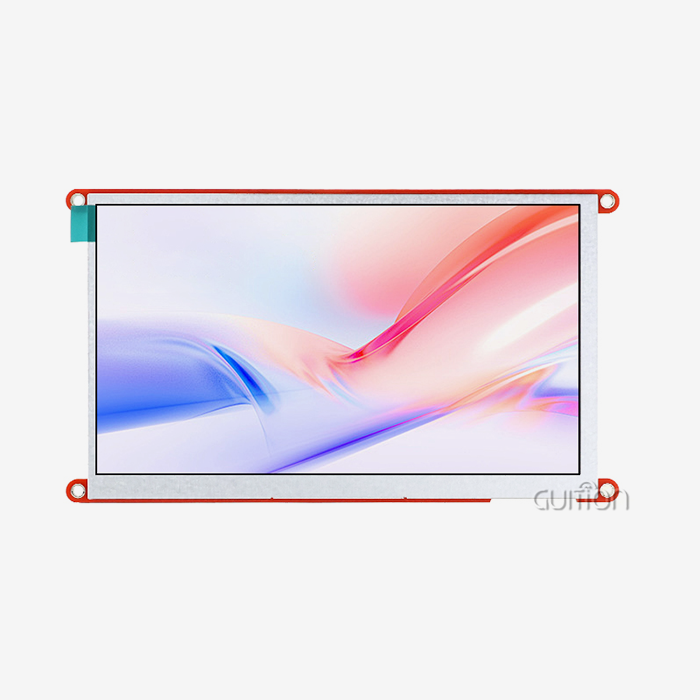
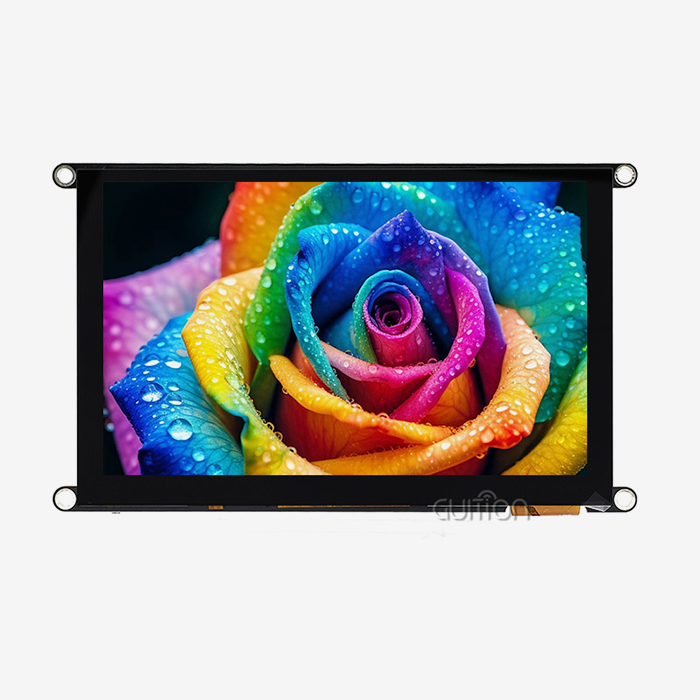
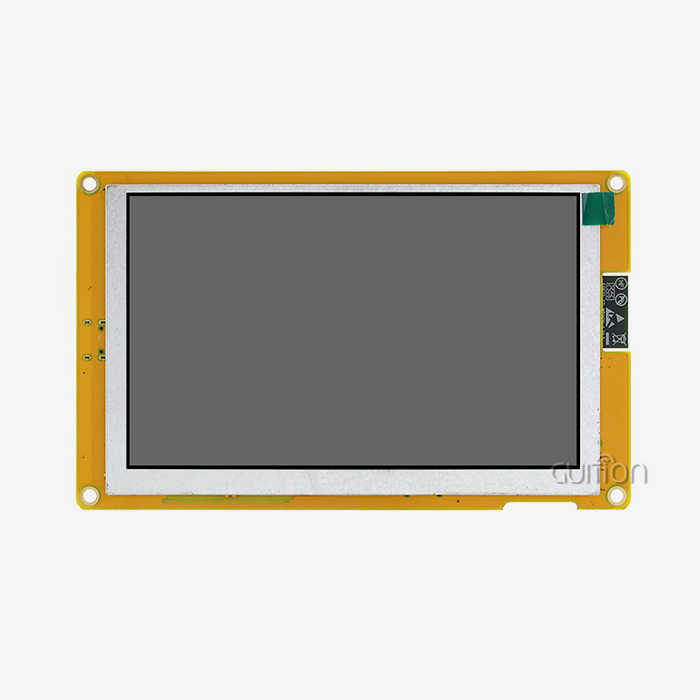
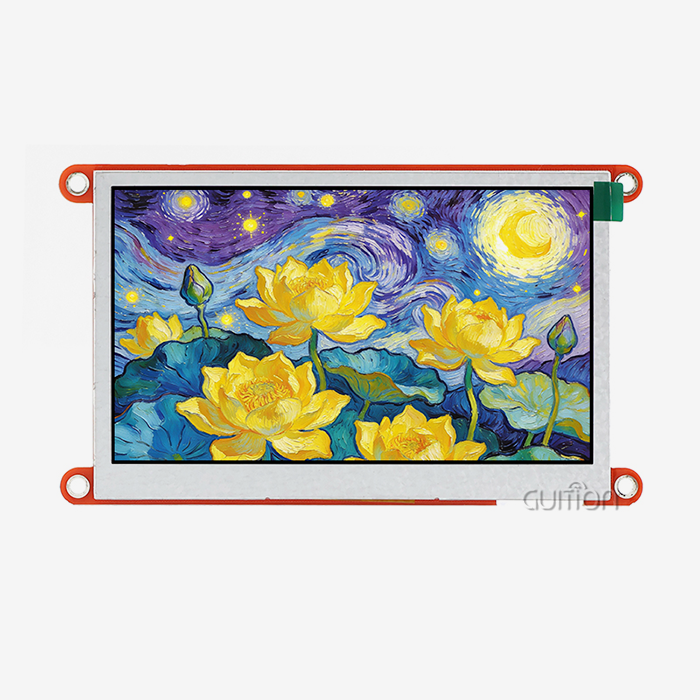
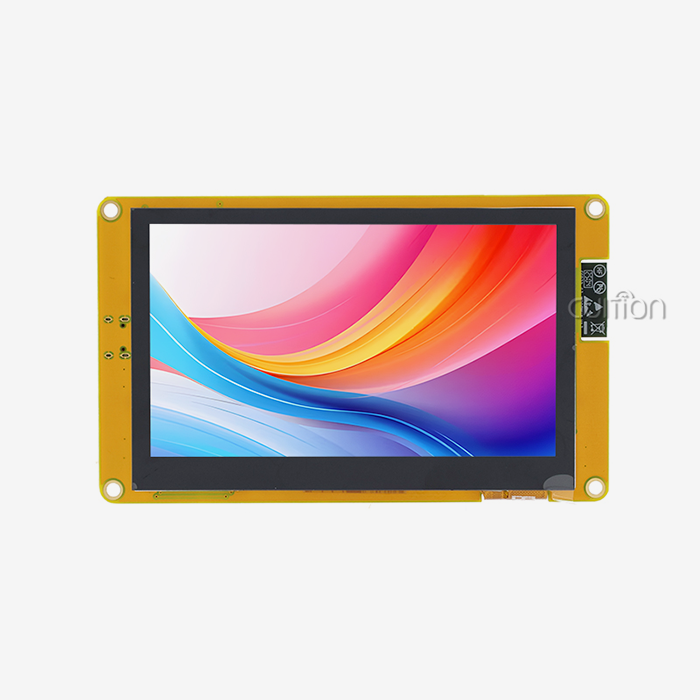
When picking a display size, you have to weigh how visible it is against its physical limitations. The GUITION JC8048W550C_I shows how a 5.0-inch form factor can be used in a wide range of situations, from smart products to industrial control screens. It has a resolution of 800x480, which makes text and images look good without taxing the ESP32-S3R8 dual-core driver, which runs at 240MHz.
How your display links to host systems is controlled by its communication ports. UART connections make it easier to connect to microcontrollers, which makes development simpler. The JC8048W550C_I works with the Arduino IDE, the ESP IDF, MicroPython, and Guition programming environments. This gives coders options no matter which toolchain they prefer. This cross-platform compatibility makes learning a lot easier. You can make a prototype in Arduino for quick testing and then move to ESP IDF to improve performance for production without having to buy new hardware.
Integration Aspects and Power Optimization
Power control is very important for programs that use batteries or care about saving energy. The JC8048W550C_I's lithium battery interface circuit makes it possible for portable applications, and the backlight control circuits let the brightness change automatically based on the environment. When there isn't much light, turning down the lighting greatly increases the battery life, which is something that medical device designers look for in portable testing equipment.
When designing an interface, signal integrity needs to be taken very seriously. With the JC8048W550C_I's reserved I/O port interface and TF card slot, you can add more features for things like data logging in energy management systems or firmware storage in business displays. Plan the route of your FPC cables ahead of time. Good EMI shielding stops interference in electrically noisy industrial settings where motors and switches make electromagnetic noise.
Prototype Development and Testing
Validating prototypes finds problems before they are made in large quantities. The GUITION JC8048W550C_I is pre-programmed with test applications at the factory, so it can be used right away after being unboxed. Check for display flaws or changes in touch sensitivity by thermal cycling tests between your lowest and highest working temperatures. Before they are used, vibration testing shows where fastening options are mechanically weak.
Field failures can be avoided by testing optical performance in different lighting conditions. For outdoor use, check the contrast ratios in direct sunlight and make sure the viewing angles match the positions of the operators. Touch response testing should include situations that your users will face, like using gloves, wet fingers, or a stylus, based on the app. These regular checks find issues quickly, before they cause production delays that last months.
Comparison and Selection Criteria for Custom TFT Display Modules
Display Technology Trade-offs
If you want to compare custom TFT display module options with OLED choices, you need to know the main differences between them. TFT LCD modules are great for industrial HMI panels and business booths because they are bright and don't cost a lot of money for big screens. OLED has better contrast and true blacks, but it costs more and gets burned in with static content, which is a problem for control interfaces that show fixed menus. Because TFT technology has been shown to work reliably in harsh conditions, it is the best choice for equipment that will be used nonstop for years.
Brightness levels are very different. Standard LCD screens give off 250 to 400 nits, which is enough for use inside. For industrial uses, 700 to 1000 nits are common, but outdoor connections need 1500 nits or more with coverings that don't reflect light. The optical bonding method gets rid of the air gaps between layers, which lowers internal reflections, makes the screen 400% easier to read in direct sunlight, and stops condensation from forming in damp places.
Touchscreen Technology Selection
Capacitive touch sensors are the most common type used in consumer electronics because they can handle multiple touches and don't break down after millions of touches. Projected sensitive technology can work through protective glass that is up to 6 mm thick. This lets designers make designs where the screen and housing look like they are one piece. The accuracy and responsiveness of this technology help smart home gadgets and medical equipment.
In some situations, resistive touchscreens are still useful. They work reliably with bare fingers, gloved hands, or styluses. This makes them essential for industrial controls where workers wear protective gear. Overall system costs go down when controller circuits are cheaper and easier to understand. Analog resistive sensors work better in tough conditions than capacitive ones, but they can only be used with a single touch and wear out over time when they are used over and over again.
Evaluating Supplier Partnerships
The long-term viability of your product depends on the supplier you choose. Ask for thorough datasheets, interface protocol documents, and sample code to test the quality of the technical help. Guition gives you full access to the Arduino code and test tools that cut development time from weeks to days. Low-level coding is no longer a problem thanks to drag-and-drop GUI development tools like the Guition software platform. This means that product managers can test interfaces without having to know a lot about embedded systems.
Following the rules for certification protects market access. If your custom TFT display module has RoHS approval, it means it meets environmental rules in the US and EU markets. Medical gadgets and business tools both need to be UL listed. Make sure that your supplier follows ISO 9001 quality management systems and does reliability testing that meets JEDEC standards for things like high-temperature storage, thermal shock cycling, and humidity resistance. These certifications aren't just extra work for the company; they make sure that the displays will work in the real world.
Procurement and Manufacturing Considerations for Custom TFT Display Modules
Understanding Pricing Structures
Unit prices are directly linked to the amount of customization. Changing the lighting or choosing a different type of connection adds 10–20% to the base price. For fully custom glass sizes, the price can double because of the money needed to make the tools. The total cost of ownership (TCO) should include fewer external adapter boards and easier mechanical integration. For example, getting rid of a separate RGB-to-MIPI converter board can save $5–$15 per unit and make assembly easier.
When you buy more than 1,000 units, volume savings start to matter. Suppliers like Guition offer economies of scale because they keep parts that are used in many different product lines in stock. The ESP32-S3R8 controller has 512KB SRAM, 384KB ROM, and 8MB PSRAM, which are more than enough resources for complex user interfaces without the need for expensive external memory chips. This unified method lowers your bill of materials (BOM) costs and makes managing your supply chain easier.
Lead Times and Logistics Planning
After the design is approved, the standard wait time for semi-custom modules is between 4 and 8 weeks. Fully customized versions take 12 to 20 weeks because of the time it takes to make the glass and test the tools. Include these dates in your plan for developing the product. Ask for engineering samples early on—testing with real hardware shows integration problems that datasheets can't predict, which keeps the schedule from getting pushed back before production commitments are made.
International shipping adds factors that make it harder to plan your goods. It takes three to five weeks for containers to get from Asian makers to delivery centers in the US. During busy times, there may be delays. When you work with suppliers who keep stock in the US, lead times drop from weeks to days. Guition's global distribution network makes sure that prototypes are delivered faster when they are needed right away and can handle high production volumes in the long term.
Quality Assurance and Compliance
Field failures that hurt a brand's reputation for esp32 display module can be avoided by strict quality control. Inspection for optical defects according to ISO 13406-2 Class II standards finds dead pixels, mura (uneven backlighting), and contamination from foreign materials. As required by JEDEC, reliability testing includes storage at high temperatures for 96 to 500 hours, cycling through temperatures of -20°C to 70°C, and resistance to humidity at 60°C and 90% relative humidity.
Electrical signal integrity testing confirms ESD protection up to ±8kV touch and ±15kV air discharge, which is very important when connecting screens to devices that have static electricity buildup. Vibration tests and ball-drop tests on the cover glass of portable devices or tools in mobile setups make sure that they are mechanically durable. If you ask for specific test results, reputable Custom TFT display module suppliers will give them to you without hiding the quality data.
Sample Requests and OEM Collaboration
Asking for review samples early on helps you feel confident in your design ideas. The GUITION JC8048W550C_I comes with test programs already installed that show how the screen works, how responsive the touch screen is, and how it connects to Wi-Fi and Bluetooth. With this instant ability, you can test the optical performance, make sure the mechanical fit is correct, and start developing the firmware all at the same time.
Set up clear ways to talk to the tech team at your seller. Write down your interface requirements, mechanical limitations, and environmental requirements. Regular design review meetings find problems before they get too bad. For example, finding out during prototype testing that the length of the FPC wire you chose causes signal integrity problems costs only a few hundred dollars, compared to the tens of thousands of dollars needed to fix production units. Partnerships that back your product throughout its entire lifecycle are formed through open teamwork.
Best Practices and Case Studies for Custom TFT Display Module Design
Avoiding Common Design Pitfalls
Environmental stress testing finds flaws before they are put into use. An American company that makes medical devices found that their screen got "black spots" after six months in facilities with lots of windows. A study of the root reason showed that UV light damaged liquid crystals. The problem was fixed by using high-Tni liquid crystal formulas and UV-protective coats, but the cost of redesigning it was more than $50,000. If you choose a custom TFT display module with UV protection, you won't have to pay so much to fix problems later.
Problems with interface compatibility slow down projects. A developer of industrial automation chose a display with an RGB interface, but their processor could only handle SPI. They had to buy a bridge IC, which cost $8 each and made PCB layout harder. The GUITION JC8048W550C_I avoids this problem by supporting multiple development environments natively. It is compatible with Arduino IDE, ESP IDF, and MicroPython, so your existing codebase can be used right away without having to be rewritten from scratch.
Real-World Application Examples
A company that makes industrial tools needed an outdoor control panel that could handle weather from -20°C to 70°C. To keep condensation from forming, they chose a custom TFT display module with glass that can handle a wider temperature range and optical bonding. The screen stayed sensitive to touch and clear through freezing winters and scorching summers, which cut down on the number of service calls that happened with their old design that used consumer-grade screens.
A company that makes medical devices needed ventilator controls in hospitals to be able to be used with gloves on. Biocompatibility standards were met by resistive touchscreen technology, which worked well with rubber or nitrile gloves. Optical bonding raised the contrast ratio, which made sure that important patient data could still be read in bright surgical lighting. The screen worked nonstop for three years in clinical trials, with no changes to the calibration or touch problems.
Conclusion
Technical performance, development speed, and long-term dependability must all be balanced when designing a custom TFT display module. Clear requirements that match display specifications to environment and user interaction patterns are the first step to a successful project. When you choose parts like the GUITION JC8048W550C_I, you get powerful processing, a lot of development options, and built-in connectivity without having to deal with the hassle of making a completely custom design. You can protect your investment after the purchase by judging suppliers based on the quality of their technical support, compliance with certifications, and lifecycle guarantees. Systematic testing and working together with suppliers can help you avoid common mistakes. You can also learn from real-life case studies in industrial, medical, and smart home uses to make goods that do well in tough markets.
FAQ
What are the main factors that affect the cost of making a unique display?
The most expensive costs up front are the one-time engineering (NRE) fees for making the tools for the flexible printed circuit, backlight case, and capacitive touch sensor. These fees can be anywhere from $3,000 to $15,000, based on how complicated the customization is. Custom unit prices are 15–30% higher than standard components, but total system costs are often lower when external adapter boards are not used and mechanical integration is made easier. Volume production spreads NRE across units, which means that customization is cost-effective for most changes made to between 1,000 and 5,000 units.
How long does custom display development typically take?
It takes 4 to 8 weeks from the time the design is approved until production samples are sent out for semi-custom changes like changing the brightness levels or FPC pinouts. Because masks have to be made and tested, fully unique designs with new glass sizes or pixel structures take 12 to 20 weeks. The GUITION JC8048W550C_I shortens the time it takes to get a product to market by giving you a pre-tested platform that lets you start development right away. You can start working on the firmware with evaluation samples while finishing up the mechanical integration, which cuts development cycles by a large amount.
Can I update firmware remotely on deployed displays?
Modern Custom tft display module solutions like the GUITION JC8048W550C_I include remote update capabilities through integrated Wi-Fi connectivity. Push firmware updates to deployed devices without having a technician visit the site. This lowers the cost of maintenance and makes it possible to quickly fix bugs or add new features. This feature is especially useful for business installations, like EV charging stations or building automation systems, where actual entry costs a lot of money in terms of labor.
Partner with Guition for Your Next Display Project
Guition delivers Custom tft display module solutions engineered specifically for industrial equipment manufacturers, IoT developers, and medical device companies requiring reliable human-machine interfaces. Our GUITION JC8048W550C_I combines powerful ESP32-S3R8 processing with comprehensive development support across Arduino IDE, ESP IDF, MicroPython, and our own Guition platform. Engineers like our drag-and-drop interface design tools because they get rid of the need for complicated low-level code while still letting them do any secondary development they want.
We know that embedded engineers and product managers have to work with tight project deadlines and limited budgets. Our display units come factory-programmed with test programs that let you test them right away. You can speed up the development process with technical documentation, Arduino libraries, and responsive engineering support. With built-in Wi-Fi and Bluetooth, UTF-8 support for multiple languages, and the ability to update goods remotely, your products will be ready for global rollout in the future. As a reliable custom TFT display module provider, we promise long-term component supply to protect your investment throughout the lifecycle of the product. Email us at david@guition.com to talk about how our display solutions can help you with your specific problem.
References
1. Chen, S. & Wang, L. (2021). Advanced TFT-LCD Technology: Design and Manufacturing Processes. International Display Engineering Society Press.
2. Mitchell, R. J. (2022). "Interface Selection Strategies for Embedded Display Systems in Industrial Applications." Journal of Embedded System Design, 45(3), 112-127.
3. Anderson, K. P. (2020). Human-Machine Interface Design for Industrial Control Systems: Best Practices and Case Studies. Technical Publishing Group.
4. Electronics Industry Alliance. (2023). Standard for Display Module Environmental Testing and Qualification Procedures. EIA Publication TFT-450B.
5. Zhang, Y. & Roberts, D. M. (2022). "Cost-Benefit Analysis of Custom versus Standard Display Solutions in Medical Device Development." Medical Device Engineering Quarterly, 18(2), 67-83.
6. Patterson, H. L. (2021). Touch Technology Selection Guide: Capacitive vs Resistive Systems for Industrial and Commercial Applications. Display Technology Institute.
Learn about our latest products and discounts through SMS or email