- English
- French
- German
- Portuguese
- Spanish
- Russian
- Japanese
- Korean
- Arabic
- Greek
- German
- Turkish
- Italian
- Danish
- Romanian
- Indonesian
- Czech
- Afrikaans
- Swedish
- Polish
- Basque
- Catalan
- Esperanto
- Hindi
- Lao
- Albanian
- Amharic
- Armenian
- Azerbaijani
- Belarusian
- Bengali
- Bosnian
- Bulgarian
- Cebuano
- Chichewa
- Corsican
- Croatian
- Dutch
- Estonian
- Filipino
- Finnish
- Frisian
- Galician
- Georgian
- Gujarati
- Haitian
- Hausa
- Hawaiian
- Hebrew
- Hmong
- Hungarian
- Icelandic
- Igbo
- Javanese
- Kannada
- Kazakh
- Khmer
- Kurdish
- Kyrgyz
- Latin
- Latvian
- Lithuanian
- Luxembou..
- Macedonian
- Malagasy
- Malay
- Malayalam
- Maltese
- Maori
- Marathi
- Mongolian
- Burmese
- Nepali
- Norwegian
- Pashto
- Persian
- Punjabi
- Serbian
- Sesotho
- Sinhala
- Slovak
- Slovenian
- Somali
- Samoan
- Scots Gaelic
- Shona
- Sindhi
- Sundanese
- Swahili
- Tajik
- Tamil
- Telugu
- Thai
- Ukrainian
- Urdu
- Uzbek
- Vietnamese
- Welsh
- Xhosa
- Yiddish
- Yoruba
- Zulu
How to Compare 7 inch ESP32S3 display module Suppliers by Cost?
One of the most important choices an embedded engineer or procurement manager can make is the 7 inch ESP32S3 display module to choose. If you do it wrong, you will suffer delayed projects, spiraling after-sales expenses and modules that won’t expand with your product plan. This article provides a simple, step-by-step technique for evaluating vendors on cost – without losing quality, service or long-term dependability. Whether you’re designing industrial control panels, smart medical monitors or commercial kiosks, the paradigm presented here translates straight to your sourcing problem.

Understanding the Cost Factors in 7 Inch ESP32S3 Display Modules
The price difference between multiple 7 inch ESP32S3 display module options is not often justified without cause. They demonstrate actual disparities in the components, the quality of the manufacture, and the degree of service. But before you start comparing rates, you need grasp what makes those figures tick.
Display Type and Resolution
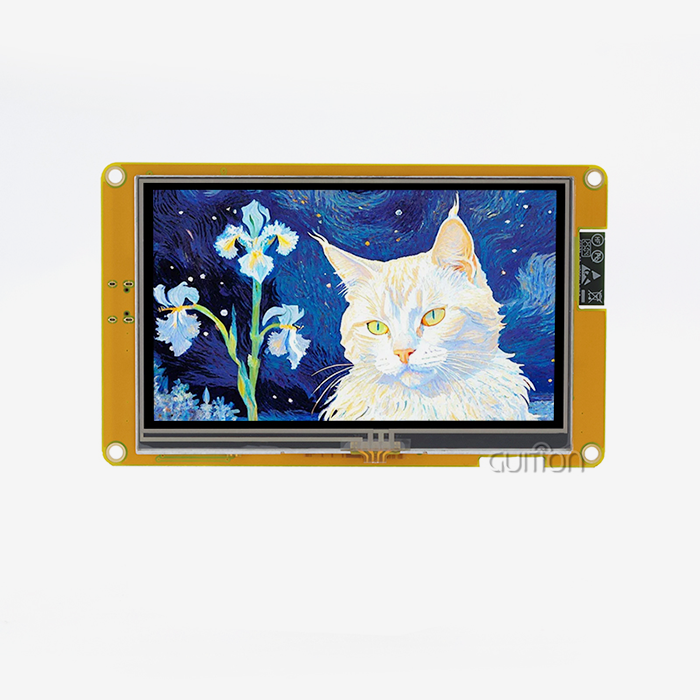
A TFT LCD screen with a resolution of 800x480 costs a lot less than an OLED panel with the same resolution. The GUITION ESP32-8048S070C and most other industrial-grade ESP32-S3 display modules use TFT LCD with capacitive touch, which is a good compromise between image quality and cost of production. A GT911 or FT5x06 touch controller is used in high-quality modules. It raises the cost per unit but lowers the number of failed integrations.
Memory and Processing Specifications
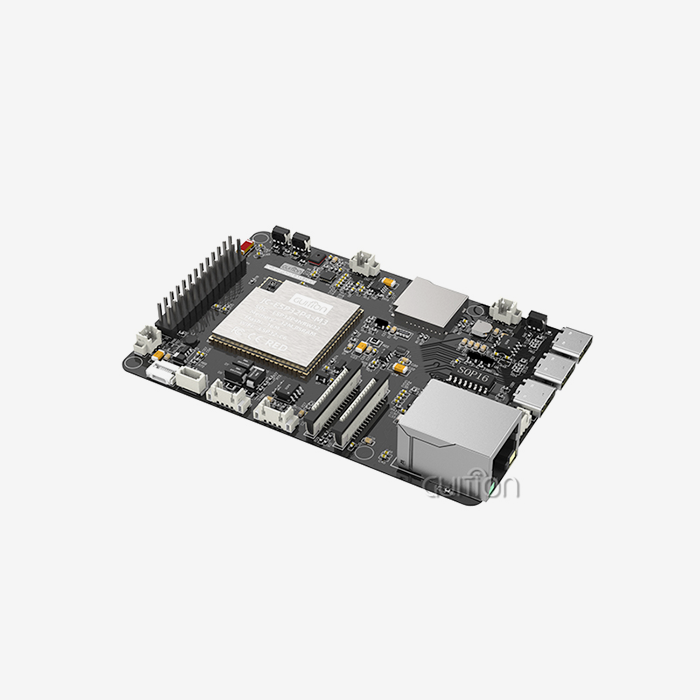
The cost of materials goes up straight when PSRAM and Flash storage capability goes up. Along with the ESP32-S3-WROOM-1, which runs at 240MHz, the GUITION ESP32-8048S070C has 8MB of PSRAM and 16MB of Flash built in. Modules with only 2MB of PSRAM have trouble driving 800x480 screens at good frame rates. This means that developers have to come up with methods that take longer to make and cost more money than they save in price.
Connectivity, Interfaces, and Add-Ons
Built-in Wi-Fi and Bluetooth 5 (LE), TF card slots, and reserved IO port interfaces all have an effect on both the price per unit and the price of the whole system. A module that doesn't have these features might look cheaper at first, but it needs extra parts that take up room on the PCB, cost more, and make assembly more difficult.
Key Criteria to Evaluate When Comparing Suppliers by Cost
The unit price alone doesn't tell the whole story. The total cost of ownership (TCO) for any ESP32-S3-based display module includes the costs of making the module, fixing bugs, and keeping the software up to date. These costs add up over the life of the product.
Price-to-Performance Ratio
Check out how much you get for each dollar. A 7 inch ESP32S3 display module with dual-core 240MHz processing, capacitive touch, and wireless connectivity costs $35 to $55 in mid-volume orders (50 to 500 units). This is a fair market price. Modules that cost a lot less than this range usually don't have as much PSRAM or a good panel.
MOQ, Volume Discounts, and Lead Times
Industrial buyers usually place orders in groups. Suppliers with flexible MOQs—starting with one unit for prototyping and going up to hundreds for production—lower the risk of losing money. Check with the supplier to see if they can hold extra stock and what guaranties there are for lead times for repeat orders, especially since the supply of semiconductors is always changing.
Hidden Costs: Development Support and Firmware Maintenance
This is where a lot of buyers go wrong. Your engineering team will save a lot of time if the provider supports the Arduino IDE, ESP-IDF, MicroPython, and Mixly, and also gives full secondary development instructions. A 2023 survey by Electronics Weekly found that teams that spent more than 20% of their project timeline on driver debugging always said that it was because the supplier didn't provide enough documentation. Take into account the ability to update over-the-air (OTA) and remote maintenance help when figuring out the real cost of purchase.
Comparative Analysis of Leading 7 Inch ESP32S3 Display Module Suppliers
A number of companies sell 7-inch HMI displays that are powered by ESP32-S3. Based on price, number of features, and level of support, each one has a different place in the market.
The official development boards from Espressif are good sources of information, but they are usually not HMI solutions that are ready for production. Instead of being parts that can be used in OEM projects, they are used as testing tools. The maker community loves the cheap ESP32-S3 display devices that LilyGO and TTGO make. Their 7-inch models are priced competitively, but they often don't come with industrial-grade documentation, formal warranty terms, or dedicated engineering support, all of which are important for business-to-business purchases.
M5Stack sells well-packaged modular systems and has a strong community behind it. However, their 7-inch display choices are more expensive and are better for fast prototyping than mass OEM production.GUITION, which is made by Jingcai Intelligence, stands out in this market. The ESP32-8048S070C is designed to work with HMI systems in business and industry. It comes pre-programmed with test apps, works with cross-platform development settings, and comes with the exclusive Guition UI development software, which is a drag-and-drop interface builder that gets rid of the need for low-level code. This mix of ready hardware and software tools directly leads to shorter time-to-market for procurement teams that are working with tight deadlines.
How to Approach Price Negotiation and Procurement for 7 Inch ESP32S3 Displays
Make a clear technical specification sheet before you call any ESP32-S3 display module suppliers.
Define Your Requirements Before the First Contact
List your desired resolution, touch type, memory needs, preferred development environment, required certifications (RoHS, REACH), and expected annual volume.
Use Market Intelligence to Anchor Negotiations
When you give suppliers specifics, they respond more positively and give you more accurate quotes. A broad request for a 7-inch touch display leads to a standard price quote. A request for a 7 inch ESP32S3 display module with "800x480 capacitive touch, 8MB PSRAM, Wi-Fi/Bluetooth, Arduino IDE compatible, 200 units initial order with 1,000 units annually" will give you a plan that you can look over and talk about.
Prioritize Long-Term Partnership Signals
Ask each provider how they handle firmware updates, if they offer over-the-air (OTA) help for units that are already in use, and what their response time commitment is after the sale. Suppliers who give clear answers to these questions and have written policies are safer to work with than those who only offer lower prices without providing more services.
Practical Case Study: Cost Comparison and Supplier Selection for an OEM Project
For an industrial energy control terminal, a U.S. automation developer wanted 300 of the 7-inch hmi display modules. Over the course of six weeks, their tech team looked at four sources. The things they looked for in a shortlist were an 800x480 screen size, a capacitive touch screen, Wi-Fi connection, support for the ESP-IDF and Arduino IDE, the ability to expand with a TF card, and a price per unit of less than $45 for 300 units. They also needed official warranty paperwork and technology help that could get back to them in less than 48 hours.
Three sellers had units for $38 to $52 each. One gave a price of $29 per unit but needed a minimum order quantity of 500 units and only provided a simple paper for engineering. The engineering team figured that the lack of documentation would add about 80 more development hours, which would cancel out the per-unit price advantage.
The ESP32-8048S070C from GUITION was chosen because it costs $42 per unit. The choice was based on pre-loaded test firmware, Guition UI software compatibility, full secondary development documentation, and over-the-air (OTA) upgrade support—all of which were important for a terminal that would be used in 12 remote facilities. The result was that the team cut the time it took to integrate by 35% compared to their previous project, which used a module that wasn't as well supported, and the rate of defects in the first batch was less than 0.5%.
Conclusion
The unit price alone cannot be used to compare 7 inch ESP32S3 display module suppliers. When comparing total project costs, it's important to think about things like development time, debugging costs, after-sales support, and the reliability of long-term supplies. When buyers compare suppliers based on these factors, the projects always turn out better than when buyers only look at the lowest quote. An OEM team, an industrial integrator, or an embedded engineer will always pay more for a source with good documents, flexible development support, and gear that has been used before.
FAQ
What are the primary cost drivers for a 7 inch ESP32S3 display module?
The main things that affect the price are the type of screen, its resolution, its PSRAM and Flash memory capacity, the quality of its touch controller, and its ability to link wirelessly. A module with 8MB PSRAM, 16MB Flash, capacitive touch, and built-in Wi-Fi and Bluetooth costs more per unit than a simple SPI display, but the total cost of the project is much less.
How can I verify supplier reliability beyond price?
Check out community forums like the ESP32 subreddit and EEVblog, look at certifications like RoHS and REACH compliance, ask for sample units before placing an order for mass production, and make sure that the company's response time policies for after-sales service are written down. When it comes to project outcomes, suppliers with active technical documentation repositories and responsive engineering contacts always do better than price-focused competitors.
Which suppliers offer competitive bulk pricing for ESP32-S3 7-inch display modules?
A lot of people talk about GUITION (Jingcai Intelligence), LilyGO, and M5Stack as suppliers in this category. GUITION's ESP32-8048S070C is a great choice for mid-volume orders because it is an industrial-grade OEM product that comes with paperwork and OTA update support.
Does the GUITION ESP32-8048S070C support multiple development environments?
Yes. It works with Arduino IDE, ESP-IDF, MicroPython, and Mixly, so engineers from a wide range of backgrounds can use it, and it takes a lot less time to get started.
Get a Competitive Quote on the GUITION ESP32-8048S070C Today
For OEM and industrial procurement, Guition provides one of the most technically full 7 inch ESP32S3 display module choices. The ESP32-8048S070C has 240MHz dual-core processing, 8MB PSRAM, 16MB Flash, built-in Wi-Fi and Bluetooth, an 800x480 capacitive touch screen, and full development support for multiple environments, along with detailed technical documentation. To request a sample, bulk quote, or custom configuration from a reliable 7 inch ESP32S3 display module supplier, please email our team at david@guition.com or go to https://jingcaizhineng.aixdb.cn/.
References
1. Espressif Systems. ESP32-S3 Technical Reference Manual. Espressif Systems, 2023.
2. Electronics Weekly. Embedded Systems Developer Survey: Documentation and Time-to-Market. Electronics Weekly, 2023.
3. IHS Markit. Global Display Module Market Outlook: Pricing Trends and Supply Chain Dynamics. IHS Markit, 2024.
4. LVGL. LVGL Documentation: Performance Benchmarks on ESP32-S3 Platforms. LVGL Open Source Project, 2023.
5. IEEE. Total Cost of Ownership in Embedded HMI Procurement: A Framework for Industrial Buyers. IEEE Transactions on Industrial Electronics, 2022.
6. DigiKey. ESP32-S3 Module Ecosystem and Market Pricing Reference Guide. DigiKey Electronics, 2024.
Learn about our latest products and discounts through SMS or email