- English
- French
- German
- Portuguese
- Spanish
- Russian
- Japanese
- Korean
- Arabic
- Greek
- German
- Turkish
- Italian
- Danish
- Romanian
- Indonesian
- Czech
- Afrikaans
- Swedish
- Polish
- Basque
- Catalan
- Esperanto
- Hindi
- Lao
- Albanian
- Amharic
- Armenian
- Azerbaijani
- Belarusian
- Bengali
- Bosnian
- Bulgarian
- Cebuano
- Chichewa
- Corsican
- Croatian
- Dutch
- Estonian
- Filipino
- Finnish
- Frisian
- Galician
- Georgian
- Gujarati
- Haitian
- Hausa
- Hawaiian
- Hebrew
- Hmong
- Hungarian
- Icelandic
- Igbo
- Javanese
- Kannada
- Kazakh
- Khmer
- Kurdish
- Kyrgyz
- Latin
- Latvian
- Lithuanian
- Luxembou..
- Macedonian
- Malagasy
- Malay
- Malayalam
- Maltese
- Maori
- Marathi
- Mongolian
- Burmese
- Nepali
- Norwegian
- Pashto
- Persian
- Punjabi
- Serbian
- Sesotho
- Sinhala
- Slovak
- Slovenian
- Somali
- Samoan
- Scots Gaelic
- Shona
- Sindhi
- Sundanese
- Swahili
- Tajik
- Tamil
- Telugu
- Thai
- Ukrainian
- Urdu
- Uzbek
- Vietnamese
- Welsh
- Xhosa
- Yiddish
- Yoruba
- Zulu
How to Choose the Best SPI LCD Display Supplier
The selection of the proper supplier for SPI LCD Displays strongly impacts your project schedule, cost, and long-term product quality. The SPI LCD display employs the Serial Peripheral Interface protocol to transmit data from a driver IC to your microcontroller using as few as 3-4 signal lines, making it significantly more practical than parallel interfaces for space-constrained systems. Before you contact any supplier, you need to check product selection, certifications, technical documentation, and after-sales assistance. This tutorial takes you through each decision point to help you purchase with confidence.

Understanding SPI LCD Displays: Key Features and Technical Foundations
SPI LCD displays operate differently from I2C or parallel-bus displays. Understanding those differences helps you buy smarter.
How the SPI Interface Works
The Serial Peripheral Interface (SPI) employs four main lines — SCK, MOSI, CS, and an optional D/C pin — to convey display instructions and pixel data at clock frequencies generally about 20 MHz to 80 MHz. The GPIO footprint remains small as data is moving serially. That is a big deal when your MCU is already handling sensors, comm modules, or motor drivers.
SPI vs. I2C vs. Parallel: Where SPI Wins
I2C maxes out at around 3.4 MHz and is for mono-symbol displays, not color TFTs. Parallel connections provide great bandwidth but need 8-16 data pins, taking up precious PCB real estate. SPI is in between: fast enough to drive 320x480 color panels at 30-60 fps with DMA, tiny enough for wearables and portable equipment.
Key Technical Properties to Review
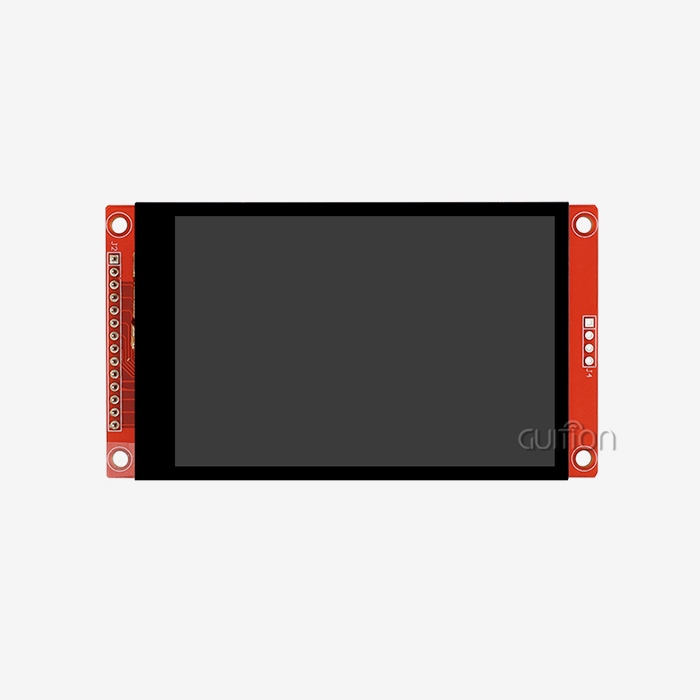
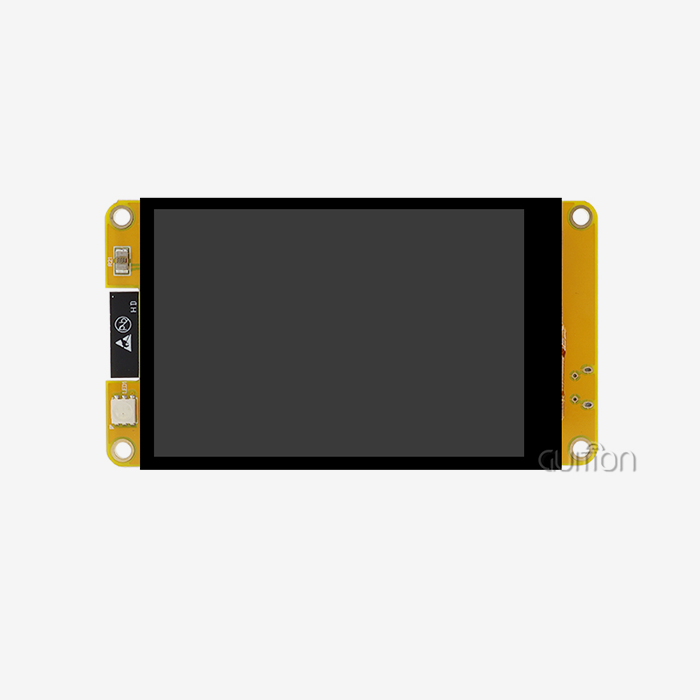
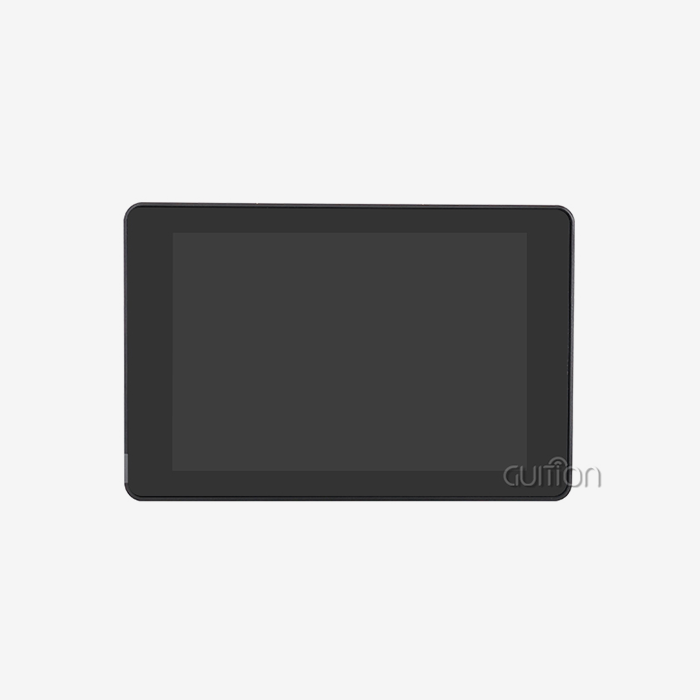
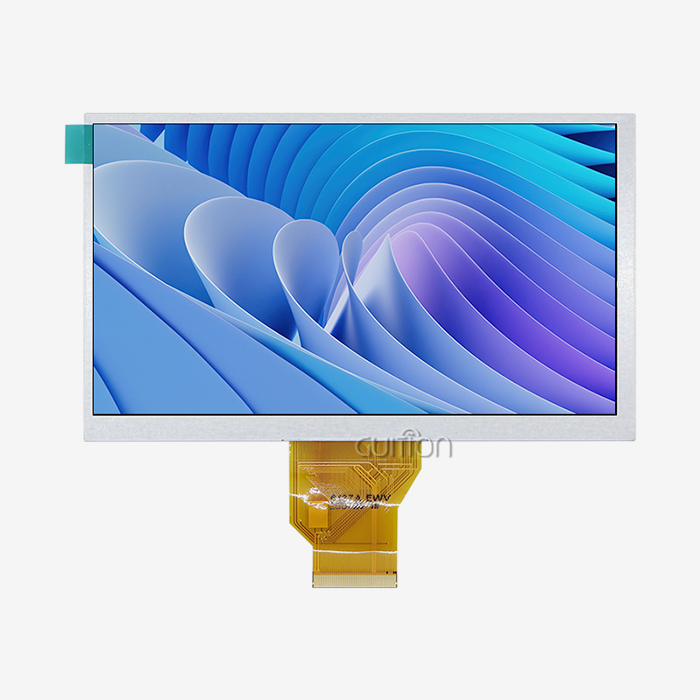
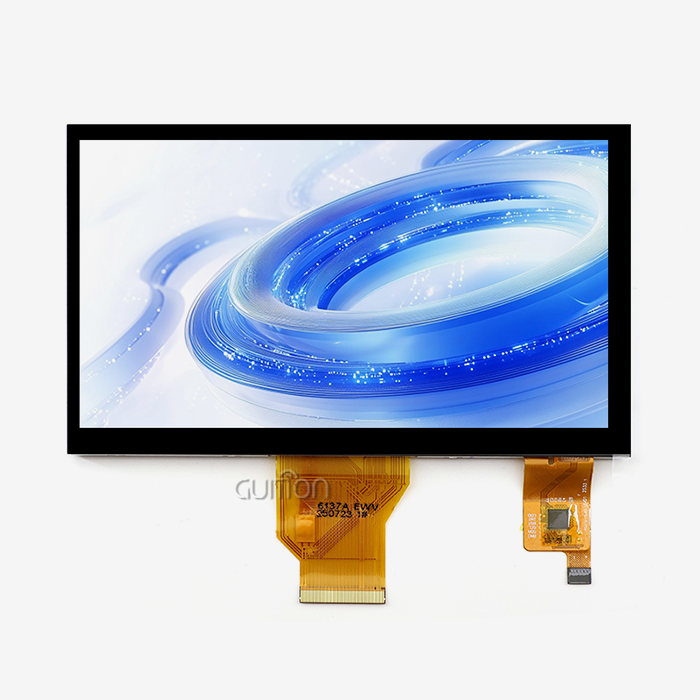
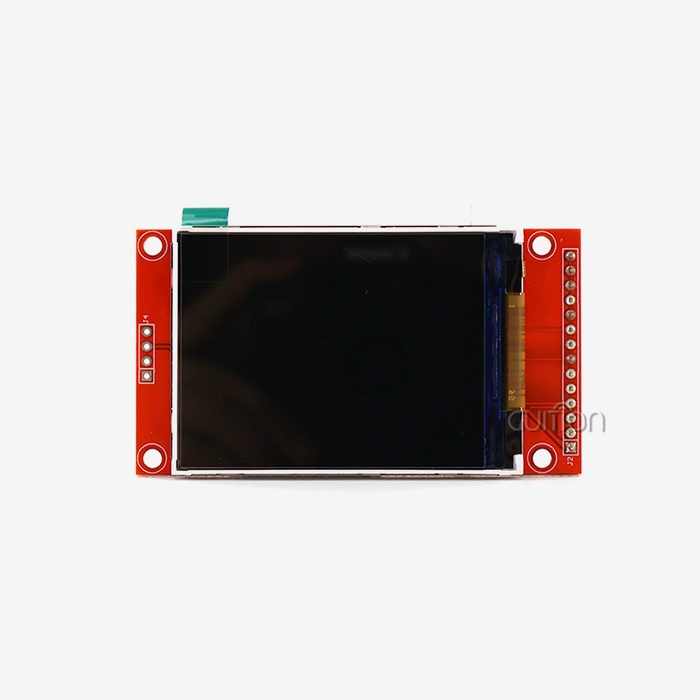
When selecting an SPI TFT module, look at the driver IC model, color depth supported (RGB565 for 16-bit or RGB666 for 18-bit), operating temperature range, and touch controller type. The GUITION JC3248A035C is a 3.5-inch Capacitive Touch Display Module with a ST7796 IC driving a 320x480 resolution with 65K color. It has bright and crisp visuals across the industrial temperature range of -20C to 70C. It has six LED backlights to provide constant brightness in varying ambient light. It is often used in 3D printers, charging stations, and medical aesthetic equipment.
Critical Criteria for Choosing the Right SPI LCD Display Supplier
Not every supplier who sells an SPI LCD display module can support your full product lifecycle. Here is how to screen them properly.
Product Range and Certification
This vendor can be relied upon to provide displays in several sizes. Guition's inventory covers 1.28 inches to 21.5 inches, from small wearable displays to big industrial control panels. Insist on RoHS and REACH compliance – they are a must-have for US market entry – and get FPC vibration resistance statistics if your product is destined for harsh shock conditions.
Pricing Transparency and Bulk Order Terms
Hidden expenses erode profits quickly. Check unit pricing at your volume level, minimum order quantities, and lead times before you commit. Suppliers that provide tiered pricing together with sample orders and technical assistance may eliminate procurement risk at the prototype stage, allowing your engineering team to test fit before scaling.
Technical Documentation and Developer Support
Poor documentation is one of the top time sinks mentioned by embedded developers. Search for vendors that provide full datasheets, wiring diagrams, pinout maps, and libraries for Arduino, ESP-IDF, and STM32. Guition also marries each display module with access to its proprietary UI creation tool and cross-platform online debugging, greatly reducing integration time on first-pass builds.
Tailoring Your Choice to Procurement Needs: Segmenting and Matching Solutions
Different sorts of projects need different types of procurement techniques. Matching supplier capabilities to your real requirements avoids over-engineering and cost overruns.
Standard Modules vs. Custom Display Solutions
If your application is a 3D printer control panel or a charging station terminal, then a standard SPI LCD display module like the GUITION JC3248A035C is an instant, proven answer. Custom screens make sense when your volume is in the tens of thousands, and your form factor is proprietary. If you're a team at an SME or a startup, beginning with a well-documented standard module cuts down engineering risk significantly.
Microcontroller Compatibility
Make sure your target platform is supported by the module and libraries from the provider. The Guition modules are compatible with Arduino, ESP-IDF (ESP32), and STM32 toolchains. That cross-platform reach lowers porting labor should your hardware platform change between prototype and production.
Lead Times, Scalability, and Remote Upgrade Capability
In the U.S., purchasers care as much about lead time predictability as unit pricing. What are the safety stock rules, and how do they schedule manufacturing runs? Also evaluate whether the provider offers OTA (over-the-air) firmware changes. With Guition’s remote upgrade function, devices deployed in the field may be updated with new UI and firmware versions without the need for on-site service visits, which directly decreases after-sales cost for industrial installations.
Comparing Popular SPI LCD Display Suppliers and Modules
Knowing where various suppliers are located allows you to budget and negotiate from a position of strength.
Waveshare is widely known in the maker and education markets. It offers spi display modules in several resolutions and comes with Python and C libraries to simplify prototyping. But it doesn’t promote industrial-grade certifications and specialized after-sales engineering assistance as prominently.
Adafruit and SparkFun are in comparable hobbyist-to-pro crossover markets. Both firms give good starter documentation, but their product lines are not built for high-volume B2B purchasing or bespoke UI development operations.
Newhaven Display sells straight to industrial customers with character and graphic LCD modules, with robust datasheets. Their SPI color TFT offering is less in diversity of sizes than providers like Guition.
Guition is an HMI development efficiency-focused solution for the B2B embedded systems industry, developed by Jingcai Intelligent. Its Guition UI software solution is independently created and allows designers to construct graphical interfaces with drag-and-drop controls without writing low-level display code, responding directly to the time-to-market constraints that most R&D managers experience. The ST7796 driver and capacitive touch of the JC3248A035C hardware, together with exclusive software support, make it a compelling choice for industrial control panels, medical monitoring devices, and energy management terminals.
These benefits are very important for teams that need fast delivery of production-ready interfaces. They solve the main procurement issues of development speed, cross-platform flexibility, and long-term supplier dependability.
Best Practices for Technical Implementation and Integration Support
Getting an SPI LCD display module running correctly on the first attempt saves days of debugging.
Wiring and Pinout Verification
And always cross-check the pinout diagram of the provider with your MCU datasheet before soldering. SPI pin names vary: some manufacturers call the data line MOSI, others SDA. Also check voltage levels; powering a 3.3V display with 5V logic without level shifting would irreversibly fry the driver IC.
Using Supplier Libraries and Platform Examples
Start with the supplier's part number rather than building your own display driver from scratch. Guition comes with out-of-the-box examples for Arduino and ESP-IDF, so your team may concentrate on application logic rather than register-level setup routines.
Troubleshooting Screen Tearing and Refresh Issues
Usually, SPI TFT screen tearing occurs due to the write cycles of the MCU not matching the refresh frequency of the display. Use the Tearing Effect (TE) output pin of the display to synchronize data flow to the vertical blanking interval. If using longer wires, say 10-15 cm, lower the SPI clock speed to preserve signal integrity.
Conclusion
When choosing a provider of SPI LCD displays, you must balance the availability of product coverage, quality of driver ICs, depth of documentation, compatibility of the platform, and dependability of supply. A 3.5-inch SPI LCD display module such as the GUITION JC3248A035C based on the ST7796 driver, with 320×480 resolution and capacitive touch, gives you a good idea of what a well-specified, production-ready module looks like. Add that hardware to a provider that gives full developer resources, OTA update support, and multi-language capabilities, and you dramatically reduce your overall cost of development.
FAQ
1. What is the difference between an SPI LCD display and an I2C display?
SPI transfers data at 20–80 MHz using 3–4 lines, making it suitable for color TFT panels at resolutions up to 320×480. I2C tops out near 3.4 MHz and works best for small monochrome displays. For any application requiring color graphics or touch input, SPI is the correct choice.
2. How do I verify a supplier's quality and reliability?
Request RoHS and REACH compliance certificates, ask for sample units before placing bulk orders, and review technical documentation quality. A supplier who provides complete datasheets, working code examples, and responsive pre-sales support is demonstrating the same reliability you can expect post-purchase.
3. Are touchscreen SPI LCD modules available for industrial use?
Yes. The GUITION JC3248A035C features a capacitive touch panel integrated with the 3.5-inch SPI display module. It operates reliably from -20 °C to 70 °C, making it applicable to 3D printers, charging stations, medical aesthetic equipment, and other industrial control devices.
4. Can Guition modules support multi-language interfaces?
Guition modules support multi-language switching and UTF-8 encoding, which makes them suitable for global product deployments across different regional markets.
Partner with Guition for Your Next SPI LCD Display Project
Guition's product line covers 1.28 inches to 21.5 inches with full secondary development support, making us a dependable SPI LCD display manufacturer for industrial and IoT applications. The Guition UI development tool, OTA upgrade capability, and cross-platform compatibility with Arduino and ESP-IDF give your engineering team a real head start. Contact Us today to request a sample of the JC3248A035C or discuss your custom display requirements. Reach our team at david@guition.com to get started.
References
1. Instruments, Texas. SPI Interface Fundamentals for Embedded Systems. Texas Instruments Application Report, 2021.
2. Maxim Integrated. Comparing Serial Interface Standards: SPI, I2C, and UART. Maxim Integrated Technical Document, 2020.
3. IPC Association. IPC-A-610: Acceptability of Electronic Assemblies. IPC Standard, 2020.
4. European Chemicals Agency. REACH Regulation: Technical Guidance for Display Module Compliance. ECHA Publication, 2022.
5. Embedded.com Editorial Staff. HMI Design Trends in Industrial Display Systems. Embedded.com, 2023.
6. Grand View Research. Global TFT LCD Display Market Size and Forecast Report. Grand View Research, 2023.
Learn about our latest products and discounts through SMS or email