- English
- French
- German
- Portuguese
- Spanish
- Russian
- Japanese
- Korean
- Arabic
- Greek
- German
- Turkish
- Italian
- Danish
- Romanian
- Indonesian
- Czech
- Afrikaans
- Swedish
- Polish
- Basque
- Catalan
- Esperanto
- Hindi
- Lao
- Albanian
- Amharic
- Armenian
- Azerbaijani
- Belarusian
- Bengali
- Bosnian
- Bulgarian
- Cebuano
- Chichewa
- Corsican
- Croatian
- Dutch
- Estonian
- Filipino
- Finnish
- Frisian
- Galician
- Georgian
- Gujarati
- Haitian
- Hausa
- Hawaiian
- Hebrew
- Hmong
- Hungarian
- Icelandic
- Igbo
- Javanese
- Kannada
- Kazakh
- Khmer
- Kurdish
- Kyrgyz
- Latin
- Latvian
- Lithuanian
- Luxembou..
- Macedonian
- Malagasy
- Malay
- Malayalam
- Maltese
- Maori
- Marathi
- Mongolian
- Burmese
- Nepali
- Norwegian
- Pashto
- Persian
- Punjabi
- Serbian
- Sesotho
- Sinhala
- Slovak
- Slovenian
- Somali
- Samoan
- Scots Gaelic
- Shona
- Sindhi
- Sundanese
- Swahili
- Tajik
- Tamil
- Telugu
- Thai
- Ukrainian
- Urdu
- Uzbek
- Vietnamese
- Welsh
- Xhosa
- Yiddish
- Yoruba
- Zulu
How to Choose the Best Ips display module for Your Device
Choosing the right IPS display module requires evaluating several interconnected factors: display size, resolution, interface compatibility, touch technology, environmental durability, and software ecosystem support. An IPS display module delivers superior 178°/178° viewing angles, accurate color reproduction exceeding 100% sRGB, and stable touch performance without the "water ripple" artifacts common in TN panels. Whether you are developing industrial control panels, medical monitoring equipment, or smart home devices, matching the module's specifications to your application requirements from the outset eliminates costly redesigns and accelerates your time-to-market significantly.

Defining Your Device Requirements for IPS Display Modules
You need to know exactly what your device needs from its screen before you can compare products. The main reason engineering teams have to re-specify parts in the middle of a project is that they skip this step.
Display Size, Resolution, and Aspect Ratio
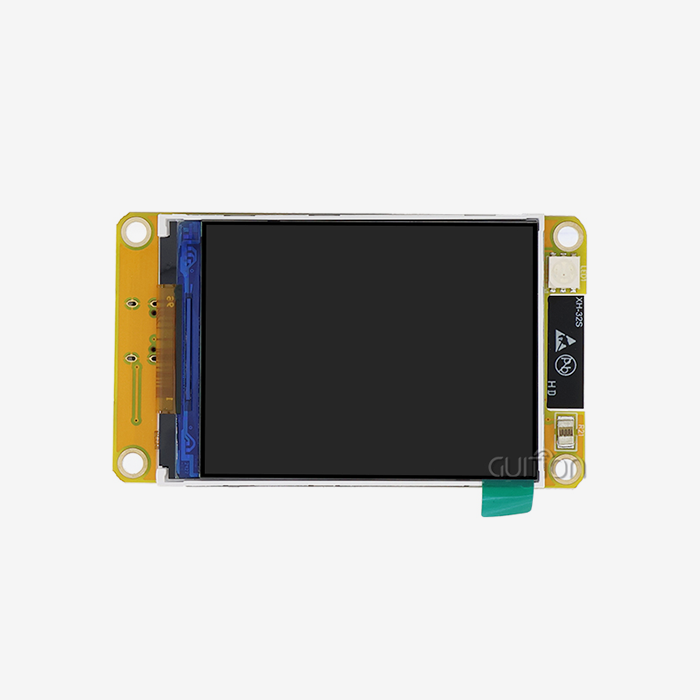
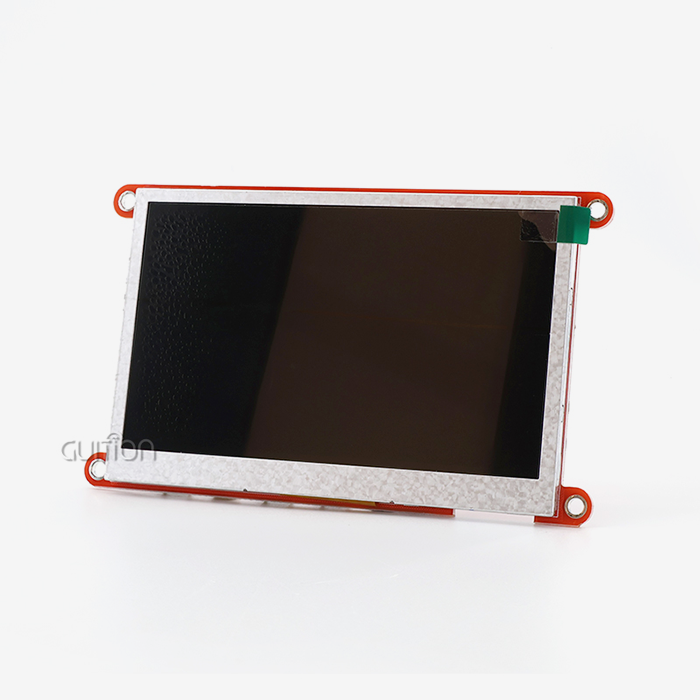
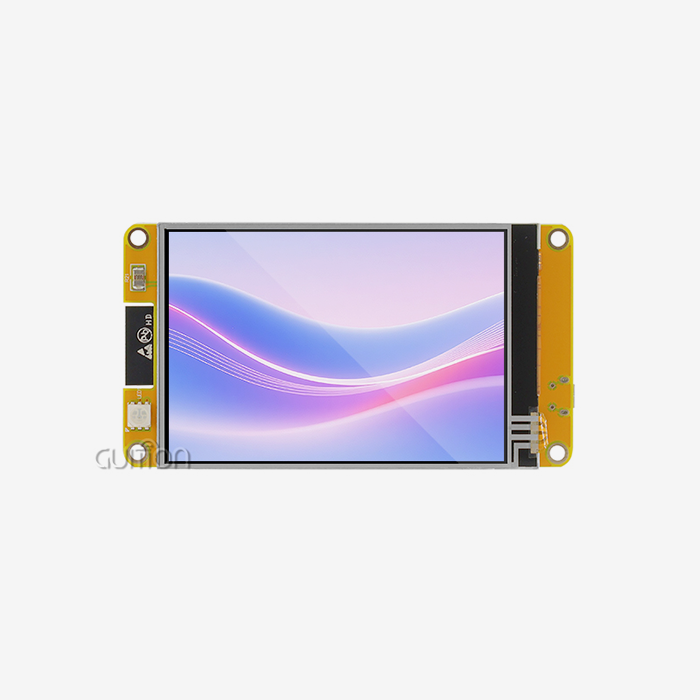
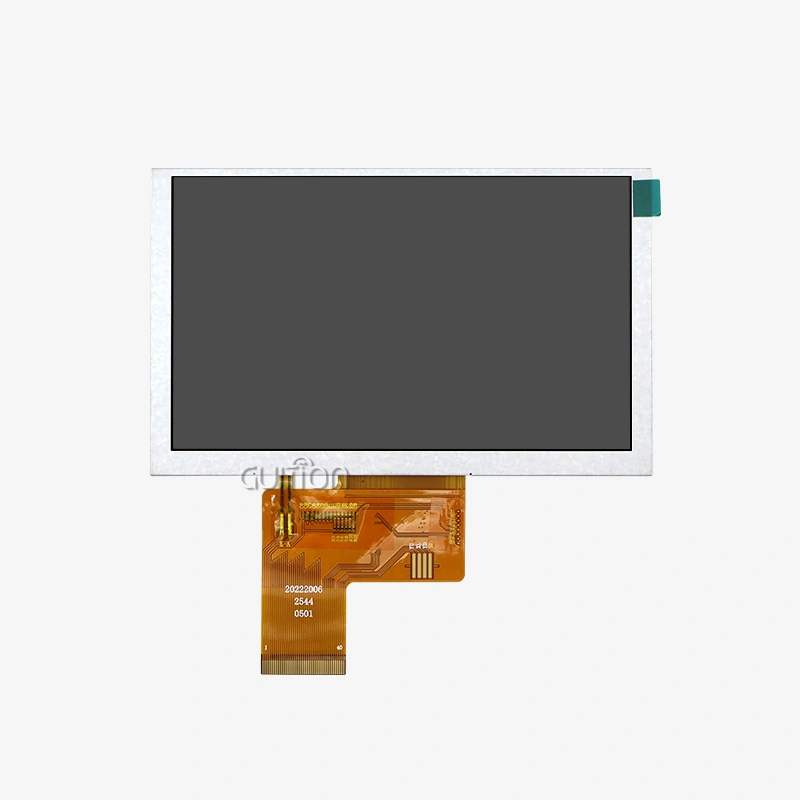
The GUITION JC4848B040C_I is a 4.0-inch IPS display module with a resolution of 800×480. It is powered by the ST7701 chip through the MIPI DSI interface. This pixel density gives you clear text and detailed UI images. It works well for small industrial platforms, 3D printer control panels, and EV charging stations where space on the screen is limited but clarity is important.
Environmental and Interface Compatibility
The toughness standards depend on where you'll be using the product. The JC4848B040C_I works reliably in temperatures ranging from -20°C to +70°C, which means it can be used in cold warehouse automation and high-temperature industrial enclosures. Its MIPI DSI interface makes sure that data can be sent quickly and with little power, which is important for adding it to embedded systems that use the Arduino or ESP-IDF frameworks.
Core Technical Criteria to Evaluate When Selecting IPS Display Modules
After making a list of your device's needs, you need objective tests to see how different parallel lcd displays stack up. You can measure how well a display works, and buying decisions should be based on that data instead of marketing copy.
The JC4848B040C_I can produce 16.7M colors through 24-bit RGB, which makes images that look real and are good for both aesthetic and useful interfaces. Its capacitive touch screen reacts right away to user input, so you don't have to deal with the lag and pain of missed touches that come with resistive options.
Here are the core technical criteria worth scrutinizing during your evaluation process:
- Brightness and Contrast: For indoor use, industrial-grade IPS panels usually aim for 300–500 nits; for outdoor use, 1000+ nits with optical bonding are needed. Make sure the contrast ratio is greater than 1000:1 so that the text can be read in normal lighting.
- Color Gamut Accuracy: Panels must cover at least 72% of NTSC or 100% of sRGB for medical diagnostic and beauty equipment. This level is easily met by the JC4848B040C_I's 16.7M color depth.
- Certifications: Make sure the product meets CE, RoHS, and, if necessary, UL standards. Medical device developers and commercial kiosk integrators who work in the U.S. market must follow these rules.
- ESD Immunity: According to standard testing procedures, driver ICs should be able to handle ±8kV contact and ±15kV air discharge. This protects the module in places where electricity is noisy at work.
These standards directly lead to fewer warranty claims, lower costs for assistance after the sale, and higher customer happiness throughout the lifecycle of a product.
Comparing Popular IPS Display Module Technologies
It's important to know the trade-offs between the different flat-panel technologies so you don't over- or under-specify your build.
IPS vs. TFT vs. OLED
Standard TFT panels lose their colors when viewed more than 45° off-axis. This means they can't be used for industrial panels with multiple operators or medical monitors that are seen from different angles. OLED has deeper blacks, but it costs more per unit, has a higher risk of burn-in with static HMI graphics, and is more sensitive to humidity, which can be a problem in outdoor kiosks or agricultural automation.
IPS technology gets around the main problem with TFTs by lining up liquid crystal molecules parallel to the substrate. This creates stable gamma curves at 178°/178° angles, both horizontally and vertically. Because of this structural benefit, an IPS display module is the best choice for touchscreen HMI applications where hitting the screen must not cause "water ripple" effects that change the shape of pixels next to each other.
Modern IPS technologies, such as in-cell touch integration, make module stacks thinner and improve optical clarity. The JC4848B040C_I's thin profile reflects these benefits, making it easy to fit into space-limited cases for medical aesthetics devices and smart home controllers.
How to Evaluate Suppliers and Ensure Long-Term Partnership Success
A technically perfect Parallel LCD Display is less useful when it is paired with a supply chain that can't be relied on. Assessing suppliers should be done with the same level of care as specifying products.
Guition is run by Jingcai Intelligence and has R&D, production, and sales all in one place. The company's product line goes from 1.28" to 21.5", so you can really "scale up" as your product family grows. Importantly, Guition provides secondary development support with full API documentation, cross-platform debugging tools, and the ability to update over-the-air (OTA) remotely. These features directly reduce the workload of your engineering team after launch.
You should ask any IPS display module supplier about their quality control standards. These include High-Temperature High-Humidity testing (60°C / 90% RH for 240 hours), AQL-standard visual inspection for zero bright-dot defects on premium SKUs, and documented V-com calibration procedures to stop image retention on static HMI screens.
Before committing, find out about lead times, minimum order quantities, warranty terms, and the availability of technical consultations. Suppliers who offer prototype testing samples before placing bulk orders show that they are confident in their ability to produce consistent products. Guition makes this evaluation process easier.
Practical Steps to Finalize Your IPS Display Module Purchase
Unexpected costs that come up during integration testing can be avoided with a structured procurement workflow.
Start by writing down the things that you can't change: the type of interface (MIPI DSI, LVDS, or eDP), the operating temperature range, the touch technology, the resolution, and the certification requirements. Then, instead of going with the lowest unit price, compare technical proposals side by side using these criteria.
Validating your prototype in the real gadget world is a must. Because the JC4848B040C_I works with both Arduino and IDF development modes, you can use your current tech stack without having to learn a lot of new things. The Guition UI development software speeds up this phase even more with drag-and-drop controls, WYSIWYG interface design, and the ability to add controls with just one click. These features greatly shorten the time it takes to create an HMI.
Plan how you will increase production and update the firmware before you start mass production. With Guition's remote upgrade support, you can make UI changes and bug fixes to units that are already in use without having to send service technicians to the field. This saves a lot of money on operational costs for large-scale deployments in commercial kiosks or energy management systems.
Conclusion
A choice that affects your entire product lifecycle is choosing the right IPS display module. The base is making sure that the size, resolution, interface, and environmental requirements are right for your application. To keep that base safe in the long term, you need to check quality certifications and the reliability of the supplier. With its 4.0-inch 800×480 IPS screen, ST7701 driver, MIPI DSI interface, 16.7M color rendering, and capacitive touch, the GUITION JC4848B040C_I is a complete solution for engineers working on tough projects in the medical, smart device, and industrial fields.
FAQ
1. What distinguishes an IPS display module from a standard TFT module?
IPS panels line up the liquid crystal molecules so they are parallel to the glass substrate. This stops the color shifting and loss of contrast that can be seen on TFT panels when the angle is more than 45°. For touchscreen HMI uses, IPS also doesn't have the "water ripple" effect that TN/TFT panels do when you press on them with your finger.
2. Is the GUITION JC4848B040C_I compatible with Arduino?
Yes, Guition works with Arduino, IDF, and its own development modes, so embedded engineers can use the module with their favorite toolchains without having to switch.
3. What certifications should I require from an IPS display module supplier?
Ask for CE and RoHS certificates at the very least. Medical device designers who work in the U.S. should also check for UL compliance. Ask for results on the HTHH tests and proof of ESD protection.
4. How do I prevent image retention on an IPS panel used for static HMI screens?
During the QC process, you should change the V-com voltage calibration and add pixel-shifting methods to your software. IPS image retention is usually short-term and can be handled with these steps.
5. Can the JC4848B040C_I operate in high-temperature industrial environments?
Yes. It can work in temperatures between -20°C and +70°C, so it can be used for both cold storage automation and heated industrial enclosures.
Partner with Guition for Your Next IPS Display Module Project
IPS display module options from Guition have been tested and proven to work well in the industrial setting. They are also easy to create. You can try out a sample of the GUITION JC4848B040C_I by getting in touch with our team to talk about your application's needs, get technical documentation, or look into custom configurations. Reach our engineering support team directly at david@guition.com to browse our full IPS display module supplier catalog and start your procurement process today.
References
1. Journal of Display Technology — "Advances in In-Plane Switching LCD Technology for Wide-Angle Applications," IEEE, 2021.
2. Display Daily — "IPS vs. OLED: A Comparative Analysis for Industrial and Medical Display Procurement," 2022.
3. Society for Information Display (SID) Symposium Digest — "Capacitive Touch Integration in Industrial-Grade IPS Panels," 2020.
4. EDN Network — "Selecting the Right Embedded Display Module: Interface Standards and Driver IC Considerations," 2023.
5. Electronics Weekly — "Quality Control Benchmarks for LCD Module Procurement in B2B Markets," 2022.
6. Medical Device and Diagnostic Industry (MD+DI) — "Display Technology Requirements for FDA-Compliant Medical Monitoring Equipment," 2021.
Learn about our latest products and discounts through SMS or email