- English
- French
- German
- Portuguese
- Spanish
- Russian
- Japanese
- Korean
- Arabic
- Greek
- German
- Turkish
- Italian
- Danish
- Romanian
- Indonesian
- Czech
- Afrikaans
- Swedish
- Polish
- Basque
- Catalan
- Esperanto
- Hindi
- Lao
- Albanian
- Amharic
- Armenian
- Azerbaijani
- Belarusian
- Bengali
- Bosnian
- Bulgarian
- Cebuano
- Chichewa
- Corsican
- Croatian
- Dutch
- Estonian
- Filipino
- Finnish
- Frisian
- Galician
- Georgian
- Gujarati
- Haitian
- Hausa
- Hawaiian
- Hebrew
- Hmong
- Hungarian
- Icelandic
- Igbo
- Javanese
- Kannada
- Kazakh
- Khmer
- Kurdish
- Kyrgyz
- Latin
- Latvian
- Lithuanian
- Luxembou..
- Macedonian
- Malagasy
- Malay
- Malayalam
- Maltese
- Maori
- Marathi
- Mongolian
- Burmese
- Nepali
- Norwegian
- Pashto
- Persian
- Punjabi
- Serbian
- Sesotho
- Sinhala
- Slovak
- Slovenian
- Somali
- Samoan
- Scots Gaelic
- Shona
- Sindhi
- Sundanese
- Swahili
- Tajik
- Tamil
- Telugu
- Thai
- Ukrainian
- Urdu
- Uzbek
- Vietnamese
- Welsh
- Xhosa
- Yiddish
- Yoruba
- Zulu
How to Choose an HMI interactive interface Supplier
Choosing the right HMI interactive interface supplier shapes every downstream decision in your project—from development speed to long-term maintenance costs. Whether you're an embedded engineer sourcing display modules for industrial control panels or a product manager scaling smart appliance production, the supplier you select directly impacts your time-to-market, system reliability, and total cost of ownership. This guide walks you through each evaluation stage so you can make a confident, well-grounded procurement decision.

Understanding the Core Decision Scenario: What to Consider When Choosing an HMI Interactive Interface Supplier
You need to be clear on your own needs before you compare vendors. The global HMI interactive interface market was worth about $5.25 billion in 2023 and is expected to grow to $8.1 billion by 2030 (Grand View Research, 2023) because people are using them for a wider range of things. Which seller factors are most important depends on what you're buying.
Define Your Application Environment First
Are you putting a touch panel in a workplace where EMI interference is a problem, or are you making a smart home device that needs a small screen that uses little power? For industrial automation environments, strong thermal tolerance and EMI shielding are needed, while for IoT consumer devices, wireless connectivity and small form factors are most important. One of the most expensive mistakes in buying hardware is not matching these needs with what the supplier can do.
Scale and Customization Needs Matter
When you order 10 units for a prototype, the supplier will expect very different things from you than when you order 10,000 units for a production run. Standard modules that are already on the market cut down on wait time and unit cost. Custom solutions, on the other hand, offer unique form factors and custom software. Before you start evaluating suppliers technically, you should make a short list of them based on things like price, service terms, and where they can help you.
Critical Evaluation Criteria for Supplier Selection
Once you know what you need, using a consistent framework to evaluate sellers keeps you from making choices based on price or feeling. It has to have both technical merit and a history of reliability.
Product Feature Set and Interface Type
The monitor technology, touch type, processor power, and software environment are all important factors that can't be skipped when evaluating. For gloved factory workers, a resistive touch panel works best, while projected capacitive works best for consumer-grade smart devices. Importantly, check to see if the supplier's software tools make low-level coding easier. If they do, that will directly save you engineering hours.
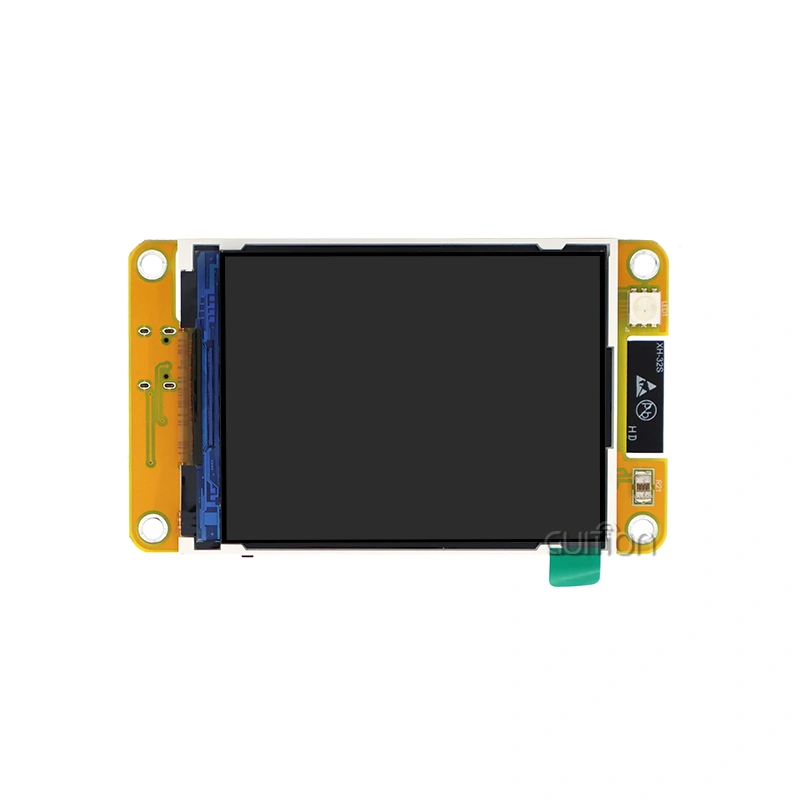
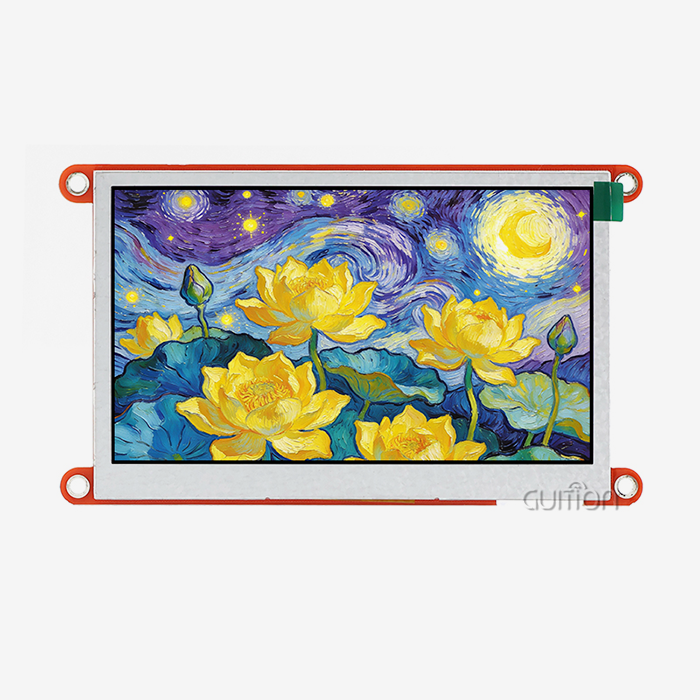
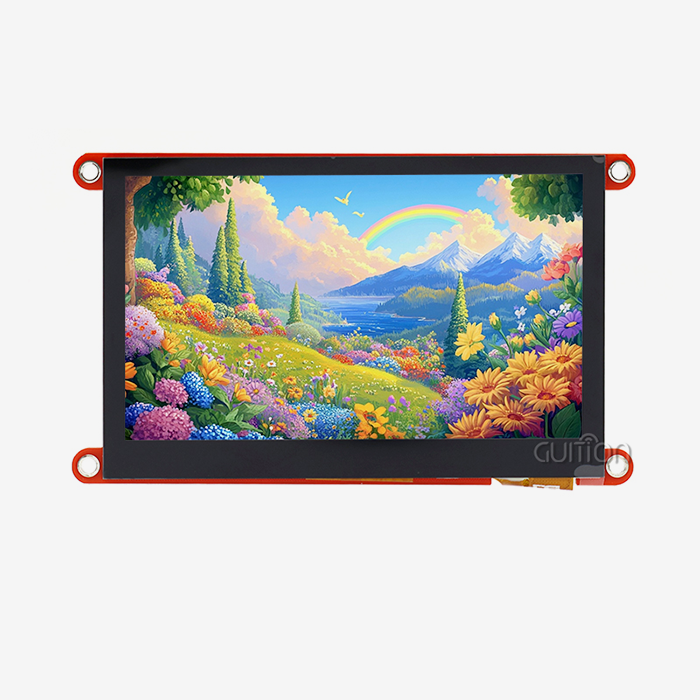
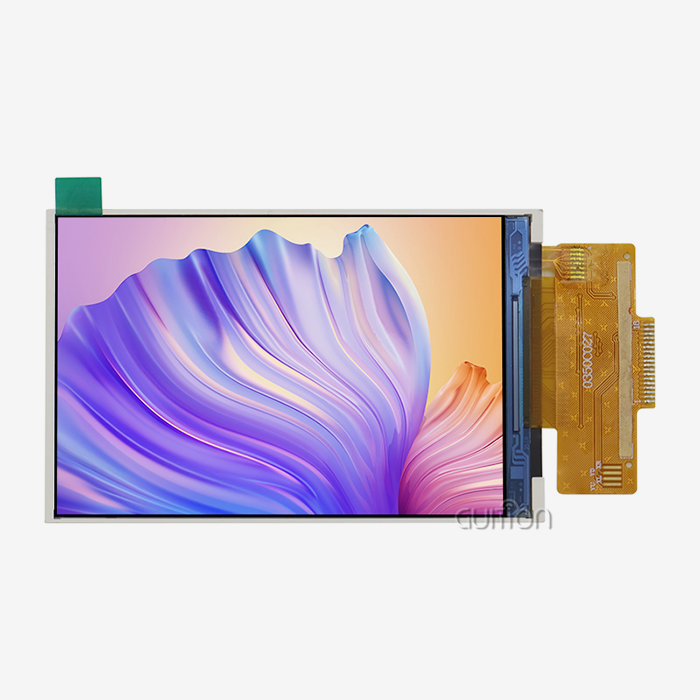
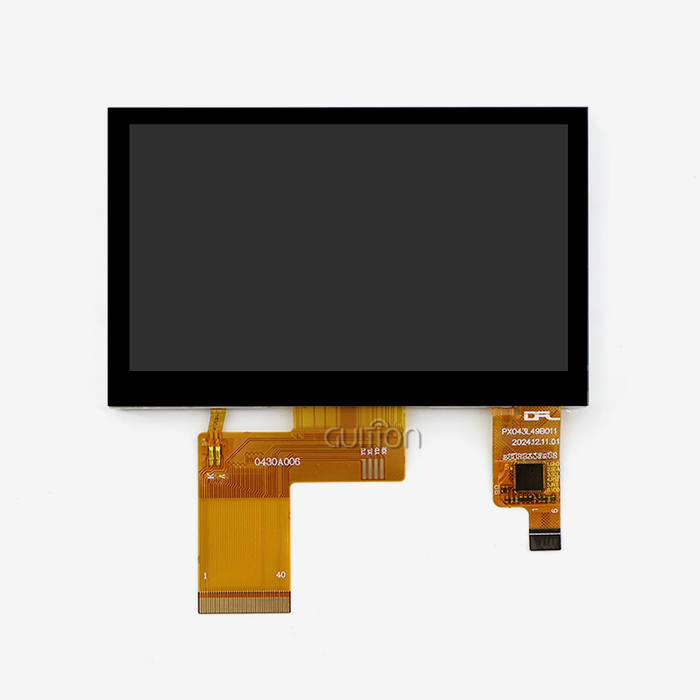
This balance is shown by the GUITION JC4827W543R_I. It has a 4.3-inch LCD screen with a resolution of 480x272 pixels, sensitive touch, and an ESP32-S3R8 dual-core processor that runs at 240MHz. It has 8 MB of PSRAM, 4 MB of Flash, built-in Wi-Fi and Bluetooth, and up to 10 IO pins that can be used. It can handle real-time data processing and responsive UI display without breaking the bank. The esp32 display module works with Arduino IDE, ESP-IDF, MicroPython, and Guition's own development platform. This gives teams real freedom instead of forcing them to use a single workflow.
Here are the core hardware advantages this device brings to your evaluation:
- Multi-platform development support: Engineers can choose from Arduino, ESP-IDF, MicroPython, or the Guition GUI tool, depending on the skills of the team. This makes it much easier for new coders to learn.
- Built-in wireless connectivity: Wi-Fi and Bluetooth are built in, so you don't need any extra communication modules. This makes the bill of materials (BOM) simpler and lets you update the firmware remotely over-the-air (OTA) without having to physically access the device.
- Expandable storage via TF card interface: Graphics images, language type libraries, and data logs can be stored on a removable TF card, which allows for more storage. The 4MB onboard Flash is still available for program code.
- Factory-programmed test programs: Out-of-the-box test methods let engineers check the hardware right away, which cuts the time it takes to integrate for the first time from days to hours.
Supplier Reputation and Certification
Large-scale industrial operations are mostly done by well-known companies like Siemens, Allen-Bradley, and Schneider Electric, which have a lot of certifications (CE, UL, IEC 61000). But their solutions often have high unit costs and don't give startups or small businesses much freedom to make changes. New technology-driven suppliers like Guition fill this gap by offering reliable systems for businesses at prices that most people can afford. Always make sure that a supplier gives you detailed technical information, quick engineering help, and clear warranty terms.
Matching HMI Display Solutions to Procurement Needs
By matching your use case to the right solution tier, you can avoid both over-engineering and price overruns.
For medical monitoring equipment and industrial control panels, you need modules that are stable, last a long time, support multiple languages, and can be upgraded remotely, since field technicians can't always do maintenance on-site. The JC4827W543R_I from Guition can encode in UTF-8 and receive firmware over the air (OTA). This makes it a good choice for systems that are used all over the world in business terminals, energy management, and farm automation.
For consumer goods and smart home devices, the focus moves to quick changes to the user interface, wireless integration, and scaling that doesn't cost too much. UI designers who don't know a lot about C++ can still make finished interfaces with the drag-and-drop Guition development tool. This speeds up product iteration by a large amount.
When buying in bulk, you should think about things like supplier lead time guarantees, volume discount structures, and long-term promises to keep supplies stable. If a seller can't promise that a part will always be available for a product's three-year lifecycle, it puts your production plans at risk.
Common Pitfalls and How to Avoid Them When Selecting an HMI Supplier
When looking at HMI interactive interface providers, even buying teams that have done this before can fall into common mistakes.
The most common mistake is focusing only on unit price without taking into account the total cost of development. It is common for a slightly more expensive option with a stable SDK and ready-made library support to cost more in the long run than a cheaper module that needs three extra weeks of work to integrate the firmware.
It's just as bad to ignore software compatibility. If most of your engineering team works with Arduino and a supplier's ESP32 Display Module needs to be set up in a proprietary IDE with little documentation, this will cause more problems with each new version of the project. Before committing, you should always ask for examples of working code and check the quality of the instructions.
The third common mistake is not recognizing how complicated after-sales support can get after the sale. Devices used in medical or industrial settings need over-the-air (OTA) updates and quick technical support. Do pilot projects with the shortlisted suppliers and set up clear ways for everyone to communicate before you start buying in bulk. You can make sure the connection works in the real world before committing to a purchase by asking for a demo unit like Guition's JC4827W543R_I, which comes with test programs already installed.
Case Studies: Successful Supplier Selection and HMI Implementation
A medium-sized company that automates farming chose Guition modules for a system that will be used at 40 remote spots to monitor the soil and control watering. They needed a user interface that could be used in more than one language by workers in different parts of the world, as well as the ability to push calibration changes without having to go to the site. The team cut the cost of firmware upkeep by about 35% in the first year of rollout by using Guition's built-in Wi-Fi and the development tool's support for multiple languages.
Within two weeks of getting their first evaluation unit, a smart home device startup that was making a centralized home control panel prototyped it successfully using the GUITION JC4827W543R_I. The factory-programmed test programs sped up the verification of the hardware, and the support for the Arduino IDE fit with the skills of their team. They were able to get to the stage of making a working prototype three weeks earlier than planned.
Conclusion
To find a trustworthy HMI interactive interface provider, you need to make sure that their technical specs, software environments, support infrastructure, and supply stability all match the needs of your application. Don't just look at price; make sure the software works right away, and insist on clear promises after the sale. Guition provides in all of these areas, with a full range of display sizes from 1.28" to 21.5", the adaptable Guition software platform, and tried-and-true modules like the JC4827W543R_I that work just as well in medical devices as they do in industrial automation.
FAQ
1. What is the difference between an HMI interactive interface and a SCADA system?
At the machine level, an HMI interactive interface lets the operator directly control and see what's going on with a single system or machine in real time. SCADA, which stands for "Supervisory Control and Data Acquisition," collects data from many HMI interactive interface points across a whole network or building. HMI interactive interface panels are the touchpoints on the front end, and SCADA is the architecture that keeps an eye on everything.
2. How critical is software compatibility when evaluating an HMI supplier?
Very critical. Development platforms that don't work well together make projects take longer and cost more to build. Suppliers that support multiple platforms, like Arduino, ESP-IDF, MicroPython, and their own GUI tools, give your team a lot of freedom and make it much easier to get started.
3. Can I customize the UI without extensive coding knowledge?
Yes, as long as you get it from the right company. Guition's drag-and-drop UI development tool lets engineers and artists make finished interfaces using visual controls instead of writing low-level graphics code. This means that anyone can make changes, no matter what level of skill they have.
4. What typical lead times should I expect from an HMI display module supplier?
Orders for standard modules usually ship between 3 and 7 business days. Custom hardware configurations may take 4–8 weeks, depending on how hard the specifications are and how many parts are available.
Partner With Guition — Your Trusted HMI Interactive Interface Manufacturer
Guition provides professional HMI interactive interface solutions for a wide range of industries, backed by quick engineering support and the adaptable Guition development platform. The GUITION JC4827W543R_I is a small module that combines ESP32-S3R8 performance, wireless connectivity, and support for development on multiple platforms. Our team is ready to help you with your project, whether you need a single test unit or a large stock that can be scaled up or down. Reach out directly at david@guition.com to talk about your needs and ask for a product catalog.
References
1. Grand View Research. Human Machine Interface Market Size, Share & Trends Analysis Report. 2023.
2. Siemens AG. SIMATIC HMI Product Documentation and Application Guide. 2022.
3. Schneider Electric. Magelis HMI Solutions: Engineering and Configuration Manual. 2021.
4. International Electrotechnical Commission. IEC 61000: Electromagnetic Compatibility (EMC) Standards for Industrial Equipment. 2020.
5. Rockwell Automation. Allen-Bradley PanelView HMI Selection and Integration Guide. 2022.
6. MarketsandMarkets Research. HMI Market by Type, Offering, Industry, and Region — Global Forecast to 2030. 2023.
Learn about our latest products and discounts through SMS or email