- English
- French
- German
- Portuguese
- Spanish
- Russian
- Japanese
- Korean
- Arabic
- Greek
- German
- Turkish
- Italian
- Danish
- Romanian
- Indonesian
- Czech
- Afrikaans
- Swedish
- Polish
- Basque
- Catalan
- Esperanto
- Hindi
- Lao
- Albanian
- Amharic
- Armenian
- Azerbaijani
- Belarusian
- Bengali
- Bosnian
- Bulgarian
- Cebuano
- Chichewa
- Corsican
- Croatian
- Dutch
- Estonian
- Filipino
- Finnish
- Frisian
- Galician
- Georgian
- Gujarati
- Haitian
- Hausa
- Hawaiian
- Hebrew
- Hmong
- Hungarian
- Icelandic
- Igbo
- Javanese
- Kannada
- Kazakh
- Khmer
- Kurdish
- Kyrgyz
- Latin
- Latvian
- Lithuanian
- Luxembou..
- Macedonian
- Malagasy
- Malay
- Malayalam
- Maltese
- Maori
- Marathi
- Mongolian
- Burmese
- Nepali
- Norwegian
- Pashto
- Persian
- Punjabi
- Serbian
- Sesotho
- Sinhala
- Slovak
- Slovenian
- Somali
- Samoan
- Scots Gaelic
- Shona
- Sindhi
- Sundanese
- Swahili
- Tajik
- Tamil
- Telugu
- Thai
- Ukrainian
- Urdu
- Uzbek
- Vietnamese
- Welsh
- Xhosa
- Yiddish
- Yoruba
- Zulu
How to Choose a Round LCD Display Arduino for IoT Design
Selecting the right round LCD display arduino module can make or break your IoT project timeline and product performance. For engineers working on compact wearable devices or circular HMI panels, the display isn't just a component—it's the primary touchpoint for user interaction. A quality circular display integrates smoothly with Arduino platforms, offers reliable performance across temperature ranges, and simplifies development through well-documented libraries. When your team needs to launch products quickly while maintaining flexibility for customization, choosing the correct display becomes a strategic decision impacting cost, scalability, and market readiness.

Understanding the Basics of Round LCD Displays for Arduino
In embedded systems, circular screens are a special kind of monitor that looks better and works better than rectangular displays. Round LCD Display Arduino units offer unrivaled design freedom for smartwatches, car gages, and rotary control interfaces, while rectangle screens are more common in general applications.
Display Technology Types and Their Implications
The rotating display market is dominated by three main technologies. Active-matrix technology is used in TFT (Thin-Film Transistor) LCD panels to make them show colors accurately and quickly enough for moving content. This group of IPS panels has viewing angles greater than 160 degrees, which is important for people who look at screens from odd angles. Higher prices and different power use profiles come with OLED technology, which has better contrast ratios and deeper blacks. Even tho standard LCD technology is cheap, it doesn't always have the brightness and response time that modern IoT applications need.The GC9A01 driver IC is now the standard for 1.28-inch circle screens because it works best with radial pixel grids and coordinate mapping. This chip handles the tricky job of turning rectangular frame buffers into circular display outputs, which got rid of the need for extra software that was a problem with older designs. The GC9A01 driver is better at matching colors and refreshing images faster than older ST7789 drivers. When properly adjusted, it can hit over 30 frames per second.
Interface Protocols and Pin Configuration
Communication methods have a big impact on how hard growth is. The 4-wire SPI interface is the most common way to create a circular monitor because it is fast and easy to use. SPI only needs four connections: DC (data/command), MOSI (data), SCK (clock), and CS (chip select). It also needs power and ground. This setup lets data flow at speeds of up to 40–80 MHz, which lets animations run smoothly and screen updates happen quickly without putting too much stress on the microcontroller.With only two data lines, I2C connections make connecting easier, but they're slower, so they can't be used for video-rate updates. Parallel interfaces offer the highest bandwidth, but they use too many GPIO pins, which are hard to come by on small Arduino boards. When comparing Round LCD Display Arduino solutions, SPI always comes out on top as the best option for production settings because it strikes a balance between performance and ease of integration.
Compatible Libraries and Software Ecosystem
A lot of Arduino development depends on tools that are managed by the community. Popular choices like Adafruit_GFX offer basic graphics tools like lines, circles, and text drawing, while TFT_eSPI and other hardware-specific libraries improve speed for certain driver ICs. Having complete instructions and sample code available speeds up development processes by a large amount, cutting time-to-market from months to weeks.
Essential Criteria for Choosing a Round LCD Display for IoT Design
When choosing screens, decision-makers have to think about a lot of technical factors. Engineering teams can avoid expensive changes in the middle of a project by knowing how each factor affects its success.
Resolution and Display Size Matching
Pixel density has a direct effect on how clear images are and how much data can be shown. On a 1.28-inch screen with a resolution of 240x240, there are about 263 PPI (pixels per inch), which means that the text is clear enough for menus and numbers. For readability, screens that are bigger need resolutions that are relatively higher. When the diagonal size is more than 2 inches, industrial control screens need monitors with resolutions of 480x480 or higher. The best size depends on the needs of the project. Modules that are between 1.28 and 1.54 inches in size are good for wearable tech because they balance visibility with form factor restrictions. Smart home controls usually have screens that are 2.1 to 2.8 inches, which are a good distance for interacting with them. Larger forms are often required by medical tracking equipment so that it can handle multiple data streams at the same time.
Power Consumption Analysis
Applications that use batteries have to stick to strict energy budgets. TFT displays usually work at 3.3V logic levels and use 20–80mA when they are operating, based on the brightness settings. Backlight LED current makes up most of the power draw, so portable devices need to be able to control the brightness. The GC9A01 controller has deep sleep settings that lower standby usage below 1mA. This means that in duty-cycled uses, the battery lasts longer. Worst-case scenarios must be thot thru by engineers. At full brightness, a circular monitor can use 150–200mA, which has a big effect on battery life. Smart power management, like turning down the brightness when not in use and turning it off completely when needed, can extend battery-dependent designs' useful lives from hours to days.
Environmental and Durability Standards
Consumer-grade and industrial parts are separated by their operating temperature ranges. The working temperature range for high-quality Round LCD Display Arduino modules is -20°C to +70°C, ensuring that the liquid crystal reaction stays the same regardless of the weather. As viscosity rises below 0°C, cheaper alternatives often fail, causing pixels to switch slowly and ghosting to show up.RoHS compliance gets rid of dangerous substances and meets international rules that are needed for products to be sold all over the world. Manufacturers who follow ISO quality standards make sure that all of their products have the same electrical properties. This lowers the number of failures in the field and guarantees claims.
Comparing Popular Round LCD Displays and Suppliers in the Market
Choosing a supplier has effects that last longer than just the cost of the parts themselves. When you evaluate a manufacturer, you have to look at their technical skills, support infrastructure, and the reliability of their supply chain.
Market Landscape Overview
Established brands like Adafruit and Waveshare serve the hobbyist and development markets. Their high prices represent the fact that they have a lot of technical support and documentation. SparkFun is in a similar market niche, focusing on teaching materials. These suppliers are great for proof-of-concept phases, but they might not have the volume pricing or customization options that are needed for production runs of more than 1,000 units. Generic makers are cheaper, but their quality control and customer service after the sale are very different. DIYmall and other similar sellers offer cheap choices that work well for applications that need to keep costs down, but tech teams need to put in more work to make sure they are reliable. Guition works in the business market by providing screen sizes from 1.28 inches to 21.5 inches with built-in HMI software. This method covers the whole development process, from designing the user interface to putting it into production. It is aimed at manufacturers who need quick iteration cycles and functionality that can be changed.
Procurement Strategy Considerations
When you make a volume commitment, you can get better prices and supply guarantees. When buyers order more than 5,000 units a year, they can usually get 15–30% off the selling price and make sure they have access to the product when parts are in short supply. Long-term contracts with providers keep prices stable, which protects project margins from changes in the market. Different providers offer very different levels of technical help. Manufacturers who offer driver source code, interface guides, and fast engineering help lower the risks of development and speed up the time it takes to get a product on the market. Warranty terms that show confidence in the product's dependability—usually 12 to 24 months for industrial-grade displays—protect against failures that happen before they should and problems with the way they were made.
Integrating Round LCD Displays With Arduino: Practical Tips and Project Ideas
To integrate things well, you need to pay attention to both the hardware links and the software improvements. Giving teams useful advice helps them avoid common mistakes that cause projects to run late.
Hardware Connection Best Practices
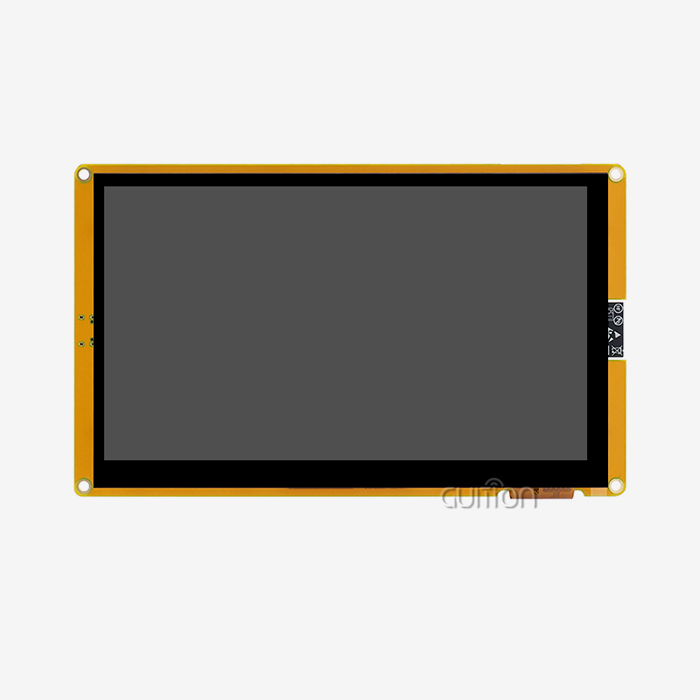
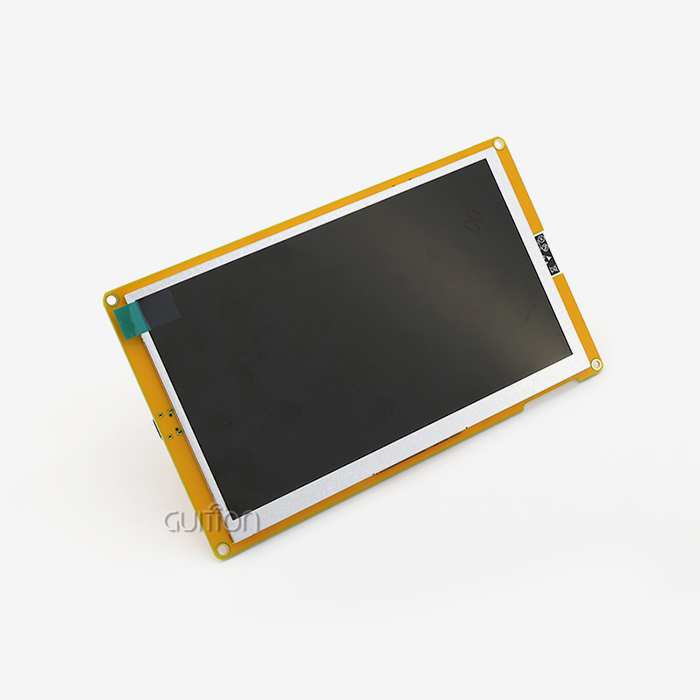
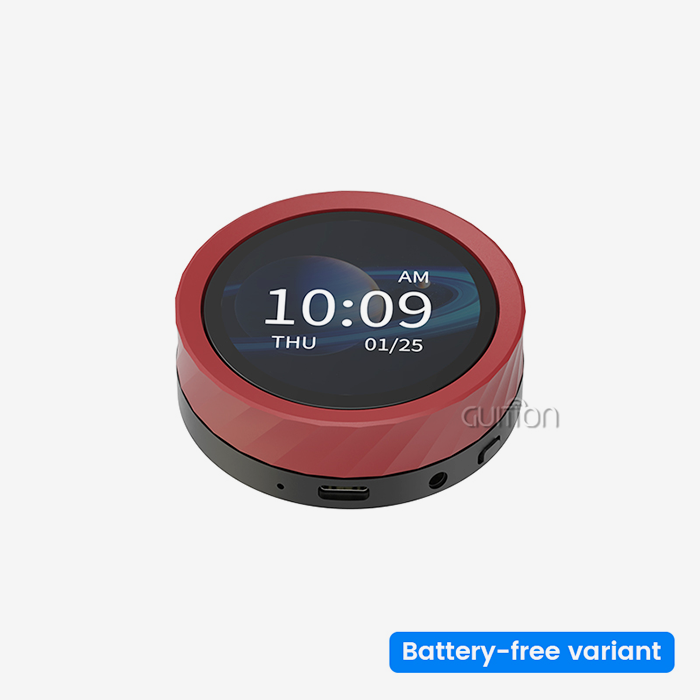
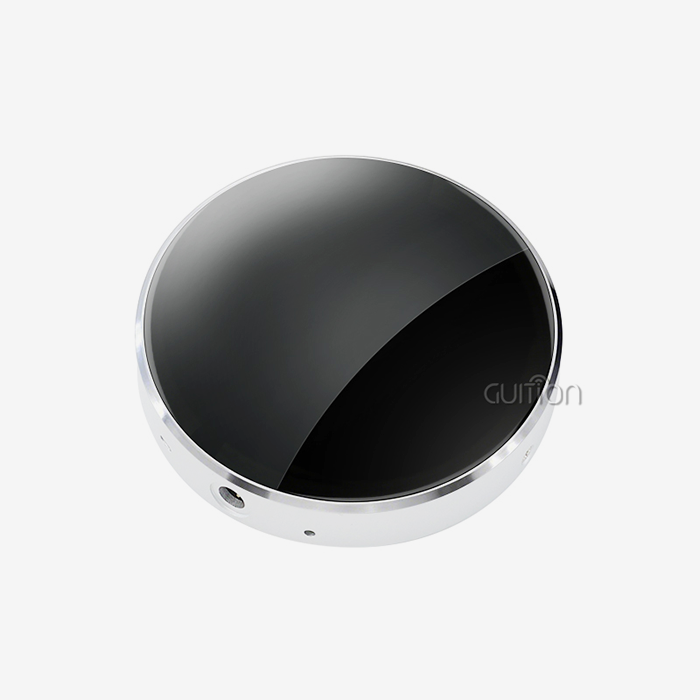
The Guition JC2424S012N_I module is a great example of a modern circular display. The GC9A01 driver IC with 240x240 resolution and 4-wire SPI is used in this 1.28-inch unit. To connect to an Arduino board, you need five signal wires and power. It is common for wiring to give MOSI to pin 11, SCK to pin 13, CS to pin 10, DC to pin 9, and RESET to pin 8. However, these assignments can change depending on the board that is being used. When connecting 3.3V screens to 5V Arduino boards like the Uno, level shifting is needed. Bidirectional logic converters keep sensitive display electronics from getting damaged and make sure that signals are always correct. Modern boards like the ESP32 work at 3.3V by default, which takes away this need for complexity while still providing WiFi and Bluetooth connectivity for IoT uses. Signal quality at high SPI speeds is affected by the length of the wire. Keeping links less than 15 cm away reduces the effects of capacitance and inductance that mess up clock edges. In factories, where motor drives and switching power supplies make electrical noise, shielded cables cut down on electromagnetic interference.
Software Development and Troubleshooting
The choice of library affects the speed of growth. TFT_eSPI has methods for the GC9A01 that are tuned for hardware, so it can achieve frame rates faster than basic Adafruit_GFX implementations. You have to edit configuration files to change the display resolution and pin assignments, but full examples make the initial setup go faster. Blank screens caused by wrong CS or DC pin settings are a common problem. Flickering usually means that the power supply isn't strong enough—displays that draw peak currents that are higher than the Arduino regulator's values need external 3.3V sources that can handle at least 500mA. If the colors are distorted, it means that the SPI speed is too fast for the monitor. Often, problems can be fixed by lowering the clock frequency from 80MHz to 40MHz.Real-life examples show how flexible circle displays can be. Rotary encoders and Round LCD Display Arduino modules are used in smart thermostat interfaces to offer simple temperature control. Industrial pressure gauges use radial arc indicators and numbers on top of them to make them look like analog dials with digital accuracy. Color-coded circular graphs on fitness trackers show heart rate zones, which make the most of the limited space available.
Final Recommendations and How to Make the Best Choice
When choosing strategic components, you have to weigh the needs of the project right now against the needs for long-term help and growth. A structured strategy for review helps buying teams make decisions with confidence.
Segmenting Requirements by Project Type
Modules that are easy to find and have a lot of community support are helpful for prototyping and low-volume production (less than 100 units). Even tho they cost more, development boards from well-known providers speed up proof-of-concept work. Higher unit costs during exploratory phases are worth it because they save time and lower technical risk. For medium-volume production (100 to 5,000 pieces), suppliers must offer technical help, volume pricing, and quality standards that are met. This group wants the ability to change things like wire lengths and connector types without needing full, unique designs. Manufacturers like Guition meet the needs of the mid-market by offering industrial reliability without the need for large MOQs.When making more than 5,000 units, it makes sense to develop a custom display that optimizes every parameter for cost and performance. But standard modules from well-known providers are often a better deal when you look at things like development costs, tooling investments, and time-to-market benefits.
Future-Proofing Your Display Selection
Long-term supportability can be predicted by how mature the software environment is. Displays that use widely used driver ICs like the GC9A01 can benefit from ongoing library improvements and a large community of resources for fixing problems. Smaller companies that make proprietary controllers run the risk of becoming obsolete and having little documentation. After recent shortages of parts, supply chain robustness has become more important. Business continuity insurance is provided by suppliers who keep inventory buffers and offer different part numbers with compatible footprints. Dual-sourcing methods, which include qualifying displays from more than one maker, keep production plans from getting thrown off by unplanned events. All of these things help industrial clients make risk-averse buying choices that combine technical performance, cost-effectiveness, and operational dependability throughout the lifetime of the product.
Conclusion
To select the best Round LCD Display Arduino module, it is necessary to weigh the technical requirements against the limitations of the project and the supplier's abilities. The technical base is made up of resolution, interface protocol, power consumption, and environmental ratings. Supplier factors like the quality of the documentation, how quickly expert help is provided, volume price, and the stability of the supply chain are all very important. The Guition JC2424S012N_I is a current circular monitor that has a resolution of 240x240, works well with SPI, and uses tried-and-true GC9A01 driver technology, making it a reliable spi display module option for various embedded applications. When making wearable tech, industrial tools, or smart home interfaces, matching the display's features to the needs of the application cuts down on development time and makes the product stand out more. Strategic relationships with suppliers turn screens from simple parts into tools that help with innovation and gain a competitive edge.
FAQ
What programming libraries work best with round LCD displays?
TFT_eSPI gives GC9A01-based circular displays the best performance possible by offering hardware acceleration and smart memory use. Adafruit_GFX has a lot of graphics primitives that make it more compatible with a wider range of display types. LVGL (Light and Versatile Graphics Library) lets you make more complex UI designs with animations and widgets, but it needs more memory and processing power.
How do I troubleshoot common display integration issues?
Most of the time, blank screens are caused by bad wiring. Check that the program setup matches the CS, DC, and RESET pin assignments. Color distortion means the SPI speed is too fast for the monitor; lower the clock frequency in the setup code. Flickering means that the power source isn't strong enough; use 3.3V controllers that are rated for at least 500mA. Looking at datasheets and testing SPI signals with an oscilloscope can help you figure out what's wrong with communication.
Where can I source reliable round LCD display Arduino modules for production?
Industrial providers like Guition focus on large orders and offer tech help and customization options. Well-known distributors like Mouser and Digi-Key carry modules from many different manufacturers, which makes it easy to compare prices. Engaging directly with Round LCD Display Arduino manufacturers ensures competitive pricing, supply guarantees, and technical support necessary for production success when scaling beyond prototypes.
Partner With Guition for Your Circular Display Integration Needs
Guition is an expert in USART-HMI display units and full interface solutions for screens ranging from 1.28 inches to 21.5 inches, used in a wide range of industrial and business settings. With its 240x240 resolution, dependable GC9A01 driver, and seamless 4-wire SPI integration, our JC2424S012N_I Round LCD Display Arduino module shows our dedication to technical greatness while delivering a reliable SPI Display Module solution for various embedded applications. In addition to hardware, our own Guition UI development software speeds up the process of making interfaces by using drag-and-drop controls, cross-platform debugging, and remote upgrade features. This cuts development times from months to weeks. Whether you're an embedded engineer making prototypes of smart devices or a product manager expanding IoT solutions, we can help you with technical paperwork, quick support, and a range of secondary development options. As a reputable provider of Round LCD Display Arduino, we know that your success depends on getting the right parts and working together in a way that builds partnerships. Get in touch with David at david@guition.com to talk about your project needs and find out how our display solutions and development tools can help you turn HMI design problems into competitive benefits.
References
1. Chen, L., & Wang, H. (2022). Advances in Circular Display Technologies for Embedded Systems. Journal of Display Technology, 18(4), 245-258.
2. Martinez, R. (2021). Arduino Interface Design: Hardware Integration Strategies for Industrial IoT. Embedded Systems Engineering Press.
3. Thompson, J., & Lee, S. (2023). SPI Protocol Optimization for High-Speed Display Communication. IEEE Transactions on Industrial Electronics, 70(2), 1823-1835.
4. Industrial Display Manufacturers Association. (2022). Quality Standards and Testing Protocols for TFT-LCD Modules. IDMA Technical Report 2022-08.
5. Patterson, M. (2021). Power Management Techniques for Battery-Operated Display Systems. Electronics Design Journal, 15(3), 112-127.
6. Zhang, Y., Kumar, A., & Roberts, D. (2023). Supply Chain Resilience in Electronic Component Procurement. International Journal of Production Research, 61(8), 2456-2473.
Learn about our latest products and discounts through SMS or email