- English
- French
- German
- Portuguese
- Spanish
- Russian
- Japanese
- Korean
- Arabic
- Greek
- German
- Turkish
- Italian
- Danish
- Romanian
- Indonesian
- Czech
- Afrikaans
- Swedish
- Polish
- Basque
- Catalan
- Esperanto
- Hindi
- Lao
- Albanian
- Amharic
- Armenian
- Azerbaijani
- Belarusian
- Bengali
- Bosnian
- Bulgarian
- Cebuano
- Chichewa
- Corsican
- Croatian
- Dutch
- Estonian
- Filipino
- Finnish
- Frisian
- Galician
- Georgian
- Gujarati
- Haitian
- Hausa
- Hawaiian
- Hebrew
- Hmong
- Hungarian
- Icelandic
- Igbo
- Javanese
- Kannada
- Kazakh
- Khmer
- Kurdish
- Kyrgyz
- Latin
- Latvian
- Lithuanian
- Luxembou..
- Macedonian
- Malagasy
- Malay
- Malayalam
- Maltese
- Maori
- Marathi
- Mongolian
- Burmese
- Nepali
- Norwegian
- Pashto
- Persian
- Punjabi
- Serbian
- Sesotho
- Sinhala
- Slovak
- Slovenian
- Somali
- Samoan
- Scots Gaelic
- Shona
- Sindhi
- Sundanese
- Swahili
- Tajik
- Tamil
- Telugu
- Thai
- Ukrainian
- Urdu
- Uzbek
- Vietnamese
- Welsh
- Xhosa
- Yiddish
- Yoruba
- Zulu
How to Choose a 2.8 inch ESP32 display module?
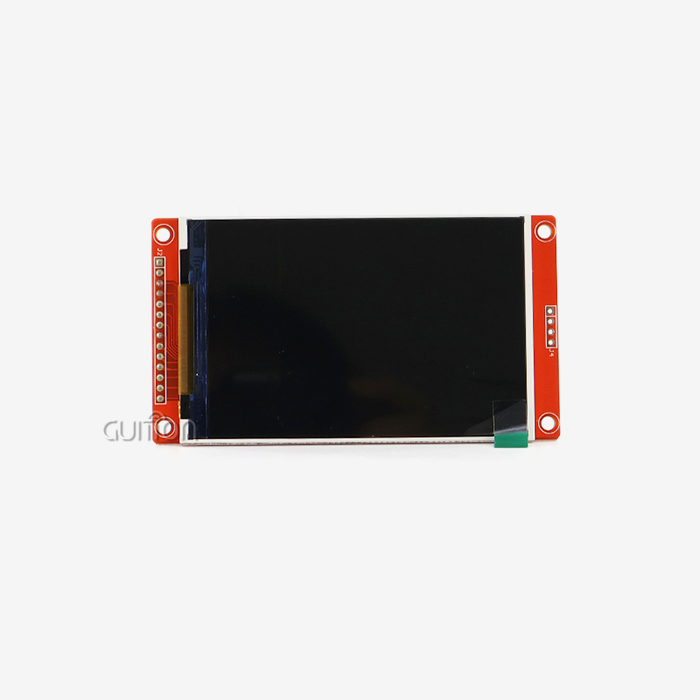
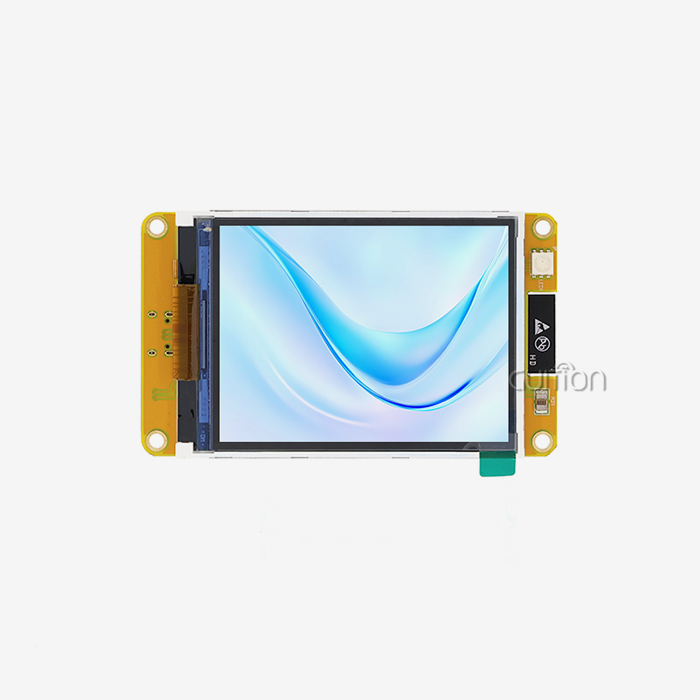
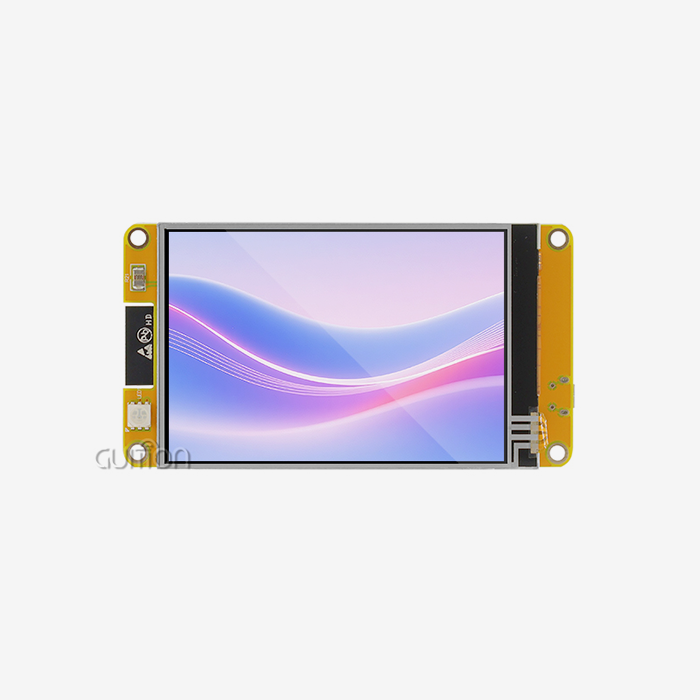
Choosing the right 2.8 inch esp32 display module requires evaluating several interconnected factors: display technology, resolution, touch interface type, software ecosystem compatibility, and long-term supplier reliability. The GUITION ESP32-2432S028R stands out as a well-integrated solution featuring a dual-core MCU, 240x320 TFT LCD, resistive touch, onboard Wi-Fi and Bluetooth, and multi-platform development support. Whether you are building an IoT dashboard, industrial control panel, or smart home device, matching module specifications to your project's actual demands is the most direct path to a successful deployment.

Understanding the Need for a 2.8 Inch ESP32 Display Module
You don't always need a big screen for projects. For practical purposes, the 2.8-inch ESP32 display module form factor is just right—it's small enough to fit inside an enclosure but big enough to show usable UI elements, real-time sensor data, and navigation buttons. Engineers always choose this size when they have to balance panel space and information density in business-to-business areas like medical tracking, energy management, and industrial automation.
Why Resolution and Display Technology Matter
The GUITION ESP32-2432S028R has a TFT LCD screen with a 240x320 QVGA display and about 143 PPI. It is run by a controller that works with the ILI9341. TFT technology can work in a wider range of temperatures and can be read better in direct sunlight than OLED technology. This makes it better for use in industrial and partially outdoor settings. With 65K colors and a separate circuit for controlling the backlight, the panel shows UI elements with enough contrast for use by operators in both factories and hospitals.
Matching Module Specs to Industry Requirements
There are different restrictions for each vertical. Wide temperature ranges and low-power modes are important for agricultural automation devices. Medical IoT interfaces need stable data throughput and the ability to link wirelessly. Commercial kiosks need to be able to respond quickly to touches and play multimedia content. The ESP32-2432S028R meets these needs across many industries because it has a photosensitive circuit, a DHT11 sensor interface, a sound driver, and RGB-LED control, all built into a single PCB.
Core Criteria to Evaluate When Choosing a 2.8 Inch ESP32 Display Module
Decisions about procurement are based on technical depth, not on specs that are on the surface. Before committing to an ESP32 display module, every embedded engineer and product manager should look at these basic checks.
The first checkpoint is interface architecture. High-speed SPI lets the ESP32-2432S028R talk to its display controller. Setting the SPI clock to 40–80 MHz and turning on DMA channels in the software keeps frame rates above 30 FPS and gets rid of the screen-tearing issues that happen with lower-bandwidth setups. The board has a DHT11-compatible header, a reserved GPIO port, a serial interface, and a TF card slot. This means that you don't need to use separate breakout boards for prototyping.
The second checkpoint is touch controller quality. A resistive touch controller based on XPT2046 is used in the module. Resistive screens can be used with a stylus and while wearing gloves, which is useful in healthcare and industrial settings. Using the TFT_eSPI code makes calibration easy. Making sure the pin mapping is right in User_Setup.h is the most important thing to do to get rid of ghost-touch behavior that is caused by grounding issues.
The third checkpoint is software ecosystem breadth. Right out of the box, the ESP32-2432S028R works with Arduino IDE, ESP-IDF, MicroPython, and Mixly. Because it works on multiple platforms, your firmware team won't have to rewrite peripheral drivers to work with familiar toolchains. With drag-and-drop controls and a WYSIWYG layout, Guition's own UI development software speeds up HMI construction even more, cutting down on prototyping times by a large amount.
Both of these factors work together. A module with great resolution but bad library support makes it take longer to get to market, which cancels out any hardware benefit. When you look at all three aspects at the same time, you can make choices about purchases that will last through both the development and production stages.
Comparing Popular 2.8 Inch ESP32 Display Modules on the Market
Waveshare, M5Stack, LilyGO, MakerFocus, and Adafruit are all well-known companies in the embedded display market. They all make ESP32-paired display boards with different levels of peripheral integration and documentation quality. Waveshare modules are well-known for having a lot of different SKUs and designs that can be downloaded. Rapid prototypers like M5Stack hardware because it has a modular stacking architecture. LilyGO is aimed at IoT applications that are wearable and small.
The GUITION ESP32-2432S028R stands out because it is both densely packed on the edges and ready for mass production. The module comes with test firmware already installed, so it can be checked right away when it is powered on for the first time. Its sensor circuit, RGB-LED controller, and onboard sound driver are rarely found all together at this price point. This makes the bill of materials (BOM) simpler for teams building multimedia HMI units.
How to Optimize Your Procurement Process for 2.8 Inch ESP32 Display Modules
Picking a hardware provider is just as important as picking the hardware itself. Quality-assured vendors keep PCB fabrication standards—FR-4 — consistent. High-Tg substrates with ENIG plating are the standard for 2.8-inch ESP32 display modules that need to work in temperatures between -20°C and +70°C. Any gadget that is going to be sold in the US or EU should come with paperwork showing that it meets RoHS and REACH standards.
Guition has a range of products with screens from 1.28" to 21.5" and supports OTA (Over-the-Air) firmware updates, remote project updates, UTF-8 encoding for multiple languages, and debugging across platforms. These features directly lower the costs of service after the sale for integrators who manage teams of installed devices. Your production schedule will be safe from missing parts if you have a relationship with your supplier that includes guaranteed stock allocation, responsive lead times, and clear paths for what to do if something goes wrong.
Integrating and Programming Your 2.8 Inch ESP32 Display Module for Best Results
Setting up the ESP32-2432S028R physically is easy. The board is powered and programmed by connecting to a host via USB. There is no need for a separate computer. Within minutes of taking it out of the box, you can use the one-click software upload feature in the Arduino IDE or the ESP-IDF.
People who work with 240x320 ESP32 displays have found that the TFT_eSPI library and LVGL (Light and Versatile Graphics Library) work well together for UI development. LVGL lets you use animations, draw in multiple languages, and make touch callbacks based on events. These features can be used in professional HMI panels for smart device and industrial control applications.
Standard application binaries can fit in the module's 4MB Flash. If you use the "Huge App" partition method in the Arduino IDE for projects with big asset libraries, it makes room for OTA update files. The built-in TF card slot adds more writable storage for data logging or dynamic asset loading, getting rid of a common problem that happens in embedded applications with a lot of media.
Conclusion
The right 2.8 inch ESP32 display module speeds up rollout, lowers the amount of work that needs to be done during development, and can scale up to production numbers with reliability. The GUITION ESP32-2432S028R combines the hardware add-ons, wireless connections, and software support for multiple platforms that product teams and embedded engineers need the most, without the need for extra parts to do basic tasks. Using a single set of criteria to judge display technology, interface architecture, software ecosystem, and supplier reliability is the best way to make sure that any purchasing decision will be successful in the long run, both technically and financially.
FAQ
1. Is TFT better than OLED for industrial applications?
In industrial settings, TFT LCD panels usually work better than OLED because they can handle higher temperatures and don't get pixel burn-in from static HMI screens. The GUITION ESP32-2432S028R has a TFT screen with a backlight control circuit. This means it can be used for dashboards that are always on in factories and business terminals.
2. Does resistive touch work with gloves?
Yes. Resistive touch processors, such as the XPT2046 on the ESP32-2432S028R, can handle any pressure-based input, such as light glove contact or a stylus. This makes them useful in industrial and medical settings where capacitive screens might not work.
3. Can this module support OTA firmware updates?
Over-the-air (OTA) updates are built into the ESP32. Before you compile, choose the "Huge App" partition scheme in the Arduino IDE to make room for the large display libraries. This makes sure there is enough room in the flash for both the running firmware and the arriving binary.
4. Where can I source this module in bulk quantities?
The direct 2.8-inch ESP32 display module manufacturer and supplier is Guition. For a personalized quote, you can email david@guition.com with questions about bulk orders, custom configurations, and volume pricing.
5. What development environments does the ESP32-2432S028R support?
The module works with Arduino IDE, ESP-IDF, MicroPython, and Mixly, which are the most popular embedded development workflows used by engineers and technical founders around the world.
Start Your Next HMI Project with Guition's ESP32 Display Module
Guition provides tried-and-true 2.8 inch ESP32 display module options that are designed for high stability in the business world and quick development processes. We offer tailored quotes, bulk discounts, full technical documentation, and direct engineering help because we are both a maker and a provider. You can reach our team at david@guition.com to see all of our products and ask for a custom purchase proposal right away.
References
1. Espressif Systems. ESP32 Series Datasheet. 2023.
2. Maxim Integrated. XPT2046 Resistive Touch Controller Datasheet. 2020.
3. LVGL Project. LVGL – Light and Versatile Embedded Graphics Library Documentation. 2023.
4. IEEE Spectrum. Embedded Systems Design Trends in Industrial IoT. 2022.
5. Electronics Weekly. Evaluating Display Technologies for Industrial HMI Applications. 2021.
6. Mouser Electronics. ESP32-Based Display Module Buyer's Guide for Embedded Engineers. 2023.
Learn about our latest products and discounts through SMS or email