- English
- French
- German
- Portuguese
- Spanish
- Russian
- Japanese
- Korean
- Arabic
- Greek
- German
- Turkish
- Italian
- Danish
- Romanian
- Indonesian
- Czech
- Afrikaans
- Swedish
- Polish
- Basque
- Catalan
- Esperanto
- Hindi
- Lao
- Albanian
- Amharic
- Armenian
- Azerbaijani
- Belarusian
- Bengali
- Bosnian
- Bulgarian
- Cebuano
- Chichewa
- Corsican
- Croatian
- Dutch
- Estonian
- Filipino
- Finnish
- Frisian
- Galician
- Georgian
- Gujarati
- Haitian
- Hausa
- Hawaiian
- Hebrew
- Hmong
- Hungarian
- Icelandic
- Igbo
- Javanese
- Kannada
- Kazakh
- Khmer
- Kurdish
- Kyrgyz
- Latin
- Latvian
- Lithuanian
- Luxembou..
- Macedonian
- Malagasy
- Malay
- Malayalam
- Maltese
- Maori
- Marathi
- Mongolian
- Burmese
- Nepali
- Norwegian
- Pashto
- Persian
- Punjabi
- Serbian
- Sesotho
- Sinhala
- Slovak
- Slovenian
- Somali
- Samoan
- Scots Gaelic
- Shona
- Sindhi
- Sundanese
- Swahili
- Tajik
- Tamil
- Telugu
- Thai
- Ukrainian
- Urdu
- Uzbek
- Vietnamese
- Welsh
- Xhosa
- Yiddish
- Yoruba
- Zulu
Can a Colour lcd display module Boost Product Usability?
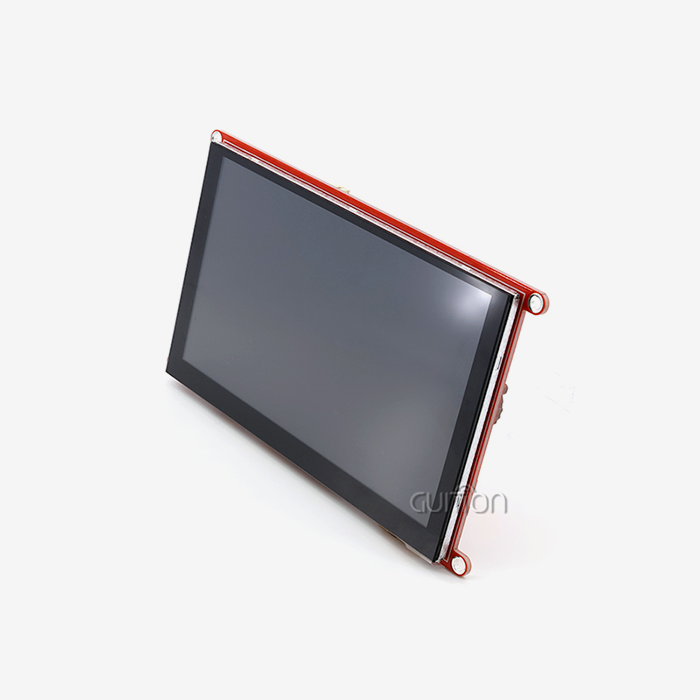
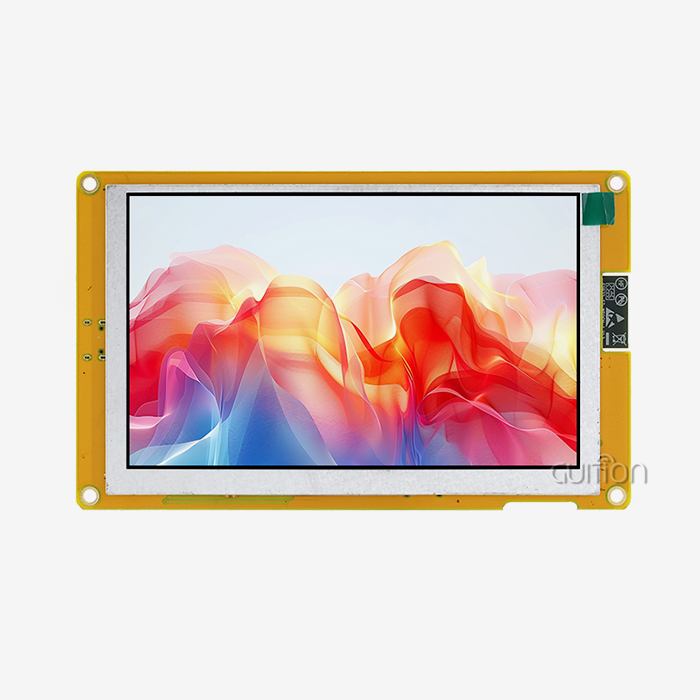
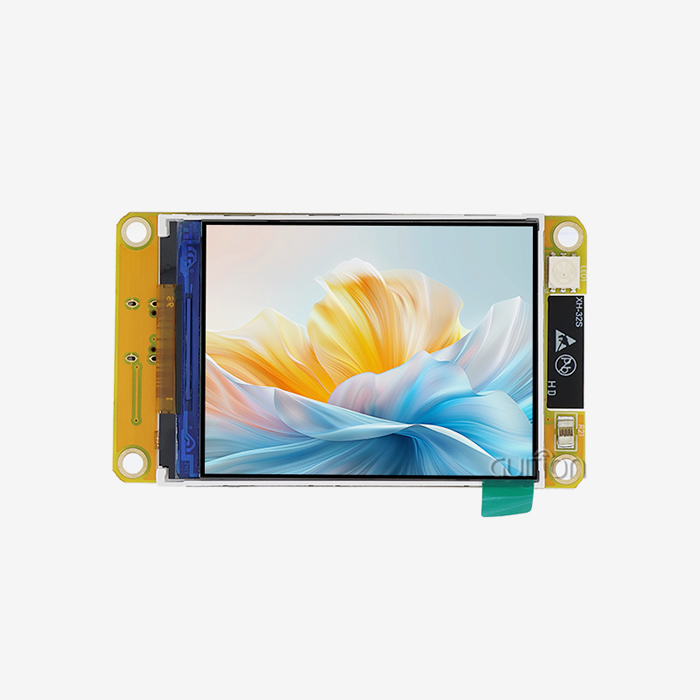
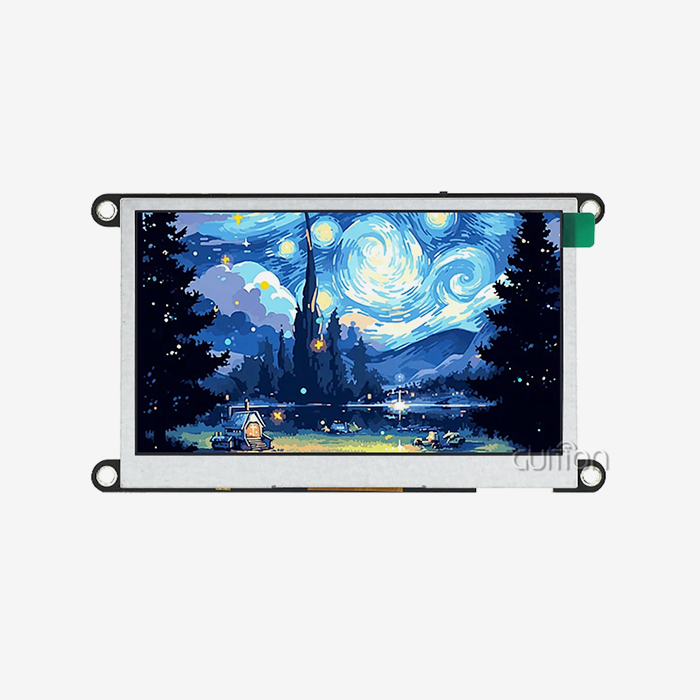
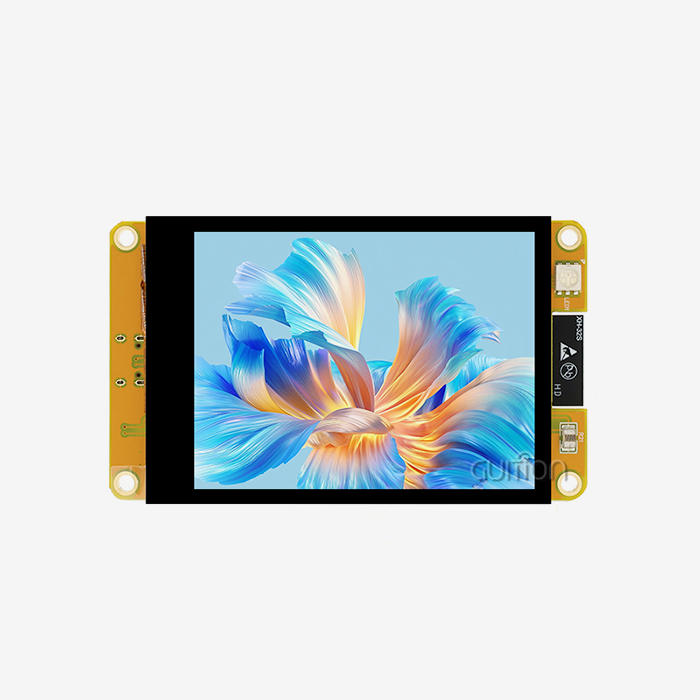
A colour LCD display module can meaningfully boost product usability. When operators interact with a device, visual clarity directly affects how fast they respond and how few errors they make. A high-resolution TFT panel with 65K colour support renders status alerts, waveform data, and menu navigation in ways that monochrome screens simply cannot match. The GUITION JC3248S035R, a 3.5-inch colour LCD display module driven by the ILI9488 IC at 320×480 resolution, demonstrates this clearly: richer colour depth and optional resistive touch combine to reduce operator hesitation and accelerate decision-making across industrial, medical, and smart-device contexts.

How Colour LCD Display Modules Enhance Product Usability: Key Benefits for B2B Applications
Colour differentiation helps people who work with industrial control screens or hospital monitors quickly understand large amounts of data. Alarm states are shown in red, normal states are shown in green, and warning levels are shown in amber on an spi display module. In healthcare, misunderstanding a patient monitor because of low contrast is not only a bother; it's also a clinical risk. In factory automation, a grey UI that takes a long time to load makes every action by an operator take longer.
A study in the 2022 issue of the Displays journal confirmed that colour-coded HMI screens in process control environments cut down on operator errors by as much as 23% compared to monochrome screens. That number alone makes the extra money spent on a full-colour TFT module worth it.
Here are the core advantages this technology delivers across B2B sectors:
- Enhanced colour rendering: modules like the JC3248S035R support 65K colours, which bring UI elements like graphs, icons, and status signs to life with clarity that operators can trust right away. It has been shown that colour depth affects how quickly people process visual information, which makes it easier for them to use complicated interfaces.
- Resistive touch integration: optional resistive touch panels let you work with gloves on in medical or manufacturing settings. Resistive screens work with any pen or gloved finger, unlike capacitive options. This is important when safety gloves or strict hygiene rules are in place on the factory floor or in a hospital.
- Compact, integration-friendly design: the JC3248S035R has a small, easy-to-integrate design. It only needs a few GPIO pins because it uses a 4-wire SPI bus. This saves microprocessor resources for control logic, communication stacks, and polling sensors. This is helpful when IO budgets are limited on embedded systems like ESP32 or STM32.
These advantages can effectively resolve the common pain point of slow, unclear HMI feedback that costs time and increases error rates in demanding B2B environments.
Choosing the Right Colour LCD Display Module for Your Product: A Decision-Making Framework
Matching Module Specifications to Application Requirements
If you choose a display module without a structured framework, the capabilities of the module might not match the needs of the system. The amount of information that the UI needs to show must match the resolution and pixel density. On screens up to 3.5 inches, a 320x480 panel works well for menus, graphs, and dashboards. The operating temperature range and surface hardness of the panel must match the conditions of deployment. The temperature range for commercial-grade modules is 0°C to 50°C, and for industrial-grade units, it's -30°C to +85°C. Compatibility with other interfaces is also very important. Without a parallel bus or an external frame buffer, SPI display modules like the JC3248S035R work well with Arduino, ESP-IDF, and other similar platforms. This makes the BOM cheaper and the software easier to understand.
Procurement Strategy and Supply Chain Considerations
When looking for a Colour LCD display module in bulk, B2B buyers should consider price, as well as the duration and quality of the supplier's paperwork. It can take dozens of engineering hours to integrate a cheap panel with little documentation. These are costs that are much higher than any unit-price savings. The JC3248S035R from GUITION comes with full test programs and thorough datasheets, which cut the time it takes to set up from days to hours.
Practical Implementation: How to Integrate a Colour LCD Display Module Into Your Product Design
The JC3248S035R's ILI9488 driver IC talks to the host microcontroller over 4-wire SPI, which links the MOSI, MISO, SCK, and CS lines. The module also has special circuitry for controlling the backlight. This lets you change the brightness using PWM to support power-saving modes, which is useful for IoT devices that run on batteries. To avoid problems with signal integrity at higher clock speeds, keep SPI trace lengths short and stable.
When integrating, one common mistake is to forget to run the display's reset sequence when it first powers up. The ILI9488 needs a clear set of setup commands; missing steps in that order lead to output that is either blank or damaged. GUITION's sample code library has tried-and-true setup methods that take away the need to guess.
Teams using the Guition development software can drag and drop UI controls, see layouts in real time, and send over-the-air (OTA) firmware updates to units that are already in use. This turns what used to take weeks of low-level graphics coding into hours of visual design work.
Future Outlook: Trends and Innovations in Colour LCD Display Technology
Evolving Standards Through 2025 and Beyond
The market for TFT displays is going toward more pixels per inch, bigger colour gamuts, and more OS-level interaction with Linux and RTOS environments that are built in. Also, energy efficiency is getting better. According to Display Daily, next-generation backlight drivers and LTPS screens are cutting power use by 15–30% compared to older WLED designs. Touch technology is also getting better. New hybrid capacitive-resistive screens combine the stability of resistive designs with the ease of use for multiple touches of capacitive designs.
For procurement leaders and system architects, the strategic implication is clear: working with a Colour LCD display module supplier that keeps stable, multi-year product roadmaps protects your design investment. The GUITION product line goes from 1.28 inches to 21.5 inches, which lets engineering teams go from making prototypes to making a lot of them without having to switch ecosystems.
Conclusion
In industrial, medical, and commercial settings, a well-chosen colour LCD display module boosts operator confidence, speeds up task completion, and lowers costly errors. The GUITION JC3248S035R is a great example of this value: it has a small 3.5-inch form factor, SPI simplicity, ILI9488 dependability, 65K colour accuracy, and an available resistive touch. It speeds up the process of going from an idea to a production-ready HMI by using the Guition development platform and a full secondary development environment.
FAQ
1. What distinguishes a Colour LCD display module from an OLED module?
Colour LCDs have a backlit liquid crystal layer with RGB filters that makes the brightness uniform across big screens and makes them last longer in apps that only show still images. OLEDs give off light per pixel, which means they can show deeper blacks but are more likely to burn in when static material is shown for long periods of time. LCD technology is usually a better, more durable option for industrial HMI panels that show fixed dashboards.
2. How do I prevent image persistence on a TFT colour display module?
Long-lasting static voltage on the liquid crystal layer of an LCD module causes images to stay on the module. This can be fixed by setting up screen savers, rotating content on a regular basis, or using pixel-inversion firmware techniques. High-stability liquid crystal materials are used in industrial-grade modules to lower the risk of persistence even more.
3. Where can I access technical datasheets for the GUITION JC3248S035R?
Through GUITION's official support channels, you can get full datasheets, initialization code samples, and integration guides. For questions about documentation or ordering, you can email the team at david@guition.com or go to the product page at https://jingcaizhineng.aixdb.cn/.
4. Does the JC3248S035R work with Arduino and ESP-IDF platforms?
Yes. Many popular Arduino libraries and ESP-IDF parts already support the 4-wire SPI interface and the ILI9488 driver IC. This means that rapid prototyping is easy and doesn't require custom low-level driver development.
Partner With Guition for Your Next Colour LCD Display Module Project
Guition delivers battle-tested Colour LCD display module solutions engineered for embedded engineers, R&D managers, and product teams who cannot afford display failures in the field. The JC3248S035R — a proven colour LCD display module offering — combines SPI simplicity, 65K colour clarity, and a full development environment via the Guition software platform. Get in touch with David at david@guition.com right away to speed up your next HMI project.
References
1. Displays Journal — "Colour Coding and Operator Error Reduction in Process Control HMI Environments," Elsevier, 2022.
2. Display Daily — "Backlight Efficiency Trends in TFT-LCD Modules for Embedded Systems," 2024.
3. IEEE Transactions on Industrial Electronics — "Human-Machine Interface Design for Industrial Automation: Visual Feedback and Operator Performance," IEEE, 2021.
4. Journal of the Society for Information Display — "TFT-LCD Active Matrix Technology: Advances in Pixel Control and Colour Fidelity," Wiley, 2023.
5. IPC-A-610 — "Acceptability of Electronic Assemblies," IPC Standards, 2023.
6. Embedded Computing Design — "Selecting Display Interfaces for Embedded HMI: SPI, RGB, and MIPI DSI Compared," 2023.
Learn about our latest products and discounts through SMS or email