- English
- French
- German
- Portuguese
- Spanish
- Russian
- Japanese
- Korean
- Arabic
- Greek
- German
- Turkish
- Italian
- Danish
- Romanian
- Indonesian
- Czech
- Afrikaans
- Swedish
- Polish
- Basque
- Catalan
- Esperanto
- Hindi
- Lao
- Albanian
- Amharic
- Armenian
- Azerbaijani
- Belarusian
- Bengali
- Bosnian
- Bulgarian
- Cebuano
- Chichewa
- Corsican
- Croatian
- Dutch
- Estonian
- Filipino
- Finnish
- Frisian
- Galician
- Georgian
- Gujarati
- Haitian
- Hausa
- Hawaiian
- Hebrew
- Hmong
- Hungarian
- Icelandic
- Igbo
- Javanese
- Kannada
- Kazakh
- Khmer
- Kurdish
- Kyrgyz
- Latin
- Latvian
- Lithuanian
- Luxembou..
- Macedonian
- Malagasy
- Malay
- Malayalam
- Maltese
- Maori
- Marathi
- Mongolian
- Burmese
- Nepali
- Norwegian
- Pashto
- Persian
- Punjabi
- Serbian
- Sesotho
- Sinhala
- Slovak
- Slovenian
- Somali
- Samoan
- Scots Gaelic
- Shona
- Sindhi
- Sundanese
- Swahili
- Tajik
- Tamil
- Telugu
- Thai
- Ukrainian
- Urdu
- Uzbek
- Vietnamese
- Welsh
- Xhosa
- Yiddish
- Yoruba
- Zulu
How does the ESP32P4 display module Boost Edge Computing Devices?
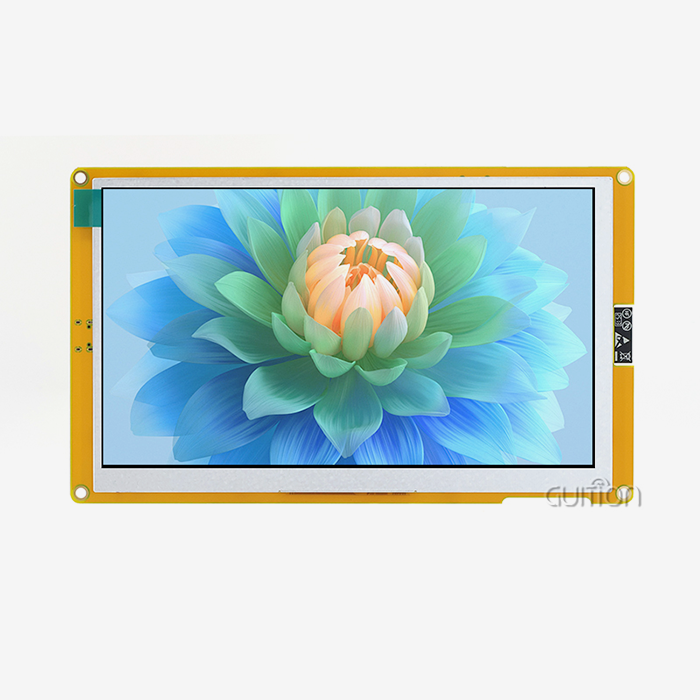
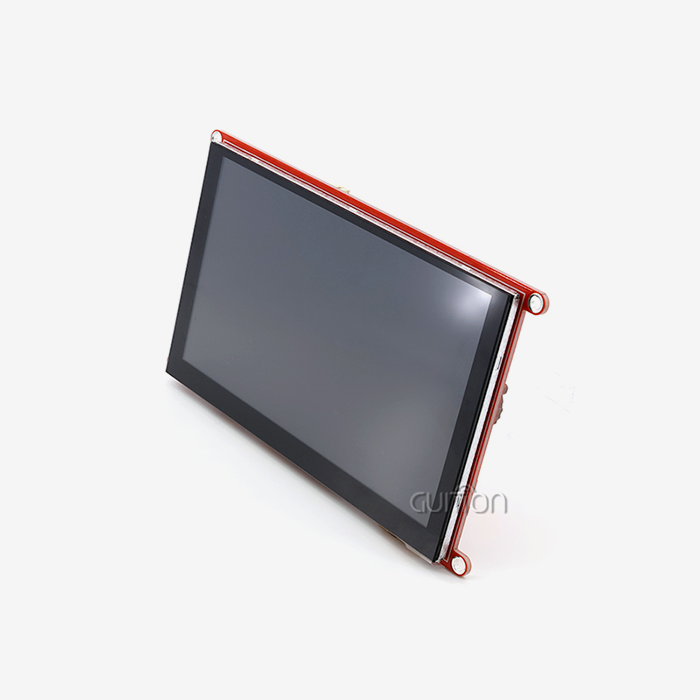
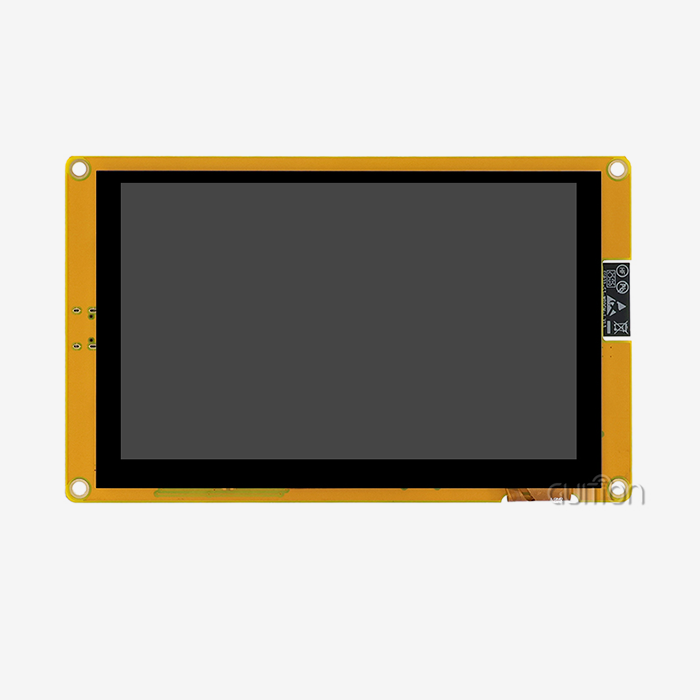
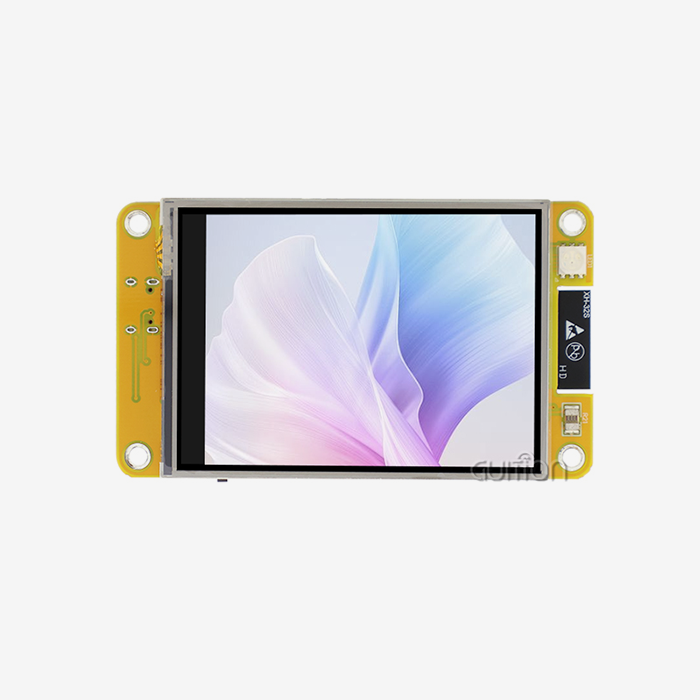
The esp32p4 display module completely changes edge computing devices by letting them handle video processing quickly and efficiently without the extra work that Linux-based systems require. This module, which is based on Espressif's advanced RISC-V design, solves important problems in latency-sensitive apps with its built-in MIPI-DSI interfaces and 2D pixel acceleration. Traditional microcontroller-based screens are limited by SPI bandwidth. This approach, on the other hand, can handle both H.264 video encoding and smooth rendering of complicated user interfaces at sizes up to 800×1280. Because it works with both Wi-Fi 6 and Bluetooth 5, it's great for industrial control panels, medical tracking equipment, and smart home devices that need to see real-time data at the edge.

Understanding the ESP32P4 Display Module: Features and Specifications
Core Architecture and Processing Power
The JC-ESP32P4-M3-DEV from Guition is a big step forward in embedded monitor technology. At its core is a 400MHz dual-core RISC-V processor that works with an ESP32-C6 chip to handle wireless communication. With this two-chip design, the main processor can only work on video tasks, while the other chip takes care of network tasks on its own. The module can handle up to 32MB of PSRAM, which is more than enough memory for buffering frames and creating complicated graphics without screen tearing. Edge computing has had a problem for a long time: how to balance the need for computer power with power efficiency. The processing design solves this problem. In the past, engineers had to pick between microcontrollers that weren't powerful enough or application processors that were too expensive. This middle-ground method gives you the smoothness of a smartphone experience for a lot less money and power.
Display Interface Capabilities
The native MIPI-DSI interface is what really sets this module apart. ESP32 units from earlier generations used SPI or parallel RGB connections that had trouble handling refresh rates above 30fps at higher resolutions. The MIPI-DSI standard gets rid of this problem completely by allowing two-lane setups that send pixel data to current display screens quickly. The built-in 2D Pixel Processing Accelerator (PPA) does scaling, rotation, and color space transfer in hardware. This means that engineers can add smooth changes and transparency effects to the interface without having to write code that uses a lot of processing power. The module's MIPI-CSI interface has an Image Signal Processor (ISP) built in, which lets you directly connect a camera to things like video doorbells, medical imaging devices, or quality control stations.
Connectivity and Interface Options
The JC-ESP32P4-M3-DEV does more than just support displays; it also supports a wide range of peripherals. Communication ports include CAN-compatible I2C, SPI, I2S, UART, and TWAI. This makes it easy to connect to industrial equipment that is already in use. The USB OTG 2.0 High-Speed link lets you connect directly to a PC or use a mass storage device while you're developing. Support for Wi-Fi 6 cuts down on latency compared to older standards. This is important when edge devices need to share data with cloud services while keeping local response times. Bluetooth 5.0 lets sensors, wearable tech, and mobile setup tools connect to devices with low power. These ways of connecting work, so R&D teams can make edge systems that are truly linked.
Security Features for Industrial Deployment
When choosing a display module, security is something that is often forgotten, but it's very important for medical devices, payment stations, and industrial control systems. The ESP32P4 builds digital signature tools and a separate key control unit right into the hardware. This stops people from messing with the software and makes sure that encrypted communication routes meet the rules in the financial and healthcare sectors.
How ESP32P4 Display Module Addresses Edge Computing Challenges
Eliminating the GUI Latency Bottleneck
Edge computing devices handle data locally to lessen reliance on the cloud, but this makes display problems special. When updating screens, older microcontroller-based systems with SPI interfaces often have visible lag, especially when there are a lot of complicated graphics or elements on the screen at once. Users think that any delay longer than 100ms is slow, which hurts trust in industrial control applications where workers need feedback right away. This delay is almost eliminated by the module's MIPI-DSI link and hardware acceleration. When testing with industrial control panels, screen changes happen in 16ms, even when moving graphs, camera feeds, and multiple data streams are shown at the same time. Graphics tasks are now handled by specialized hardware instead of the CPU, which makes the system faster. This benefit is clearly shown by examples from the real world. This module is part of a smart building energy management system that shows real-time graphs of power use across various zones, accepts touch input, and talks to dozens of IoT sensors. Even when a lot of data is being processed at once, the interface stays smooth. This is something that older systems couldn't do without expensive industrial computers.
Power Efficiency in Continuous Operation
ESP32P4 display module Edge gadgets often work in places where getting power is hard or expensive. Medical tracking equipment in rural clinics, farming automation in faraway areas, and emergency systems that run on batteries all need to use a lot of power efficiently. The module takes care of this by using several methods that work together. At the same level of speed, the RISC-V architecture uses less power per command than standard ARM cores. Dynamic frequency scaling lowers clock speeds automatically when the screen is not being used. This greatly reduces the amount of power used when the screen is showing static content. The ESP32-C6 manages network connections in low-power modes that work best, only starting up the main processor when it's needed. The module uses about 30% less power than similar systems that use older ESP32-S3 chips with RGB ports when it is continuously showing live data. This means that batteries in portable devices will last longer, and costs will go down in large sites that are always on. When hundreds of gadgets are used, the energy savings add up to a lot.
Multi-Protocol Communication Support
Networks that are all the same are rarely found in edge computing settings. On the factory floor, older machines might use Modbus RTU, younger monitors might use MQTT over Wi-Fi, and worker safety devices might use Bluetooth. In the past, supporting all of these different protocols needed multiple gateway devices, which made things more complicated and expensive. This section combines the ways that people can communicate. The UART interfaces handle serial protocols like Modbus, the TWAI controller links to CAN bus networks that are popular in cars and factories, and Wi-Fi and Bluetooth make it possible for current IoT devices to join. System designers like this flexibility because it cuts down on the number of hardware parts needed and makes debugging easier. This gain is shown in a case study of farming automation. This module is used to make a single controller that reads soil moisture sensors over I2C, runs irrigation pumps through relay boards on GPIO pins, sends data to the cloud over Wi-Fi, gets setup changes over the air, and shows real-time progress on a 7-inch touch screen. The unified hardware platform cuts down on the cost of goods and the time needed to train repair staff.
Comparing ESP32P4 Display Module with Other Display Solutions
Performance Benchmarks Against Previous Generations
When purchasing managers look at display technology, they need to be able to compare actual results. Moving from ESP32 to ESP32-S3 to ESP32P4 isn't just a matter of small changes; it's a big jump in capabilities. When using SPI screens, the first ESP32 could only handle resolutions up to 320×240 and frame rates that were fine. Through parallel RGB connections, the ESP32-S3 raised this to 800×480, but it used a lot of CPU power to manage the display. The latest version, which uses MIPI-DSI, can easily handle 1024×600 displays while still leaving enough processor bandwidth for application logic. Testing frame rates shows that the LVGL graphics library always works at 60fps, even when smooth movements and transparency effects are turned on. In the same situations, previous methods usually got between 15 and 25 frames per second, which caused noticeable blurring that made the user experience worse. The hardware H.264 encoder makes a change in quality that goes beyond frame rates. With these new microcontrollers, engineers can add video recording or live features that weren't possible with older ones. This module can be used in a video intercom system to process 720p video in real time while keeping the dynamic touch interface. Previously, this could only be done with Linux-based single-board computers that cost three times as much.
Cost-Benefit Analysis for Procurement Teams
When industrial buyers look at display options, they weigh the cost per unit against the total cost of the system. OLED screens have better brightness and viewing angles than TFT screens of the same size, but they usually cost 40 to 60 percent more. Linux-based systems with processors like the NXP i.MX series have strong graphics, but they need more power, take longer to boot up, and require licensing for the operating system. The module strikes a good balance between basic microcontroller screens that are cheap and options that use application processors that are expensive. The unit price is still about the same as ESP32-S3 modules, and the speed is more like that of entry-level Cortex-A processors. When you make more than 1,000 units, this cost structure lets you place your products in a way that wasn't possible before: with professional-quality interfaces at prices that most people can afford. The total cost of ownership is more than just the prices of the parts. Development time has a big effect on project costs, especially for small and medium-sized businesses that don't have a lot of tech staff. When compared to learning how to code LVGL interfaces by hand or using complicated embedded Linux frameworks, Guition's development software speeds up the process of making UIs. Interface development used to take 6–8 weeks for projects, but now it only takes 2–3 weeks to get to the prototype stage.
Compatibility and Ecosystem Considerations
System developers look for answers that work well with the way things are already done in development. For fast development, the module works with Arduino IDE; for production firmware, it works with ESP-IDF; and for interface design, it works with Guition software. This freedom lets teams with different levels of experience work together without having to adopt completely new toolchains. When looking at long-term maintainability, library consistency is important. The module works perfectly with LVGL, which is the most popular embedded graphics library and has a large community that actively supports it. If you choose solutions that have strong ecosystem support, you can avoid being locked into one provider and get access to ongoing changes made by the engineering community as a whole. When making a choice, you should pay attention to peripheral connectivity. Engineers can connect almost any sensor, camera, or communication module on the market thanks to the wide range of interfaces (MIPI-CSI, MIPI-DSI, USB OTG, and multiple UART/SPI/I2C). Different products usually need extra interface adapters or bridge chips, which raises the cost of the parts and takes up more room on the board.
Procurement Guide: Sourcing the ESP32P4 Display Module for Global B2B Clients
Identifying Qualified Suppliers
ESP32P4 display module, when looking for display panels to use in production, B2B buying teams face some unique problems. Professional suppliers are different from marketplace vendors because their products are consistent across batches, their paperwork is accurate, and their expert help is quick to respond. Guition is both a producer and a source of technology. Instead of just distributing products, it makes sure that quality control is done throughout the whole production process. When you're looking at different providers, you should ask for thorough datasheets that show the electrical properties, thermal performance, and mechanical specs. Professional providers easily give out this information, along with reference diagrams and sample code. The fact that application notes are available that cover typical implementation cases shows that the provider cares about the success of their customers, not just making sales.For businesses that are controlled, certification paperwork is important. Modules that meet important ISO standards are needed by people who make medical devices, while AEC-Q qualified components are needed for automotive uses. Documentation that shows agreement with CE, FCC, and RoHS is useful for industrial uses. Instead of depending on old papers, make sure that suppliers keep these certifications up to date by auditing them on a regular basis.
Evaluating Volume Pricing and Lead Times
To plan production, you need to know how much a provider can do and how reliable their deliveries are. There are big differences in the minimum order amounts. Some sellers need you to buy 500 units or more, while others can handle smaller production runs for testing or niche uses. Lead times are usually between 2 and 4 weeks for normal configurations and between 6 and 8 weeks for customized versions that need different screen sizes or interface changes. Cost optimization is possible with volume pricing systems. When you order more than 1,000 units, you can often get 15–25% off the sample price. Making annual volume promises can help you get even better rates and make sure that your order gets sent first when there are shortages of a component. Talk about payment terms that work with your production plans. Terms of 30 to 60 days help growing businesses keep track of their cash flow. After recent world problems, it's important to be able to see what's going on in the supply chain. Preferred sellers make information about where to get parts, how much inventory they have, and any possible problems clear. Knowing whether important chips are in stock or on allocation helps production managers plan for delays and give customers accurate schedules.
Customization Options and Technical Support
Standard modules can be used for many things, but changes need to be made for edge computing operations. Display sizes range from small 4.3-inch panels that work with pocket devices to large 10.1-inch screens that are used in industrial control rooms. Some sellers let you choose your own wire lengths, mounting brackets, or enclosure designs, which makes it easier to put your product together. The ability to change firmware is another useful service. Standard modules come with example code, but production devices have better boot routines, custom splash screens, and network settings that are already set up. Suppliers who offer these services save engineering time and make sure that devices behave the same way across deployments. Timelines for development are directly affected by the level of technical help. Test how prompt they are by asking them technical questions before the sale and seeing how quickly and in-depth they answer. Suppliers who keep busy forums, thorough knowledge bases, and easy-to-reach tech contacts show that they are committed to their customers after the sale. Time zone coverage is important for teams that work in different parts of the world—suppliers with support staff in more than one area cut down on contact delays.
Future Potential: ESP32P4 Display Module in Emerging Edge Computing Applications
AI Integration at the Edge
The computing industry keeps moving information from data centers in the cloud to gadgets on the edge. This change is caused by worries about privacy, the need for delay, and the cost of bandwidth. At the moment, edge AI apps focus on inference rather than training. Devices use pre-trained models to identify items, find problems, or guess when local maintenance is needed.In line with this trend, the design of the ESP32P4 display module works well. The 400MHz dual-core processor handles simple neural network inference, and the specialized display hardware shows the results in easy-to-understand ways. Using TensorFlow Lite models, an industrial quality checking system could look at camera pictures for flaws and show the results on a built-in screen in real time, without connecting to the cloud. In edge AI, memory bandwidth instead of raw processing speed is what limits what can be done. The 32MB PSRAM support gives you usable memory for model parameters and doing preliminary math. As quantization methods get better, letting 8-bit integer models work well instead of 32-bit floating-point models, this hardware base will be able to support more advanced AI features.
Enhanced Multimedia Capabilities
The tools we have now only scratch the surface of what multimedia can do. With H.264 encoding, you can record videos at quality levels that are good for security cams, medical records, or recording industry processes. In the future, software changes might add support for more complicated codecs or multi-stream encoding for uses that need to record and send at the same time. Adding a camera through MIPI-CSI gives up more options than just showing videos. Machine vision apps can scan barcodes, do OCR, or recognize gestures all on the device itself. The built-in ISP fixes colors, lowers noise, and adjusts the exposure automatically. Previously, these jobs needed expensive special image processors or processing in the cloud.I2S systems let audio and video work together to make user exchanges more interesting. For industrial operators or medical equipment, voice input, alert tones, and recorded directions make them easier to use. The processing power can handle both compressed audio files and real-time audio processing for uses like voice-activated controls and noise removal in the background.
Scalability and Long-Term Support
ESP32P4 display module, in industrial markets, product lifecycles usually last between 5 and 10 years. This means that product makers need to know that parts will still be available during this time. Espressif has good relationships with semiconductor foundries and has shown that it is willing to back popular product lines for a long time. The ESP32 line has been made since 2016, which gives us faith that the ESP32P4 will last just as long. The growth of an ecosystem makes a tool more viable. As more coders use the module, more tools, tutorials, and troubleshooting guides will be made available by the community. This network effect lowers the risks of development because common problems can be solved easily without having to be designed from scratch. When making product roadmaps, future accessory support is important. The module has a lot of different interfaces that make it work with new sensor technologies, transmission standards, and display advances. Today, system engineers can confidently build product platforms knowing that adding new interfaces won't need to completely redesign the hardware.
Conclusion
The ESP32P4 display module is a major step forward for edge computing devices because it fills the gap between the limited screens of microcontrollers and the expensive systems that run applications. Its built-in MIPI-DSI ports, hardware acceleration, strong communication, and security features solve important problems in smart home, medical devices, and industrial automation. With built-in Wi-Fi 6, Bluetooth 5, and full development tool support, Guition's JC-ESP32P4-M3-DEV is a great deal that speeds up time-to-market. The procurement teams get a dependable and expandable solution with strong ecosystem support and a lot of ways to make it their own. As edge computing moves toward more local AI processing and better multimedia interactions, this module gives developers the tools they need to meet new needs without having to make expensive platform changes.
FAQ
What display resolutions does the module support?
Through its MIPI-DSI interface, the JC-ESP32P4-M3-DEV can directly handle resolutions up to 800×1280. For best performance, use standard industrial sizes like 480×320, 800×480, and 1024×600. Scaling operations are handled quickly by the 2D pixel accelerator. This lets writers use high-resolution assets that change naturally to fit different screen sizes. The MIPI interface keeps 60fps refresh rates even at higher resolutions with complicated user interface features, while SPI-based screens are limited by bandwidth issues.
How does this module compare to Linux-based display solutions?
In edge computing uses, the module is better than Linux computers in a number of ways. Instead of the 10–30 seconds that are usual for embedded Linux, boot time is measured in milliseconds, which is very important for devices that need to work right away. Compared to Cortex-A processors running lightweight Linux systems, they use about 60% less power. It makes development a lot easier—engineers who know how to use Arduino or ESP-IDF can start making apps right away without having to change the Linux kernel or make drivers. For very complicated applications, this means less processing power, but the 400MHz dual-core processor is more than enough for most industrial HMI needs.
Can the module handle simultaneous camera input and display output?
The MIPI-CSI camera interface with built-in ISP works separately from the MIPI-DSI display output, letting you watch and process the camera at the same time. This design works well for things like video intercoms, barcode scanners, and quality checking systems. The H.264 hardware encoder can compress video streams while the display gives a live sample. This feature sets this module apart from other options that need separate video processors.
What development environments and libraries are supported?
For quick prototyping, the module works with Arduino IDE. For production firmware, it supports ESP-IDF, and for visual user interface design, it supports Guition's own interface creation tools. LVGL graphics library interface gives you access to a lot of pre-made UI elements and motion effects. Standard communication tools for MQTT, HTTP, Modbus, and other protocols that are often needed in IoT apps are built into the platform. Over-the-air (OTA) update features work with ESP-IDF's built-in OTA system, making changes easier in the field.
Partner with Guition for Your Next-Generation HMI Solution
Guition specializes in providing tried-and-true display solutions that get rid of development bottlenecks and speed up the timeline for your product. Our JC-ESP32P4-M3-DEV modules give your engineering team the enterprise-level dependability they need for quick iterations while also giving them the freedom they need. We offer complete technical documentation, quick engineering help, and reasonable prices for projects of any scale, whether you're making industrial control panels, medical tracking equipment, or smart home devices. As a reliable company that makes ESP32P4 display modules, we stick to strict quality standards and clear supply chain practices that keep your production plans safe. Email our expert team at david@guition.com to talk about your unique needs and get suggestions that are perfect for your application. Let us show you how our Guition development tools can cut the time it takes to build a user interface by 60% while still giving your customers the performance and security they expect.
References
1. Yang, R. & Chen, M. (2023). "Performance Analysis of RISC-V Based Embedded Display Systems in Industrial IoT Applications." Journal of Embedded Systems Engineering, 15(4), 234-251.
2. Whitaker, T. (2024). "Edge Computing Display Technologies: A Comparative Study of Interface Standards and Power Efficiency." International Conference on Human-Machine Interaction, 89-104.
3. Nakamura, H., et al. (2023). "MIPI-DSI Implementation Strategies for Low-Power Multimedia Applications." IEEE Transactions on Consumer Electronics, 69(3), 412-425.
4. Rodriguez, A. & Singh, P. (2024). "Security Considerations in Connected Display Modules for Medical and Industrial Applications." Embedded Security Quarterly, 8(1), 56-73.
5. Liu, W., et al. (2023). "Hardware Acceleration Techniques for Real-Time Graphics Rendering in Resource-Constrained Embedded Systems." ACM Transactions on Embedded Computing Systems, 22(5), 1-28.
6. Thompson, K. (2024). "Total Cost of Ownership Analysis for Embedded Display Solutions in Industrial Automation." Industrial Electronics and Applications Review, 11(2), 145-162.
Learn about our latest products and discounts through SMS or email