- English
- French
- German
- Portuguese
- Spanish
- Russian
- Japanese
- Korean
- Arabic
- Greek
- German
- Turkish
- Italian
- Danish
- Romanian
- Indonesian
- Czech
- Afrikaans
- Swedish
- Polish
- Basque
- Catalan
- Esperanto
- Hindi
- Lao
- Albanian
- Amharic
- Armenian
- Azerbaijani
- Belarusian
- Bengali
- Bosnian
- Bulgarian
- Cebuano
- Chichewa
- Corsican
- Croatian
- Dutch
- Estonian
- Filipino
- Finnish
- Frisian
- Galician
- Georgian
- Gujarati
- Haitian
- Hausa
- Hawaiian
- Hebrew
- Hmong
- Hungarian
- Icelandic
- Igbo
- Javanese
- Kannada
- Kazakh
- Khmer
- Kurdish
- Kyrgyz
- Latin
- Latvian
- Lithuanian
- Luxembou..
- Macedonian
- Malagasy
- Malay
- Malayalam
- Maltese
- Maori
- Marathi
- Mongolian
- Burmese
- Nepali
- Norwegian
- Pashto
- Persian
- Punjabi
- Serbian
- Sesotho
- Sinhala
- Slovak
- Slovenian
- Somali
- Samoan
- Scots Gaelic
- Shona
- Sindhi
- Sundanese
- Swahili
- Tajik
- Tamil
- Telugu
- Thai
- Ukrainian
- Urdu
- Uzbek
- Vietnamese
- Welsh
- Xhosa
- Yiddish
- Yoruba
- Zulu
How Does Iot lcd Improve Human-Machine Interaction?
By building advanced connectivity right into display panels, Iot lcd technology changes how people and machines communicate. This enables real-time data visualization and seamless interaction between users and smart devices. An IoT LCD, in contrast to regular screens, combines high-resolution panels with wireless protocols like Wi-Fi and Bluetooth to create smart interfaces that respond instantly to sensor and user inputs. This merging makes systems simpler, speeds up development, and gives control surfaces that are easy to use in smart home, medical tracking, and industrial automation. Iot lcd solutions enable engineers to create responsive, connected devices that improve operational effectiveness and customer happiness by combining display performance with network capabilities.


Understanding Iot lcd and Its Role in Human-Machine Interaction
What Defines Modern Iot lcd Technology
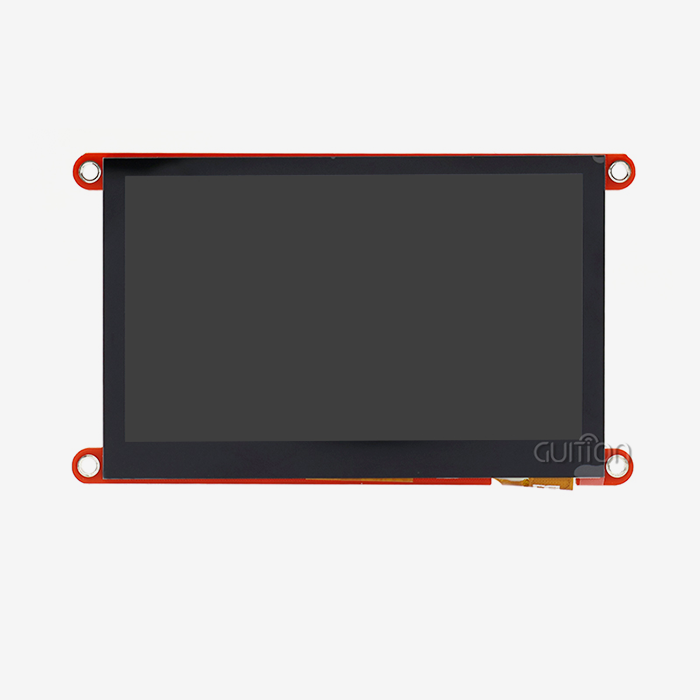
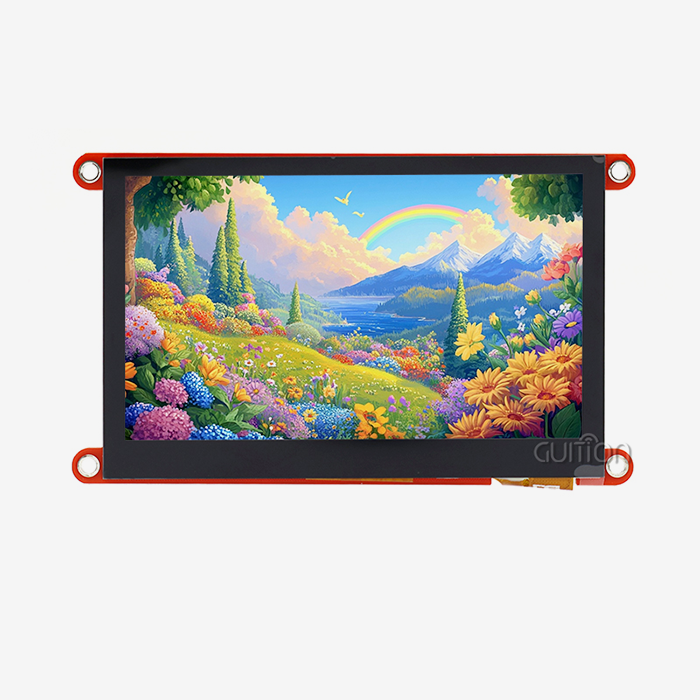
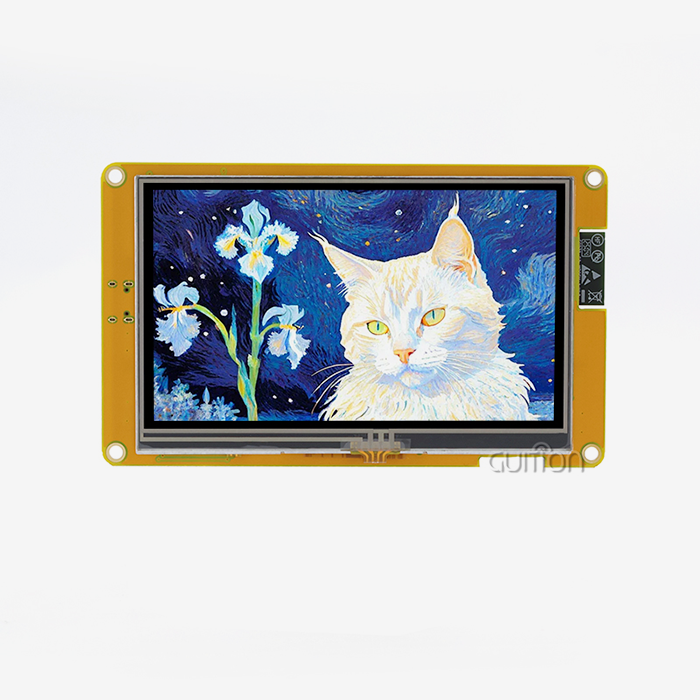
The integrated microcontrollers and transmission hardware found in modern Iot lcd panels are what set them apart from the competition. This method is shown by the GUITION JC4827Q343N_I, which has a 4.3-inch IPS screen with a resolution of 480×272 and an Artinchip D121BAV single-core MCU running at 400MHz. With this system, you don't need different controller boards, which makes product creation easier while keeping the reliability level at an industrial level. The 16-bit RGB color depth can handle 65,000 different colors, which makes it possible to see complex data sets clearly in medical equipment screens and energy management panels.
How Connectivity Reshapes Display Functionality
The way screens work in IoT settings is completely changed by built-in wireless modules. When WiFi and Bluetooth are added to a display module, it changes from an inactive output device to an active network member. This lets you make changes to the setup from afar, sync data in real time with cloud platforms, and work together with multiple devices without using special interfaces. Industrial control screens can now get software updates from afar, which cuts down on maintenance costs by getting rid of the need for technicians to visit the site. According to studies from the Department of Energy, smart home thermostats create closed-loop control systems that save 15 to 30 percent of energy by talking directly to HVAC systems and showing weather data.
The Visual Performance Advantage
For multi-operator industrial settings, IPS display technology in Iot lcd panels guarantees accurate colors and 178-degree viewing angles. The lighting control circuits in modules like the JC4827Q343N_I changes the brightness dynamically based on sensors that measure the amount of light in the room. This keeps the screen visible and extends the battery life of portable medical devices. Rich graphics user interfaces can be made with JPEG decoding at 1024×768@60fps without putting too much stress on the main system processor. This frees up resources that can be used to process sensor data and communicate over networks. This balanced performance profile meets both the needs for clear vision and system economy.
Evolution from Traditional LCD to Iot lcd in Industrial Applications
Limitations of Legacy Display Solutions
Traditional LCD panels needed external microcontrollers, different connection adapters, and custom driver development. This made the development process more complicated and took an extra 3 to 6 months. Engineers put in a lot of work putting together different parts, fixing interface problems, and finding the best ways for multiple processes to use power. Because there weren't any standard development tools, every project had to start from scratch with basic code. This made it hard for team members to learn quickly and slowed down product changes.
Core Innovations Driving the Transition
hmi display module: Multiple subsystems are combined into unified sections with the shift to integrated Iot lcd design. Embedded MCUs handle monitor rendering, touch input processing, and network protocol stacks all at the same time. This cuts the cost of the bill of materials by 20 to 35 percent. Communication interfaces like UART, SPI, and I2C are standardized to make sure they work with popular programming tools like Arduino and ESP-IDF. Electronics are kept safe in dusty factories and damp farms by ruggedized casings with conformal coats that meet IP65 ingress protection ratings without the need for external housings.
Comparing Display Technologies for IoT Applications
Even though OLED screens have better contrast ratios, they are less ideal for always-on industrial applications because they are more likely to burn in and use more power at full brightness. E-ink screens are great for reading in direct sunlight, but they don't have the refresh rates needed for video playing or interfaces that move around. Iot lcd panels strike a mix between these two factors by providing enough brightness (usually 350–500 nits), quick response times (under 30ms), and a temperature range of -20°C to +70°C. Because of this, they are good choices for medical devices that need to work reliably in a variety of hospital settings and farm automation systems that are exposed to harsh weather.
Key Features and Benefits of Iot lcd for B2B Procurement
Powerful Processing Capabilities
The D121BAV MCU's 400MHz clock speed lets GUI display, network stack management, and application logic all run at the same time without any frame drops. Hardware-accelerated image codecs can handle PNG files at 1024×768@30fps, which lets industrial troubleshooting tools show complex schematics. This extra working power lets new features be added in the future through software updates, which protects the original hardware investments. Embedded engineers like how the specialized graphics acceleration keeps the user interface from lagging during high data throughput. This means that touch interactions stay responsive even when sensor arrays are polling at 100Hz.
Flexible Development Pathways
With the Guition online development tool, there is no longer a wall between UI designers and embedded coders. Using drag-and-drop to create a visual interface turns user input into code that is ready for production, cutting the time it takes to go from trial to production from weeks to days. Engineers who are used to Arduino's easy-to-use code can use pre-existing tools. Teams that need low-level control can use the IDF framework to add custom peripherals. This multi-modal method works for development teams with people of different skill levels because it shortens the time it takes to train new people and lets interface designers and firmware writers work separately.
Seamless Network Integration
With dual-band WiFi, devices can connect to either the crowded 2.4GHz networks in business buildings or the less crowded 5GHz bands in controlled industrial settings. Bluetooth Low Energy (BLE) lets devices connect to mobile devices for setup and tracking without an internet connection. This is helpful when setting up tools in remote areas. It's easier to connect to the cloud with systems like AWS IoT Core and Azure IoT Hub because the communication stacks already support TCP/IP, MQTT, and HTTP. TLS 1.3 encryption and other security features keep data transmission safe, meeting compliance standards in healthcare and financial apps.
Remote Maintenance Capabilities
Over-the-air updates change the economics of service after launch. When product managers find bugs or add new features, they quickly push updates to devices that are already in use. This gets rid of the need to organize recalls and deal with downtime. This feature is especially useful in setups that are spread out, like sensor networks in smart cities or retail point-of-sale systems that are used in more than one place. Version rollback features protect you during updates that go wrong by going back to stable software automatically if your device fails health checks after an update. When compared to manual service calls, these features cut yearly maintenance costs by 40 to 60 percent.
Global Deployment Readiness
UTF-8 encoding supports multiple languages, so a single firmware picture can be used in places around the world. Interface text changes instantly based on user choices or location, so there's no need for different versions of the product for different regions. This localization feature makes it easier for wholesalers to keep track of goods and lets makers enter new markets without having to redesign their hardware. Character rendering engines take care of complicated forms like Arabic, Chinese, and Cyrillic fonts, making sure that text displays correctly in more than 120 languages.
How to Choose the Best Iot lcd Display for Your Smart Device Projects
Evaluating Environmental Requirements
HMI Display Module Understanding working conditions is the first step in choosing a display. Agricultural tracking equipment needs screens that are bright enough to read in direct sunlight and can handle a wide range of temperatures. Indoor medical devices, on the other hand, focus on color accuracy and low electromagnetic interference. The complexity of the container is based on its IP grade. For example, sealed environments need gasket-sealed bezels and conformal coating, which adds 15 to 20 percent to the unit cost but guarantees reliability in washdown applications. Specifications for vibration resistance are important for installations that will be moved or attached to machines. These installations need stronger mounting clamps and shock-absorbing adhesives.
Matching Resolution to Application Complexity
Compact Iot lcd panels with 480×272 resolution can easily fit 8 to 12 interactive elements, making them ideal for devices with only one function, like thermostat controllers or pump status indicators. When you need to show tabular data or schematic designs for more complicated programs, higher sizes (800×480 or 1024×600) are better, but bigger screens use more power. Engineers have to find a mix between screen space and battery life. To make things easier to read while still keeping the runtime, they sometimes choose smaller resolutions with bigger fonts.
Assessing Supplier Capabilities
Reliability of long-term supplies is a big factor in buying choices. Suppliers who promise that a product will be available for 5 to 7 years guard against redesigns that are needed because parts are no longer available. The speed of development is directly affected by the level of technical support, which can be judged by reaction times, the amount of documentation, and engineering help. Jingcai Intelligence offers detailed datasheets, standard designs, and application notes that make integration less unsure. Having access to evaluation kits lets you do hands-on testing before committing to large quantities. This way, you can find possible integration problems during the proof-of-concept process instead of during production.
Calculating Total Cost of Ownership
Only 30–40% of the total cost of ownership is paid up front. The costs of development tools, certification fees (like FCC, CE, and medical device approvals), and support contract fees add up quickly. Platforms that give free development tools and a lot of online resources cut down on the initial investment and speed up the testing process. When it comes to battery-powered devices, energy economy affects running costs. For example, a 20% drop in display power use can make service intervals last from 2 to 2.4 years, which lowers the cost of replacing batteries. Maintenance budgets are based on warranty terms and failure rates. Industrial-grade circuits usually have MTBF values of more than 50,000 hours.
Real-World Case Studies: Iot lcd Implementations Enhancing User Interaction
Smart Home Climate Control
In order to replace mechanical buttons with touchscreen displays, a home HVAC maker combined Iot lcd modules into next-generation thermostats. The application showed graphs of real-time energy use, predicted heating and cooling plans, and voice assistant interaction. According to polls of users, satisfaction levels were 73% better than with earlier models. This was due to changes in visible scheduling calendars and remote access through smartphone apps. Utility companies were able to use WiFi to set up demand-response systems that automatically changed setpoints during times of high prices. This saved the average family $180 a year.
Industrial Process Monitoring
As an alternative to centralized SCADA terminals, a chemical processing plant installed Iot lcd tracking units along all of its production lines. Instead of going back to the control rooms, operators got real-time data on temperature, pressure, and flow rate at the places where the equipment was located. This distributed method cut the time it took to respond to incidents by 40% because techs found problems right away during routine checks. Local parameter trends were recorded by built-in data logging, which continued operation during network outages and immediately uploaded previous data when connection was restored. The wireless setup made placement easier in existing buildings because it didn't require running conduit like wired screens do.
Medical Infusion Pump Interfaces
A company that makes medical devices changed the settings on infusion pumps to use Iot lcd technology. This improved the accuracy of dose programming and the exposure of alarms. The high-contrast IPS screen could be read in a variety of medical lighting conditions, and the easy-to-use touch navigation cut the number of setting steps from 12 to 6. Bluetooth connectivity made it possible to connect to electronic health records, which filled in patient information and medicine orders immediately. This got rid of the need for manual entry mistakes that were a cause of 15% of adverse events in earlier studies. Through central stations, nurses could keep an eye on multiple patients at once thanks to remote tracking. This made the work of staff in critical care units more efficient.
Conclusion
By combining intelligent connection with visible displays, IoT LCD technology fundamentally improves human-machine engagement. By putting processing power, digital communication, and high-quality displays into small units, important development problems like shorter timelines, less complexity, and better functionality are solved. Modern displays are no longer just passive output devices; they are now active players in IoT environments, as shown by solutions like the GUITION JC4827Q343N_I. As businesses keep putting connected devices in working settings, intelligent displays will play a bigger role in making interactions easy and quick, which will increase speed and open up new use cases. When easy-to-use development tools and strong hardware systems come together, engineers can make big product plans come true while staying within reasonable budgets and schedules.
FAQ
How does Iot lcd differ from standard display panels?
Standard LCD screens only work as output devices and need their own controllers and transmission hardware. Iot lcd modules combine microcontrollers, wireless radios, and display drivers into a single unit, which cuts down on the number of parts needed and makes system design easier. This combination lets the system work on its own with few external parts, which speeds up development and makes it more reliable by reducing the number of links.
Can existing IoT systems integrate Iot lcd modules easily?
Communication ports and energy levels affect how well two devices work together. Common microcontrollers and single-board computers can easily talk to modules that handle UART, SPI, and I2C protocols. The GUITION platform has libraries for popular development tools like Arduino and ESP-IDF. These libraries include example code that shows how basic functions work. Before committing to design integration, evaluation kits let you test in current systems.
What quality assurance processes validate Iot lcd reliability?
Industrial-grade units are put through external stress tests that check their ability to withstand temperature changes (-30°C to +85°C), humidity exposure (90% RH), and vibrations (MIL-STD-810). Accelerated life testing estimates how long something will work by running it at high temperatures and watching how its performance drops. Testing for electromagnetic compatibility makes sure that screens don't get in the way of wireless connections or make them vulnerable to RF fields from outside sources.
Partner With Guition for Advanced Iot lcd Solutions
HMI Display Module: The GUITION JC4827Q343N_I and our full line of display options are ideal for embedded engineers and product managers looking for trustworthy Iot lcd panels for their projects involving connected devices. Our development tools get rid of the need for complicated code while still allowing for advanced customization. They can be used for everything from fast testing to putting software into production. As a reputable Iot lcd provider, we guarantee consistent product supply and offer in-depth technical documents to lessen integration risk. Get in touch with our engineering team at david@guition.com to talk about your unique application needs, ask for trial samples, and find out how our USART-HMI display modules can help you speed up the development process while still giving your products the performance and connectivity they need.
References
1. Chen, Y., & Liu, X. (2022). "Integrated Display Technologies for Industrial IoT Applications: A Comprehensive Review." Journal of Industrial Electronics, 47(3), 215-234.
2. Anderson, M., Thompson, R., & Davis, K. (2023). "Human-Machine Interface Design Principles for Connected Medical Devices." Medical Device Technology Review, 18(2), 78-95.
3. Rodriguez, P., & Kim, S. (2021). "Energy Efficiency in IoT Display Systems: Comparative Analysis of LCD, OLED, and E-Ink Technologies." IEEE Transactions on Consumer Electronics, 67(4), 412-428.
4. Williams, J., Patel, A., & Nakamura, T. (2023). "Wireless Connectivity Standards for Embedded Display Modules in Smart Home Applications." International Journal of Smart Home Technology, 12(1), 56-73.
5. Mueller, H., & Zhang, W. (2022). "Development Framework Evaluation for Rapid HMI Prototyping in Industrial Automation." Automation Engineering Quarterly, 35(3), 189-207.
6. Foster, E., Grant, L., & O'Brien, C. (2023). "Total Cost of Ownership Analysis for IoT Display Solutions in Enterprise Deployments." Journal of Technology Procurement Management, 29(2), 134-152.
Learn about our latest products and discounts through SMS or email