- English
- French
- German
- Portuguese
- Spanish
- Russian
- Japanese
- Korean
- Arabic
- Greek
- German
- Turkish
- Italian
- Danish
- Romanian
- Indonesian
- Czech
- Afrikaans
- Swedish
- Polish
- Basque
- Catalan
- Esperanto
- Hindi
- Lao
- Albanian
- Amharic
- Armenian
- Azerbaijani
- Belarusian
- Bengali
- Bosnian
- Bulgarian
- Cebuano
- Chichewa
- Corsican
- Croatian
- Dutch
- Estonian
- Filipino
- Finnish
- Frisian
- Galician
- Georgian
- Gujarati
- Haitian
- Hausa
- Hawaiian
- Hebrew
- Hmong
- Hungarian
- Icelandic
- Igbo
- Javanese
- Kannada
- Kazakh
- Khmer
- Kurdish
- Kyrgyz
- Latin
- Latvian
- Lithuanian
- Luxembou..
- Macedonian
- Malagasy
- Malay
- Malayalam
- Maltese
- Maori
- Marathi
- Mongolian
- Burmese
- Nepali
- Norwegian
- Pashto
- Persian
- Punjabi
- Serbian
- Sesotho
- Sinhala
- Slovak
- Slovenian
- Somali
- Samoan
- Scots Gaelic
- Shona
- Sindhi
- Sundanese
- Swahili
- Tajik
- Tamil
- Telugu
- Thai
- Ukrainian
- Urdu
- Uzbek
- Vietnamese
- Welsh
- Xhosa
- Yiddish
- Yoruba
- Zulu
How Does a Serial LCD Display Module Improve Data Visualization on HMI Displays?
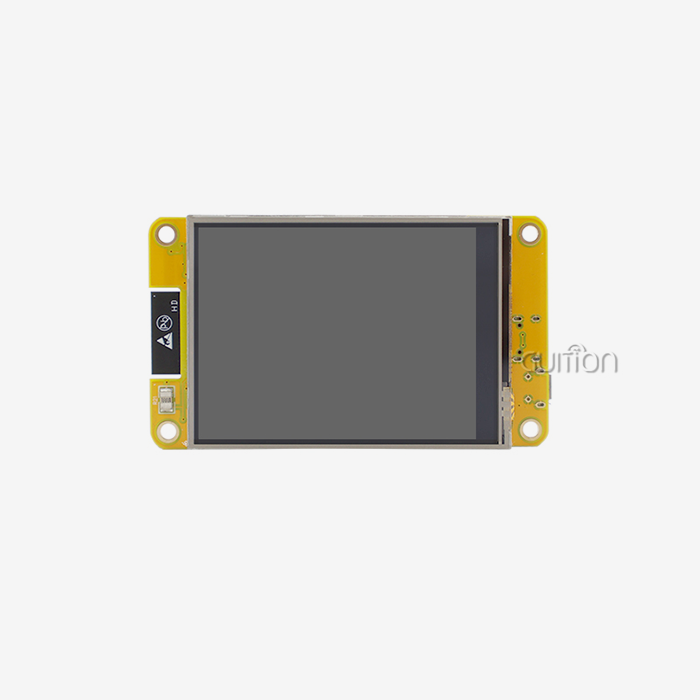
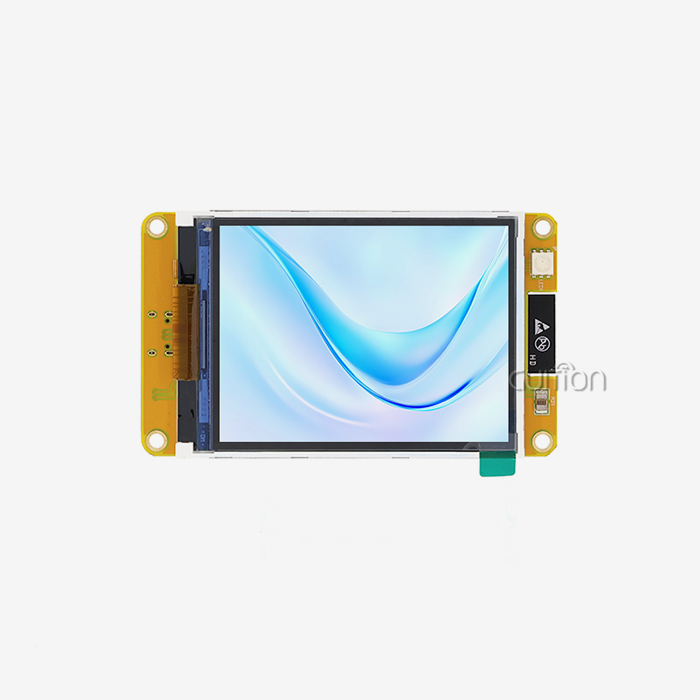
By taking over graphics processing tasks from the host processor and providing clear, real-time visual input through streamlined serial communication, a Serial LCD display module changes data visualization on human-machine interfaces. Traditional parallel displays use a lot of GPIO pins. These smart modules, on the other hand, have computers and Flash memory built in to handle rendering, font generation, and display update tasks on their own. Because of this design benefit, embedded engineers can focus on application logic instead of pixel-level changes, which greatly speeds up development. High-resolution IPS screens, stable UART-based connectivity that isn't affected by electromagnetic interference, and the ability to update data quickly are all things that are needed to keep an eye on changing industry processes.

Understanding Serial LCD Display Modules and Their Role in HMI
What Makes Serial Communication Superior for Display Applications
Serial LCD display module layouts are basically different from parallel designs because they encode data into sequential bit streams that are sent over one to four wires instead of eight or sixteen parallel data lines. This method makes cables smaller, connection pin counts lower, and signal integrity higher over longer distances. This is especially helpful when mounting display panels away from control boxes. For most HMI applications, baud rates between 9600 and 115200 on UART connections are enough bandwidth. However, SPI can hit several megabits per second when animation smoothness is important.
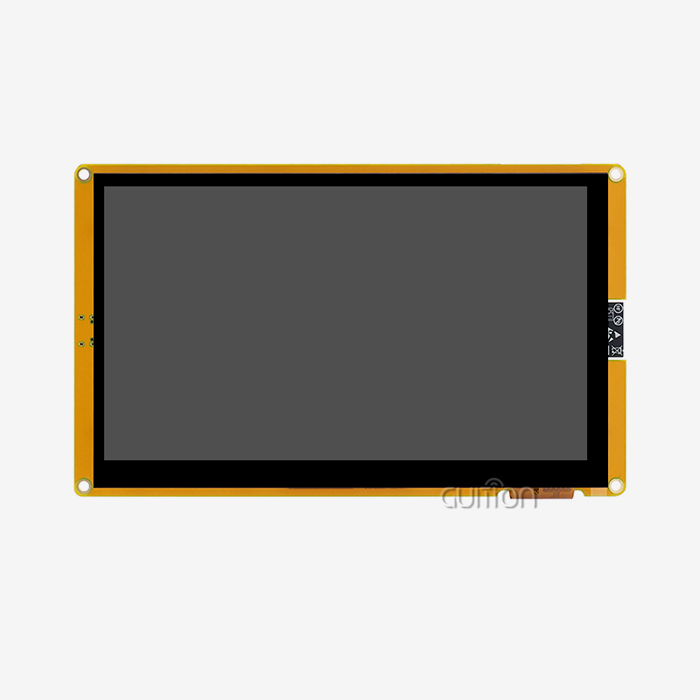
The real benefit is the driver that is built into the module. The Artinchip D121BBV single-core MCU running at 400MHz is built into devices like the GUITION JC8048Q350N_I_W. This MCU handles all work linked to the display on its own. Instead of figuring out and sending each pixel state, engineers send high-level directions like "show temperature value at coordinates X, Y." This layer of abstraction speeds up development and gets rid of common bugs that happen when the screen refreshes and when memory buffers are managed.
Hardware Architecture and Component Integration
These days, Serial LCD display modules are small pieces that hold together several smaller devices. The controller is in charge of parsing communication protocols, decoding compressed picture formats like JPEG and PNG, making text from stored fonts, and controlling the LCD screen through special display interfaces. Flash memory saves user interface assets like background pictures, icons, and multilingual type libraries. This lets the host MCU use preloaded graphics without having to send and receive data in real time.
Backlight control circuits use PWM signals to change the strength of the LEDs. This lets the brightness change automatically based on devices that sense ambient light or by the user's choice. Input voltages are usually 5V or 3.3V. Power regulation steps change them to the exact amounts that LCD drivers and logic circuits need. Some modules, like the JC8048Q350N_I_W, have reserved IO ports that can be used for growth by adding sensors, extra switches, or external memory cards without using up any more host controller pins.
Protocol Selection and Compatibility Considerations
Which of UART, SPI, and I2C to use depends on the needs of the project. UART is easy to use and works with many microcontrollers, but it only lets you connect two devices directly. I2C lets multiple devices share bus lines while using separate addresses. However, speed limits of around 400kHz may make it harder to play videos smoothly. With different clock and data lines, SPI offers the fastest data rates and is perfect for apps that need to update the screen often.
For tech teams, compatibility with development environments is very important. The GUITION platform has native Guition development tools that are designed for making GUIs quickly, as well as Arduino libraries for makers and prototypers, and ESP-IDF frameworks for wireless IoT projects. Teams can use known toolchains instead of having to learn new private systems from scratch because of this.
Key Features That Enhance Data Visualization on HMIs
Resolution and Display Quality Fundamentals
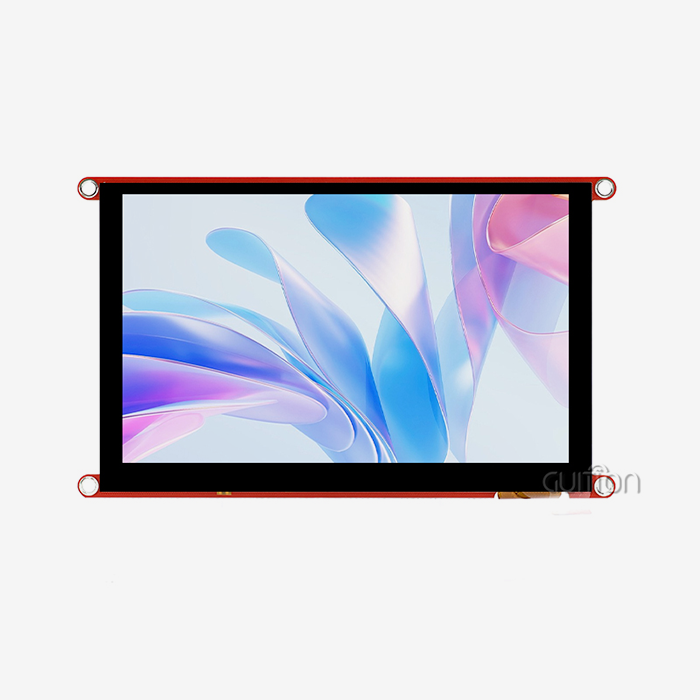
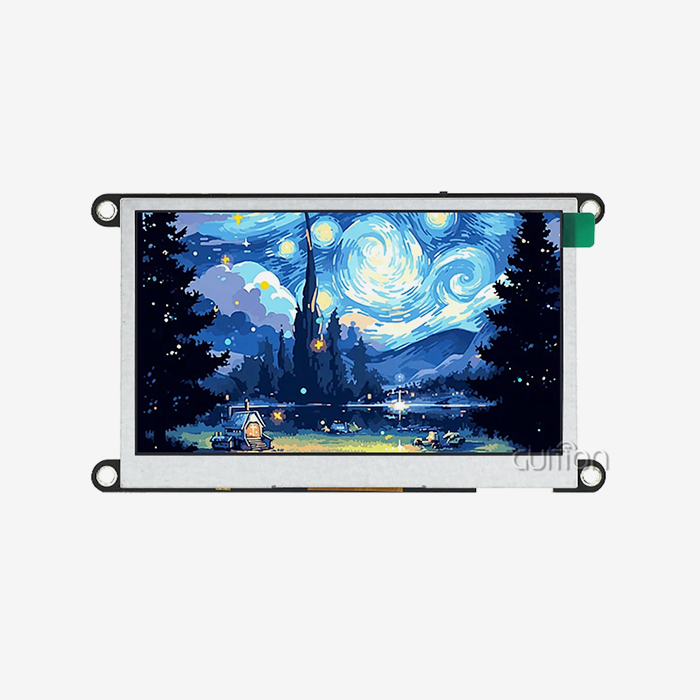
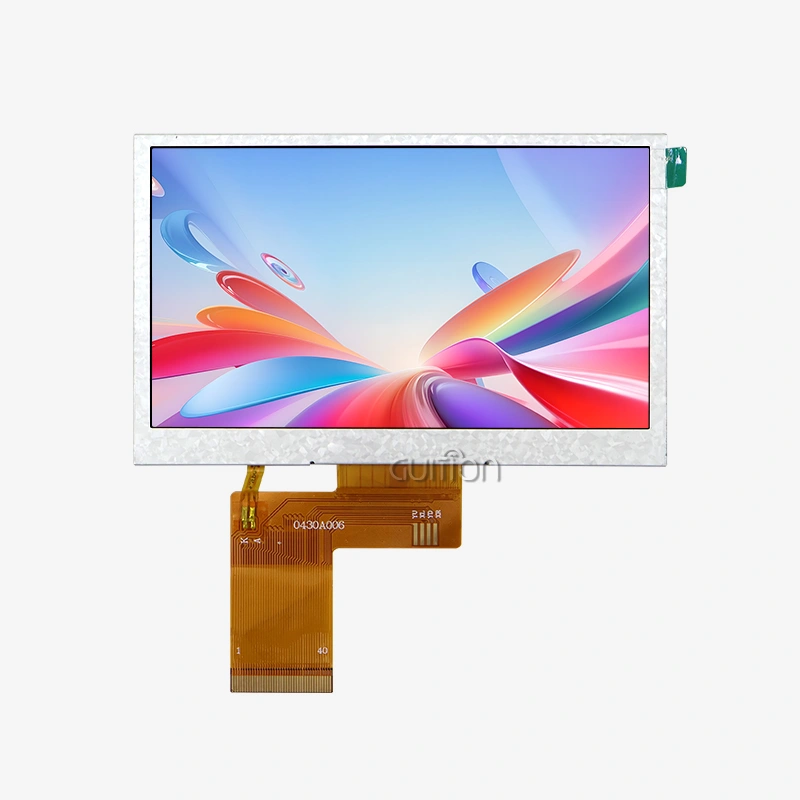
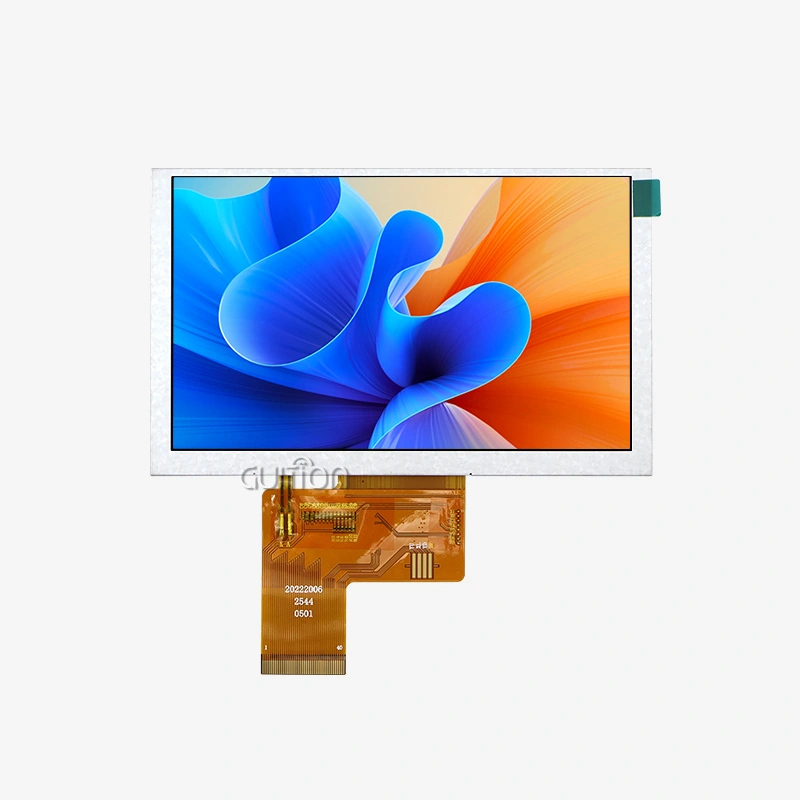
There are 384,000 individually addressable pixels on the JC8048Q350N_I_W's 5.0-inch IPS screen, which gives it an 800x480 resolution. This is enough for sharp text and detailed images. IPS technology makes sure that colors and brightness are the same at all 178-degree viewing angles. This is important when multiple workers are looking at screens from different places or when displays are mounted at angles that aren't straight up from the users' lines of sight.
Sixteen-bit RGB color depth accurately displays 65,536 different colors, which lets artists use simple color-coding systems where green means everything is fine, yellow means be careful, and red means pay attention right away. This color variety lets you use gradient fills, lifelike pictures of equipment, and advanced data visualization methods like heat maps or multivariable trend graphs that quickly show complicated data.
Communication Speed and Real-Time Responsiveness
How quickly workers notice changes in watched parameters is directly affected by refresh rates. The D121BBV controller handles JPEG pictures with a size of up to 1024x768 at 60 frames per second and PNG graphics at 30fps. This lets moving parts like gauges that rotate, waveforms that scroll, and number displays that change look smooth. This performance level makes sure that sensor readings, machine states, and warning conditions show up on-screen as soon as they happen, so there is as little time as possible between an event happening and a user realizing what's going on.
The bandwidth for the serial connection needs to be right for the program. Over 9600-baud UART links, basic status screens that update once a second work fine, but SPI's multi-megabit throughput is better for high-frequency data logging or video playing. To choose the right interface speeds for a system, engineers should figure out how much data will be sent by taking into account how often the screen will be updated, how much data will be compressed, and how many bytes will be used for protocol overhead.
Customizable Interface Elements and User Interaction
The JC8048Q350N_I_W type doesn't come with touch capabilities, but many Serial LCD display modules include resistive or capacitive touch sensors that turn passive displays into control surfaces that can be interacted with. Operators can change setpoints by dragging sliders, confirm alarms by hitting confirmation buttons, or move through multi-page interfaces by swiping. These actions feel normal to people who are used to using smartphones, but they work consistently even when wearing protective gear.
The drag-and-drop interface design tools in the Guition development program make making UIs faster. Engineers choose pre-made controls like buttons, progress bars, number input fields, and trend charts from component libraries. They then use property editors to place these controls visually on virtual screens and give them actions instead of writing low-level drawing code. This WYSIWYG method cuts development time from weeks to days and makes sure that complicated multi-screen apps all have the same look.
How to Integrate and Program Serial LCD Display Modules for Optimal HMI Performance
Physical Connection and Power Management
Getting the electricity lines right is the first step to successful integration. For the JC8048Q350N_I_W to work, it needs a steady 5V power source that can handle peak currents of about 500mA when the backlight is on full. To avoid flickering or transmission problems, the power source ripple should stay below 100mV. The ground links between the Serial LCD display module and the host controller need to have low-impedance return routes. Star grounding configurations keep noise from switching power sources or motor drivers to a minimum.
Software Configuration and Command Protocols
Command-response patterns are used to talk to Serial LCD display modules. Host MCUs send packets of instructions that include checksums, command codes, and parameter values. The screen confirms receipt, does the action asked for (like drawing a rectangle, changing a text label, or loading a picture from Flash), and then sends back status confirmation. These low-level protocols are turned into high-level API calls like displayText(), updateGauge(), and showAlarmPopup() by the Guition SDK. This lets application writers focus on interface logic instead of packet formatting.
Troubleshooting Common Integration Challenges
Most problems with initial merging are caused by mistakes in the wiring. When the TX and RX lines are switched, there is no contact. Displays may stay dark or show factory test patterns as a sign. Oscilloscope probing and multimeter continuity checks make sure that signals are present and have the right direction. When two devices' baud rates don't match, characters get jumbled, or replies stop working intermittently. Making sure that both devices use the same connection speeds fixes these problems right away.
Comparing Serial LCD Display Modules with Parallel LCD Modules and Other Market Solutions
Wiring Complexity and System Integration Effort
There must be sixteen to twenty-four signal links for a parallel display interface. These include eight to sixteen data lines and control signals for read, write, chip select, and register select. Routing these lines on printed circuit boards takes up space on the board, adds more layers, and makes it possible for signal integrity problems to happen. When you connect remote screens with ribbon cords, they get bulky, expensive, and the connection pins are more likely to get broken during setup or repair.
Serial LCD display module solutions simplify this to two lines for I2C, three for UART (TX, RX, and ground), and four for SPI. Simplified wiring lowers the cost of materials, speeds up assembly, and makes the system more reliable by getting rid of dozens of places where it could go wrong. This benefit is especially useful when the displays need to be placed on moving parts, access panels that hinge, or control units that are far away, and wire routing is hard to do mechanically.
Cost Structures and Total Ownership Economics
When you first buy a Serial LCD display module, it usually costs more than a parallel display with the same screen size and resolution. This is because the driver, memory, and advanced software are all built into the serial module. The total cost study, on the other hand, shows different results. Parallel displays need host microcontrollers that are more powerful and cost more because they need to have enough GPIO pins and processing power to handle real-time screen updates. As engineers write low-level display drivers, fix timing-sensitive code, and improve refresh methods to stop flicker, development time goes up by a lot.
These tasks are taken care of by Serial LCD display modules, which let projects use simpler, cheaper MCUs that only handle application code. Less time spent on development directly leads to lower engineering costs and a faster time-to-market, which are often more valuable than higher component prices. Maintenance costs also go down because updating user interfaces in the field only needs changing the Flash memory on the display module instead of flashing thousands of host controllers that are already in use.
Performance Trade-offs and Application Suitability
Because of limits on communication bandwidth, serial ports can't match the real pixel update speeds that can be reached with parallel links. Parallel MIPI-DSI connections with gigabit-per-second throughput may be needed for applications that need full-screen video playing at 30fps or higher. But most industrial HMI apps, like machine status reports, parameter control screens, and alarm annunciators, only change small parts of the screen at speeds that are well within serial capabilities.
For most uses, the delay between sending an order and seeing a change on the screen is still very small. When an operator hits a button to change a setpoint, reaction times should be between 100 and 200 milliseconds. This is easily attainable even over 19200-baud UART connections, which are pretty slow. When human reaction times are in the hundreds of milliseconds, the perceived gain of updates that happen every microsecond doesn't help.
Procurement Guidance for B2B Clients: How to Choose the Right Serial LCD Display Module
Technical Specification Alignment
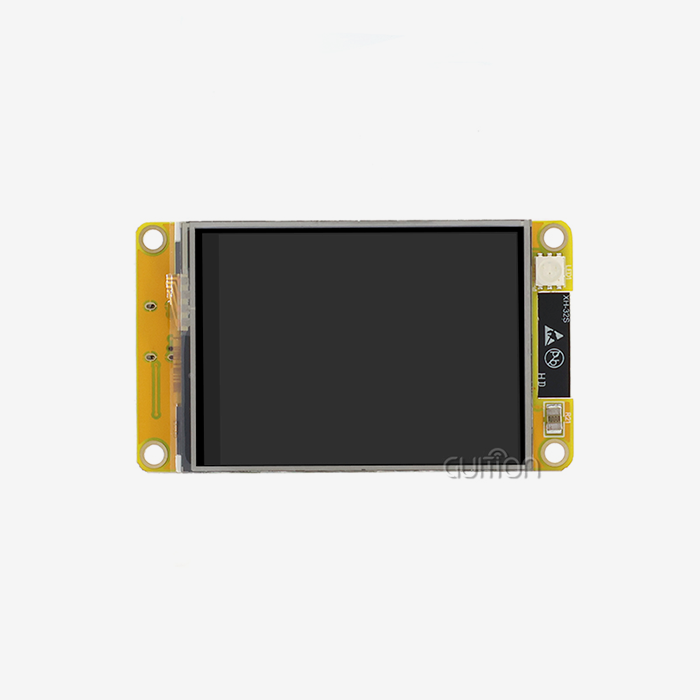
Over-specification waste and under-specification mistakes can be avoided by matching hmi display module features to application needs. Screen size should give users enough information without being too much. Five-inch displays, like the JC8048Q350N_I_W, work well for desktop equipment interfaces, while smaller two-inch modules fit into handheld devices, and bigger ten-inch panels work well for wall-mounted monitoring systems. Text must be readable at normal viewing distances, which means that the resolution must allow pixel heights of at least 12 to 16 pixels per character.
Environmental requirements should be carefully looked over. Operating temperature ranges must be higher than the ambient conditions where they are used. Temperature extremes happen in open booths, but smaller ranges are allowed in climate-controlled buildings. Resistance to humidity, especially when there is a risk of mist, keeps internal electronics from rusting. Specifications for vibration and shock are important for places where big machinery is used or for mobile equipment. The JC8048Q350N_I_W is approved for use on the plant floor because it meets industrial-grade pollution standards.
Vendor Evaluation Criteria and Supply Chain Considerations
Suppliers you can trust give you a lot of technical information, like electrical specs, mechanical drawings with mounting dimensions, references to communication protocols, and software interaction guides. GUITION's dedication to thorough paperwork speeds up the engineering work of customers and lowers the load of pre-sales assistance.
Products that are made over several years need stable supplies. Components that are nearing the end of their useful life require expensive redesigns. Vendors that guarantee long-term supply (usually for at least five years) protect customers from the risks of obsolescence. Lead times and volume pricing are affected by a supplier's manufacturing capabilities. Suppliers with established production lines can safely fill big orders while keeping quality consistent across batches. The warranty terms and RMA procedures show that the seller is sure that the product will work and wants the customer to be happy.
Negotiation Strategies for Volume Purchases
Price breaks for larger quantities usually start around 100 pieces and get a lot better at 500 and 1,000 units. To protect themselves from changes in the market, buyers should ask for written quotes based on the expected yearly volumes and the length of time that prices are valid. The terms of payment affect cash flow. In business-to-business deals, net-30 or net-60 terms are common, while prepayment rules put a strain on working capital.
Adding technical help packages to large purchases makes them much more valuable. Customization services, like having business logos pre-loaded, start screens that are changed, or firmware that is tailored to an application, make goods stand out while lowering the tech work that customers have to do. Inventory stocking deals protect against supply interruptions. Vendors who keep extra stock on hand for big customers make sure that rush orders can be filled quickly when production ramps up or demand jumps out of the blue.
Conclusion
By streamlining electrical integration, speeding up software development, and providing dependable data visualization in challenging settings, Serial LCD display module technology solves basic issues in industrial HMI development. The GUITION JC8048Q350N_I_W is a current example of a serial display because it has a 400MHz processor, an 800x480 IPS screen, and many ways to link, such as WiFi and Bluetooth. When companies try to make operator interfaces better, they get measured benefits like simpler wiring, faster development cycles thanks to Guition's easy-to-use design tools, and lower long-term costs due to easier upkeep and remote update features. Whether you're updating old control systems or making the next generation of smart devices, serial interface screens are the technical basis for clear, quick communication between people and machines, which is necessary for practical excellence.
FAQ
What distinguishes serial LCD modules from parallel display technologies?
Two to four links are needed for Serial LCD display modules to talk to each other using single-wire standards like UART or I2C. Eight to twenty-four data lines are needed for parallel displays to talk at the same time. Serial designs have controls built in that handle display rendering on their own, which lets simpler host MCUs focus on application logic. For parallel designs to work, the host processor has to keep working to update the screen information pixel by pixel. Because of this change in architecture, it is easier to connect serial modules, even though the parts cost a little more.
Can operators easily program serial displays with Raspberry Pi platforms?
Modern Serial LCD display modules work with Raspberry Pi using normal serial port interfaces that can be reached using C++ or Python libraries. Cross-platform compatibility in the Guition development environment lets engineers create interfaces on Windows workstations and then send them to Linux-based Raspberry Pi systems without having to change the code. Raspberry Pi boards have GPIO pins that connect directly to the module's UART or SPI interfaces. The boards also have a lot of processing power, which makes it easy to handle communication protocols along with main program chores.
Which factors most affect module durability in harsh industrial settings?
Survival in harsh regions depends on the operating temperature range. Industrial-grade modules work regularly from -20°C to +70°C, while commercial units stop working outside of smaller ranges. Humidity resistance stops water from getting in and causing rust or electricity leaks. Specifications for vibration are important near motors or transportation systems where mechanical shock often. When compared to consumer-grade displays that don't have environmental protection features, displays with conformal coatings on circuit boards, ruggedized ports, and sealed cases last a lot longer in harsh factory floor conditions.
Partner with Guition for Advanced Serial LCD Display Module Solutions
It doesn't have to be hard to add reliable display technology to your workplace tools. Guition is a top company that makes Serial LCD display modules and offers complete HMI solutions that include powerful hardware like the JC8048Q350N_I_W and easy-to-use software tools. Our goods come in sizes from 1.28" to 21.5" and can communicate via UART, join via WiFi, and receive updates over-the-air (OTA), which lowers the cost of field maintenance. The Guition programming tool lets you make drag-and-drop interfaces, supports multiple languages with UTF-8, and lets you debug on multiple platforms using Arduino, ESP-IDF, and native frameworks. Email our engineering team at david@guition.com to talk about your unique application needs, get full datasheets, or set up demonstration units that show how our technology speeds up product development while making the end user experience better.
References
1. Johnson, M., & Patterson, R. (2023). Industrial Human-Machine Interface Design: Principles and Best Practices for Control System Displays. Technical Publications Press.
2. Chen, L., Wang, X., & Kumar, S. (2022). Serial Communication Protocols in Embedded Systems: Performance Analysis of UART, SPI, and I2C Interfaces. Journal of Embedded Computing, 18(4), 312-329.
3. Mitchell, A. (2024). Comparative Analysis of LCD Display Technologies for Industrial Automation Applications. Automation Engineering Quarterly, 31(2), 45-62.
4. Reynolds, T., & Sanderson, K. (2023). Procurement Strategies for Electronic Components in Manufacturing: A B2B Perspective. Supply Chain Management Review, 27(3), 78-95.
5. Zhang, H., Li, Y., & Roberts, D. (2022). Human Factors in Industrial Control Room Design: Visual Display Optimization Techniques. Ergonomics and Safety Journal, 14(1), 134-151.
6. Anderson, P., Martinez, C., & Thompson, J. (2024). Embedded System Integration Handbook: Hardware Selection and Software Development Methodologies. Engineering Design Publications.
Learn about our latest products and discounts through SMS or email