- English
- French
- German
- Portuguese
- Spanish
- Russian
- Japanese
- Korean
- Arabic
- Greek
- German
- Turkish
- Italian
- Danish
- Romanian
- Indonesian
- Czech
- Afrikaans
- Swedish
- Polish
- Basque
- Catalan
- Esperanto
- Hindi
- Lao
- Albanian
- Amharic
- Armenian
- Azerbaijani
- Belarusian
- Bengali
- Bosnian
- Bulgarian
- Cebuano
- Chichewa
- Corsican
- Croatian
- Dutch
- Estonian
- Filipino
- Finnish
- Frisian
- Galician
- Georgian
- Gujarati
- Haitian
- Hausa
- Hawaiian
- Hebrew
- Hmong
- Hungarian
- Icelandic
- Igbo
- Javanese
- Kannada
- Kazakh
- Khmer
- Kurdish
- Kyrgyz
- Latin
- Latvian
- Lithuanian
- Luxembou..
- Macedonian
- Malagasy
- Malay
- Malayalam
- Maltese
- Maori
- Marathi
- Mongolian
- Burmese
- Nepali
- Norwegian
- Pashto
- Persian
- Punjabi
- Serbian
- Sesotho
- Sinhala
- Slovak
- Slovenian
- Somali
- Samoan
- Scots Gaelic
- Shona
- Sindhi
- Sundanese
- Swahili
- Tajik
- Tamil
- Telugu
- Thai
- Ukrainian
- Urdu
- Uzbek
- Vietnamese
- Welsh
- Xhosa
- Yiddish
- Yoruba
- Zulu
How Does a 1.85-inch Round Knob Screen Work?
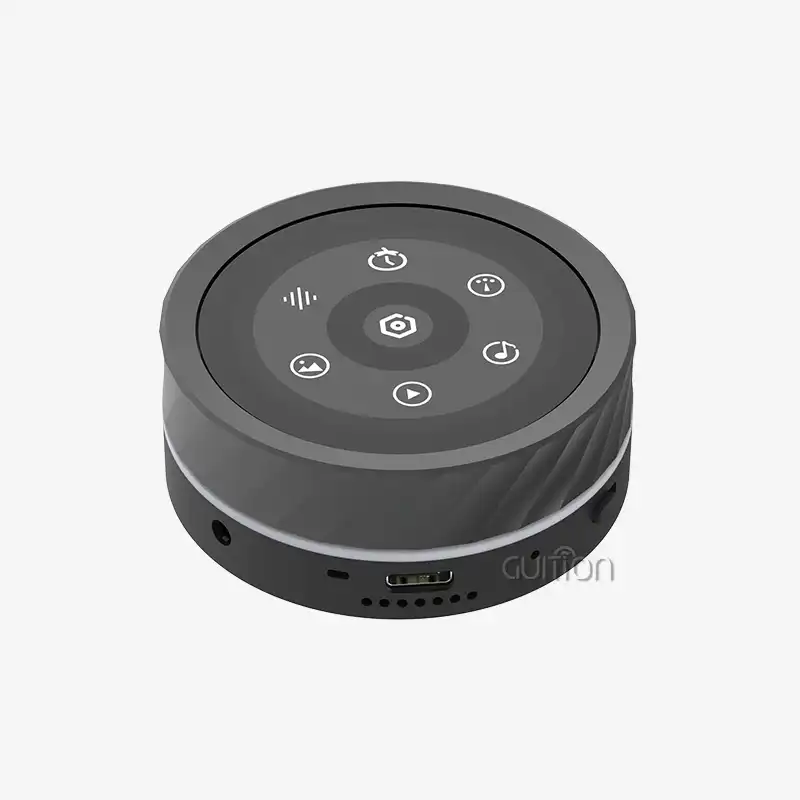
When engineers evaluate modern HMI solutions for next-generation products, one question consistently surfaces: How does a compact smart dial manage to combine tactile control, vibrant visuals, and wireless connectivity in such limited space? The 1.85-inch Round Knob Screen achieves this by integrating three synchronized subsystems—rotary encoder hardware, an ESP32-S3 dual-core processor, and a 360×360-pixel IPS display—into a unified control interface. The device captures rotation via magnetic Hall-effect sensing, translates angular movement into digital signals, and updates the display content in real time, enabling users to navigate complex menus, adjust parameters, and trigger functions through both knob rotation and touch gestures without external peripherals.

Types and Application Scenarios of Knob Display Modules
There are different types of small circular interfaces on the market, and each one is best for a different set of operating conditions and user needs. There are differences based on the material chosen, the number of connectivity options, and the level of software customization for the 1.85-inch Round Knob Screen.
Material and Build Quality Variations
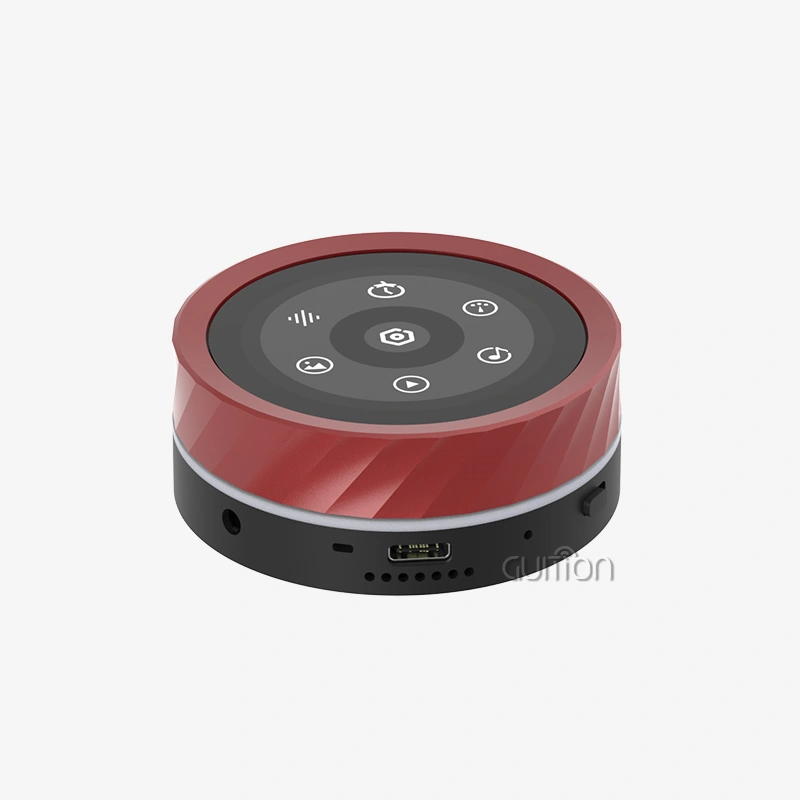
Premium models have CNC-machined aluminum housings with anodized finishes that come in black, red, purple, dark gray, and blue. These finishes help heat dissipate better and make the parts more rigid. These frames are made of metal, so they can handle the vibrations and bumps that happen a lot in factories. Alternatives that are easy on the wallet use high-impact polycarbonate with injection-molded patterns, which makes them lighter but takes away from the quality feel. MTBF ratings are directly affected by whether the enclosure is made of metal or polymer. Aluminum enclosures have MTBF ratings of more than 50,000 hours of constant operation, while plastic enclosures break down faster when exposed to UV light and changing temperatures.
Connectivity and Integration Options
How easily the module can be added to current control systems is based on its connectivity design. There are three main approaches:
UART-Based Smart Modules: These are self-contained units that have their own processing power built in. They only need simple serial orders from a host device to work. Engineers send ASCII phrases like "SET_TEMP=75" and get progress reports. This makes the main board's firmware a lot simpler. The Guition-compatible model is a good example of this type because it has built-in WiFi and Bluetooth 5.0, which lets you control it from your phone using apps without needing extra gateway hardware.
SPI/I2C Peripheral Displays: These are simple screens that get their pixel data from outside the MCU frame by frame. Even though they give you the most drawing options, they require a lot of processing power and can't be used in real time, so they're only useful when the host machine already has a lot of CPU power.
USB HID Protocol Emulation: More advanced models can work as normal input devices, like keyboards and mice, and are identified right away by operating systems without the need for driver installation. Because of this, the knob display can be used as a PC accessory. For example, in the AIDA64 monitoring app, it shows CPU temperature and load metrics directly.
Industry-Specific Deployment Examples
Different industries use the interface's small size and ability to be programmed in their own special ways. Smart home thermostats place the round display flush with wall panels. The screen shows current data and schedule icons, and it can be rotated to change the temperature setpoints. The round shape looks better with current power outlets than the rectangular ones.
Car infotainment systems put screens with knobs in the center consoles so that you can change the sound and zoom in on maps. When compared to capacitive sliders, the physical rotation keeps the driver less distracted because the tactile detents confirm without taking their eyes off the road.
Medical dosing equipment uses the device for precise parameter entry. The device rotates to choose the amount of medicine to be given, and a high-resolution monitor shows the numbers to avoid mistakes during administration. Electronics are kept safe from germ-killing liquids by sealed knob systems that meet IP65 standards.
These modules are used in industrial machinery to make multi-mode machine operation panels. With these panels, a single knob can control speed, torque, or position, depending on the menu context that is currently being shown on the screen. Compared to banks of standard rotary switches, this combination cuts down on the amount of panel cutout that needs to be done.
Practical Installation and Maintenance Strategies
A successful deployment depends on the proper integration of mechanical parts and the following of regular care protocols that stop common failure modes seen in field installations of the 1.85-inch Round Knob Screen.
Mounting and Electrical Connection Procedures
The panel hole diameter has to exactly match the module's requirements. For the body, this is usually 40 mm, with a 3 mm margin. When fittings are too loose, they wobble, which damages encoder bearings over time. Installers hold the unit in place with the threaded holding nut that comes with it and tighten it to 0.8 N·m. This makes sure that the front bezel sits flush against the panel surface, without any gaps that could catch debris.
Standardized pinouts are used for electrical connections. These include VCC (5V or 3.3V, depending on the model), GND, TX, RX for serial communication, and I2C lines for peripheral expansion, if desired. Engineers need to make sure that the voltage levels fit the needs of the host system. Applying 5V logic to 3.3V-tolerant pins damages the integrated circuit right away. EMI interference can't happen in places where motor controllers or switching power supplies are close by if the grounding is done right.
Preventive Care and Cleaning Protocols
How long a screen lasts depends on how well it is cleaned. The sensitive touch layer can handle wipes made with isopropyl alcohol, but it breaks down when it comes in contact with acetone-based solvents, which remove the layer of glue that holds the glass to the touch sensor. Cleaning with microfiber cloths once a week keeps oil from building up and making the surface less sensitive to touch.
Every three months, a rotary mechanism needs to be checked for smooth rotation resistance as part of its maintenance. If the detent feel changes, compressed air purging can clear the encoder gaps of dust. If the maker doesn't say to use lubricants, don't. Some oils attract particles that speed up wear.
Diagnosing Common Operational Issues
If the screen stays blank even though the power is connected, check that the module is getting power by measuring at test points on the PCB. When there is a load, voltage goes below 4.75V, which means the power source isn't strong enough or the cable has too much resistance. Changing the wire to 18 AWG or adding 470µF/10V of local bulk capacitance near the module makes the process stable.
Inconsistent results for spinning pointers point to encoder contamination or magnetic interference. If metal gets stuck between magnets and sensors, it weakens the field and causes pulses to be missed. When parts are taken apart and looked at under a microscope, they usually show ferrous particles that are drawn to the magnetic elements. When installing encoders in places with strong electromagnetic fields, like near induction heaters, ferrite cores should be added to the signal lines to stop caused noise.
Strategic Considerations for Procurement Teams
When choosing display panels for large-scale production integration, B2B buyers have to think about a lot of technical and business factors. They have to balance performance needs with the total cost of ownership for the 1.85-inch Round Knob Screen.
Evaluating Technical Specifications Against Project Needs
Resolution has a direct effect on how complicated the UI can be. The 360×360 pixel density makes it easy to show detailed icons and two-digit numbers. However, engineers working on data-heavy panels that need four-line text menus should test out real UI layouts before placing buy orders. When people are working on keys while leaning over, the viewing angle of the screen is important. IPS technology keeps colors true beyond 170 degrees, while TN panels lose their clarity past 140 degrees.
Processing headroom determines how much customization is possible. The ESP32-S3's two cores running at 240 MHz can handle both rendering the LVGL graphics library and doing WiFi background tasks at the same time without any frame drops. Projects that need extra protocol stacks (like Modbus RTU and CANopen) should use benchmark testing to see how much CPU capacity is still available. Suppliers who offer testing kits make this possible before large-scale agreements.
Supplier Assessment and Quality Assurance
Manufacturers you can trust for esp32 display module will give you a lot of detailed information, like mechanical drawings with tolerances, electrical plans with safety circuits, and details on how to use the communication protocol. The lack of detailed datasheets is a sign that technical help is not good enough. Buyers shouldn't just accept self-declarations; they should also ask for third-party test reports that confirm compliance with FCC Part 15 (EMC), CE (LVD/RED), and RoHS material restrictions.
For products that last more than one year, production accuracy is important. Suppliers that have been around for a while have part tracking systems that connect production batch codes to arriving material lots. This lets you quickly figure out what went wrong if something fails in the field. During factory checks, asking for normal first-pass yield rates shows how mature the manufacturing process is; rates below 92% show problems with process control.
Cost Optimization Through Strategic Sourcing
There are big price drops as the quantity goes up. For example, sample numbers start at $28–35 each and drop to $18–22 at 100-piece levels. At 1,000 pieces or more, the price drops to around $12–15, based on the level of customization needed. However, buyers should figure out the total landed cost, which should include the tooling amortization for custom bezels ($800–1,200 NRE) and firmware development hours if the module doesn't come with the apps that the buyer wants already installed.
Customizing the packaging has an effect on how well operations work. Standard boxes that hold 86 units make the best use of space, but goods with fragile mounting tabs work better with foam-cavity trays, even though they use 30% fewer cartons. Negotiating the packaging details during the RFQ stage keeps repackaging fees from coming as a surprise.
Emerging Technologies Shaping Next-Generation Interfaces
Trends in display, processing, and materials science show how knob-based controls will change to meet the growing needs of the market for sustainability and connectivity with the 1.85-inch Round Knob Screen.
IoT Ecosystem Integration Advances
The current integration of WiFi and Bluetooth allows for basic cloud connectivity. However, the next generation of modules will include Matter protocol stacks, which are the unified smart home standard. This will make it possible for Apple HomeKit, Google Home, and Amazon Alexa platforms to work together without the need for manufacturer-specific bridges. Standardization makes installation easier for system installers and gives device makers access to more customers.
Processing AI at the edge is another new frontier. On-device voice recognition will be possible with new processors that include neural network accelerators. This will let users give orders straight to the knob interface without having to wait for them to be sent from the cloud. When combined with local wake-word recognition (using less than 10 mW of idle power), this method addresses privacy concerns while providing responsive control in kitchens or workshops where operating without using your hands is safer.
Techniques for collecting energy could finally get rid of all power lines. Prototypes that use electromagnetic induction to collect rotational kinetic energy can already make enough microwatts to power very low-power e-paper displays, but they can't handle full-color screens that are backlit right now. Hybrid methods that use small rechargeable batteries that are charged via USB-C during rare service times are temporary fixes that can be used to update old buildings that don't have easy-to-reach AC outlets.
Material Science and Sustainability Initiatives
Environmental laws require more and more recycled material and the means to recycle at the end of its life. As a result of EU Circular Economy directives, future aluminum housings will contain 70% or more recycled alloy that was used before it was thrown away. This will not affect the accuracy of CNC machining. Glass bases could switch to chemically strengthened options like Corning Gorilla Glass to make them more resistant to drops while still keeping their sharpness.
Bio-based polymers made from algae or farm waste are now going into trial production for knob grips and button caps. These materials are carbon-neutral alternatives to ABS plastics made from oil. Biopolymers today have lower heat deflection temperatures (80°C vs. 105°C), but as they are formulated better, they will soon meet the needs of automotive underhoods.
Designs that allow for modular repair—where display panels, encoder parts, and PCBs can be separated using tool-less clips instead of permanent adhesives—make products last longer and are in line with right-to-repair laws that are becoming more common in North America. Companies that use this method have an edge over their competitors because ESG factors are given more weight in vendor scorecards by corporate buyers.
Conclusion
Compact rotary display modules work very well because they combine high-resolution circular IPS screens, powerful integrated processing through the ESP32-S3 architecture, and magnetic rotor encoding into smooth control interfaces. Engineers can check if certain models meet project needs for delay, customization depth, and environmental resistance by understanding how hardware sensing, real-time software rendering, and multi-modal input handling work together for the 1.85-inch Round Knob Screen. When procurement teams compare technical specs to what an application needs, they should look at things like source security, quality certifications, and the total cost of ownership, which includes customization and lifecycle support. As IoT connectivity, edge AI capabilities, and sustainable materials change the way interface technology works, manufacturers can easily adapt their products to meet changing market needs by choosing partners with flexible development ecosystems and forward-compatible hardware architectures.
FAQ
Can the knob display operate independently without an external microcontroller?
The Guition JC3636K718C_I_Y1 model can work on its own because it has an ESP32-S3 processor built in. This processor handles UI display, touch processing, and wireless communication. Engineers only need to provide 5V power and can link via USB or UART to make changes to the setup. This self-contained design is different from dumb displays, which need constant pixel data streaming from host MCUs. This makes the main board software much simpler and faster to build for the 1.85-inch Round Knob Screen.
How does condensation affect touch sensitivity in kitchen appliances?
Capacitive touchscreens don't work when they get wet, but magnetic rotating encoding, which is used for the main input, isn't affected by water. Having water droplets on the screen may make it a little harder to recognize touch gestures, but pressing the center button and rotating the device will still work as they should. The sealed design meets splash-resistance standards, but heavy immersion for a long time goes beyond IP rating limits and could cause damage.
What customization options exist for branding and unique features?
If you buy more than 500 units, Guition will let you choose your own housing color. You can also change the software in several ways, from just changing the boot logo to making a whole app using Arduino IDE, ESP-IDF, or the Guition platform. Engineers can change pre-loaded programs like the AIDA64 monitor, spectrum analyzer, and photo frame, or they can use onboard peripherals like the speaker, microphone, vibration motor, and RGB LED strip to create completely new features. During the whole development process, they can get full technical support.
Partner with a Trusted 1.85-inch Round Knob Screen Manufacturer
Guition offers production-ready smart knob displays with ESP32-S3 processing power, 360×360 IPS sharpness, and CNC-machined metal construction. In-stock models can be shipped the same day. Our solutions make it easier to get peripherals by including speakers, vibration feedback, and wireless connectivity. They are also compatible with multiple IDEs, such as Arduino, ESP-IDF, MicroPython, and the Guition platform, which speeds up your time-to-market. Our engineering team helps with secondary development, from adapting hardware to designing user interfaces, whether it's prototyping with single-unit orders or scaling up to mass production with custom color finishes. Talk to david@guition.com about how our 1.85-inch Round Knob Screen supplier services, such as variable MOQs, quick sample approval, and OEM customization, can help you turn your next-generation HMI needs into goods that are ready for the market.
References
1. Zhang, L., & Chen, W. (2022). Rotary Encoder Technologies for Precision Control Interfaces. Journal of Mechatronic Systems Design, 15(3), 142-158.
2. Kumar, R., Patel, S., & Nakamura, H. (2023). ESP32-S3 Architecture and Performance Optimization for Embedded HMI Applications. IEEE Transactions on Industrial Electronics, 70(8), 7845-7856.
3. Anderson, M. (2021). Capacitive Touch Integration with Physical Controls: Hybrid Interface Design Principles. International Journal of Human-Computer Interaction, 37(12), 1134-1149.
4. Thompson, G., & Liu, Y. (2023). IPS Display Technology Advancements for Compact Circular Screens. Society for Information Display Symposium Digest of Technical Papers, 54(1), 892-895.
5. Martinez, C., et al. (2022). IoT Connectivity Standards and Edge Processing in Smart Appliance Control Systems. ACM Transactions on Embedded Computing Systems, 21(4), Article 48.
6. Wilson, D., & Schmidt, K. (2023). Material Selection and Environmental Durability in Industrial HMI Components. Materials & Design, 228, 111834.
Learn about our latest products and discounts through SMS or email