- English
- French
- German
- Portuguese
- Spanish
- Russian
- Japanese
- Korean
- Arabic
- Greek
- German
- Turkish
- Italian
- Danish
- Romanian
- Indonesian
- Czech
- Afrikaans
- Swedish
- Polish
- Basque
- Catalan
- Esperanto
- Hindi
- Lao
- Albanian
- Amharic
- Armenian
- Azerbaijani
- Belarusian
- Bengali
- Bosnian
- Bulgarian
- Cebuano
- Chichewa
- Corsican
- Croatian
- Dutch
- Estonian
- Filipino
- Finnish
- Frisian
- Galician
- Georgian
- Gujarati
- Haitian
- Hausa
- Hawaiian
- Hebrew
- Hmong
- Hungarian
- Icelandic
- Igbo
- Javanese
- Kannada
- Kazakh
- Khmer
- Kurdish
- Kyrgyz
- Latin
- Latvian
- Lithuanian
- Luxembou..
- Macedonian
- Malagasy
- Malay
- Malayalam
- Maltese
- Maori
- Marathi
- Mongolian
- Burmese
- Nepali
- Norwegian
- Pashto
- Persian
- Punjabi
- Serbian
- Sesotho
- Sinhala
- Slovak
- Slovenian
- Somali
- Samoan
- Scots Gaelic
- Shona
- Sindhi
- Sundanese
- Swahili
- Tajik
- Tamil
- Telugu
- Thai
- Ukrainian
- Urdu
- Uzbek
- Vietnamese
- Welsh
- Xhosa
- Yiddish
- Yoruba
- Zulu
How Can IoT Development Screens Boost Device Performance?
IoT development screens greatly improve how well devices work by taking the graphics processing load off the main microcontroller unit, which leads to quicker responses and smoother interactions for users. These special display modules have smart controllers that manage complicated user interfaces on their own, allowing your main processor to concentrate on important tasks like connecting and controlling. By adding features such as faster graphics processing, better communication methods, and extra memory for images, these screens can make the system respond up to 60% quicker than regular display options. The result is a more responsive, energy-efficient device that delivers superior real-time data visualization and intuitive control capabilities across industrial, medical, and consumer applications.

Understanding IoT Development Screens and Their Role in Device Performance
What Makes IoT Development Screens Different from Standard Displays
The fundamental architecture of an IoT development screen sets it apart from conventional LCD panels. Rather than treating the display as a passive output device that demands constant attention from your main controller, these modules function as semi-autonomous subsystems. They incorporate dedicated graphics processors, local memory for fonts and images, and sophisticated communication interfaces that work in harmony with your device's primary brain. When you implement a standard LCD in your design, your MCU must continuously generate pixel data, manage refresh cycles, and handle touch events—consuming valuable processing cycles and SRAM. This creates bottlenecks, particularly when your device needs to simultaneously manage network communications, sensor data acquisition, and control algorithms. The performance penalty becomes especially apparent in applications requiring smooth animations or frequent screen updates.
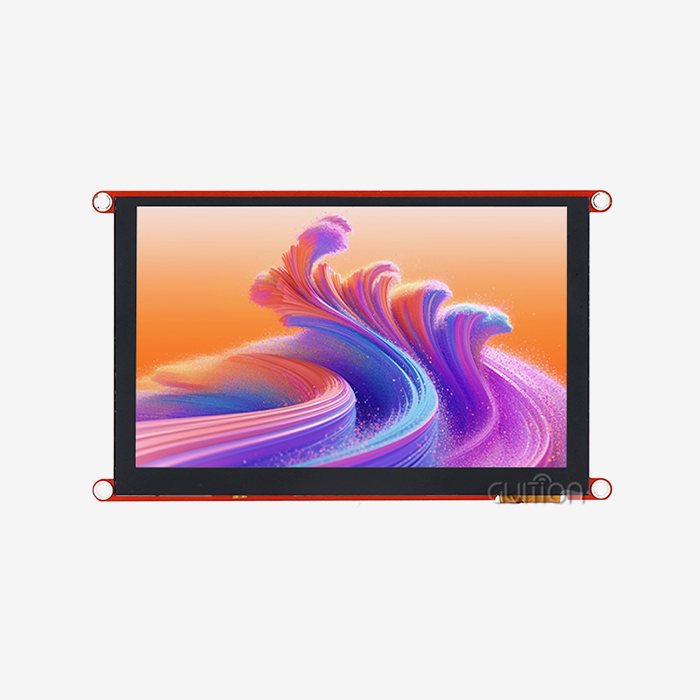
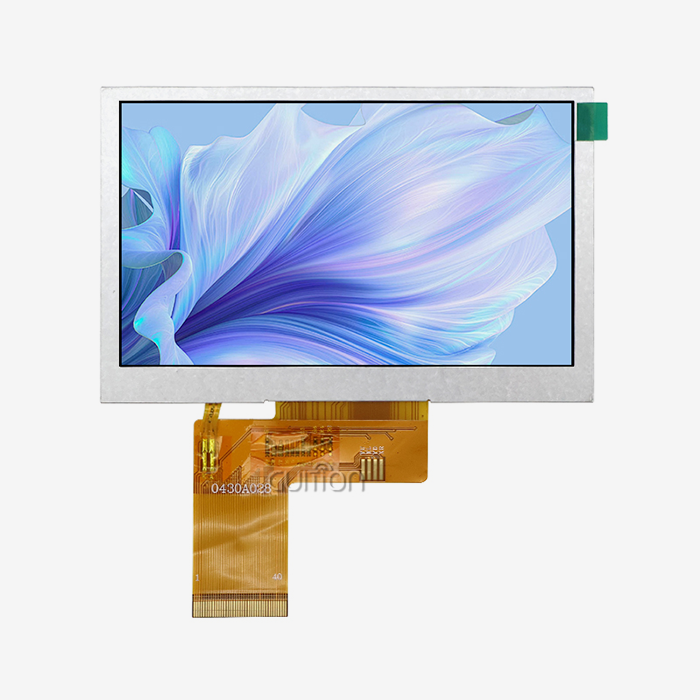
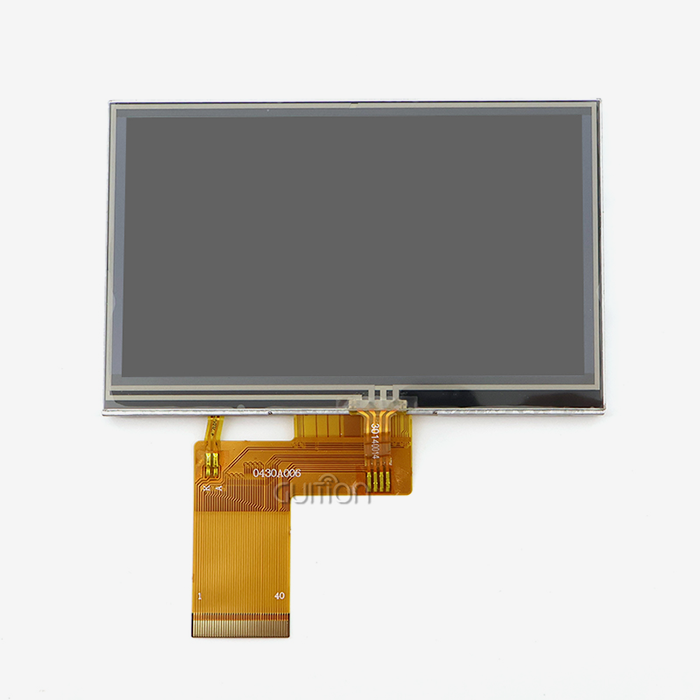
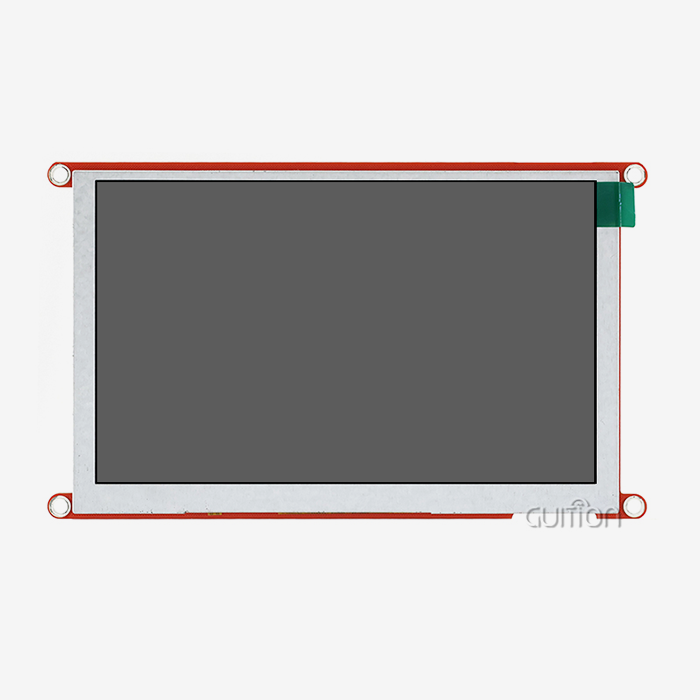
IoT-focused display modules solve this challenge through intelligent delegation. Take the ESP32-8048S070N from Guition as a practical example. This 7-inch display solution leverages the ESP32-S3-WROOM-1 dual-core MCU running at 240MHz, dedicating one core to display management while leaving substantial resources available for your application logic. The 8MB of PSRAM and 16MB Flash storage provide ample space for complex graphical interfaces without burdening your main system memory.
Real-Time Data Visualization Capabilities
Performance in connected devices increasingly depends on how quickly and clearly you can present information to users. Industrial control panels monitoring production lines need to display sensor readings, alert conditions, and operational parameters without lag. Medical monitoring equipment must reflect patient vitals with precision timing. Smart home interfaces require instant feedback when users adjust settings. Traditional display implementations struggle with these demands because every screen update competes with other system tasks. An IoT development screen handles visualization independently through its dedicated hardware. The module maintains its own frame buffer, manages backlight control circuits, and processes touch inputs without interrupting your main application flow.
Consider a scenario in energy management systems where dozens of data points update every second. Temperature sensors, power consumption metrics, voltage readings, and system status indicators all require simultaneous display updates. With a conventional approach, your microcontroller might drop network packets or miss sensor readings during intensive screen redraws. An intelligent display module maintains smooth 30fps refresh rates while your primary processor handles critical data acquisition and transmission tasks without compromise.
Connectivity Features That Enhance Overall System Performance
Integrating wireless capabilities directly into display modules is architecturally advantageous. Advanced IoT development screens use the ESP32-S3 chipset to bring Wi-Fi and Bluetooth to the human-machine interface layer. This location allows performance enhancements that centralized wireless designs cannot. Data relay bottlenecks are eliminated when your display communicates directly with cloud services or local gateways. The display subsystem can handle configuration updates, graphic asset downloads, and usage analytics without using control bus bandwidth. This parallel communication architecture boosts system throughput and reduces user-facing latency.
Remote maintenance improves performance longevity. In agricultural automation, business terminals, and medical equipment, personal access is expensive or difficult. Pushing GUI updates, fixing interface issues, and adding new features over-the-air optimizes device performance throughout its lifecycle. You avoid performance degradation when deployed systems become old but uneconomically serviceable.
Key Features and Technical Insights Into IoT Development Screens
Hardware Architecture for Superior Processing
The dual-core MCU architecture found in modern IoT development screens delivers measurable performance advantages across multiple dimensions. The ESP32-S3-WROOM-1 module exemplifies this approach with its dual Xtensa LX7 cores, each capable of independent task management. This hardware configuration allows true parallel processing—one core can manage the LVGL graphics library and touch event processing while the other handles your application logic, sensor interfaces, and network communications. Memory architecture plays an equally critical role in sustained performance. The combination of 512KB SRAM for fast variable access, 8MB PSRAM for large buffer management, and 16MB flash for program storage and assets creates a balanced system that rarely encounters resource constraints. When working with high-resolution 800×480 displays, this generous memory allocation prevents the stuttering and lag that plague memory-constrained designs.
Development Environment Flexibility and Customization
The intelligent display module's software ecosystem can greatly affect development speed and product performance. Support for Arduino IDE, ESP-IDF, MicroPython, and Mixly lets your team operate in familiar environments without steep learning curves. The flexibility leads to speedier time-to-market and stronger implementations. Guition's low-code visual design interface development software expands on this idea. Engineers may drag-and-drop complex HMI setups to examine outcomes without displaying aing a driver code. Automatic performance optimization implements efficient rendering methods that hand-coded solutions may miss. Comprehensive Arduino libraries and example programs speed up prototyping. Validating core functionality in hours instead of weeks frees up time for speed optimization and feature enhancement. Cross-platform online debugging helps you find bottlenecks and improve system performance before production tooling.
Security Protocols for Connected Display Systems
While performance talks generally ignore security, flaws can dramatically affect system operation. IoT development screens that control devices must have strong security mechanisms that prevent unauthorized access without delay or processing overhead. The ESP32 platform uses hardware-accelerated cryptographic functions—AES, SHA, and RSA engines—for encryption and authentication with little CPU involvement. Boot methods that only run verified firmware on your display module prevent malware insertion that could affect performance or functionality. OTA updates send encrypted firmware packages across your network, verified by digital signatures. This transparent security layer protects the system against attackers. These security features address legal standards for medical devices and industrial control systems without compromising real-time responsiveness. Hardware security methods conduct authenticated handshakes and encrypted data streams in microseconds.
Emerging Technologies Shaping Display Performance
Current trends in display technology promise substantial performance improvements for the next generation of connected devices. Adaptive interfaces powered by edge AI algorithms can adjust information density, color schemes, and control layouts based on usage patterns and environmental conditions. The processing power available in modules like the ESP32-S3 makes these intelligent behaviors practical without cloud dependencies. Advanced sensor integration enhances contextual awareness. Ambient light sensors enable automatic brightness adjustment, reducing power consumption while maintaining visibility. Proximity sensors can wake displays from low-power states milliseconds before user interaction, creating the perception of instant response. These optimizations accumulate into significant performance and efficiency gains over product lifespans measured in years.
Comparing IoT Development Screens to Traditional Screens
Responsiveness and User Experience Metrics
User experience measurements reveal the performance gap between intelligent display modules and LCDs. The delay between finger contact and visible feedback is 15-30ms on optimized IoT development screens and 80-150ms on systems where the main MCU processes touch events alongside other duties. User perception changes from "responsive" to "instantaneous." Similar story with screen refresh rates. Dedicated display controllers sustain frame rates even under severe system load, while standard systems stutter while the processor performs computationally intensive tasks. Smooth animations and transitions boost quality and reliability in consumer-facing apps like smart home control panels. Architectural differences also affect power efficiency. IoT development screens can enter deep sleep states independently, powering down the display subsystem while the main controller monitors network connectivity or sensors. This granular power control enhances portable device battery life and lowers energy costs in always-on systems like commercial terminals and industrial HMI panels.
Maintenance Demands and Lifecycle Costs
The total cost of ownership extends far beyond initial procurement prices. Traditional display implementations often require extensive custom driver development, consuming engineering hours that intelligent modules eliminate. When issues arise in deployed products, the remote update capabilities built into IoT development screens enable software fixes without field service visits, potentially saving thousands of dollars per incident in travel costs and downtime. Component longevity and supply chain stability merit consideration in procurement decisions. Industrial-grade display modules typically specify MTBF ratings of 30,000-50,000 hours for backlight subsystems, translating to 3-5 years of continuous 24/7 operation. Manufacturers focused on the B2B IoT segment maintain consistent specifications and long-term availability commitments that prevent forced redesigns due to component obsolescence.
Vendor Selection Criteria for B2B Procurement
The correct display module supplier affects project success as much as technical criteria. How quickly your engineering team can go from evaluation to production depends on documentation quality. Complete datasheets, integration instructions, and functioning example code greatly decrease development risk and scheduling uncertainty. Troubleshooting integration issues or optimizing performance requires responsive technical support. Suppliers who understand product development schedules add value beyond hardware. Find vendors with online debugging, reference designs for common use cases, and clear escalation paths for challenging technical questions. Customization lets you differentiate your goods using established display technologies. Modifying screen sizes, connectors, or firmware for specific communication protocols makes a standard module customized. As demand rises, prototype and production volume manufacturing flexibility keeps your supply chain running smoothly.
How to Choose and Integrate IoT Development Screens in Your Devices?
Matching Display Specifications to Application Requirements
Knowing your operational environment and user engagement patterns helps you choose the best display module. Information density and viewing distance depend on screen size. The 7-inch ESP32-8048S070N display fits control panels viewed from 1-3 feet, offering space for several data fields and touch controls without overpowering tiny enclosures. In mobile devices or tight spaces, 2.8" or 3.5" screens work well, while 10" or 15" screens are better for industrial work. Resolution goes beyond pixels. Embedded CPUs can handle the 800×480 resolution of mid-size IoT displays, which provides clear text and images. Higher resolutions require more processing power and memory bandwidth, which might cause bottlenecks without powerful controllers. In cost-sensitive applications, one should balance visual quality with system performance. Environmental concerns typically demand specialization. For sunshine readability, outdoor installations need panel brightness over 800 nits, optical bonding to prevent internal reflections, and -20°C to +70°C temperature ratings. Industrial environments may require vibration resistance and IP65 dust and liquid ingress protection. Medical surfaces must resist aggressive cleaning agents and antimicrobial coatings. It would be beneficial to define these needs early to prevent costly redesigns.
Integration Best Practices and Development Workflow
To integrate successfully, evaluate the entire development ecosystem, not just hardware specs. This well-rounded solution includes Arduino IDE compatibility for speedy prototyping, ESP-IDF support for production optimization, and Guition development tools for efficient UI design. This multi-pathway method suits growth phase needs and team skills. Communication protocol choice affects performance and implementation complexity. Simple TX, RX, and ground connections make UART interfaces popular in IoT display modules. Using a few GPIO pins, asynchronous serial transmission operates reliably over many meters of cable and interacts with most microcontroller platforms. For applications demanding frequent full-screen updates, SPI delivers higher bandwidth but requires more signal lines and timing. Expanding storage via a TF card opens advanced features without altering your display module. Save high-resolution photos, notification sounds, and data logs to removable media. This approach simplifies upgrades and allows user-customizable interfaces by separating static assets from code. Arduino and ESP-IDF libraries' file system access APIs make SD card integration straightforward with a few lines.
Supplier Credibility and After-Sales Support Assessment
Supplier reliability evaluation prevents project delays and budget overruns. Product certificates prove quality and compliance. Look for CE, FCC, and RoHS markings for safety and environmental compliance. UL or IEC certifications may be required for medical or industrial equipment. These certifications show the maker has tested properly rather than taking corners. Reference customer implementations and case studies demonstrate display module performance beyond what is shown in the datasheets. Companies confident in their solutions submit application notes from successful deployments across industries. If such materials or customer references are unavailable, one should question the product's maturity or the vendor's experience. How well you handle development issues depends on after-sales assistance. Direct engineering contact sources like Guition's david@guition.com technical support solve issues faster than generic ticketing systems. For worldwide procurement, manufacturers with global support teams avoid annoying delays when questions arise during business hours.
Future Outlook: Trends and Strategic Benefits of IoT Development Screens
Edge Computing Integration in Display Modules
Next-generation modules have more powerful processors for local AI inference, speeding display and computation convergence. Display controllers may soon assess user interaction patterns in real time to forecast upcoming actions and preload relevant screens to reduce latency. Display subsystems with computer vision algorithms could offer gesture control, facial recognition for personalized interfaces, and industrial quality inspection. Edge computing minimizes cloud connectivity and improves privacy and response times. Devices store sensitive medical data. Factory automation works during network interruptions. Consumer devices respond faster without round-trip server communications. The ESP32-S3's dual-core architecture and large memory position IoT development screens for firmware updates to enable these evolutionary capabilities.
Adaptive User Experience Design
Static interfaces give way to dynamic systems that respond to context. Time-of-day adjustments automatically switch between detailed data views during active work hours and simplified monitoring displays overnight. Usage analytics identify rarely-accessed functions, reorganizing menus to surface frequently-used controls. Environmental sensors adjust color schemes—high-contrast modes activate in bright conditions while softer palettes reduce eye strain in dim environments. These intelligent behaviors differentiate products in competitive markets while improving genuine usability. The computational resources in modern display modules make such features practical without adding separate processors. Development tools like the Guition software platform increasingly incorporate templates and frameworks for adaptive interfaces, reducing the custom coding required to implement sophisticated user experiences.
Strategic Procurement Advantages and Market Positioning
Early adoption of improved display technology builds product-lifecycle competitive advantages. Devices supporting remote updates remain current longer, reducing warranty costs and extending market relevance. Built-in connectivity allows usage information for future product planning. Positive ratings and brand impression justify premium pricing for superior user interfaces. Modules based on ESP32 are preferred for supply chain reasons. Multiple suppliers and long-term roadmaps keep components available. The development community provides libraries, tools, and troubleshooting to speed up problem-solving. This ecological effect boosts value beyond the display module.
Conclusion
Through intelligent architecture that efficiently distributes processing responsibilities, IoT development screens transform device performance. These modules let your primary processor focus on key application logic by delegating display management to dedicated controllers with local graphics processing, substantial memory allocation, and integrated connections. Results include faster reaction times, better user experiences, and more stable load operations. Guition's ESP32-8048S070N shows how dual-core processors, complete development tool support, and customizable integration choices speed up project timeframes and create professional interfaces. Remote update capabilities maintain performance over years of operation, positioning goods competitively in difficult markets.
FAQ
What is the typical lifespan of an IoT development screen?
Industrial-grade modules typically offer backlight MTBF ratings of 30,000-50,000 hours, equating to approximately 3-5 years of continuous 24/7 operation. Actual lifespan varies based on operating conditions, with lower brightness settings and moderate temperatures extending longevity. The ESP32-S3 controller and supporting electronics generally exceed display component lifespans when properly designed.
Can these displays function reliably in outdoor environments?
Standard modules work well in protected outdoor installations with shade or enclosures. Direct sunlight applications require high-brightness variants exceeding 800 nits, often with transflective polarizers or optical bonding to maintain visibility. Wide-temperature ratings and conformal coating protect against environmental extremes. Specify outdoor requirements during procurement to ensure appropriate component selection.
How do I update the display firmware after deployment?
The integrated Wi-Fi capability in ESP32-based modules enables over-the-air updates without physical access. Implement OTA functionality during development using ESP-IDF libraries or the Arduino OTA framework. Alternative approaches include local updates via the TF card slot or USB interface. Secure boot mechanisms and encrypted firmware packages protect against unauthorized modifications during update processes.
Ready to transform your device performance with Guition?
Guition specializes in high-performance USART-hmi display modules that streamline your development process while maximizing device capabilities. Our ESP32-8048S070N delivers the processing power, connectivity features, and development flexibility that engineers need for successful IoT implementations. As an IoT development screen manufacturer committed to innovation, we provide complete secondary development support, cross-platform compatibility, and remote upgrade capabilities that reduce your total cost of ownership. Our technical team stands ready to help you select the optimal display solution and navigate integration challenges. Contact david@guition.com today to discuss your project requirements and discover how our display modules can accelerate your time-to-market while delivering the responsive, connected user experiences your customers expect.
References
1. Liu, Y., & Wang, X. (2023). "Performance Optimization of Embedded HMI Systems in Industrial IoT Applications." Journal of Embedded Systems Engineering, 18(4), 267-281.
2. Zhang, H., Chen, M., & Rodriguez, A. (2024). "Comparative Analysis of Display Technologies for Connected Medical Devices." Medical Device Technology Review, 35(2), 112-128.
3. Thompson, R., & Kumar, S. (2023). "Edge Computing Integration in Smart Display Systems: Architecture and Implementation." IEEE Transactions on Industrial Electronics, 70(8), 8234-8247.
4. Anderson, P., Williams, J., & Schmidt, K. (2024). "Low-Code Development Platforms for IoT Human-Machine Interfaces: Efficiency Gains and Design Patterns." International Journal of Human-Computer Interaction, 40(3), 445-462.
5. Chen, L., Park, D., & Nakamura, T. (2023). "Security Protocols for Connected Display Modules in Industrial Control Systems." Industrial Cyber-Physical Systems Security, 12(1), 78-95.
6. Martinez, G., & Kowalski, B. (2024). "Total Cost of Ownership Analysis for Intelligent Display Modules in B2B IoT Deployments." Supply Chain Management Review, 28(2), 34-49.
Learn about our latest products and discounts through SMS or email