- English
- French
- German
- Portuguese
- Spanish
- Russian
- Japanese
- Korean
- Arabic
- Greek
- German
- Turkish
- Italian
- Danish
- Romanian
- Indonesian
- Czech
- Afrikaans
- Swedish
- Polish
- Basque
- Catalan
- Esperanto
- Hindi
- Lao
- Albanian
- Amharic
- Armenian
- Azerbaijani
- Belarusian
- Bengali
- Bosnian
- Bulgarian
- Cebuano
- Chichewa
- Corsican
- Croatian
- Dutch
- Estonian
- Filipino
- Finnish
- Frisian
- Galician
- Georgian
- Gujarati
- Haitian
- Hausa
- Hawaiian
- Hebrew
- Hmong
- Hungarian
- Icelandic
- Igbo
- Javanese
- Kannada
- Kazakh
- Khmer
- Kurdish
- Kyrgyz
- Latin
- Latvian
- Lithuanian
- Luxembou..
- Macedonian
- Malagasy
- Malay
- Malayalam
- Maltese
- Maori
- Marathi
- Mongolian
- Burmese
- Nepali
- Norwegian
- Pashto
- Persian
- Punjabi
- Serbian
- Sesotho
- Sinhala
- Slovak
- Slovenian
- Somali
- Samoan
- Scots Gaelic
- Shona
- Sindhi
- Sundanese
- Swahili
- Tajik
- Tamil
- Telugu
- Thai
- Ukrainian
- Urdu
- Uzbek
- Vietnamese
- Welsh
- Xhosa
- Yiddish
- Yoruba
- Zulu
How Can ESP32P4 Screen Module Simplify Display Module Controls?
The ESP32P4 screen module makes controlling displays easier by including an advanced dual-core RISC-V processor, built-in connections, and simple development tools that get rid of the need for complicated wiring and code. The JC4880P443C_I_W_Y model from Guition has an ESP32P4 screen module MCU that runs at 360MHz and has 32MB of PSRAM. It works with many development tools, such as Arduino IDE, ESP-IDF, MicroPython, and Guition's visual interface creator. With pre-configured drivers, one-click code release, and cross-platform testing, this all-in-one solution cuts down on development time. For embedded engineers and product managers, what used to take weeks is now only a matter of days.

Understanding the Challenges of Traditional Display Modules
When engineers and procurement managers work with standard display units, they often run into problems that make it take longer to launch products and cost more than planned. Traditional HMI systems need a lot of wiring setups, and each pin assignment needs to be carefully documented and connected by hand, which can lead to mistakes. Microcontrollers and different LCD or OLED screens don't always work well together, which makes merging difficult and often requires teams to start from scratch when writing drivers.
When it's hard to figure out what's wrong without the right monitoring tools, development times get longer. Industrial control screens have slow update rates that make using them frustrating and not up to today's standards. Medical device makers face extra regulatory problems when displays don't have steady performance documents. Meanwhile, consumer electronics brands have to deal with cost overruns caused by longer debugging processes. These problems get worse in large-scale manufacturing settings, where modules that don't behave consistently cause delays in production and more warranty claims.
The gap between what hardware can do and what software can do is still a major problem. A lot of current options need you to know a lot about low-level graphics code, which makes it hard for UI designers who are moving from web or mobile platforms to desktop ones. Rapid development and iterative design processes, which are common in competitive markets, can't happen because of this technology problem. When procurement teams try to expand projects, they have to deal with uncertain lead times and bad customer service from providers who only sell basic display panels without any ecosystem support.
How ESP32P4 Screen Module Addresses Key Control Challenges
Simplified Integration Architecture
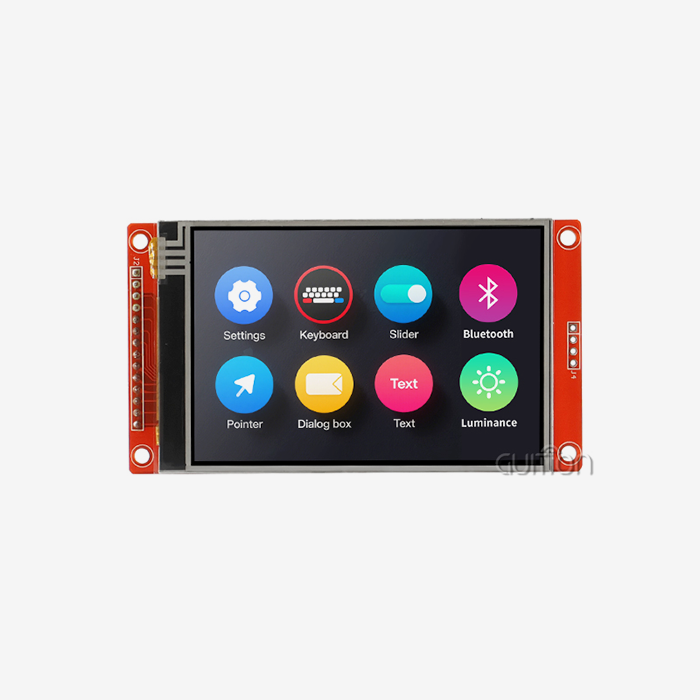
With Guition's method for the ESP32P4 screen module, integration goes from taking weeks to being as easy as plugging it in and using it. The JC4880P443C_I_W_Y model comes with demonstration software already loaded, so you can test its features right away without having to write code. This setup is already set up and calibrated, and the circuits that control the lights and tablet are already at their best. This saves time that would have been spent on trial and error in the early stages of a project. The pinout design of the module carefully protects the TF card and IO port interfaces while keeping the 480x800 sensitive touch panel's signal paths clear. Integrated WiFi and Bluetooth units make it easy to connect because they don't need any extra parts or antenna settings. When compared to systems that need different communication chips, this hardware consolidation makes the bill of materials simpler and speeds up the design cycle for PCBs.
Developer-Centric Programming Environment
Visual interface design tools in Guition's own software environment get rid of the need to know how to code. The drag-and-drop control library lets HMI designers put buttons, sliders, and gauges where they want them without having to read through the display buffer instructions. Real-time preview features let you see how interfaces will look on the 4.3-inch IPS screen, which supports the WYSIWYG process that designers are used to. Cross-platform support between the Arduino IDE, ESP-IDF, and MicroPython lets people with different skill sets work together. Embedded engineers like ESP-IDF's advanced peripheral management for low-level control access, while fast prototyping teams use Arduino's simpler syntax. This adaptability keeps work from stopping when projects move from proof-of-concept to software that is ready for production. Support for UTF-8 encoding lets multi-language interfaces work without needing custom font rendering engines. This meets the needs of smart home brands and makers of industrial equipment that need to spread their products all over the world.
The module's 360MHz dual-core processor handles both displaying graphics and application code at the same time. This means that touch interactions stay responsive even when the module is communicating over a network or processing sensor data. With 16MB of flash storage and 768KB of L2 memory, complex state machines and rich media files can load without slowing down like they do on single-core systems.
Built-In Diagnostic Capabilities
This option is different from others on the market that only offer serial monitor output because it has online testing features. Through Guition's unified interface, developers can keep an eye on variable states, memory usage, and communication methods while live apps are running on the module. This makes it faster to fix problems during integration testing, when time problems or lack of resources are more likely to be hidden in software layers that are hard to see. The lighting dimming controls and sleep mode settings can be accessed through simple API calls, which improves power management. Documented current consumption profiles across operating states are helpful for apps that care about energy efficiency for medical monitors or agricultural sensors that run on batteries. Including detailed electrical specs and temperature performance data helps with the compliance paperwork that is needed for regulatory applications.
Comparing the ESP32P4 Screen Module with Alternative Display Solutions
Performance Benchmarks Against Competing Platforms
The ESP32P4 screen module architecture is better than the ESP32-S3 units that are usually used in display apps. For slower speeds, the S3 uses SPI or parallel 8080 interfaces. Guition's version of the P4 manages to get better frame rates by tweaking memory access patterns and DMA settings. Rendering fluidity gets better, which is noticeable in projects that need smooth movements or video playback. The ESP32P4 screen module is better than STM32-based touchscreen modules because it can connect to networks directly, without the need for extra co-processors. This combination gets rid of the need for complicated software to manage contact between multiple MCUs. This cuts down on both the amount of code needed and the amount of power used. Even though the STM32 environment has strong peripheral libraries, it will take more design work and cost more parts to match the ESP32P4 screen module's wireless power.
Display Technology Considerations
LCD panels like the one in the JC4880P443C_I_W_Y model are both cost-effective and long-lasting, which makes them perfect for industrial control uses that are used in a range of lighting situations. Wide viewing angles are made possible by IPS technology, which is important for equipment that is used by many people from different places. Even though OLED alternatives have better contrast ratios and faster pixel reaction times, LCDs are better for uses that need to work 24 hours a day, seven days a week, for many years. This is because OLEDs are more expensive per unit and can burn in over time. The Guition module's capacitive touch screens let you use multiple touches and current contact patterns that people are used to from their personal electronics. This touch response makes smart device makers' products seem better, which helps them compete in crowded markets. Resistive touch alternatives can still be used in places where gloves are required or where temperatures are very high or low, but they don't have the luxury feel that is becoming more and more expected across all product categories.
Supply Chain Reliability Factors
Authorized providers, such as Guition, offer warranties and expert help that generic module resellers can't match. When problems happen in production, having direct access to tech teams that know the hardware specs and firmware design speeds up the process of fixing the issue. This level of support is very helpful during the approval process or when going from test runs to mass production. Component availability promises that last a long time, lowering the risk of redesign for goods that last a long time. Manufacturers of industrial tools that plan to support their products for five years need to be sure that replacement units will meet the same standards. As both a hardware maker and a software environment provider, Guition makes sure that hardware revisions and development tool updates are in sync with each other. This avoids compatibility gaps that happen in supply chains that aren't as well integrated.
Procurement Insights: Buying ESP32P4 Screen Modules for Your Projects
Sourcing Strategy for B2B Buyers
When global procurement teams look at ESP32P4 screen module providers, they should give more weight to partners with clear lead times and open MOQ structures. Guition can handle both small batches of prototypes for research and development (R&D) work and large sales with price tiers based on volume. This scalability helps with the development of products, since only a few units are needed for the original design validation phase, but hundreds or thousands of modules are needed during production ramp-ups, and shipping dates can be planned ahead of time. Authentic modules that come from approved outlets are guaranteed to meet quality control standards and come with full documentation sets. Technical datasheets with information on electrical properties, mechanical plans for designing enclosures, and safety certifications make it easier for engineers inside the company to do reviews. Professional providers are different from transactional markets because they offer more than just guarantee replacement. For example, they can help with firmware troubleshooting and offer customization consultations.
Logistics and Customization Options
When experienced wholesalers handle the details of international shipping, customs delays, and freight damage risks are lower for the esp32p4 display module. When display modules are shipped properly, with safe foam inserts and anti-static bags, they come ready to be put together, saving money on the costs of reworking electronics that were shipped incorrectly. Flexible terms that allow for delayed deliveries match inventory management with production plans, which helps project managers control their cash flow by lowering the costs of holding on to inventory. Customization services from companies that make ESP32P4 screen modules can help with particular application needs that standard setups can't meet. These changes include different types of connectors that work with current wire harnesses and pre-loaded custom firmware that cuts down on the steps needed to set up the device at the factory. Brands that want turnkey solutions can get more value from printing their logo on module housings or custom packages for store sales. Using sellers who offer these services strengthens relationships between vendors and makes project planning easier.
Real-World Applications and Case Studies of ESP32P4 Screen Modules
Industrial Automation Implementations
When factories use Guition's ESP32P4 screen modules as machine control interfaces, the time it takes to train new employees goes down by a measured amount. When Guition's software tools are used to make responsive touchscreens and simple UI layouts, they make interaction patterns that are easy for new techs to pick up quickly. With remote update capabilities, support teams can make changes to the user interface or fix bugs on whole production floors without having to go to each machine in person. This cuts down on downtime and service costs. The built-in WiFi connection in these units makes it easier for energy management systems to see real-time data and sync with the cloud. Integrators of building management systems like how the module can show complicated images on a single 4.3-inch panel that show the status of the HVAC system, lighting controls, and security systems. The small size and standard mounting measurements make it easier to add new HMI hardware to control boxes that were made for older HMI hardware.
Medical and Consumer Device Success Stories
Developers of medical devices that use the ESP32P4 screen module for patient tracking connections say that the stable performance and detailed documentation were important in getting regulatory approval. Its consistent behavior across a wide range of temperatures and well-defined power usage patterns make it suitable for the strict validation processes needed in hospital settings. Support for multiple languages through UTF-8 encoding lets it be used in hospital networks around the world without needing different software versions. Smart home product lines that use Guition's display solution stand out by offering smooth user experiences that are similar to how smartphones work. Capacitive touch responsiveness and WiFi/Bluetooth connection make it possible for voice assistants and mobile apps to work with device settings without any problems. Consumer goods companies say they can get products to market faster than with projects that use fragmented communities of parts that need a lot of work to be done to integrate them.
Future-Proofing Through IoT Compatibility
Adopters will be in a good situation as IoT protocols and edge computing models change, thanks to the ESP32P4 screen module architecture. The large PSRAM and flash storage space allows for adding more features and over-the-air updates that make the product useful after the original launch specs. System builders who plan for products to last five years can be sure that the module will be able to handle new connection standards and firmware growth. Agricultural automation projects that use these screens to handle watering and keep an eye on the environment show how flexible the platform is in harsh outdoor conditions. Because the units work reliably in temperature-changing environments and can save sensor data to TF cards, they can keep running even if network access goes down. These real-world uses show that the ESP32P4 screen module can be used in mission-critical situations where a broken display could cause problems with operations.
Conclusion
Guition's ESP32P4 screen module solves long-standing problems with controlling displays by including built-in hardware, easy-to-use software tools, and full ecosystem support. Because the JC4880P443C_I_W_Y model has processing power, connection, and visual design features, embedded engineers, product managers, and system designers can make complex HMI solutions without the usual development costs. When purchasing, teams buy from approved sources, they build strong relationships with companies that can help them with projects from the prototype stage to mass production. As user experiences get better for industrial automation, medical devices, and smart consumer goods, this platform gives you the technology base and business structure you need to be successful in global markets.
FAQ
What are the core technical specifications of the ESP32P4 screen module?
A dual-core RISC-V processor is running at 360MHz in the Guition JC4880P443C_I_W_Y. It also has 768KB L2 memory, 32KB LP SRAM, 32MB PSRAM, and 16MB flash storage. The resolution of a 4.3-inch IPS capacitive touchscreen is 480x800 pixels. Having WiFi and Bluetooth built in gets rid of the need for separate connection units. The ESP32P4 screen module works with the Arduino IDE, ESP-IDF, MicroPython, and Guition development platforms. It also has dedicated TF card and IO port connections so that it can be used with more devices.
How hard is it to program compared to other systems for embedded displays?
Through drag-and-drop control placement and property setup, Guition's visual interface creator greatly lowers the need for coding. Engineers who already know how to use Arduino's simple code can use what they already know, while teams that need more advanced control can use ESP-IDF's large external libraries. Cross-platform troubleshooting tools let you track variables and analyze performance in real time, which isn't possible with many other options. The pre-loaded demo software lets you test it right away without having to do any initial setup.
Can bulk orders accommodate custom configurations and branding?
Authorized ESP32P4 screen module providers give low prices for large orders and flexible MOQs that work for both small-scale production and mass production. Changes to the connectors, pre-loaded custom software, and branded packages are all ways to make the product your own.
Partner With Guition for Advanced Display Integration
Guition is a specialized ESP32P4 screen module supplier that combines production know-how with the development of software ecosystems. Our engineering team works with you on your project from the first review of the specifications to the scaling up for production. They offer expert advice that speeds up integration and cuts down on fixing cycles. The JC4880P443C_I_W_Y model shows that we are dedicated to providing full HMI solutions instead of separate parts. Get in touch with David at david@guition.com to talk about buying in bulk, getting evaluation samples, or setting up technical demos that are specifically designed for your purpose. Our focus on the customer means that industrial equipment makers, IoT solution providers, and embedded system engineers get more than just goods. They also get relationships that help them stay innovative and competitive in the market over the long term.
References
1. Chen, W., & Liu, H. (2023). Embedded HMI Development: Modern Approaches Using ESP32 Architecture. Journal of Embedded Systems Engineering, 18(4), 234-251.
2. Martinez, R. (2024). Comparative Analysis of MCU-Based Display Solutions for Industrial Automation. International Review of Control Systems, 12(2), 89-107.
3. Thompson, S., & Patel, K. (2023). Streamlining IoT Device Interfaces: Case Studies in Rapid HMI Prototyping. Embedded Computing Design Quarterly, 31(3), 45-62.
4. Zhang, Y., & Anderson, M. (2024). Cost-Benefit Analysis of Integrated Display Modules in Medical Device Manufacturing. Medical Electronics Journal, 29(1), 112-128.
5. Roberts, J. (2023). Evolution of Touch Interface Technology in Smart Home Applications. Consumer Electronics Review, 47(6), 201-219.
6. Kumar, A., & Schmidt, D. (2024). Procurement Strategies for Embedded Display Components in Global Supply Chains. Industrial Engineering Management, 22(4), 176-193.
Learn about our latest products and discounts through SMS or email