- English
- French
- German
- Portuguese
- Spanish
- Russian
- Japanese
- Korean
- Arabic
- Greek
- German
- Turkish
- Italian
- Danish
- Romanian
- Indonesian
- Czech
- Afrikaans
- Swedish
- Polish
- Basque
- Catalan
- Esperanto
- Hindi
- Lao
- Albanian
- Amharic
- Armenian
- Azerbaijani
- Belarusian
- Bengali
- Bosnian
- Bulgarian
- Cebuano
- Chichewa
- Corsican
- Croatian
- Dutch
- Estonian
- Filipino
- Finnish
- Frisian
- Galician
- Georgian
- Gujarati
- Haitian
- Hausa
- Hawaiian
- Hebrew
- Hmong
- Hungarian
- Icelandic
- Igbo
- Javanese
- Kannada
- Kazakh
- Khmer
- Kurdish
- Kyrgyz
- Latin
- Latvian
- Lithuanian
- Luxembou..
- Macedonian
- Malagasy
- Malay
- Malayalam
- Maltese
- Maori
- Marathi
- Mongolian
- Burmese
- Nepali
- Norwegian
- Pashto
- Persian
- Punjabi
- Serbian
- Sesotho
- Sinhala
- Slovak
- Slovenian
- Somali
- Samoan
- Scots Gaelic
- Shona
- Sindhi
- Sundanese
- Swahili
- Tajik
- Tamil
- Telugu
- Thai
- Ukrainian
- Urdu
- Uzbek
- Vietnamese
- Welsh
- Xhosa
- Yiddish
- Yoruba
- Zulu
ESP32P4 lcd module Factory Recommendations for OEM Projects
The best ESP32P4 lcd module factory for an OEM project is one that matches your interface, touch, software, and volume needs and proves its quality with samples and records. I recommend writing your specification first, comparing MIPI DSI and RGB options, and scoring each supplier on engineering support, quality control, and total cost. Then validate a sample and run a pilot build before any bulk order. In this guide, I explain each step and show how the Guition JC4880P443C_I_W, a 4.3-inch 480×800 touchscreen module, fits OEM programmes.

Prepare Your Specification Before You Request Quotes
Define Your ESP32P4 LCD Module Requirements Before Contacting a Factory
A good to-do list will save weeks of work. Before I call a factory, I write down what I want to use it for, how it will be used, the screen size, resolution, type of touch, brightness, power budget, interface, mechanical limits, and how many I expect to buy each year. These panels may have to withstand a lot of different temperatures and not shake easily. Devices like this could be more concerned with lifespan and size. You should also include in your RFQ the connectors, driver IC, certifications, annual demand and launch date that you need. When a supplier has all the information it needs to suggest a standard or custom ESP32P4 lcd module, you avoid price delays, redesigns, and integration shocks.
Compare MIPI DSI and RGB Interface Options for ESP32-P4 Displays
Expressif says the ESP32-P4 has an MIPI DSI host. MIPI DSI has a few high-speed differential lanes. That means goods can be smaller and require less wire. RGB links use data sent in parallel. A lot of embedded systems use them, and the people who work with industrial HMIs and fixed setups generally think they know what they are doing. Which means you have to look at the panel, the driver or bridge, the PCB structure, the connector and the software stack to make the right choice. Before signing off on a production design, get timing data, pin definitions, initialisation code, and a working sample from each factory. If someone tells you something is “compatible” and they don’t give you code you can run, don’t trust them.
Evaluate Specifications for OEM Applications
Resolution alone doesn't tell you much about a screen. I look at more than just the colour performance. I also consider viewing angle, refresh rate, brightness, power consumption, thermal limits, driver IC, touch controller and software support. A specific resolution might work with some cases. Resolutions of 800×480 and 1024×600, and other forms can be used on a number of screen sizes. Make sure the LCD logic, lighting, and touch power areas correspond to the power design you drew. Mechanical details are also important, such as active area, mounting points, FPC position, cover glass and bezel size. The ESP32P4 lcd module box includes datasheets, reference code, models, and customisation, which makes engineering much easier.
Compare Factories and Suppliers with a Clear Scorecard
Know the Common Supplier Types for an ESP32P4 LCD Module
The ESP32P4 LCD module products are most popular in India, Pakistan, Vietnam, Indonesia, Brazil, Russia, Mexico, the United States, Turkey, Germany, etc. Simple sources are good for samples because they have a lot of stock, and it doesn’t cost that much to make the first one. OEMs must develop custom parts for branded products and long-term projects, which can consist of varied sizes, firmware updates, touch integration, or packaging. A factory with its own engineers usually can respond to technical questions more quickly and make it clearer who is responsible than a chain of outside vendors. Some distributors will be willing to work with you on small orders and quick tests, but you won’t have the same ability to make changes or see how they are made. Pick the right kind of seller depending on the stage of the job, the technical difficulty and the estimated time to make.
Build a Factory Evaluation Scorecard.
A plant study should evaluate how well it makes things, its engineering tools, and how well it manages the supply chain. Get to know the SMT lines, the bonding process, touch integration and the tools that can be used for inspection. You should ensure that the team is able to do both small- and large-scale production. You can ask for quality checks that are performed before shipping the product, during production checks, final functional tests, ageing, brightness uniformity, touch accuracy and environmental factors to know more about quality. When a panel or driver IC reaches the end of its useful life, it’s important to have a written engineering change process and be able to find parts. Finally, you must have the export papers, know RoHS and REACH, and have EMC support. Ask the supplier what radio compliance paperwork they can provide for sales in the US. Many of these modules already have WiFi and Bluetooth built in.
Assess Price, MOQ, and Total Procurement Cost
It’s not all about the price per unit. Different screen sizes, resolutions, interfaces, touch technology, cover glass, brightness, driver IC, test needs, tooling, packing and order quantity all have different prices. You should have separate lines for samples, engineering or NRE work, fixtures, tools, shipping, packing and production units. When you choose, please check MOQ and lead time also. The lead time and standard modules could be different. If you are comparing prices, you should also consider technical compliance, sample performance, guarantee, payment terms, quality promises, extent of customisation, and after-sales support. This might be the most expensive choice for an ESP32P4 lcd module project if it hides costs for rework or failure, although it might be the cheapest price at first.
Validate Samples and Plan Your Procurement
Validate Samples Before a Bulk Order
Sample validation keeps your schedule safe. Engineers want to see how the device charges, how secure the interface is, how well it responds to touches, how much power it uses, how well the connector fits, and how well it works with the firmware and GUI tools that are planned. See how the text looks, how the animations work, what the picture quality is, how accurate the touches are, how fast you can react, and how easy it is to read in real-life lighting. Your product should also be subjected to long-term ageing tests for temperature, humidity, vibration, ESD and backlight if required. Before you can approve the ESP32P4 LCD module for mass production, you need to run a test batch and sign off on a golden sample. For each package, note the size of the device, any limitations on what it looks like, the version of its software, the colour, brightness, connections, and how it responds to touch.
Select the Best Supplier for Your Project Stage
As your project moves through its different stages, so will the appropriate supplier for it. For standard development, the most important things are documentation, demos and expert support. The most important things during validation are that the component is stable in the first place and that it can be changed and tested. If you have to produce a lot of something, you have to think about supply continuity, quality systems, cost control, and capacity. A weighted scorecard allows you to make a fact-based choice. I think quality and technical fit should be weighted more heavily than price. Ask simple questions. Does the factory do both RGB and MIPI DSI designs? Does it come with firmware you can use? How easy are the parts to switch? Can it guarantee OEM packaging and a continuous flow of goods? These questions will be answered with facts and not just claims by the best company that makes ESP32P4 lcd modules.
Avoid Common Sourcing Mistakes
Many sourcing problems occur when buyers only look at the price of a part or how nice it looks. A good resolution is not enough if the timing, pin assignments, voltage levels, driver software, touch control, or backlighting is not done well. In some cases, the development board is not an OEM part that can go into production. This is because it may not have the right mechanics, lifetime support, testing or approval papers. Another common mistake is to ignore the risk of panels and driver ICs reaching the end of their useful life and to place a large order before pilot validation. Most of these issues can be avoided by knowing the exact interface, testing your own firmware on the ESP32P4 LCD module, approving a "golden sample" and making change control clear.
Follow a Structured Procurement Process for an OEM ESP32P4 LCD Module
When you have an organised way of doing things, everybody from engineering to buying to quality control to production is all on the same page. The first step is to list the application, technical needs, expected number, target markets, compliance needs, and start date. Narrow down the list of companies. Use things like compatibility, papers, ability to make, and answer quality. First, get examples, drawings, help for software, and test data. Then make sure the interface, GUI, touch, mechanical, and environmental stuff is fine. In negotiations, you need to be clear on the price, minimum order quantity (MOQ), lead time, warranty, packaging, payment terms, and the rules for engineering changes. Make one to see how it works before you make a tonne. Then consider quality, delivery, part changes and feedback from customers.
Why the Guition JC4880P443C_I_W Fits OEM Projects
Core Hardware of the Guition ESP32P4 LCD Module
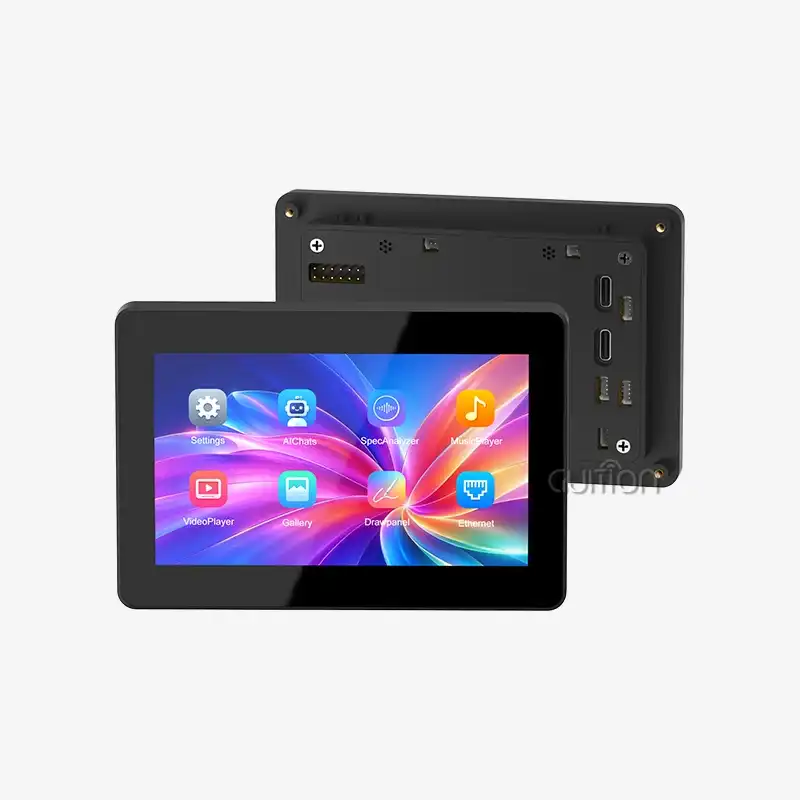
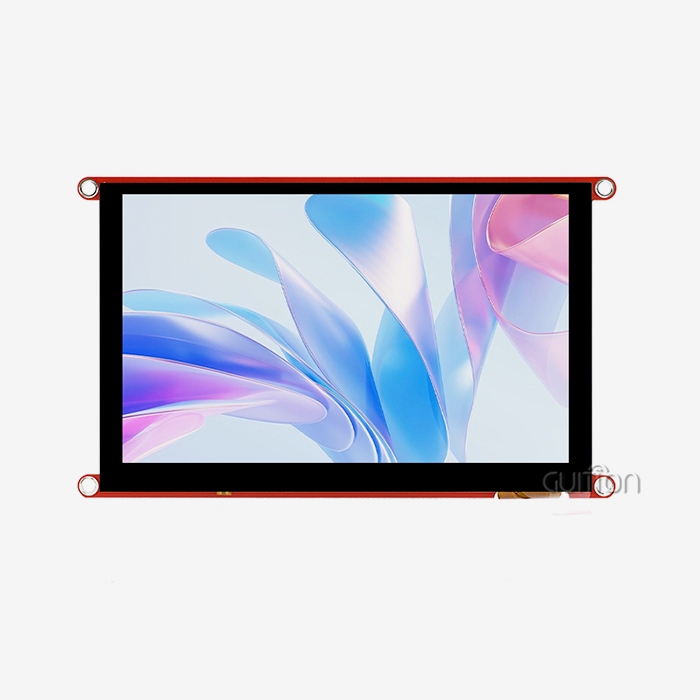
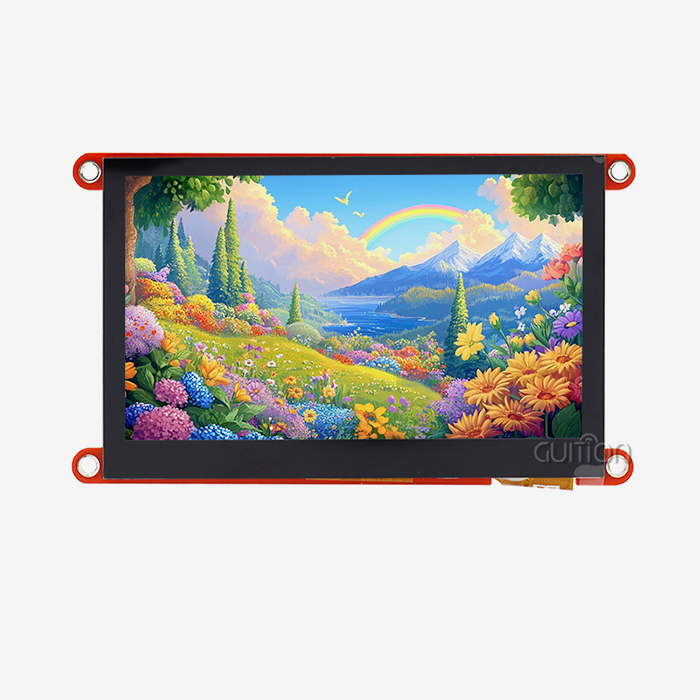
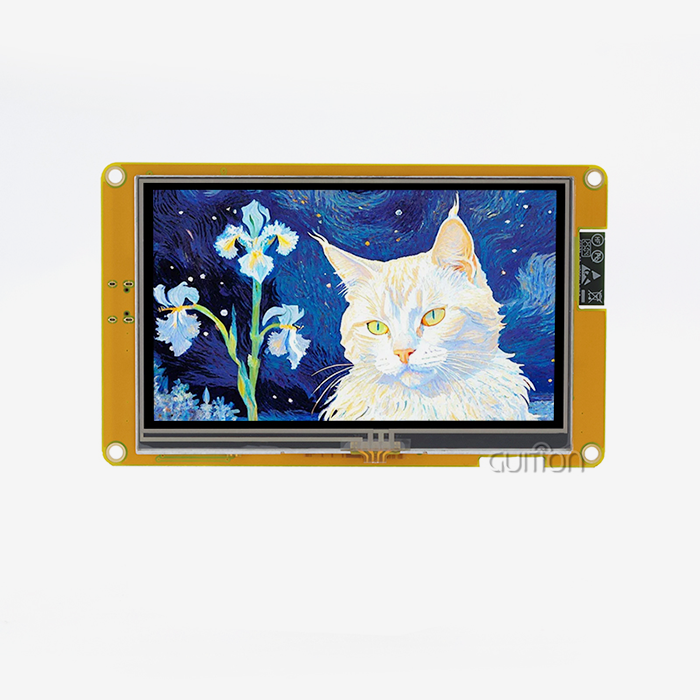
On this road, you can find the JC4880P443C_I_W from Guition, a brand of Jingcai Intelligence. It’s a 4.3-inch ESP32P4 LCD module with a 480×800 IPS capacitive touch screen. It has 2 cores with a maximum frequency of up to 360 MHz, 768 KB HP L2MEM, 32 KB LP SRAM and 128 KB HP ROM. This is the main controller. It also has 32MB of PSRAM and 16MB of flash. It can display 16.7 million colours and has a wide viewing angle. It is easier to read the controls from the side. The touch control and the backlight control circuits are already built in, so your team doesn't need to build those parts from scratch for the first version.
Development Tools and Software Support
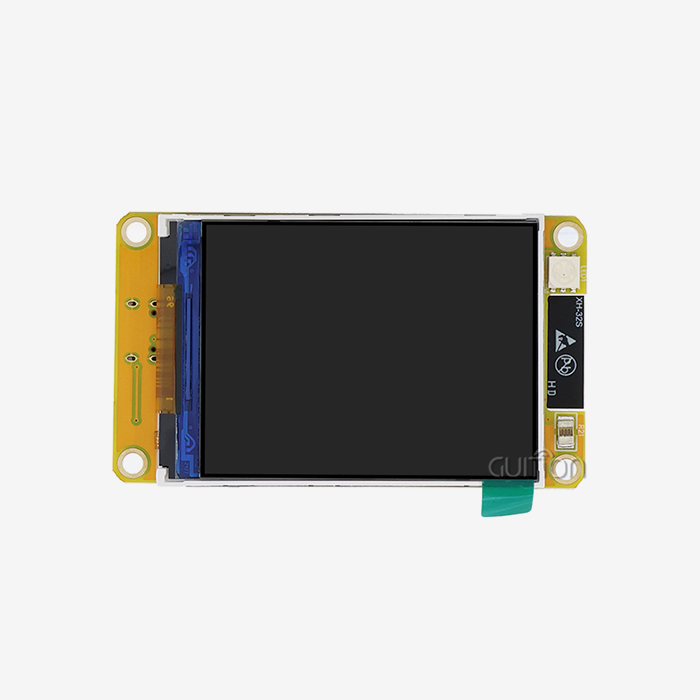
This ESP32P4 LCD module is compatible with Arduino IDE, ESP-IDF, MicroPython, and Guition development software. This enables each engineer to work in an environment that is comfortable to them. The online GUI tool features drag-and-drop controls and a WYSIWYG design, so the UI artists can create screens without writing low-level graphics code. You can get the functions from the Arduino library and sample apps from Guition. Now you can post code with a single click, as the download process is faster. The company also provides technical documents and secondary development interfaces. It can change languages for stuff sold worldwide and enable cross-platform online testing, which reduces the time needed for debugging. It can show from 1.28 inches to 21.5 inches, so you don't have to have a different set of tools to change the size of a job.
Connectivity, Storage, and Power Options
With WiFi and Bluetooth, you can connect to the cloud, watch remotely, and talk to other devices. Guidance software users can also make remote changes to projects. That means you can add new features and keep products up to date without having to go to the site. That saves money after the sale. You can store fonts, images, data logs, media files, and other hardware on the TF card and IO port interfaces. A lithium battery interface circuit can be used for portable electronics, small connections, and battery backup systems. The screen and touch can be tested before powering up the unit. Each unit features built-in test tools. These features are well suited for smart kitchen appliances, medical monitoring, energy management, automating farming, smart control panels, smart kiosks, and more.
Conclusion
To choose an ESP32P4 LCD module factory for an OEM project, the first step is to write down a list of requirements that include the interface, resolution, touch, power, mechanics, and volume. For MIPI DSI and RGB to work best with different designs, timing data and working code should be used to make sure they can work together. The type of supplier should match the stage of the project. A scorecard that looks at price alone is not as accurate as one that looks at engineering support, quality systems, traceability, and compliance records. There are also costs for samples, NRE, tools, and MOQ terms. A golden sample, a pilot build, and sample testing all help lower the risk of integration and production. When you use written change control, you also avoid making common mistakes. There are four development choices that meet these selection criteria on the Guition JC4880P443C_I_W. It has a 4.3-inch tablet with a resolution of 480×800, WiFi, Bluetooth, and a TF card interface.
FAQ
Q: How do I choose between MIPI DSI and RGB?
A: To begin, think about how your team fixes bugs, how big the product is, and where the lines will go. For small designs, MIPI DSI works well, and RGB works well for most embedded builds. First, get factory-supplied time data, pin descriptions, and code that works.
Q: What should I test before a bulk order?
A: Check the software, the plug fit, the power-up, the touch, the lights, the current draw, and the plug. Add temperature, ESD, and long-run checks if your product needs them. After that, OK a test batch and a perfect sample. You can compare the results later if you write them down.
Q: Which tools does the JC4880P443C_I_W support?
A: These pieces of software can be used with it: Arduino IDE, ESP-IDF, MicroPython, and Guition. Choose a spot that works for your group. It has a 4.3-inch 480×800 capacitive touchscreen, WiFi, Bluetooth, 32MB of PSRAM, and 16MB of flash. It also has a TF card slot.
Q: Can I update devices after deployment?
A: With Guition software, users can make changes to their projects from afar. After the sale, this cuts down on costs because you don't have to go to the store to fix things or add features.
Request an ESP32P4 LCD Module Recommendation from Guition for Your OEM Project
Are you ready to move on to research samples? As an OEM, you can get the JC4880P443C_I_W or a size between 1.28 and 21.5 inches. Send an email to david@guition.com with your start date, screen size, interface, touch needs, and number of units sold each year. As a company that makes ESP32P4 LCD modules and supports the Guition software, we respond with datasheets, drawings, and sample options. Visit https://jingcaizhineng.aixdb.cn/ to learn more about this item.
References
1. ESP32-P4 Datasheet, Espressif Systems, 2024
2. ESP32-P4 Technical Reference Manual, Espressif Systems, 2024
3. ESP-IDF Programming Guide, Espressif Systems, 2024
4. LVGL Documentation, LVGL Kft., 2024
5. MIPI Alliance Specification for Display Serial Interface (DSI), MIPI Alliance, 2015
6. IPC-A-610H Acceptability of Electronic Assemblies, IPC, 2020
Learn about our latest products and discounts through SMS or email