- English
- French
- German
- Portuguese
- Spanish
- Russian
- Japanese
- Korean
- Arabic
- Greek
- German
- Turkish
- Italian
- Danish
- Romanian
- Indonesian
- Czech
- Afrikaans
- Swedish
- Polish
- Basque
- Catalan
- Esperanto
- Hindi
- Lao
- Albanian
- Amharic
- Armenian
- Azerbaijani
- Belarusian
- Bengali
- Bosnian
- Bulgarian
- Cebuano
- Chichewa
- Corsican
- Croatian
- Dutch
- Estonian
- Filipino
- Finnish
- Frisian
- Galician
- Georgian
- Gujarati
- Haitian
- Hausa
- Hawaiian
- Hebrew
- Hmong
- Hungarian
- Icelandic
- Igbo
- Javanese
- Kannada
- Kazakh
- Khmer
- Kurdish
- Kyrgyz
- Latin
- Latvian
- Lithuanian
- Luxembou..
- Macedonian
- Malagasy
- Malay
- Malayalam
- Maltese
- Maori
- Marathi
- Mongolian
- Burmese
- Nepali
- Norwegian
- Pashto
- Persian
- Punjabi
- Serbian
- Sesotho
- Sinhala
- Slovak
- Slovenian
- Somali
- Samoan
- Scots Gaelic
- Shona
- Sindhi
- Sundanese
- Swahili
- Tajik
- Tamil
- Telugu
- Thai
- Ukrainian
- Urdu
- Uzbek
- Vietnamese
- Welsh
- Xhosa
- Yiddish
- Yoruba
- Zulu
CYD display module Customization Options for OEM Designs
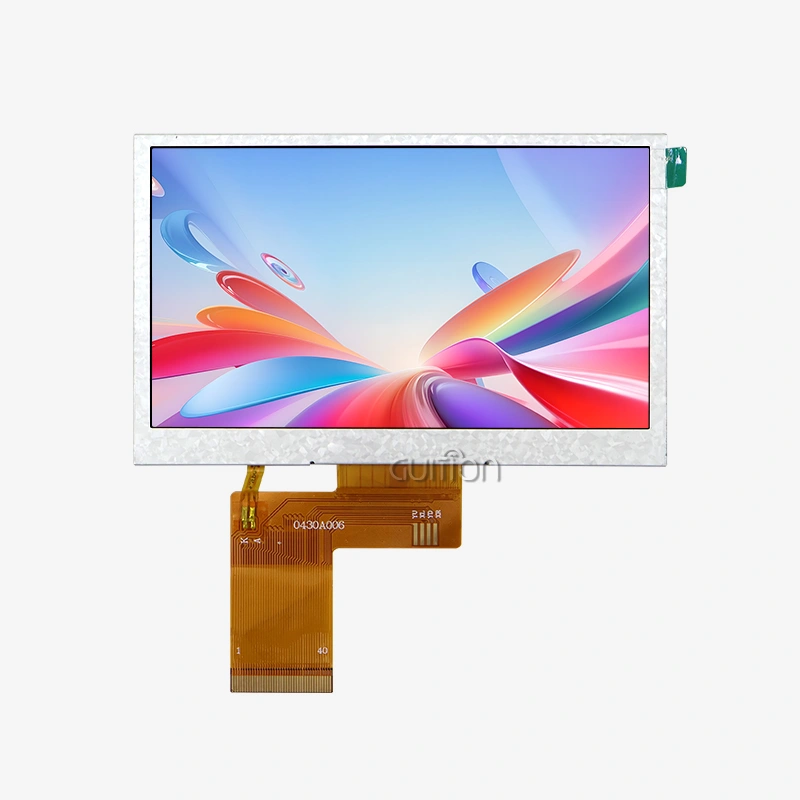
When OEM engineers and purchasing managers look for display options, they keep running into problems like how to integrate them, how flexible they are, and how hard it is to find a good mix between performance and price. These problems can be solved by Guition's CYD display module, which can be fully customized for use in medical devices, smart home goods, IoT apps, and industrial equipment. This method is shown by our ESP32-8048S043C_I model, which has a 4.3-inch sensitive touchscreen with an 800x480 resolution and is powered by the ESP32-S3R8 dual-core processor. It also has WiFi and Bluetooth built in. Standard hardware can be turned into exact solutions that meet your unique technical needs, brand standards, and operating environments through customization.

Understanding the Need for CYD Display Module Customization
When making an OEM product, you need more than just off-the-shelf parts. The temperature where your factory control panels work is very high. Your medical tracking equipment needs to be in line with the rules. When you create smart appliances, your brand needs to fit in perfectly. In these situations, some problems can't be fixed by general CYD display modules.
Why Standard Solutions Fall Short
Generic display hardware makes it harder for devices to work together. Standard UART methods might not work well with the software you already have. Physical measurements and enclosure designs don't always match up perfectly, which means that technical adjustments have to be made. Display brightness levels that are best for offices don't show up well in factory lights or look too bright in home settings.
Customization as Strategic Advantage
Customized display options get rid of these problems. When buying teams choose customized modules, they have more control over the firmware's behavior, the mechanical measurements, the brightness calibration, and even the interface protocols. The CYD display module design lets you make a lot of changes while still keeping the dependability that industrial users need. This freedom cuts down on the time it takes to get a product to market by getting rid of the integration problems that usually cause starts to be delayed by weeks or months. Custom branding carved directly into display housings is good for companies that make smart home products. The designers of medical devices get the exact color clarity that is needed for diagnostic tools. Manufacturers of industrial tools get versions that are tougher and can handle shaking, dust, and changes in temperature. In busy markets where stock displays don't give you a competitive edge, these changes make your display stand out.
Core Customization Options for CYD Display Modules
In both hardware and software, Guition lets you make changes in a planned way. Our tech team uses your exact instructions to change the CYD display module's features, connectivity choices, physical features, and software functions.
Display Specifications and Visual Performance
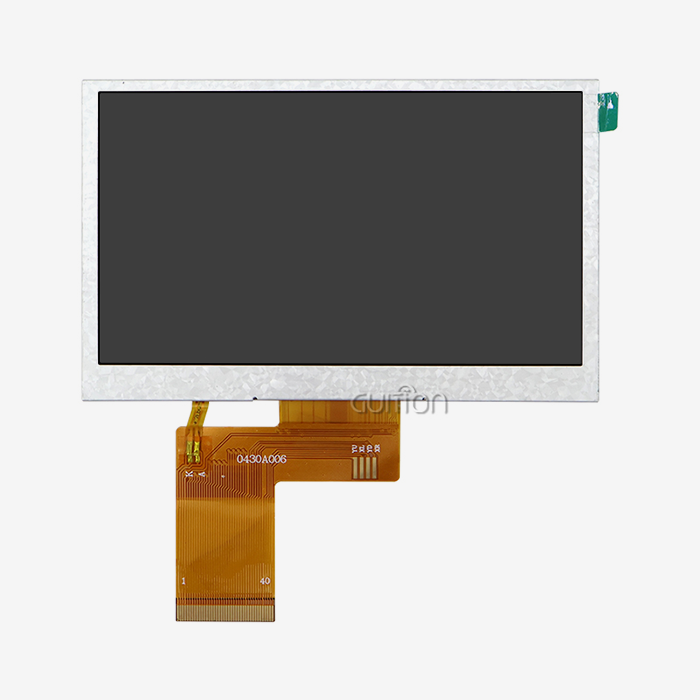
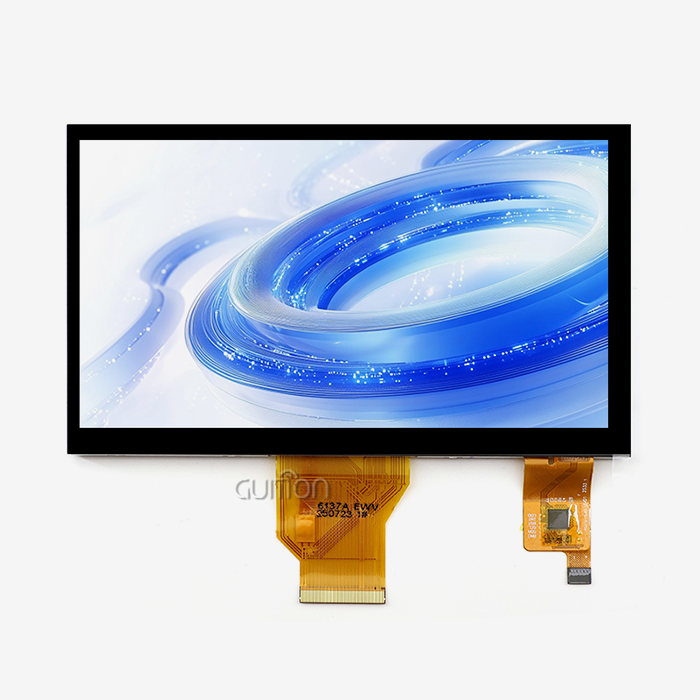
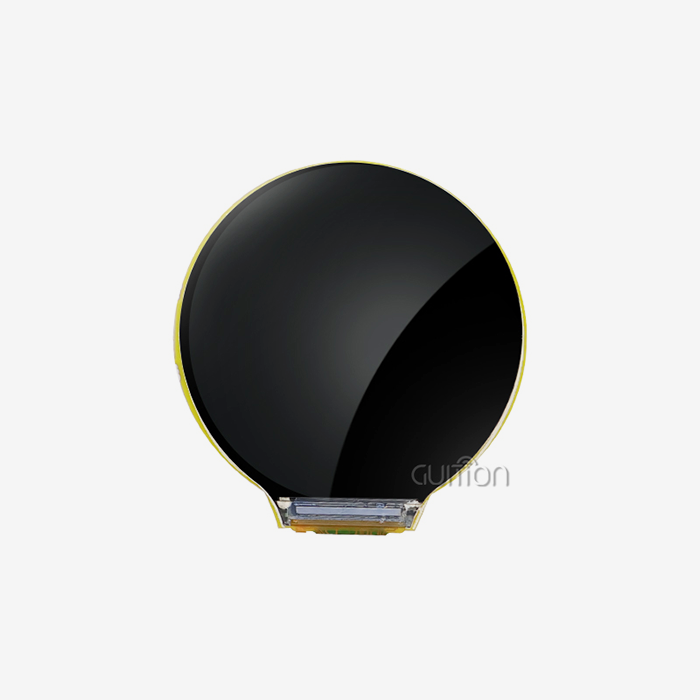
Resolution and size are the building blocks of customization. Our normal ESP32-8048S043C_I has a resolution of 800x480 on 4.3 inches, but we can set up other sizes from 1.28 inches to 21.5 inches if needed for a specific purpose. Capacitive touch sensitivity can be changed so that gloves can be worn for work or a stylus can be used for exact entry in medical charts. Calibration of brightness is very important. For outdoor kiosks, lighting levels of 800 nits or more are needed to block direct sunlight. On the other hand, bedroom medical monitors need to be dimmed below 50 nits so that they can be seen at night without disturbing the patient. The CYD display module can handle these wide ranges by changing the backlight circuit. Changing the color temperature makes sure that everything stays in line with the brand's rules. For example, warmer tones are used in consumer goods, neutral whites are used in industrial equipment, and certain calibrations must match medical imaging standards.
Interface and Connectivity Customization
How complicated integration is depends on the communication methods used. Our basic units come with SPI, I2C, and UART interfaces. If your legacy systems need different baud rates, voltage levels, or protocol versions, we can make custom setups to meet those needs. The ESP32-S3R8 processor gives you options because its 512KB SRAM and 8MB PSRAM can handle complicated communication stacks without slowing down the system. There are more types of wireless communication than just WiFi and Bluetooth. We set up certain antenna designs for metal cases, change the transmission power to meet the needs of different markets, or add LoRa modules for large-scale outdoor farming automation. You can set up your IO ports to work with your sensor arrays, button layouts, or external peripherals without having to use adapter boards, which can make your design look cluttered.
Mechanical and Environmental Adaptations
With mechanical adaptation, problems with physical merging go away. The mounting hole shapes match the styles of the enclosures you already have. Custom borders can have your brand's colors, names, or other design needs built in. Standard plastics are replaced by metal for better heat escape or ruggedized polycarbonate for better resistance to impact. Customizing the environmental grade takes into account how things actually work. Standard units work successfully from 0°C to 60°C, but industrial versions can work from -20°C to 85°C. In places with a lot of damp, conformal coating saves electronics. Sealed containers with IP65 grades can be used in areas that need to be cleaned, like food processing areas or outdoor installs. With these changes, the CYD display module goes from being a research tool to a part that can be used in production.
Software and Development Environment
Our Guition interface development tools already make it easier to make UIs, but now you can also change how firmware works. Development time is cut down by having apps already loaded that are specific to your product group. For example, industrial screens, home automation controls, and medical data displays. With custom bootloaders, your logo is displayed during the startup process. Support for multiple languages through UTF-8 encoding makes tools ready for use around the world. The ESP32-8048S043C_I module works with Arduino IDE, ESP-IDF, MicroPython, and Mixly. We also set up default programming settings that are right for your team's skills. Over-the-air (OTA) firmware updates can be done after the device has been deployed. This is very important for handling spread IoT setups without having to pay for field service.
Selecting the Right CYD Display Module for Your OEM Design
To choose the right CYD display module design, you must first be clear about your exact needs in terms of function, style, compliance with regulations, and cost.
Defining Core Project Requirements
The first step in figuring out what technical needs are is to define the interfaces. At 115200 baud, does your motherboard use UART to talk, or does it use SPI at 20MHz? What kinds of power do your IO outputs use? How many GPIO pins must be clear so that sensors or controllers can use them? The CYD display module has a lot of connections, but it's cheaper to avoid rewrite loops that aren't necessary if you write down the exact requirements.
Evaluating Standard versus Custom Solutions
The lead time for off-the-shelf modules is faster, and the minimum order quantity is cheaper. Custom versions need more money to buy tools and take longer to make, but they meet exact requirements. The point of choice is usually based on the amount of production. For prototypes and small runs of less than 500 units, basic modules with mechanical connections are often used. When you make more than 1,000 units, you should invest in custom tools that lower the cost per unit and improve the quality of integration.
Assessing Supplier Capabilities
Evaluation of a supplier goes beyond price. The quality of technical help decides whether customization goes smoothly or takes too long and causes frustration. During customization, from reviewing the initial specifications to making sure the production runs smoothly, Guition offers specialized engineering advice. We have worked with industrial control, medical devices, household technology, and the Internet of Things, so we know how to meet the specific needs of each field. Production potential and the dependability of the supply line are very important. A recent lack of parts has messed up a lot of projects. Smaller businesses don't handle changes in the supply chain as well as larger companies that keep a lot of parts on hand, have multiple ways to get them, and can make things in a variety of ways. Our 16MB Flash and 8MB PSRAM parts are always available because we buy them from a variety of sources.
Case Studies: Successful CYD Display Module Customizations for OEM Clients
Real-world examples show how CYD display module customization can be useful in a wide range of situations.
Industrial Equipment Manufacturer
A company that makes CNC machining centers needed display panels that could handle the water mist, metal particles, large temperature changes, and vibrations that come with metalworking. Standard screens broke after a few months. We made the CYD display module unique by adding sealed casings with an IP65 rating, parts that can work in a wider temperature range, shock-mounted PCB circuits, and conformal coating. The brightness was raised to 700 nits so that it would be easier to see in the plant. Their own machine command protocol was connected to custom UART software. This cut down on field failures by 87% and made integration easier, which used to need special wire harnesses.
Medical Device Developer
A company that makes patient tracking systems needed screens that met IEC 60601-1 medical safety standards and showed oxygen saturation levels accurately. Standard units didn't have the right certificates or colors. Some of the customization options were medical-grade power separation, UL-approved materials, color correction with a Delta E level of less than 2, and antimicrobial surface treatments. Real-time waveform rendering at 60 frames per second was possible with the ESP32-S3R8 processor's computing power. Regulatory documents show that FDA clearance was sped up by three months compared to their previous display provider.
Consumer Electronics Brand
A company that makes smart home devices that was putting out voice-controlled kitchen screens needed a unique industrial design to set their products apart. Plain boxy screens looked like they were all the same. We made curved glass covers with custom capacitive touch grids, ambient light sensors that make the screen brighter on their own, and custom boot routines that were unique to the brand. The esp32 display module's WiFi connection worked perfectly with their current IoT environment. Custom injection-molded frames were made to match the colors of their most popular products. When compared to competing goods with basic displays, the unique design led to 34% higher store sell-through.
Future Trends in CYD Display Module Customization for OEM Solutions
New technologies make customization easier, but worries about environment change the materials that can be used for the CYD display module.
Transparent and Flexible Display Technologies
New shapes are possible with transparent OLED and flexible e-paper technologies, but not with regular LCDs. These improvements help head-up screens in cars, wearable tech, and building pieces. Current CYD display units use tried-and-true LCD technology, but as these technologies get better and cheaper, our plan includes versions that are clear and adaptable. It will be possible to customize optical bonding methods, adjustable circuit integration, and the driver circuitry that controls these high-tech screens.
Smart Interactive Displays with AI Integration
With the help of IoT and AI, screens go from being output devices to smart engagement hubs. The ESP32-S3R8 chip already has a lot of computing power—its 240MHz dual-core operation and 8MB PSRAM allow edge AI inference for voice requests, gesture detection, and predictive interfaces. In the future, customization will include custom AI processors, better microphone arrays, and software that works better with TensorFlow Lite models. Displays will know what users want before they ask for it, change their designs based on the situation, and give users information before they ask for it.
Sustainable and Eco-Friendly Customization
Environmental duty is becoming more and more important in purchasing decisions. Customization is moving toward materials that can be recycled, using less power, and making products last longer. The CYD display module already has power-saving parts, but in the future, it will use bio-based plastics, production processes that don't use lead, and flexible designs that let parts be replaced instead of the whole module being thrown away. Along with technical specs, carbon impact transparency and environmental certifications will become normal customization dimensions.
Conclusion
When it comes to the complicated needs that OEM engineers, product managers, and buying workers face every day, Guition's CYD display module offers full customization. Our ESP32-8048S043C_I model is a great example of this because it has powerful ESP32-S3R8 processing, a wide range of connectivity choices, and an open development environment. You can also make a lot of changes to the display, the way it's built, how it works in different settings, and the software that it can do. Whether your application needs to be tough for industrial use, precise for medical use, aesthetically pleasing for consumers, or smart for IoT devices, custom display solutions get rid of interaction problems and speed up time-to-market. Customization turns basic hardware into a strategic competitive edge that sets your goods apart in markets that are very picky.
FAQ
What lead times should we expect for customized CYD display modules?
Customization times depend on how complicated the changes are and how many CYD display modules are being made. Customizing only the firmware usually takes two to three weeks. Including casting, mechanical changes that involve special bezels or housing designs take 6 to 8 weeks. It takes 10 to 12 weeks for full custom designs with changed PCB plans or part replacements. Production volumes affect schedules. Prototypes ship within the times given, but production volumes above 5,000 units may need shipping plans that are spread out over time. During the original consultation, Guition gives you a full project timeline and keeps track of your progress by milestones as the project develops.
How do customized modules maintain compatibility with our existing systems?
Preserving compatibility is one of the most important goals of customization. Before suggesting changes, our engineering team looks at the current transmission methods, voltage levels, time needs, and mechanical limitations. The ESP32-S3R8 design of the CYD display module is flexible and can handle a wide range of input standards, including legacy protocols. We give you full integration documentation, reference firmware, and expert help during the whole creation process. Validating compatibility means trying a prototype with your real gear before committing to mass production.
What post-purchase support does Guition provide for customized display solutions?
Standard guarantee coverage and quick repair for manufacturing flaws are built into production units. With remote update options, firmware can be improved even after it has been deployed. Customers who buy a lot get special help and can talk directly to engineers. We make long-term promises about the availability of parts, so spare parts and new units will always be available for as long as your product is on the market.
Partner with a Trusted CYD Display Module Manufacturer
Guition is ready to turn your display needs into the best options possible. We have been making HMI CYD display module options for a long time and are very good at customizing them for industrial equipment, medical devices, smart home products, and Internet of Things (IoT) uses. The basis is our ESP32-8048S043C_I module, and our tech team makes the exact changes your project needs. Get in touch with david@guition.com right away to talk about your unique needs, whether they are for mechanical changes, software customization, or the integration of the whole system. Ask for full specs, prototype models, or quotes on large orders. Our focus on the customer means that your display solution will improve product performance, shorten development times, and help you stand out in the market.
References
1. International Journal of Human-Computer Interaction, "Customization Strategies in Industrial Display Systems for OEM Applications," Volume 38, Issue 12, 2023.
2. IEEE Transactions on Industrial Electronics, "ESP32-Based HMI Solutions: Performance Analysis and Customization Frameworks," Volume 70, Issue 7, 2023.
3. Medical Device Design & Manufacturing, "Regulatory Compliance in Custom Display Integration for Healthcare Applications," March 2024 Edition.
4. Embedded Systems Engineering Magazine, "Comparative Analysis of Capacitive Touch Display Modules in Industrial Environments," Volume 29, Issue 4, 2024.
5. Journal of Smart Home Technology, "WiFi and Bluetooth Integration Strategies for Consumer IoT Display Devices," Volume 15, Issue 2, 2023.
6. Industrial Automation and Control Systems Review, "Total Cost of Ownership Analysis: Standard versus Customized hmi display modules," Annual Report 2024.
Learn about our latest products and discounts through SMS or email