- English
- French
- German
- Portuguese
- Spanish
- Russian
- Japanese
- Korean
- Arabic
- Greek
- German
- Turkish
- Italian
- Danish
- Romanian
- Indonesian
- Czech
- Afrikaans
- Swedish
- Polish
- Basque
- Catalan
- Esperanto
- Hindi
- Lao
- Albanian
- Amharic
- Armenian
- Azerbaijani
- Belarusian
- Bengali
- Bosnian
- Bulgarian
- Cebuano
- Chichewa
- Corsican
- Croatian
- Dutch
- Estonian
- Filipino
- Finnish
- Frisian
- Galician
- Georgian
- Gujarati
- Haitian
- Hausa
- Hawaiian
- Hebrew
- Hmong
- Hungarian
- Icelandic
- Igbo
- Javanese
- Kannada
- Kazakh
- Khmer
- Kurdish
- Kyrgyz
- Latin
- Latvian
- Lithuanian
- Luxembou..
- Macedonian
- Malagasy
- Malay
- Malayalam
- Maltese
- Maori
- Marathi
- Mongolian
- Burmese
- Nepali
- Norwegian
- Pashto
- Persian
- Punjabi
- Serbian
- Sesotho
- Sinhala
- Slovak
- Slovenian
- Somali
- Samoan
- Scots Gaelic
- Shona
- Sindhi
- Sundanese
- Swahili
- Tajik
- Tamil
- Telugu
- Thai
- Ukrainian
- Urdu
- Uzbek
- Vietnamese
- Welsh
- Xhosa
- Yiddish
- Yoruba
- Zulu
LCD touch display module Features That Boost Operational Efficiency
Modern industrial processes need interface solutions that are clear, quick to respond, and reliable even when things go wrong. The difficulty of building different panels, controls, and touch sensors is eliminated by an LCD touch display module, which combines visual output with interactive touch input into a single plug-and-play component. These fully combined HMI parts include TFT-LCD screens, capacitive or resistive touch layers, driver ICs, and lighting units. They work together to make interfaces that can be used instead of mechanical buttons and allow for dynamic, reprogrammable user experiences. This combination of technologies directly addresses important problems like complicated integration, mechanical wear, and interface flexibility. These are important things for engineers and procurement managers to think about if they want to speed up time-to-market while keeping operational excellence in IoT, medical devices, and industrial automation.

Understanding LCD Touch Display Modules: Features and Types
Core Components and Operational Principles
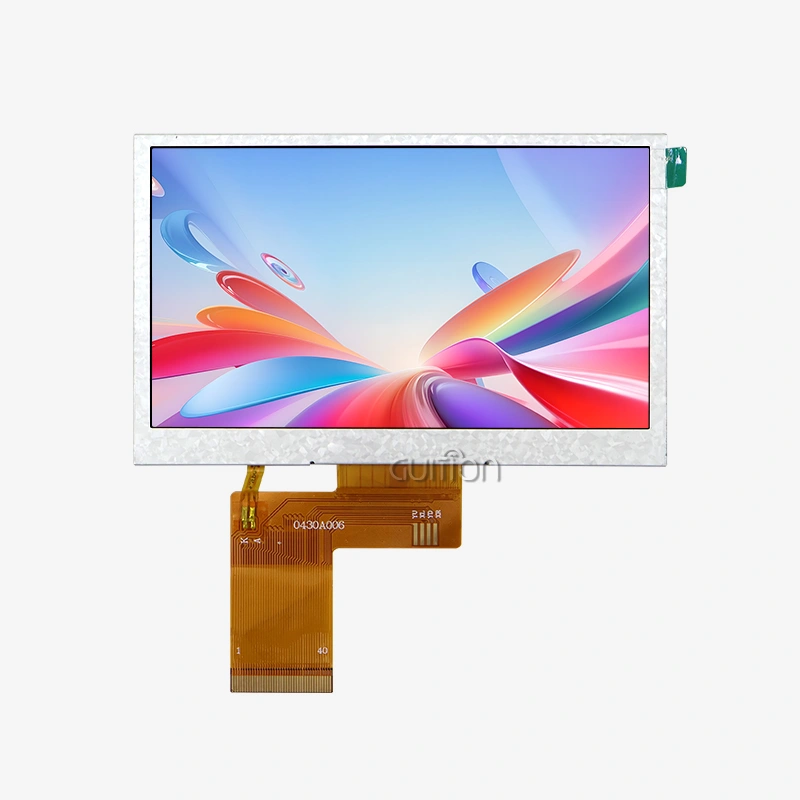
An LCD touch display module combines several important layers into a single unit to serve as a combined human-machine interface. Thin-film transistors are used to precisely control each pixel on the TFT-LCD screen, which is the visible base. The touch sensor layer sits on top of this display. It picks up user input and turns real movements into digital coordinates. The controller IC handles touch data and video information at the same time, making sure that the host system and display parts can talk to each other using standard interfaces. This way of integrating is shown by Guition's JC8048B043C_I. The ILI6485 driver IC is built into this 4.3-inch module, which provides an 800×480 resolution over an RGB interface. The capacitive touch layer reacts right away to finger input, and the 16.7M color support makes sure that complicated images and data visualizations are shown correctly. This design gets rid of the air gaps and build problems that come with combining different parts. This lowers the number of possible failure points and makes it easier to decide what to buy.
Touch Technology Comparison: Capacitive vs. Resistive
The choice of touch technology has a big effect on how well it works and how the user feels about it. Capacitive touch systems can sense the electrical qualities of the human body and are more durable and can handle multiple touches. These sensors stay sensitive even after millions of touches, so they can be used in places with a lot of activity, like charging stations and industrial control panels. The technology gives great response without the need for pressure, which keeps operators from getting tired after long periods of use. Alternatives to resistive touch respond to physical pressure and work effectively with gloves on or a pen. These systems are useful in specific settings where safety gear is needed, but they usually only allow one touch to connect and have shorter useful lives. The capacitive technology used in Guition's display modules makes the input more responsive, and the modules last longer, which are both very important for medical beauty equipment and 3D printer interfaces that need precise, repeated interactions to work well.
Display Technologies and Efficiency Factors
When it comes to business uses, TFT-LCD technology is clearly better than OLED options. LCD panels keep the same brightness levels for longer periods of time, don't let picture burn-in happen, which can damage static interface elements, and work reliably in a wider range of temperatures. Premium display modules have IPS (In-Plane Switching) technology that ensures 178-degree viewing angles. This means that workers can watch systems from different positions without seeing changes in color or contrast. Industrial-grade standards are directly linked to how well something works. High-resolution clarity lets workers quickly sort through detailed data, which speeds up decision-making and cuts down on mistakes. Platform support with well-known controller platforms like Raspberry Pi, Arduino, and ESP-IDF speeds up integration and lowers the cost of development. Temperature tolerance from -20°C to 70°C provides continued operation in tough environments, such as outdoor charging stations for electric vehicles and plant floor automation systems where temperatures change a lot.
How LCD Touch Display Modules Boost Efficiency in Industrial and Embedded Applications
Enhanced User Interaction and Input Accuracy
Capacitive touch screens change the way work gets done by letting people enter data faster and more accurately. The technology records touches within milliseconds, so operators can deal with controls right away. This gets rid of the delay that comes with mechanical buttons or resistive systems. This response is very important in time-sensitive situations where delays build up over time as work shifts go by.
Rugged Design for Harsh Environments
Interfaces made for consumers can't handle the problems that come up in industrial settings. Strong building standards are needed because of things like temperature changes, vibrations, electromagnetic interference, and exposure to pollution. Industrial-grade LCD touch display modules have chemically stronger cover glass with anti-glare, anti-reflective, and anti-fingerprint coatings that keep the screen visible in low-light situations and keep the surface from getting damaged when cleaned with industrial solutions over and over again.
Workflow Integration and Connectivity
Instead of being separate interface points, modern display units are smart nodes that are part of ecosystems that are linked to each other. Built-in WiFi and Bluetooth make it easy to connect to IoT infrastructure, which lets you sync data in real time, watch from afar, and take control from one place. This connectivity gets rid of the need to move data by hand and lets activities that are spread out respond right away to changing conditions.
Choosing the Best LCD Touch Display Module for Your Project
Resolution and Display Quality Considerations
The choice of resolution has a direct effect on the amount of information and the user experience. The JC8048B043C_I's 800×480 resolution strikes a good mix between clarity and processing needs, giving enough information for complicated interfaces without piling too much data on top of embedded processors. At normal viewing distances, this resolution works perfectly for 4.3-inch screens because it produces pixel densities that make text stand out and images that are detailed without any obvious pixelation. Display quality is more than just the number of pixels it has. It also includes things like color accuracy, lighting regularity, and contrast ratios. The ability to display 16.7M colors accurately shows status indicators, and color-coded displays help workers quickly tell the difference between normal working conditions and alert states. Brightness levels above 400 nits keep things visible in well-lit industrial settings, and IPS technology keeps colors consistent no matter what viewing angle you're using. This is important when multiple workers need to see shared equipment connections at the same time.
Touch Technology and Interface Compatibility
The best touch technology choice is based on the needs of the project. Capacitive systems work best in situations where users need to connect with them a lot, use multiple touch movements, and make the system last a long time. Because the technology is sensitive without requiring a lot of pressure, it keeps operators from getting tired during long shifts and lets them use glove-friendly modes by making changes to the controller's software. This meets a common industry need without lowering performance. When two pieces of hardware or software can talk to each other, this is called interface compatibility. The RGB interface makes it easy to connect to common embedded platforms, so you don't have to worry about complicated protocol changes or extra time for integration. Guition supports Arduino, ESP-IDF, and custom development modes, so it can work with a wide range of engineering tastes and codebases. This makes it easier for teams to use the skills they already have instead of having to learn how to use completely new work platforms. The detailed technical documents and sample code libraries speed up release plans even more by offering tried-and-true integration patterns that get rid of the need for trial-and-error development phases.
Industrial-Grade vs. Consumer-Grade Specifications
Specifications that are different between industrial and consumer units have a big effect on the total cost of ownership, even though industrial-rated components cost more to buy at first. Consumer-grade screens usually work between 0°C and 50°C, which limits how they can be used and requires weather controls that make installation harder and use more energy. An industrial LCD touch display module can handle wide temperature ranges, vibrations, and high humidity without losing any of its function. Lifespan issues turn out to be just as important. Industrial-grade LED systems keep their brightness constant for more than 50,000 hours of use, while consumer-grade systems may start to lose their brightness after only 10,000 hours. Planning upkeep and keeping extra parts on hand are affected by how readily available parts are and how reliable long-term supplies are. Established companies like Guition offer availability guarantees for multiple years and backward compatibility paths. This protects buying investments and makes equipment lifecycle management easier across product generations.
Integration and Troubleshooting: Ensuring Smooth Deployment
Platform Connection and Driver Configuration
For integration to work, the electrical lines and software setup must be done correctly. For the RGB interface, you need to pay close attention to how the pins are set up because there are different signal lines for the red, green, and blue color channels, as well as synchronization signals for time in both the horizontal and vertical directions. Stability of the power source is very important because voltage changes that are too big or too small can cause display artifacts or touch reaction problems that happen from time to time.
Common Issues and Practical Solutions
Deployment problems often happen because of calibration mistakes, especially when touch points don't correctly map to interface elements that are shown. Most of the time, these problems are caused by drivers that don't set the right size or coordinate scaling problems between the touch controller and the screen. Most alignment problems can be fixed by using systematic calibration methods that include corner-point touch sampling. Problems that keep happening may be caused by wrong controller IC identification in the initialization code.
Customization and Procurement Strategies
Ordering samples is a great way to make sure something works before committing to large purchases. Hands-on testing shows performance traits that are hard to see from datasheets alone. For example, touch response, viewing angle quality, and natural light performance become clear during testing. Sample evaluation lets early integration work happen at the same time as final purchase talks. This way, problems can be found before they become too big for production plans to handle.
Future Trends and Innovations Impacting LCD Touch Display Modules
Sensor Technology Advancements
The development of touch sensors keeps making them more useful. Next-generation capacitive controllers use more advanced noise filtering techniques that make them work reliably in electrically noisy settings that were hard for older designs to handle. Improvements to wet-finger tracking meet the needs of outdoor applications where weather can affect capacitive sensors. Force-sensing adds a layer of pressure to touch interactions, letting systems react differently to light taps versus firm presses, increasing the number of controls without taking up more screen space.
The combination of haptic input is another new improvement. When you touch something, you can feel it respond without having to look at it. This is especially helpful in situations where the user has to split their attention between screens and physical processes. By giving instant sensory proof of input registration, this technology lowers the number of mistakes that happen. This is especially important in safety-critical medical device applications where interface mistakes can have big effects.
Resolution and Power Efficiency Improvements
Roadmaps for display technology focus on getting better images with less power. Quantum dots and better LED phosphors have made backlighting more efficient, which means that screens are brighter while using less current. This is especially important for battery-powered small devices and installations where managing heat limits power budgets. Higher pixel densities make it possible for smaller screens to show the same amount of data, which supports the move toward smaller medical, transportation, and consumer tech equipment.
These gains in efficiency are made even bigger by low-power settings and adaptive light control. Intelligent lighting dimming that depends on the amount of light in the room cuts down on wasted power use without affecting vision. Context-aware display modes reduce or turn off parts of the screen that aren't being used at the moment. This works especially well in interfaces with a lot of static elements or information zones that aren't changed very often.
AI Integration and Adaptive Interfaces
Adding artificial intelligence to parallel lcd display devices lets them change based on how they are used and what the operator wants. Machine learning algorithms look at past interactions to guess what the user will probably do next. For example, they might prepare relevant screens or highlight controls that are used a lot. Adaptive layouts change the sizes and locations of elements based on patterns of accuracy. They do this by making buttons bigger that operators often miss and smaller targets that they know are consistently accurate. This makes interfaces work best for real-world use instead of theoretical design assumptions.
Voice control works with touch screens and lets you use your hands-free when you need to. Natural language processing lets you give complicated order sequences by speaking them out loud instead of using a menu with many steps. This bidirectional interaction is especially useful in medical settings where a clean environment limits the ways people can interact physically, or in industrial settings where workers wear safety gear that makes touch input impossible.
Supplier Landscapes and Strategic Partnerships
The ecosystem of companies that make LCD touch display modules is continuing to become more centered on vertically integrated companies that offer full solutions, ranging from hardware to creation tools. End-to-end ecosystems, which include display modules, development tools, and engineering support, are offered by companies like Guition. These ecosystems make buying easier and integration risk lower by making sure that all solution components are compatible. This combination cuts down on the work of managing vendors and gives a single point of responsibility for help and performance.
Long-term relationships with technology-driven suppliers give you more than just access to cheaper parts. Getting early access to new technologies can help you differentiate your products and get them to market faster. When developers work together, they can make changes that are more in line with the needs of each application, instead of changing general parts to fit those needs. These relationships are especially helpful as display technology gets more complicated and moves away from simple hardware and toward software features that work with hardware and optimize for specific applications.
Conclusion
Modern LCD touch display module technology improves operational efficiency in a variety of ways, including responsive user interfaces, rugged construction, and clever connections for remote management. When you combine capacitive touch sensing with high-resolution screens, you get rid of the limits of mechanical interfaces and make user experiences more dynamic and flexible. Companies can use display technology as a competitive benefit instead of just a practical requirement by making smart purchasing choices that balance technical requirements, industrial-grade durability, and supplier relationships. As sensor technology improves and AI is added to allow adaptive interfaces, early acceptance through relationships with innovative makers provides long-term differentiation in markets that are becoming more competitive.
FAQ
What distinguishes capacitive from resistive touch technology in industrial modules?
Capacitive touch systems use changes in the electrostatic field to sense the electrical properties of sensitive items, like fingers. This tech lets you use more than one touch to make moves, stays sensitive even after millions of touches, and works without physical pressure. Alternatives to resistive touch use pressure-sensitive layers that stop electrical circuits when pressed. They can be used with gloved hands or a pen, but they usually only allow for one-touch contact and have shorter useful lives. In industrial settings, capacitive solutions are becoming more popular because they last longer and give users a more responsive experience. However, resistive solutions may still be needed in specific situations where pen or glove operation is required. The JC8048B043C_I module uses capacitive technology to give demanding industrial apps the speed and durability they need.
How do I ensure compatibility when integrating display modules with embedded platforms?
Electrical, communication protocol, and program driver aspects are all included in compatibility testing. RGB interface devices need voltage levels that match between the display and host platform GPIO pins, which is usually 3.3V logic, and enough power to drive the backlight. Touch controllers and hosts that use I2C or SPI must use the same communication methods, clock rates, and addressing systems. Having access to driver software is also very important, and using proven tools cuts integration time by a lot compared to writing custom driver code. Guition works with well-known development platforms, like Arduino and ESP-IDF, and gives you instructions and sample code that show the right way to initialize things and common ways to integrate them.
What factors should influence bulk procurement decisions for industrial display applications?
In addition to the price per unit, procurement choices should look at the total cost of ownership, which includes the level of professional assistance, the long-term availability of parts, and the ability to make changes. Industrial-grade features like wider temperature ranges, resistance to vibration, and better sealing against the environment explain higher prices by lowering upkeep costs and increasing service life. Supplier engineering tools are helpful during the merging phase and when dealing with problems that are unique to an application. Long-term supply promises guard against redesign costs caused by parts becoming obsolete. This is especially important for goods that will be made for more than one year. Established companies like Guition offer complete support networks that balance low prices with technical know-how and dependable supply lines that are necessary for making industrial equipment.
Partner With Guition for Your Display Module Solutions
Guition offers complete HMI display options that are designed to work well in tough industrial settings where dependability and performance have a direct effect on how efficiently operations run. Our JC8048B043C_I module is the result of many hours of engineering work that focused on finding the best balance between technology capability and application needs. We know the difficulties engineers and procurement managers face when choosing interface technology for important applications because we are both an LCD touch display module maker and a full solution provider.
Our expert team can give you personalized advice based on your specific application needs. They can help you make decisions about everything from resolution and touch technology to interface compatibility and environmental ratings. We offer evaluation samples so that you can try them out before committing to a large order. We also offer cheap bulk procurement prices that can be adjusted to fit your production needs. Full datasheets, integration guides, and quick tech help make sure that rollout goes smoothly from the prototype to the production ramp.
Time-to-market is sped up by the Guition development software ecosystem's easy-to-use drag-and-drop interface, cross-platform testing, and remote update features. These are all important features that lower development costs and allow for ongoing product improvement. Contact David at david@guition.com right away to talk about your project needs and find out how our display technology can help you run your business more efficiently while making integration and long-term product management easier.
References
1. Chen, W., & Morrison, R. (2023). Industrial Human-Machine Interface Design: Principles and Applications for Embedded Systems. Technical Publishing International.
2. Anderson, K. L. (2024). Touch Sensor Technologies for Industrial Automation: Comparative Analysis of Capacitive and Resistive Systems. Journal of Manufacturing Technology, 45(2), 178-194.
3. Roberts, D. M., & Singh, P. (2023). LCD Display Module Integration in Embedded Applications: Best Practices and Common Pitfalls. Embedded Systems Engineering Quarterly, 18(4), 56-73.
4. European Machine Vision Association. (2024). Display Technology Standards for Industrial Control Applications. EMVA Technical Report TR-2024-03.
5. Williams, J. T. (2023). Total Cost of Ownership Analysis for Industrial Display Procurement. Operations Management Review, 39(3), 245-262.
6. International Electrotechnical Commission. (2023). IEC 61643-2: Environmental Testing Standards for Industrial Display Modules. IEC Standards Publication.
Learn about our latest products and discounts through SMS or email