- English
- French
- German
- Portuguese
- Spanish
- Russian
- Japanese
- Korean
- Arabic
- Greek
- German
- Turkish
- Italian
- Danish
- Romanian
- Indonesian
- Czech
- Afrikaans
- Swedish
- Polish
- Basque
- Catalan
- Esperanto
- Hindi
- Lao
- Albanian
- Amharic
- Armenian
- Azerbaijani
- Belarusian
- Bengali
- Bosnian
- Bulgarian
- Cebuano
- Chichewa
- Corsican
- Croatian
- Dutch
- Estonian
- Filipino
- Finnish
- Frisian
- Galician
- Georgian
- Gujarati
- Haitian
- Hausa
- Hawaiian
- Hebrew
- Hmong
- Hungarian
- Icelandic
- Igbo
- Javanese
- Kannada
- Kazakh
- Khmer
- Kurdish
- Kyrgyz
- Latin
- Latvian
- Lithuanian
- Luxembou..
- Macedonian
- Malagasy
- Malay
- Malayalam
- Maltese
- Maori
- Marathi
- Mongolian
- Burmese
- Nepali
- Norwegian
- Pashto
- Persian
- Punjabi
- Serbian
- Sesotho
- Sinhala
- Slovak
- Slovenian
- Somali
- Samoan
- Scots Gaelic
- Shona
- Sindhi
- Sundanese
- Swahili
- Tajik
- Tamil
- Telugu
- Thai
- Ukrainian
- Urdu
- Uzbek
- Vietnamese
- Welsh
- Xhosa
- Yiddish
- Yoruba
- Zulu
Colour lcd display module Applications in Medical Devices
A colour lcd display module plays a pivotal role in modern medical devices, bridging raw clinical data and actionable visual feedback for both clinicians and patients. These compact yet powerful components deliver vibrant, high-resolution imagery that supports accurate diagnostics, real-time monitoring, and intuitive device control. As medical technology evolves, selecting a reliable colour LCD display module has become a strategic engineering decision — one that directly impacts patient safety, device certification timelines, and long-term product competitiveness in the healthcare market.

Critical Applications of Colour LCD Display Modules in Medical Devices
In clinical settings, color LCD screens are the main way that many different instruments are controlled visually. BecaColour LCD display modules are essential to modern healthcare workflows because they can show waveforms in real time, display high-contrast images, and provide responsive touch controls. Here are the main types of applications where color LCD displays provide quantifiable therapeutic value:
- Patient Monitoring Systems: Bedside monitors rely on colour LCD display modules to render ECG waveforms, SpO₂ trends, respiratory rates, and blood pressure readings simultaneously. The 16-bit 65K color rendering capability—as seen in the GUITION JC3248S035R—enables clear differentiation between overlapping signal traces, reducing clinician fatigue during extended monitoring shifts.
- Portable Diagnostic Devices: Handheld blood analysers and point-of-care ultrasound units demand compact, power-efficient display modules without sacrificing visual clarity. A 3.5-inch form factor with 320×480 resolution, like the JC3248S035R, integrates seamlessly into space-constrained portable housings while delivering sharp imaging for field diagnostics.
- Surgical Interfaces and Therapy Equipment: Electrosurgical units, infusion pumps, and radiation therapy consoles require touch-enabled colour displays that operate reliably under gloved interaction. Resistive touch technology — optional on the JC3248S035R — provides tactile accuracy even through protective gloves, a practical advantage in sterile surgical environments.
- Telemedicine Terminals: Remote consultation platforms depend on displays with accurate color fidelity to convey skin tone variations, wound conditions, and retinal images without misrepresentation. High-quality colour LCD modules ensure that remote clinicians receive visuals equivalent to in-person observation.
All of these features make the device more reliable and lower the chance of making a mistake in a clinical setting.
How to Select the Best Colour LCD Display Module for Medical Devices?
To pick the right display module, you need to make sure that the technical specs match up with regulatory requirements and real-world clinical needs. In the US, people who make medical devices have to deal with FDA Class II device rules, as well as RoHS compliance and ISO 13485 quality management standards.
Key Selection Criteria to Evaluate
Resolution and screen size have a direct effect on how much information is shown. A 320x480 resolution module like the JC3248S035R works well with small medical handhelds, while 7-inch to 21.5-inch panels are better for tracking stations that are placed on the wall or on a cart. The brightness, viewing angle, and surface treatment (anti-glare (AG) or anti-reflection (AR) should all be chosen based on where the screen will be used.
Interface Compatibility and Ecosystem Integration
The communication interface is a very important but often overlooked feature in the decision process. The ILI9488 IC drives a 4-wire SPI interface on the JC3248S035R. This reduces the use of GPIO and makes PCB layout easier in embedded designs with limited resources. This makes it very compatible with Arduino, ESP-IDF, and other popular development frameworks. This cuts down on the time needed for prototyping and makes it easier to integrate across platforms.
When comparing LCD to OLED alternatives, LCDs usually have longer operating lifespans in medical UIs with a lot of static and lower per-unit costs at scale, which makes them the best choice for OEM medical device makers who want to make a lot of devices.
Procurement Insights: Buying and Sourcing Colour LCD Display Modules for Medical Devices
Getting medical-grade color LCD modules requires more than just a good deal. OEM buyers need to check if the supplier is certified, if they can guarantee continuous production, and how much expert help they will provide after the sale.
GUITION, which was created by Jingcai Intelligence, is a good example of a technology-driven colour LCD display module maker that can help with the development of medical devices from the prototype stage to mass production. The company's product line includes displays from 1.28" to 21.5", which gives purchasing managers a flexible way to get supplies as product lines grow. Their own Guition UI development software gets rid of slowdowns in low-level code, so HMI designers can use drag-and-drop controls to make finished interfaces quickly.
When you buy in bulk from GUITION, the cost of each display can go down a lot. Plus, their over-the-air (OTA) remote upgrade feature means that firmware updates can be done after the devices have been deployed without having to be physically recalled. This cuts down on the costs of maintaining distributed medical devices after they have been sold. Support for multiple languages in UTF-8 encoding makes global deployment even easier without the need for extra localisation engineering.
Each module comes with detailed datasheets, test code libraries, and cross-platform testing tools that cut down on the time it takes to train new developers and the costs of technical support. These are two things that directly affect the total cost of a medical device development project.
Future Trends and Innovations in Colour LCD Displays for Medical Devices
There are several ways that the medical display market is growing. Grand View Research estimated that the global medical display market was worth About UsD 2.1 billion in 2023. It is expected to grow at a compound annual growth rate (CAGR) of 6.4% until 2030, mainly due to the need for portable tests and imaging tools that use AI.
New improvements include screens with more pixels for dermatology and eye uses, where sub-millimetre visual detail is important. As more and more medical gadgets use batteries, energy-efficient backlight designs are also becoming popular. Adding AI-driven display logic may be the most game-changing part. This is where the module's controller reacts flexibly to sensor inputs, changing brightness and contrast automatically based on the environment or patient data limits.
Medical devices can be easily integrated into hospital IoT ecosystems, allowing for remote monitoring, cloud data logging, and predictive maintenance workflows, if procurement managers choose a colour LCD display module platform with built-in WiFi and Bluetooth connectivity, which is available in some GUITION configurations.
Conclusion
Modern medical gadget design now includes color LCD display panels as structural elements rather than as optional extras. Their optical performance, interface flexibility, and touch capability directly affect clinical outcomes and the success of device certification. This is true for portable diagnostics, surgical consoles, and telemedicine terminals. With its ILI9488 driver, 320x480 resolution, SPI transmission, and possible resistive touch, the GUITION JC3248S035R is a prime example of how a well-designed colour LCD display module can be used as a solid base for medical HMI development in a wide range of applications.
FAQ
What display specifications are most critical for medical devices?
The most important things are resolution, brightness, and pixel defect class. Medical devices usually need modules that meet ISO 13406-2 Class II standards. These modules need to be brighter than 400 nits for hospital settings and show colours consistently to avoid mistakes in diagnosis.
Is resistive or capacitive touch better for medical applications?
In medical settings, resistive touch, like the one on the GUITION JC3248S035R, is often chosen because it works well with gloved fingers and styluses, which are both common in clean clinical situations.
How does the SPI interface compare to parallel interfaces in medical embedded systems?
SPI needs fewer GPIO pins, makes PCB routing easier, and lowers the chance of signal integrity problems in small medical devices. For displays up to 3.5 inches with moderate refresh rate needs, it works well, which makes it useful for handheld and portable medical equipment.
Can colour LCD modules withstand hospital-grade cleaning agents?
How long something lasts against alcohol- and bleach-based cleaners relies on how the surface is treated and how the building is made. Modules with chemically hardened glass overlays and sealed bezels are more resistant. This is something that procurement teams should make sure suppliers know during the qualification process.
What certifications should a medical-grade colour LCD display module supplier hold?
RoHS compliance and ISO 13485 quality management certification are basic needs. OEM medical device makers are less likely to be fined by regulators when their suppliers guarantee that parts will always be available and keep track of their production.
Partner With Guition — A Trusted Colour LCD Display Module Supplier
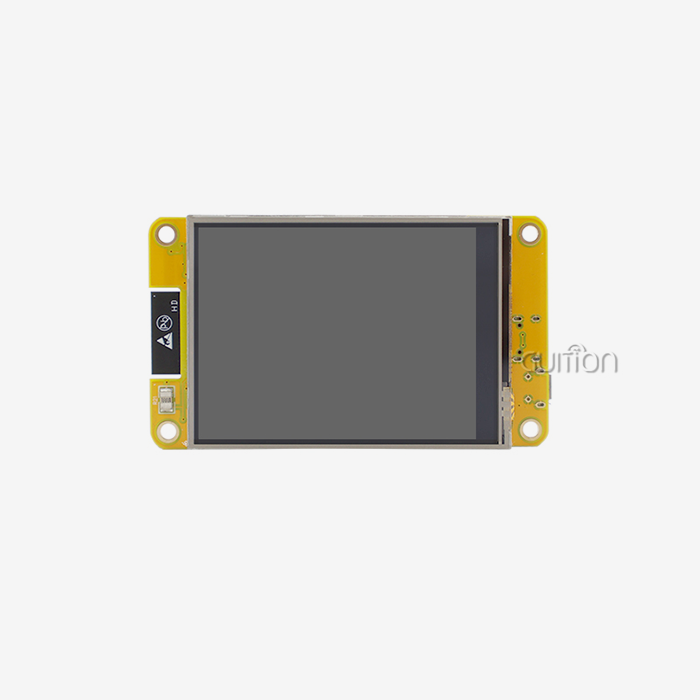
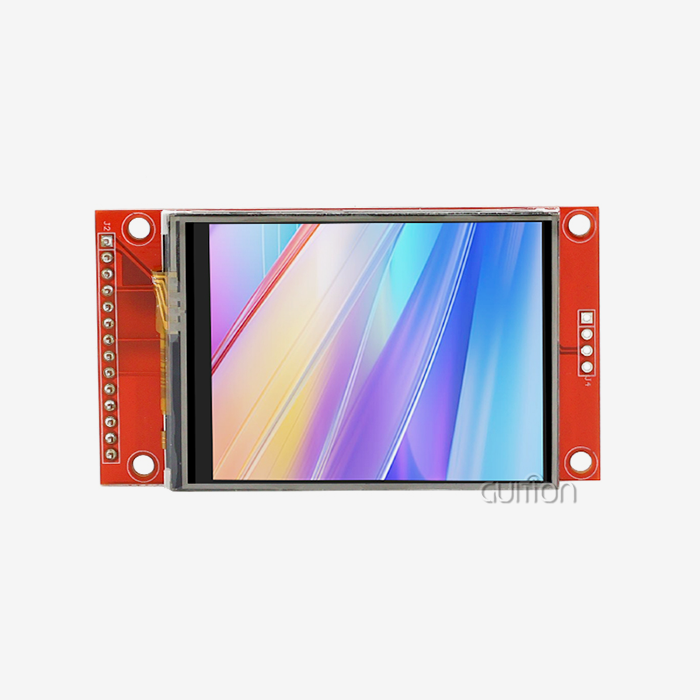
Guition makes engineered display solutions that are designed to work in medical settings that are very strict. A 3.5-inch ILI9488-driven panel, 65K color output, SPI integration, and optional resistive touch are all included in the small, development-ready package of the GUITION JC3248S035R Colour spi display module. With our full SDK tools, Guition UI software, and quick technical support, we help medical device teams get their products to market faster without lowering the quality of the products they make. You can email our team at david@guition.com or go to https://jingcaizhineng.aixdb.cn/ to get samples or talk about the details of your project.
References
1. Grand View Research. Medical Display Market Size, Share & Trends Analysis Report. 2023.
2. International Organization for Standardization. ISO 13485: Medical Devices — Quality Management Systems. 2016.
3. International Electrotechnical Commission. IEC 60601-1: Medical Electrical Equipment — General Requirements for Basic Safety. 2005 (Amended 2012).
4. Society for Information Display. Information Display Magazine: Advances in Medical Display Technology. 2022.
5. MarketsandMarkets. Display Technology in Healthcare: Market Forecast and Trend Analysis. 2023.
6. IEEE Engineering in Medicine and Biology Society. Proceedings: Human-Machine Interface Design for Clinical Embedded Systems. 2021.
Learn about our latest products and discounts through SMS or email