- English
- French
- German
- Portuguese
- Spanish
- Russian
- Japanese
- Korean
- Arabic
- Greek
- German
- Turkish
- Italian
- Danish
- Romanian
- Indonesian
- Czech
- Afrikaans
- Swedish
- Polish
- Basque
- Catalan
- Esperanto
- Hindi
- Lao
- Albanian
- Amharic
- Armenian
- Azerbaijani
- Belarusian
- Bengali
- Bosnian
- Bulgarian
- Cebuano
- Chichewa
- Corsican
- Croatian
- Dutch
- Estonian
- Filipino
- Finnish
- Frisian
- Galician
- Georgian
- Gujarati
- Haitian
- Hausa
- Hawaiian
- Hebrew
- Hmong
- Hungarian
- Icelandic
- Igbo
- Javanese
- Kannada
- Kazakh
- Khmer
- Kurdish
- Kyrgyz
- Latin
- Latvian
- Lithuanian
- Luxembou..
- Macedonian
- Malagasy
- Malay
- Malayalam
- Maltese
- Maori
- Marathi
- Mongolian
- Burmese
- Nepali
- Norwegian
- Pashto
- Persian
- Punjabi
- Serbian
- Sesotho
- Sinhala
- Slovak
- Slovenian
- Somali
- Samoan
- Scots Gaelic
- Shona
- Sindhi
- Sundanese
- Swahili
- Tajik
- Tamil
- Telugu
- Thai
- Ukrainian
- Urdu
- Uzbek
- Vietnamese
- Welsh
- Xhosa
- Yiddish
- Yoruba
- Zulu
Circular Knob Buying Guide: Size, Grip, Fit, and Finish
It is not enough to simply select a shape that appeals to you when it comes to selecting the appropriate circular knob for your application. A round knob serves as the principal tactile interface between a user and a device, and it is responsible for managing precision, comfort, and long-term reliability through its controls. When you are sourcing components for an industrial control panel, a medical monitoring device, or a smart home controller, it is important to have a thorough awareness of the dimensions, grip profile, fitting tolerances, and surface quality of the components. This will safeguard your investment in procurement and further improve the usability of the final product.

Understanding Circular Knobs: Types, Materials, and Uses
What Defines a Circular Knob?
A circular knob is a type of rotary control element that is meant to transform the movement of the hand into a signal that can be monitored. Whether smooth, ridged, or fluted, its geometry affects the force you feel, your grip security, and fatigue after long sessions. In clean rooms and medical settings, where particles getting lodged is a concern, buttons with a smooth profile are an effective solution. When it comes to providing superior tactile input, ridged and fluted variants are preferable in industrial environments where workers may be required to wear gloves or work in conditions with considerable vibration.
Common Materials and Trade-offs
The choice of material directly affects how long something lasts and how much it costs to own. Buttons made of metal, particularly those made of aluminium that has been CNC-machined, are stiffer and have a heavier feel, which gives consumers the impression that they are of greater quality. It is possible for the surface of plastic knobs to deteriorate over time if they are subjected to ultraviolet light or cleaned with chemicals on a regular basis. Plastic knobs are more affordable and lighter per unit. The gaps in the market are filled by engineered polymers, which provide chemical resistance at an affordable price. When you compare circular controls to square, oval, or lever-style controls, you will see that the circular design evenly distributes grip pressure throughout the finger pads. This alleviates localised strain and ensures that the controls comply with the ergonomic compliance criteria established by ISO 9241-910.
Size, Grip, and Fit: Choosing the Right Circular Knob
The most important choice in the procurement process is choosing the right diameter and shaft projection. Undersized buttons need too much pinch force, and large units get in the way of space in tight panel layouts.
Measuring Diameter and Projection Correctly
Find the knob's outer diameter at its widest point and make sure that the shaft hole depth is the same as the length of the encoder or potentiometer shaft. Metric shafts usually have sizes between 4 mm and 8 mm, while imperial ones usually have shapes of ¼-inch and ⅽ-inch. The knob's projection, or how far it sticks out from the mounting surface, affects both clearance and leverage ratio. For fine adjustment tasks, a deeper projection gives you more mechanical advantage.
Ergonomics and Fitment Tolerances
The round shape naturally fits the tip of the finger, which spreads the torque load more widely than lever or D-pad options. For professional B2B use, make sure that the knob bore tolerances match the standard for your fastening (set-screw, D-shaft, or spline) so that the knob doesn't slip under cyclic loads. A secure fit that doesn't rattle also cuts down on noise in quiet places like medical wards or broadcast studios.
Circular Knob Finishes and Design Options
The surface finish controls corrosion resistance, tactile warmth, and long-term appearance. Matte anodised aluminium keeps glare down in control rooms with a lot of light and doesn't let fingerprints build up. Polished finishes make consumer-facing gadgets look more expensive, but they need to be cleaned more often to keep their look. Brushed metal is a good compromise between being unique-looking and being able to handle light wear and tear. Brand colour matching is easier with painted finishes, but the cost per unit is lower. However, chip resistance decreases in high-contact deployments.
Anodised and brushed metal buttons are easy to take care of: just wipe them down with a damp cloth and light detergent to recover their look without damaging the oxide layer. Painted versions should be checked for tiny cracks where corrosion can start on a regular basis. Choosing the right finish during the specification stage stretches repair gaps and lowers costs after the sale.
Procurement Guide: How to Buy and Source Circular Knobs?
When looking for rotary interface parts, procurement workers have to combine speed, customization depth, and supplier reliability more and more. While established Circular knob manufacturers offer engineering advice, certification paperwork, and scalable MOQ structures that safeguard project timelines, online B2B platforms allow for quick price comparison.
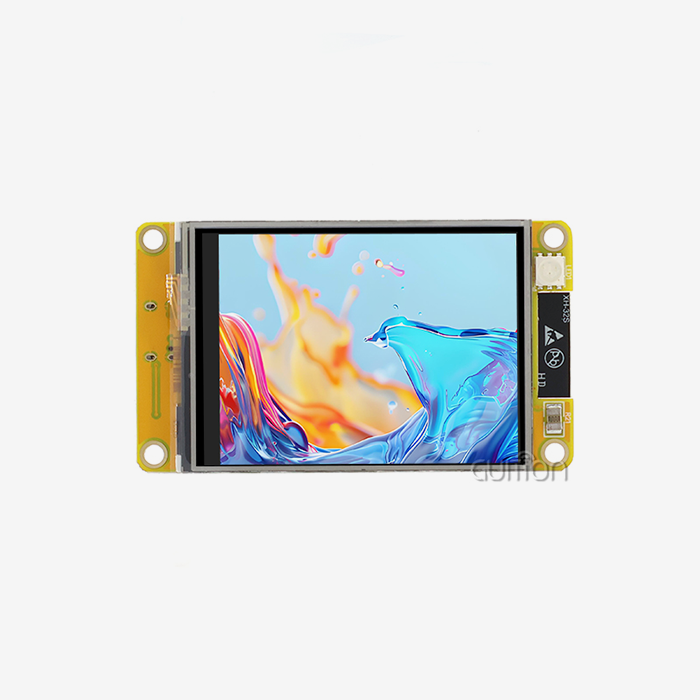
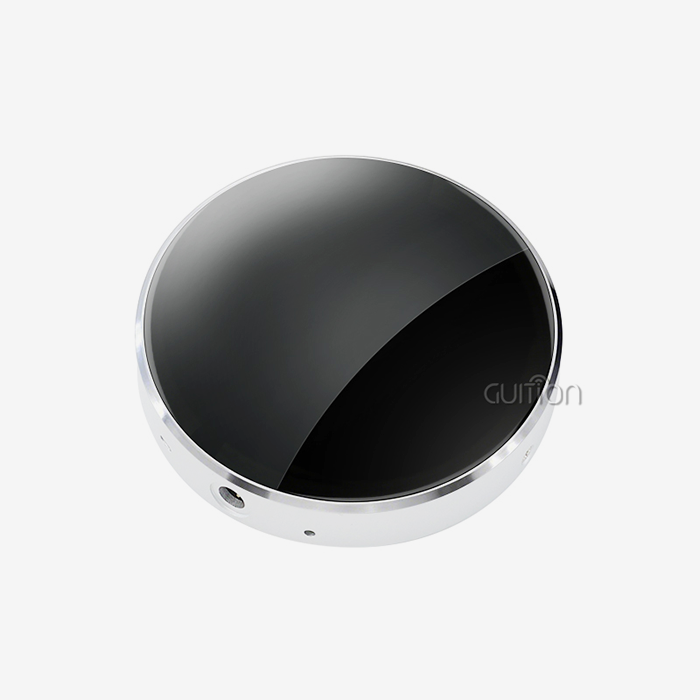
Direct contact with a Circular knob provider opens up customization options not available through online shopping when your application requires a branding color scheme or a non-standard bore diameter. The 1.85-inch Round Knob Touch Display (Model: JC3636K718C_I_Y1(BU)) from Guition is a good example of this flexibility: standard orders ship from stock and delivery is confirmed on the second business day; the MOQ starts at just one piece to help test prototypes; and teams looking for a consistent industrial look can choose custom colours starting at 500 units.
The most important things that procurement managers constantly look for in a device are the following:
- CNC-machined metal casing available in five standard colours — red, black, purple, dark grey, and blue — with custom colour matching at 500-unit MOQ, giving product teams genuine branding control.
- 86 units per standard carton with flexible packaging configuration, reducing per-unit shipping cost at volume while accommodating non-standard fulfilment requirements.
- Sample availability subject to eligibility review, allowing engineering teams to validate fitment, haptic feel, and display quality before committing to a production run.
These terms make it easier for buyers to get what they want. They directly address the cost and time pressures that embedded engineers and R&D managers face when moving from prototype to production.
Evaluating Supplier Credibility
Make sure that the company that sells you the Circular knob keeps quality records that can be tracked, has helpful technical support, and can show that their products work with your current development stack across platforms. The Guition device works with the Arduino IDE, ESP-IDF, MicroPython, and the company's own graphics programming platform. This feature means that it can be used with most embedded engineering teams' preferred toolchains.
Making the Right Choice: Decision Factors and Recommendations
A well-designed rotary knob module should meet three requirements at the same time: it should be physically durable enough for the deployment environment, have a comfortable shape that fits the way operators use it, and have an electronic integration level that fits your system architecture. All three are covered by the guide JC3636K718C_I_Y1(BU). Its ESP32-S3R8 dual-core processor running at 240 MHz, along with its 8 MB PSRAM and 16 MB Flash, gives 3D printer HMI panels, automation control terminals, and medical device interfaces the extra computing power they need. The 360x360 IPS fully laminated capacitive touchscreen works with the built-in rotary knob mechanism, so users don't have to learn how to use both again when they want to change something.
The built-in vibration motor confirms each detent step with satisfying haptic feedback. Ergonomics research links this feature to lower operator error rates in noisy or low-visibility industrial settings. WiFi and Bluetooth 5.0 connections allow over-the-air software updates and remote diagnostics, which lowers field service costs across spread locations in a measurable way.
Conclusion
Correct specification of a Circular knob, including size, grip shape, finish, and computer integration, helps keep development costs down and improves the user experience. The Guition 1.85-inch Round Knob Touch Display (JC3636K718C_I_Y1(BU)) combines high-quality hardware, developer freedom, and easy access to purchasing into a single approved module. Its CNC-machined case, ability to work with multiple firmware platforms, and next-business-day shipping make it a useful component for any HMI project that needs reliable rotary control and current connection.
FAQ
How do I select the correct circular knob size for my panel?
Check the available panel cutout diameter, make sure the shaft type is compatible (D-shaft, spline, or set-screw), and make sure the projection doesn't touch any other parts. The 1.85-inch form factor fits standard small panel recesses found in automation and medical cabinets for display-integrated Circular knobs like the Guition JC3636K718C_I_Y1(BU).
What maintenance does a CNC-machined metal knob require?
Aluminum surfaces that have been anodised only need to be cleaned every so often with a soft, lint-free cloth and mild soap. Stay away from rough chemicals that hurt the oxide layer. In places with a lot of shaking, check the set-screw torque once a year.
Can I order custom colours for my production run?
Yes. The Guition JC3636K718C_I_Y1(BU) comes in five regular colours. For orders of 500 units or more, custom color matching is possible. Talk to the sales team about Pantone or RAL references.
Does the rotary knob module support OTA firmware updates?
The built-in WiFi and Bluetooth 5.0 make it possible to fully update the software from afar so that changes can be made without physically accessing units that are already in use.
What development environments does this circular knob display support?
It works with the Arduino IDE, ESP-IDF, MicroPython, and the Guition graphical user interface platform. These are the main embedded development workflows that professional engineering teams use.
Partner With Guition for Your Next Circular Knob Project
With next-business-day delivery, a one-piece MOQ, and technical help from prototype to production, Guition offers tried-and-true Circular knob esp32 display modules like the JC3636K718C_I_Y1(BU). Our team is ready to help you find a reliable Circular knob maker for either small-batch samples or large-scale production. You can email us at david@guition.com or visit https://jingcaizhineng.aixdb.cn/ to see all of our products and get a sample or custom quote right away.
References
1. International Organization for Standardisation. ISO 9241-910: Ergonomics of Human-System Interaction — Framework for Tactile and Haptic Interaction. ISO, 2011.
2. Pheasant, S., & Haslegrave, C. M. Bodyspace: Anthropometry, Ergonomics and the Design of Work (3rd ed.). CRC Press, 2006.
3. Harper, R. Inside the Smart Home. Springer, 2003.
4. Ulrich, K. T., & Eppinger, S. D. Product Design and Development (6th ed.). McGraw-Hill Education, 2015.
5. Salvendy, G. (Ed.). Handbook of Human Factors and Ergonomics (4th ed.). Wiley, 2012.
6. Pugh, S. Total Design: Integrated Methods for Successful Product Engineering. Addison-Wesley, 1991.
Learn about our latest products and discounts through SMS or email