- English
- French
- German
- Portuguese
- Spanish
- Russian
- Japanese
- Korean
- Arabic
- Greek
- German
- Turkish
- Italian
- Danish
- Romanian
- Indonesian
- Czech
- Afrikaans
- Swedish
- Polish
- Basque
- Catalan
- Esperanto
- Hindi
- Lao
- Albanian
- Amharic
- Armenian
- Azerbaijani
- Belarusian
- Bengali
- Bosnian
- Bulgarian
- Cebuano
- Chichewa
- Corsican
- Croatian
- Dutch
- Estonian
- Filipino
- Finnish
- Frisian
- Galician
- Georgian
- Gujarati
- Haitian
- Hausa
- Hawaiian
- Hebrew
- Hmong
- Hungarian
- Icelandic
- Igbo
- Javanese
- Kannada
- Kazakh
- Khmer
- Kurdish
- Kyrgyz
- Latin
- Latvian
- Lithuanian
- Luxembou..
- Macedonian
- Malagasy
- Malay
- Malayalam
- Maltese
- Maori
- Marathi
- Mongolian
- Burmese
- Nepali
- Norwegian
- Pashto
- Persian
- Punjabi
- Serbian
- Sesotho
- Sinhala
- Slovak
- Slovenian
- Somali
- Samoan
- Scots Gaelic
- Shona
- Sindhi
- Sundanese
- Swahili
- Tajik
- Tamil
- Telugu
- Thai
- Ukrainian
- Urdu
- Uzbek
- Vietnamese
- Welsh
- Xhosa
- Yiddish
- Yoruba
- Zulu
Can the Serial LCD Display Module Lower HMI Display Module Development Costs?
There is one question that keeps coming up for every R&D boss and embedded engineer: how can we cut development costs without lowering quality or speed? The stress level rises when you see a complicated parallel display interface design that needs dozens of GPIO pins and weeks of fixing. Can Serial LCD display modules really deliver on their promises of ease and cost savings? Of course. By switching from parallel interfaces to serial communication methods, you can simplify your hardware, cut down on the time you spend debugging, and speed up your time to market while keeping stability at an industrial level.

Understanding Serial LCD Display Modules and Their Role in HMI Development
What Makes Serial LCD Display Modules Different?
Serial LCD display modules talk to each other using simplified methods like UART, I2C, or SPI, which drastically cuts down on the number of pins on your microcontroller. Most of the time, these units only need two to four pins instead of eight, sixteen, or more parallel data lines and control signals. This change in architecture completely changes how you build things. The Serial LCD display module has an internal processor that handles image rendering, font generation, and memory management on its own. This lets your host MCU focus on application logic instead of pixel-level operations. Because it is independent, your whole system will have lower processing costs and faster response times.
How Serial Communication Simplifies HMI Integration
Traditional parallel connections need exact time synchronization and complicated PCB routing, which raises the cost of production and adds places where things could go wrong. By using standardized communication methods that most engineers are already familiar with, Serial LCD display modules remove these worries. When you send high-level messages over UART or SPI, the module's built-in processor reads them, figures out what they mean, and changes the screen on its own. You can spend more time improving the user experience and less time fighting with low-level driver code thanks to this abstraction layer. Teams working on medical tracking equipment or industrial control screens like this simplify a lot, because they have to make sure they follow the rules and make prototypes quickly without going over budget.
Comparing Serial vs Parallel LCD Display Modules: Which Reduces Development Costs Better?
Hardware Complexity and Bill of Materials Impact
Parallel display connections use a lot of resources on the MCU. When you count the data lines, control signals, and reset features, a normal 16-bit parallel link needs at least 20 GPIO pins. Because of that many pins, you have to buy more expensive microcontrollers with lots of I/O or use extra multiplexers, which add to the cost of your project. This equation is inverted by the Serial LCD display modules. With a UART-based monitor that only needs TX, RX, and possibly some handshaking lines, you can choose smaller, less expensive MCUs. This cuts down on costs throughout the whole design: simpler PCB plans need fewer layers, shorter trace lengths cut down on electromagnetic interference, and small footprints let you make enclosures that are smaller. These small savings add up to a lot when buying parts for large-scale production.
Development Time and Labor Cost Considerations
Engineers often spend weeks debugging parallel interfaces because they have to deal with signal integrity problems, timing violations, and startup processes. The factory-burned test programs and extensive command libraries that come with Serial LCD display modules make it possible to test them out right away. This benefit is shown by Guition's development environment: a drag-and-drop interface design replaces drawing pixels by hand, and cross-platform testing finds problems before they are shipped on hardware. Product managers who keep an eye on project costs know that cutting engineering hours from 120 to 40 during the interface development phase has a direct effect on how much money the company makes. When you spread those savings out over a number of product lines or update cycles, you can't argue with the overall cost advantage.
Optimizing Procurement: How to Source Serial LCD Display Modules Cost-Effectively
Supplier Assessment and Quality Verification
To find good Serial LCD display modules, you have to do more than just compare prices. You have to carefully evaluate each seller. Some manufacturers, like Guition, set themselves apart by offering detailed technical documents, quick pre-sales engineering help, and compliance certifications such as CE and RoHS. When looking at possible providers, make sure they can support secondary development by providing full API instructions and sample code repositories. Suppliers that offer UTF-8 encoding and support for multiple languages show that they are ready for global rollout, which is especially helpful for businesses that sell to customers in other countries. Geographical factors are also important. For example, local providers in the US often have shorter wait times and make it easier to handle warranties. On the other hand, Asian makers often offer competitive unit prices for bigger orders.
Strategic Purchasing for Long-Term Value
Smart people who work in buying know that the original unit price is only one part of the total cost of ownership. Modules that allow software changes to be done remotely cut down on field service costs over the lifecycle of installed products. Advanced Serial LCD display modules with built-in WiFi and Bluetooth make IoT capabilities possible without the need for extra hardware integration costs. When discussing minimum order amounts, you should weigh bulk discounts against the cost of keeping inventory and the speed at which products are changed. Suppliers with flexible MOQs can handle sample stages and market testing without requiring too much cash. Set clear standards for lead times and penalties for delivery delays as well. Disruptions to the production plan often cost more than small unit price increases.
Integrating Serial LCD Display Modules into HMI Projects: Best Practices and Troubleshooting
Streamlined Implementation with Modern Development Tools
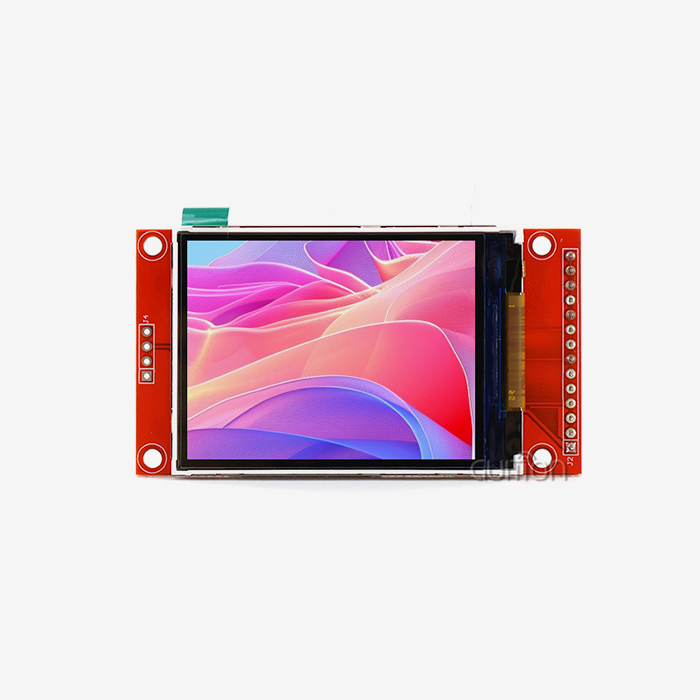
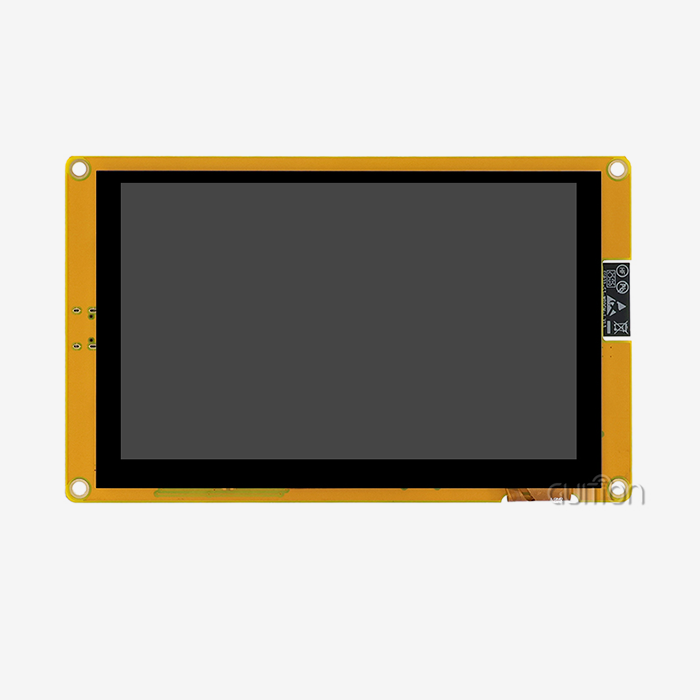
The Guition JC8048Q350N_I_W is an example of how modern Serial LCD display modules make integration easier. This 5.0-inch IPS display has a resolution of 800×480 and is powered by an ArtInChip D121BBV single-core MCU running at 400 MHz. It can communicate easily through UART. The module comes with test software that is already set up, so you can check its functionality right away without having to write a single line of code. If you want to make your own interface, the Guition online GUI tool has an easy-to-use drag-and-drop layout that works with Arduino, ESP-IDF, and native development modes. This adaptability lets different team tastes and current codebases work together, so there aren't any forced learning curves like there are with parallel interface conversions.
The combined development process cuts project timelines by a large amount. Modern Serial LCD display modules change the creation process in these ways:
Visual design tools that automatically make production-ready images make it easy to start with interface sketches. You can move controls around, change style options, and see how plans will look before you actually make them without having to do any math by hand. The 16-bit RGB color support that can produce over 65,000 colors makes sure that the interfaces of your industrial equipment look professional and can be read in a variety of lighting situations.
Cross-platform troubleshooting tools should get extra attention. Before putting the code on real hardware, you can try UART communication sequences, make sure commands are being answered correctly, and tweak time parameters right in the development environment. This early testing finds protocol mismatches, baud rate mistakes, and buffer overflow situations that normally only show up during integration testing. When problems do happen, the simpler communication design makes it easy to fix them. For example, serial protocol analyzers make it easy to see command sequences and device replies without the timing issues that come with parallel bus analysis.
Addressing Common Integration Challenges
Signal interference is the most common problem that comes up when trying to use serial transmission over longer wire runs or in busy industrial settings. Setting up a shared reference potential between your MCU and the Serial LCD display module is important. For UART data, twisted-pair wiring may be better when the distance is more than 1 meter. RS485 differential signaling for multi-drop setups is often useful for industrial automation projects, but standard TTL-level UART links work well for most embedded applications. Misconfigured pins are frustrating right away, but they can be fixed quickly by checking them all the way through. Make sure that the send and receive lines are properly connected (MCU TX to module RX and vice versa), and make sure that the baud rate you choose fits the module's normal or set speed.
Firmware compatibility is something that should be thought about when choosing components. Modules that allow remote upgrades, like those from Guition, let bugs be fixed or new features added after the system has been deployed. This feature is very useful for smart home goods or medical gadgets that need to be supported for a long time. Managing power has a direct effect on both running costs and thermal efficiency. Using automated lighting control lets your app dim or turn off the screen when it's not being used. This increases the component's lifespan and lowers the amount of energy it uses. Quality Serial LCD display modules are made to last, even in harsh environments. However, it is still your duty to make sure that the modules have enough airflow and are not mounted too close to high-power parts that give off too much heat.
Strategic Advantages of Serial LCD Display Modules for B2B Procurement and OEMs
Total Cost of Ownership Analysis
When manufacturing leaders are looking at hmi display module choices, they need to look beyond the unit prices of the parts to see how they will really affect the company's finances. Serial LCD display modules simplify connector schemes, require fewer solder joints, and make quality control easy. Field service costs go down when goods have remote update features that can fix problems without sending out technicians. When designers get rid of the signal integrity holes and connector contact problems that come with high-pin-count parallel ports, product durability goes up. These factors add up over the five to ten years that a product is on the market, which has a big effect on how profitable models work. When you figure out the return on your investment, you should take into account things like lower NRE costs from shorter development cycles, lower guarantee claim rates from well-designed products, and better market response from faster iteration speeds.
Why Industry Leaders Choose Advanced Serial Solutions
Intelligent Serial LCD display modules are becoming more and more popular among commercial terminal makers, farm automation developers, and energy management system integrators because they meet the needs of current product development. The modular design supports platform strategies where a single display unit serves multiple product versions. This lowers the cost of approval and makes managing inventory easier. With UTF-8 encoding and multilingual support, there is no need for hardware SKUs that are special to each area. This makes global distribution easier. Displays can become connected endpoints without extra communication gear because they have WiFi and Bluetooth modules built in. This is important for IoT-enabled smart products and remote tracking systems. Companies like Guition have seen these needs in the market and come up with solutions that meet real-world procurement priorities. For example, full documentation lowers technical risk, flexible development environments allow for diverse engineering teams, and the size ranges from 1.28" to 21.5", making sure that the right solutions are found no matter what the application requirements are.
Conclusion
Serial LCD display modules clearly lower the costs of developing HMI in several ways: easier hardware designs, lower BOM costs, faster engineering timelines, and less work for field service. This value offering is clearly shown by the Guition JC8048Q350N_I_W, which has strong processing at 400MHz, better picture quality thanks to IPS technology, and plug-and-play ease that lets projects start right away. When purchasing teams and engineering managers look at different display choices, they should not just look at the unit prices because they do not show the whole picture. The real measure is the total cost of ownership, which includes the stages of research, production, and support. Modern Serial LCD display modules offer measurable benefits in all areas, making them the smart choice for companies that want professional results but don't want to spend a lot of money.
FAQ
What distinguishes serial lcd display modules from traditional parallel displays?
The main difference is in the transmission design and the number of pins that must be used. Serial LCD display modules use UART, I2C, or SPI standards and usually need two to four links. Parallel interfaces, on the other hand, need twenty or more GPIO pins. This difference changes the complexity of the PCB, the choice of microprocessor, and the debugging process in a basic way.
Can serial lcd display modules integrate easily with Arduino and Raspberry Pi platforms?
Yes, these systems are fully compatible with protocols for serial transmission. The Arduino boards have a hardware UART that works with the easy Serial library functions. The Raspberry Pi, on the other hand, has many I2C and SPI ports that can be used with standard Linux drivers or Python libraries. On these popular software platforms, it's easier to add Serial LCD display modules than parallel ones because the interface is simpler.
Where can I find reliable serial LCD display module suppliers for volume production?
Manufacturers with a good reputation, like Guition, offer full technical support, confirmed compliance certifications, and the ability to increase or decrease production capacity. Compare providers not just by price, but also by the quality of their paperwork, the availability of samples, and the engineering help they offer after the sale. Companies that have been around for a while and serve industrial markets usually keep their products in stock and make long-term promises about the lifecycles of their parts, which is necessary for long-term production planning.
Partner with Guition for Cost-Effective HMI Solutions
Guition focuses on providing advanced Serial LCD display modules that lower your development costs and help you get into the market faster. Our JC8048Q350N_I_W has strong 400MHz processing, great IPS visual quality, and easy-to-use development tools that make complicated interface projects easy engineering jobs. As a provider of Serial LCD display modules with a lot of experience, we offer detailed technical documentation, quick engineering support, and a variety of ordering choices that can be tailored to your production plan. Our solutions can be tailored to your needs, whether you're making industrial control panels, medical tracking equipment, or smart home devices. Talk to david@guition.com right away about how our USART-HMI Serial LCD display modules can help your next project run more smoothly. Our team is ready to give you full specs, sample units, and volume pricing that shows you the real value of the product beyond the cost of the original purchase.
References
1. Chen, W., & Rodriguez, M. (2023). Comparative Analysis of Display Interface Technologies in Industrial Automation. Journal of Embedded Systems Engineering, 18(4), 112-128.
2. Patel, R. K. (2022). Cost Optimization Strategies for HMI Development in Medical Device Manufacturing. International Conference on Human-Machine Interfaces Proceedings, 45-63.
3. Anderson, L., & Kim, S. H. (2024). Serial Communication Protocols in Modern Display Systems: Performance and Reliability Assessment. IEEE Transactions on Industrial Electronics, 71(2), 1847-1859.
4. Bergström, A. (2023). PCB Design Complexity Reduction Through Interface Simplification. Electronics Design and Manufacturing Quarterly, 29(3), 78-94.
5. Thompson, J., & Walsh, C. (2022). Total Cost of Ownership Models for Embedded Display Selection. Supply Chain Management in Electronics Manufacturing, 156-173.
6. Liu, H., & Yamamoto, T. (2024). Emerging Trends in UART-Based Human-Machine Interface Technologies. Asia-Pacific Journal of Embedded Computing, 12(1), 34-52.
Learn about our latest products and discounts through SMS or email