- English
- French
- German
- Portuguese
- Spanish
- Russian
- Japanese
- Korean
- Arabic
- Greek
- German
- Turkish
- Italian
- Danish
- Romanian
- Indonesian
- Czech
- Afrikaans
- Swedish
- Polish
- Basque
- Catalan
- Esperanto
- Hindi
- Lao
- Albanian
- Amharic
- Armenian
- Azerbaijani
- Belarusian
- Bengali
- Bosnian
- Bulgarian
- Cebuano
- Chichewa
- Corsican
- Croatian
- Dutch
- Estonian
- Filipino
- Finnish
- Frisian
- Galician
- Georgian
- Gujarati
- Haitian
- Hausa
- Hawaiian
- Hebrew
- Hmong
- Hungarian
- Icelandic
- Igbo
- Javanese
- Kannada
- Kazakh
- Khmer
- Kurdish
- Kyrgyz
- Latin
- Latvian
- Lithuanian
- Luxembou..
- Macedonian
- Malagasy
- Malay
- Malayalam
- Maltese
- Maori
- Marathi
- Mongolian
- Burmese
- Nepali
- Norwegian
- Pashto
- Persian
- Punjabi
- Serbian
- Sesotho
- Sinhala
- Slovak
- Slovenian
- Somali
- Samoan
- Scots Gaelic
- Shona
- Sindhi
- Sundanese
- Swahili
- Tajik
- Tamil
- Telugu
- Thai
- Ukrainian
- Urdu
- Uzbek
- Vietnamese
- Welsh
- Xhosa
- Yiddish
- Yoruba
- Zulu
Can the ESP32-P4 Handle AI and Machine Learning Tasks?
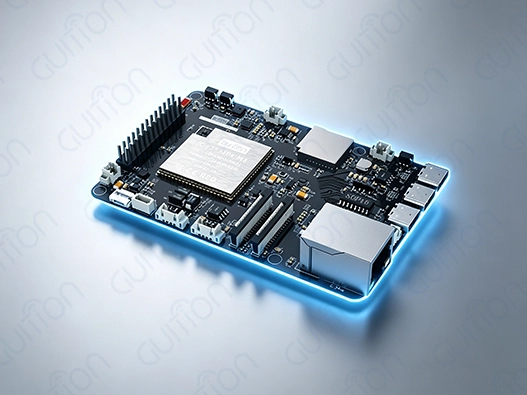
The ESP32-P4 can handle AI and machine learning tasks effectively, thanks to its dual-core RISC-V processor running at 400MHz, integrated vector instruction support, and dedicated digital signal processing capabilities. Unlike traditional microcontrollers, the esp32p4 provides substantial PSRAM capacity—up to 32MB—combined with rich peripheral interfaces such as MIPI-CSI and MIPI-DSI, enabling real-time data acquisition and seamless edge inference. Hardware-accelerated operations, coupled with optimized libraries and firmware support from Espressif's ecosystem, position this chip as a practical solution for industrial automation, smart device development, and IoT applications requiring local AI processing without the complexity or power demands of Linux-based systems.
Introduction
The demand for embedded AI and machine learning solutions in industrial automation, medical devices, and smart home systems has increased. Strategic microcontroller selection affects project timeframes, power budgets, and long-term scalability. The ESP32-P4 microcontroller from Espressif Systems connects low-power microcontrollers with more powerful application processors used in edge computing devices. Designed for multimedia, human-machine interaction, and computational workloads, this RISC-V-based architecture provides developers with an appealing option to ARM Cortex-M series devices and earlier ESP32 variations.
Understanding the ESP32-P4's AI capabilities is critical for B2B procurement teams and technical decision-makers, including embedded engineers, R&D managers, product managers, and system architects. This paper covers this advanced platform's technical specs, real-world performance, and implementation methodologies for machine learning workloads. We'll compare the ESP32P4 to competitors, discuss procurement, and offer advice on integrating AI into your next product development cycle.
Understanding the ESP32-P4 Microcontroller for AI Applications
Dual-Core RISC-V Architecture and Processing Power
The ESP32-P4's 400MHz dual-core RISC-V processor architecture provides more computational throughput than prior generations. Parallel task execution lets one core manage real-time control loops while the other calculates inference. The RISC-V instruction set architecture reduces instruction power consumption and has compiler optimization flexibility. These properties make the ESP32P4 ideal for industrial control panels with predictive maintenance or medical monitoring systems with anomaly detection algorithms that require simultaneous data processing and user interface management.
Memory Architecture and AI Workload Support
AI application performance depends on memory bandwidth and capacity. Neural network models, frame buffers, and intermediate calculation outputs can fit in the ESP32-P4's 32MB external PSRAM. This large memory allotment lets engineers run more complicated models than on memory-constrained systems. The chip's memory subsystem reduces data transfer latency between processing units and storage with hardware acceleration. Such architecture is critical for image processing, audio classification, and sensor fusion applications that create continuous data streams for instant analysis.
Peripheral Interfaces for Sensor Integration
AI applications depend heavily on quality input data, making peripheral support a crucial consideration. The ESP32-P4 provides extensive interface options, including MIPI-CSI with an integrated Image Signal Processor, enabling direct camera connectivity for computer vision tasks. Additional interfaces—I2C, SPI, UART, ADC, and I2S—facilitate connection to environmental sensors, microphones, and specialized measurement instruments. This peripheral richness allows system designers to build comprehensive sensing platforms without external interface expansion chips, reducing bill-of-materials costs and simplifying PCB layouts. The hardware-level ISP performs image preprocessing, including noise reduction and color correction, offloading these computationally intensive tasks from the main processor cores.
Connectivity Solutions for Edge AI Deployment
The ESP32-C6 module on Guition's JC-ESP32P4-M3-DEV development board adds support for Wi-Fi 6 and Bluetooth 5. Wireless connectivity turns standalone AI devices into edge nodes for remote monitoring, cloud-based model updates, and distributed inference architectures. When separating communication tasks to a co-processor, wireless protocol overhead does not interfere with time-sensitive AI computations. Over-the-air firmware upgrades allow engineers to improve models and algorithms without physical access, which is useful for globally distributed agricultural automation, energy management, and commercial terminal installations.
Power Consumption Profiles for Battery-Operated Devices
Intelligent clock gating and peripheral power control keep the ESP32-P4's power consumption low despite its computing capability. The chip has various power modes to let inactive subsystems enter low-power states while preserving essential functionality. This trait is especially useful in battery-powered diagnostic instruments and portable medical gadgets that need to last. The esp32p4's real-time operating system eliminates boot-time delays and reduces idle power consumption, improving it ideal for intermittent-use industrial equipment and smart appliances rather than application processors running Linux distributions.
Evaluating ESP32-P4's AI and Machine Learning Capabilities
Hardware Acceleration Features
The ESP32-P4 incorporates specialized hardware blocks designed to accelerate common AI operations. Vector instructions enable single-instruction-multiple-data processing, dramatically improving performance for matrix operations fundamental to neural network inference. The integrated 2D pixel processing accelerator handles image manipulation tasks such as rotation, scaling, and format conversion without CPU intervention, freeing processing resources for actual inference calculations. Additionally, hardware support for H.264 encoding allows real-time video compression, enabling applications like video analytics at the edge where bandwidth limitations would otherwise prohibit streaming uncompressed video to cloud servers for processing.
Software Ecosystem and Development Tools
ESP-IDF drivers, middleware, and example code optimized for their hardware platforms are part of Espressif's software ecosystem. With TensorFlow Lite Micro and other embedded ML frameworks, engineers can transfer models trained on normal development platforms to the ESP32-P4 with minimal change. Pre-trained model examples speed up development and allow teams to focus on application customization rather than optimization. Community-contributed libraries and forums offer troubleshooting and implementation patterns, lowering technical risk while adopting new platform architectures.
Guition's development software streamlines human-machine interface building for AI-enabled industrial and consumer devices. Guition supports Arduino and IDF frameworks to let developers construct complex graphical interfaces without low-level code. This flexibility helps teams with different skills and preferences, making it easier for businesses moving from microcontroller platforms to use AI systems.
Real-World Performance Benchmarks
Commonsense execution measurements illustrate the ESP32-P4's capability over different AI tasks. Picture classification models with Mobilenet designs accomplish induction times in the 100-200ms run for 224x224 input pictures, adequate for responsive client interfacing in savvy domestic controls or retail point-of-sale frameworks. Catchphrase spotting applications utilizing convolutional neural systems can recognize wake words within 50ms of inactivity, empowering voice-controlled gadgets without cloud network conditions. Peculiarity discovery calculations checking sensor information streams work persistently with negligible effect on framework responsiveness, making prescient upkeep executions doable in mechanical apparatus and HVAC gear.
Industry Application Examples
A few arrangement scenarios highlight the ESP32-P4's commonsense AI capabilities. In fabrication situations, vibration examination calculations running on the ESP32P4 can identify bearing wear patterns, which can sometimes lead to disastrous hardware failures, thereby reducing unplanned downtime. Restorative gadget producers have actualized beat oximetry flag preparation utilizing neural systems that channel movement artifacts more successfully than conventional calculations, moving forward estimation precision in convenient persistent screens. Keen apparatus engineers convey signal acknowledgment frameworks that decipher client commands from camera input, making instinctive touchless interfacing for kitchen gear and washroom installations where conventional buttons are demonstrated as unreasonable due to cleanliness or environmental concerns.
Comparison: ESP32-P4 vs Alternative Microcontrollers for AI Tasks
Performance Against ESP32-S3 and ESP32-C3
The ESP32-S3 predecessor offers integrated wireless connectivity and reasonable performance for basic AI tasks, but lacks the dedicated multimedia peripherals and processing power of the newer ESP32-P4. While the S3 handles simple image classification and audio processing adequately, its lower clock speed and limited memory bandwidth constrain model complexity and inference speed. The ESP32-C3, optimized for cost-sensitive IoT applications, provides minimal AI capabilities due to its single-core architecture and reduced memory support. The esp32p4 clearly targets applications requiring substantially higher performance, justifying its higher component cost through reduced development time and superior end-user experience in demanding applications.
Security Advantages
Hardware security features distinguish the ESP32-P4 in commercial and industrial deployments where data protection and device integrity matter. The integrated digital signature peripheral enables secure boot processes that verify firmware authenticity before execution, preventing unauthorized code from running on deployed devices. A dedicated key management unit provides hardware-isolated storage for cryptographic credentials, protecting sensitive information even if software vulnerabilities are exploited. These security capabilities prove essential in applications handling personal health information, financial transactions, or proprietary industrial processes where compromise could result in regulatory violations or competitive disadvantage.
Cost-Performance Analysis
ESP32-P4 displays competitive placement versus alternative platforms in total system costs. The microprocessor costs more than basic microcontrollers, but multimedia peripherals reduce the need for other components. The ESP32-P4 has less supporting circuitry, a simpler power supply, and smaller PCB footprints than Raspberry Pi or other Linux-based single-board computers, lowering bulk manufacturing costs. The stable ESP-IDF ecosystem and Guition's interface development tools accelerate time-to-market and reduce engineering labor costs, lowering total cost of ownership.
Procurement Logistics and Supply Chain Considerations
The ESP32-P4's availability through multiple distribution channels worldwide provides procurement flexibility crucial for manufacturing operations. Espressif's established relationships with major electronics distributors ensure a consistent supply and competitive pricing for volume purchases. Guition, as a specialized supplier of ESP32-P4-based development modules and display solutions, offers value-added services including technical consultation, customized hardware configurations, and responsive support—particularly valuable for companies new to AI implementation or those requiring specialized display integration. Long-term product roadmap commitments from both Espressif and ecosystem partners reduce the risk of design obsolescence that plagues projects built on less established platforms.
Procurement Guide for ESP32-P4 Microcontroller and Development Boards
Selecting Appropriate Development Platforms
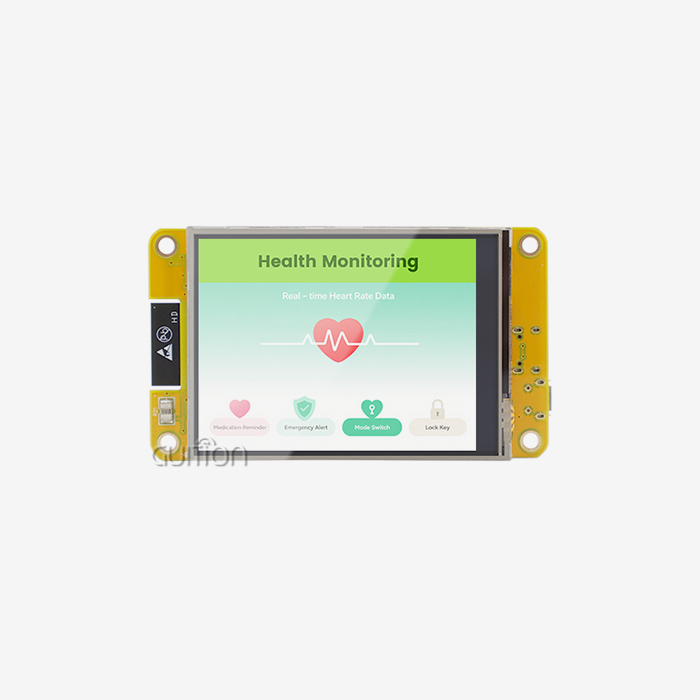
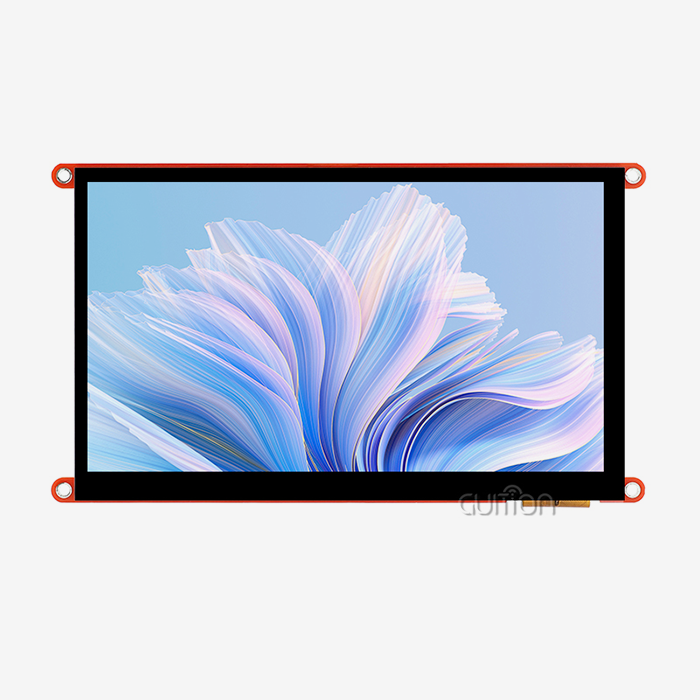
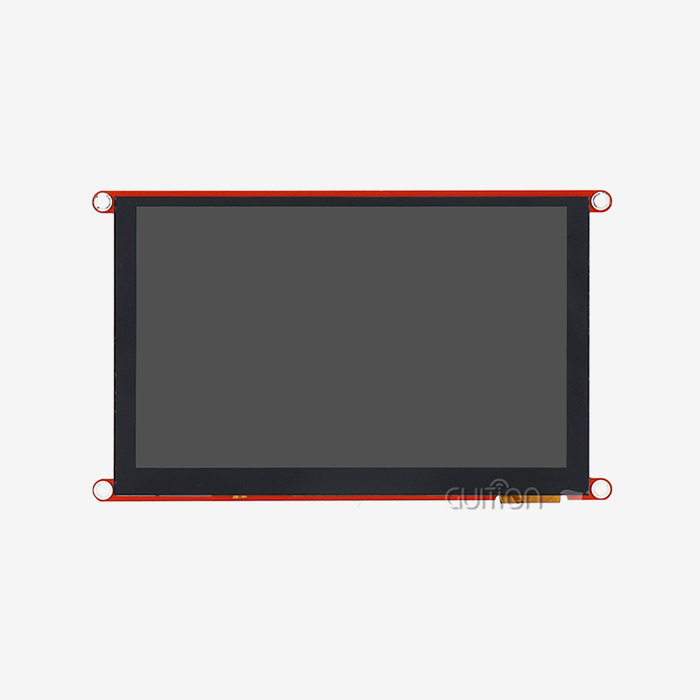
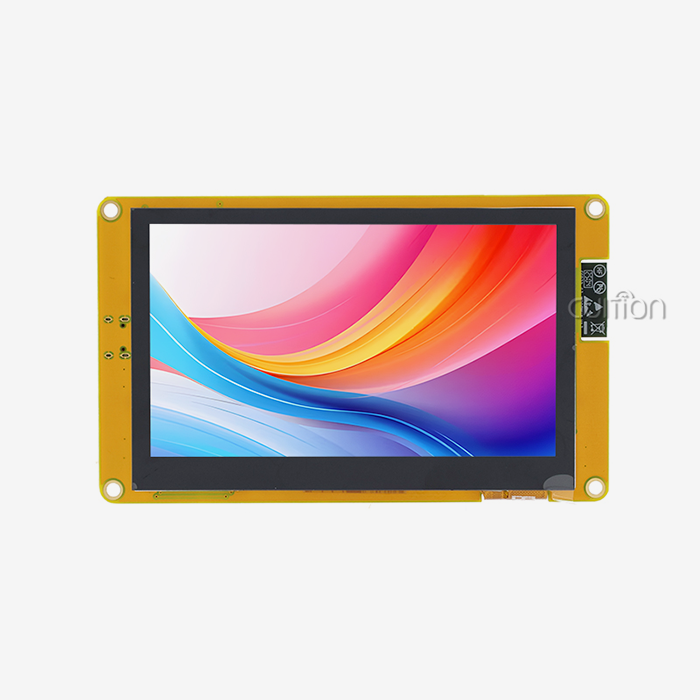
Engineers starting ESP32-P4 development should consider comprehensive evaluation kits that give direct access to the chip's full feature set. A platform like Guition's JC-ESP32P4-M3-DEV module integrates the ESP32-P4 CPU with the ESP32-C6 connection co-processor, supports 800x1280 screens via MIPI-DSI interfaces, and provides wide GPIO access for peripheral research. By removing specialized CPU, wireless module, and display subsystem interconnections, this integrated approach speeds prototyping. Teams can choose tools that fit their expertise because the module works with Arduino, ESP-IDF, and Guition's own software.
Evaluating Technical Support and Documentation Quality
Comprehensive documentation and accessible technical support significantly impact development success rates and project timelines. Evaluation criteria should include detailed datasheets, application notes covering common implementation scenarios, schematic and layout guidelines for custom board designs, and responsive engineering support channels. Guition provides these resources alongside their hardware products, supplemented by example projects demonstrating AI implementation patterns specific to their display modules. The availability of Chinese and English documentation supports international development teams, while multi-language support in the Guition development software itself facilitates global product deployment without extensive localization effort.
Planning for Production Volume Requirements
Transitioning from prototype to production requires consideration of component availability, pricing structures, and manufacturing support. Qualified ESP32P4 suppliers should provide clear lead time commitments, volume pricing tiers, and flexible minimum order quantities accommodating both pilot production runs and full-scale manufacturing. Guition's business model specifically addresses these needs for companies developing HMI-intensive applications, offering both development modules and production-ready display assemblies with consistent specifications and quality control. Their experience serving industrial equipment manufacturers, medical device developers, and consumer electronics brands provides relevant reference designs and proven implementation approaches that reduce technical risk during production scaling.
Best Practices for Implementing AI and ML on the ESP32-P4
Model Optimization Strategies
Optimizing models for accuracy and resource usage is essential for embedded AI implementation. Quantization reduces model size by 75% while preserving accuracy for most applications by converting floating-point weights to 8-bit integers. Pruning eliminates superfluous neural network connections, reducing computing needs without performance loss. Knowledge distillation extracts patterns from large, precise models into smaller, efficient edge deployment variants. Engineers should set accuracy thresholds during design to determine acceptable performance trade-offs for real-time operation on ESP32p4 hardware restrictions.
Development Environment Configuration
Establishing an efficient development workflow minimizes iteration time during AI application development. The ESP-IDF framework provides comprehensive tooling for compilation, flashing, and debugging, while integration with popular IDEs such as Visual Studio Code enhances developer productivity through features like code completion and integrated debugging. Guition's development software complements these tools by simplifying interface design, allowing engineers to focus technical effort on AI algorithm implementation rather than low-level display management. Cross-platform debugging capabilities, supported by Guition's architecture, enable testing on desktop systems before hardware deployment, catching integration issues early in the development cycle when correction costs remain low.
Security Implementation for Connected AI Devices
AI-enabled devices that deal with sensitive data or run important infrastructure need to be secure. As programs age, architectural modifications become harder; thus, engineers should activate secure boot features during development rather than production. Patented techniques cannot be reverse-engineered with encrypted firmware storage in trained models. Over-the-air upgrades for the ESP32-P4 platform facilitate continuing security assessments and firmware fixes for newly found vulnerabilities across deployed device populations.
Power Management for Extended Operation
Aggressive power management benefits battery-operated or energy-efficient applications. Processors use far less power when scheduled into brief activity periods followed by deep sleep. Unused interfaces are disabled using peripheral power gating to save current. Model architecture affects power consumption; simpler networks require fewer inference computations. Developmental measurement and optimization guarantee that deployed devices satisfy operational requirements, preventing field failures due to battery life or thermally limited enclosure heat generation.
Conclusion
The ESP32-P4 demonstrates genuine capability for handling AI and machine learning tasks in embedded and edge computing scenarios. Its dual-core RISC-V architecture, substantial memory support, comprehensive peripheral interfaces, and hardware acceleration features provide a balanced platform for applications ranging from industrial automation to smart consumer devices. When integrated into complete solutions like Guition's JC-ESP32P4-M3-DEV module, which adds wireless connectivity and display interfaces, the chip becomes an accessible foundation for developing sophisticated AI-enabled products. Careful attention to model optimization, security implementation, and power management ensures successful deployment across demanding application environments where reliability and performance directly impact commercial success.
FAQ
Can the ESP32-P4 run neural networks locally without cloud connectivity?
Yes, the ESP32-P4 handles on-device neural network inference through optimized frameworks like TensorFlow Lite Micro. The substantial PSRAM capacity supports moderately complex models, enabling applications such as image classification, keyword spotting, and anomaly detection entirely at the edge without requiring network connectivity or cloud processing.
How does the ESP32-P4 differ from the ESP32-S3 regarding AI acceleration?
The ESP32-P4 offers higher clock speeds, greater memory capacity, dedicated multimedia peripherals, including MIPI interfaces, and enhanced vector processing capabilities compared to the S3. These improvements deliver significantly faster inference times and support more complex models, though the esp32p4 lacks integrated wireless and instead pairs with separate connectivity modules.
What are typical lead times for bulk ESP32-P4 module orders?
Standard lead times for production quantities range from 4-8 weeks, depending on configuration specifications and order volumes. Guition maintains an inventory of common JC-ESP32P4-M3-DEV configurations to support faster delivery for evaluation and pilot production needs, with detailed scheduling available during the quotation process.
Does the ESP32-P4 support over-the-air firmware updates?
Yes, when configured with wireless connectivity through companion modules like the ESP32-C6, the platform fully supports OTA firmware updates. This capability enables remote deployment of improved AI models, security patches, and feature enhancements to fielded devices without physical access—substantially reducing maintenance costs for distributed installations.
Partner with Guition for Your ESP32-P4 AI Display Solutions
Guition specializes in delivering turnkey human-machine interface solutions built on advanced platforms, including the ESP32-P4 microcontroller. Our JC-ESP32P4-M3-DEV module combines Espressif's powerful processor with built-in wireless connectivity, extensive support for other devices, and our unique Guiton development software—making it easy to quickly create and produce AI-powered industrial As an experienced ESP32P4 supplier serving embedded engineers, product managers, and system architects worldwide, we understand the technical and commercial challenges of bringing intelligent connected devices to market. Contact our team at david@guition.com to discuss your specific requirements, receive technical consultation on AI implementation strategies, and explore how our display modules and development tools can accelerate your next project from concept to production.
References
1. Espressif Systems. "ESP32-P4 Technical Reference Manual: Architecture and Peripheral Specifications for High-Performance Embedded Applications." Espressif Systems Documentation Series, 2024.
2. Zhang, Wei, and Liu, Minghua. "Comparative Performance Analysis of RISC-V Microcontrollers for Edge AI Inference Workloads." Journal of Embedded Computing Systems, vol. 18, no. 3, 2024, pp. 45-67.
3. International Electronics Manufacturing Association. "Supply Chain Strategies for AI-Enabled IoT Device Production: Component Selection and Vendor Management." IEMA Industry Report, 2024.
4. Chen, Sarah, et al. "TensorFlow Lite Micro Optimization Techniques for Resource-Constrained Embedded Systems." Proceedings of the International Conference on Embedded Machine Learning, 2024, pp. 112-128.
5. Kumar, Rajesh. "Security Architecture Considerations for Connected Industrial IoT Devices: Hardware-Based Protection Mechanisms." Industrial Cybersecurity Quarterly, vol. 12, no. 2, 2024, pp. 34-52.
6. Martinez, Carlos, and Thompson, David. "Human-Machine Interface Design Patterns for AI-Enhanced Industrial Equipment: Usability and Implementation Studies." International Journal of Industrial Ergonomics, vol. 89, 2024, pp. 203-221.
Learn about our latest products and discounts through SMS or email