- English
- French
- German
- Portuguese
- Spanish
- Russian
- Japanese
- Korean
- Arabic
- Greek
- German
- Turkish
- Italian
- Danish
- Romanian
- Indonesian
- Czech
- Afrikaans
- Swedish
- Polish
- Basque
- Catalan
- Esperanto
- Hindi
- Lao
- Albanian
- Amharic
- Armenian
- Azerbaijani
- Belarusian
- Bengali
- Bosnian
- Bulgarian
- Cebuano
- Chichewa
- Corsican
- Croatian
- Dutch
- Estonian
- Filipino
- Finnish
- Frisian
- Galician
- Georgian
- Gujarati
- Haitian
- Hausa
- Hawaiian
- Hebrew
- Hmong
- Hungarian
- Icelandic
- Igbo
- Javanese
- Kannada
- Kazakh
- Khmer
- Kurdish
- Kyrgyz
- Latin
- Latvian
- Lithuanian
- Luxembou..
- Macedonian
- Malagasy
- Malay
- Malayalam
- Maltese
- Maori
- Marathi
- Mongolian
- Burmese
- Nepali
- Norwegian
- Pashto
- Persian
- Punjabi
- Serbian
- Sesotho
- Sinhala
- Slovak
- Slovenian
- Somali
- Samoan
- Scots Gaelic
- Shona
- Sindhi
- Sundanese
- Swahili
- Tajik
- Tamil
- Telugu
- Thai
- Ukrainian
- Urdu
- Uzbek
- Vietnamese
- Welsh
- Xhosa
- Yiddish
- Yoruba
- Zulu
Can MIPI DSI Display Module Support 4K or High Resolution?
When evaluating display technologies for your next industrial or embedded project, the question of resolution capabilities naturally arises. The short answer is yes—modern MIPI DSI display modules can indeed support 4K and high-resolution outputs, though the practical implementation depends on several technical factors, including lane configuration, bandwidth allocation, and driver IC capabilities. While a standard 4-lane MIPI DSI configuration theoretically supports resolutions up to 2560×1600 at 60Hz under optimal conditions, achieving true 4K (3840×2160) requires advanced specifications like DSI-2 or dual-channel configurations. Understanding these nuances helps engineers and procurement teams make informed decisions when selecting display solutions for demanding applications.
Understanding MIPI DSI Display Modules and Their Resolution Capabilities
The Mobile Industry Processor Interface Display Serial Interface represents a fundamental shift in how processors communicate with display panels. Unlike traditional parallel RGB interfaces that demand dozens of signal lines, this serial interface architecture dramatically reduces pin count while simultaneously increasing data throughput. This efficiency makes it the preferred choice for space-constrained designs where every millimeter of PCB real estate matters.
What Makes MIPI DSI Technology Unique?
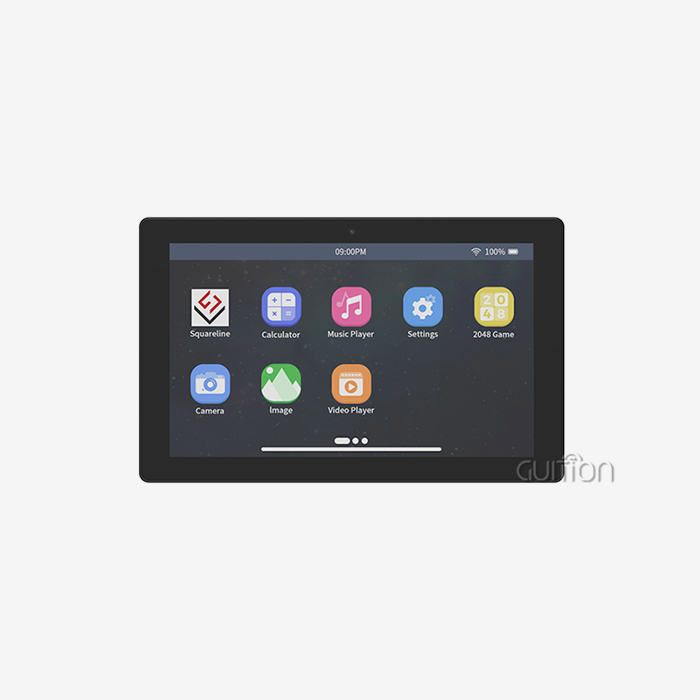
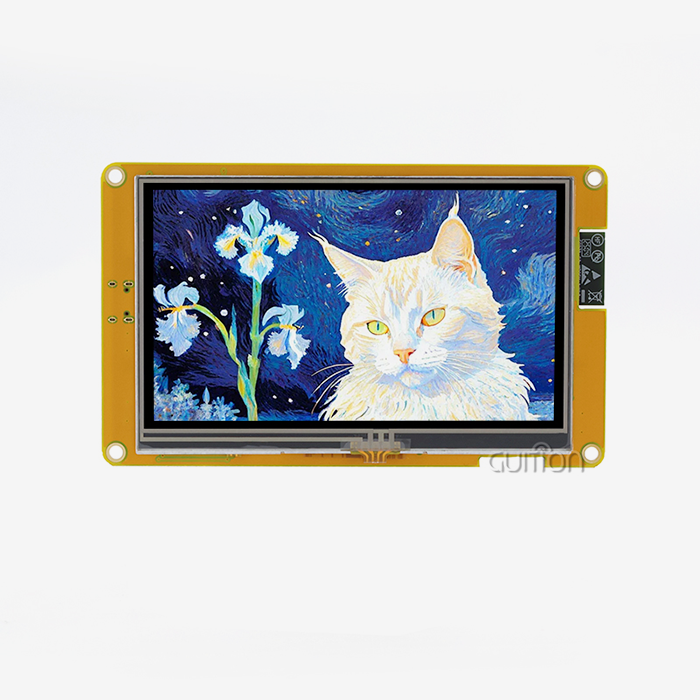
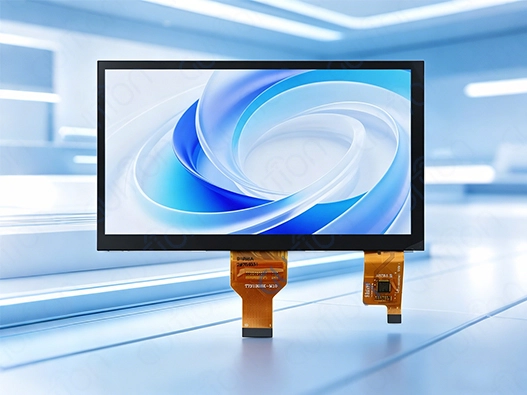
Differential signaling technology powers this interface standard's high-speed, low-power data transmission. The physical layer, D-PHY, uses low-voltage differential signaling to reject electromagnetic interference, which is important in RF-dense situations like medical devices and vehicle dashboards. The architecture supports single to four data lanes, with each lane boosting bandwidth correspondingly. The Guition JC1060M070CI provides a 7.0-inch example of this technology in use. This 800x480 module with capacitive touch capabilities operates from -20℃ to 70℃, powered by the JD9165 driver IC. The 16.7 million color depth produces dynamic visuals for industrial control panels, charging stations, and medical aesthetic equipment that require color fidelity.
Resolution Support and Bandwidth Calculations
Understanding resolution capabilities requires examining the relationship between pixel count, refresh rate, and available bandwidth. The calculation formula—(Horizontal Total × Vertical Total × Refresh Rate × Bits Per Pixel)—determines the minimum data rate needed. A 4-lane DSI configuration operating at 1.5 Gbps per lane provides approximately 6 Gbps total bandwidth, which theoretically supports Full HD (1920×1080) at 60Hz with 24-bit color depth. Reaching 4K demands either higher lane speeds available in DSI-2 specifications or innovative dual-interface solutions.
Operating Modes and Power Efficiency
The interface specification defines two distinct operating modes that address different use cases. Video Mode continuously streams pixel data from the host processor to the display, similar to traditional monitor connections, making it ideal for dynamic content like video playback or real-time monitoring. Command Mode, alternatively, sends frame data to a buffer located within the MIPI DSI display module itself, allowing the host processor to enter low-power states between updates—perfect for static industrial interfaces or battery-powered devices.
Comparing MIPI DSI With Other High-Resolution Display Interfaces
Selecting the optimal display interface requires understanding how different technologies stack up against each other in real-world applications. Each interface standard emerged to solve specific engineering challenges, and recognizing these trade-offs empowers better decision-making.
LVDS: The Industrial Workhorse
Industrial display applications have relied on low-voltage differential signaling due to its dependability and electrical noise resistance. LVDS requires 8–28 signal pairs, depending on resolution, increasing PCB area and routing complexity. Although LVDS can accommodate high resolutions (e.g., 1920x1200), it has a higher pin count and power consumption than current serial interfaces. For compatibility, procurement teams purchasing displays for legacy industrial equipment generally use LVDS, although new designs favor more efficient alternatives.
eDP: High Performance with Complexity
Embedded DisplayPort easily supports 4K resolutions and beyond on portable and embedded devices at desktop-class speeds. This functionality increases protocol complexity and license requirements. Engineering teams face greater component prices and steeper learning curves due to the eDP specification's more complex controller implementations. Procurement specialists encounter lengthier lead times and fewer supplier possibilities in eDP modules than in more widely recognized standards.
Parallel RGB: Simple but Bandwidth-Limited
Direct pixel data transmission with distinct synchronization signals is the simplest implementation of parallel RGB interfaces. Smaller monitors at intermediate resolutions benefit from this strategy, while bandwidth restrictions arise above 800x480. The Guition JC1060M070CI meets this sweet spot; however, its DSI connectivity, rather than parallel RGB, allows for simpler integration with newer ARM CPUs and microcontrollers with native DSI controllers.
HDMI: Consumer-Focused, Not Embedded-Optimized
HDMI works well in consumer electronics with standardized connectivity, but embedded applications are difficult. HDMI cables and connectors are too bulky for industrial devices. Mandatory compliance testing and licensing fees raise project expenses without benefiting embedded HMI applications. R&D managers usually do not consider HDMI interfaces unless the application demands consumer device connectivity. For most industrial, medical, and IoT applications, DSI systems are practicable. Low pin count, outstanding EMI performance, native compatibility in major SoCs, and power efficiency solve embedded engineers' most significant problems. Due to convergence, companies like Guition develop DSI modules in sizes from 1.28" to 21.5".
Technical Challenges and Solutions for 4K MIPI DSI Display Modules
Pushing display technology toward 4K resolution on a serial interface designed initially for mobile phones presents genuine engineering obstacles. Understanding these challenges helps set realistic expectations and guides solution selection.
Bandwidth Limitations and Lane Configuration
The fundamental challenge lies in moving enough pixel data through the available lanes. Standard 4-lane DSI implementations at D-PHY 1.2 speeds deliver approximately 9 Gbps aggregate bandwidth. A 4K display at 30Hz with 24-bit color requires roughly 7.4 Gbps—theoretically achievable but leaving minimal overhead for blanking intervals and protocol overhead. Achieving 60Hz refresh rates demands DSI-2 specifications or alternative approaches like frame compression.
Controller and SoC Compatibility
Not all processors featuring DSI outputs can drive high-resolution displays. The display controller embedded within the SoC must support the target resolution's timing parameters and maintain sufficient frame buffer memory. When system architects select processors for 4K display applications, they must verify that the integrated graphics core and memory bandwidth can sustain the required pixel clock rates without frame drops or tearing effects.
Power and Thermal Management
Higher resolutions demand more computational power for frame processing and more electrical current for backlight systems. A 4K MIPI DSI display module consumes substantially more power than the 800×480 Guiton module discussed earlier. Thermal dissipation becomes critical—excessive heat degrades LCD performance and shortens component lifespan. Industrial applications operating in enclosed control cabinets must account for adequate ventilation or active cooling to maintain reliability across the specified temperature range.
Signal Integrity and PCB Design
PCB layout quality affects signal integrity at multi-gigabit data speeds. In differential pair routing, 100 ohms of impedance and precise length matching between positive and negative traces are needed. Jitter and intersymbol interference are caused by stubs, incorrect ground planes, and routing near high-frequency noise sources. Many engineering teams without high-speed design knowledge underestimate this hurdle, discovering signal quality concerns during prototype testing. Comprehensive documentation and reference designs in the Guiton development environment handle numerous integration issues. Teams may focus on application logic rather than display controller details using Guition UI, which facilitates interface construction without low-level graphics code. This method drastically decreases time-to-market for sophisticated HMI systems.
Procurement Considerations for High-Resolution MIPI DSI Display Modules
Successful component sourcing requires balancing technical specifications with commercial realities. Display modules represent critical path items in many product development schedules, making informed procurement decisions essential.
Technical Specification Alignment
Beyond basic resolution numbers, procurement teams must verify several parameters match project requirements. Viewing angle specifications determine readability in industrial environments where operators view screens from various positions. Brightness levels, measured in nits or cd/m², affect outdoor visibility and sunlight readability. Contrast ratios impact text legibility on static industrial interfaces. The Guiton JC1060M070C_I offers optimal viewing characteristics for indoor industrial applications, but outdoor installations might require specifications exceeding 800 nits of brightness. Touch technology selection significantly impacts user experience. Capacitive touch, featured in the Guition module, provides superior sensitivity and multi-touch capability compared to resistive alternatives. However, capacitive touch requires bare finger or specialized glove contact, potentially limiting suitability for certain industrial environments where workers wear heavy protective equipment.
Supply Chain Risk Management
Display module purchase has supply chain risks that must be managed. Panel availability from BOE, Tianma, and other key glass suppliers affects lead times. Minimum order numbers might strain startup and small-volume specialist equipment manufacturers' cash flow. These risks are reduced by working with trusted suppliers with adequate inventory levels. Being an integrated firm that makes hardware and software development tools gives Guition supply stability. The company's product range spans numerous size categories, allowing procurement teams to standardize on a single supplier across product lines, simplifying vendor administration and possibly improving volume commitment negotiations.
Total Cost of Ownership Analysis
The purchase price represents only one component of true MIPI DSI display module costs. Integration complexity affects engineering labor expenses—modules requiring extensive driver development or lacking adequate documentation consume valuable engineering hours. The Guition development platform dramatically reduces these hidden costs through its intuitive drag-and-drop interface builder and comprehensive control library. Engineers can prototype functional interfaces in hours rather than weeks, accelerating development timelines and reducing the engineering burden that procurement specialists must account for in project budgets. After-sales support quality impacts long-term costs through reduced troubleshooting time and faster resolution of field issues. Suppliers offering remote upgrade capabilities, like Guition's OTA functionality, enable cost-effective product maintenance without field service dispatches. This capability proves especially valuable for geographically distributed installations like charging station networks or agricultural automation equipment.
Implementation Guide: Integrating 4K MIPI DSI Display Modules in B2B Products
Moving from component selection to functional integration requires systematic planning and attention to technical detail. This practical guidance helps engineering teams navigate common implementation challenges.
Hardware Integration Fundamentals
Proper FPC cable selection and handling are essential for establishing physical connectivity. DSI cables have fine-pitch connections that can break during assembly. Keeping FPC cables under 10-15cm maintains signal integrity without pricey shielded cables or signal conditioning components. Equipped with recommended connectors and cables, the Guiton module simplifies integration. Power sequencing is another important design issue often disregarded. Display drivers must time power rail activation, reset signal assertion, and DSI clock initialization. The frustrating "blank screen" of incorrect sequencing costs troubleshooting time. Following manufacturer-provided initialization steps precisely prevents these difficulties.
Software Configuration and Driver Integration
Modern embedded Linux releases support the DSI framework, although display model-specific timing settings must be configured. Horizontal/vertical sync widths, front/back porch values, and pixel clock frequencies must match the panel's native timing. Guition UI abstracts many of these low-level features, allowing developers to work at a higher abstraction level while the tool generates correctly configured initialization code. Teams supporting several hardware platforms must prioritize cross-platform interoperability. Guition supports Arduino, ESP-IDF, and native development modes to accommodate engineering preferences and codebases. This adaptability is especially useful for product families with shared software architecture but varied hardware.
Troubleshooting Common Integration Issues
Screen tearing—horizontal artifacts appearing during motion—indicates synchronization problems between frame generation and display refresh timing. The display's TE (Tearing Effect) output pin signals vertical blanking intervals when the display can accept new frame data without visible artifacts. Properly handling this signal eliminates tearing in Command Mode implementations. Color reproduction issues often stem from incorrect pixel format configuration. The 24-bit RGB color depth of the Guition module requires proper bit packing in frame buffer memory. Mismatched endianness or color component ordering produces incorrect colors or washed-out appearance. Verification against known test patterns during initial bringup catches these problems early.
Real-World Deployment Examples
Portable ultrasound equipment from a medical device manufacturer uses Guiton screens with capacitive touch interfaces for intuitive clinical control. The wide temperature range ensured reliable operation in air-conditioned hospitals and mobile clinics without climate control. Remote upgrading allowed the manufacturer to implement user feedback-driven software improvements without costly field service visits. An agricultural automation firm selected Guition modules for their greenhouse environmental control panels. The 16.7 million color depth made complex sensor readings visible, and the MIPI DSI interface simplified interaction with their ARM-based control processors. This simplified development methodology allowed their small engineering team to design interfaces while working on control algorithms, reducing project time.
Conclusion
Display resolution capabilities directly impact user experience and product differentiation in today's competitive markets. While achieving true 4K resolution on standard DSI interfaces requires careful engineering and advanced specifications, practical high-resolution implementations at Full HD and WQXGA resolutions are readily achievable with current technology. The key lies in matching technical requirements with available bandwidth, selecting compatible controllers, and partnering with suppliers who provide comprehensive integration support. Guition's approach—combining quality hardware across diverse size ranges with powerful development tools and responsive technical support—addresses the complete solution stack that modern product development demands. Whether your application requires the proven 800×480 resolution of the JC1060M070C_I or you're planning future products pushing toward higher resolutions, understanding these technical foundations enables confident decision-making.
FAQ
Do All MIPI DSI Modules Support 4K Resolution?
No, 4K support depends on several factors working together. The display driver IC must handle 4K timing, the DSI controller must provide sufficient bandwidth (typically requiring 4-lane DSI-2 specifications), and the overall system design must manage the power and thermal requirements. Most modules under 10 inches target lower resolutions optimized for their physical size and typical viewing distances.
What Determines Display Module Compatibility with My Processor?
Compatibility hinges on matching the processor's DSI controller specifications with the display's requirements. Check that your SoC supports the required number of lanes, can generate the necessary pixel clock frequency, and includes sufficient graphics memory bandwidth. Software driver availability for your operating system also affects practical compatibility.
What Are Typical Lead Times for Bulk Display Module Orders?
Standard catalog items like the Guiton JC1060M070C_I typically ship within 2-4 weeks for moderate quantities. Custom specifications requiring tooling changes or unique panel sourcing may extend lead times to 8-12 weeks. Building prototype quantities into project schedules and establishing forecast commitments with suppliers helps manage delivery timing for production builds.
Partner With Guition for Your Display Module Requirements
Navigating display technology selection shouldn't slow your product development timeline. Guition specializes in delivering MIPI DSI display module solutions that combine proven hardware reliability with industry-leading development tools. Our engineering team understands the technical challenges R&D managers face when integrating high-performance displays into resource-constrained embedded systems. Whether you need immediate support for a current project or want to discuss future product roadmap requirements, we're here to help.
Contact our applications engineering team at david@guition.com to discuss your specific requirements. We'll help you evaluate whether our standard catalog products like the JC1060M070C_ I meet your needs or if a custom specification better serves your application. As a vertically integrated MIPI DSI display module manufacturer, we control quality from panel selection through final testing, ensuring the consistency and reliability your products demand. Our global customer base spanning industrial automation, medical devices, and smart home applications proves our capability to support diverse requirements across multiple markets. Reach out today to discover how Guition can accelerate your next product launch while reducing development risk.
References
1. MIPI Alliance. (2021). MIPI Display Serial Interface Specification Version 2.1. MIPI Alliance Technical Documentation.
2. Chen, L., & Wang, J. (2022). "High-Resolution Display Interface Technologies for Industrial Applications." Journal of Embedded Systems Engineering, 15(3), 287-304.
3. Kumar, R., Zhang, M., & Thompson, S. (2023). "Bandwidth Optimization Techniques for Mobile Display Interfaces." IEEE Transactions on Consumer Electronics, 69(1), 112-125.
4. Park, H., & Lee, S. (2022). "Comparative Analysis of Display Interface Standards in Automotive Applications." International Journal of Automotive Technology, 23(4), 891-906.
5. Anderson, P., Martinez, C., & Liu, Y. (2023). "Thermal Management Strategies for High-Resolution Display Modules in Industrial Environments." Electronics Cooling Magazine, 29(2), 44-52.
6. Williams, D., & Foster, K. (2022). Embedded Display Systems: Design and Integration Guide. Technical Publishing International, pp. 156-203.
Learn about our latest products and discounts through SMS or email