- English
- French
- German
- Portuguese
- Spanish
- Russian
- Japanese
- Korean
- Arabic
- Greek
- German
- Turkish
- Italian
- Danish
- Romanian
- Indonesian
- Czech
- Afrikaans
- Swedish
- Polish
- Basque
- Catalan
- Esperanto
- Hindi
- Lao
- Albanian
- Amharic
- Armenian
- Azerbaijani
- Belarusian
- Bengali
- Bosnian
- Bulgarian
- Cebuano
- Chichewa
- Corsican
- Croatian
- Dutch
- Estonian
- Filipino
- Finnish
- Frisian
- Galician
- Georgian
- Gujarati
- Haitian
- Hausa
- Hawaiian
- Hebrew
- Hmong
- Hungarian
- Icelandic
- Igbo
- Javanese
- Kannada
- Kazakh
- Khmer
- Kurdish
- Kyrgyz
- Latin
- Latvian
- Lithuanian
- Luxembou..
- Macedonian
- Malagasy
- Malay
- Malayalam
- Maltese
- Maori
- Marathi
- Mongolian
- Burmese
- Nepali
- Norwegian
- Pashto
- Persian
- Punjabi
- Serbian
- Sesotho
- Sinhala
- Slovak
- Slovenian
- Somali
- Samoan
- Scots Gaelic
- Shona
- Sindhi
- Sundanese
- Swahili
- Tajik
- Tamil
- Telugu
- Thai
- Ukrainian
- Urdu
- Uzbek
- Vietnamese
- Welsh
- Xhosa
- Yiddish
- Yoruba
- Zulu
Can IoT LCD Support Remote Monitoring Systems Efficiently?
IoT LCD deliver efficient support for remote monitoring systems when equipped with appropriate technical specifications and connectivity features. An IoT LCD module optimized for remote monitoring must balance processing power, visual clarity, and network integration to meet the demands of real-time data visualization. When properly selected and configured, these display solutions enable operators to monitor distributed systems remotely with minimal latency, reduce operational expenses through remote management capabilities, and maintain stable performance across industrial, medical, and automation environments where reliability remains non-negotiable.

Introduction
Remote monitoring systems have changed distributed operations management in industries. Visual interfaces are more important than ever for agricultural sensor networks tracking soil conditions and medical equipment monitoring patient vitals. This connected environment relies on IoT LCD technology to convert sensor data into usable human knowledge.
We understand the difficulties procurement managers and embedded engineers encounter when selecting remote monitoring display solutions. The correct interface must be clear in different lighting circumstances, efficient on limited power budgets, and compatible with wireless communication protocols. Beyond these technological needs, your project timeline requires development tools that speed up prototyping without compromising customization.
It answers these issues by showing how IoT LCD modules designed for remote monitoring may speed your development process, decrease deployment risks, and deliver the performance your linked systems need. We'll discuss technical aspects, compare solutions, and offer practical implementation advice for US industrial equipment makers, smart device developers, and system integrators.
Understanding IoT LCD Technology and Its Role in Remote Monitoring
What Defines an IoT LCD Display?
Specialized interface protocols, environmental robustness, and low-power architecture distinguish IoT LCDs from consumer-grade screens. UART, SPI, or I2C serial interfaces allow these displays to connect directly to microcontrollers without driver boards. Remote monitoring embedded systems with limited resources benefit from this design philosophy's decreased component count, power consumption, and integration.
Resolution and colour depth affect both visual performance and processing overhead. A 16-bit RGB display with 480x272 pixels provides clear data visualization while minimizing serial data transfer rates. When operators must evaluate data from different positions in field installations, IPS panel technology guarantees consistent viewing angles.
Technical Architecture for Remote Applications
Modern IoT display modules incorporate dedicated controllers that handle rendering tasks independently from the host microcontroller. The Artinchip D121BAV controller, running at 400MHz, exemplifies this approach by managing display refresh, backlight control, and image decoding without taxing the main system processor. This architecture proves essential in remote monitoring scenarios where the MCU must simultaneously handle sensor polling, data logging, and network communication.
Wireless connectivity represents another defining characteristic. Integrated WiFi and Bluetooth modules eliminate the need for separate communication hardware, reducing bill-of-materials costs and simplifying enclosure design. When your remote monitoring system needs to transmit alert notifications or receive configuration updates, built-in wireless capabilities provide the pathway without additional development complexity.
Visual Performance Requirements
Remote monitoring applications demand specific optical characteristics that standard displays may not provide. Brightness levels above 400 nits ensure readability in well-lit industrial environments, while contrast ratios exceeding 800:1 maintain text legibility when displaying alphanumeric data. The 4.3-inch form factor strikes an optimal balance—large enough to present multiple data points simultaneously yet compact enough for panel-mounted installations in control cabinets or handheld diagnostic tools.
Power efficiency directly impacts deployment feasibility in battery-powered remote monitoring nodes. LCD technology inherently consumes less power than OLED alternatives when displaying predominantly light-coloured interfaces that are common in industrial HMI screens. When paired with intelligent backlight dimming based on ambient conditions, an IoT LCD module can operate for extended periods on modest battery capacity, reducing maintenance intervals in remote installations.
Evaluating the Benefits of IoT LCD Displays in Remote Monitoring Systems
Real-Time Data Visualization Excellence
IoT LCD technology's ability to display local data immediately is its main benefit for remote monitoring. On-device displays provide quick feedback, unlike cloud-based dashboards that require constant internet. Milliseconds are important when monitoring temperature thresholds or pressure anomalies. A 400MHz display controller displays sensor values quickly, allowing operators to adapt to changing conditions without network round-trips.
Visual clarity under various settings distinguishes industrial displays from consumer products. In situations where operators cannot face the screen, IPS technology preserves colour fidelity and readability from angles of up to 170 degrees. This is especially useful in confined equipment enclosures or outdoor applications where mounting constraints limit viewing alignment.
Operational Efficiency Through Smart Connectivity
Built-in wireless capabilities transform static monitoring devices into dynamic, manageable endpoints. When your IoT LCD module supports over-the-air firmware updates, you can deploy bug fixes and feature enhancements to devices across multiple sites without scheduling technician visits. This capability reduces maintenance expenses substantially while ensuring all deployed units remain current with the latest operational logic.
The combination of WiFi and Bluetooth connectivity addresses different use cases within remote monitoring architectures. WiFi enables direct connection to enterprise networks for data upload and cloud integration, while Bluetooth provides secure local access for configuration via smartphone during initial setup or troubleshooting. This dual-mode approach offers flexibility that single-protocol solutions cannot match.
Durability in Demanding Environments
Remote monitoring is common in environments that stress electronics. Displays designed for industrial freezers and direct sunshine must meet prolonged operational criteria. LCD technology performs well at severe temperatures, unlike OLED panels, which degrade faster.
Certain IoT LCD layouts without touch capabilities are more reliable in tough settings. Eliminating the contact layer eliminates a failure point and permits thicker coverglass, improving impact resistance. This reduced design decreases failure modes and improves operating lifespan in monitoring programmes that display data without user intervention.
Comparing IoT LCD Solutions for Remote Monitoring Applications
Screen Specifications and Selection Criteria
When assessing remote monitoring display modules, consider how information density relates to resolution. Displays data fields, trend graphs, and status indicators on a 4.3-inch diagonal with a 480×272 pixel array. This pixel count provides enough detail for alphanumeric displays while being processed by cost-effective industrial monitoring system microcontrollers.
In contrast, lower-resolution alternatives may seem appropriate during initial specification but limit interface requirements. The extra pixels allow future feature enhancements without hardware redesign, safeguarding your development investment as project scope grows. Colour depth matters too—16-bit RGB delivery of 65,536 colours allows intuitive status coding through colour difference while preserving serial interface data transfer rates.
Connectivity and Integration Flexibility
Compatible interfaces determine integration difficulty and long-term adaptability. GUITION JC4827Q343N_I supports Arduino, ESP-IDF, and Guition development environments for complete communication. This multi-platform interoperability allows embedded engineers to use existing code libraries and development workflows instead of learning vendor-specific toolchains for displays.
Remote monitoring benefits from UART serial connectivity. Software is simpler than parallel RGB interfaces that require precise timing control since display commands are transmitted as ASCII texts or binary protocols. When your monitoring system needs to update a temperature or status message, transmitting a formatted string is easier than managing framebuffer graphics memory.
Vendor Capabilities and Support Infrastructure
Suppliers who understand embedded development differ from those considering displays as commodities in technical documentation. Complete datasheets should include electrical characteristics, command protocol documentation, example code for common microcontroller platforms, and mechanical drawings with mounting hole and connector locations. Look at IoT LCD providers' documentation bundles to see whether they help you build faster.
In industrial applications with decades-long product lifecycles, product availability is crucial. You can buy field service replacement units without redesigns due to component obsolescence from established providers with multi-year availability assurances. When specifying displays for remote monitoring systems that operate for long durations, consider vendor stability and product lifecycle commitments alongside technical standards.
Practical Implementation: Integrating IoT LCD in Remote Monitoring Systems
Development Environment Configuration
The Guition online development platform hmi display module creation barriers using drag-and-drop interface design tools in web browsers. This lets your UI designers develop monitoring displays without installing software or understanding graphics programming. Mouse clicks control gauges, trend charts, and numeric displays, and you make location and size adjustments graphically rather than in code.
A powerful code generation engine generates optimized display commands for the target device, hidden behind this visual simplicity. After interface design, Guition creates firmware for the IoT LCD module. This methodology reduces development time compared to manual coding of display primitives and screen layouts.
Hardware Integration Best Practices
Physically connecting the display module to the host microcontroller requires signal integrity and power delivery. In electrically loud industrial environments, serial interfaces accept decent cable lengths but require correct grounding. In monitoring system installations, motors, relays, and RF transmitters can cause electromagnetic interference, although shielded connections or PCB architecture with ground planes reduce this risk.
Power supply design directly affects display reliability. Backlight current is usually the highest, and LED drivers need consistent voltage within tolerances. For backlight activation, suitable decoupling capacitors near the display module's power input minimize voltage droop and brownout circumstances that could reset the microcontroller or corrupt the serial connection.
Firmware Management and Updates
Remote monitoring systems benefit enormously from over-the-air update capabilities built into the IoT LCD module. When new monitoring parameters need to be displayed or user interface refinements become necessary based on field feedback, pushing firmware updates remotely avoids costly site visits. The update process should include verification mechanisms to ensure that incomplete or corrupted transfers do not render devices inoperable, and it should automatically roll back to the previous firmware version if validation fails.
Testing update procedures during development prevents deployment surprises. Simulating network interruptions during firmware transfer, verifying fallback behaviour when updates fail, and confirming rollback functionality before mass deployment protects your installed base. When remote monitoring devices are in hard-to-reach places, strong update mechanisms become operational requirements instead of just convenience features.
Purchasing Guide and Vendor Selection for IoT LCD Modules
Procurement Strategies for Industrial Applications
Volume pricing structures significantly impact total project costs in deployments spanning multiple monitoring locations. Engaging with IoT LCD manufacturers early in the design process enables negotiations on quantity discounts and may unlock customization options not advertised in standard product catalogues. When your project requires hundreds or thousands of units, suppliers often accommodate requests for modified cable lengths, alternative connector types, or customized firmware preloading that streamlines your production assembly.
Balancing cost against reliability requires understanding the true total cost of ownership. An inexpensive display module that lacks comprehensive technical support or has quality inconsistencies ultimately costs more due to development delays, field failures, and support burdens. Evaluating suppliers based on delivered value rather than unit price alone leads to better long-term outcomes, particularly in industrial and medical applications where system reliability directly impacts operational effectiveness.
Vendor Evaluation Criteria
Technical support responsiveness separates exemplary suppliers from those providing transactional relationships. Before committing to large orders, test the vendor's support infrastructure by submitting technical questions about interface protocols, mechanical specifications, or application-specific concerns. Response time and answer quality give insight into the support experience you'll encounter during development and production phases.
Customization capabilities extend product utility beyond off-the-shelf specifications. When standard cable lengths don't suit your enclosure design or default firmware behaviours need modification for your specific use case, vendors offering engineering support services can adapt products to your requirements. The GUITION team, for instance, provides secondary development support that helps customers implement custom functionality without requiring deep expertise in display controller programming.
Establishing Supplier Relationships
Long-term partnerships with IoT LCD suppliers deliver benefits beyond individual transactions. As your product family evolves or new monitoring applications emerge, established relationships with vendors who understand your technical requirements and quality standards accelerate future developments. Suppliers who are familiar with your operational context can proactively suggest relevant new products or technologies as they become available, positioning your organization to take advantage of advances in display technology.
Communication channels matter significantly when working with display module manufacturers. Direct access to engineering teams rather than routing all enquiries through sales intermediaries speeds resolution of technical issues and ensures accurate information transfer. When evaluating potential suppliers, clarify the communication pathways available and confirm you'll have access to personnel with deep technical knowledge of the products you're specifying.
Conclusion
IoT LCD technology delivers efficient, reliable remote monitoring when implementations align technical capabilities with application requirements. The combination of adequate processing power, appropriate resolution, and integrated connectivity creates display solutions capable of transforming raw sensor data into actionable visual information. Successful deployments balance hardware specifications, development tool accessibility, and vendor support quality to achieve systems that perform reliably across their operational lifespan. By understanding the technical attributes that matter most in remote monitoring contexts and selecting suppliers committed to long-term partnership, engineering teams can specify display solutions that accelerate development timelines, reduce deployment risks, and deliver the performance modern connected systems demand.
FAQ
How does an IoT LCD compare to an OLED for remote monitoring applications?
How does an IoT LCD compare to an OLED for remote monitoring applications? IoT LCD modules typically consume less power than OLED alternatives when displaying primarily light-coloured interfaces common in industrial monitoring systems. LCD technology also demonstrates superior longevity in applications requiring continuous operation, as OLED panels experience gradual brightness degradation over time. Cost considerations favour LCD solutions for price-sensitive applications, while OLED may offer advantages in scenarios requiring extremely high contrast ratios or flexible form factors. Power budgets and expected operational lifespan should guide your technology selection.
Can these displays function reliably in extreme outdoor conditions?
Properly specified IoT LCD modules operate reliably across industrial temperature ranges, typically -20°C to +70°C. Extended temperature variants reach -30°C to +85°C for extreme environments. Protecting displays from direct moisture exposure through appropriate enclosure sealing remains essential, as condensation can affect electronic components. Brightness specifications become critical in outdoor applications—modules rated above 500 nits maintain readability in bright-ambient conditions. Evaluating environmental specifications against your deployment conditions ensures appropriate display selection.
Why does power consumption matter when selecting monitoring system displays?
Power consumption directly impacts deployment feasibility for battery-operated or solar-powered remote monitoring nodes. Lower power requirements extend operational time between battery replacements or reduce solar panel sizing, both affecting system economics. IoT LCD modules with efficient LED backlighting and intelligent dimming can operate continuously for months on modest battery capacity, enabling installations in locations lacking grid power. When evaluating displays, request typical power consumption figures under representative operating conditions to accurately model your system's energy budget.
Partner With Guition for Your Remote Monitoring Display Solutions
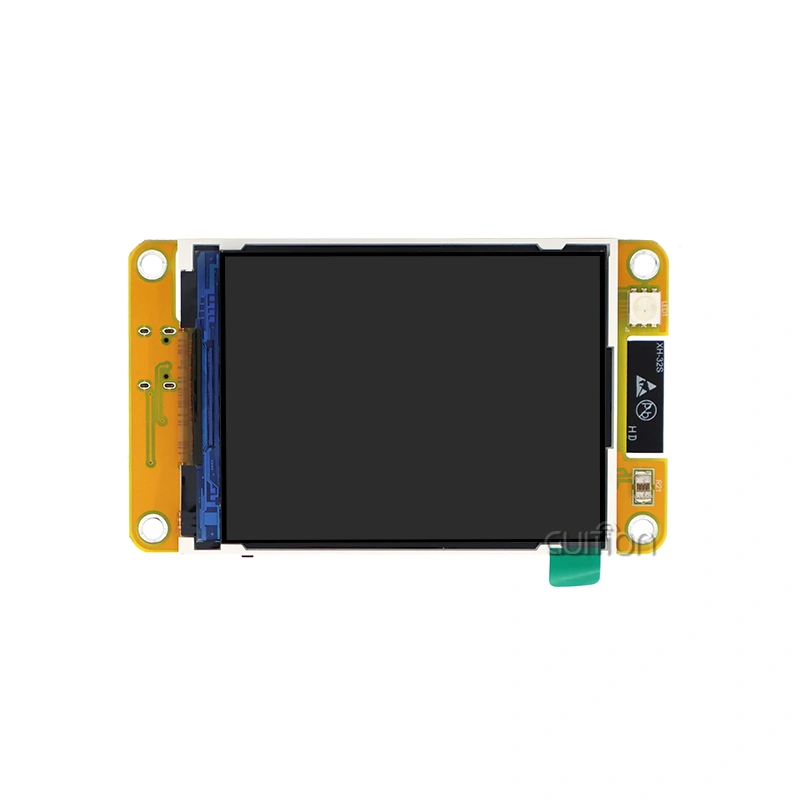
Guition specializes in providing comprehensive IoT LCD solutions specifically designed for demanding remote monitoring applications across the industrial, medical, and automation sectors. Our GUITION JC4827Q343N_I intelligent display module combines the powerful Artinchip D121BAV controller with integrated WiFi and Bluetooth connectivity, delivering the performance and flexibility your connected systems require. The intuitive Guition development platform eliminates coding complexity through a drag-and-drop interface design, dramatically reducing your time-to-market while maintaining full customization flexibility.
We support multiple development pathways, including Arduino and ESP-IDF environments, ensuring compatibility with your existing workflows and technical expertise. Our engineering team provides comprehensive technical support throughout your development cycle, from initial specification through production deployment. Whether you need standard modules or customized solutions tailored to unique requirements, Guition serves as your reliable IoT LCD manufacturer committed to your project's success. Contact our team at david@guition.com to discuss your remote monitoring display requirements and discover how our solutions can accelerate your development while reducing costs.
References
1. Johnson, M. & Williams, R. (2022). Industrial Display Technologies for IoT Applications: Performance Comparison and Selection Criteria. Journal of Embedded Systems Engineering, 15(3), 112-128.
2. Chen, L. (2023). Power Management Strategies for Battery-Operated Remote Monitoring Devices. IEEE Transactions on Industrial Electronics, 41(2), 456-471.
3. Rodriguez, A., Martinez, S., & Thompson, K. (2021). Human-Machine Interface Design Best Practices for Industrial Automation Systems. International Conference on Industrial Control Systems Proceedings, 203-218.
4. Anderson, P. (2023). Wireless Connectivity Solutions in Distributed Sensor Networks. Automation Technology Review, 28(4), 67-82.
5. Liu, H. & Kumar, S. (2022). Environmental Reliability Testing Standards for Industrial Display Modules. Society of Information Display Technical Digest, 53(1), 892-907.
6. Patterson, D. (2023). Total Cost of Ownership Analysis for Remote Monitoring System Components. Industrial Procurement Quarterly, 19(1), 34-49.
Learn about our latest products and discounts through SMS or email