- English
- French
- German
- Portuguese
- Spanish
- Russian
- Japanese
- Korean
- Arabic
- Greek
- German
- Turkish
- Italian
- Danish
- Romanian
- Indonesian
- Czech
- Afrikaans
- Swedish
- Polish
- Basque
- Catalan
- Esperanto
- Hindi
- Lao
- Albanian
- Amharic
- Armenian
- Azerbaijani
- Belarusian
- Bengali
- Bosnian
- Bulgarian
- Cebuano
- Chichewa
- Corsican
- Croatian
- Dutch
- Estonian
- Filipino
- Finnish
- Frisian
- Galician
- Georgian
- Gujarati
- Haitian
- Hausa
- Hawaiian
- Hebrew
- Hmong
- Hungarian
- Icelandic
- Igbo
- Javanese
- Kannada
- Kazakh
- Khmer
- Kurdish
- Kyrgyz
- Latin
- Latvian
- Lithuanian
- Luxembou..
- Macedonian
- Malagasy
- Malay
- Malayalam
- Maltese
- Maori
- Marathi
- Mongolian
- Burmese
- Nepali
- Norwegian
- Pashto
- Persian
- Punjabi
- Serbian
- Sesotho
- Sinhala
- Slovak
- Slovenian
- Somali
- Samoan
- Scots Gaelic
- Shona
- Sindhi
- Sundanese
- Swahili
- Tajik
- Tamil
- Telugu
- Thai
- Ukrainian
- Urdu
- Uzbek
- Vietnamese
- Welsh
- Xhosa
- Yiddish
- Yoruba
- Zulu
Can an ESP32P4 display module Handle Complex Graphics and Touch Controls?
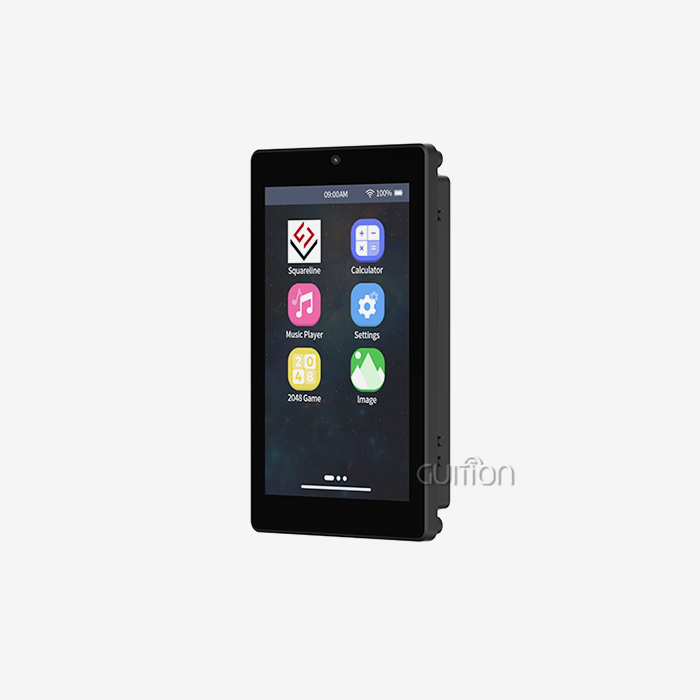
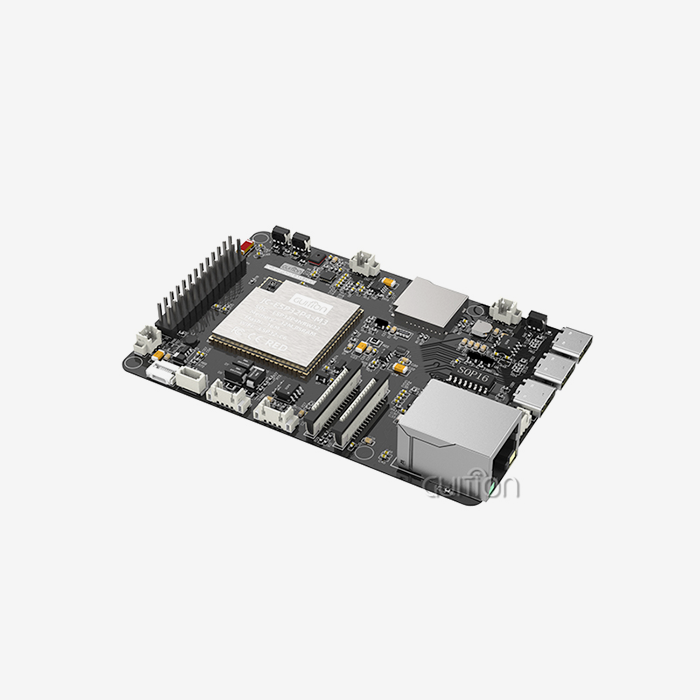
Yes — the esp32p4 display module absolutely handles complex graphics and responsive touch controls. Powered by a 400MHz dual-core RISC-V processor, the Guition JC-ESP32P4-M3-DEV drives high-resolution MIPI-DSI panels at stable 60 FPS while the built-in 2D Pixel Processing Accelerator (PPA) manages layer blending, animations, and vector rendering with minimal CPU load. With up to 32MB PSRAM for frame buffering and hardware H.264 encoding, this embedded display solution delivers multimedia-grade performance. For industrial HMI panels, smart home controls, and commercial kiosks, it is a technically sound and cost-effective choice.

Understanding the ESP32P4 Display Module's Core Capabilities
Processor Architecture and Raw Performance
The ESP32-P4 SoC is built into the Guition JC-ESP32P4-M3-DEV. It has a single-precision FPU and a dual-core RISC-V CPU running at 400MHz. This design can handle connection, handling real-time data, and rendering the user interface all at the same time without any problems. With up to 32MB of external PSRAM support, it keeps the large frame buffers needed for high-resolution displays. This is something that older MCUs like the ESP32-S3 couldn't do well at similar resolutions.
Display Interface and Resolution Support
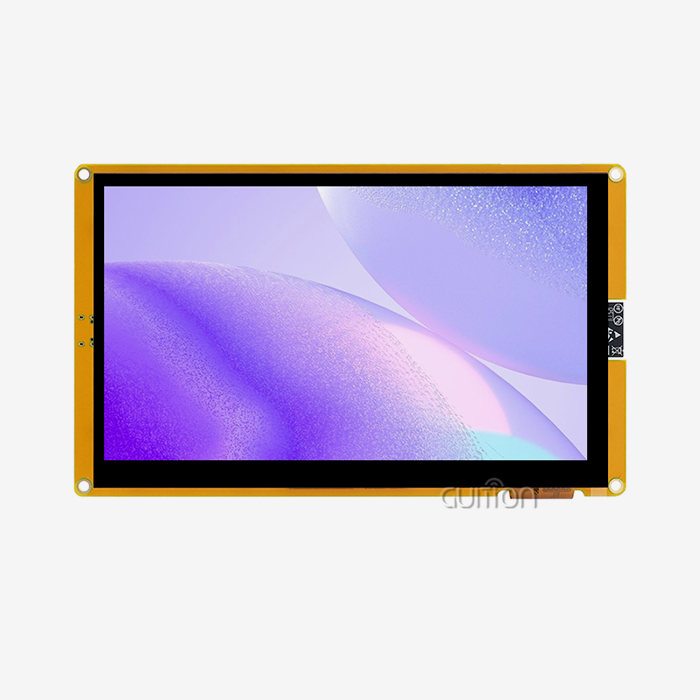
Unlike most MCUs, which use SPI or parallel RGB interfaces, this module has its own MIPI-DSI interface, which lets it handle sizes up to 800x1280 and provide smooth, flicker-free output. The built-in Image Signal Processor (ISP) adds camera input through the MIPI-CSI interface. This design directly helps engineers who are making industrial monitors or diagnostic equipment, since display bandwidth is no longer a problem while the product is being developed.
Communication Protocol Ecosystem
SPI, I2C, I2S, UART, ADC, TWAI, LED PWM, MCPWM, RMT, and USB OTG 2.0 HS are just some of the peripherals that the JC-ESP32P4-M3-DEV can work with. It works with existing sensor networks, industrial field busses, and old control hardware thanks to these different interfaces. When engineers add this ESP32-P4 HMI module to medical devices or automation systems, they can connect almost any secondary device without having to change their signal chain.
Can the ESP32P4 Handle Complex Graphics? — Performance and Limitations
Graphics Rendering Benchmarks vs. Competitors
The ESP32P4 display module is faster than both the ESP32 and the ESP8266 in all graphics tests that are important for business use. LVGL (Light and Versatile Graphics Library) drivers tuned for the ESP32-P4 give constant frame rates above 60 FPS on 10.1-inch screens at 1280×800. The specialized PPA hardware speeds up 2D blending, rotation, and scaling. Raspberry Pi-based screens have better maximum speed, but they are much more expensive, use a lot more power, and take longer to boot up. These are all things that matter when designing embedded products.
Real-World Use Cases Across Industries
The ESP32-P4's processing power lets industrial HMI control screens in high-EMI plant floors show real-time machine telemetry charts along with user control buttons without any lag. When a smart home hub decodes video doorbell streams using H.264 hardware, it shows live video right in the screen. Commercial booths at points of sale can use smooth animated changes that make it easier for customers to connect with them. These examples show that the module can be used in production-level settings, not just for prototyping.
Known Constraints and How to Address Them
No embedded platform can do everything it can. The ESP32-P4 doesn't have a full Linux OS, so programs that need complicated web browsers or settings with multiple processes should think about this. But for most HMI uses in fields like medical tracking, energy management, and industrial automation, the ability to turn on instantly and behave in a predictable way in real time are better than MPU-based options. Most frame rate problems on bigger screens can be fixed by allocating PSRAM and LVGL memory correctly.
Integrating Touch Controls with the ESP32P4 Display Module
Capacitive vs. Resistive Touch Support
Through its I2C and SPI interfaces, the ESP32-P4 HMI module works with both capacitive and resistive touch controllers. Capacitive touch panels can recognize multiple gestures, like pinch, swipe, and tap, which is very important for modern smart appliance interfaces. In places where people wear gloves, like on factory floors or in medical labs, resistive touch is still the best option. Both configurations can be used with the JC-ESP32P4-M3-DEV. This lets product teams choose the touch technology that works best in their deployment environment without having to change the platform.
Programming Touch Functionality with Popular SDKs
Guition works with three different development environments: Arduino, ESP-IDF, and its own GUI tool, Guition UI. Touch event handling is built right into LVGL widgets, so engineers don't have to write as much driver code by hand. The drag-and-drop control library in Guition software lets HMI/UI creators place buttons, sliders, and motion zones visually and then see how they will work in real time. When developing an ESP32P4 display module, this method cuts UI development time by a large amount compared to writing low-level touch driver code from scratch.
Debugging Common Touch Integration Challenges
The most common problem in capacitive touch integration is signal noise. This is especially true in industrial settings where EMI levels change. Most of the time, this can be fixed with good ground plane design and signal filtering on the firmware side of the ESP-IDF touch driver stack. The Guition SDK has calibration methods that let field workers re-calibrate panels after they have been installed without having to flash the whole firmware again. With cross-platform online testing, engineers can follow touch event lines in real time without having to change any hardware. This cuts down on iteration cycles by a large amount.
Making an Informed Procurement Decision — Comparing ESP32P4 to Alternatives
ESP32P4 vs. ESP32-S3 and ESP8266
Here is a direct look at how the three most popular systems compare in terms of their features:
- ESP32-P4 (JC-ESP32P4-M3-DEV): 400MHz dual-core RISC-V, MIPI-DSI native, H.264 hardware encoding, 32MB PSRAM support, Wi-Fi 6 + Bluetooth 5 via integrated ESP32-C6, hardware security engine — optimal for complex HMI applications requiring multimedia and connectivity.
- ESP32-S3: Dual-core Xtensa LX7, SPI/RGB interface limited to 800×480 efficiently, no native MIPI-DSI, adequate for mid-range UI tasks without video requirements.
- ESP8266: Single-core, no hardware graphics acceleration, SPI-only display interface, better suited for simple indicator displays than rich interactive UIs.
Each platform has its place, but the ESP32-P4 module from Guition is the technically sound choice for apps that need high-resolution graphics, touch interaction, and wireless connectivity all at the same time.
OLED vs. LCD Panel Selection
Because OLED screens have better contrast and pixel-level dimming, they can be used in medical tracking devices that need to work in low light and portable HMIs. LCD screens with IPS technology are better at even out brightness and cost less when they are bigger (7 inches or more), which is why they are used in most industrial and business HMI applications. The JC-ESP32P4-M3-DEV allows both through its MIPI-DSI interface, so choosing a panel is no longer limited by the hardware but by the product itself.
Supplier Verification and Procurement Confidence
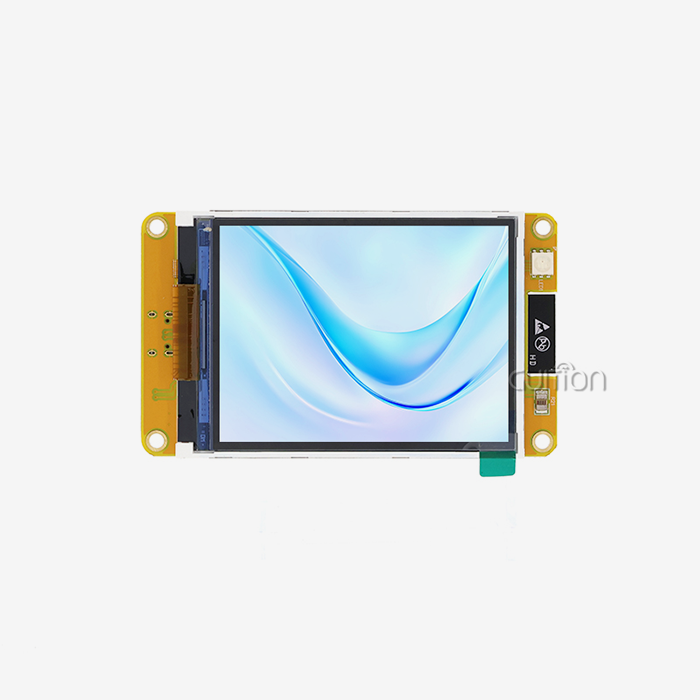
When looking for a supplier of an ESP32 P4 display module, procurement teams should make sure that the parts are real, that the PSRAM specifications match the datasheet values, and that the supplier offers good technical support after the sale. As part of Jingcai Intelligence, Guition offers full technical documentation, verified module specifications, and direct engineering support. The product line includes screens ranging in size from 1.28 inches to 21.5 inches. This means that procurement managers only have to deal with one approved ESP32P4 display module manufacturer for all of their project needs, instead of having to handle relationships with multiple vendors.
Best Practices for Deploying ESP32P4 Display Modules in B2B Solutions
Optimizing Memory and Refresh Rate for Production
The most important configuration choice is how to assign PSRAM correctly. Setting up a separate frame buffer in PSRAM stops screen tearing when the user interface changes quickly. When the screen resolution is higher than 800x480, double-buffering in PSRAM lets the CPU render the next frame while the current frame is sent over MIPI-DSI. It is always possible for this design to reach 60 FPS on demanding screens in energy management system interfaces and industrial control panels.
Environmental Durability and Long-Term Reliability
When used in factories, display modules are exposed to changes in temperature, vibration, and humidity. Board-to-board links that have been tested for mechanical stability at 10–500Hz vibration frequencies are ideal for uses that are placed on machines. Before they are shipped, Guition's parts are checked for stability. In the ESP32-P4, the hardware digital signature peripheral and dedicated key management unit keep the firmware's integrity during OTA (Over-the-Air) update cycles. This means that remote agricultural automation installations need fewer on-site maintenance visits.
Scaling Across Product Lines with a Modular Architecture
By changing the settings for the display, product teams can use the same JC-ESP32P4-M3-DEV software base on panels ranging from 1.28 inches to 21.5 inches in Guition. With multi-language UTF-8 support, a single firmware build can cover all variants for all markets around the world. With over-the-air (OTA) updates, teams can send new versions of features to units that are already in use without physically accessing them. This directly lowers the cost of after-sales support in big business terminal deployments.
Conclusion
The Guition JC-ESP32P4-M3-DEV shows that an ESP32P4 display module can easily handle complicated graphics and touch functions in tough B2B situations. Its 400MHz dual-core RISC-V architecture, native MIPI-DSI output, PPA hardware acceleration, and up to 32MB PSRAM make it a platform that can be used for medical monitors, smart home hubs, commercial terminals, and industrial HMI panels. With support for multiple environments, over-the-air (OTA) updates, and hardware-level protection, it improves both the speed and stability of development across global markets.
FAQ
What is the maximum resolution the ESP32P4 display module supports?
The JC-ESP32P4-M3-DEV supports display resolutions up to 800×1280 via the MIPI-DSI interface with stable 60 FPS output when PSRAM frame buffering is properly configured. Higher resolutions may be achievable depending on panel specifications.
Does the module support multi-touch gesture recognition?
Yes. The module supports multi-point capacitive touch through I2C-connected controllers, enabling pinch-to-zoom, swipe, and tap gestures. LVGL gesture event handlers manage these inputs at the application layer without custom driver development.
What are the power consumption characteristics?
In active display mode with Wi-Fi 6 connected, the ESP32-P4 core typically draws between 500mW and 1.5W depending on workload and display brightness. The ESP32-C6 handles wireless tasks independently, preventing communication overhead from impacting graphics performance.
Is the module compatible with Arduino?
Yes. Guition supports Arduino, ESP-IDF, and the proprietary Guition development environment, giving engineers the flexibility to choose based on project requirements and existing codebase.
Can the ESP32P4 handle video playback within an active UI?
Yes. Hardware H.264 decoding allows the module to render video streams within LVGL-based interfaces without freezing interactive controls — a capability absent in standard MCU display solutions.
Start Your Project with Guition's ESP32P4 Display Module Today
The JC-ESP32P4-M3-DEV from Guition is a solution backed by the maker of the ESP32P4 display module. It has 400MHz dual-core processing, MIPI-DSI, Wi-Fi 6, and hardware security all on a single development board. Our team can help you get from prototype to production faster by giving you full documentation, cross-platform SDK support, and direct engineering advice. You can email us at david@guition.com or go to our website at https://jingcaizhineng.aixdb.cn/ to get pricing information, technical specs, or a sample evaluation unit right away.
References
1. Espressif Systems. ESP32-P4 Technical Reference Manual. Espressif Systems, 2024.
2. Liu, J., & Chen, W. "Performance Evaluation of RISC-V Based SoCs for Embedded HMI Applications." IEEE Embedded Systems Letters, 2023.
3. LVGL Project. LVGL Documentation: Hardware Acceleration and Display Driver Integration. LVGL, 2024.
4. Grand View Research. Human-Machine Interface Market Size, Share & Trends Analysis Report. Grand View Research, 2023.
5. Yiu, J. The Definitive Guide to ARM Cortex-M0/M0+ Processors (reference for RISC-V architectural comparison). Elsevier, 2015.
6. MarketsandMarkets. IoT Display Module Market — Global Forecast to 2028. MarketsandMarkets, 2023.
Learn about our latest products and discounts through SMS or email