- English
- French
- German
- Portuguese
- Spanish
- Russian
- Japanese
- Korean
- Arabic
- Greek
- German
- Turkish
- Italian
- Danish
- Romanian
- Indonesian
- Czech
- Afrikaans
- Swedish
- Polish
- Basque
- Catalan
- Esperanto
- Hindi
- Lao
- Albanian
- Amharic
- Armenian
- Azerbaijani
- Belarusian
- Bengali
- Bosnian
- Bulgarian
- Cebuano
- Chichewa
- Corsican
- Croatian
- Dutch
- Estonian
- Filipino
- Finnish
- Frisian
- Galician
- Georgian
- Gujarati
- Haitian
- Hausa
- Hawaiian
- Hebrew
- Hmong
- Hungarian
- Icelandic
- Igbo
- Javanese
- Kannada
- Kazakh
- Khmer
- Kurdish
- Kyrgyz
- Latin
- Latvian
- Lithuanian
- Luxembou..
- Macedonian
- Malagasy
- Malay
- Malayalam
- Maltese
- Maori
- Marathi
- Mongolian
- Burmese
- Nepali
- Norwegian
- Pashto
- Persian
- Punjabi
- Serbian
- Sesotho
- Sinhala
- Slovak
- Slovenian
- Somali
- Samoan
- Scots Gaelic
- Shona
- Sindhi
- Sundanese
- Swahili
- Tajik
- Tamil
- Telugu
- Thai
- Ukrainian
- Urdu
- Uzbek
- Vietnamese
- Welsh
- Xhosa
- Yiddish
- Yoruba
- Zulu
Is a Graphic lcd display module Ideal for Embedded Control Systems?
The graphic LCD display module is suited for embedded control systems. Unlike fixed-segment or character LCDs, a graphic LCD display module generates pixel-addressable graphics, bespoke fonts, real-time waveforms, and multi-language menus. This provides engineers the visual independence that existing HMI systems try to achieve. The modules provide intuitive, information-packed user interfaces with power budgets and BOM costs under control for industrial automation, medical devices, and smart appliance development. For the need for consistent display performance across vast temperature ranges and multiple connection protocols, a graphic LCD display module is still a solid technological option.

Understanding Graphic LCD Display Modules
What Sets Them Apart from Character LCDs
Graphic LCD display modules control each pixel on a dot-matrix grid instead of predetermined alphanumerics. This pixel-level control enables engineers to show logos, technical graphs, dynamic menus, and text in various languages, something a typical character LCD cannot do. The Graphic LCD play module is a significant feature of modern integrated HMI design, with an architectural shift from segmented addressing to full bitmap rendering.
Key Technical Specifications to Evaluate
Pay attention to the resolution, interface type, driver IC, and operating voltage in a datasheet. The amount of information displayed is directly related to the resolution. For example, an 800x480 panel shows more detailed images than a 320x240 panel. MCU load and data flow are affected by the interface choice (SPI, I2C, or RGB parallel). Driver ICs, like the ST7265 used in the GUITION JC8048B043N, handle pixel multiplexing on the inside, which makes the host controller's job easier.
How Resolution Impacts Embedded System Performance
Higher resolution makes the user interface clearer, but it needs more frame buffer memory. When planning memory for a 4.3-inch, 800x480 screen with 16.7M colors, the frame buffer needs to be very careful. Before choosing a module, engineers working on systems based on STM32 or ESP32 should make sure that their memory design can handle the full color depth. When you match the resolution to the complexity of the application, you avoid over-engineering and lower the total cost of the system.
Key Considerations When Choosing a Graphic LCD Module for Embedded Systems
Resolution, Size, and Interface Compatibility
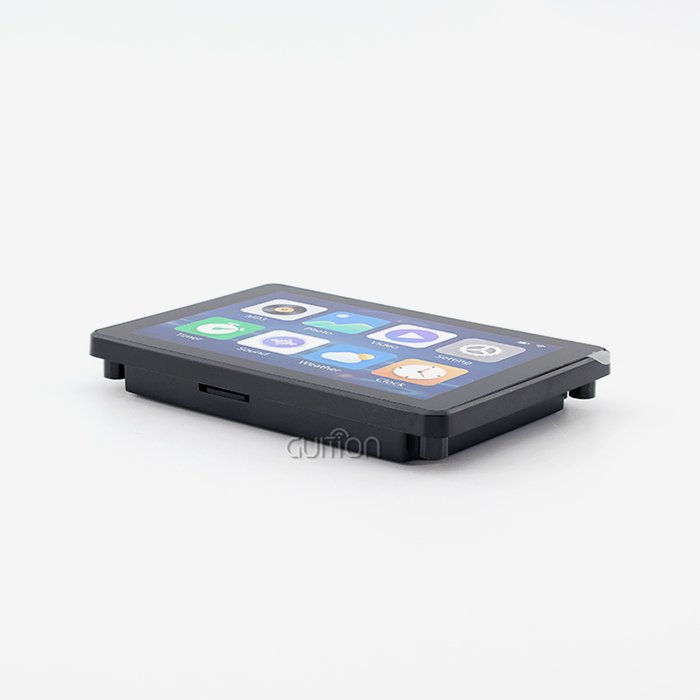
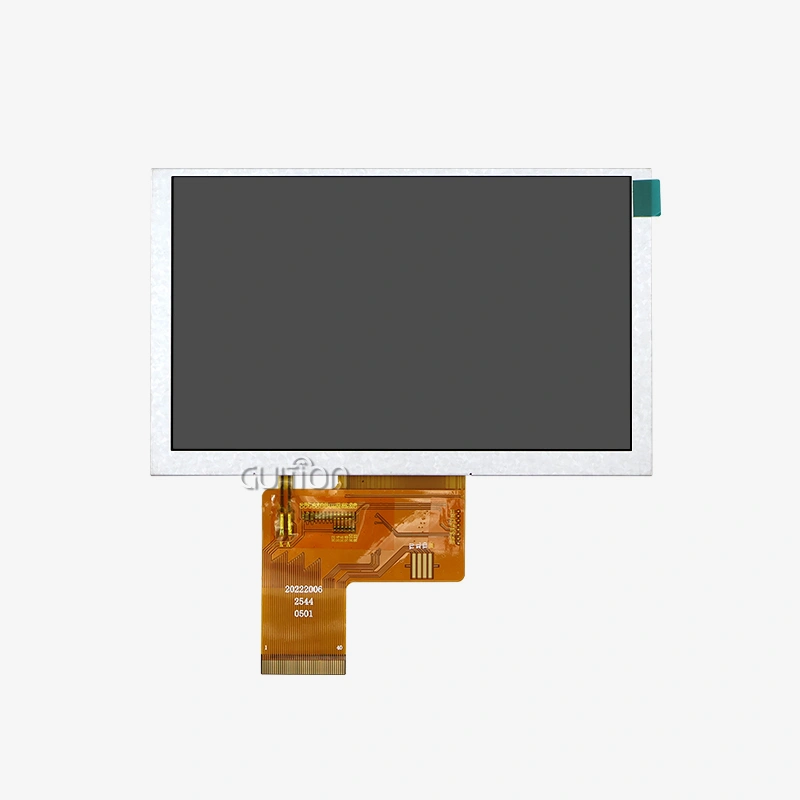
Size and quality must match the form of the enclosure and the distance from the user to the screen. Control screens, charging stations, and small industrial terminals all benefit from a 4.3-inch graphic LCD display module with 800x480 resolution, like the GUITION JC8048B043N. The RGB interface on this module lets you send and receive data quickly. This means it works with application processors that have a parallel display controller, like those in the STM32F4 or ESP32-S3 families.
Graphic LCD vs. OLED vs. TFT LCD: A Practical Comparison
Each type of display technology has pros and cons that should be taken into account when buying one.Here is a simple comparison of technologies that buyers of embedded systems will find useful:
- Graphic LCD display module (monochrome/STN): Low power, high reliability, sunlight-readable in transflective mode, cost-effective for simple status displays, but limited color output compared to TFT.
- OLED: Self-emissive with high contrast, but susceptible to burn-in over long operating hours — a concern for 24/7 industrial deployments.
- TFT LCD (color, IPS): Delivers full-color graphics with wide viewing angles and long operational lifespan, making it the preferred choice for feature-rich embedded HMIs.
The GUITION JC8048B043N is a color TFT graphic display module that fits in between basic graphic LCDs and high-end embedded screens. It has a -20°C to 70°C working range and 16.7M color output with IPS-level viewing modes.
Procurement Factors: MOQ, Lead Time, and Supplier Support
As much as specs matter to B2B buyers, availability and supply reliability are even more important. Check to see if the supplier of the graphic LCD display module provides full datasheets, reference schematics, and helpful pre-sales assistance. Having flexible MOQ terms and proof of approval (RoHS, CE) lowers the risk of buying something, especially when a product is still in its early stages of development.
Applications of Graphic LCD Display Modules in Embedded Control Systems
Industrial Automation and Control Panels
Electrical noise and mechanical vibration must be tolerated by a Graphic lcd display module in PLC controllers and variable frequency drives while displaying real-time parameter data. Color TFT modules with RGB connections can show frequency curves, fault codes, and system state all at the same time. This is much more useful for maintenance workers who are in charge of complicated machines than blinking LED signs.
Medical and Portable Instrumentation
Because of their low power consumption and easy reading in hospital lighting, Graphic LCD display units are popular in portable medical devices like infusion pumps, patient monitors, and diagnostic handheld tools. With its bright TFT screen and wide color gamut, the GUITION JC8048B043N is perfect for medical aesthetics and monitoring devices that need accurate visual feedback to boost operator trust and patient safety.
3D Printers, Charging Stations, and Smart Appliances
The GUITION JC8048B043N is used in smart home control panels, EV charging station displays, and control interfaces for 3D printers. The 800x480 resolution of the module makes it possible for these apps to clearly show print progress, charge status, and home automation controls. Its RGB interface and ST7265 driver IC make it easier to integrate firmware, which shortens the development cycle for product teams that need to get products to market quickly.
Leading Graphic LCD Display Module Suppliers and Brands for Embedded Systems
Established Market Players
Newhaven Display, Waveshare, Raystar, and Displaytech are some of the manufacturers in the TFT and graphic LCD display module business. People like Newhaven Display because they have a lot of information about their products and sell them all over North America. Waveshare offers cheap evaluation modules to the maker and prototyping market.
Why GUITION Stands Out as a Graphic LCD Display Module Manufacturer
GUITION, created by Jingcai Intelligence, offers a full display product line from 1.28" to 21.5" and is backed by the proprietary Guition UI development software. Raystar focuses on custom graphic LCD display module solutions for industrial OEM customers requiring high-volume supply agreements. Engineers can use this software to make HMI interfaces without having to write low-level graphics code. This cuts development time by a large amount. The GUITION JC8048B043N graphic display module comes with full documentation and can be used with Arduino, ESP-IDF, and the native Guition development environment. It also allows over-the-air (OTA) upgrades for maintenance after launch.
Evaluating a Supplier Beyond the Datasheet
A trustworthy Graphic lcd display module provider should offer schematics, software libraries, live technical help, and clear documentation that demonstrates they meet RoHS and CE standards. All of these can be found on GUITION's support page. The multi-language UTF-8 encoding support and global supply capability of GUITION add significant value for procurement managers looking for a Graphic lcd display module supplier for multi-region deployment.
Best Practices for Integrating Graphic LCD Modules into Embedded Control Systems
Hardware Verification Before Firmware Development
Verify that the pins of the graphic LCD display module and the host MCU are aligned before writing a single line of driver code. Check the logic voltage levels. If the 3.3V MCU GPIO and the 5V display interface don't match, it can damage hardware or make signals that aren't reliable. For the GUIDE JC8048B043N and its RGB interface, make sure that your application processor has a hardware display controller that can handle the required data bus width and pixel clock frequency.
Driver Configuration and Software Library Setup
Follow the steps in the GUIDE datasheet to set up the ST7265 driver initialization sequence. Engineers who are using ESP32-S3 with ESP-IDF can look at GUITION's examples of platform-specific drivers. The Guition UI software lets you drag-and-drop controls into place and see what the final design will look like. This means that you don't have to do any hand pixel-coordinate calculations, which can slow down UI development. Cross-platform online debugging and the ability to add controls with just one click shorten the time it takes from signing off on the schematic to having a working prototype.
Troubleshooting Signal Flicker and Communication Errors
When an RGB interface display flickers, it's usually because the pixel clock time is off or there isn't enough power supply separation. Place 100nF ceramic capacitors close to the module's power pins and make sure the pixel clock matches the refresh rate set by the panel. Before going to hardware debugging, make sure the CPOL and CPHA settings match the driver IC specification. Communication problems in SPI-based Graphic lcd display modules are often caused by SPI mode mismatches.
Conclusion
A graphic LCD display module delivers genuine value in embedded control systems where information density, visual clarity, and interface flexibility matter. The GUITION JC8048B043N demonstrates what a well-engineered 4.3-inch TFT module can achieve: 800×480 resolution, 16.7M color output, ST7265 driver IC, and RGB interface connectivity — all within a temperature-rated, industrially deployable package. When paired with the Guition development software and GUITION's cross-platform ecosystem, engineering teams get a display solution that shortens development timelines and reduces long-term maintenance costs.
FAQ
What resolution should I choose for an industrial HMI graphic LCD display module?
The GUITION JC8048B043N shows what a well-designed 4.3-inch TFT module can do: it has a 800x480 resolution, 16.7M color output, a ST7265 driver IC, and RGB interface connection, all in a box that can be used in industrial settings and is temperature-rated. When engineering teams use the GUITION cross-platform ecosystem and development software, they get a display solution that speeds up development and lowers long-term maintenance costs.
Can a graphic LCD display module work with Arduino or ESP32?
480x272 is good for basic status displays on most industrial panels and control terminals. 800x480, like the GUITION JC8048B043N, is better for more complex UIs with graphs, icons, and text in more than one language. Make sure the resolution works with the memory and display controller on your MCU.
How does a TFT graphic display module compare to OLED for long-running applications?
Yes, GUITION modules work with Arduino, ESP-IDF, and the Guition programming environment itself. The JC8048B043N's RGB interface works with ESP32-S3 processors that have a hardware LCD controller, which makes it a good choice for embedded systems that are connected to the internet of things.
What customization options does GUITION offer for the JC8048B043N?
When an OLED screen is used for a long time with no changes, it can burn in. TFT LCD panels don't have this problem. A TFT Graphic lcd display module provides a longer operating lifespan for 24/7 industrial or business uses, such as charging stations or medical monitors.
Does the GUITION JC8048B043N support remote firmware updates?
Yes, over-the-air (OTA) remote upgrades are possible with GUITION's products. This means that engineering teams can push UI or firmware updates after the device has been shipped without having to physically access the device.
Get Your GUITION Graphic LCD Display Module — Request a Quote Today
GUITION has a full line of TFT display modules from 1.28" to 21.5", along with the Guition UI development platform and quick technical support. For both trial and production numbers, the JC8048B043N Graphic lcd display module is offered directly from GUITION. As a verified Graphic lcd display module manufacturer, our team can supply datasheets, reference designs, and competitive pricing, whether you need a single unit for testing or a large order. To start your question, email us at david@guition.com or go to https://jingcaizhineng.aixdb.cn/.
References
1. Mouser Electronics. TFT LCD Display Modules Selection Guide. Mouser Electronics, 2023.
2. Digi-Key Electronics. Choosing the Right Display Technology for Embedded Systems. Digi-Key TechForum, 2022.
3. Microchip Technology. Graphic LCD Display Interface Design for PIC Microcontrollers. Microchip Application Note AN1457, 2021.
4. Espressif Systems. ESP32-S3 Technical Reference Manual — LCD Controller Chapter. Espressif Systems, 2023.
5. Society for Information Display (SID). Display Measurement Standards and Panel Performance Evaluation. SID Symposium Digest, 2022.
6. IPC Association. IPC-7711/7721: Rework, Repair, and Modification of Electronic Assemblies — Display Module Integration Guidelines. IPC, 2020.
Learn about our latest products and discounts through SMS or email