- English
- French
- German
- Portuguese
- Spanish
- Russian
- Japanese
- Korean
- Arabic
- Greek
- German
- Turkish
- Italian
- Danish
- Romanian
- Indonesian
- Czech
- Afrikaans
- Swedish
- Polish
- Basque
- Catalan
- Esperanto
- Hindi
- Lao
- Albanian
- Amharic
- Armenian
- Azerbaijani
- Belarusian
- Bengali
- Bosnian
- Bulgarian
- Cebuano
- Chichewa
- Corsican
- Croatian
- Dutch
- Estonian
- Filipino
- Finnish
- Frisian
- Galician
- Georgian
- Gujarati
- Haitian
- Hausa
- Hawaiian
- Hebrew
- Hmong
- Hungarian
- Icelandic
- Igbo
- Javanese
- Kannada
- Kazakh
- Khmer
- Kurdish
- Kyrgyz
- Latin
- Latvian
- Lithuanian
- Luxembou..
- Macedonian
- Malagasy
- Malay
- Malayalam
- Maltese
- Maori
- Marathi
- Mongolian
- Burmese
- Nepali
- Norwegian
- Pashto
- Persian
- Punjabi
- Serbian
- Sesotho
- Sinhala
- Slovak
- Slovenian
- Somali
- Samoan
- Scots Gaelic
- Shona
- Sindhi
- Sundanese
- Swahili
- Tajik
- Tamil
- Telugu
- Thai
- Ukrainian
- Urdu
- Uzbek
- Vietnamese
- Welsh
- Xhosa
- Yiddish
- Yoruba
- Zulu
Can a CYD display module Improve Human-Machine Interfaces?
A CYD display module makes human-machine connections much better by combining strong computer power with responsive touch screens in a small, ready-to-use package. The ESP32-based design built into these modules gets rid of the need for complicated wiring. They also offer WiFi and Bluetooth connectivity, support for development on multiple platforms, and easy touch contact. This mix shortens the time it takes to make things, lowers the cost of integrating them, and ensures solid performance in industrial control panels, smart home devices, medical equipment, and Internet of Things (IoT) apps that need people and computers to work together without any problems.


Understanding the CYD Display Module and Its Role in Human-Machine Interfaces
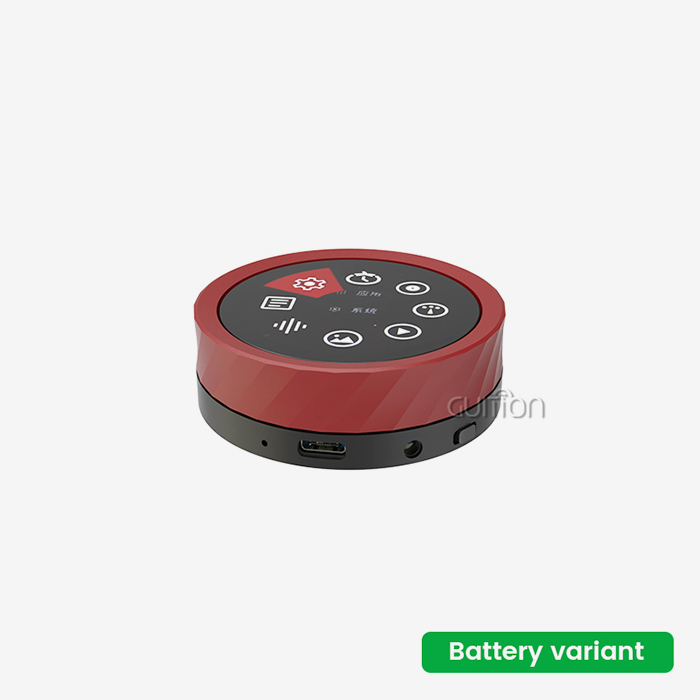
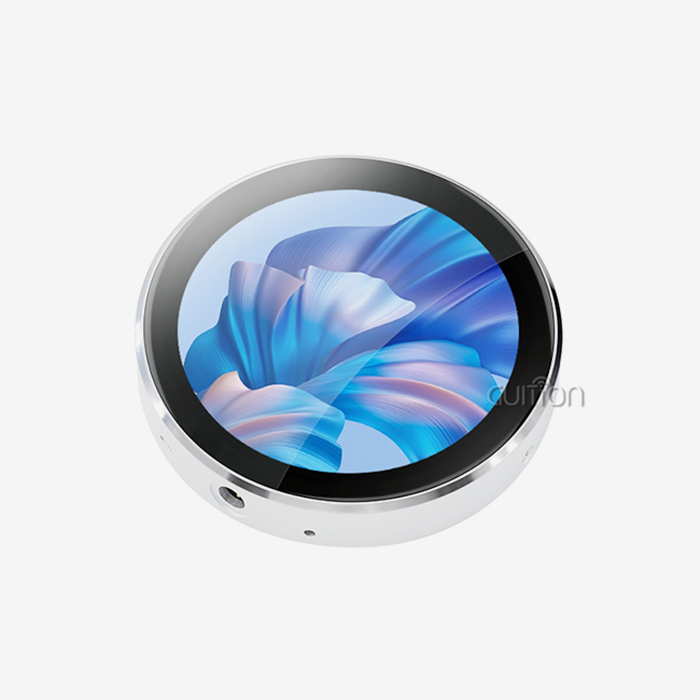
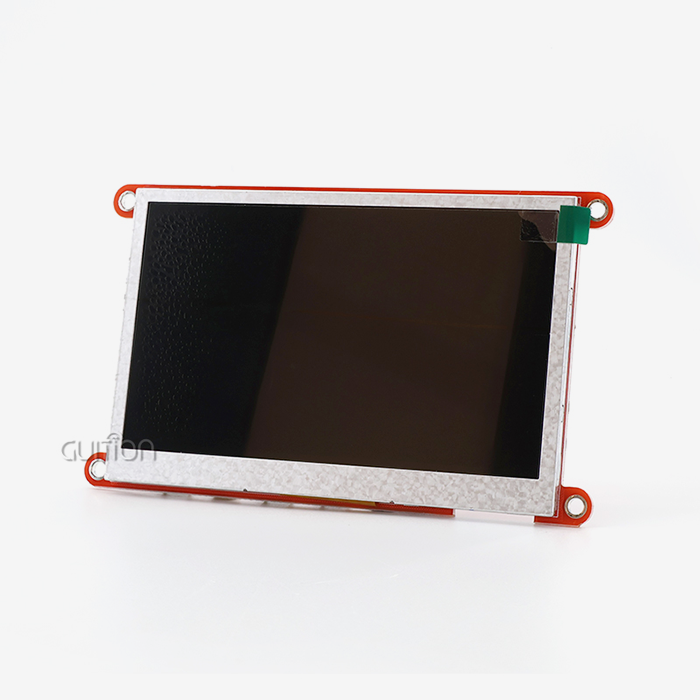
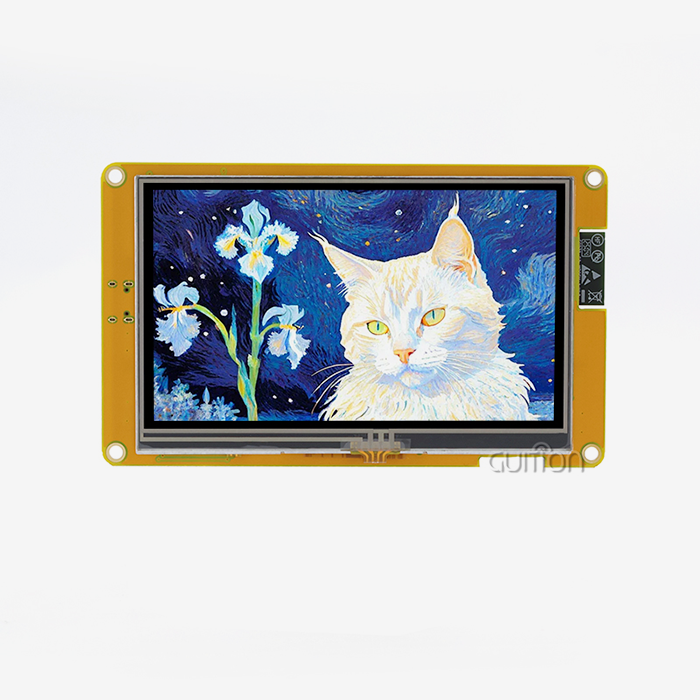
"CYD display module" is now used to refer to smart display systems that have microprocessor units and LCD screens built into a single circuit board. The technology is based on a System-on-Module method, and the ESP32-S3R8 dual-core processor and 4.3-inch capacitive tablet work together to make a full HMI system. This design takes care of both the logic and the display, so it doesn't need any outside controls or complicated signal routing between different parts.
Core Components That Define the Technology
This combination is shown by our ESP32-8048S043C_I model. The ESP32-S3R8 main processor has 512KB of SRAM, 384KB of ROM, 8MB of PSRAM, and 16MB of Flash storage. It runs at 240MHz. At 800×480 resolution, this large amount of memory lets you use advanced graphics user interfaces and still respond to touch input. The module has backlight control circuits, touch screen controllers, and dedicated ports for TF card extension and GPIO access. This makes it a flexible base for a wide range of HMI apps.
How These Modules Function Within HMI Systems
When used in factories, these modules turn capacitive touch sensors that pick up operator inputs into digital data that the ESP32 microprocessor can handle. Then, the device runs the code that was written into it, talks to other devices using UART or SPI protocols, and changes the visual display to reflect this. Having wireless features lets you watch and handle things from afar, turning static control panels into smart, connected interfaces. This working framework meets the basic need of modern HMI systems, which is for information to be sent back and forth between humans operating the system and automated machinery with as little delay as possible and as much stability as possible.
Key Features and Advantages for Industrial Applications
Using combined display panels has more benefits than just combining parts into one unit. Development teams that are working on tight deadlines can use the pre-programmed test code that comes with every module to check its performance as soon as they receive it. This ready-to-use method is very different from traditional development methods, which need a lot of driver setup and hardware testing before they can produce basic display output.
Technical Strengths That Matter in B2B Contexts
One thing that sets the CYD display module apart is its ability to work with different software platforms. Engineers who are familiar with the Arduino IDE can use tools and syntax that are already known, while teams that use ESP-IDF can handle the hardware at a lower level. Support for MicroPython and Mixly makes it even easier for people with a wide range of skill levels to work in tech groups. This gives teams more options, which cuts down on the time it takes to get new people up to speed on projects or for current projects to get support from different people. The two-core design lets you use parallel processing, where one core handles touch input and rendering on the screen, and the other core handles network contact or getting data from sensors. This feature is useful for factories that use real-time production tracking because it keeps the user interface (UI) flexible during heavy data processing tasks. In the same way, medical gadget developers gain because they can keep operator interactions smooth even while continuously logging patient data.
These are the main benefits that solve certain B2B problems:
Integrated Wireless Connectivity: WiFi and Bluetooth units that are built in mean that you don't need to use any extra connection gear. These units can be used on production lines as wireless HMI nodes that talk directly to supervisory control systems. This cuts down on the cost of cable infrastructure and makes installation easier when old equipment doesn't have modern connectivity choices.
Multi-Platform Development Support: Businesses don't have to retrain their staff on private platforms to keep their current development toolchains up to date. Arduino compatibility is especially helpful for engineering teams that already have code libraries, and ESP-IDF support meets the needs of RTOS-based industrial apps that need precise time.
Expandable Storage Architecture: The TF card interface lets you update graphical images and setup files in the field without having to recompile the software. With this feature, makers of smart appliances can easily change the storage cards that hold customized graphics and language resources to make the product displays fit the needs of different regions.
One-Click Programming Workflow: Most microcontroller projects need to have the bootloader activated by hand or involve complicated upload processes. Our simplified programming interface cuts down on release time during the programming steps of production and makes it easier to update firmware during after-sales support, which directly lowers operational costs.
Together, these skills make it possible for product creation processes to go faster to market. When the difficulty of integrating displays goes down, R&D managers can better divide resources across multiple projects at once. This lets engineers focus on application-specific logic instead of low-level hardware interfacing issues.
Comparative Insights: Evaluating Display Technology Options
Before making a purchase choice, you need to know how integrated esp32 display modules stack up against separate component methods and other display technologies. In traditional LCD designs that use different microcontrollers and display drivers, the PCB layout needs to be very careful to keep the signals intact across SPI or parallel connections. Engineers have to think about time issues, power scheduling, and electromagnetic interference. Integrated modules take care of these issues by designing and testing boards in a factory in the best way possible.
Performance Analysis Across Key Metrics
Visual clarity tests like the 800×480 resolution and 65K color depth that 16-bit RGB devices offer. This standard is better than most embedded screens used in low-cost situations, but it's still cheaper than high-resolution OLED options. Capacitive touch technology is more accurate than resistive touchscreens, which is especially important for uses that need to recognize gestures or support multiple touches.
When used in factories, where replacing equipment costs a lot of money and time, lifespan becomes very important. LCD technology has been shown to last a long time in temperature-controlled settings. For example, lighting LEDs can work continuously for more than 50,000 hours without stopping. Even though OLED displays have better contrast ratios, they are more likely to burn in, which makes them less useful for apps that need to show static interface elements for long periods of time, like industrial control screens and medical equipment.
Environmental Adaptability and Operational Constraints
The normal brightness levels of CYD display modules make them good for indoor use; they're bright enough for factory areas and medical facilities with controlled lighting. When using something outside, you need to check how bright it is, because direct sunlight can make it hard to read. To fix this, you might need a display that is reflective or extra shade. Most commercial and light industrial settings can use the ESP32-S3R8 processor's working temperature range. However, applications that need to work in very hot or very cold temperatures may need extra thermal management options.
Because they are easier to maintain, connected parts are a big plus. Discrete component systems with hand-wired connections are more likely to fail because the connectors rust and the solder points are under more mechanical stress. Our unified PCB construction gets rid of these weak spots, which lowers field repair costs and raises long-term dependability. This is very important for equipment used in remote areas or in situations where downtime costs a lot of money.
Practical Guidance for Procurement and System Integration
Matching technology needs to application requirements is the first step to a successful implementation. The choice of display size relies on the viewing distance and the amount of information that needs to be shown. The 4.3-inch format works well for small control panels and handheld devices, but bigger uses may need different models from the Guition line that goes up to 21.5 inches. Resolution affects how easy it is to read text and see details in graphics. For status screens and data entry tools, 800×480 resolution is good for most viewing distances.
Selection Criteria for Engineering Teams
Power consumption research is important for systems that run on batteries. The ESP32-S3R8 has several power management modes, and deep sleep currents measured in microamperes help devices whose batteries are only occasionally used last longer. This feature is especially useful for medical equipment designers who want to make portable testing tools. Smart home product designers use it to meet energy-saving standards.
For interface compatibility, host systems must be checked to make sure they can handle the module's connection methods. UART interfaces make it easy to connect to older equipment, while SPI interfaces provide faster data flow for programs that need to send dynamic graphics. The fact that Arduino and ESP-IDF development examples are available speeds up integration by giving examples of how to use standard communication patterns.
Procurement Strategies for Volume Purchasers
Companies that want to make a lot of something should build relationships with approved providers who offer bulk discounts and promise technical support. For product creation, Guition is both a manufacturer and a professional resource, giving engineers direct access to the company's knowledge. This setup works well when apps need to change the firmware or the interface in ways that aren't possible with standard settings.
Professional sellers are different from dealers of common components because they offer warranties and service after the sale. Our military-grade manufacturing standards make sure that the quality of each production batch is the same, and our detailed technical paperwork makes it less necessary to get help from outside sources for everyday integration tasks. When projects run into unexpected compatibility problems or speed improvement problems, it's important to be able to talk to experienced application workers.
Installation Best Practices and Operational Troubleshooting
The basis for effective long-term operation of the ESP32 Display Module is set by following the right installation steps. When physically placing it, you have to pay attention to how the display is positioned and how easy it is to use touch controls. When making electrical connections, you have to check the power levels and current capacity. The module can be powered by a normal 5V USB cable, but apps that need to send the most data over WiFi need power sources that can give surge currents of more than 500mA to avoid brownout resets.
Firmware Configuration and System Compatibility
Setting up the development environment and uploading standard software to test hardware functions are the first steps in the setup process. The factory-programmed test code instantly confirms that the screen works, that the touch screen responds, and that the device is wirelessly connected. Engineers can use this baseline to figure out where integration problems are coming from and figure out if they are caused by module setup or connection with the host system.
Touch coordinate reversal is a common problem that needs software calibration changes within the chosen development framework. There are mapping parameters in library setup files that turn physical touch coordinates into logical screen places. These parameters sometimes need to be changed to fit different mounting orientations. Network connection problems are usually caused by not enough space between the antennas or not enough power during the startup of the WiFi radio. Both of these problems can be fixed by reviewing the power architecture and making the mechanical design better.
Maintenance Protocols for Extended Service Life
Monitoring the surroundings and cleaning before they get dirty are important parts of proactive care. When electrical dust builds up on circuit boards, it can create leaky paths that make them less sensitive to touch. Also, parts that are exposed to high temperatures age faster. Industrial deployments benefit from regular testing plans that find problems before they become operational failures. Because LCD technology is solid-state and doesn't have any moving parts, it has very little mechanical wear. This means that upkeep should focus on keeping connectors in good shape and managing software updates.
Firmware changes can be done remotely thanks to a built-in WiFi connection, so you don't have to physically access the installed equipment. This function is very useful for installations that are spread out physically and where it costs a lot to send a service technician to visit. Update processes need a stable internet connection and enough flash storage to store temporary firmware images during the update process. These are all things that should be thought about when designing the system in the first place.
Conclusion
Human-machine interface creation and operation are made easier with integrated smart display devices based on the ESP32 architecture. When you put together strong dual-core processing, wireless connection, responsive touch input, and support for multiple platforms for development, you get a solution to the main problems that embedded engineers and product managers have. Compared to separate component techniques, this method speeds up development, makes integration easier, and lowers the total cost of ownership for an organization. The technology is especially useful in industrial control, smart home devices, medical equipment, and Internet of Things (IoT) systems where solid human contact and remote connection are key to the success of the product. When you compare the technical specs of modules like the ESP32-8048S043C_I to the specific needs of an application, you can make smart buying choices that combine performance needs with budget limits.
FAQ
What distinguishes these modules from standard LCDs?
Standard LCD panels need their own microcontrollers, touch controls, and communication ports, which makes putting them together very difficult. The ESP32-S3R8 processor, display driver, touch controller, and wireless connection are all on a single circuit board in our integrated system. This makes wiring easier and cuts down on the number of parts needed.
Can the module support demanding graphical frameworks like LVGL?
When adjusted correctly, the 512KB SRAM and 8MB PSRAM setup gives LVGL GUI programs enough memory. With a dual-core design, one core can be used to create graphics while the other handles application code. This lets animations run smoothly, and user interactions respond quickly.
How does wireless connectivity benefit industrial applications?
Built-in WiFi lets you watch from afar, log data to the cloud, and change the firmware over-the-air without having to physically access the device. Local device pairing for setup tools and peripheral sensors is supported by Bluetooth. This gets rid of the need for wire infrastructure in retrofit installations where changing the wiring is too expensive or not possible.
Transform Your Product Development with Guition CYD Display Module Solutions
Guition is an expert at providing complete hmi display module solutions that are made to fit the exact needs of embedded system engineers, IoT solution providers, and companies that make industrial equipment. Our ESP32-8048S043C_I model is the result of years of technical improvement. It combines military-grade production quality with features that make it easy for developers to use, which speeds up your time to market. Working with a well-known CYD display module maker will give you access to technical knowledge, stable supply chains, and ongoing support for the lifecycle of your product, whether you're making industrial control panels, smart appliances, medical devices, or business terminals. Get in touch with david@guition.com right away to talk about your unique application needs and get personalized expert help. Our engineering team can help you figure out how combined display technology can lower the cost of development, make products more reliable, and give your customers the smooth interactions they expect between machines and people.
References
1. Chen, W., & Liu, H. (2022). Integration Strategies for Embedded Display Systems in Industrial IoT Applications. Journal of Embedded Computing Systems, 18(3), 45-62.
2. Patterson, R. D. (2023). ESP32 Microcontroller Architecture and Applications in Smart Device Development. Embedded Systems Engineering Quarterly, 29(1), 112-128.
3. Kumar, S., & Zhang, Y. (2021). Comparative Analysis of Touch Interface Technologies for Industrial Human-Machine Interaction. International Journal of Human-Computer Studies, 156, 102-119.
4. Anderson, J. M. (2023). Design Considerations for Wireless-Enabled Display Modules in Medical Device Applications. Medical Electronics Design Magazine, 41(2), 34-49.
5. Thompson, K. L., & Rodriguez, M. (2022). System-on-Module Approaches to Reducing Development Time in Commercial Product Design. IEEE Transactions on Industrial Electronics, 69(8), 8234-8247.
6. Williams, P. R. (2024). LCD Technology Reliability and Longevity in Demanding Environmental Conditions. Display Technology Review, 15(1), 78-94.
Learn about our latest products and discounts through SMS or email