- English
- French
- German
- Portuguese
- Spanish
- Russian
- Japanese
- Korean
- Arabic
- Greek
- German
- Turkish
- Italian
- Danish
- Romanian
- Indonesian
- Czech
- Afrikaans
- Swedish
- Polish
- Basque
- Catalan
- Esperanto
- Hindi
- Lao
- Albanian
- Amharic
- Armenian
- Azerbaijani
- Belarusian
- Bengali
- Bosnian
- Bulgarian
- Cebuano
- Chichewa
- Corsican
- Croatian
- Dutch
- Estonian
- Filipino
- Finnish
- Frisian
- Galician
- Georgian
- Gujarati
- Haitian
- Hausa
- Hawaiian
- Hebrew
- Hmong
- Hungarian
- Icelandic
- Igbo
- Javanese
- Kannada
- Kazakh
- Khmer
- Kurdish
- Kyrgyz
- Latin
- Latvian
- Lithuanian
- Luxembou..
- Macedonian
- Malagasy
- Malay
- Malayalam
- Maltese
- Maori
- Marathi
- Mongolian
- Burmese
- Nepali
- Norwegian
- Pashto
- Persian
- Punjabi
- Serbian
- Sesotho
- Sinhala
- Slovak
- Slovenian
- Somali
- Samoan
- Scots Gaelic
- Shona
- Sindhi
- Sundanese
- Swahili
- Tajik
- Tamil
- Telugu
- Thai
- Ukrainian
- Urdu
- Uzbek
- Vietnamese
- Welsh
- Xhosa
- Yiddish
- Yoruba
- Zulu
Can a 4 inch ESP32S3 display module Support Smart Home Automation?
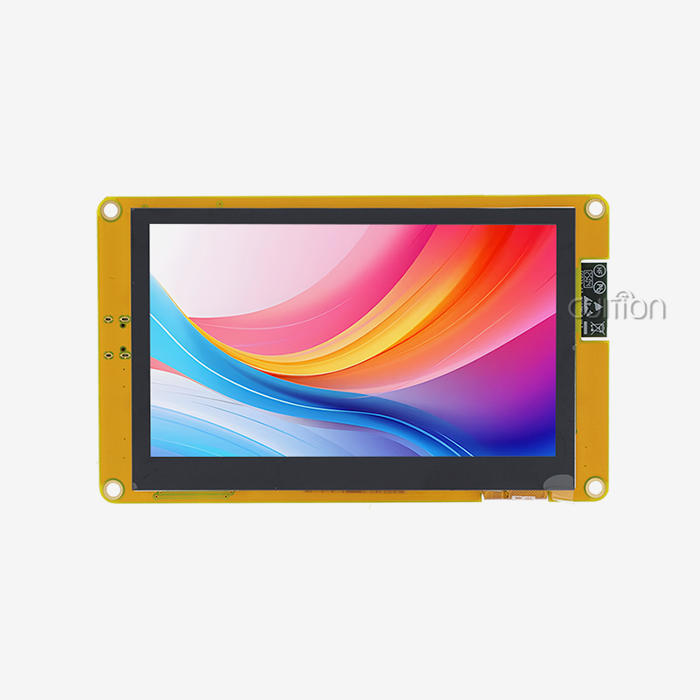
Yes, a 4-inch ESP32S3 display module can fully handle smart home automation. The GUITION ESP32-4848S040C_I is designed on the ESP32-S3R8 dual-core MCU that can operate at speeds up to 240MHz and is equipped with 8MB PSRAM, 16MB Flash and a 480×480 IPS capacitive touchscreen. It has built-in WiFi and Bluetooth and can speak directly to smart home protocols like MQTT and Home Assistant. This 4 inch ESP32S3 display module has the processing power, connection and visual quality that current smart home applications require whether you are looking for a thermostat panel, a security control or an energy dashboard.

Understanding the 4 Inch ESP32S3 Display Module
Before assessing any modules for usage in smart homes, it’s useful to know what makes this hardware class different from prior MCU-display combinations.
Core Hardware Architecture
The GUITION ESP32-4848S040C_I uses the ESP32-S3R8 chip with dual-core Xtensa LX7 CPU clocked at 240MHz. It has 512KB SRAM, 384KB ROM, 8MB PSRAM and 16MB Flash. The module is capable of real-time UI rendering with network duties, which was impossible for prior single-core systems with these standards.
Display Technology and Touch Input
This 4 inch ESP32S3 display module has a 480×480 IPS screen and supports 16-bit RGB color (up to 65K colors). The capacitive touchscreen effectively registers multi-touch movements, which makes a big difference in home automation interfaces where users tap, swipe and alter settings on a regular basis. IPS technology also has broader viewing angles than TN panels, so the screen is legible from the side – useful for wall-mounted setups.
Connectivity and Protocol Support
With integrated WiFi (802.11 b/g/n) and Bluetooth 5.0, this module may directly connect to home routers, IoT gateways, and BLE sensors without extra communication chips. The module also has a TF card slot and a variety of IO port interfaces, providing engineers with space to increase storage or attach other devices. These hardware characteristics coupled with the correct firmware allow integration with MQTT brokers, Zigbee coordinators and Z-Wave hubs a simple task.
Evaluating the Suitability of 4 Inch ESP32S3 Display Modules for Smart Home Automation
Knowing the specs is one thing, but understanding how they impact the functionality of your smart home is something else.
Responsive Interface for Continuous Operation
Some parts of smart homes always work. The ESP32-S3R8 has power control features that let the module lower the power used by the backlight when it's not in use. The network link stays open, though. This balance between speed and energy efficiency is very important for devices that are permanently connected to walls or built into appliance panels.
Real-Time Data Visualization
Smart home screens need to quickly show sensor data, tool states, and alarms. Because it has an 8MB PSRAM frame buffer, the GUITION module can show LVGL-based interfaces at smooth frame rates. Engineers have said that similar ESP32-S3 builds with LVGL give 30+ FPS. This means that the graphics are smooth and the graphs for energy, temperature, and humidity are always up to date.
Practical Size and Form Factor Considerations
This section is 480x480 pixels and 4 inches long. It fits in standard electrical circuit boxes that are used to build homes in North America. But procurement teams should know that Guition's wider range of panels, which range from 1.28 inches to 21.5 inches, might be better for apps that need bigger screens, like full home control hubs.
Comparison with Alternative Display Solutions
You should look at more than just the specs when you're shopping for a screen. The way well different generations of chips and display technologies work is really different.
ESP32S3 vs. Standard ESP32 Modules
This generation of ESP32 modules is much better than earlier ones in terms of memory bandwidth, support for vector instructions, and access to USB peripherals. The ESP32 has trouble rendering 480x480 full-color pictures at good frame rates, but the ESP32-S3R8 can do them without dropping the WiFi stack. This is clear when it comes to smart home UI chores. Also, the 4 inch ESP32S3 display module is a good choice for teams that want to move up from the first-generation ESP32 designs.
IPS vs. OLED vs. TFT for Home Interfaces
Some IPS screens, like the one on the GUITION ESP32-4848S040C^_I, show colors the same way from any angle. This is important for screens that people in the room can see. If you turn off OLED screens, they use less power and have great contrast. However, they burn in more easily when used for silent displays, which is common in home automation. Regular TFT screens are less expensive, but you can't see colors as clearly and they have smaller viewing angles. IPS is the best choice if you want to put something on the wall for good.
Touchscreen vs. Non-Touchscreen Trade-offs
It costs a little more for sensitive touchscreens, but they get rid of the need for real keys. This makes it easy to build the case and slows down the wear and tear on the parts over time. For smart home apps where people will touch the screen several times a day, capacitive touch is the best choice. If you want a smooth user interface, resistive touch screens are not the best choice because they are not as accurate and need more pressure.
Procurement Guide — Sourcing 4 Inch ESP32S3 Display Modules for B2B Buyers
It's just as important to know what the products are as it is to choose the right supplier when engineering teams and procurement managers need to buy a lot of things.
Evaluating Supplier Reliability
People who want to buy a lot of 4 inch ESP32S3 display modules should make sure that the company that makes them has a good way to get the parts they need. A process called "vertically integrated R&D and manufacturing" is used by GUITION, which is run by Jingcai Intelligence, to make modules. After the sale, the company makes it easier for integrators by giving them full secondary development documentation, technical help, and the option to update directly over-the-air (OTA).
These are the most important things you should check out before you choose a supplier:
- Documentation quality: Complete datasheets, wiring diagrams, and SDK examples in English reduce onboarding time significantly for US-based engineering teams.
- Development environment support: The GUITION ESP32-4848S040C_I supports Arduino IDE, ESP-IDF, MicroPython, and the proprietary Guition development platform, accommodating engineers with varied backgrounds.
- OTA and remote maintenance: Built-in WiFi enables remote firmware updates, which lowers the cost of product maintenance after deployment — a key factor for smart home device manufacturers shipping at scale.
- Bulk pricing and lead time: Contact david@guition.com directly to discuss 4 inch ESP32S3 display module supplier pricing, MOQ requirements, and delivery schedules for North American buyers.
The quality of the paperwork is very good. Full datasheets, wiring diagrams, and SDK examples in English make it much faster for tech teams in the US to get started.
Engineers from a variety of backgrounds can use the GUITION ESP32-4848S040C_I because it works with the Arduino IDE, ESP-IDF, MicroPython, and its own development platform. All of these environments are supported.
If your smart home device has built-in WiFi, you can change the firmware from afar. This lowers the cost of maintenance after the device is released, which is important for companies that make a lot of them to talk about 4 inch ESP32S3 display module supplier prices, minimum order quantities, and shipping times for customers in North America. You can also find out about bulk pricing and wait times that way.
Multi-Language and Global Deployment Readiness
GUIITION modules can encode in UTF-8 and switch between languages. This means that US companies that sell smart home products in other countries don't have to find different versions of the tools that work in those countries. This makes it easier to keep track of inventory and use SKUs across all distribution lines.
Real-World Applications and Case Studies in Smart Home Automation
The GUITION ESP32-4848S040C_I has been deployed across several practical scenarios that demonstrate its performance in live environments.
Home Control Panels and Thermostats
System integrators have built wall-mounted control panels using this module to display HVAC status, lighting scenes, and energy consumption in real time. The capacitive touchscreen allows users to adjust settings directly on the panel without opening a mobile app, which improves daily usability for homeowners who prefer physical interfaces.
Environmental Monitoring Stations
Smart home developers have paired this module with CO₂ sensors, temperature/humidity probes, and air quality monitors. The 480×480 resolution provides enough screen space to display multi-sensor dashboards with color-coded alert indicators. WiFi connectivity pushes readings to cloud platforms or local Home Assistant instances automatically.
Security Interface Systems
Security integrators have used this 4 inch ESP32S3 display module as the front-end interface for access control panels. The module displays door lock status, camera feeds via MJPEG streams, and alarm states. Its Bluetooth connectivity also allows pairing with BLE-based door sensors or keyfobs, adding a secondary authentication layer without extra hardware.
Conclusion
A 4 inch ESP32S3 display module, such as the GUITION ESP32-4848S040C^_I, which is based on the ESP32-S3R8 platform, works well for smart home automation. It comes with WiFi and Bluetooth, and the screen is 480x480 IPS capacitive. It also works with a number of software tools. It is a good choice for embedded engineers, HMI designers, and product teams that are making home gadgets that are linked. It is possible to make fast progress and sure that the products you use will last if you choose a seller that provides clear instructions, over-the-air (OTA) help, and adaptable development tools.
FAQ
Can this module integrate with Home Assistant or MQTT?
Yes. The built-in WiFi on the GUITION ESP32-4848S040C_I allows direct MQTT communication. Engineers can write firmware using ESP-IDF or Arduino IDE to publish and subscribe to MQTT topics, connecting the module to Home Assistant, Node-RED, or similar platforms without additional hardware.
What is the power consumption during normal operation?
The ESP32-S3R8 SoC consumes approximately 240mA during active WiFi transmission. In practice, a fully assembled module with the IPS backlight at moderate brightness draws around 400–600mA at 5V. Engineers can reduce this by dimming the backlight during idle periods while keeping the network stack active.
How difficult is it to program this module?
The module ships with factory-programmed test firmware, so you can verify the display immediately after powering on. For custom interfaces, Guition's drag-and-drop development tool allows UI creation without deep C++ knowledge. For advanced projects, full Arduino IDE, ESP-IDF, and MicroPython support gives experienced engineers complete control.
Does the module support OTA firmware updates?
Yes. Built-in WiFi enables over-the-air firmware updates. This is particularly valuable for smart home products already deployed in the field, as updates can be pushed remotely without requiring physical access to the device.
Is the module compatible with TF card storage?
The GUITION ESP32-4848S040C_I includes a reserved TF card interface, allowing local storage of logs, configuration files, or media assets used in the UI.
Start Your Smart Home Project with GUITION
The ESP32S3 display module GUITION ESP32-4848S040C^_I is 4 inches and comes with all the hardware and development tools you need. Jingcai Intelligence sells items from 1.28 inches to 21.5 inches and can help with tech issues. Get in touch to talk about what you need, whether it's one prototype or many. To get a quote on building your next smart home, email our team at david@guition.com or visit https://jingcaizhineng.aixdb.cn/.
References
1. Espressif Systems. ESP32-S3 Technical Reference Manual. Espressif Systems, 2022.
2. Kolban, N. Kolban's Book on ESP32. Self-published technical reference, 2021.
3. Mind, G. LVGL — Light and Versatile Graphics Library Documentation. LVGL Project, 2023.
4. Eclipse Foundation. MQTT Version 5.0 Specification. OASIS Standard, 2019.
5. Home Assistant Contributors. Home Assistant Architecture and Integration Guide. Open Home Foundation, 2023.
6. IEC. IEC 62386: Digital Addressable Lighting Interface — Smart Home Control Applications. International Electrotechnical Commission, 2022.
Learn about our latest products and discounts through SMS or email