- English
- French
- German
- Portuguese
- Spanish
- Russian
- Japanese
- Korean
- Arabic
- Greek
- German
- Turkish
- Italian
- Danish
- Romanian
- Indonesian
- Czech
- Afrikaans
- Swedish
- Polish
- Basque
- Catalan
- Esperanto
- Hindi
- Lao
- Albanian
- Amharic
- Armenian
- Azerbaijani
- Belarusian
- Bengali
- Bosnian
- Bulgarian
- Cebuano
- Chichewa
- Corsican
- Croatian
- Dutch
- Estonian
- Filipino
- Finnish
- Frisian
- Galician
- Georgian
- Gujarati
- Haitian
- Hausa
- Hawaiian
- Hebrew
- Hmong
- Hungarian
- Icelandic
- Igbo
- Javanese
- Kannada
- Kazakh
- Khmer
- Kurdish
- Kyrgyz
- Latin
- Latvian
- Lithuanian
- Luxembou..
- Macedonian
- Malagasy
- Malay
- Malayalam
- Maltese
- Maori
- Marathi
- Mongolian
- Burmese
- Nepali
- Norwegian
- Pashto
- Persian
- Punjabi
- Serbian
- Sesotho
- Sinhala
- Slovak
- Slovenian
- Somali
- Samoan
- Scots Gaelic
- Shona
- Sindhi
- Sundanese
- Swahili
- Tajik
- Tamil
- Telugu
- Thai
- Ukrainian
- Urdu
- Uzbek
- Vietnamese
- Welsh
- Xhosa
- Yiddish
- Yoruba
- Zulu
Can a 3.5 inch ESP32S3 display module Simplify IoT Development?
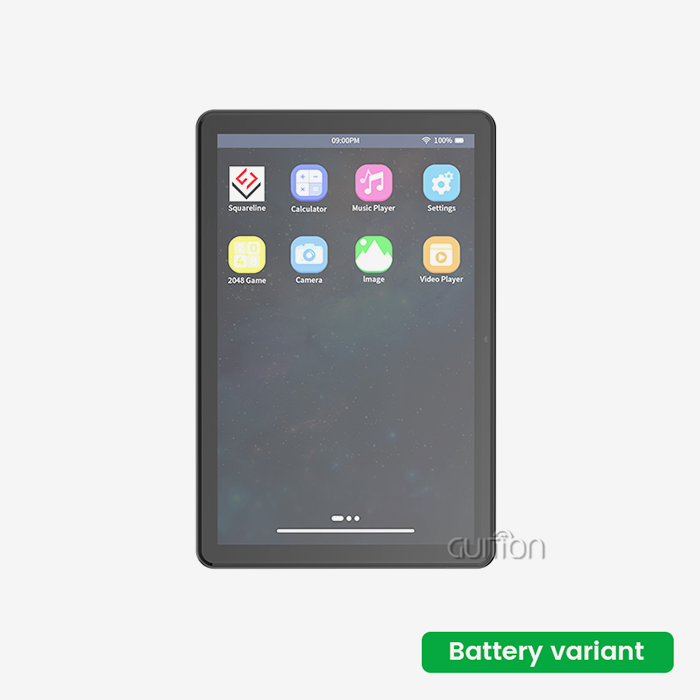
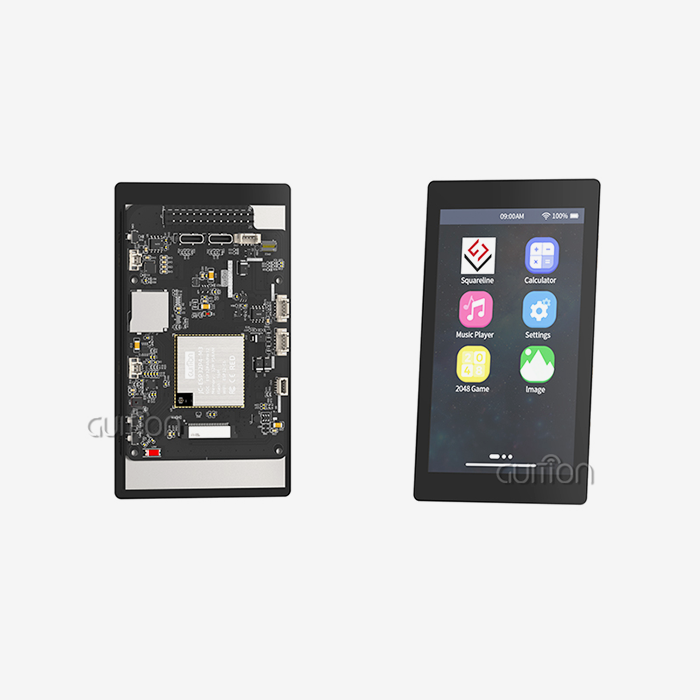
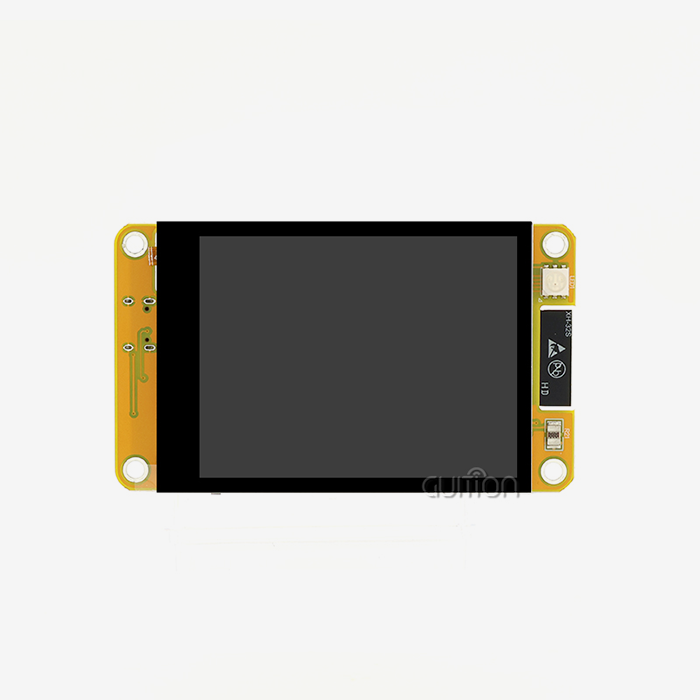
A 3.5 inch ESP32S3 display module integrates a dual-core processor, wireless connectivity, and a touch-enabled IPS screen into a single compact board. For embedded engineers and product teams under deadline pressure, that level of hardware consolidation eliminates weeks of integration work. The GUITION JC3248W535C_I_Y is a strong example: it combines the ESP32-S3R8 MCU with a 320×480 capacitive touch display, built-in WiFi and Bluetooth, and support for Arduino IDE, ESP-IDF, MicroPython, and the proprietary Guition development environment—all out of the box.

Understanding the 3.5 Inch ESP32S3 Display Module: Features and Specifications
The JC3248W535C_I_Y is based on the ESP32S3R8 dual-core MCU. It has 512KB SRAM, 384KB ROM, 8MB PSRAM, and 16MB Flash and can run at up to 240MHz. These shapes aren't just for looks; they make it possible for LVGL-based GUI drawing to run smoothly and for double-buffered frame management to work without the need for extra memory chips.
Display Quality and Touch Interface
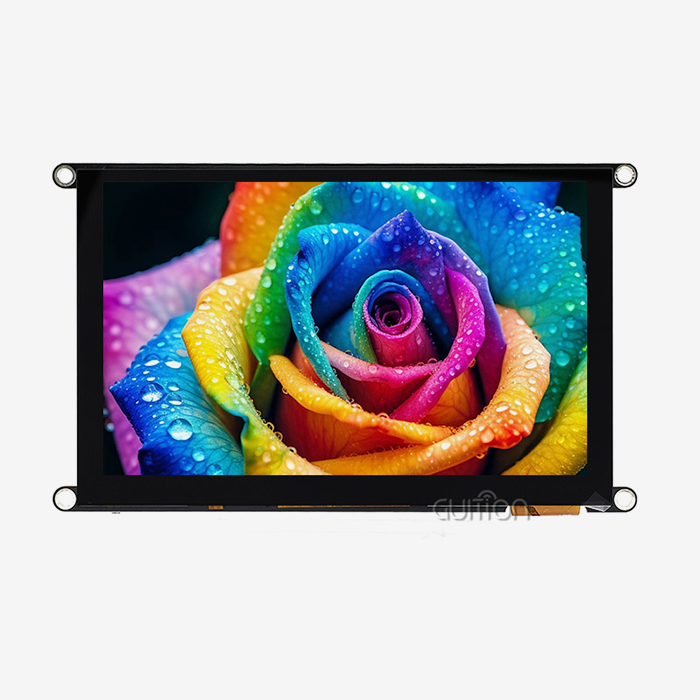
The 3.5 inch IPS LCD panel has a resolution of 320x480 pixels and a viewing angle of 170°, so it can be used on industrial panels, medical monitors, and the dashboards of smart appliances. The capacitive touch device responds to multiple touches and allows for smooth contact that resistive screens just can't match in precise settings.
Hardware Expandability
The module has a TF card slot for external storage and up to 12 customisable IO pins that engineers can use to connect sensors, relays, or communication devices without having to rebuild the board. The built-in lighting control circuit and touch screen control circuit reduce the number of external parts.
Power and Connectivity Architecture
This 3.5 inch ESP32S3 display module is really movable because it has a built-in WiFi and Bluetooth connection as well as a lithium battery charging circuit with overcharge and overdischarge safety. The wireless stack doesn't depend on the display pipeline, so network operations don't slow down frame rate.
Why the 3.5-Inch ESP32S3 Display Module Is an Ideal Choice for IoT Solutions?
It's common for IoT development teams to use separate MCU boards and display breakouts. They then spend weeks fixing problems with pin conflicts, power sequencing, and drivers that don't work with each other. That level of complexity is cut down by the GUITION JC3248W535C_I_Y, which provides an HMI module that is already installed and whose hardware requirements have been taken care of.
Comparing Size, Clarity, and Cost
When compared to 2.8-inch options, the 3.5 inch form factor offers about 56% more screen space while still having a PCB footprint that fits well into standard enclosures. IPS LCD panels are better than OLED choices of the same size because they have more consistent brightness and last longer when they are used all the time, which is important for industrial control panels and business kiosks that are used 24 hours a day, seven days a week.
Validated Industrial Reliability
This 3.5-inch ESP32S3 display module is made according to military-grade standards. It can operate in temperatures ranging from -20°C to +70°C and can handle up to ±4kV of contact discharge. It comes with factory test apps already installed, so teams can check how the hardware works before they write a single line of application code. That alone cuts down on initial testing steps by a large amount.
When put together, these features lead to a lower total cost of ownership. The cost of development decreases, you can perform upkeep from afar, and the product's lifecycle far exceeds that of normal consumer-grade modules.
Procurement Guide: How to Source the Best 3.5 Inch ESP32S3 Display Module for Your IoT Project?
There's more to finding the right integrated display than just looking at description sheets. Supply chain continuity, expert help after the sale, and the authenticity of real parts are all things that affect how long your product line will last.
The most important things to look for in a 3.5 inch ESP32S3 display module provider for business-to-business purchases are these:
- Component authenticity and certification: Make sure that the ESP32S3R8 chip comes from authorised sellers and that the module has RoHS compliance paperwork. In the market for integrated displays, fake SoCs are still a real danger.
- Technical documentation depth: A trustworthy company gives full diagrams, pin mapping tables, SDK integration guides, and example projects for all development platforms that they support. Lack of paperwork means that there isn't much help after the sale.
- Bulk order management and lead times: Make sure you know if the supplier keeps stock in a warehouse or if they build items to order. For production runs, you can't negotiate lead times that you can count on.
- After-sales and remote support capability: Suppliers who offer cross-platform debugging help and software update advice make your own tech work a lot easier.
GUITION, which is part of Jingcai Intelligence, handles the whole process, from research and development to production and sales. Their productcatalogueg has display modules ranging from 1.28" to 21.5". This means that buying teams can use the same source for all of their different product SKUs, which makes the supply chain much simpler.
Programming and Integration: Simplifying Development with the ESP32-S3 Display Platform
The gap between hardware and software is one of the most annoying things about developing embedded HMIs. Engineers who already know how to use Arduino shouldn't have to learn everything all over again in order to use a high-performance display module.
This is directly dealt with by the GUITION JC3248W535C_I_Y, which works with four programming environments: the Arduino IDE, the ESP-IDF, MicroPython, and the Guition GUI development tool. Each setting is made for a different type of worker, and users are not locked into a specific stack.
Pay close attention to the Guition software platform. It has a drag-and-drop UI builder and a large built-in control library. This lets HMI designers create screen layouts visually and write code that can be deployed without needing to write low-level display drivers. Cross-platform online debugging shortens the cycle of changes, and deployed devices can get firmware updates without direct access, which is a real practical benefit for equipment that is out in the field using this 3.5 inch ESP32S3 display module.
The platform comes with UTF-8 multi-language encoding, which is important for product teams that are making apps for global markets where localizing the user interface is a must rather than a nice-to-have.
Future of IoT Interfaces: How ESP32-S3 Display Modules Drive Innovation
The environment of embedded HMI is changing toward better visual quality, AI integration at the edge, and wireless connection that is always on. The ESP32S3R8's vector instruction set already supports lightweight on-device inference. This makes this type of 3.5 inch ESP32S3 display module a good choice for local anomaly detection, voice command processing, and predictive maintenance dashboards that don't need to go back and forth to the cloud.
The ESP32S3 ecosystem's hardware roadmaps show that PSRAM configurations will be increased, parallel interface speeds will be sped up, and MQTT and Matter protocols will be better integrated for IoT merging in smart homes and factories. If a product manager is planning to develop something over the next two to three years, choosing an ESP32S3 display module means building on a platform that developers and silicon vendors are putting a lot of money into.
Conclusion
The GUITION JC3248W535C_I_Y 3.5-inch ESP32S3 display module combines processing power, wireless connectivity, touch interaction, and software support for multiple environments onto a single board that is ready for mass production. It makes integrating hardware easier, speeds up development, and gives industrial, medical, and consumer IoT apps a base that can grow as needed. This module is a good technical and business choice for teams that want a solid embedded display option with real long-term supplier support.
FAQ
What development environments does the GUITION 3.5-inch ESP32S3 display module support?
The JC3248W535C_I_Y works with the Guition graphic programming tool, the Arduino IDE, ESP-IDF, and MicroPython. This range works for engineers of all skill levels and job types, so they don't have to follow a single set of rules.
Can the module operate in industrial temperature conditions?
Yes. The module can work in temperatures ranging from -20°C to +70°C, so it can be used in plant floor panels, outdoor shelters, and equipment that goes through thermal cycling.
Does the ESP32-S3 display module support OTA firmware updates?
Engineers can push firmware updates to deployed devices over WiFi with the Guition platform's remote upgrade feature, even when they don't have physical access to the hardware.
How many IO pins are available for peripheral integration?
On the JC3248W535C_I_Y, there are up to 12 customisable IO pins and a TF card slot for extra storage. This gives sensors, relays, and external transmission units enough ways to link.
Is the module compatible with LVGL?
Yes. With its dual-core design, DMA support, and 8MB of PSRAM, the ESP32S3R8 has the processing power and frame buffer memory to run LVGL at 30+ FPS on the 320x480 screen.
Partner with GUITION for Your Next ESP32 Display Project
GUITION offers tried-and-true HMI systems backed by a full R&D-to-production workflow. The JC3248W535C_I_Y 3.5-inch esp32 display module gives your project the dependability, software flexibility, and supplier stability it needs, whether you are making a prototype or running a production run. You can contact the GUITION team at david@guition.com or go to https://jingcaizhineng.aixdb.cn/ to see all of the 3.5-inch ESP32S3 display module options that are available for B2B sourcing.
References
1. Espressif Systems. ESP32-S3 Technical Reference Manual. Espressif Systems, 2022.
2. Maier, A., Sharp, A., & Vagapov, Y. "Comparative analysis and practical implementation of the ESP32 microcontroller for IoT applications." Internet of Things and Cloud Computing, 2017.
3. Gartner Research. Market Guide for Embedded HMI Display Technologies. Gartner, 2023.
4. IEEE. "Human-Machine Interface Design for Industrial IoT Systems." IEEE Transactions on Industrial Informatics, 2021.
5. LVGL Project Team. LVGL: Light and Versatile Graphics Library — Documentation and Benchmarks. LVGL, 2023.
6. IHS Markit. Embedded Display Module Market: Trends, Sizing, and Forecasts. IHS Markit, 2022.
Learn about our latest products and discounts through SMS or email