- English
- French
- German
- Portuguese
- Spanish
- Russian
- Japanese
- Korean
- Arabic
- Greek
- German
- Turkish
- Italian
- Danish
- Romanian
- Indonesian
- Czech
- Afrikaans
- Swedish
- Polish
- Basque
- Catalan
- Esperanto
- Hindi
- Lao
- Albanian
- Amharic
- Armenian
- Azerbaijani
- Belarusian
- Bengali
- Bosnian
- Bulgarian
- Cebuano
- Chichewa
- Corsican
- Croatian
- Dutch
- Estonian
- Filipino
- Finnish
- Frisian
- Galician
- Georgian
- Gujarati
- Haitian
- Hausa
- Hawaiian
- Hebrew
- Hmong
- Hungarian
- Icelandic
- Igbo
- Javanese
- Kannada
- Kazakh
- Khmer
- Kurdish
- Kyrgyz
- Latin
- Latvian
- Lithuanian
- Luxembou..
- Macedonian
- Malagasy
- Malay
- Malayalam
- Maltese
- Maori
- Marathi
- Mongolian
- Burmese
- Nepali
- Norwegian
- Pashto
- Persian
- Punjabi
- Serbian
- Sesotho
- Sinhala
- Slovak
- Slovenian
- Somali
- Samoan
- Scots Gaelic
- Shona
- Sindhi
- Sundanese
- Swahili
- Tajik
- Tamil
- Telugu
- Thai
- Ukrainian
- Urdu
- Uzbek
- Vietnamese
- Welsh
- Xhosa
- Yiddish
- Yoruba
- Zulu
What Certifications Matter for Resistive touch display module?
When sourcing a resistive touch display module for industrial, medical, or IoT applications, certifications are not a formality — they are a procurement safeguard. Certified modules confirm that the touch sensor assembly, ITO layers, and display electronics meet internationally recognized safety, electromagnetic, and environmental standards. For engineers integrating a resistive touch display module into mission-critical equipment, compliance documentation must not be overlooked, as it can trigger customs delays, liability exposure, or field failures. This guide walks through every certification tier that matters and explains how GUITION's JC2432S028R aligns with those benchmarks.

Overview of Essential Certifications for Resistive Touch Display Modules
To procure effectively, you must first know which certifications apply to your suppliers. Any Resistive touch display module intended for business usage must meet specific compliance standards in each area and industry vertical.
These are the main types of certificates that every buying team should look at:
- CE Marking (EU Directive): Mandatory for any touch display module sold into European markets. CE confirms conformity with Low Voltage Directive (LVD) and EMC Directive requirements. Without it, distribution in the EU is legally prohibited.
- UL Certification (North America): UL 60950-1 or UL 62368-1 listing confirms electrical safety for information technology equipment, a standard expectation for industrial and commercial HMI modules in the US market.
- RoHS Compliance: The EU RoHS Directive restricts hazardous substances including lead, mercury, and cadmium. RoHS compliance is now a baseline expectation globally, not just in Europe, and affects product recyclability and ESG reporting.
- ISO 9001 Quality Management: ISO 9001 certification at the manufacturing level confirms that the supplier operates a documented, audited quality management system, which directly reduces variance in touch panel assembly quality.
- IEC 61000 EMC Standards: Electromagnetic compatibility testing under IEC 61000 ensures that a resistive touch display module neither emits disruptive interference nor suffers functional degradation near industrial machinery.
- IP Rating (IEC 60529): Ingress protection ratings matter significantly for outdoor kiosks, agricultural automation terminals, and food processing environments where moisture or particulate exposure is routine.
These certifications cover the regulatory, safety, and durability aspects that industrial buyers care about the most. When a module has this approval stack, it means that the company that made it cares about quality control and not just making cheap modules.
How Does Certification Impact Resistive Touch Module Performance and Procurement Decisions?
Certified resistive touch modules always show smaller linearity error margins, more accurate activation force calibration, and better ITO layer stability over time. IEC 62132 testing guidelines say that EMC-tested units are resistant to electrostatic discharge events, which is a crucial trait for automation settings.
Certification as a Procurement Cost Lever
The total cost of ownership goes down when you buy approved parts. Less failures in the field directly lead to less money spent on service after the sale. For example, medical device makers say that getting CE and ISO 9001-certified touch screen modules cuts down on the time it takes to prepare for regulatory submissions because they don't have to do independent re-testing at the component level.
Real-World Application Evidence
Industrial automation integrators using HMI panels in high-vibration environments have found that IPC-certified PCB assemblies in touch display modules maintain the integrity of the FPC bond during long mechanical stress cycles. This directly supports the 1 million actuation life rating that is typical for good 4-wire resistive designs.
Comparing Certifications Across Leading Resistive Touch Display Module Brands and Manufacturers
Well-known companies like Elo Touch and Panasonic put out full approval grids for all of their products that include CE, UL, RoHS, and FCC. Best practices say that procurement teams should use clear certification as a way to choose which vendors to work with. Manufacturers in Shenzhen with ISO 9001 facilities and published CE and RoHS paperwork that can be checked are also considered credible.
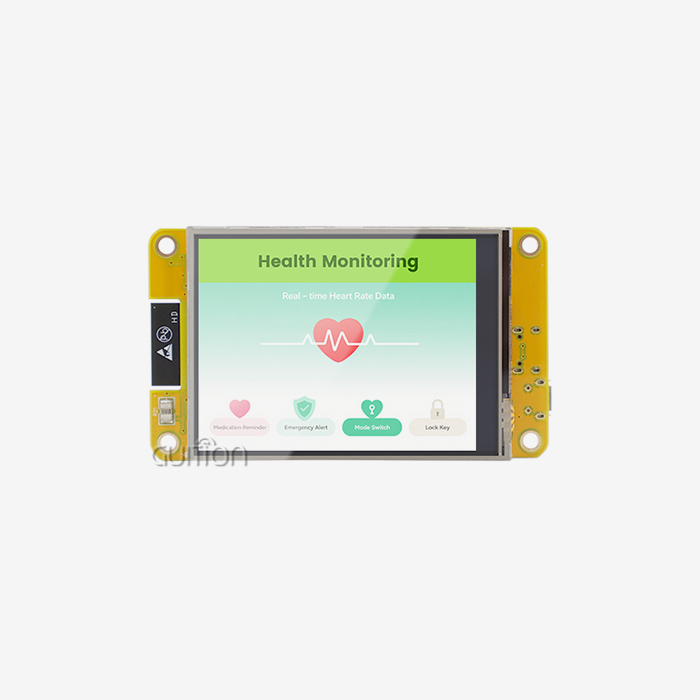
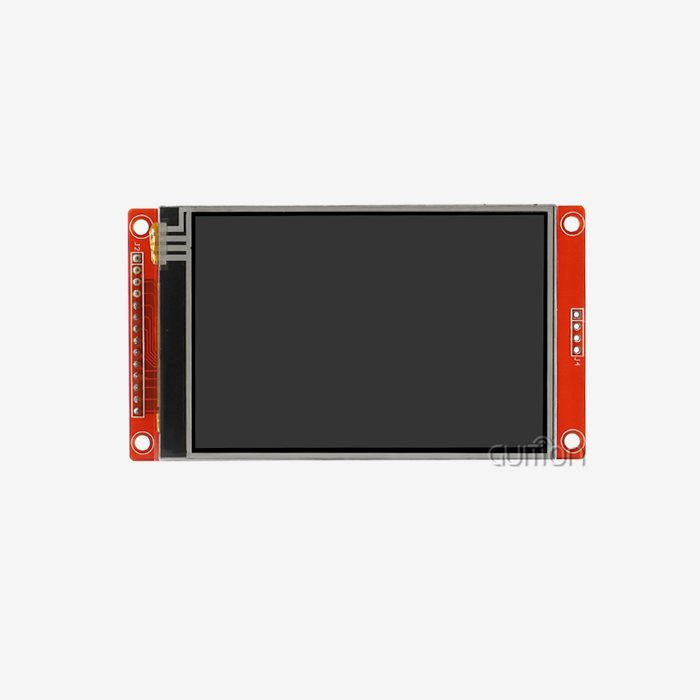
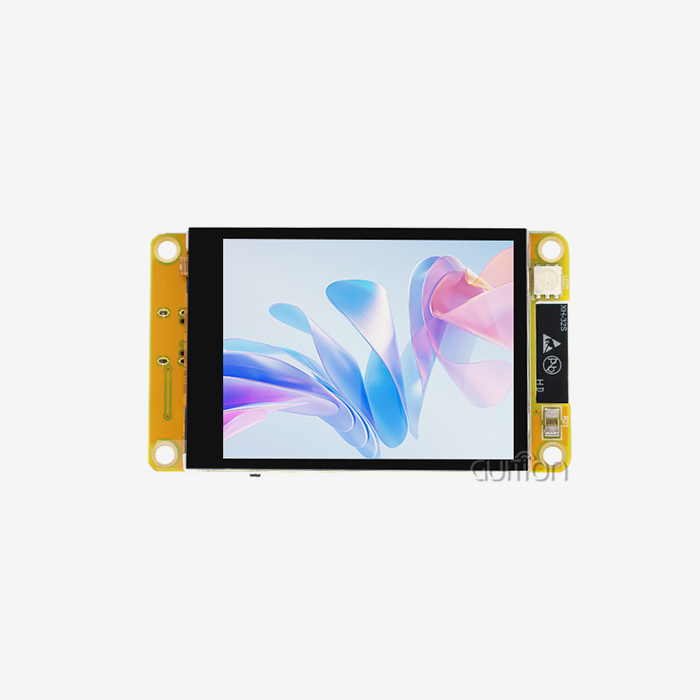
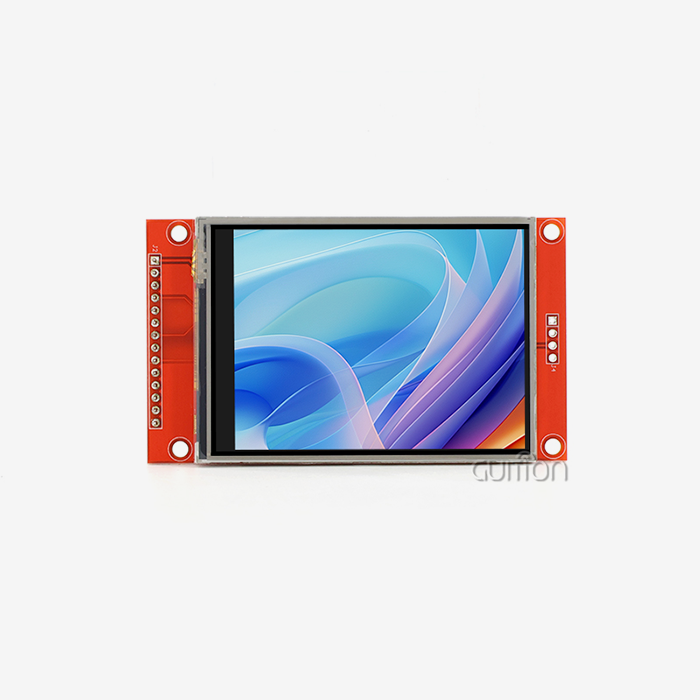
The JC2432S028R is a 2.8-inch Resistive touch display module made by Shenzhen Jingcai Intelligent Co., Ltd. It uses the ILI9341 driver IC and has 240x320 resolution and 4-wire SPI. The company's quality system is in line with ISO 9001 standards, and the manufacturing method meets military-grade dependability standards. The design of the module lets you choose materials that are RoHS-compliant, and its SPI-based minimal IO architecture makes the PCB less complicated, which makes EMC compliance easier for the final product.
Industrial-grade resistive touch display units need more thorough testing than consumer-grade versions. OEMs that are making medical monitors or energy management terminals need to make sure they meet at least CE, RoHS, and IEC 61000 standards. GUITION's supply paperwork helps with that process.
Procurement Best Practices: How to Verify and Leverage Certifications When Buying Resistive Touch Display Modules?
For responsible procurement, certifications must be checked before a purchase order is sent out. A useful way to check is shown below:
- Request original certificates, not copies: Ask suppliers for certificate numbers, issuing body names, and expiry dates. Cross-reference CE declarations against the EU RAPEX database and UL listings against UL's online certification directory.
- Confirm scope alignment: A CE certificate issued for a base display module may not cover the integrated touch controller sub-assembly. Verify that the certificate scope explicitly includes the configuration of the resistive touch display module you are purchasing.
- Review test reports, not just certificates: ISO 17025-accredited lab test reports provide quantitative evidence — linearity error data, EMC emission levels, and environmental stress screening results — that certificates alone do not convey.
- Assess renewal cadence: Certifications with lapsed renewal dates are a supply chain liability. Confirm that the supplier maintains active certification status and has an internal audit schedule.
It can be hard to find a good balance between strict certification requirements and lead time and MOQ realities in procurement. When suppliers keep R&D, production, and sales together, as GUITION does, they can usually process paperwork faster and provide better compliance support than suppliers with more dispersed supply chains.
Conclusion
Certifications for a Resistive touch display module are not extra work that needs to be done; they are proof that a part will work safely and consistently for as long as it is supposed to. The CE, UL, RoHS, ISO 9001, IEC 61000, and IP grades all address a different type of failure or legal requirement. When procurement teams check this certification stack before they source, they greatly lower the risk that comes after. The JC2432S028R from GUITION has the approved manufacturing discipline, strong ILI9341 performance, and development ecosystem support that buyers in the industrial and IoT sectors need.
FAQ
Are CE and RoHS certifications mandatory for resistive touch display modules sold in the US?
RoHS compliance is not required by federal law in all US states, but the Electronic Waste Recycling Act in California is similar to RoHS. Not in the US, but in the EU, products must have a CE mark. But many US OEMs need suppliers to support both global sales plans and ESG policies for the whole company.
How do I verify that a resistive touch display module has an authentic certification?
Ask for the certificate registration number and check it directly with the public register of the granting body, like UL's Product iQ portal or the EU's NANDO database for Notified Bodies. Check the certificate's reach and expiration date all the time.
Does ISO 9001 certification ensure the quality of a touch panel module?
ISO 9001 only certifies the method for quality control, not the products themselves. It proves that the production process is written down and checked, which statistically lowers differences and defect rates between batches of production.
Can a resistive touch display module be used in medical devices without additional certification?
IEC 60601-1 compliance at the device level is usually needed for medical applications. Medical device approval is still needed, but component-level CE and ISO 9001 certification from the module provider can help. Always talk to your team in charge of legal issues.
Partner with GUITION for Certified Resistive Touch Display Module Supply
The JC2432S028R resistive touch spi display module from GUITION offers manufacturing transparency, compliance documents, and dedicated engineering support. Our team at Shenzhen Jingcai Intelligent Co., Ltd. is ready to help you with your buying process whether you need a certified Resistive touch display module provider for medical devices, smart home systems, or industrial automation. You can email our technical team at david@guition.com to ask for datasheets, compliance records, and ways to make the product your own.
References
1. International Electrotechnical Commission. IEC 61000-4 Series: Electromagnetic Compatibility Testing and Measurement Techniques. IEC, 2023.
2. European Commission. Guide to the Implementation of Directives Based on the New Approach and the Global Approach. European Commission, 2022.
3. Underwriters Laboratories. UL 62368-1: Audio/Video, Information and Communication Technology Equipment Safety Standard. UL Standards, 2022.
4. International Organization for Standardisation. ISO 9001:2015 Quality Management Systems — Requirements. ISO, 2015.
5. IPC Association. IPC-A-610: Acceptability of Electronic Assemblies. IPC, 2020.
6. European Parliament. Directive 2011/65/EU on the Restriction of the Use of Certain Hazardous Substances in Electrical and Electronic Equipment (RoHS Recast). Official Journal of the European Union, 2011.
Learn about our latest products and discounts through SMS or email